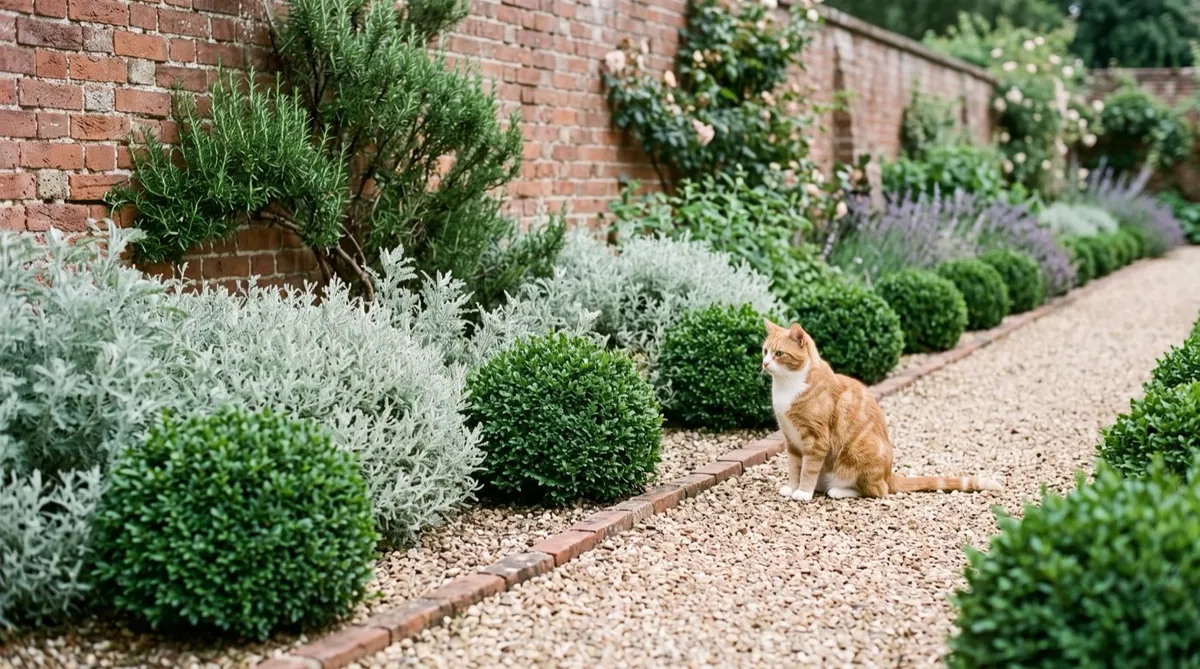
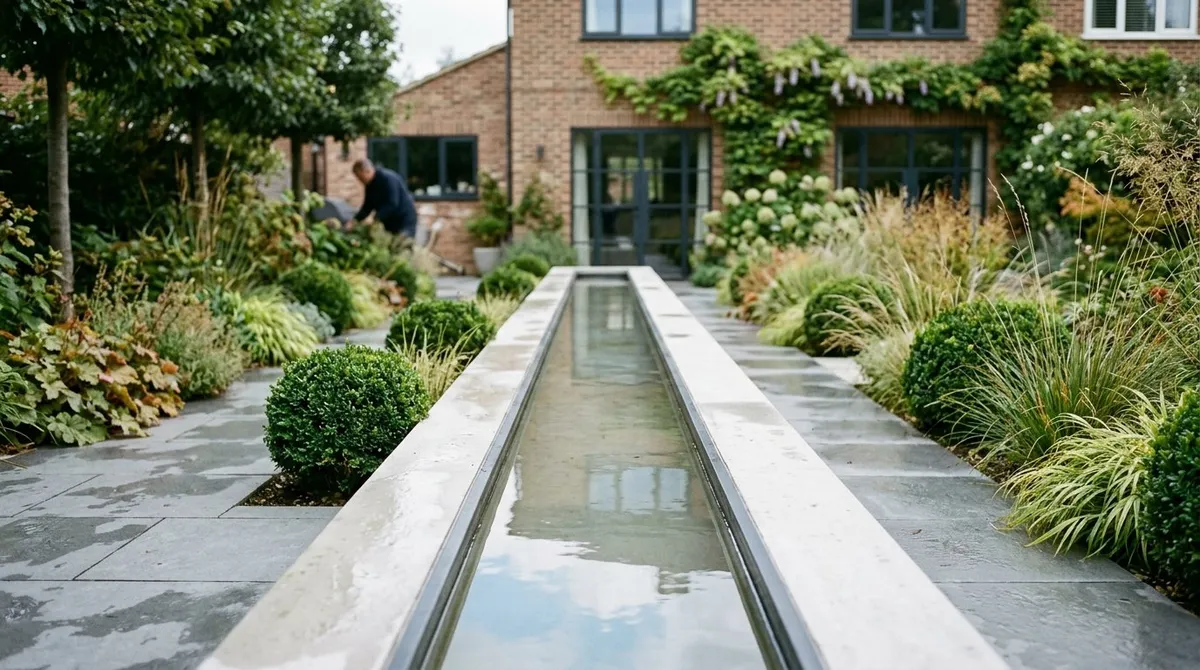
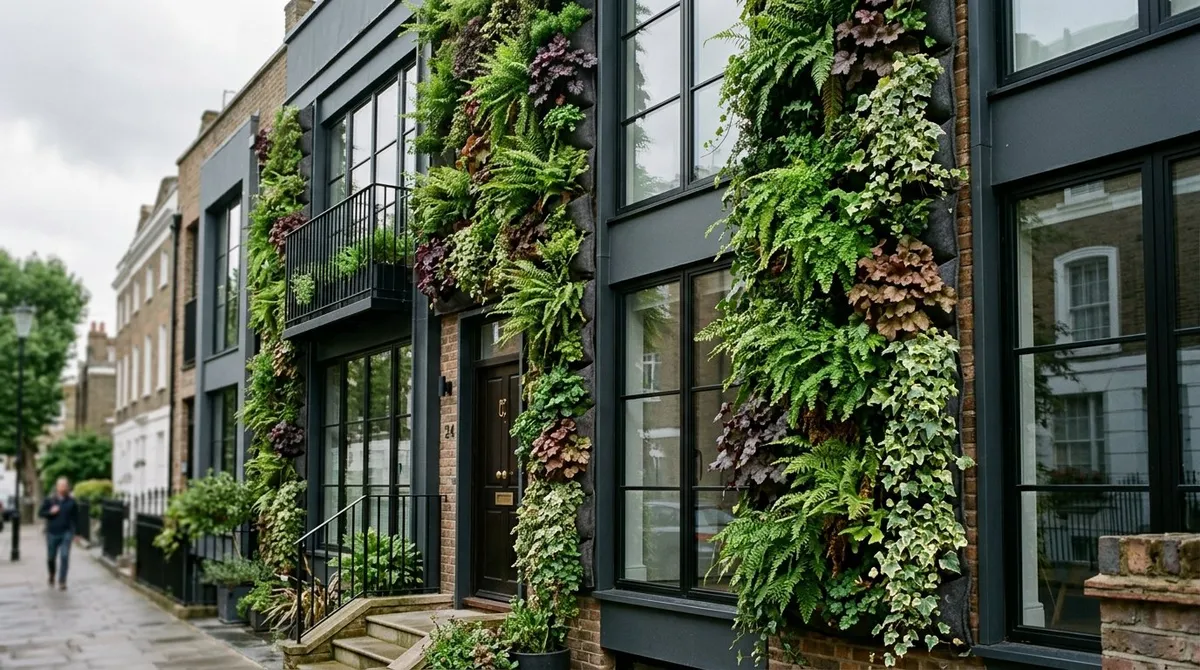
Key takeaways
- Solid and gap-free beats leafy every time, so start with a heavy fence or wall
- Seal the base with concrete gravel boards, because sound leaks through any gap
- Height matters too, and 2m is the usual limit for a back garden fence without planning permission
- Hedges hide the road and make it feel quieter, but they barely block sound on their own
- A splashy water feature near your seat masks the hum that's left
- Sit close behind the barrier, where its sound shadow is deepest
The best way to reduce traffic noise in a garden is a solid, heavy, gap-free barrier between you and the road. A close-board fence or a wall does the real work. Hedges, climbers and water then make what’s left feel calmer.
Most people reach for a hedge first. It looks like a wall, but sound slips through it. This guide covers what actually quietens a roadside garden, in the order to tackle it. If being overlooked bothers you more than noise, the guide to privacy design for an overlooked garden is a better starting point.
Why hedges alone don’t stop road noise
Sound travels through air, so anything full of air lets it through. A hedge is mostly gaps between leaves and twigs. However thick it looks, traffic noise passes straight through.
Three things stop sound in a garden:
- Mass. Heavy materials such as brick, close-board timber or packed earth block sound. Light panels let it through.
- No gaps. Sound pours through the smallest hole. A gap under a fence or daylight between panels undoes the whole barrier.
- Height. Sound bends over the top of a barrier. A low fence lets it sail straight over. Around 2m makes a real difference.
There’s also how noise feels. If you can’t see the road, your brain treats it as less of a nuisance. And if a nicer sound is close to you, such as running water, your ear stops picking out the traffic. The calmest roadside gardens use both: a solid barrier to cut the noise, and planting and water to win over your ears.

Same height, very different results. The solid fence blocks sound, while the leafy hedge lets it slip through the gaps.
Which garden noise barriers work best?
Solid, heavy barriers are the ones that make a road sound quieter. Planting and water make the garden feel calmer. Use this table to see where each option fits.
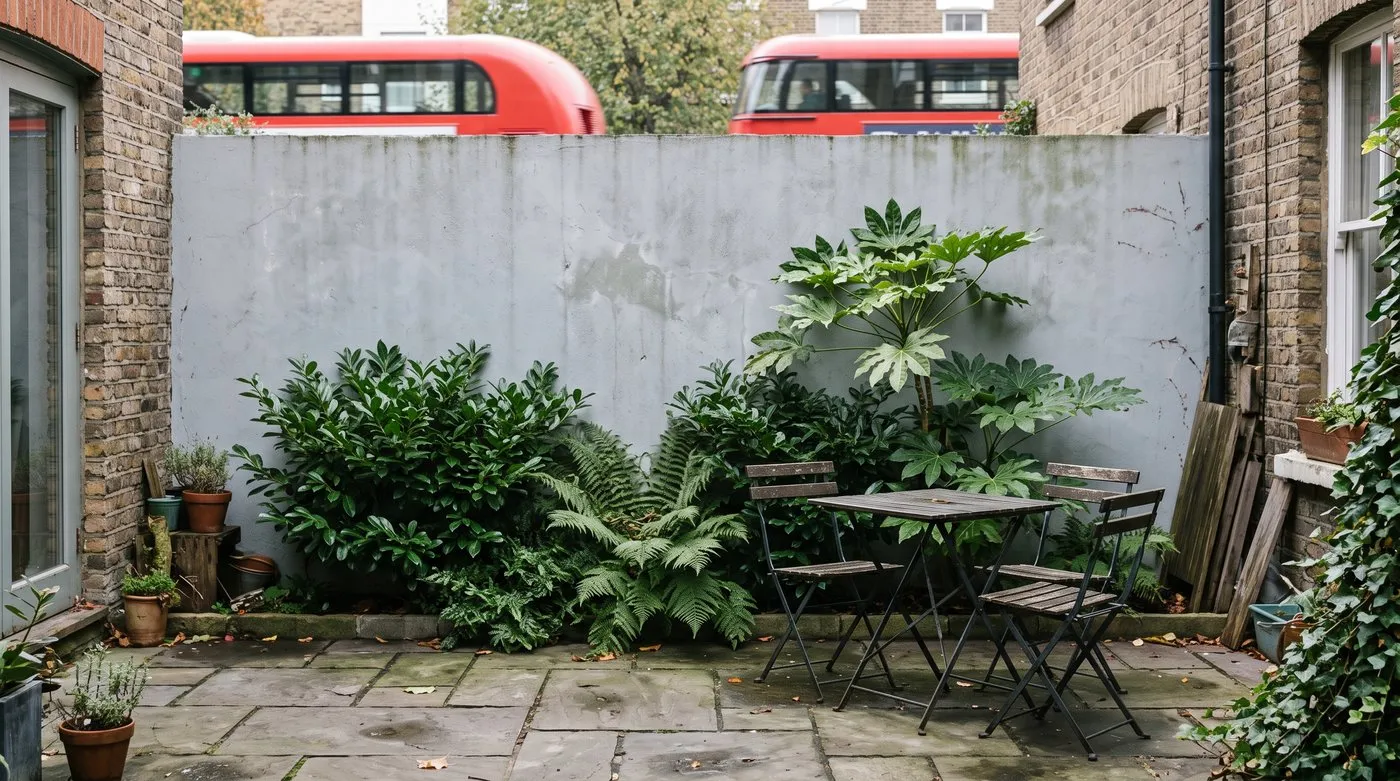
A solid wall does the blocking, and evergreen planting in front softens the look and the echo.
| Option | What it does | Space needed | Best for |
|---|---|---|---|
| Brick or block wall | Blocks sound well, no gaps | Narrow | Small urban plots with a budget |
| Acoustic or close-board fence | Blocks sound if sealed at the base | Narrow | Most gardens |
| Earth bank (bund) | Blocks and soaks up sound | Very wide | Large gardens |
| Climbers on a solid fence | Softens echoes, looks green | Narrow | Dressing up a new fence |
| Evergreen hedge | Hides the road, softens echoes | 60-100cm deep | Planting in front of a barrier |
| Water feature | Masks the hum near your seat | Small | Every roadside garden |
| Lightweight panel fence | Lets most sound through | Narrow | Not worth it for noise |
Choosing a solid fence for traffic noise
A solid fence is the most practical noise barrier for most UK gardens. It takes up little room and goes up in a day or two. The key word is solid. Overlap, slatted and trellis fences let sound through.
Choose close-board, tongue-and-groove or purpose-made acoustic fence panels. Acoustic panels are heavier and denser than ordinary timber, which is why they work better. Pick the heaviest panels your posts can take.
Seal the base with concrete gravel boards, so there’s no gap between fence and soil. Bolt panels tight to the posts, with no daylight showing through. Ideas for styles and finishes are in the guide to garden fence ideas.
In most back gardens you can put up a fence or wall up to 2m high without planning permission. Next to a road used by vehicles, the limit is 1m. The GOV.UK guidance on fences, gates and garden walls explains the rules. Check with your council if you live in a listed building or a conservation area.

Concrete gravel boards close the gap at the bottom. Leave a gap there and the noise walks right under your new fence.
Walls and earth banks for bigger gardens
A brick or block wall blocks sound even better than a fence. It’s heavy and has no joints to leak. It costs more and needs proper foundations, but in a small city plot a rendered block wall is often the neatest answer.
An earth bank, or bund, is a long mound of packed soil with grass or plants on top. It blocks sound with its weight, and its soft surface soaks some up rather than bouncing it back. You sometimes see them along new estates beside main roads.
The catch is space. A bank needs a wide base to stay stable, so it only suits large gardens. Building one also means moving a lot of soil, often with a digger. Ask your council before you start, as big changes in ground level can need permission. A fence along the top adds extra height.

Grassed earth banks are common on new estates beside main roads. They add weight between the houses and the traffic.
Using hedges and climbers to soften the sound
Hedges and climbers won’t block road noise on their own, but they are still worth planting. They hide the road, which makes it feel quieter. They also soften hard echoes off walls and paving.
The trick is to plant them in front of a solid fence or wall, never instead of one. Good evergreen choices for a roadside hedge include:
- Yew (Taxus baccata): dense, dark and slow, but worth the wait. Poisonous to people and pets, so avoid it where dogs chew.
- Cherry laurel (Prunus laurocerasus): big glossy leaves and quick to fill out. Also toxic if eaten.
- Privet (Ligustrum ovalifolium): tough, quick and copes with city air.
For a planting plan, see privacy screening with hedges or trees. If fumes worry you as much as noise, the guide to pollution-busting plants and hedges covers the best roadside choices.
On a fence, evergreen climbers such as ivy or star jasmine add a soft green face. The guide to living walls covers planted panels if you want something bolder. Check hedges for nesting birds before trimming. Damaging an active nest is an offence, so avoid cutting from March to August where you can.

Climbers on the fence and a yew hedge beside it hide the road and soften the echo. The fence behind does the blocking.
Masking traffic noise with a water feature
A water feature doesn’t lower road noise, it covers it. Moving water makes a steady sound a lot like traffic hum. Your ear can’t easily pick the two apart, so it stops noticing the road.
Placement is everything. Put the water close to your seating, not against the boundary. You want the water to be louder at your ear than the road.
Choose a feature with a good, strong flow: a cascade, a wall spout or a water blade. A gentle trickle won’t cover a busy road. Match the splash to the traffic. There’s plenty of choice in the guide to water feature ideas for UK gardens.

A strong curtain of water right by the bench drowns out the hum that’s left. Close to your ear is what counts.
Where to put seating in a noisy garden
Sit close behind your barrier. Sound bends over the top of a fence or wall, then drops back down further into the garden. The quietest spot is right in the barrier’s shadow.
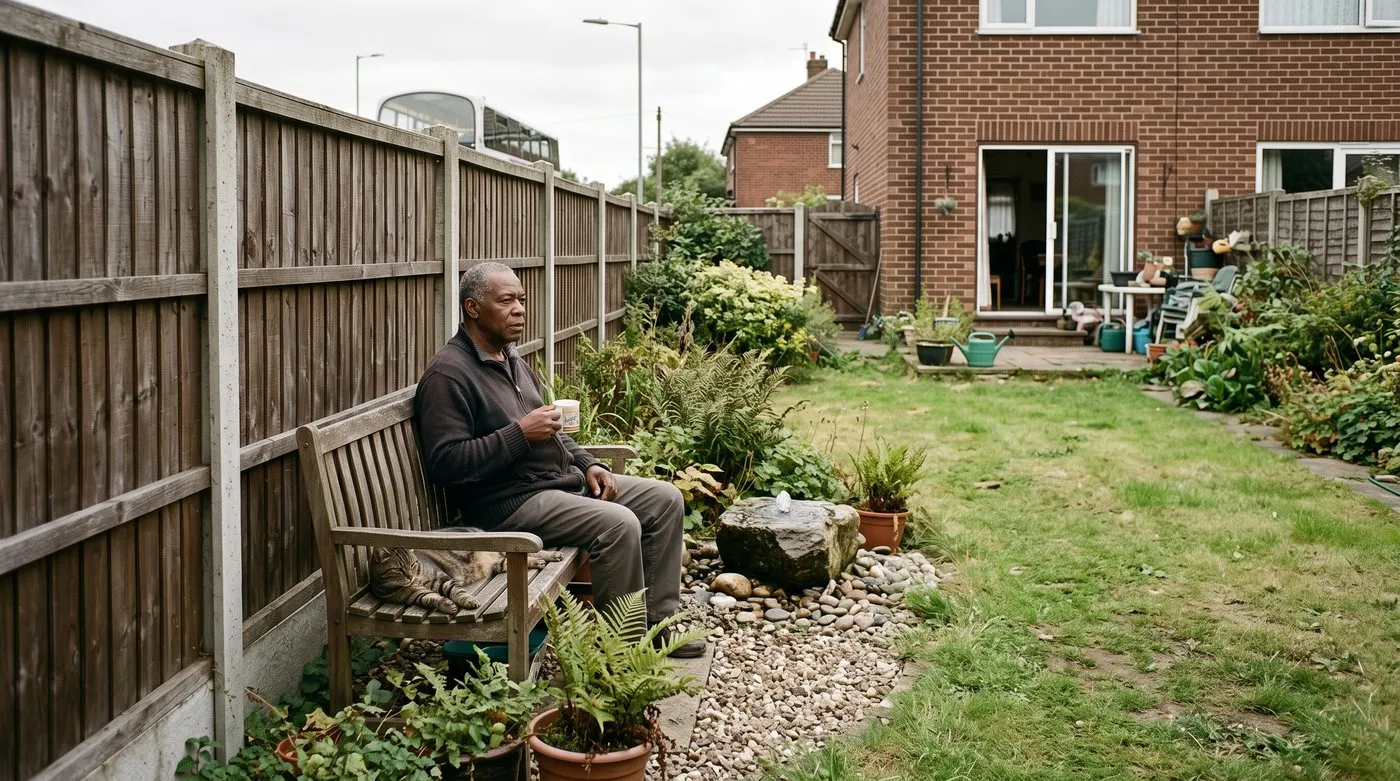
Tucking the bench right up against the fence puts you in its quiet shadow, and the water beside it covers the rest.
Out in the middle of the lawn, you lose most of the benefit. Tuck the bench or patio against the road-side boundary, then add your water feature beside it.
Hard surfaces bounce sound around. In a small city garden, swap some paving for planting, gravel or timber to cut the echo. In a front garden, a solid low wall plus dense planting behind it takes the edge off noise before it reaches the windows.
Common mistakes with garden noise barriers
Relying on a hedge alone. It hides the road but lets the sound through. Plant it in front of a solid barrier.
Leaving a gap under the fence. Sound floods through any opening. Fit gravel boards and close every joint.
Buying lightweight panels. Thin overlap panels are too light to stop much sound. Pay for close-board or acoustic panels.
Building too low. A waist-high fence lets noise pass straight over. Aim for about 2m where the rules allow it.
Putting the water feature by the boundary. It needs to be near your ear, not near the road.
Frequently asked questions
Do plants and hedges actually block traffic noise?
Not much on their own. Sound slips through the gaps between leaves and stems, so even a thick hedge only takes the edge off. What a hedge does well is hide the road, and out of sight really does feel quieter. Plant it in front of a solid fence or wall for the best of both.
What is the best fence for reducing road noise?
A solid, gap-free fence about 2m tall. Close-board, tongue-and-groove or purpose-made acoustic panels all work, as long as there are no gaps. Fit concrete gravel boards so the base meets the ground, and make sure no daylight shows between panels and posts. The heavier the panels, the better.
Will a water feature cover up traffic noise?
Yes, it masks the noise rather than blocking it. The sound of moving water is close enough to traffic hum that your ear stops picking the road out. Put it near your seating, not by the boundary, and choose one with a good strong flow. A gentle trickle won’t cover a busy road.
Do I need planning permission for a noise barrier fence?
Usually only if it goes over 2m, or 1m next to a road. In most back gardens you can put up a fence or wall up to 2m without permission. Next to a road used by vehicles, the limit is 1m. Listed buildings and some estates have extra rules, so check with your council before you build.
Is an earth bank good for blocking road noise?
Yes, if you have the space. A grassed or planted earth bank, called a bund, is solid and soft at once, so it blocks and soaks up sound. It needs a wide base to stay stable, so it suits big gardens only. Ask your council before building a large one, as it can need permission.
Where should I sit in a garden next to a busy road?
Close behind your fence or wall. Sound bends over the top of a barrier, so the quietest spot is right in its shadow. Out in the middle of the lawn, the noise drops back down to ear level. Add a water feature beside your seat and it gets calmer still.
Once the noise is under control, browse more garden design ideas or read the guide to evergreen climbers for year-round cover to green up your new fence.
Our team produces practical UK gardening guidance from source research, contributor records and established horticultural practice. Editorial standards are overseen by Matt W.