Key takeaways
- Hairy, rough or needled leaves catch the most traffic soot
- Cotoneaster franchetii, yew and western red cedar are among the best for roadside hedges
- Plant 3-5 plants per metre for a dense hedge at least 1.5-2m tall
- Choose evergreens, so the hedge keeps working through winter
- Keep it gap-free from the ground up, as gaps let polluted air through
- A hedge helps, but it can't remove fumes like nitrogen dioxide
Pollution-busting hedges can help if your garden sits beside a busy road. Their leaves catch tiny specks of traffic soot before they drift across the garden. Plants with hairy, rough or needled leaves, such as Cotoneaster franchetii, yew and western red cedar, catch the most.
A hedge won’t clean the air completely, so it’s worth knowing what it can and can’t do. This guide covers which plants work best, how to plant a dense barrier and how to keep it thick. If traffic noise bothers you more than fumes, our guide to quietening a garden next to a road covers fences, walls and water features too.
How do hedges trap pollution?
Leaves act like a filter. As traffic air blows into a hedge, tiny specks of soot from exhausts, brakes and tyres hit the leaves and stick.
The rougher and hairier the leaf, the more it holds. Smooth, glossy leaves let more of it blow off again. Rain then washes the soot down into the soil, so the leaves are ready to catch more.
Leaves can’t catch gases, though. Fumes like nitrogen dioxide pass straight through. A hedge helps with the sooty particles, not the whole problem.
Winter matters most. Roadside pollution is often worse in cold, still weather, when fumes hang low. That’s exactly when deciduous hedges are bare. An evergreen hedge keeps working all year.
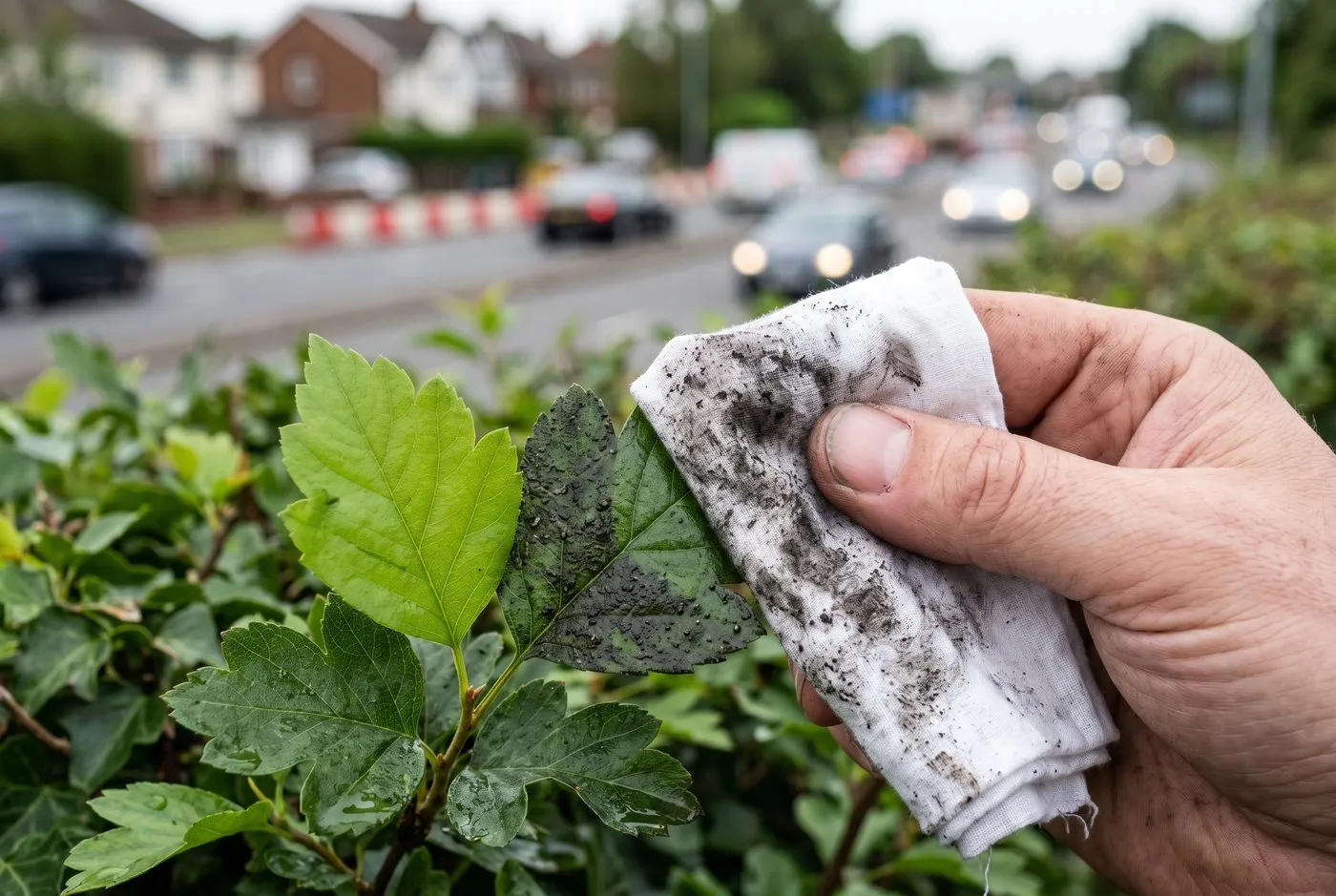
Wipe a roadside leaf and you’ll see the soot it has caught. That’s dirt that didn’t reach your garden.
Which plants trap the most pollution?
Choose plants with hairy, rough or needled leaves and dense growth. Evergreens are best, as they work through winter.
Cotoneaster franchetii is the standout. Its small grey-green leaves are hairy underneath and rough on top, which makes them very good at catching soot. RHS research picked it out as one of the best shrubs for busy roads. It fills out quickly, copes with tough conditions and keeps most of its leaves in winter.
Yew and western red cedar (Thuja) give dense, year-round cover, and their packed needles and sprays catch a lot. Hawthorn is a good native choice that’s thick and slightly rough-leaved, but it’s bare in winter. Ivy on a wall gives a lot of leaf in a thin space.
| Plant | Leaves | Evergreen? | Best use |
|---|---|---|---|
| Cotoneaster franchetii | Small, hairy, rough | Semi-evergreen | Front-line roadside hedge |
| Yew | Dense, flat needles | Yes | Formal front-line hedge |
| Western red cedar (Thuja) | Dense scale-like sprays | Yes | Taller boundary hedge |
| Hawthorn | Lobed, slightly rough | No | Mixed with evergreens |
| Ivy | Waxy, dense mat | Yes | Walls and fences in tight spots |
| Silver birch | Small, rough-textured | No | A tree behind the hedge |
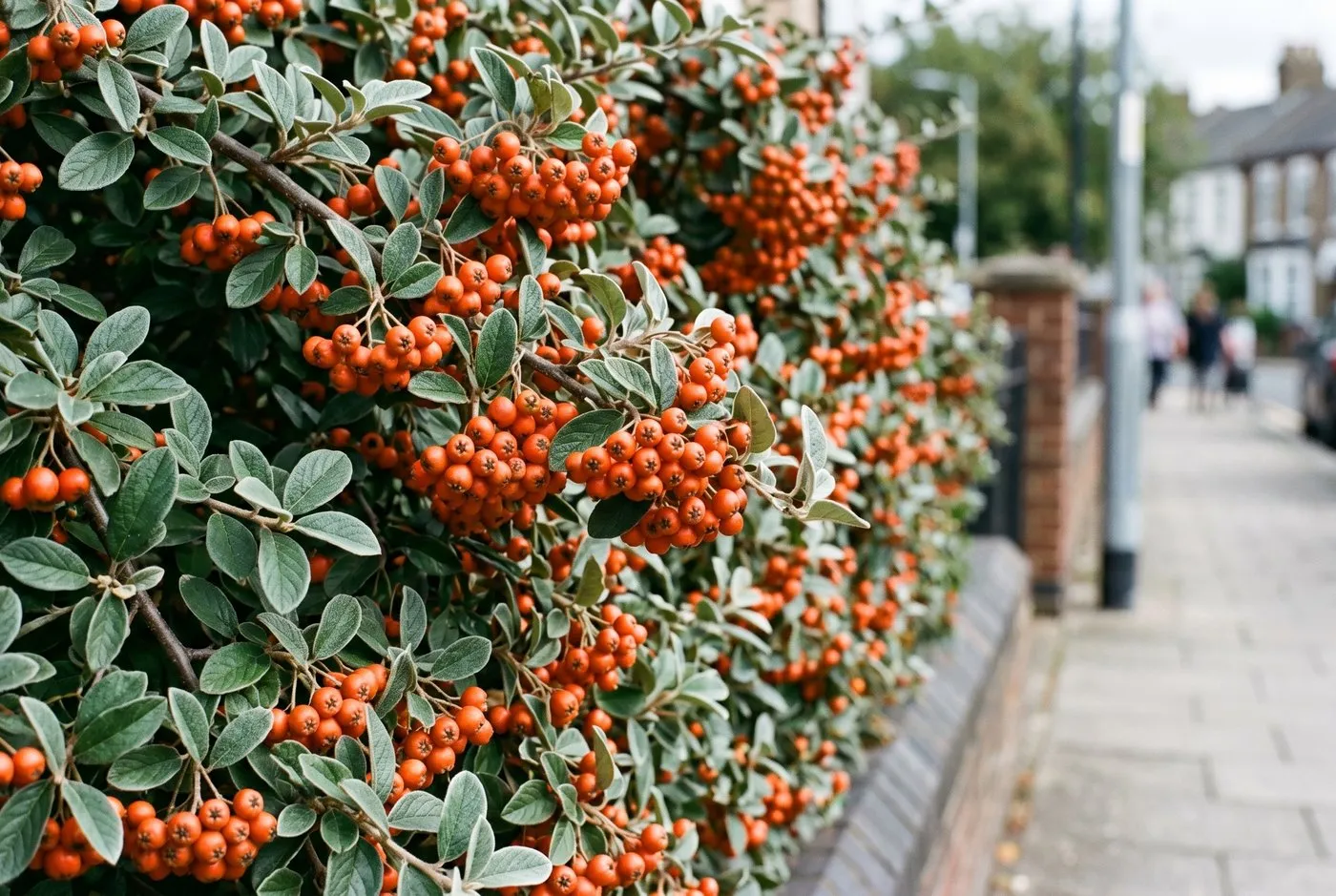
Cotoneaster franchetii’s small, slightly hairy leaves are great at catching soot. Birds love the berries too.
Why rough leaves beat big shiny ones
Texture matters more than size. A large, smooth leaf has lots of surface but little grip, so soot blows off again. A small, hairy leaf holds on to much more.
That’s why dense conifers do so well. A yew or thuja hedge packs in a huge number of tiny needles or scales. Silver birch works for the same reason, with lots of small, rough leaves.
Not sure about a plant? Run your fingers over a leaf. If it feels rough, hairy or waxy, it will catch more than a slick, shiny one. Glossy laurel and holly look dense but are less good at holding on to soot.
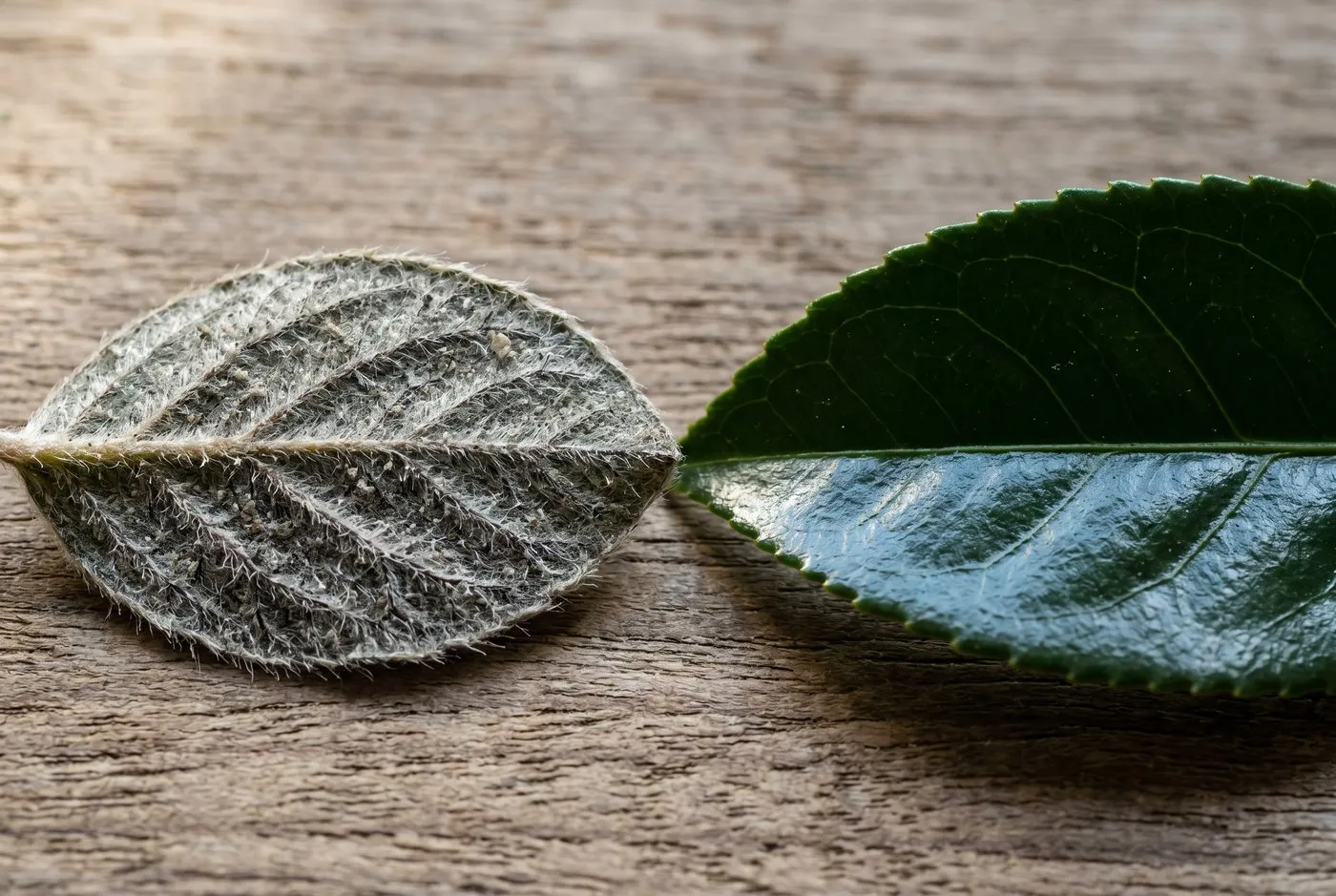
The hairy leaf on the left holds on to soot. The glossy leaf on the right lets more of it blow off.
Hedge, tree or green wall?
A continuous hedge is best for a front boundary. It runs along the road at breathing height and filters air along its whole length.
A single tree helps less, because air flows round it. Trees still shade the road and help the street as a whole. Use them behind a hedge, or where you want height. Our guide to the best trees for privacy has good options.
A green wall of ivy, or another climber on a trellis, is the answer for narrow city plots. It catches soot in a thin strip where a hedge won’t fit. Our guide to English ivy explains how to keep it in check.
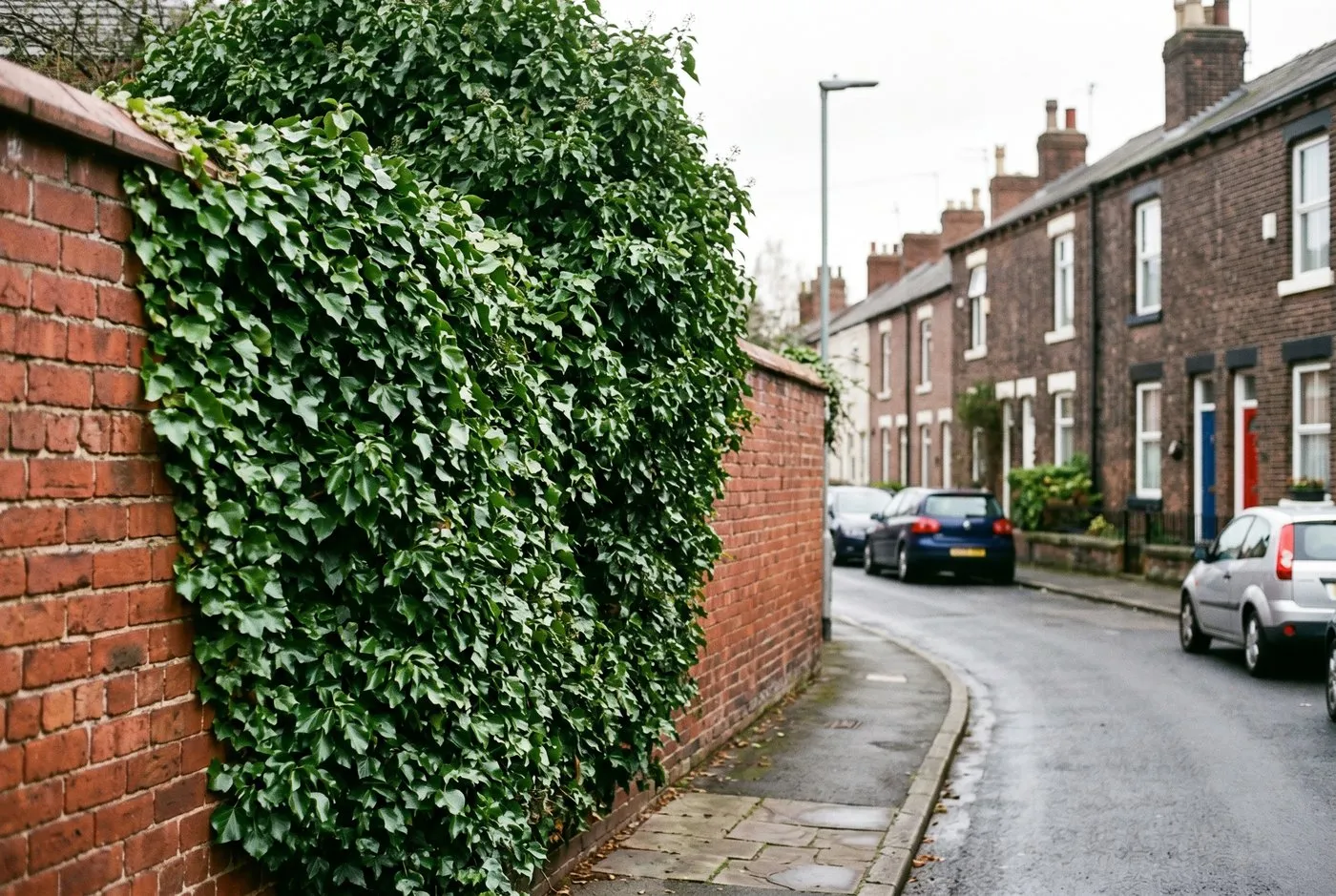
Ivy on a wall gives a lot of leaf in a thin strip, which suits narrow city front gardens.
How to plant a roadside pollution hedge
Plant densely, aim for height and leave no gaps. If any of those slip, polluted air finds its way round.
- Plant in the dormant season, from November to March, when bare-root plants are available and cheaper.
- Space plants closely. Set 3-5 plants per metre. Five per metre gives a solid screen faster. A staggered double row works well on wider boundaries.
- Aim for 1.5-2m tall or more, so the hedge rises above head height.
- Keep it dense right to the ground. A hedge that’s bare at the base lets air rush underneath.
- Plant close to the road, as far forward as your boundary allows.
- Water well through the first two summers. A hedge that settles in quickly closes its gaps quickly.
Our hedge planting guide covers soil preparation, spacing and aftercare step by step.
Warning: All parts of yew are poisonous, except the red flesh of the berry. Don’t plant it where horses, livestock or pets can nibble it, or along a school route. Choose cotoneaster, thuja or hawthorn there instead.
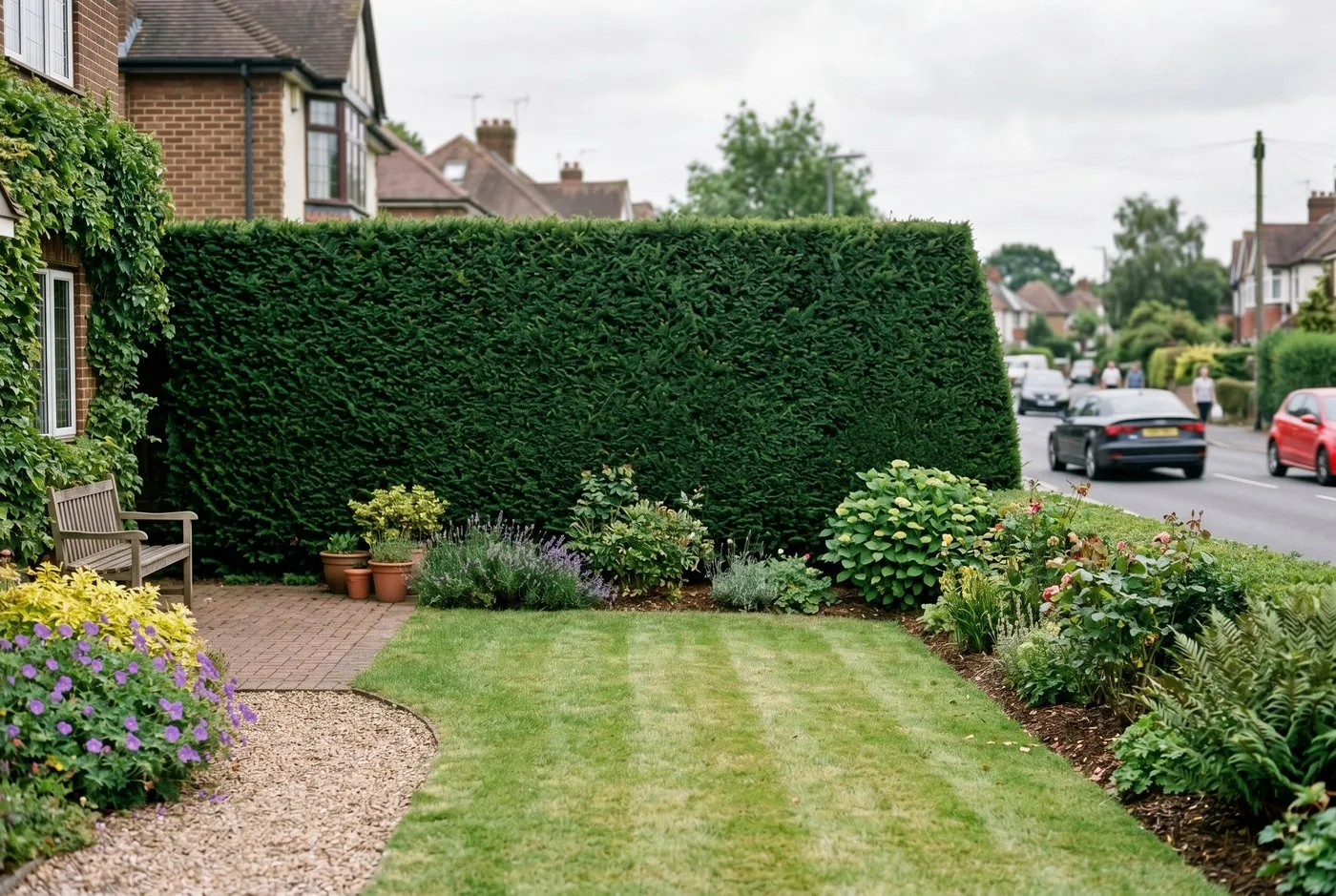
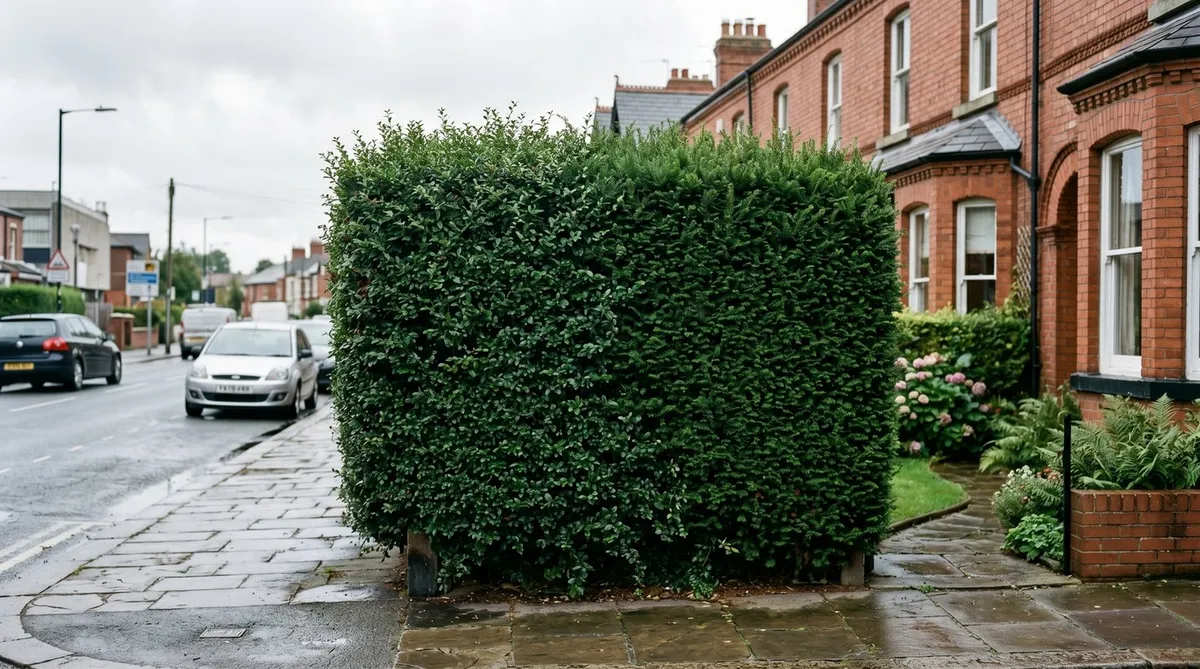
A tall, dense evergreen hedge between road and house keeps catching soot right through winter.
Front-garden pollution hedges
The front garden is where these hedges work hardest. A hedge along the front boundary catches soot before it reaches your windows and door.
Even a modest 1.5m hedge across a terraced front garden helps. Keep it trimmed little and often, so it stays thick. If you’re replacing old box, our guide to box hedge alternatives lists tough, dense options for lower hedges. Our front garden ideas show how to fit a hedge in alongside bins, paths and parking.
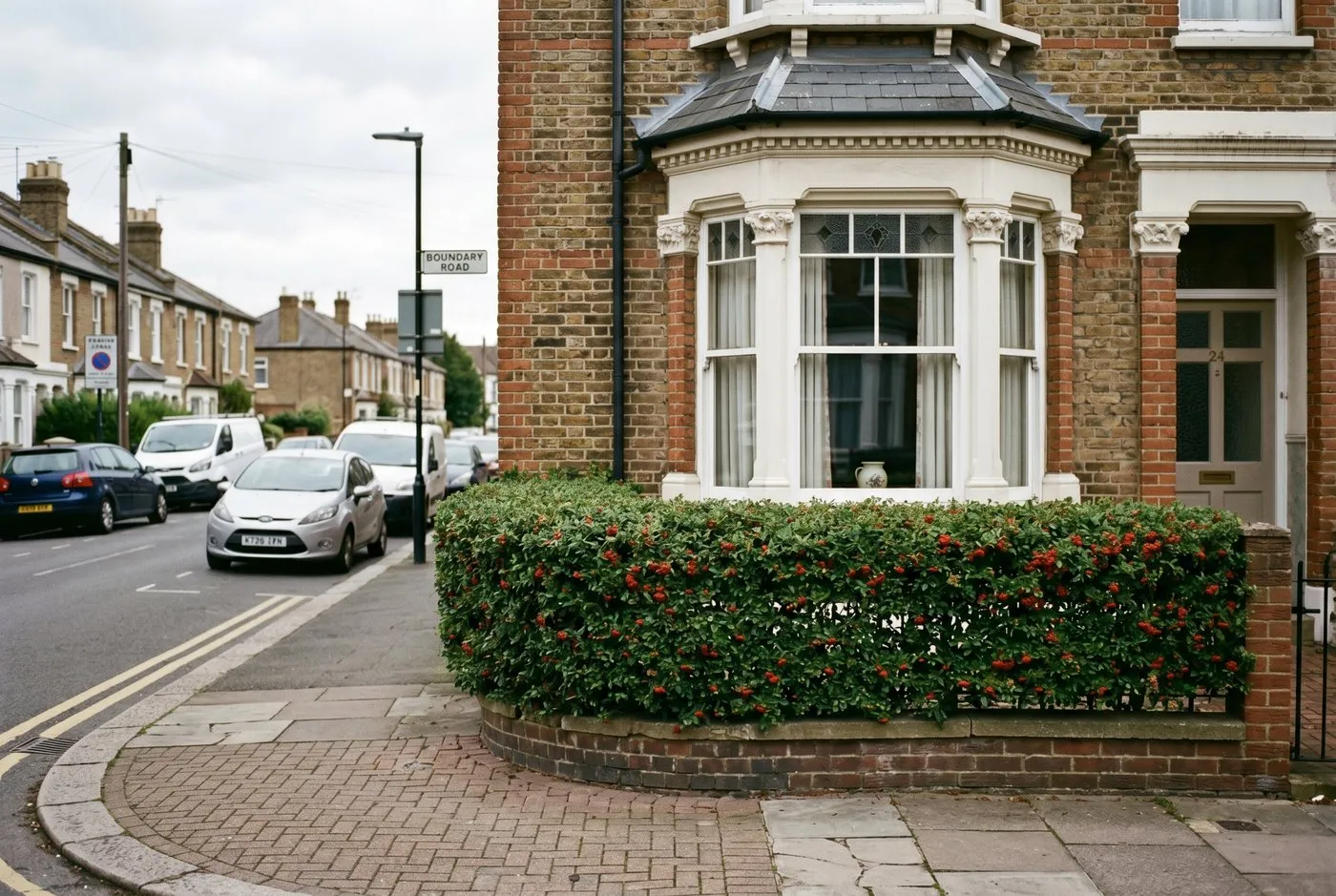
A dense hedge along a front wall catches soot before it reaches the windows.
What a pollution hedge can’t do
A hedge helps, but it isn’t a cure. It catches some of the soot that passes through, not all of it.
It can’t remove gases like nitrogen dioxide, which pass straight through leaves. The very finest specks are also the hardest to catch. Indoors, good ventilation still matters, and near very busy roads some people use an air purifier. Think of the hedge as one helpful layer, not the whole fix.
A dense hedge also softens traffic noise a little, and rustling leaves help mask it. A solid fence or wall behind the hedge blocks more sound.
Common mistakes with roadside hedges
- Choosing glossy leaves. Shiny laurel or holly looks thick but catches less. Pick hairy, rough or needled plants.
- Planting too far apart. One plant per metre leaves gaps for years. Plant 3-5 per metre.
- Letting the base go bare. Trim from the start to keep the bottom thick, and choose plants that stay dense low down.
- Relying on deciduous plants alone. Beech or hawthorn on their own are bare in winter, when pollution is often worst. Include evergreens.
- Cutting in nesting season. Birds love dense hedges. Avoid cutting from March to August, and never disturb an active nest.
Keeping the hedge thick and healthy
A pollution hedge only works while it’s dense. A neglected hedge thins out and gaps open up.
Trim in late summer or early autumn, once the nesting season is over. Check carefully for active nests before you start. Our guide on when to cut hedges has the dates. Cut the sides so the hedge is slightly wider at the bottom than the top. That lets light reach the base, which keeps it leafy.
Mulch in spring to keep the soil moist, especially on the poor, compacted ground common beside roads. Replace any plant that dies before a gap sets in. Check the road side each autumn for damage from salt spray, and prune out any dead patches. To see air quality where you live, look up your area on Defra’s UK air quality site. For more ideas, browse our plants section.
Now you know which plants trap the most soot, read our guide to fast-growing hedging plants to get your barrier up quickly.
Frequently asked questions
What are the best pollution-busting plants for UK gardens?
Cotoneaster franchetii is one of the best for UK roadside hedges. Yew, western red cedar and hawthorn are close behind. Their hairy, rough or needled leaves catch fine traffic soot. Ivy on walls helps where there’s no room for a hedge.
How do hedges reduce air pollution near roads?
Their leaves catch tiny specks of soot as air passes through. Hairy and rough leaves hold on to more than smooth ones. Rain then washes the soot into the soil, so the leaves can catch more.
How tall should a pollution barrier hedge be?
At least 1.5-2m, and taller is better beside a busy road. It needs to be above head height and dense from the ground up. Evergreen plants keep it working in winter.
Why is Cotoneaster franchetii good for pollution?
Its small, hairy, rough leaves are very good at catching soot. RHS research picked it out as one of the best shrubs for busy roads. It’s semi-evergreen, quick to fill out and copes with tough roadside conditions.
Can a hedge completely clean roadside air?
No, a hedge helps but it isn’t a cure. It catches some of the soot but can’t remove gases like nitrogen dioxide. Indoors, good ventilation still matters.
Do pollution-busting hedges also reduce traffic noise?
Yes, a little, and they make the road feel further away. A thick, tall, gap-free hedge softens traffic noise, and rustling leaves help mask it. A solid fence or wall behind the hedge blocks more sound.
Our team produces practical UK gardening guidance from source research, contributor records and established horticultural practice. Editorial standards are overseen by Matt W.