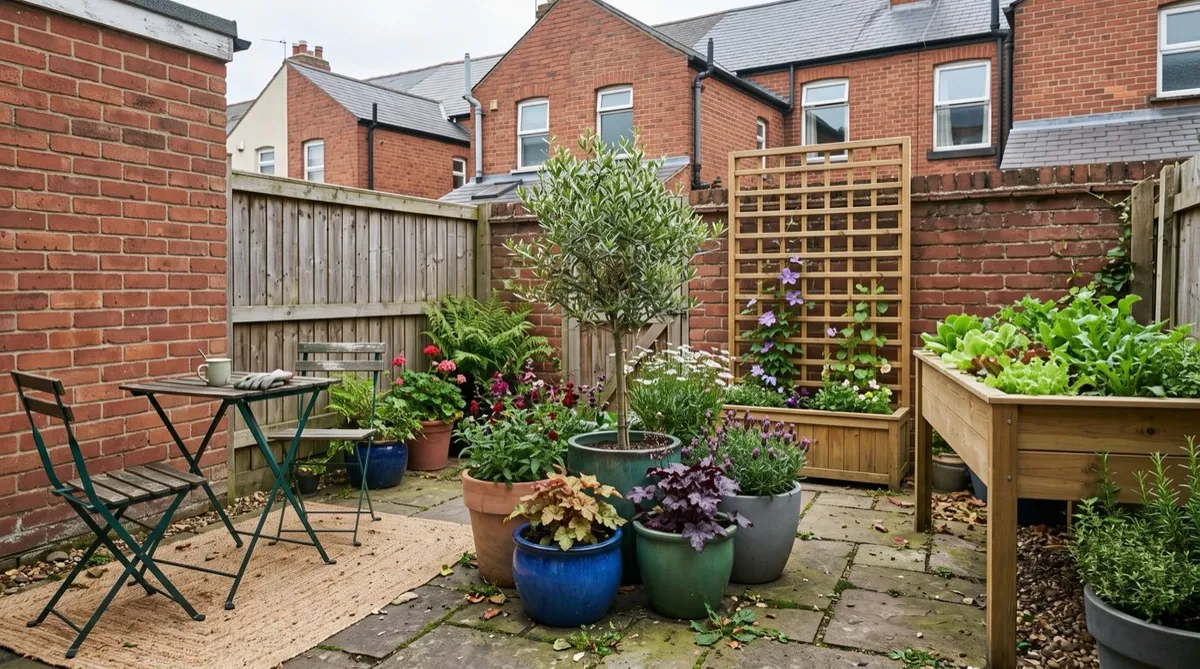
Key takeaways
- City gardens are often warmer but shadier than rural ones, so map the sun before you plant
- Grow edibles in raised beds or pots of fresh compost if your soil is full of rubble or of unknown history
- Walls and fences are your biggest growing space, so cover them with climbers and wall planters
- Trellis and slatted screens calm wind tunnels better than solid panels
- Pale walls and paving bounce light into dark corners
- Even a washing-up bowl pond brings city wildlife in
A good city garden works with its conditions, not against them. Most UK urban plots are warmer than the countryside but shadier, windier and short of decent soil. Plan for those four things and even a tiny yard can be green, private and productive.
This guide is about the problems that are special to towns and cities: shade from buildings, wind tunnels, rubble soil, overlooking windows and traffic noise. If you’re working with a paved space, our patio garden ideas for small spaces covers layout and surfaces. If you live in a flat, the balcony gardening guide is the one for you.
What makes a city garden different?
City gardens differ in four ways: warmth, shade, wind and soil. Knowing which ones affect your plot tells you what to plant and where.
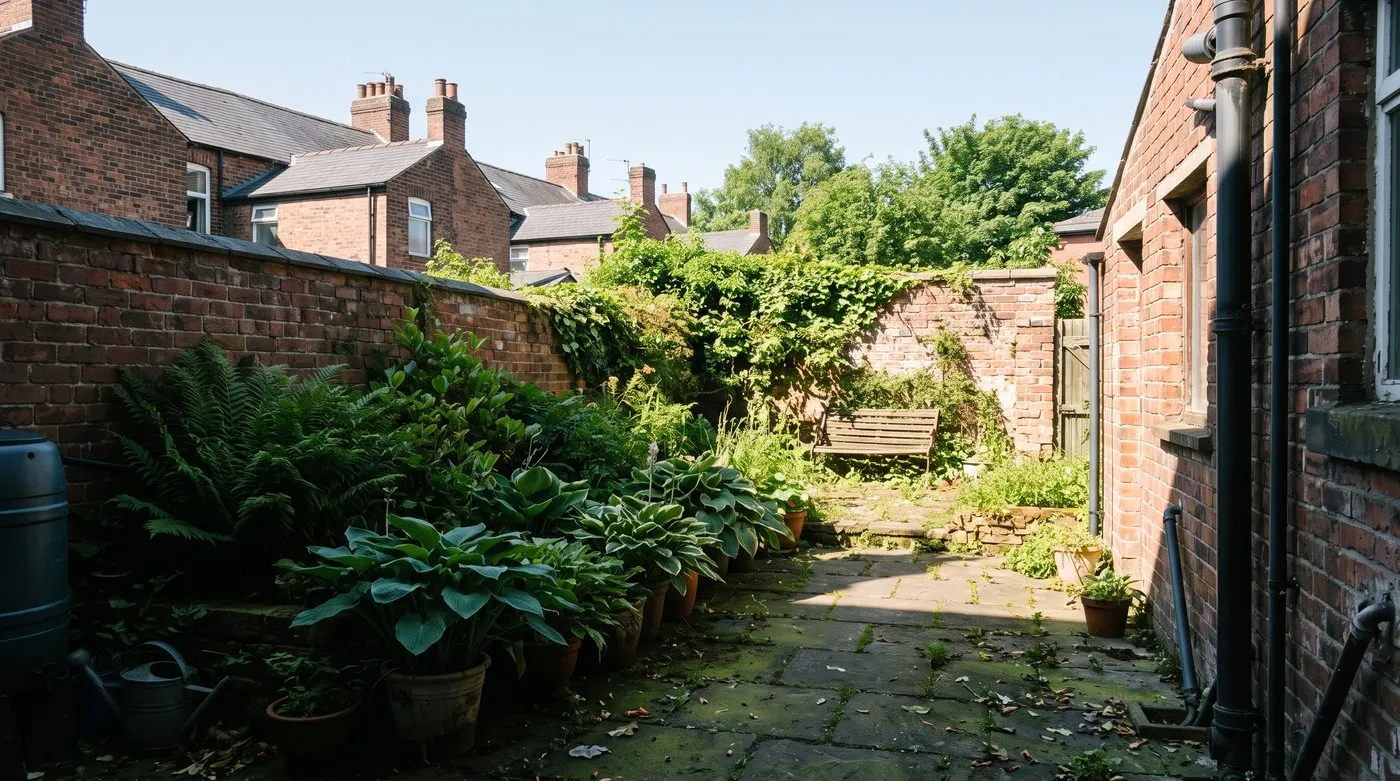
Tall houses can keep half a city garden in shade. Put the seat where the sun lands and shade lovers everywhere else.
Warmth. Brick, paving and roofs soak up heat by day and release it at night. Town gardens often have lighter frosts and a slightly longer season. That helps tender plants like agapanthus, salvias and tomatoes.
Shade. Tall houses, extensions and boundary walls block direct sun for much of the day. A south-facing garden can still be in shadow until midday.
Wind. Gaps between houses funnel wind into sudden gusts. One corner can be calm while a side passage is a wind tunnel.
Soil. Many terraced and older gardens sit on builder’s rubble, ash and clay. New-build gardens often have a thin layer of topsoil over compacted subsoil.
How do you plant a shady city garden?
Map the sun first, then choose plants for each spot. Note which corners get sun in the morning, at midday and in the evening, ideally in spring and summer.
Spots with under three hours of direct sun suit shade lovers. Ferns, hostas, hellebores, heucheras and Japanese anemones all cope well. Pale paving and white or cream walls bounce light into dark corners, so plants and people both feel brighter. A mirror on a gloomy wall does the same trick.
Save the sunniest patch for seating or food growing. Our north-facing garden ideas go into shade planting in more depth, with plant lists for every corner.
Gardener’s tip: Take a phone photo of the garden every two hours on a sunny day. Lined up together, they show exactly where the light falls.
How do you deal with wind between buildings?
Filter the wind rather than block it. Solid fences and walls make wind tumble over the top and swirl down the other side. Trellis, slatted screens and hedges let some air through and slow it down.
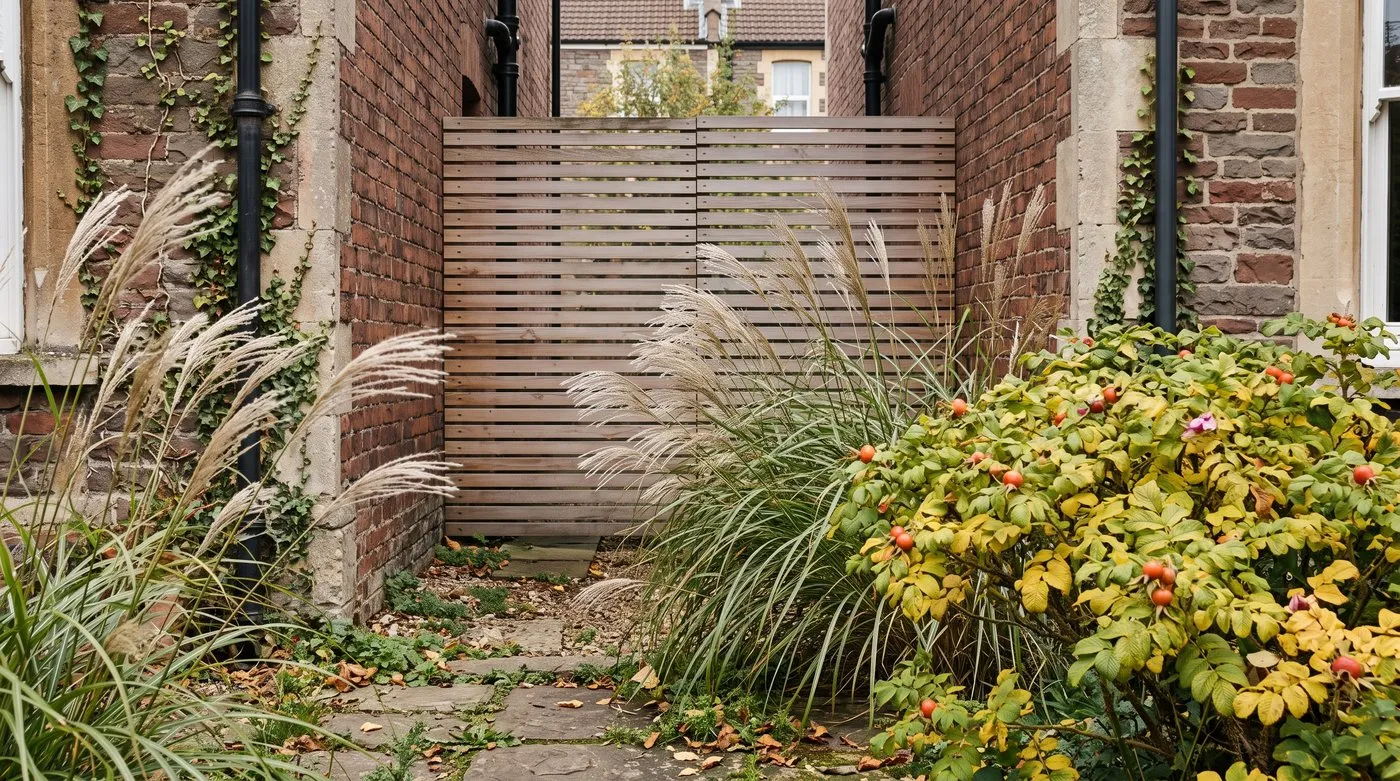
A slatted screen lets some air through and slows it down, so the garden behind stays calmer.
Watch where leaves and litter gather on a windy day. That shows you the sheltered corners. The path the leaves blow along is your wind channel. Put a slatted screen or tough shrubs across that path, not just along the boundary.
Good wind-tolerant choices include Rosa rugosa, privet, griselinia and tall grasses like Miscanthus. Stake new trees low down so the root ball can’t rock. Keep tall pots in the sheltered spots, or use heavy, wide-based containers.
Fences and walls over 2m high usually need planning permission. Check with your council before building anything taller.
How to fix poor soil in a city garden
Raised beds or large pots of fresh compost are the quickest fix for rubble, clay or compacted soil. They also sidestep any question about what’s in old urban ground.
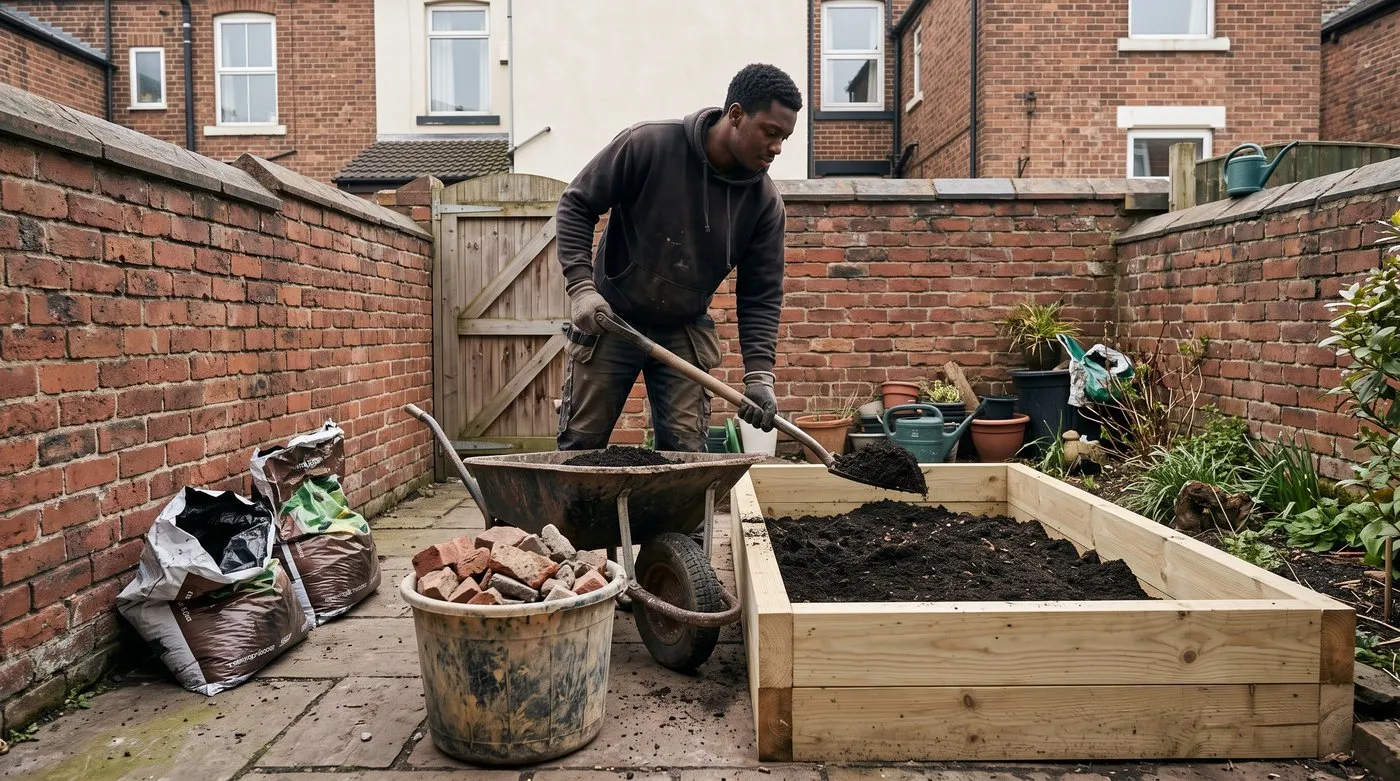
If your spade hits bricks and ash, build up instead. A raised bed of fresh compost gives crops a clean start.
Dig a test hole about a spade deep. If you hit bricks, ash or broken glass, clear what you can and build up with a raised bed. On heavy clay, add plenty of garden compost or well-rotted manure each autumn. Avoid digging when the soil is wet, as it compacts even more.
Warning: Older city soil can contain lead and other contaminants from old paint, fires and traffic. Grow food in raised beds lined with fresh soil and compost, or in pots, if you don’t know your plot’s history. Wash produce well and peel root crops.
Using walls and fences as growing space
Walls are the biggest growing space in most city gardens. Climbers, trained fruit and wall planters add greenery without using any floor.
Fix horizontal wires or trellis about 5cm off the wall, so air can move behind the plants. Then choose climbers to suit the aspect.
| Climber | Best aspect | Why it suits a city garden |
|---|---|---|
| Climbing hydrangea | North or east | Self-clinging, white flowers in shade |
| Star jasmine | South or west | Evergreen, scented, likes a warm wall |
| Boston ivy | Any | Self-clinging, red autumn leaves |
| Clematis montana | East or west | Quick cover, spring flowers |
| Rose ‘New Dawn’ | South or west | Repeat flowers, copes with part shade |
| Ivy | Any | Evergreen, good for birds and insects |
Self-clinging climbers can mark old brickwork and soft mortar. Use them on sound walls only, or grow climbers on trellis instead.
Wall pockets and shelves hold herbs, salad and trailing flowers. They dry out quickly, so check them most days in summer. For more structures and planters, see our vertical gardening ideas.

Wall pockets turn a bare bit of brick into a herb garden. They dry out fast, so give them a drink most days in summer.
How to stop a city garden feeling overlooked
Screen upwards, not just outwards. Most overlooking comes from upstairs windows, so a taller fence rarely solves it.
A small tree, a pair of pleached trees or a pergola over the seating area blocks views from above. Climbers on trellis along the top of a fence add height without a solid wall. Choose a light, airy tree such as amelanchier or a multi-stem birch, so you don’t swap privacy for gloom.
Sitting in the right place helps too. A bench tucked against the house wall is often less overlooked than one at the end of the garden. Our guide to privacy design for an overlooked garden has more layouts.

Climbers on every wall turn a hard little courtyard into a private green room.
How to make a city garden feel quieter
Dense planting and gentle water make the biggest difference. Plants soften sound and hide the source, which makes a garden feel calmer even when the noise is still there.
Put evergreen shrubs and hedging between the seat and the road. A small bubbling water feature near where you sit masks traffic hum. Close-boarded fences reflect less sound into the garden than you might fear, but planting in front of them helps more. Our guide on how to quieten a garden next to a road goes into the details.
Growing food in a city garden
Grow food in the sunniest spot, in pots or raised beds of fresh compost. Five or six hours of sun is enough for most crops. City warmth helps tender crops like tomatoes, chillies and courgettes.
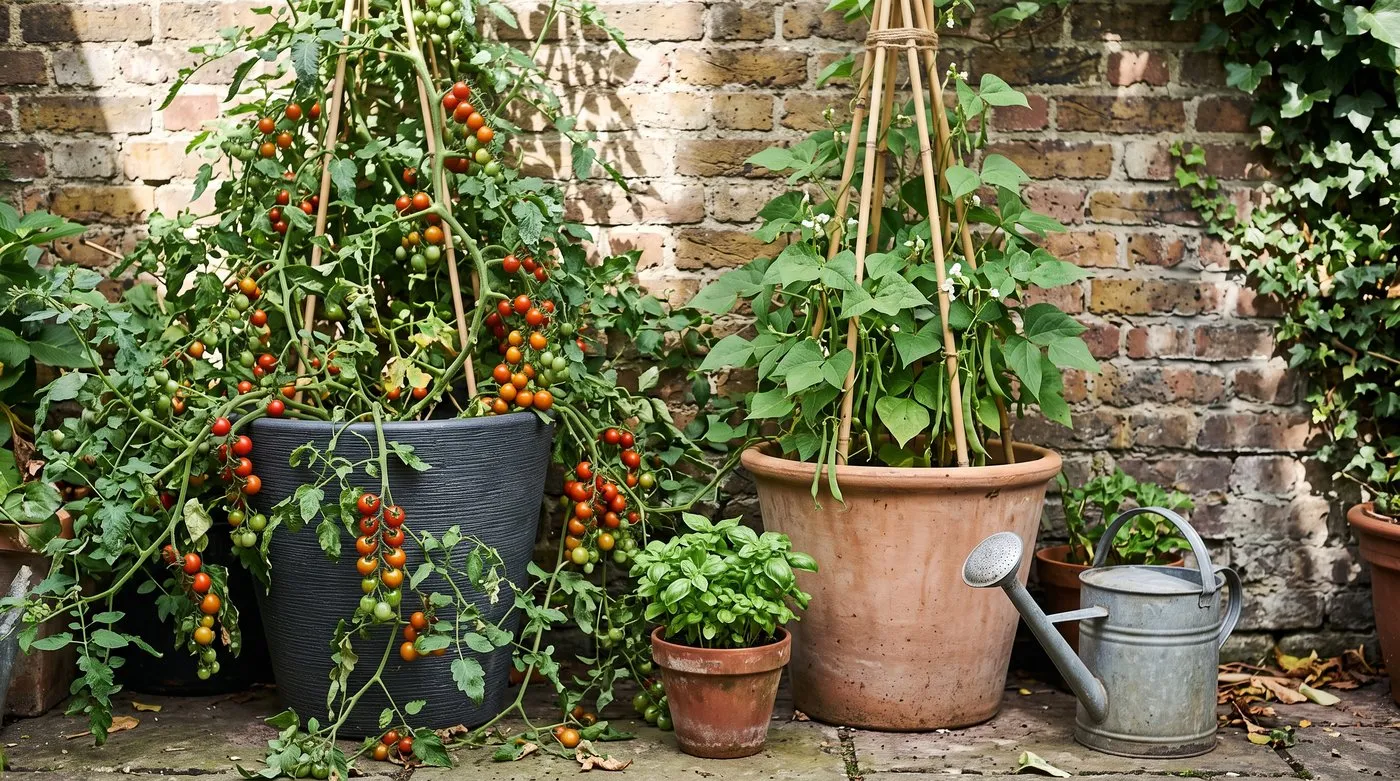
A warm city wall is a gift for tomatoes and beans. Big pots of fresh compost keep them away from dodgy soil.
Good choices for a small urban plot:
- Salad leaves, herbs and radishes for quick crops in 20-30cm pots.
- Tomatoes and chillies in large pots against a warm wall.
- Climbing French beans up a wigwam or trellis, using height not floor space.
- Strawberries in hanging baskets or a tower.
- A dwarf apple or fig in a big pot on a sunny wall.
Pots need watering more often than beds, sometimes daily in a heatwave. A simple drip kit on a timer makes summer much easier. Our container vegetable gardening guide covers pot sizes, compost and feeding.
How to bring wildlife into a city garden
Water, flowers and shelter bring wildlife into even a tiny yard. City gardens can be really valuable stepping stones for bees, birds and hedgehogs.
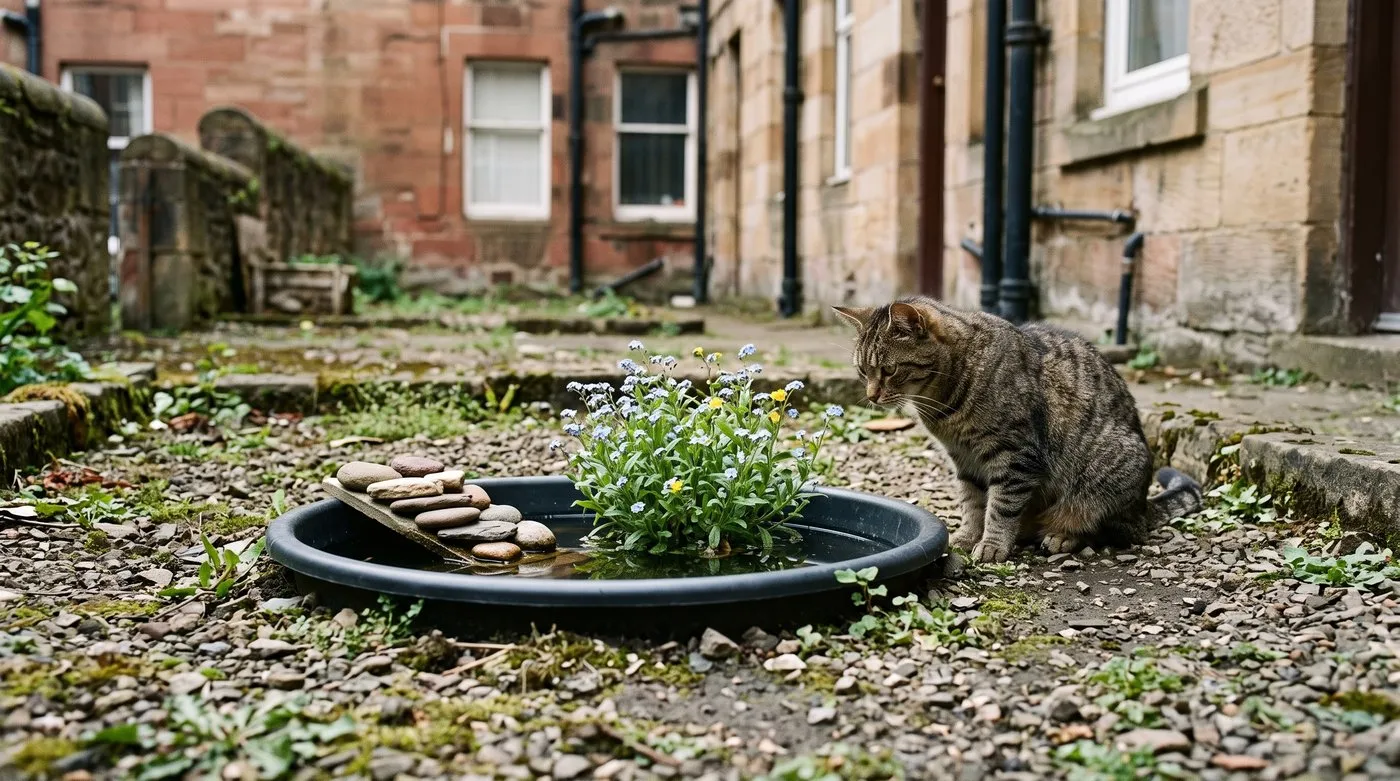
A bowl of rainwater sunk into the ground is enough to bring birds and insects into a city yard.
Sink a washing-up bowl or small trough level with the ground, add a few stones as a ramp, and fill it with rainwater. Grow flowers from early spring to late autumn, such as crocus, alliums, lavender, scabious and asters. Climbers give birds nesting spots, so trim them outside the March to August nesting season. Leave a small log pile in a shady corner for beetles and other minibeasts.
If you share a fence with a neighbour, a 13cm hole at the base lets hedgehogs travel between gardens. Skip pesticides and pick pests off by hand instead.
Month-by-month city garden calendar
| Month | What to do |
|---|---|
| January | Map winter shade, plan the year, check pots for frost cracks |
| February | Sow chillies on a warm windowsill, mulch beds with compost |
| March | Plant climbers and shrubs, sow salads under cover |
| April | Sow salads and herbs outside, start tomatoes indoors |
| May | Plant out tender crops after the last frost, set up drip watering |
| June | Water pots daily in hot spells, tie in climbers |
| July | Feed tomatoes weekly, pick salads and herbs often |
| August | Take cuttings of salvias and pelargoniums, top up ponds with rainwater |
| September | Plant spring bulbs in pots, sow winter salads |
| October | Move tender pots against the house wall, clear spent crops |
| November | Plant tulips and bare-root hedging, raise pots on feet |
| December | Check stakes and ties before winter gales |
Common city garden mistakes
- Planting without mapping the sun. Sun lovers in a shaded corner sulk, and shade plants scorch against a hot wall.
- Building a solid barrier against wind. It creates swirling gusts on the other side. Filter it with trellis or hedging instead.
- Growing food in unknown soil. Use raised beds or pots of fresh compost until you know what’s underground.
- Too many different plants. In a small space, repeat a short list of plants for a calmer look.
- Forgetting about water. Pots in a warm, windy yard dry out fast. Plan watering before you plant.
Frequently asked questions
How do I design a small city garden in the UK?
Start by mapping the sun, then decide what the space is for. Put seating where the evening sun lands and growing where the most light falls. Use walls for climbers, pots for flexibility, and keep the plant list short so it looks calm.
Are city gardens warmer than country gardens?
Yes, towns and cities usually stay a little warmer, especially at night. Buildings and paving hold the day’s heat, so frosts are often lighter. Shade from buildings can cancel that out, so check how much sun your garden really gets.
What are the best plants for a shady city garden?
Ferns, hostas, hellebores, heucheras and climbing hydrangea are reliable choices. Pale or variegated leaves brighten dark corners. Japanese anemones and foxgloves add flowers in part shade.
Is it safe to grow vegetables in city soil?
Often yes, but play safe if you don’t know your soil’s history. Older urban soil can contain rubble, ash and lead. Grow edibles in raised beds or pots of fresh compost, wash produce well and peel root crops.
How do I add privacy to a small urban garden?
Use climbers on trellis, a small tree or pleached trees above the fence line. These screen windows without making the garden feel boxed in. A pergola or sail over the seating area blocks views from above.
How do I reduce noise in a city garden?
Dense evergreen planting and a little running water help most. Plants soften noise and hide its source, which makes it feel quieter. A small bubbling water feature near the seat masks traffic hum.
How do I attract wildlife to an urban garden?
Add water, flowers from spring to autumn, and somewhere to hide. A small pond or shallow dish, climbers for nesting birds and a log pile all help. Skip pesticides and leave a corner a little untidy.
Got a long, narrow plot behind a terrace? Our guide to terraced house garden design shows how to lay it out, and the garden design hub has plenty more ideas.
Our team produces practical UK gardening guidance from source research, contributor records and established horticultural practice. Editorial standards are overseen by Matt W.