Key takeaways
- Screen at eye level and above, and remove the low branches that cast most shade
- Crown lifting is usually the best single cut for getting light back
- Thin only a modest amount each year, or the tree sprouts a mass of new shoots
- Prune most deciduous trees in winter, but cherries and plums in summer
- Never top a tree; cut back to a healthy side branch instead
- Check for a Tree Preservation Order or conservation area before you cut
To prune trees for privacy and light, keep the screen where you need it and take out the branches that only cast shade. Privacy mostly comes from leaves above fence height. Light is mostly lost to low branches and a crowded centre. Remove those, and you get sun back without opening up the view.
Three pruning methods do the job: crown lifting, crown thinning and crown reduction. This guide explains each one, when to prune and the rules to check first. For the safe way to take off a heavy limb, see the guide to removing large tree branches.
How to keep privacy and still get light back
Think about where you need the screen. Someone looking over a fence or from a window sees through the canopy above about 2m. Below that, the fence already does the job.
So the low skirt of branches does little for privacy but casts heavy shade on the lawn and patio. A dense, tangled centre blocks sun too. Remove those parts and leave the outer screen at the top alone.
| Method | What it does | Use it when |
|---|---|---|
| Crown lifting | Removes the lowest branches | The ground under the tree is dark |
| Crown thinning | Takes out some inner branches | The tree is dense but the right size |
| Crown reduction | Shortens the height and spread | The tree has outgrown its space |
Never top a tree by chopping the main stems off at one height. It ruins the shape, lets in rot and causes a thicket of weak regrowth.
Crown lifting to let light under the tree
Crown lifting means removing the lowest branches so the canopy starts higher up. It’s usually the best single cut for getting light back, because low branches cast the heaviest shade.
- Remove whole branches back to the branch collar, the slightly swollen ring where a branch joins the trunk.
- Don’t leave stubs, and don’t cut flush with the trunk.
- Keep at least two-thirds of the tree’s height as leafy crown. Lifting too far weakens the tree and loses the screen.
- On young trees, lift gradually over a few years rather than all at once.

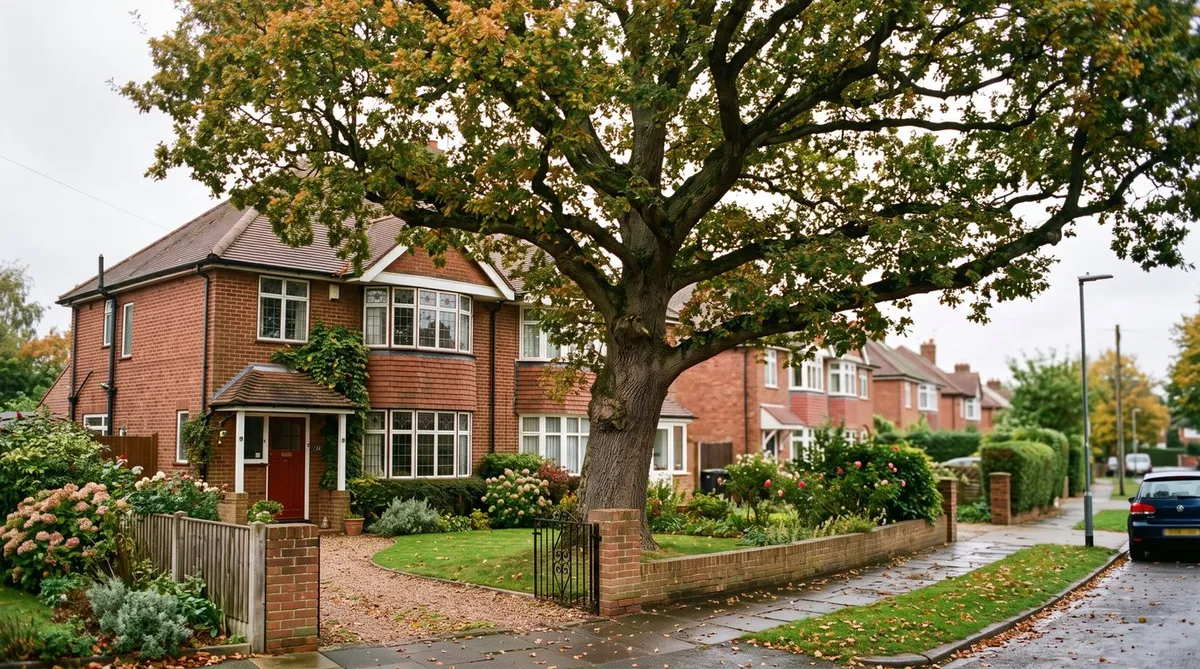
Taking off the lowest branches lets sun reach the lawn, while the leafy top still screens the view.
Crown thinning for dappled light
Crown thinning removes some of the inner branches evenly through the canopy. The tree keeps its outline but lets dappled light through.
Take out crossing branches, rubbing branches and weak inner growth. Work evenly over the whole tree so it stays balanced.
Keep it modest: only a small share of the branches each year. Heavy thinning stresses the tree, and it replies with masses of upright shoots that make it denser than before. Don’t strip the inside bare and leave leaves only at the tips. That’s called lion-tailing, and it makes branches weak and prone to snapping.
Crown reduction for an over-large tree
Crown reduction shortens the height and spread of a tree. Use it when the whole tree has outgrown its space, not just to get light underneath.
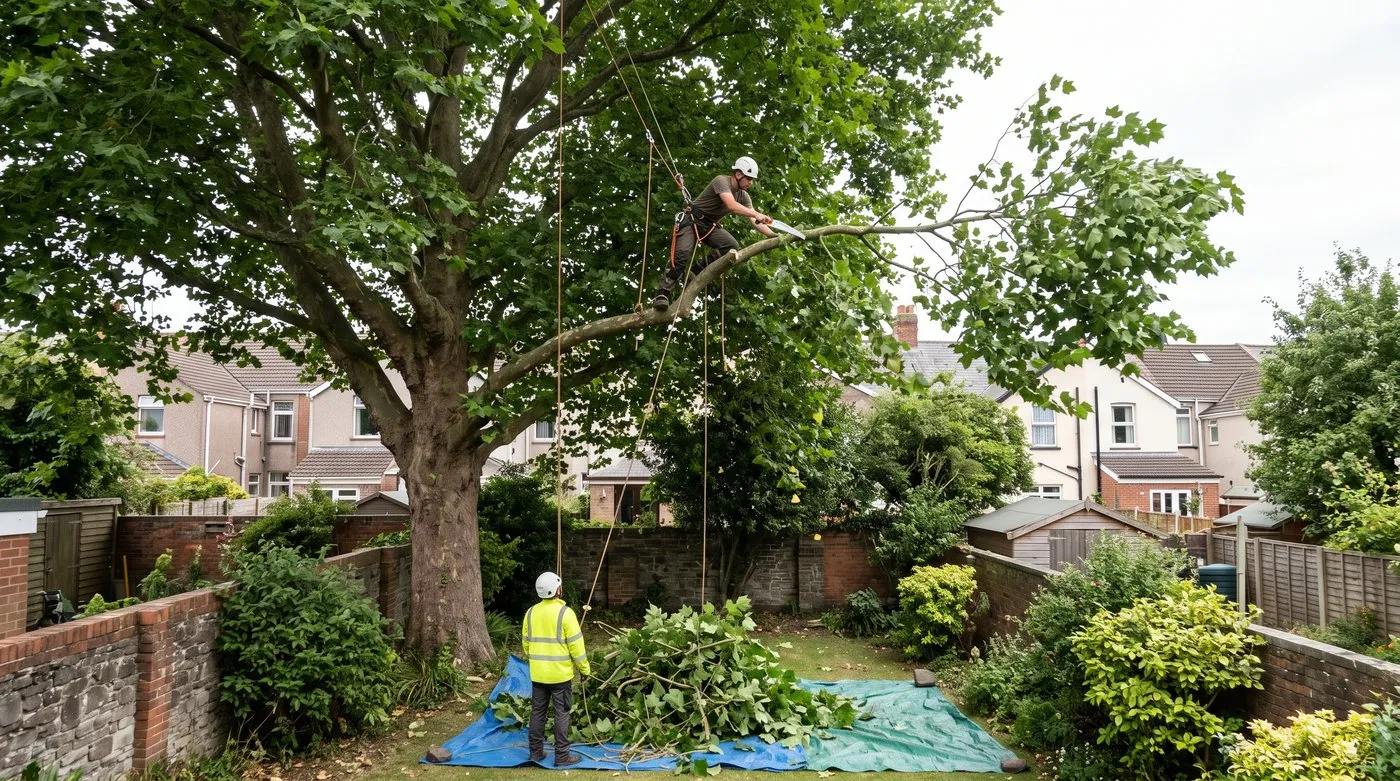
Reducing a big tree means working at height with ropes, so leave it to a qualified tree surgeon.
Cut each branch back to a healthy side branch pointing outwards. The side branch should be at least a third as thick as the branch you’re removing, so it can take over as the new tip. Don’t cut back to bare stubs.
Reduction on a large tree is skilled and risky work. For anything above head height or involving big limbs, hire a qualified, insured arborist (tree surgeon). The Arboricultural Association lists approved contractors. The same cut-to-a-side-branch idea applies when you prune garden shrubs.
When to prune trees in the UK
Prune most deciduous trees in winter, from November to February. With the leaves off, you can see the branch structure clearly, and birds aren’t nesting.
There are some important exceptions:
- Cherries, plums and other Prunus: prune in summer, roughly June to August. Winter cuts raise the risk of silver leaf, a fungal disease that gets in through wounds.
- Birch, walnut and maples: these bleed sap heavily if cut in late winter or spring. Prune them in late summer or in early winter when fully dormant.
- Spring-flowering trees: if you want the blossom, prune just after flowering, checking for nests first.
Birds nest in trees from about March to August. Damaging an active nest is an offence, so look carefully before any cut in spring and summer.

Winter is the best time for most deciduous trees: the branches are easy to see and no birds are nesting.
Tree pruning calendar
| Month | Task |
|---|---|
| November to February | Main pruning for most deciduous trees: lift, thin and reduce |
| March to May | Avoid big jobs. Check for nests before any light trimming |
| June to August | Prune cherries, plums and other Prunus. Rub off unwanted new shoots |
| Late summer | Prune birch, walnut and maples |
| September to October | Plan winter work. Plant new bare-root screening trees from late autumn |
Check the rules before you cut
Some trees are protected, and cutting them without permission can lead to a heavy fine.
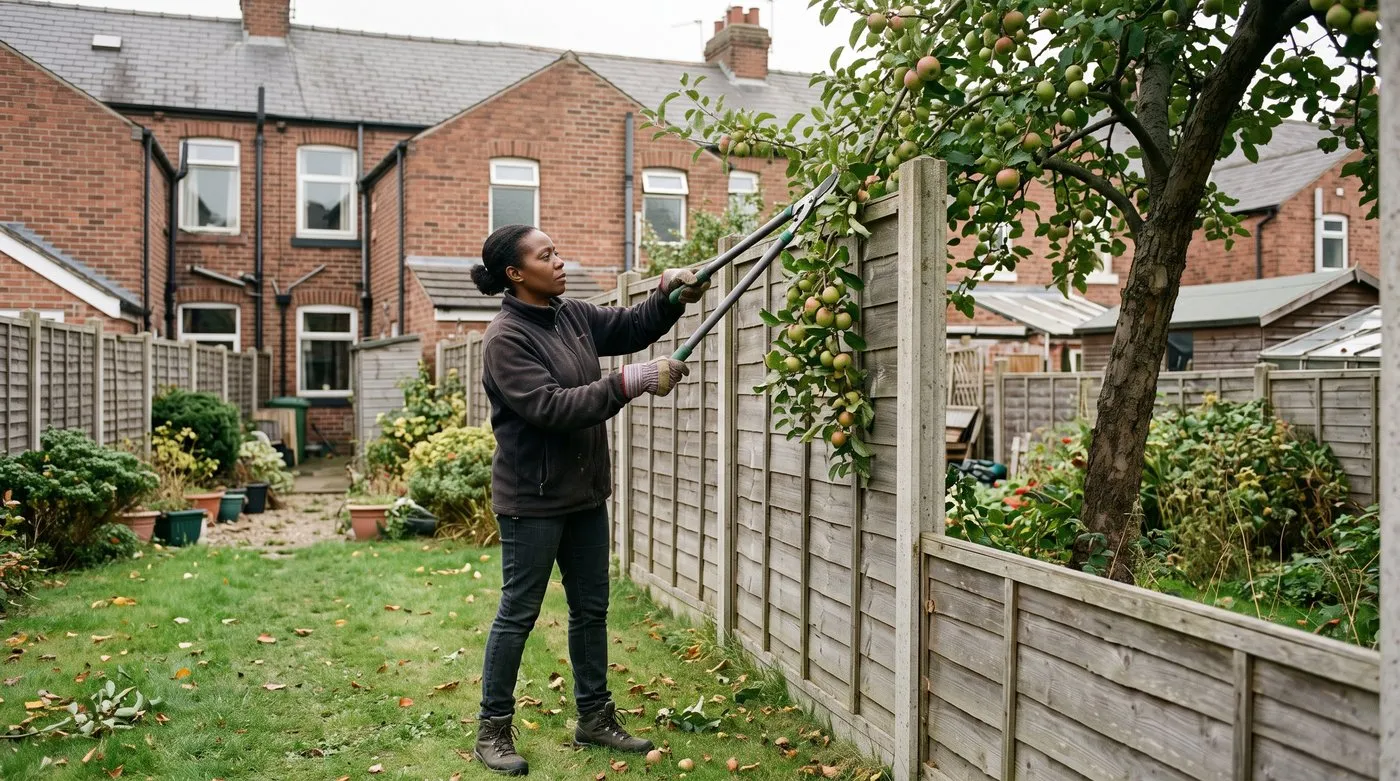
You can trim overhanging branches back to the boundary, as long as the tree isn’t protected.
- Tree Preservation Order (TPO): you need the council’s consent before pruning or felling. Your council’s website or planning team can tell you if a tree has one.
- Conservation areas: you must give the council six weeks’ written notice before most work on trees in a conservation area.
- Overhanging branches: you can cut a neighbour’s branches back to the boundary, as long as the tree isn’t protected. Don’t go beyond the boundary or onto their land. The branches belong to the tree’s owner, so ask what they’d like you to do with them.
The guide to Tree Preservation Orders explains how to check and apply. There’s no general legal right to light for a garden. The high hedges rules cover lines of two or more mostly evergreen trees or shrubs over 2m tall, not single trees. The garden neighbour disputes guide explains how those work.
Trees that give privacy without heavy shade
If you’re planting a new screen, choose trees that cast lighter shade. Deciduous trees drop their leaves in winter, letting low sun in just when you want it most.
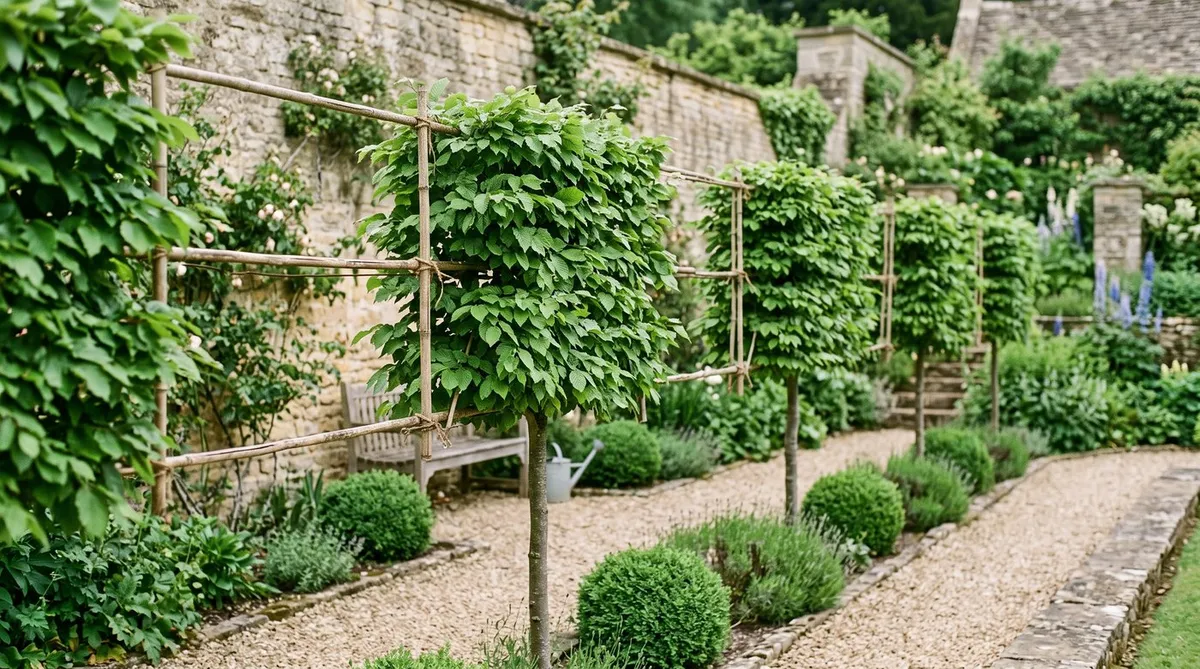
Pleached trees are trained into a flat panel of branches on clear trunks. They screen at upstairs-window height while leaving the space below open and light. Hornbeam and lime are the usual choices.
| Tree | Evergreen? | Shade | Good for |
|---|---|---|---|
| Amelanchier | No | Light, airy | Small gardens, blossom and autumn colour |
| Crab apple | No | Light to moderate | Blossom, fruit for birds |
| Hornbeam (pleached or natural) | No | Dappled | Formal screens, takes pruning well |
| Pleached lime | No | Light below the panel | Narrow boundaries |
| Portugal laurel | Yes | Heavy | Year-round screen away from the house |
| Holly | Yes | Heavy | Dense, slow screen for shady corners |
The guide to the best trees for privacy has more choices, and privacy screening with hedges and trees helps you decide between the two.

Pleached hornbeam gives privacy at upstairs height with open space and light underneath.
Why a pruned tree grows back thicker
Trees react to heavy pruning by sending up lots of fast, upright shoots called water shoots. Cut too much, top the tree or leave stubs, and within a couple of summers it can be denser than before.
The fix is restraint, not more cutting. Prune little and often, and always cut back to a branch collar or a healthy side branch.
If a tree is already covered in water shoots, don’t cut them all off at once, as that starts the cycle again. Over two or three winters, thin them out. Keep one or two well-placed shoots to become new branches and remove the rest cleanly at their base.

This thicket of upright shoots is what heavy cutting leads to. Thin it gradually over a few winters.
Common mistakes when pruning for privacy and light
- Topping the tree. It causes rot and dense, weak regrowth. Reduce to side branches instead.
- Taking too much at once. Spread big jobs over several winters.
- Pruning cherries and plums in winter. Wait for summer to reduce the risk of silver leaf.
- Cutting flush or leaving stubs. Finish each cut just outside the branch collar.
- Not checking for protection. A quick check with the council avoids a fine.
- Climbing with a saw. Leave work above head height to a qualified arborist.
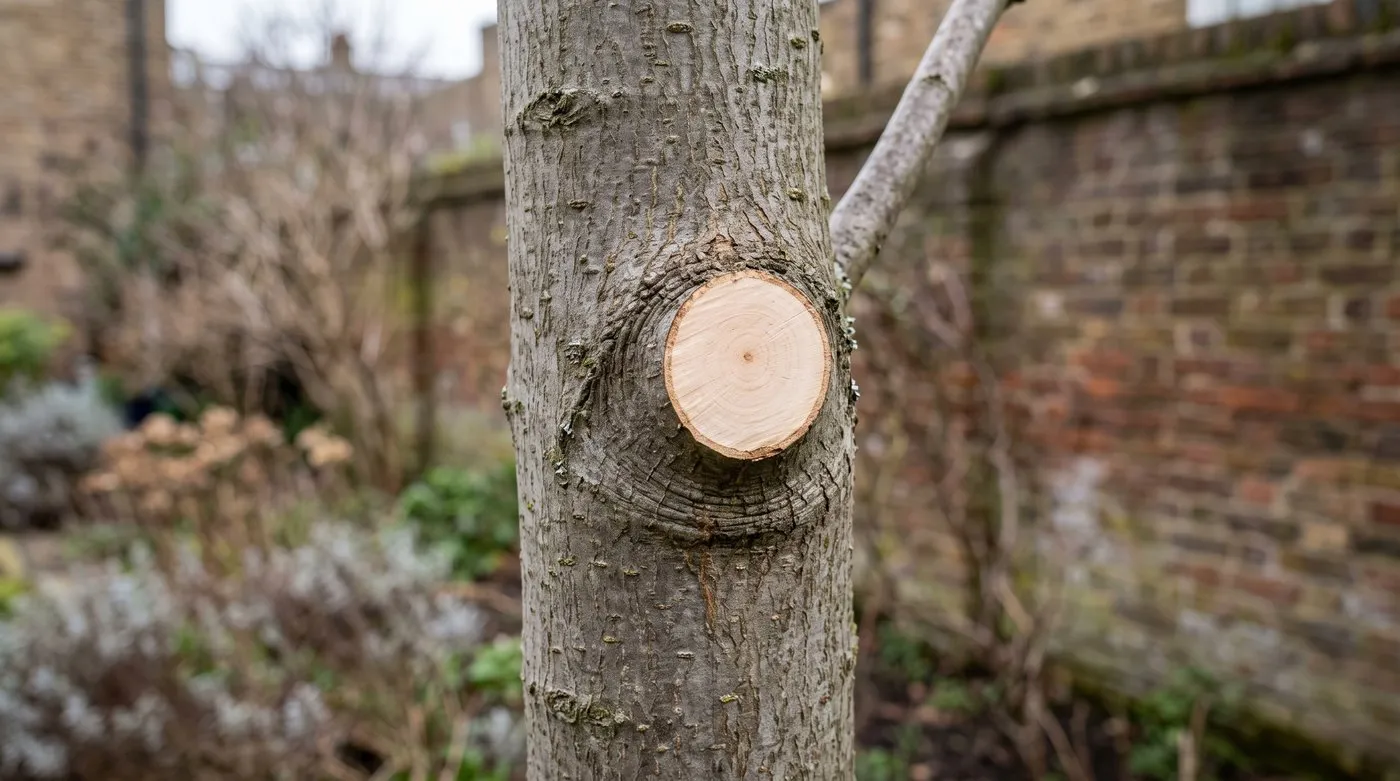
A good cut sits just outside the swollen collar. Don’t leave a stub and don’t cut flush with the trunk.
For more pruning guides, visit the how-to hub. If you’re planting a new screen, read the guide to planting bare-root trees for the next step.
Frequently asked questions
How do I prune a tree for more light but keep my privacy?
Remove the lowest branches and thin the inside, but leave the upper screen alone. Most privacy comes from leaves above fence height. Low branches and a crowded centre block the most light, so taking those out lets sun through without opening the view.
When is the best time to prune trees in the UK?
Most deciduous trees are best pruned in winter, from November to February. You can see the branches clearly and birds aren’t nesting. Prune cherries, plums and other Prunus in summer instead, to reduce the risk of silver leaf disease.
How much of a tree can I prune at once?
Only a modest amount; spread big jobs over several years. Taking too much at once stresses the tree and triggers lots of weak, upright shoots. If a tree needs a lot of work, do some each winter.
Do I need permission to prune a tree in my garden?
Only if it’s protected by a Tree Preservation Order or in a conservation area. Protected trees need council consent first. In a conservation area, you must give the council six weeks’ notice before most tree work. Check with your council before you start.
Can I cut branches that overhang my garden?
Yes, back to the boundary line, as long as the tree isn’t protected. You can’t go onto your neighbour’s land or cut beyond the boundary. The branches belong to the tree’s owner, so ask before throwing them back over the fence.
Why has my tree grown back thicker after pruning?
It was probably cut too hard or topped. Trees respond to heavy cutting with a mass of fast, upright shoots. Thin these out gradually over a few winters, keeping the best one or two as new branches.
What trees give privacy without blocking too much light?
Deciduous trees with light canopies, and pleached trees, are the best choices. Amelanchier, hornbeam and crab apple let winter sun through. Pleached hornbeam or lime screen at upstairs height with clear space below.
Our team produces practical UK gardening guidance from source research, contributor records and established horticultural practice. Editorial standards are overseen by Matt W.