Key takeaways
- Check with your council before any tree work, because a TPO isn't visible on the tree
- Consent is free to apply for, and councils normally decide within 8 weeks
- In a conservation area, most garden trees need 6 weeks' notice before work
- Dead trees are exempt from consent but still need 5 working days' notice
- Removing a protected tree usually means planting a replacement in the same spot
- Breaking a TPO can lead to an unlimited fine, so get consent in writing first
A Tree Preservation Order means you need your council’s permission before doing almost any work on that tree. The good news is that checking is easy and asking for consent is free. The trap is that nothing on the tree tells you it’s protected, so plenty of people only find out after they’ve booked a tree surgeon.
This guide explains how to check for a TPO, what you can and can’t do, and how to apply for consent. It covers the rules in England. Wales is very similar, and Scotland and Northern Ireland have their own versions, so check with your council there.
What does a Tree Preservation Order protect?
A TPO protects trees that matter to the look of a neighbourhood. Your local council makes the order, and it can cover a single tree, a group, an area or a whole wood.
Once a tree has a TPO, you need written consent to cut down, top, lop, uproot, wilfully damage or destroy it. Damaging the roots counts too. Digging a trench, laying a patio or piling soil over the root area can all harm a protected tree.
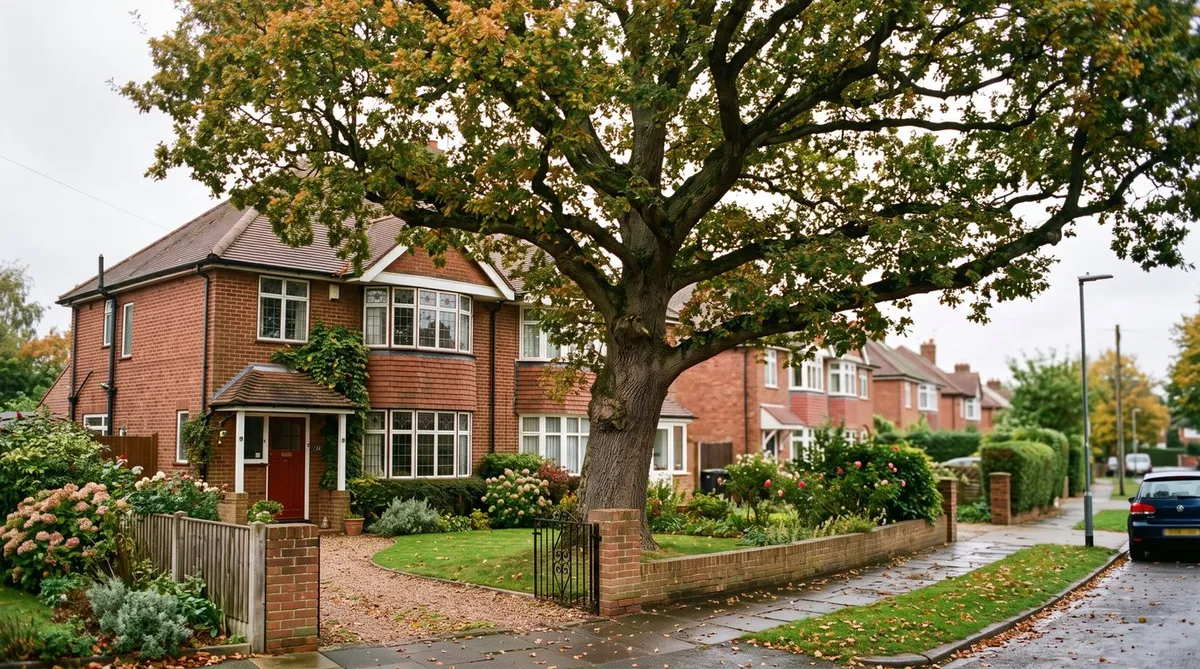
Councils usually protect trees people can see from a road, path or public space. A big sycamore on a street corner is more likely to have a TPO than a rare tree tucked away in a back garden. Hedges aren’t covered by TPOs. Problem hedges fall under separate high hedge rules.
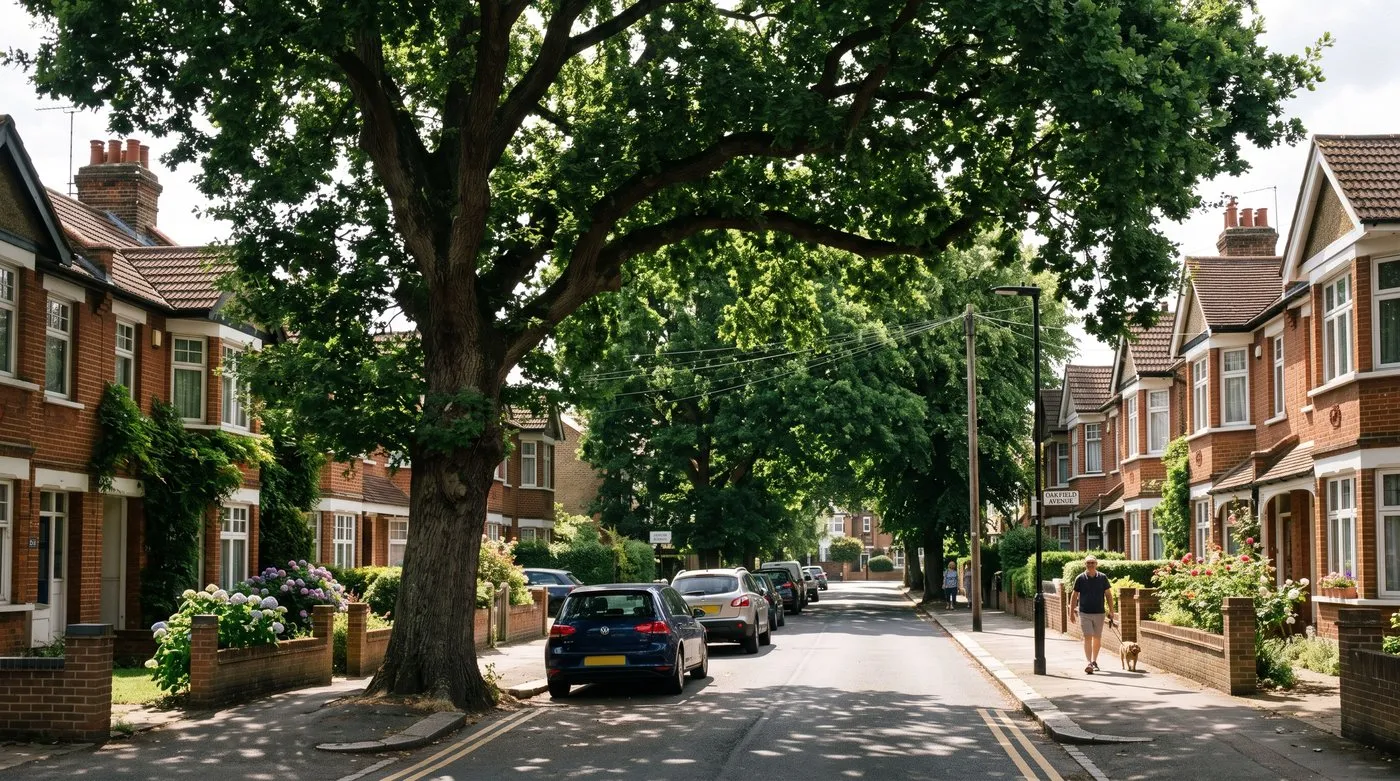
Trees that add to the look of a street are the ones councils usually protect. Size and visibility matter more than how rare the tree is.
How to check whether your tree has a TPO
Ask your local council before you do any tree work. It takes one email and saves a lot of worry.
- Look for an online TPO map. Search your council’s website for “tree preservation order” or “protected trees”.
- Email the tree officer. If there’s no map, send the address, a simple location plan and a photo of the tree. Councils answer these questions all the time.
- Check your conservation area status at the same time. Trees there can be protected without a TPO.
- Check your house purchase paperwork. A TPO shows up in the local land charges search your solicitor ran.
Newer estates sometimes have trees protected by a condition on the original planning permission. The council can tell you about that too.
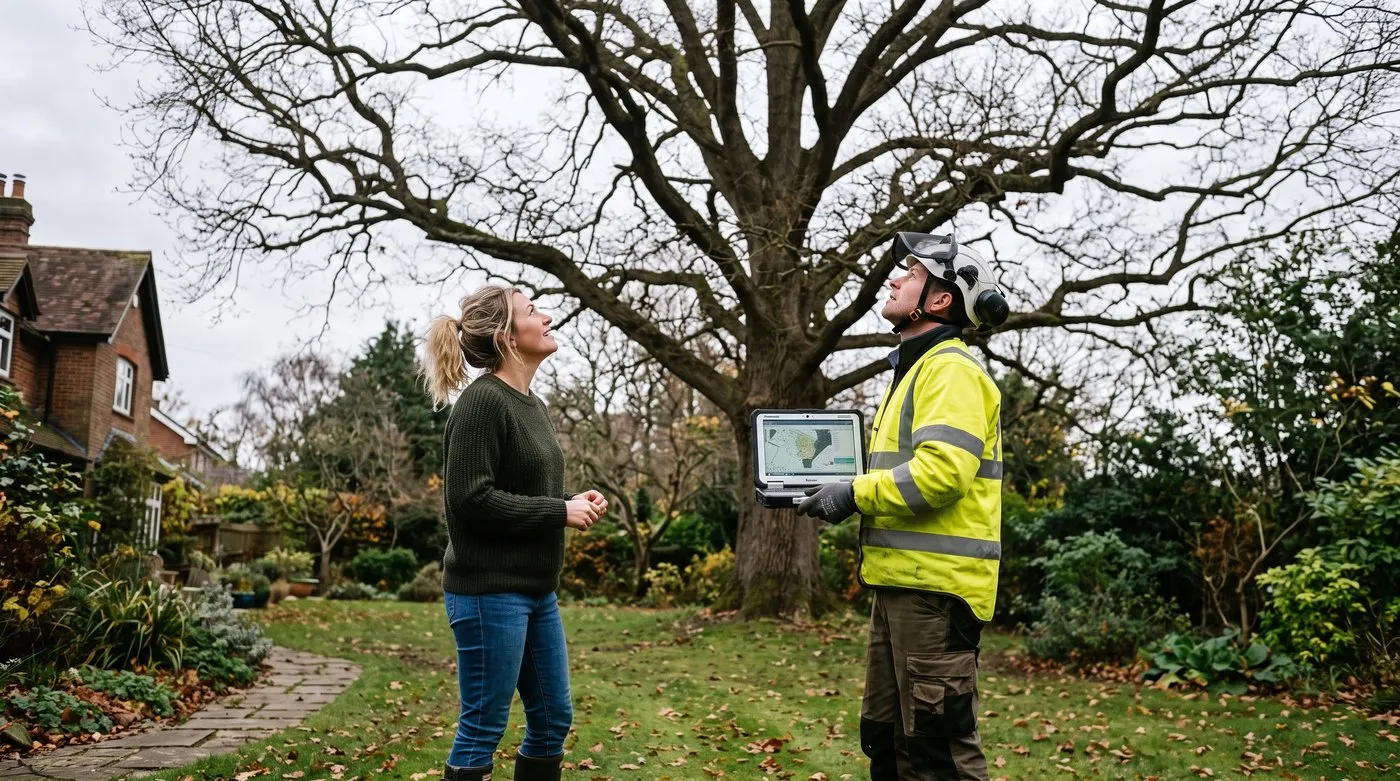
Get the council’s answer before any work is booked. A good tree surgeon will ask whether you’ve checked.
What you can and can’t do to a protected tree
If the work cuts or harms living wood or roots, assume you need consent. Here are the jobs people most often ask about.
| Job | Need consent? | What to do |
|---|---|---|
| Fell the whole tree | Yes | Apply for consent, then replant |
| Crown reduction, thinning or lifting | Yes | Apply with a clear description of the work |
| Pruning back from your house or gutters | Yes | Apply, even for small amounts |
| Cutting a neighbour’s overhanging branches | Yes | Apply, and talk to your neighbour |
| Digging, paving or building over the roots | Usually | Ask the tree officer before you start |
| Removing dead branches from a living tree | No | Keep photos in case you’re asked |
| Felling a dead tree | No consent, but notice | Give 5 working days’ written notice first |
| Dealing with an immediate danger | No consent | Only do what’s urgently needed, then tell the council straight away |
Topping a protected tree because it blocks light or a satellite signal is exactly the sort of job that gets people into trouble. If light is your problem, the guide to pruning trees for privacy and light explains what’s realistic.
Overhanging branches from a neighbour’s protected tree still need consent, even though you’d normally be allowed to cut back to the boundary. Anyone can apply, not just the owner. The guide to garden neighbour disputes covers the wider rules on boundaries.
How to apply for TPO consent
Applying is free and usually done online. You can use your council’s website or the national Planning Portal.
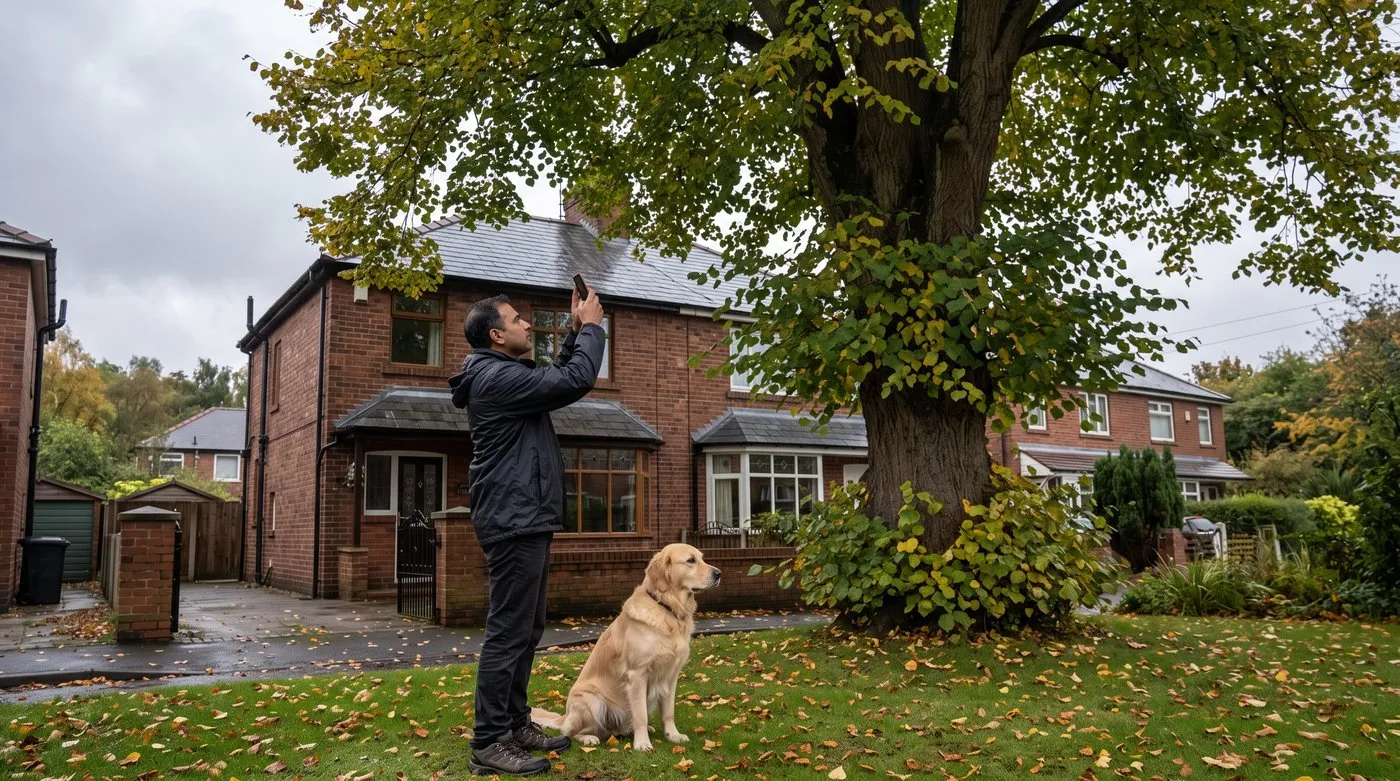
Clear photos and a precise description of the work are what get a consent application approved quickly.
A clear description is what gets a quick yes. Say exactly what you want done, for example “reduce the crown by 2m all round” rather than “cut back the tree”. Add photos, mark the tree on a simple plan and explain why the work is needed. A report from a qualified tree surgeon helps for bigger jobs.
The council normally decides within 8 weeks. It may agree, refuse or agree with conditions. If you disagree with the decision, or it doesn’t decide in time, you can appeal.
Warning: A tree surgeon’s quote isn’t permission. The legal responsibility sits with you. Get the consent in writing, with its reference number, before any work starts.
If the tree is causing damage to your house, include a report from a structural engineer or tree specialist. Councils take real damage seriously. Dropping leaves or blocking light is rarely enough on its own.
Dead, dying and dangerous trees
A dead tree doesn’t need consent, but you must give the council 5 working days’ written notice first. The only exception is a genuine emergency.
A tree that is dying, diseased or just looking poorly is not exempt. It needs full consent like any other protected tree. If you’re not sure whether a tree is dead or just struggling, the guide to sudden tree death helps you tell the difference.
If a tree or branch is an immediate danger, you can do the work needed to make it safe straight away. Do only what’s urgently necessary. Tell the council as soon as you can, and take dated photos before and after, because you may need to show the danger was real.
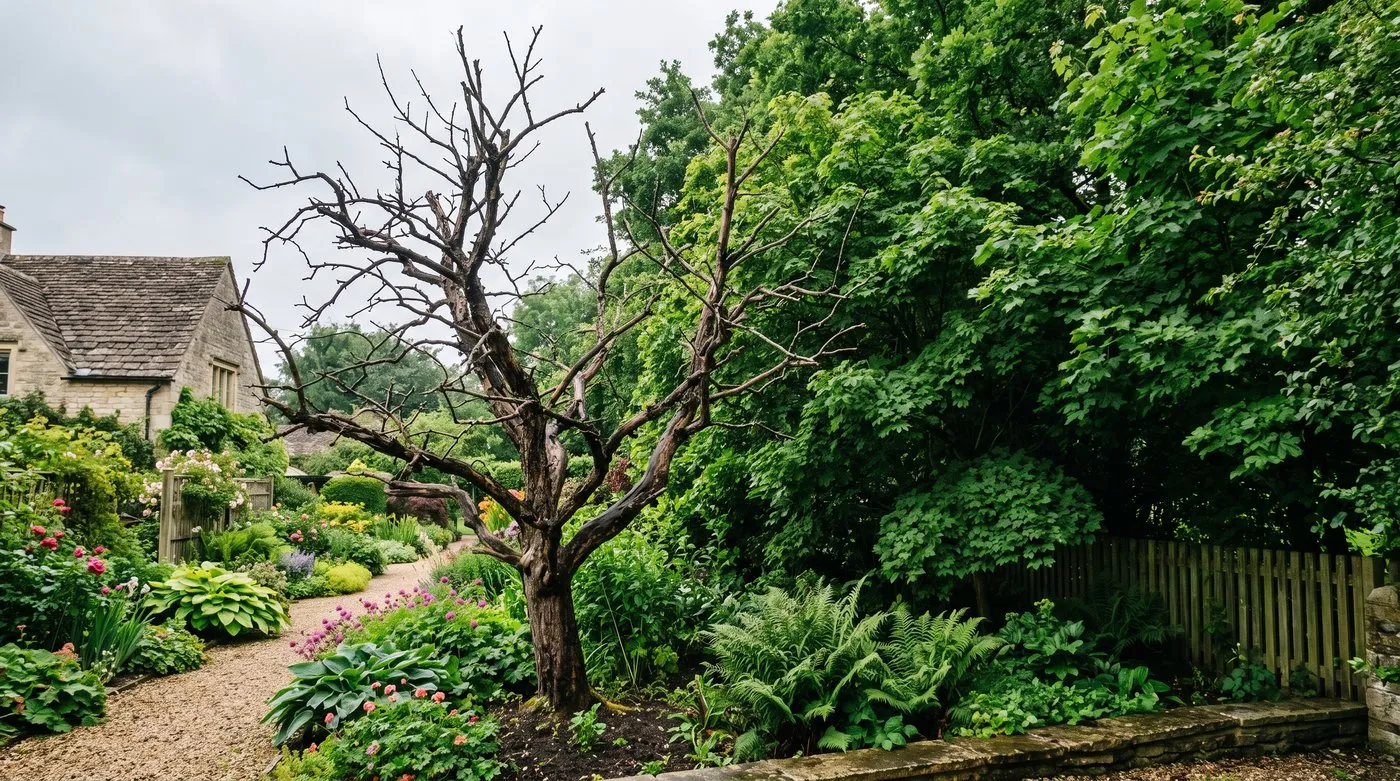
Only a genuinely dead tree is exempt from consent, and it still needs 5 working days’ notice. A sickly tree that’s still alive needs full consent.
Trees in a conservation area
In a conservation area, most garden trees are protected even without a TPO. The rule covers trees with a trunk more than 7.5cm across, measured 1.5m above the ground.
Before doing any work on these trees, you must give the council 6 weeks’ written notice. That gives the tree officer time to look and, if they want to keep the tree, to make a TPO. If they don’t respond within 6 weeks, you can go ahead with the work you described. Do it within two years, or you’ll need to give notice again.
This catches out lots of people in older streets. If your area has period houses and a distinct character, check whether it’s a conservation area before touching any tree.
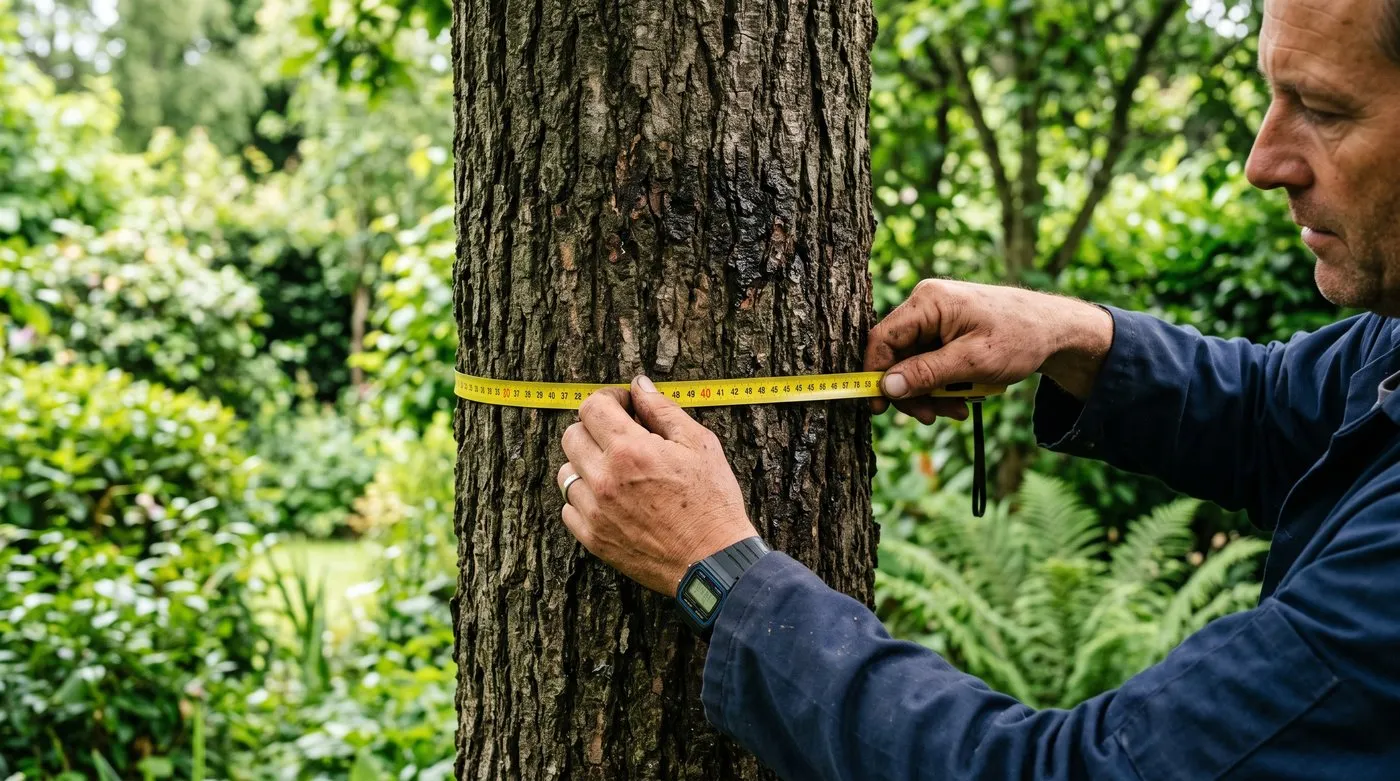
Measure the trunk 1.5m above the ground. In a conservation area, anything over 7.5cm across needs 6 weeks’ notice before work.
What happens if you break a TPO?
Cutting down or destroying a protected tree without consent is a criminal offence, with an unlimited fine. Courts can also take into account any money you gained, such as a higher value for a building plot.
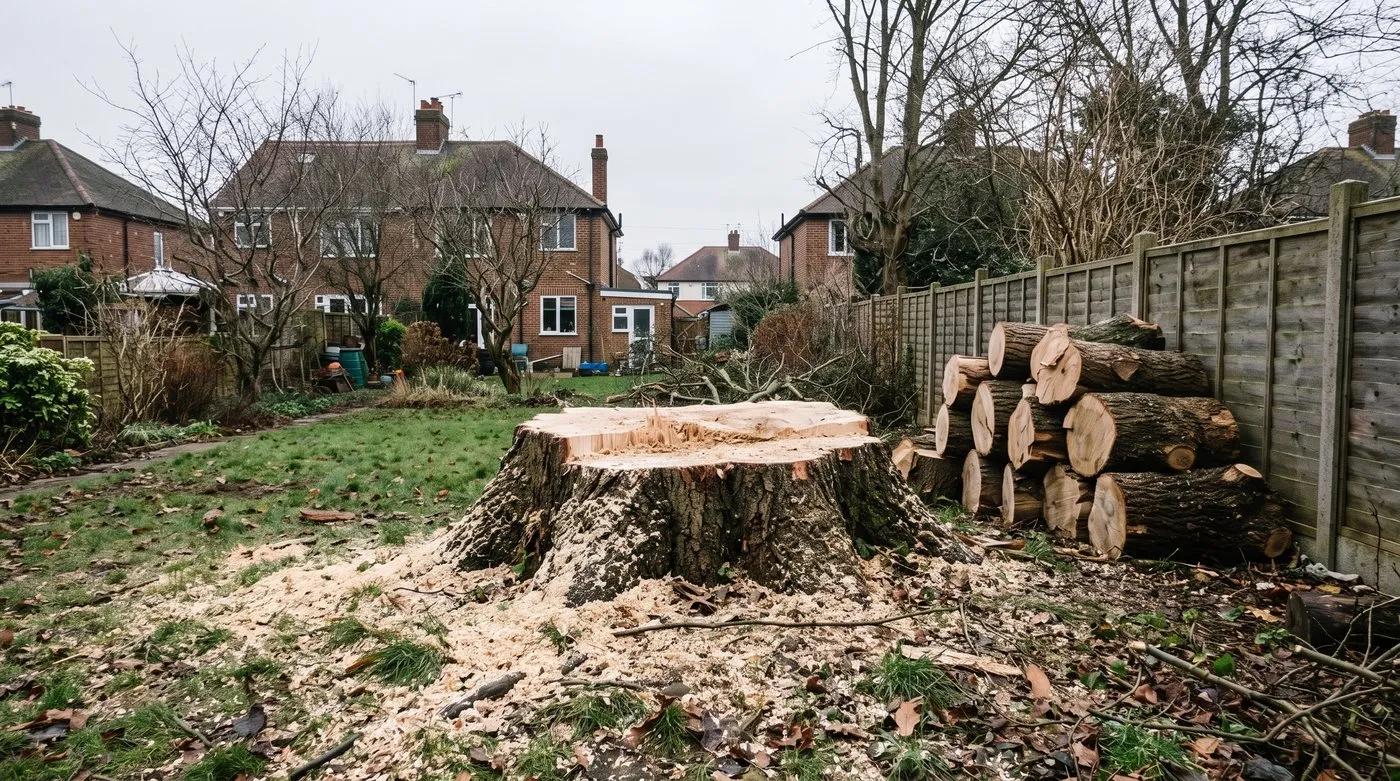
A mature tree takes decades to replace, which is why felling a protected one without consent carries such heavy fines.
Smaller breaches, such as unauthorised pruning that doesn’t kill the tree, are a separate offence with a lower fine. Councils do prosecute homeowners as well as developers, and not knowing about the TPO isn’t a defence. On top of any fine, you’ll usually have to plant a replacement.
Do you have to replant a protected tree?
Usually, yes. If a protected tree is removed because it was dead or dangerous, or without consent, you must plant a replacement in the same place as soon as you reasonably can. The new tree is protected by the same order.
If you don’t replant, the council can serve a notice making you do it. When consent is given to fell a tree, the council may add replanting as a condition too.
Pick a replacement that suits the space. The guide to the best trees for small gardens covers good choices that won’t outgrow a modern plot, and native trees for UK gardens lists wildlife-friendly options.
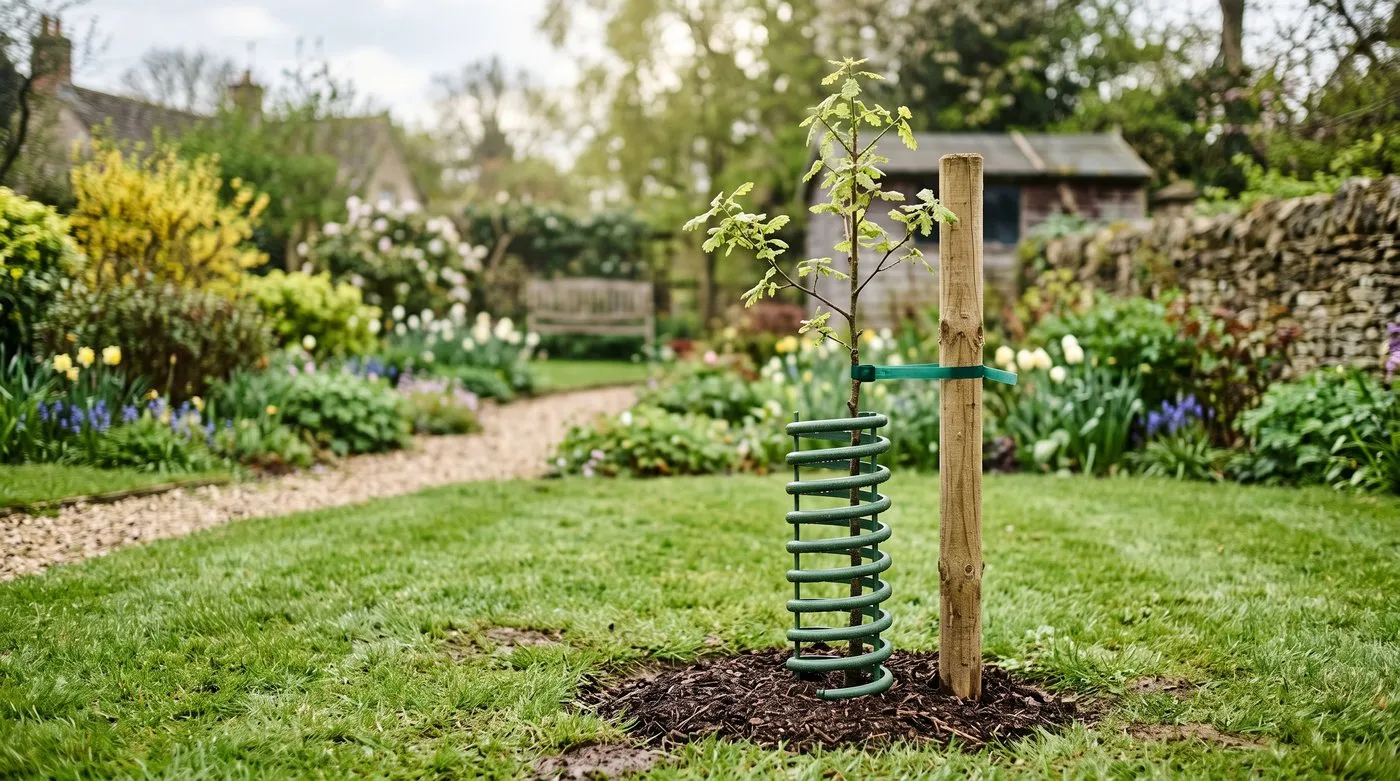
Remove a protected tree and a replacement usually has to go back in the same spot. Stake it well and water it through its first summers.
TPOs, conservation areas and high hedges compared
| Rule | What it covers | What you need |
|---|---|---|
| Tree Preservation Order | Named trees, groups, areas or woodland | Written consent, usually within 8 weeks |
| Conservation area | Trees over 7.5cm across at 1.5m high in the area | 6 weeks’ written notice |
| High hedge rules | Mostly evergreen hedges over 2m that block light | A complaint to the council, after trying to agree with your neighbour |
| Planning condition | Trees kept as part of a new development | Check the planning permission with your council |
An overgrown conifer hedge is usually a high hedge matter, not a TPO one. The guide to a conifer that’s too big explains your options.
Common TPO mistakes
Assuming no TPO means no protection. Conservation area trees are protected without one. Check both.
Leaving it to the tree surgeon. The duty is yours. Get the consent reference yourself.
Treating a sick tree as dead. Only dead trees are exempt, and even they need 5 working days’ notice.
Damaging the roots. A new patio, a change in levels or a trench can kill a protected tree. Ask before you dig.
Forgetting to replant. A replacement is usually required, even when the removal was allowed.
For the full official rules, see the GOV.UK guidance on tree preservation orders. For safe technique once you have consent, read the guide to removing large tree branches. Next, check the legal dates for cutting hedges, the other bit of garden law that catches people out. More practical guides are in the how-to hub.
Frequently asked questions
How do I know if a tree has a Tree Preservation Order?
Ask your local council, which keeps a record of every TPO. Many councils have an online TPO map. If not, email the tree officer with the address and a photo. A TPO also shows up in the local land charges search when you buy a house.
Can I be fined for cutting down a protected tree?
Yes, and the fine can be unlimited. Cutting down or destroying a protected tree without consent is a criminal offence. Lesser unauthorised work, such as pruning that doesn’t kill the tree, is also an offence with a smaller fine.
Do I need permission to prune a tree with a TPO?
Yes, almost always. Pruning, topping, lopping or cutting roots all need written council consent. Applying is free. The main exceptions are removing dead branches, dealing with an immediate danger, and dead trees, which need 5 working days’ notice.
Who is responsible for a tree with a TPO?
The owner of the land the tree grows on. That duty passes to you when you buy the property, even if the TPO was made long before. You apply for consent and replant if the tree has to go.
Can I cut my neighbour’s overhanging branches if the tree has a TPO?
Not without consent, even on your side of the boundary. Anyone can apply for consent, not just the owner. It’s polite and sensible to talk to your neighbour first.
Are trees in a conservation area automatically protected?
Most of them, yes. In a conservation area, trees with a trunk over 7.5cm across, measured 1.5m above the ground, are covered. You must give the council 6 weeks’ written notice before any work.
Do I have to replace a protected tree that I remove?
Usually, yes. If a protected tree is removed because it was dead or dangerous, or without consent, you must plant a replacement in the same place. The new tree is protected too. With consent, the council may set replanting as a condition.
Our team produces practical UK gardening guidance from source research, contributor records and established horticultural practice. Editorial standards are overseen by Matt W.