Key takeaways
- Talk to your neighbour first, then confirm what you agreed in a short friendly note
- You can cut overhanging branches back to the boundary, but not beyond it, and should offer the cuttings back
- There's no legal height limit for hedges; councils can act on evergreen hedges over 2m that cause a real problem
- The "left-hand fence" rule is a myth; check the title plan and deeds instead
- Check for a tree preservation order or conservation area before cutting any tree
- Avoid hedge cutting from March to August, when birds are most likely to be nesting
Most garden neighbour disputes come down to the same few things: a hedge that’s grown too tall, branches over the fence, a fence nobody wants to fix, bonfire smoke or a camera pointing the wrong way. The good news is that the rules are simpler than people think, and a calm chat sorts out most of them.
This guide explains your rights for each common problem and the sensible order to tackle it in. It covers England and Wales, with notes on Scotland and Northern Ireland where they differ.
Important: This is general information, not legal advice. If a dispute involves the boundary line itself, damage to your home or real money, speak to a solicitor who deals with property disputes.
What do garden neighbour disputes usually start with?
Hedges cause more arguments than anything else, and fast-growing leylandii is the usual suspect. Trees come next: branches over the fence, falling leaves and roots. Then come fences and walls, and who should repair them.
Newer flashpoints include doorbell cameras and CCTV. Bonfires, raised decking that overlooks a neighbour and sheds built right up to the fence fill out the list.
The pattern is nearly always the same. Something grows or changes slowly, nobody mentions it for months, and the first conversation happens when someone’s already cross. Raising things early, while they’re still small, saves a lot of grief.
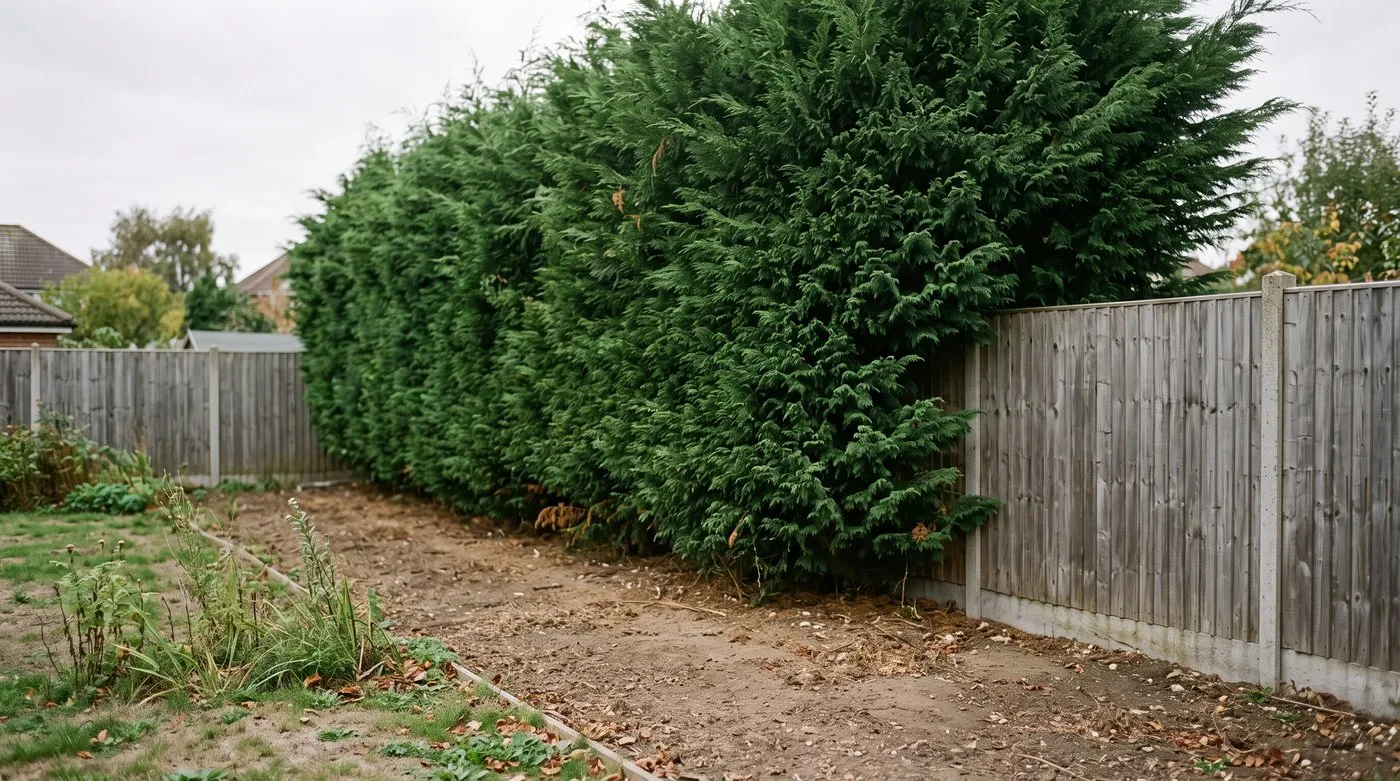
Nothing much grows under a tall leylandii. The bare, dry strip at the base shows how much light and water it takes.
How tall can a neighbour’s hedge be?
There’s no legal height limit for a hedge. Your neighbour can grow a hedge taller than 2m if they want to. What the law does give you is a way to complain to the council if a tall hedge is causing a real problem.
In England and Wales, the high hedges rules let your council step in when all of these apply:
- The hedge is a line of two or more trees or shrubs. A single tree doesn’t count.
- It’s evergreen or semi-evergreen, like leylandii or laurel. Beech and hornbeam hedges are usually left out.
- It’s over 2m tall and acts as a barrier to light or access.
- It badly affects your reasonable enjoyment of your home or garden.
Scotland and Northern Ireland have their own high hedge laws with very similar tests. Each nation’s councils handle complaints locally.

Agreeing a height and a cutting month with your neighbour stops the same argument coming back every summer.
How does a high hedge complaint work?
A complaint to the council is a last resort. You’ll need to show you’ve tried to sort it out with your neighbour first, so keep copies of friendly letters and notes.
Councils charge a fee for a high hedge complaint, and it varies a lot between areas. Check your council’s website before you apply, as the fee is usually not refunded once they’ve looked at the case.
If the council agrees the hedge is a problem, it can issue a remedial notice. This tells the owner how far to cut the hedge back and how to keep it at that height. The notice stays with the property, so it binds future owners too. Ignoring it is a criminal offence. The GOV.UK guide to high hedges, trees and boundaries explains the process.
Don’t expect a council to act over a hedge that blocks a view, a deciduous hedge or a single big tree. Those fall outside the scheme, so talking is your main option.
Can I cut my neighbour’s overhanging branches?
Yes. You can cut branches and roots that cross onto your side back to the boundary line. A few rules keep you on the right side of the law:
- Cut to the boundary and stop. Cutting into your neighbour’s side of the plant could land you in court for damaging their property.
- Stay on your own land. Don’t lean over or go into their garden without permission.
- Offer the cuttings back. Branches and fruit belong to your neighbour. If they don’t want them, dispose of them yourself. Never throw them over the fence.
- Check the tree isn’t protected. A tree with a tree preservation order, or in a conservation area, needs council consent before you cut it.
- Watch for nesting birds. It’s an offence to damage or destroy an active nest, so check before you cut, especially from March to August.
For large branches, get a qualified tree surgeon. A clumsy cut can harm the tree or bring a branch down, and you could be responsible. Our guide to pruning trees for privacy and light covers how to cut well once you’re clear on what you’re allowed to do.
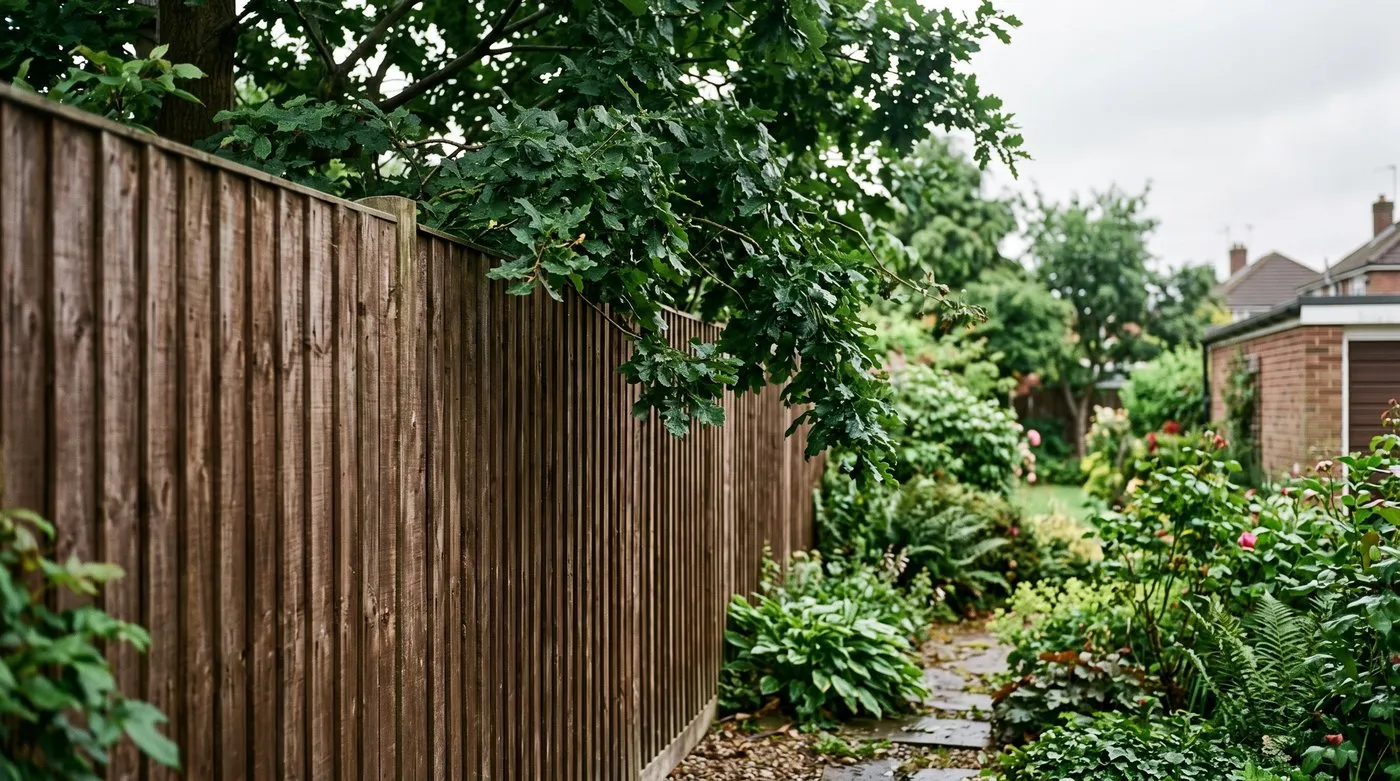
You can cut overhanging branches back to the line of the fence, but no further, and check for nesting birds first.
What about roots, leaves and drains?
Roots follow the same rule as branches: you can cut back roots that cross the boundary. Be careful, though. Cutting big roots on one side can make a mature tree unstable, so get a tree surgeon’s advice first.
Falling leaves and fruit are seen as a natural part of having trees nearby. You can’t usually make a neighbour clear up leaves that blow onto your side.
Drains are a common worry. Roots tend to get into old pipes through joints that have already cracked. If you suspect root damage, get a drain survey before you blame anyone. If a tree may be causing subsidence to your house, contact your home insurer, who will investigate.
Who owns the fence?
There’s no rule that you own the left-hand fence, or the right-hand one. It’s a myth. Who’s responsible for a fence depends on what your deeds say.
Look at your title plan and register, which you can download for a small fee from HM Land Registry. Responsibility is often shown with a T mark on the boundary line. The T points into the property of the owner responsible. Two T marks joined in an H shape usually means the fence is shared.
Many older deeds show nothing at all. In that case, nobody has a clear duty to put up a fence, and the simplest fix is to agree with your neighbour who’ll look after it. If a fence is rotten and your neighbour won’t replace it, you can put up a new one just inside your own land.
Title plans only show the general line of the boundary, not the exact one to the centimetre. If the line itself is in dispute, get a solicitor’s advice before moving anything. For practical help keeping an existing fence standing, see our guide to garden fence repair and maintenance.
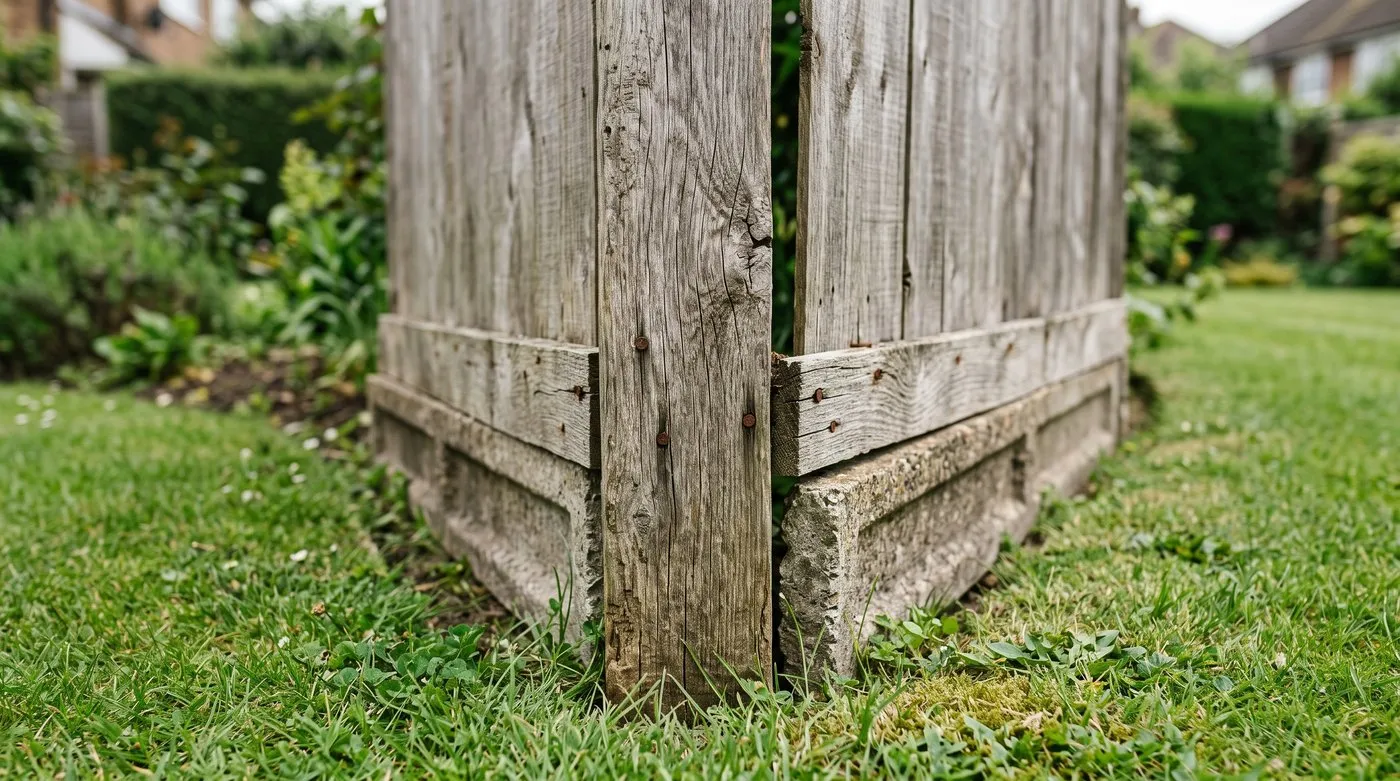
The fence posts don’t tell you who owns a fence. Your title plan and deeds do.
How high can a fence or shed be without planning permission?
In England, you can usually put up a fence, wall or gate up to 2m high without planning permission. Next to a road or footpath, the limit is 1m. Trellis on top counts towards the height.
Sheds and other outbuildings have their own rules. Within 2m of a boundary, the whole building must be no more than 2.5m high. Raised decking more than 30cm off the ground needs planning permission. Listed buildings, some conservation areas and some newer estates have tighter rules, so check with your council first.
Raised decking and tall sheds are common causes of complaints about being overlooked. If privacy is the issue, screen planting on your own side often works faster than any formal complaint. Our pick of the best trees for privacy is a good place to start.
Japanese knotweed over the boundary
Japanese knotweed spreading from a neighbour’s land is taken seriously. It can count as a legal nuisance, and it can affect selling or mortgaging a home.
Deal with it early. Make sure it really is knotweed first, as bindweed, Russian vine and dogwood are often mistaken for it. Our Japanese knotweed identification guide shows what to look for. Then take dated photos, write to the owner, and get a professional management plan from a specialist contractor. It’s also an offence to let knotweed spread into the wild, so never dump cuttings.
Do I have a right to light in my garden?
Usually not. A right to light can only build up for a window or rooflight, and normally takes 20 years of uninterrupted light to gain. It doesn’t apply to a lawn, greenhouse or veg bed.
So if a hedge or building shades your garden, your options are the high hedge complaint, if the hedge qualifies, or a friendly chat. Often the practical answer works best. Reducing a hedge or thinning a tree’s crown lets in more light for far less hassle than any legal claim. If you’re planting a new screen, a slower grower such as a western red cedar hedge is easier to keep at a sensible height than leylandii.
Can a neighbour’s camera film my garden?
A camera that only records your neighbour’s own property is fine. Once it captures your garden, your drive or the street, data protection law applies. They then need a good reason for filming that area, should put up a sign, and must handle the footage responsibly.
Start by asking them to re-angle the camera or use the privacy mask in the app. Many doorbell cameras also record sound, which is harder to justify, so ask them to switch audio off. If that doesn’t work, the Information Commissioner’s Office (ICO) has guidance and takes complaints.
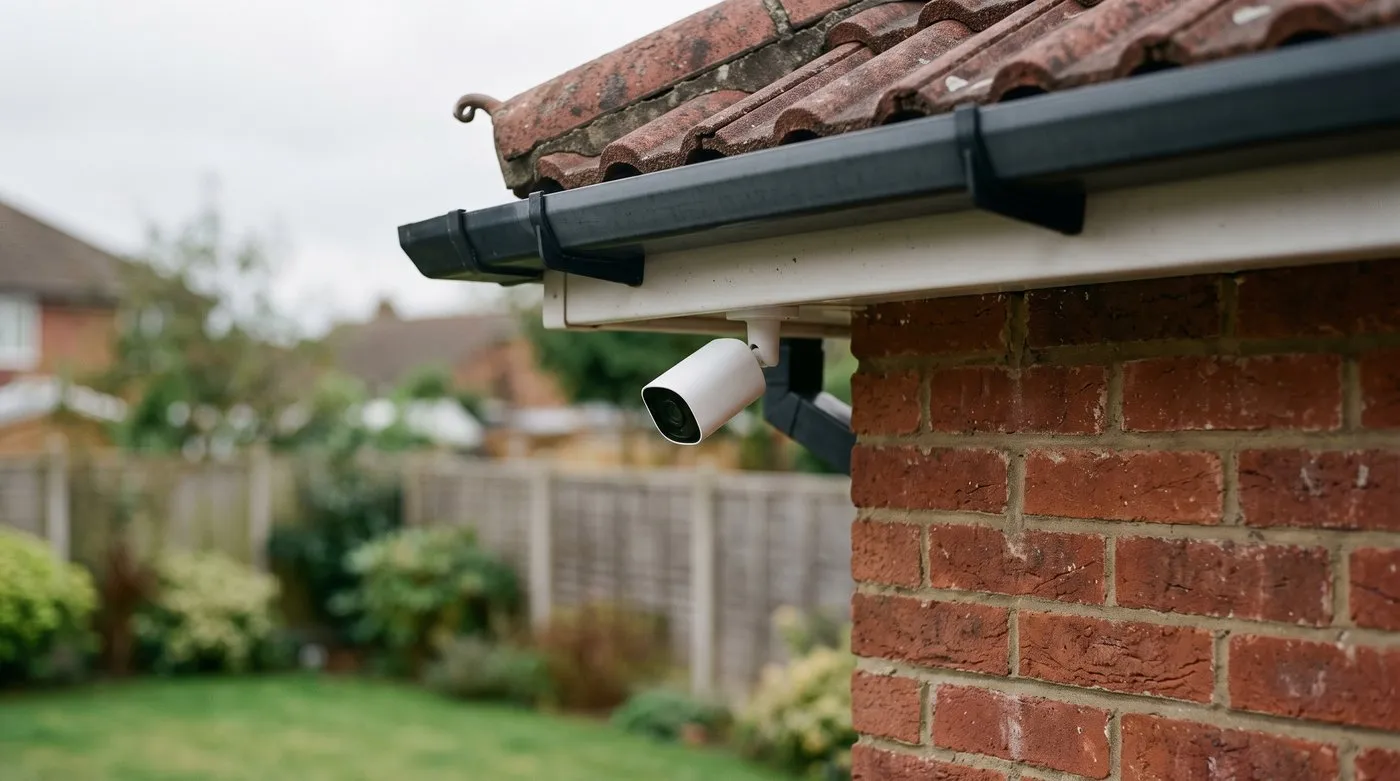
Angling a camera down so it only covers your own garden avoids most arguments about privacy.
Are garden bonfires allowed?
Yes. There’s no law against garden bonfires and no set hours. But smoke that’s frequent and unreasonable can be treated as a statutory nuisance by your council.
One bonfire a year is very unlikely to count. Regular fires of wet garden waste are a different story. If smoke is a problem, keep a diary of dates and times, then contact your council’s environmental health team. Letting smoke drift across a road is an offence too.
If you’re the one with the bonfire, burn only dry garden waste, on a still day, well away from the fence. Never burn plastics or treated timber. Composting or the council’s green waste bin is usually a better choice. Our guide to bonfires on allotments covers site rules if you have a plot.
How to settle a neighbour dispute, step by step
Most disputes that end in court could have stopped at step one. Work through these in order:
- Have a friendly chat. Pick a good moment, keep it calm and listen. Then send a short, friendly note confirming what you agreed.
- Write a polite letter. If nothing changes, write with dated photos and a clear request, and give a reasonable deadline. Keep a copy.
- Try mediation. A community mediation service helps both sides talk with a neutral person. Some councils offer it free.
- Use the formal route. That might be a high hedge complaint, environmental health or the ICO, depending on the problem.
- See a solicitor. Save this for disputes about the boundary line itself, damage to your home or knotweed.

A chat over the fence, followed by a short friendly note, settles most garden disputes before they start.
Gardener’s tip: Agree a written one-page note with your neighbour while you’re on good terms. Cover the hedge height, the cutting month and who looks after which fence. It isn’t a legal contract, but it heads off most arguments.
Common mistakes in garden neighbour disputes
- Cutting beyond the boundary. Trimming the whole shrub because half a cut looks odd can count as damaging their property. Cut to the boundary and stop.
- Throwing cuttings over the fence. The material is theirs, but dumping it without asking just starts a new row. Offer it back politely.
- Rushing to the council. Councils turn down hedge complaints if you haven’t tried to sort things out first. Keep notes and letters.
- Cutting hedges in nesting season. Damaging an active nest is an offence at any time of year. Our guide on when to cut hedges has the safe times.
- Keeping quiet when you sell. The forms you fill in when selling ask about disputes. Not mentioning one can come back to bite you after the sale.

Gaps under fences and roaming pets are easier to sort out with a neighbour you’re on good terms with.
For more ideas on boundaries, hedges and screening, browse our garden design guides. If a hedge is the problem, read our guide on what to do when a conifer gets too big for the next step.
Frequently asked questions
How tall can my neighbour’s hedge be in the UK?
There’s no legal height limit for a hedge. The 2m figure is only the point where a council can look at a high hedge complaint. That route covers evergreen or semi-evergreen hedges of two or more plants that badly affect your home or garden.
Can I cut my neighbour’s overhanging branches?
Yes, you can cut them back to the boundary line. Don’t cut beyond it, and don’t lean over or go onto their land without permission. Check first that the tree isn’t protected by a tree preservation order or a conservation area.
Do I have to give the cuttings back to my neighbour?
You should offer them back, because they belong to your neighbour. If they don’t want them, dispose of them yourself. Never throw them back over the fence without asking.
Is it true you always own the left-hand fence?
No, that’s a myth. Responsibility for a fence is shown in your deeds or title plan, often with a T mark on the boundary. If nothing is recorded, talk to your neighbour about sharing the upkeep.
How high can I build a garden fence without planning permission?
In England, up to 2m in most back gardens without permission. Next to a road or footpath the limit drops to 1m. Trellis on top counts towards the height. Listed buildings and some conservation areas have extra rules.
Can my neighbour point a CCTV camera at my garden?
They can, but data protection rules then apply. A camera that only covers their own property is fine. Once it records your garden or the street, they must be able to justify it and use it responsibly.
Is my neighbour allowed to have a bonfire?
Yes, there’s no law against garden bonfires. If the smoke is frequent and unreasonable, the council can treat it as a nuisance. Keep a diary of dates and times before you report it.
Our team produces practical UK gardening guidance from source research, contributor records and established horticultural practice. Editorial standards are overseen by Matt W.