Key takeaways
- Mexican fleabane flowers from late spring into autumn, often May to October
- Flowers open white and age to pink, so a plant shows both at once
- It thrives in full sun on walls, steps, gravel and paving cracks
- Sow on the surface in spring and don't cover, as the seed needs light
- Cut back hard in early spring for fresh, bushy growth
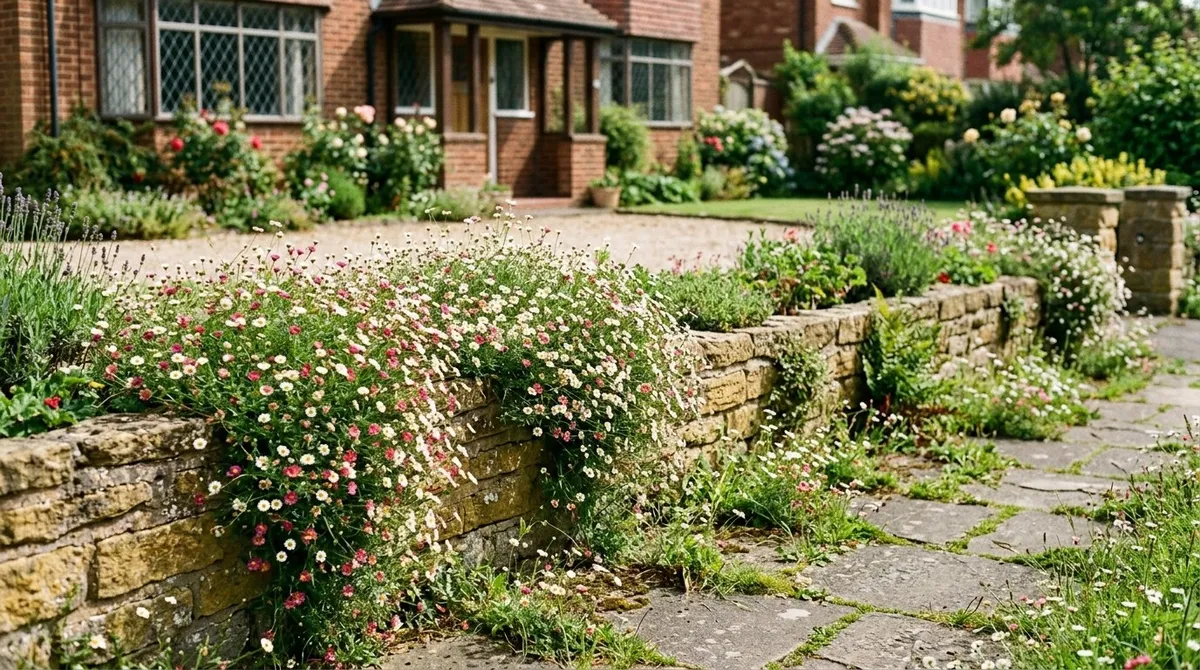
Mexican fleabane (Erigeron karvinskianus) is the little daisy you see foaming out of old walls and steps. It is one of the easiest plants to grow in a sunny garden. Once settled, it flowers for months and seeds itself into cracks where little else will grow.
Each daisy opens white and turns pink as it ages, so a single plant shows both colours at once. It needs full sun and sharp drainage, and very little else. This guide covers where to grow it, how to sow it and the one yearly job that keeps it looking fresh.
What is Mexican fleabane?
Erigeron karvinskianus is a low, spreading perennial daisy from Mexico and Central America. It is also called wall daisy or Santa Barbara daisy. It holds the RHS Award of Garden Merit, and the seed strain ‘Profusion’ is the one most often sold.
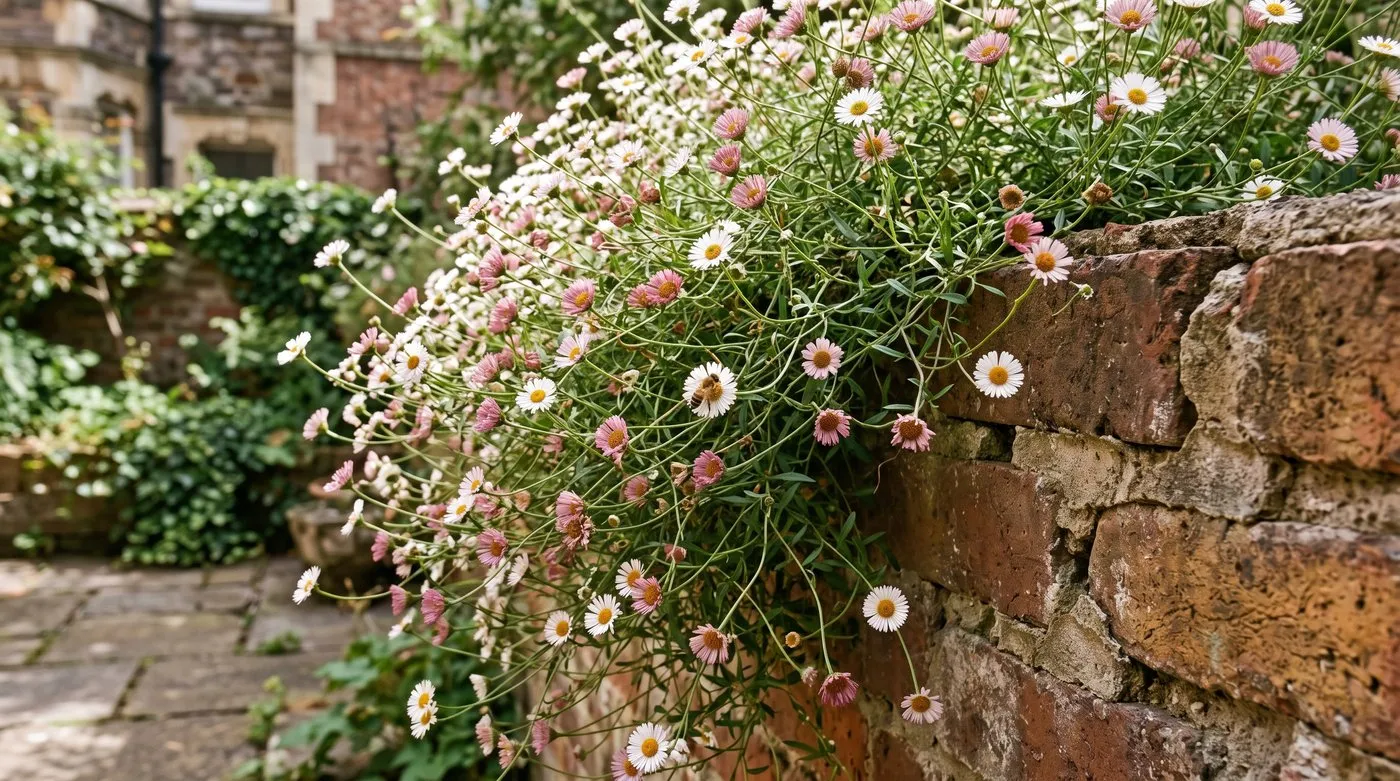
Each tiny daisy opens white and blushes pink as it ages, so you get both colours on one plant.
It makes a loose mound of thin, wiry stems about 15-30cm tall and 30-60cm wide. The leaves are small and narrow. The flowers are tiny daisies, around 2cm across, with yellow centres. They open from late spring and keep coming until the autumn frosts.
Where Mexican fleabane grows best
Plant it in full sun and lean, free-draining soil. It is happiest in the spots most plants hate: dry-stone walls, wall tops, steps, gravel and the joints between paving slabs.
In rich, damp border soil it grows soft and floppy, and it can rot over a wet winter. On a gritty wall or gravel path it stays neat and tough. Once settled, it copes well with dry spells. In shade it gets thin and leggy and flowers poorly, so give it a sunny south or west-facing spot. A gravel garden, sunny bank or crevice garden all suit it.
It is a good choice for seaside gardens too, in a sunny, sheltered wall. The guide to salt-tolerant plants for coastal gardens lists more plants for those conditions.
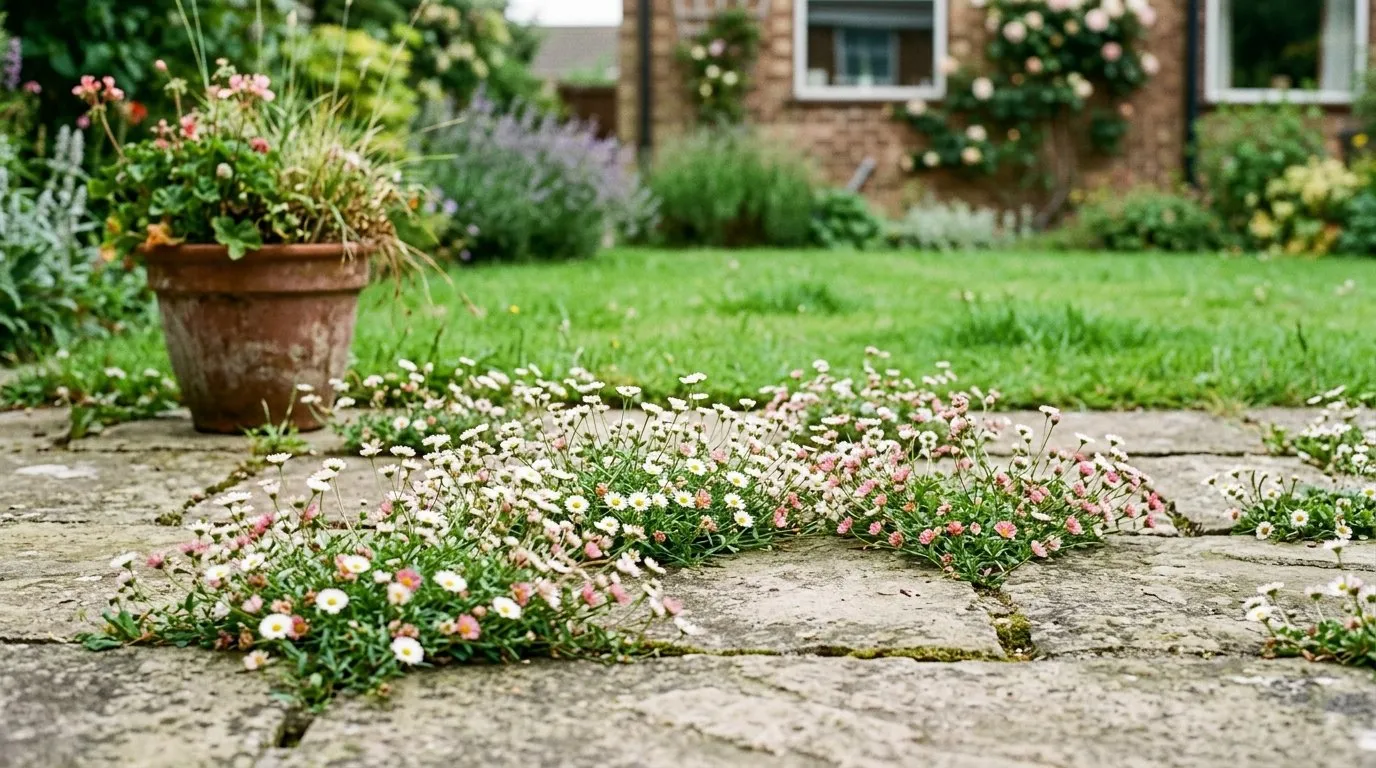
Seedlings settle into paving joints and soon soften hard edges. You don’t have to plant a thing once a parent plant is nearby.
How to grow Erigeron from seed
Seed is the cheapest way to start a patch. The one rule is: sow on the surface and don’t cover it, because the seed needs light to germinate.
- Sow from March to May, under cover or outdoors once frosts ease.
- Fill a pot or tray with gritty seed compost and water it.
- Scatter the tiny seed thinly on top and press it in gently.
- Keep it moist and somewhere bright, out of hot sun.
- Seedlings usually appear within a few weeks.
- Pot them on, then plant out once they are a good size, about 30cm apart.
You can also sprinkle seed straight onto a gravel bed or into wall cracks in spring. Or simply buy one pot and let it seed around.
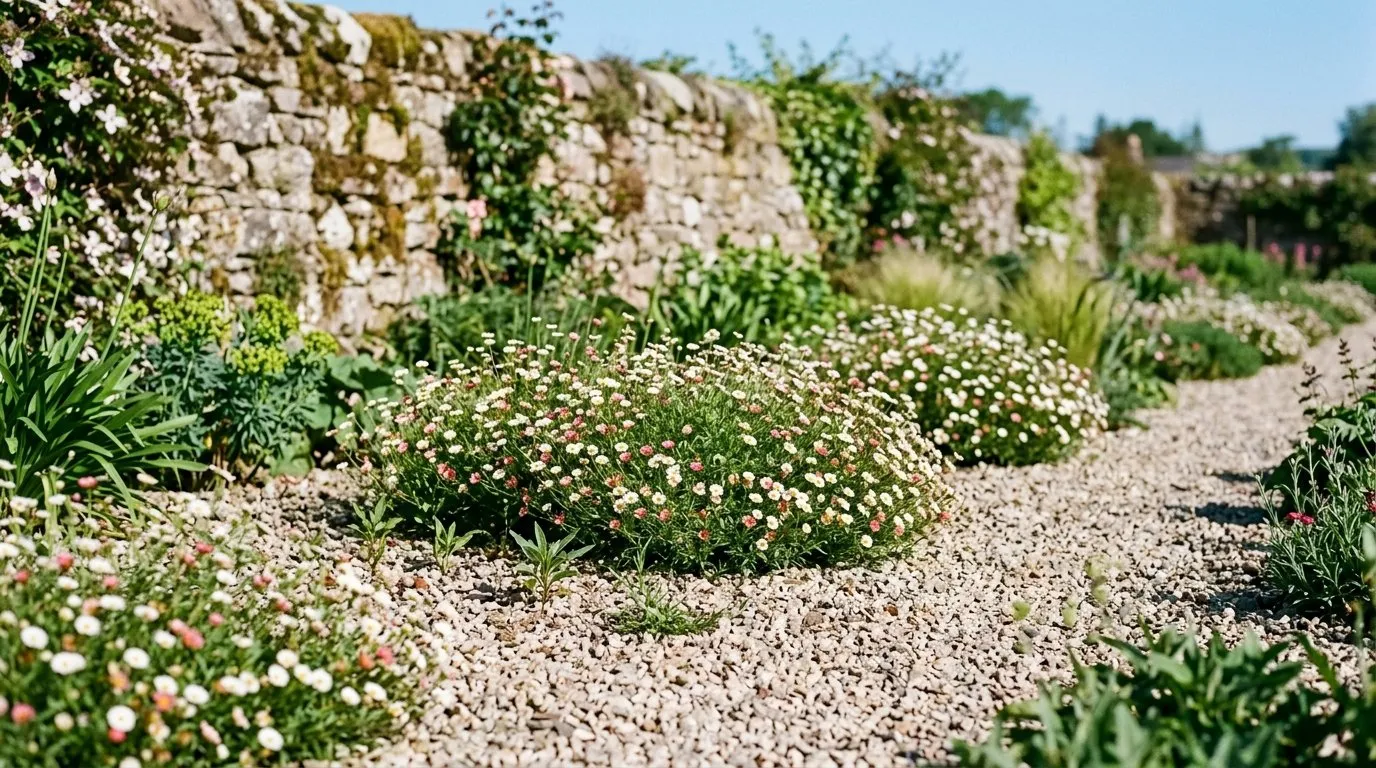
Gravel makes a perfect seedbed. Leave a few seedlings to grow and pull out the rest.
Planting Erigeron in walls and paving
To get a plant into a wall, choose a young plant or a seedling with a small root ball. Gently work it into a gap or crack, push a little gritty compost in around it, and water well. Keep it watered for the first few weeks until the roots take hold.
For paving, plant in a wider joint or at the edge where a slab meets gravel. Self-sown seedlings that pop up in the right places are often the easiest and best-placed plants of all. If you are building new steps or walls, the guide to garden steps and retaining walls is a good starting point, and fleabane will happily soften them later.
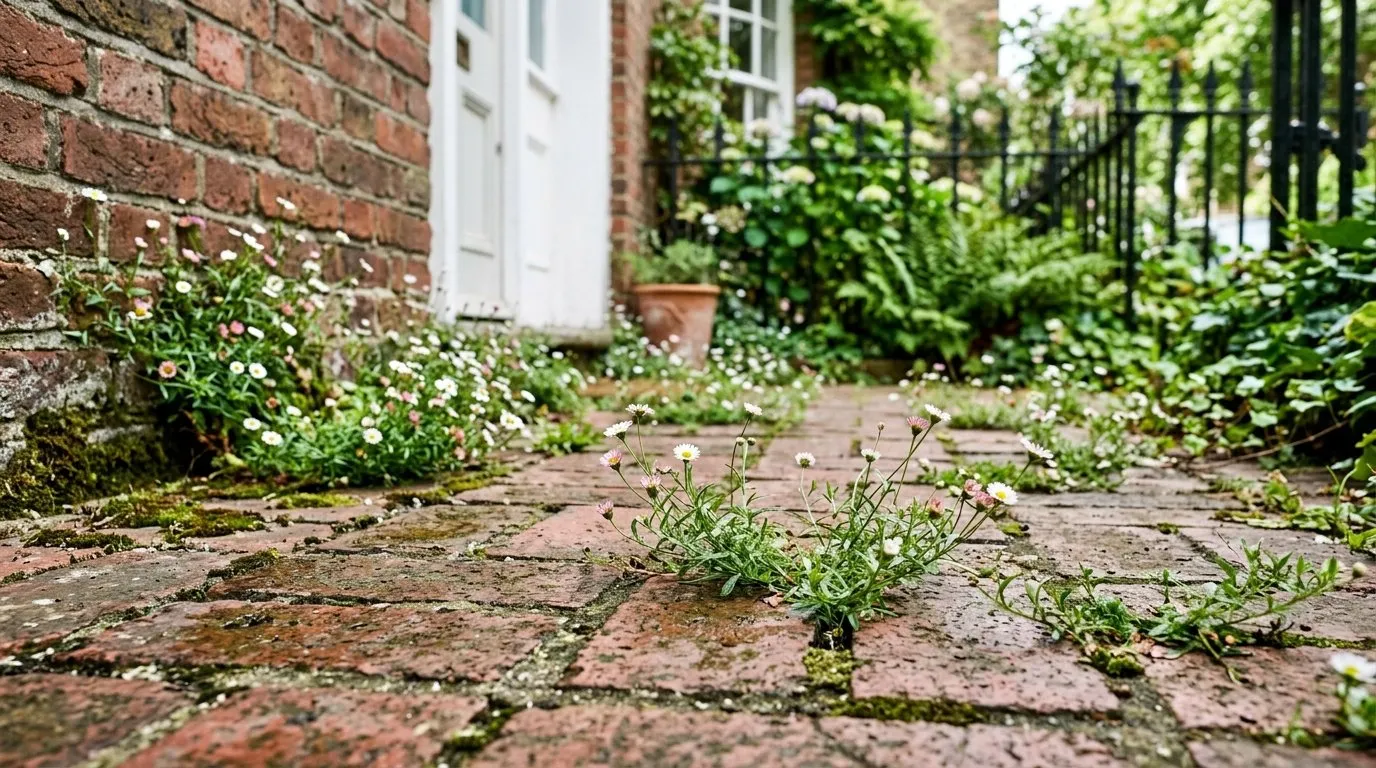
Seedlings come up in sunny brick and paving cracks. Pull out any that land where you’ll trip over them.
Why it self-seeds so freely
The seed is tiny and light, with a little parachute of hairs like a mini dandelion. It blows into cracks and gravel. Because it needs light to sprout, it mostly comes up on bare, open ground rather than in thick planting, lawns or deep mulch.
That makes it easy to manage. Pull unwanted seedlings while they are small. They come out with a gentle tug. For more plants that fill gaps for free, see the guide to easy self-seeding plants.
Cutting back and everyday care
Mexican fleabane needs one job a year. Cut the whole plant back hard in early spring, to about 5cm, before new growth gets going. This clears tired, woody stems and gives fresh, bushy growth that flowers well. Leave the old growth standing over winter to protect the crown.
There’s no need to deadhead. It flowers on regardless, and leaving some flowers lets it seed. Don’t feed it or mulch it with bark or rich compost. A little grit around the base is all it needs. New plants need watering until settled, but established ones rarely do.
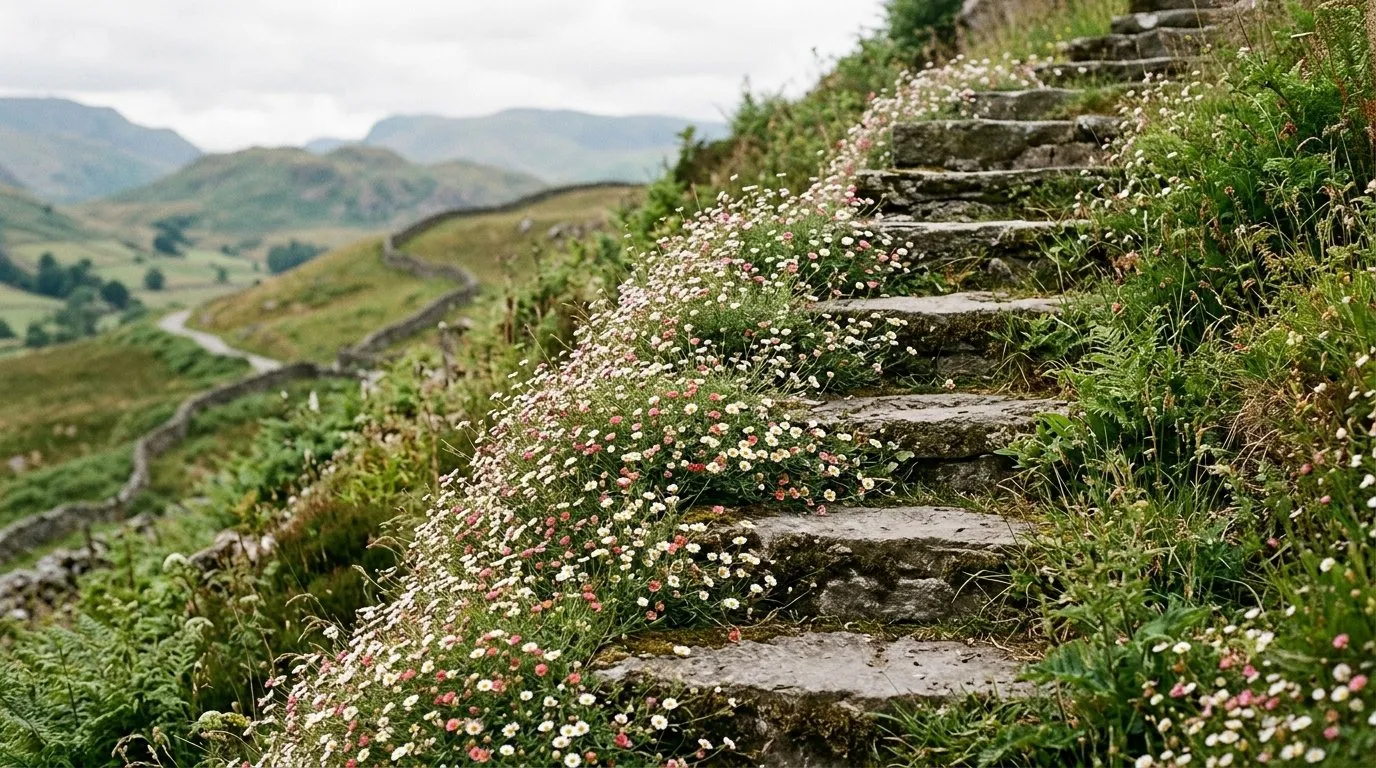
A hard trim in early spring keeps plants dense and covered in flowers, like these softening a flight of stone steps.
Erigeron for bees and other pollinators
The open daisies are easy for bees, hoverflies and butterflies to feed from. Because the plant flowers for so long, it still offers food in early autumn when many borders have finished. Plant it along a path or wall edge where you can watch the visitors.
Erigeron glaucus for exposed seaside spots
For a really exposed coastal wall, try its cousin Erigeron glaucus, the seaside daisy. It is a tougher, lower mound with bigger lilac-pink daisies and yellow centres. It copes with wind and salt spray better than Mexican fleabane. Both want the same thing: full sun, sharp drainage and lean soil.
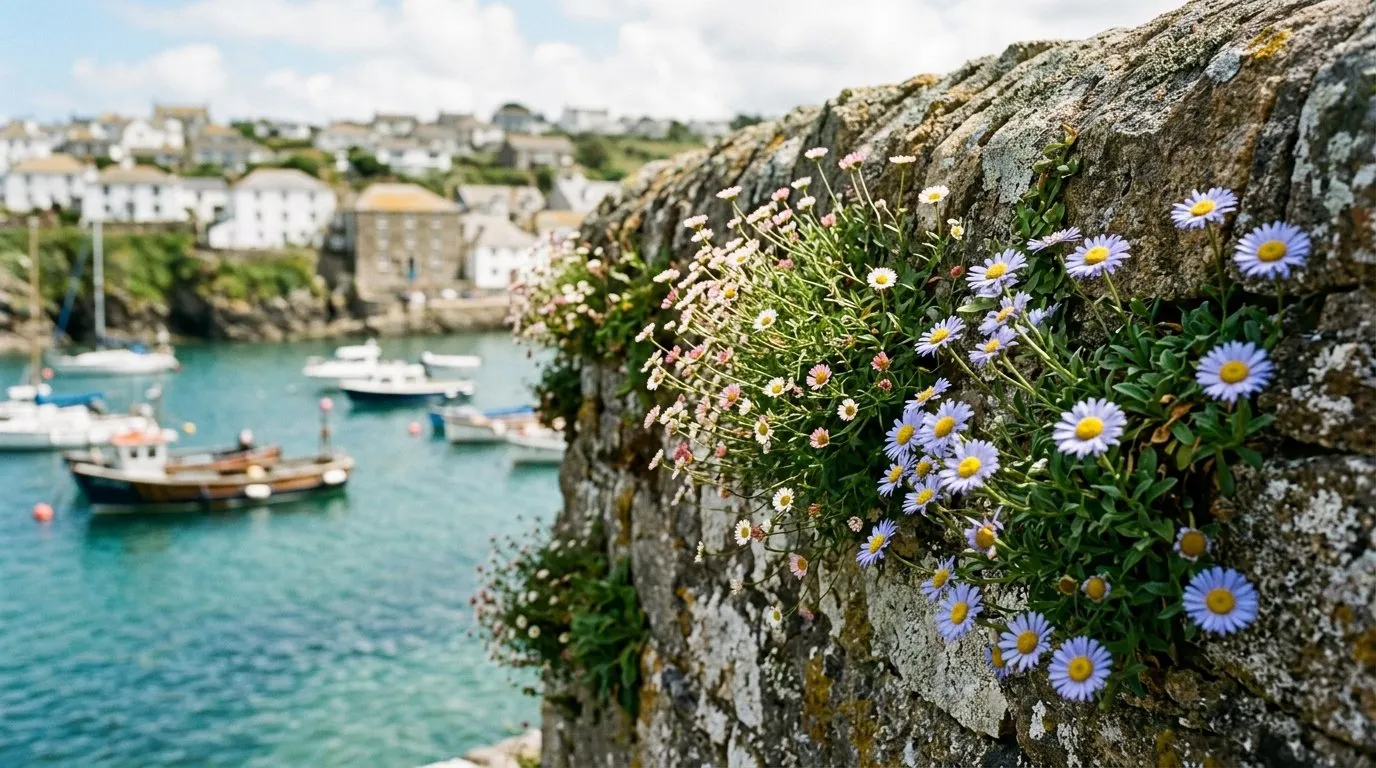
Mexican fleabane (left) and the larger lilac seaside daisy (right) on a harbour wall. Both love sun, wind and a stony root run.
Erigeron compared with other wall plants
Mexican fleabane is one of several plants that colonise walls and gravel. This table helps you pick the right one for your spot.
| Plant | Flowers | Height | Position | Good to know |
|---|---|---|---|---|
| Mexican fleabane | May to autumn | 15-30cm | Full sun | Long season, easy to control |
| Red valerian | Late spring to summer | 60-90cm | Full sun | Seeds very freely, suits big walls |
| Aubrieta | Spring | 10-15cm | Full sun | Spreads as a mat over wall faces |
| Yellow corydalis | Spring to autumn | 20-30cm | Sun or part shade | Good for shadier walls |
| Ivy-leaved toadflax | Late spring to summer | Trailing | Sun or shade | Tiny, for damp wall faces |
For spring colour on a wall, the guide to growing aubrieta pairs well with fleabane. If you want a bigger, bolder wall plant, read about growing red valerian.
Mexican fleabane care calendar
| Month | What to do |
|---|---|
| January | Leave plants standing to protect the crowns |
| February | Order seed. Clear leaves off gravel |
| March | Cut plants back hard to about 5cm. Start sowing |
| April | Sow into pots, gravel or wall cracks |
| May | First flowers. Water new plants until settled |
| June | In full flower. No deadheading needed |
| July | Flowering continues. Established plants rarely need water |
| August | Let some flowers set seed |
| September | Move or pot up self-sown seedlings |
| October | Still flowering in mild spells |
| November | Leave the old growth for winter |
| December | Nothing to do. Wait for the spring cut |
Common mistakes with Erigeron
- Covering the seed. It needs light to germinate, so sow on the surface.
- Planting in rich, damp soil. It grows floppy and can rot in winter. Keep it lean.
- Growing it in shade. It gets leggy and flowers poorly. Give it full sun.
- Mulching with bark or compost. This smothers the crown and stops seedlings. Use grit instead.
- Cutting back in autumn. Leave old growth over winter and trim in early spring.
Frequently asked questions
How do you grow Erigeron karvinskianus?
Grow it in full sun in lean, free-draining soil. Sow seed on the surface in spring, or plant a pot in a gravel bed or wall. Once it flowers, it usually seeds itself around.
Is Mexican fleabane invasive in the UK?
It self-seeds freely but is easy to control. Seedlings come up mainly in bare gravel, cracks and walls. Pull out any you don’t want while they are small.
Does Erigeron come back every year?
Yes, it is a perennial that also self-seeds. Older plants can be short-lived or lost in a cold, wet winter. Self-sown seedlings usually keep a patch going.
When does Erigeron flower?
Usually from May until the autumn frosts. In a warm, sheltered spot it can start earlier and carry on later. It is one of the longest-flowering plants you can grow.
Why are my Erigeron flowers different colours?
Each flower opens white and turns pink as it ages. New flowers keep opening, so the plant carries white and pink daisies together. That’s what gives it its soft, two-tone look.
How do you stop Erigeron getting leggy?
Cut it back hard in early spring, to about 5cm. Fresh, dense shoots soon follow. Full sun and lean soil also keep it compact.
For more tough plants that shrug off dry summers, read the guide to drought-tolerant plants for UK gardens. The plants hub has plenty more ideas.
Our team produces practical UK gardening guidance from source research, contributor records and established horticultural practice. Editorial standards are overseen by Matt W.


