Key takeaways
- Set slabs on edge at 30-60 degrees with two-thirds of their depth buried
- Planting slots should be 2-5cm wide: wider gaps lose the crevice effect
- Backfill with 50% grit, 25% sharp sand and 25% loam, never rich compost
- Reclaimed paving slabs cost £0-£2 each; quarry sandstone runs £180-£280 per tonne
- Plant plugs or 9cm pots at most; big pot-grown alpines rarely root into slots
What Is a Crevice Garden and Why Do Alpines Thrive in One?
A crevice garden is a bed of stone slabs set vertically or at a steep angle, with planting slots 2-5cm wide between them. Two-thirds of every slab sits below the surface, so what looks like a row of stone fins is anchored 20cm deep or more. Czech rock gardeners refined the style in the 1980s, and it has spread to botanic gardens across Europe and North America.
Alpines do better in those slots than in any pot or border for three reasons. First, sharp drainage: rain hits the angled stone and runs straight down the faces, so the surface drains in under a minute. Second, a cool root run: roots follow the slab faces 30cm down, where summer soil stays 8-10C cooler than the surface. Third, dry crowns: each rosette sits on stone and grit rather than wet compost, and a dry crown is the single biggest factor in winter survival.
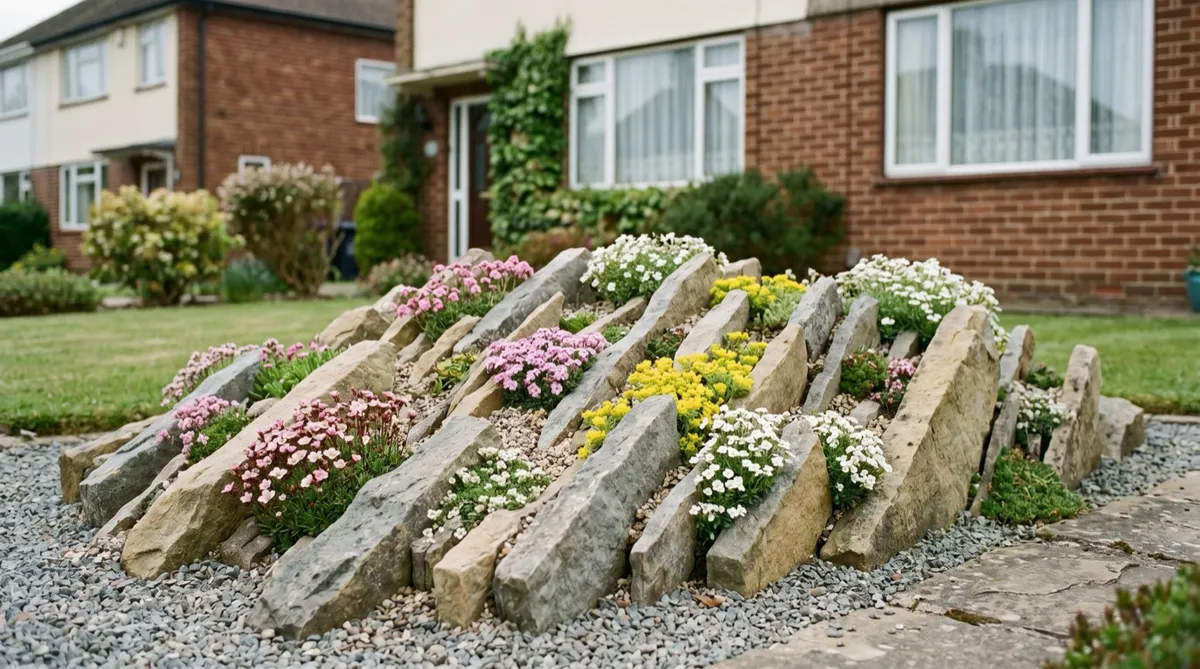
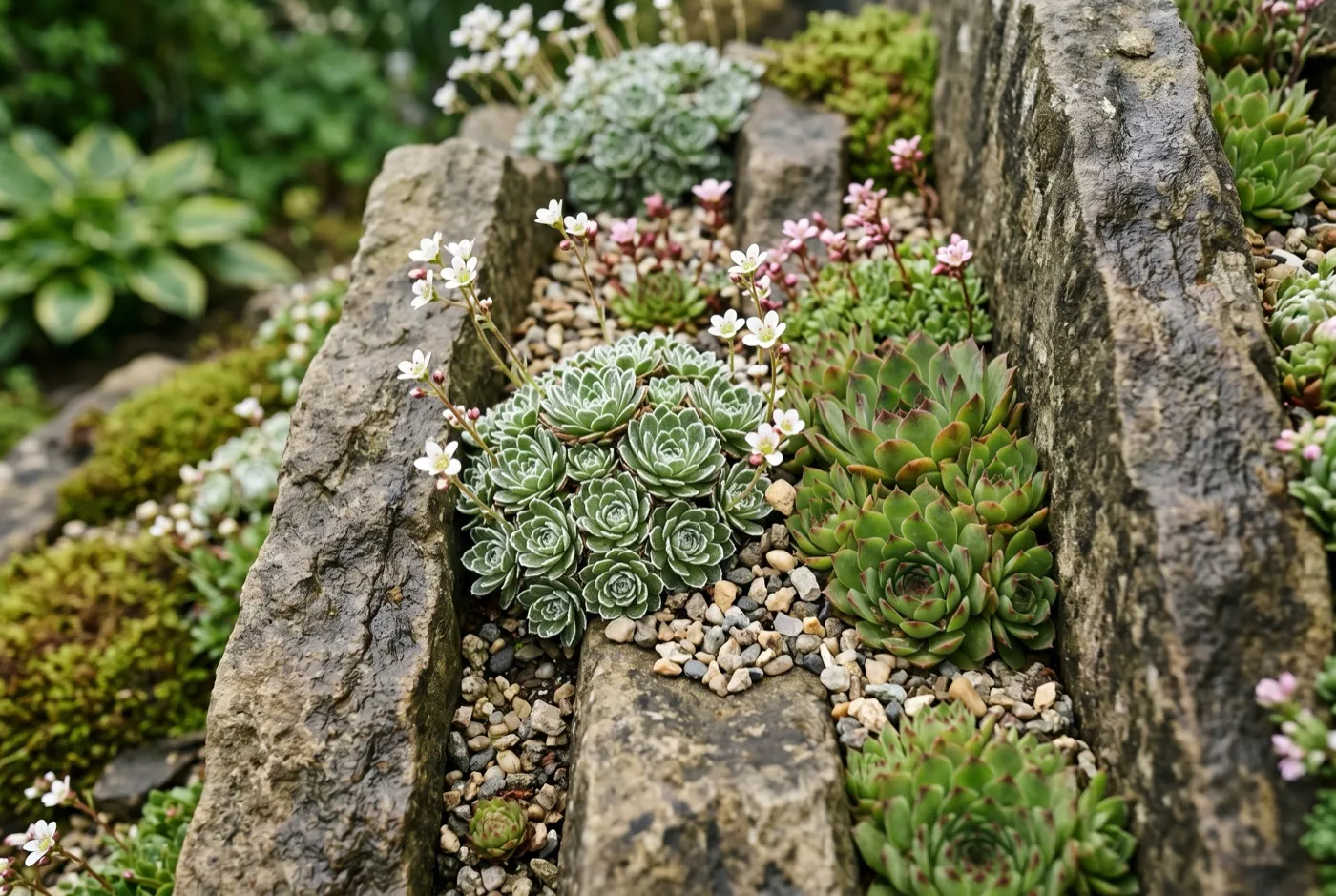 Alpines flowering in 2-4cm slots. Each crown sits on stone and grit, never on wet compost.
Where to Source Crevice Garden Stone in the UK
Slate offcuts from roofing merchants are the next best buy at £40-£80 per tonne. Thin slate suits very tight 2cm slots and gives crisp, dark strata lines. Buying new, local quarries sell sandstone at £180-£280 per tonne and limestone at £200-£300 per tonne. A 2m x 1m bed swallows roughly 250-300kg, so a new-stone build costs £50-£90 in rock alone. Stick to one stone type per bed so the strata read as a single outcrop.
Reclaimed sandstone paving is the gold standard because every strip comes out a consistent 35-40mm thick, which keeps the strata lines parallel, and the faces are already weathered.
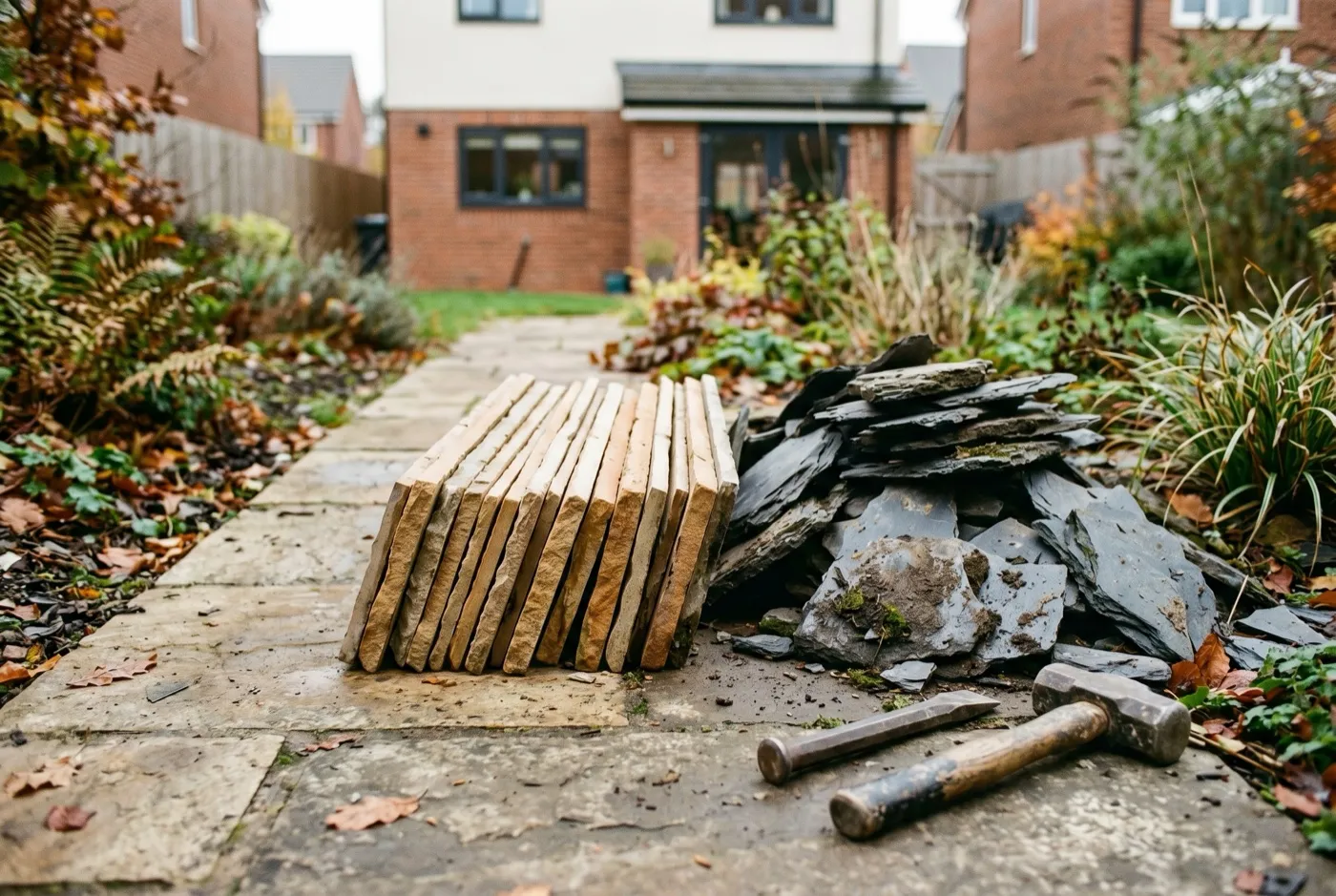 Reclaimed paving split into 150-200mm strips beside slate offcuts. One stone type per bed keeps the strata honest.
How to Build a Crevice Garden Step by Step
The build follows six stages. Ours took three days spread over a week in October.
- Mark out and dig (day 1). Excavate the footprint 25-30cm deep. On clay, fork the base and add a 10cm layer of coarse gravel. If water still sits in the hole overnight, fix that first with the methods in our soil drainage and structure guide.
- Split the slabs (day 1). Score each slab with a bolster, then snap it over a timber edge into 150-200mm strips. Expect one breakage in every five or six slabs.
- Set the spine (day 2). Stand the tallest strips along the centre line at 30-60 degrees, two-thirds buried. Check the angle against a phone level and keep every slab parallel.
- Work outwards (day 2). Add rows either side, leaving 2-5cm gaps. Backfill each crevice with gritty mix as you go, ramming it down with a cane so no air pockets remain.
- Top dress (day 3). Spread 3cm of 6mm grit over every soil surface, tucking it under each slab edge.
- Settle (days 4-14). Water the whole bed once, then leave it 10-14 days. A finished slab should not shift when you lean your full weight on it.
The critical mistake is laying the stone flat, or near flat. Below 30 degrees the slabs stop channelling rain downwards, the gaps sit like saucers, and you have built crazy paving with plants in the joints. The angle is the whole mechanism, not a styling choice.
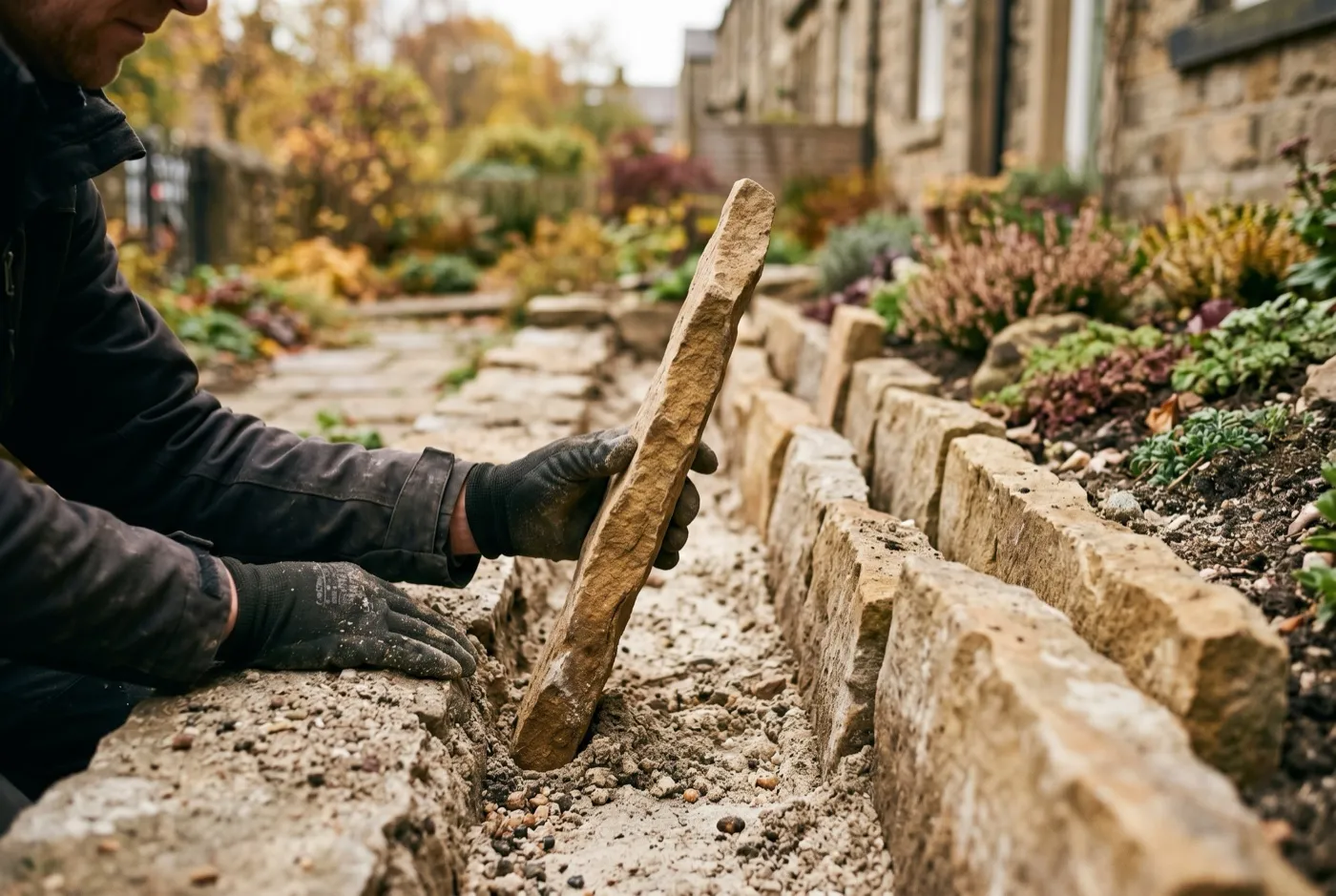 Setting the spine row. Each strip goes in at 30-60 degrees with two-thirds of its depth below the surface.
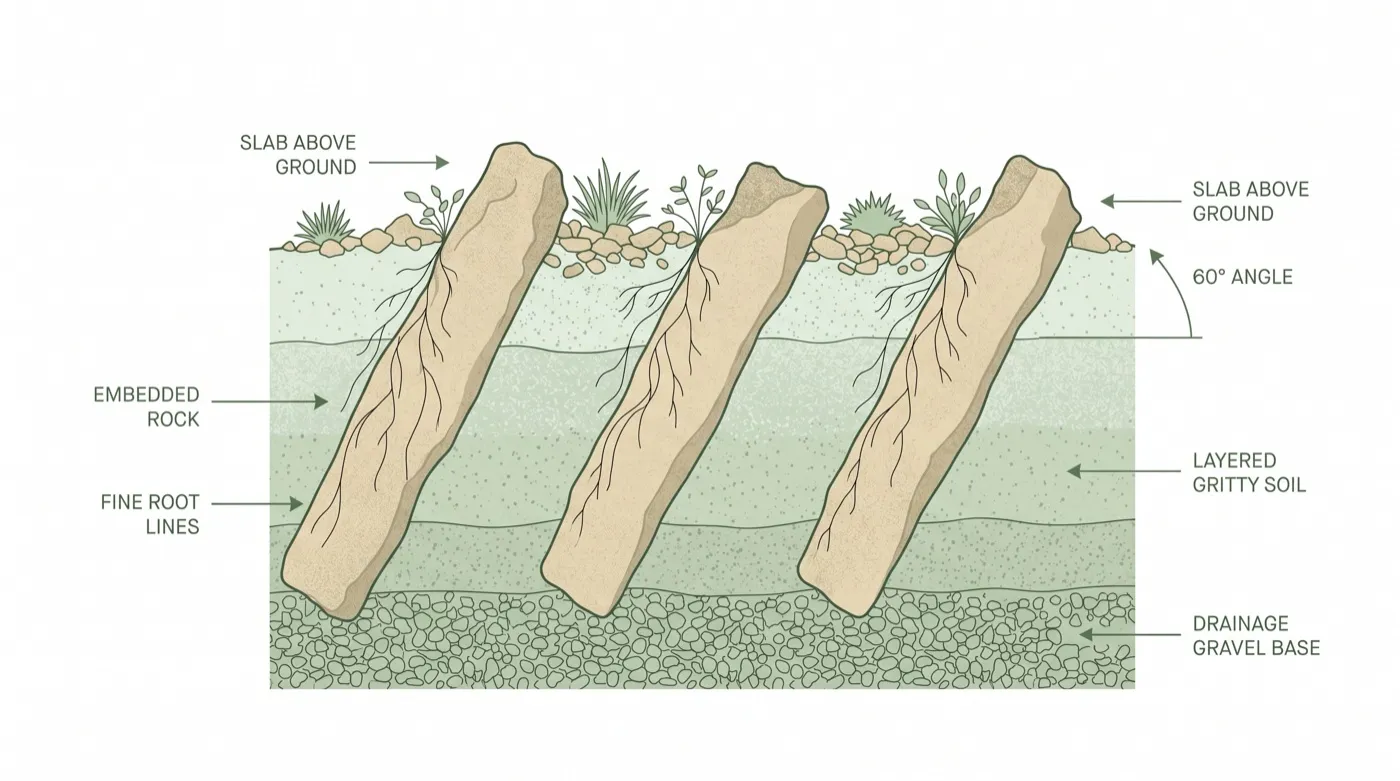 The hidden two-thirds. Buried slabs anchor against frost heave and guide roots 30cm down to cool, damp grit.
The Planting Mix That Keeps Crowns Dry
The backfill is 50% horticultural grit (4-6mm), 25% sharp sand and 25% sterilised loam. John Innes No.1 stands in for the loam if you cannot source it loose. A 2m x 1m bed takes around 150 litres of mix, which cost us £35 in bagged materials.
That ratio looks brutally lean, and it should. Alpines evolved on mountains where nutrients are scarce and water vanishes in minutes. Grown lean, they form tight cushions with hard, wax-coated foliage. Grown in multi-purpose compost they balloon into soft growth through summer, then that lush tissue rots when November rain arrives. The mix drains in seconds, holds a thin film of moisture against the sand grains, and feeds the plants just enough.
Never substitute multi-purpose or peat-based compost for the loam, and skip fertiliser entirely. The 3cm grit top dressing matters as much as the mix below it: it holds each collar clear of damp soil and stops rain splashing mud into the rosettes.
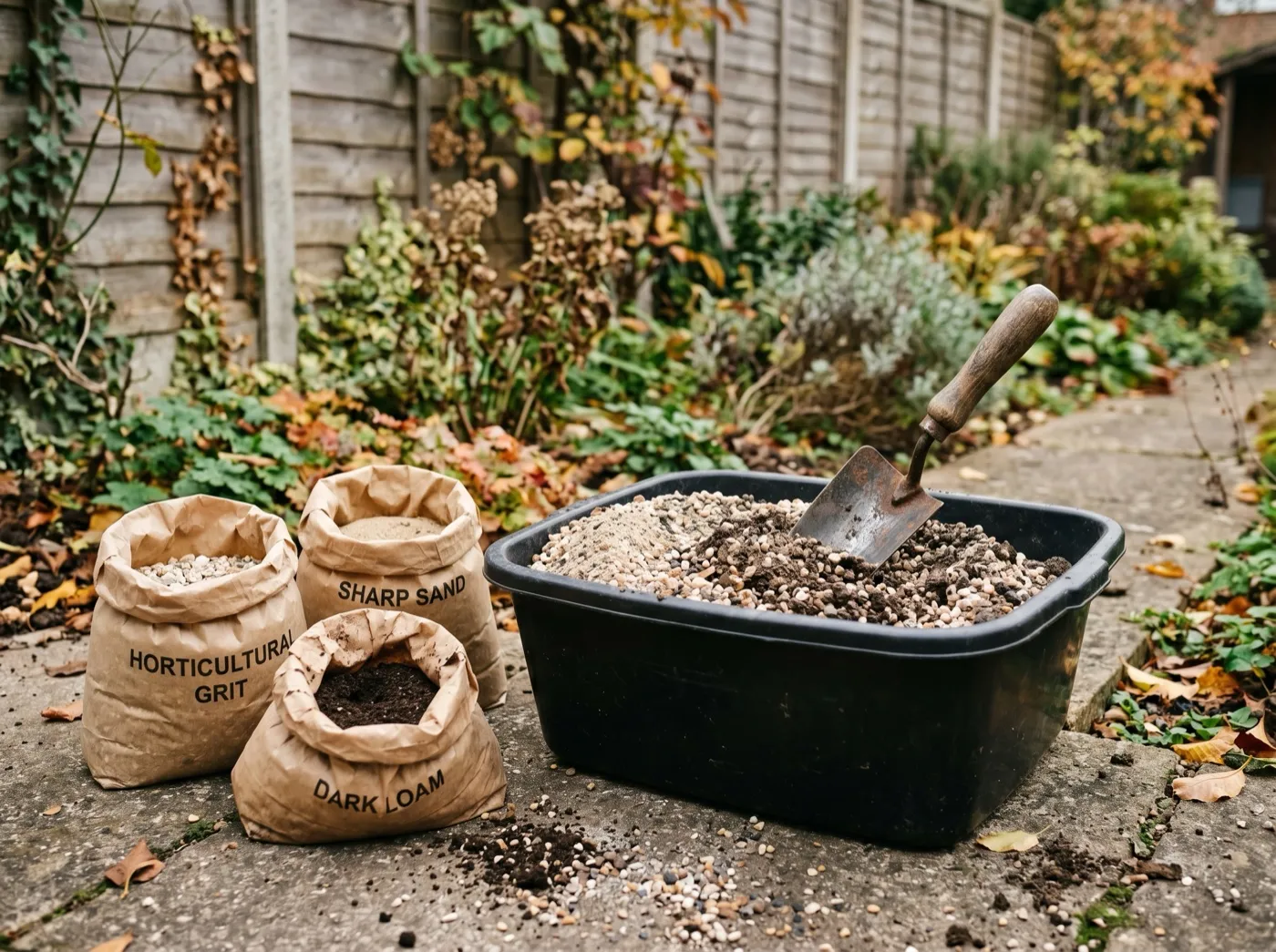 The 50:25:25 backfill. Half grit, a quarter sharp sand, a quarter loam, and no fertiliser at all.
Best Alpines for UK Crevice Gardens
Crevice Garden Care Month by Month
October is the best month to build, because the stone settles before the frosts. Spring builds work too, but water them more in their first summer.
| Month | Task |
|---|---|
| January | Check crowns after storms, lift off any wet leaves, never water |
| February | Look for frost heave on new plantings, re-firm grit around collars |
| March | First planting window once soil passes 7C, Draba flowers now |
| April | Main planting month, water new plugs weekly if dry |
| May | Peak flowering, water first-year plants every 5-7 days in dry spells |
| June | Deadhead Dianthus and Phlox, take Sempervivum offsets |
| July | First-summer beds get 10 litres per square metre weekly in drought |
| August | Established beds need no water, shade Lewisia in heatwaves |
| September | Second planting window, order stone for an autumn build |
| October | Best month to build, slabs settle for 10-14 days before frost |
| November | Clear fallen leaves weekly, wet leaves rot crowns in days |
| December | Fit a propped pane over Lewisia and Gentiana in the wettest districts |
Why Crevice Beds Outlast Conventional Rockeries
The root cause of most alpine deaths in Britain is winter wet sitting in the crown, not frost. The plants are built for cold: many tolerate -15C to -20C under alpine snow. What they never meet on a mountain is four months of mild, saturated soil pressed against the rosette.
A rockery cannot avoid that. Its open soil pockets hold compost that stays saturated from November to February, and every crown sits in it. Our side-by-side numbers tell the story: 21 of 36 rockery plants survived two winters (58%), against 33 of 36 in the crevice bed (92%). Same species, same garden, 4m apart.
Common Mistakes That Kill Crevice Plantings
- Laying slabs flat. It feels safer and uses less stone, but below 30 degrees the bed stops shedding water and becomes paving. Stand the stone up and bury two-thirds.
- Using rich compost. Multi-purpose compost holds ten times the winter moisture of a gritty mix and feeds soft growth. Stick to 50% grit, 25% sand, 25% loam.
- Cutting crevices too wide. Past 5cm a slot turns into a soil pocket that slumps, waterlogs and grows weeds. If a gap looks generous, wedge a stone shim into it.
- Planting big pot-grown alpines. A 1-litre rootball cannot enter a 4cm slot, so people dig out the top of the crevice and leave air pockets. Buy plugs and let them grow into the stone.
- Skipping autumn leaf clearance. One wet sycamore leaf lying on a cushion for a fortnight will rot it. Clear the bed weekly through November.
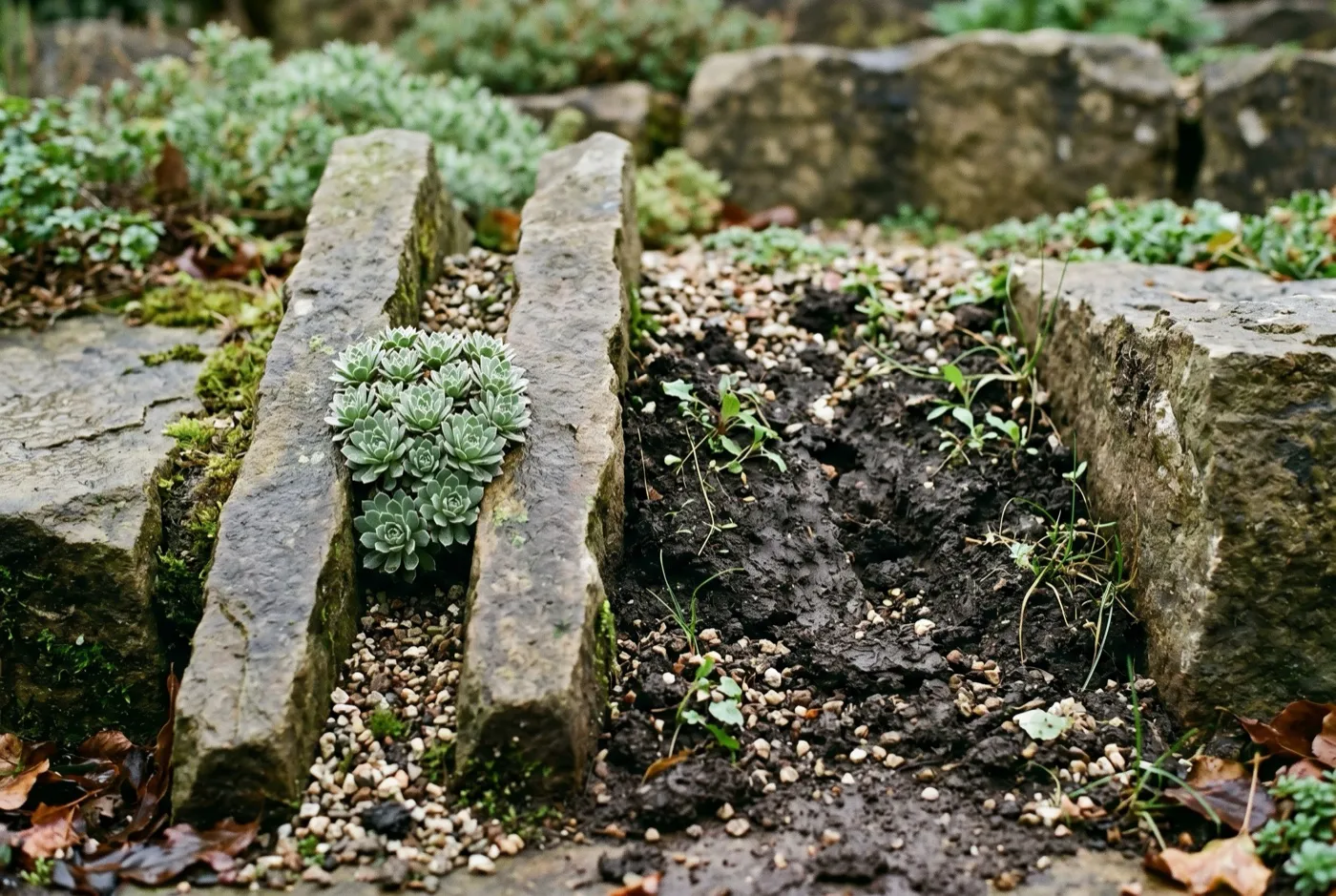 Left: a 3cm slot holding a plug firm. Right: an 8cm gap where soil slumps, puddles and invites weeds.
Frequently asked questions
What is a crevice garden?
A crevice garden is stone slabs set on edge with narrow planting slots between. The slabs sit at 30-60 degrees with two-thirds of their depth buried, copying a natural rock outcrop. Alpines root down the cool stone faces into gritty soil. The style comes from Czech rock gardeners and suits wet UK winters far better than a flat rockery.
How wide should crevice garden gaps be?
Between 2cm and 5cm, just wide enough for a small plug plant. Tight slots hold the rootball firm, channel rain straight down and leave no room for weeds. Anything wider than 5cm behaves like a rockery pocket: the soil slumps, holds winter wet and the crevice effect is lost.
What angle should crevice garden slabs be set at?
Between 30 and 60 degrees, with two-thirds of each slab buried. The angle sheds rain off the crowns and directs it down the stone faces to the roots. Burying two-thirds anchors the slab against frost heave and gives roots a long, cool run. Slabs laid flat just make crazy paving.
What soil mix does a crevice garden need?
Use 50% horticultural grit, 25% sharp sand and 25% loam. John Innes No.1 works as the loam part. The mix drains in seconds and stays lean, which keeps growth compact and hard. Rich compost is the most common killer: it feeds soft growth that rots in a wet November.
Which alpines grow best in a UK crevice garden?
Can I build a crevice garden from old paving slabs?
Our team produces practical UK gardening guidance from source research, contributor records and established horticultural practice. Editorial standards are overseen by Matt W.