Key takeaways
- Pick an open, sunny, free-draining spot; a natural slope beats any flat bed
- Lay a 15-20cm drainage base of rubble and grit on clay before anything else
- Mix soil 1:1:1 by volume: topsoil, horticultural grit, and leaf mould or compost
- Bury one third to half of every rock and align the strata lines for a natural look
- Tilt rocks slightly back so rain runs into the planting pockets, not off the front
- Top-dress with 3-4cm of grit; winter wet, not cold, kills more alpines than anything
A rockery is the closest a UK garden gets to a mountainside, and it lives or dies on drainage. Rock gardens copy the conditions where alpines grow wild: thin, lean soil, baking sun, and water that drains away in seconds. Get the drainage right and a rockery thrives for decades with almost no feeding or watering. Get it wrong and you bury good plants in cold, wet soil that rots their roots over winter. This guide covers how to build a rockery from the ground up: choosing the site, laying the drainage base, mixing the soil, setting the rocks so they look natural, and planting the alpines that suit a British climate.
The whole approach rests on two ideas. First, sharp drainage below the plants. Second, part-buried rocks set with aligned strata so the rockery reads as a natural outcrop, not a pile of stones. Skip either and it shows.
Choosing the right spot for a rock garden
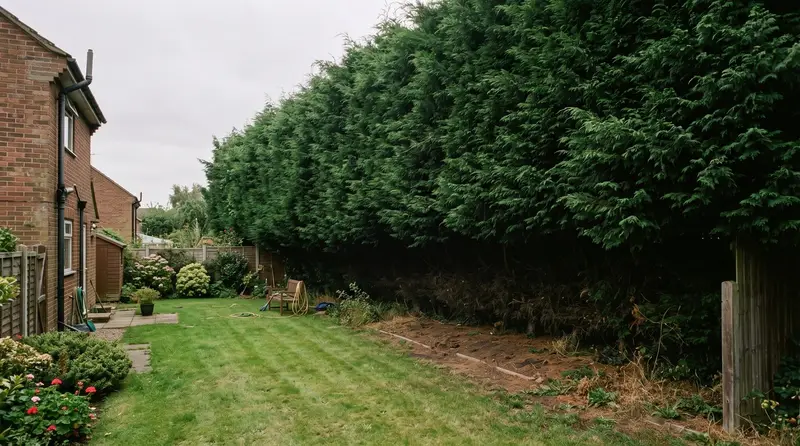
Avoid two places above all. The first is under trees: dripping canopies, deep shade, and a mat of greedy roots starve and rot alpines. The second is any boggy hollow where water sits after rain. Alpines evolved on scree and rock ledges where meltwater runs straight off. Standing water is fatal.
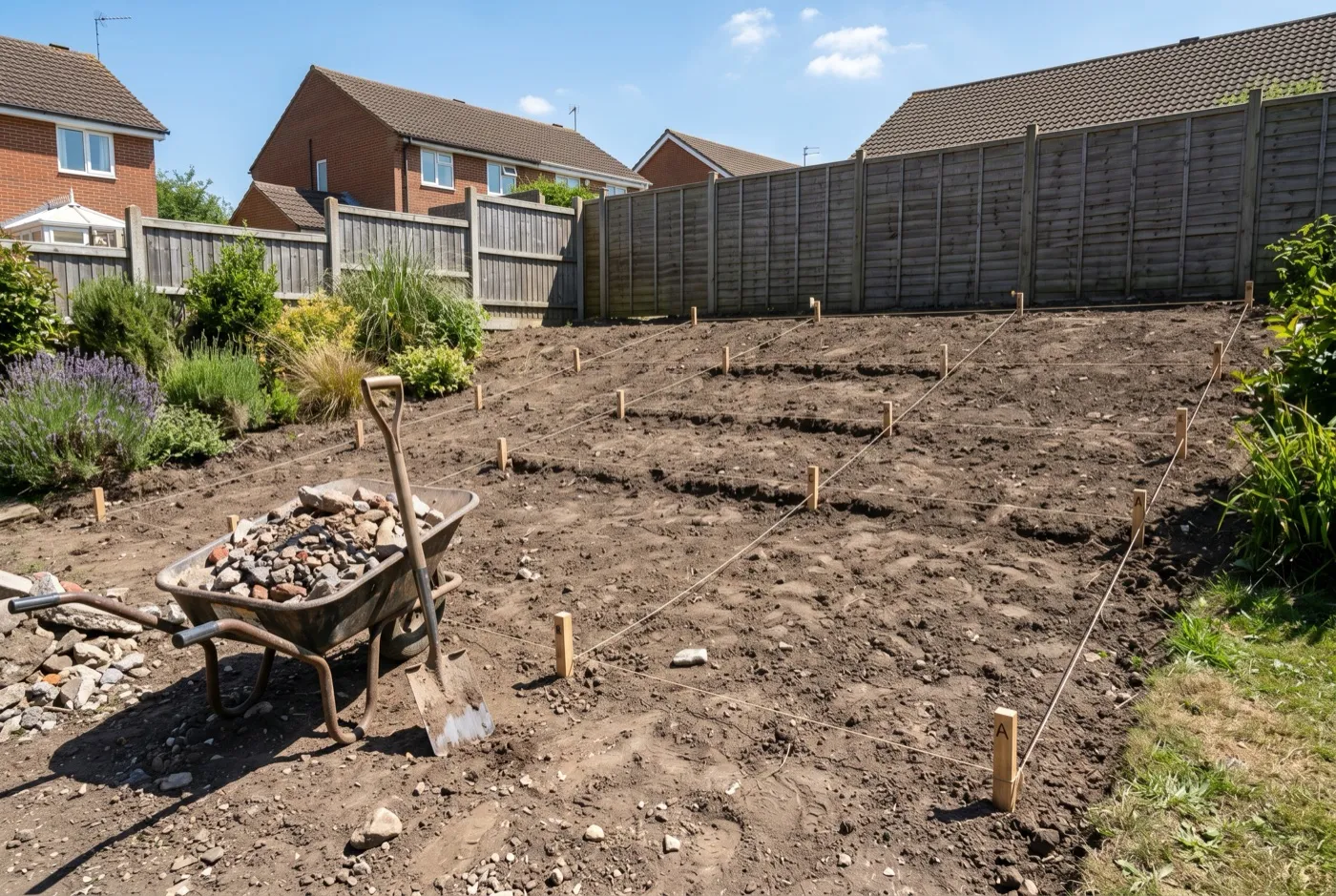 An open, south-facing slope in full sun is the ideal rockery site. Note the absence of overhanging trees that would shade and starve alpines.
Laying a drainage base that alpines need
The drainage base is the part most people skip, and the part that decides everything. Alpines die from winter wet, not cold. Their roots need air, and waterlogged soil drowns them. On free-draining sandy soil you can sometimes plant straight into improved ground. On clay, you cannot.
For clay or any heavy soil, dig out the top 15-20cm across the rockery footprint. Fill the base with a 10-15cm layer of rubble or hardcore: broken brick, crushed concrete, or stone chippings all work. Top that with a 5cm layer of coarse grit to stop the soil washing down into the rubble and clogging it. This whole sandwich gives water somewhere to go.
Warning: A drainage problem cannot be fixed once the rocks and plants are in. If you lay too shallow a base on clay, the only cure is to dismantle the whole rockery and start again. Spend the effort here, not later.
Mixing the right gritty soil for a rockery
Ordinary garden soil holds too much water for a rockery. You need a free-draining, lean mix that drains fast and stays low in nutrients, because rich soil makes alpines soft and leggy.
The standard recipe is equal parts by volume of three ingredients:
- Topsoil or loam. The body of the mix, ideally a low-fertility loam rather than rich vegetable-bed soil.
- Horticultural grit. Sharp, lime-free grit at 3-6mm opens the mix and creates the drainage channels alpine roots need.
- Leaf mould or garden compost. A small amount of organic matter holds just enough moisture between the grit.
That 1:1:1 ratio suits most rockery plants. For true alpines such as saxifrages and encrusted cushions, shift the balance towards more grit, roughly 2 parts grit to 1 part each of loam and leaf mould. The poorer and grittier the mix, the tighter and more weather-hardy the plant. A rockery is one of several lean-soil styles, and the planting in a Mediterranean-style scheme relies on the same sharp drainage.
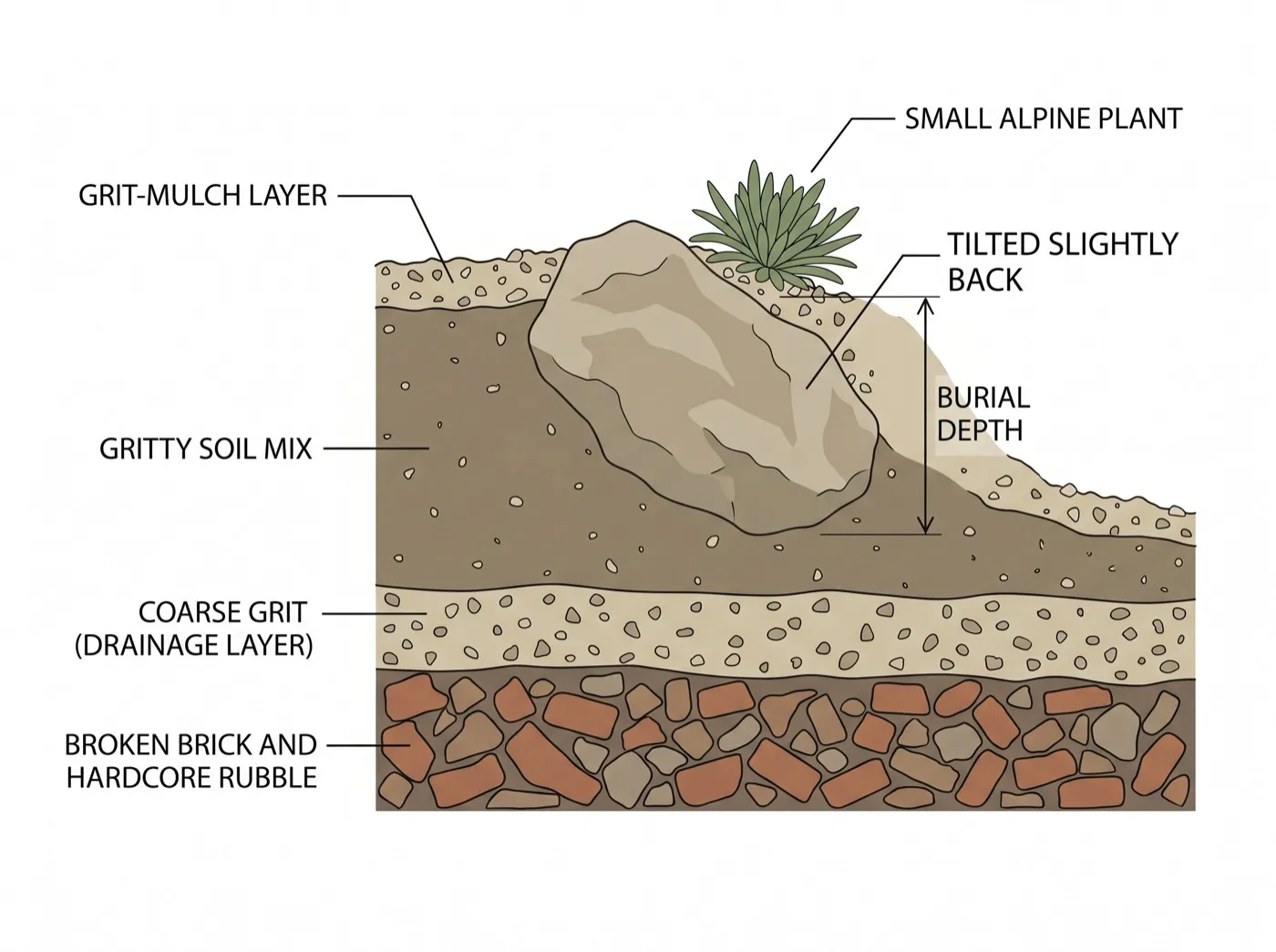 The layered build, bottom to top: 10-15cm hardcore, 5cm coarse grit, the 1:1:1 gritty soil, part-buried rock, and a 3-4cm grit mulch over the surface.
Choosing and estimating your stone
Use one type of local stone for a natural result. Mixing limestone, sandstone, and slate in one rockery looks like a builder’s offcut pile. A single stone type reads as a true outcrop. Buy from a local quarry where you can, both for the right regional look and to cut delivery cost on heavy material. Spare stone from the same batch also lends itself to rock and stone edging ideas that tie the rockery into nearby beds and paths.
Each stone type has its own character. Limestone weathers into soft, rounded shapes and suits lime-loving alpines. Sandstone is warm and easy to read for strata. Slate gives sharp, dramatic angles. Granite is hard, slow to weather, and very long-lasting.
| Stone | Look | Cost per tonne | Weathering | Best for |
|---|---|---|---|---|
| Sandstone | Warm, clear strata lines | £120-£180 | Moderate, mellows in 2-3 years | Easiest for beginners to set naturally |
| Limestone | Pale, rounds with age | £140-£220 | Fast, takes moss quickly | Lime-loving alpines, cottage settings |
| Slate | Dark, sharp angular planes | £150-£250 | Very slow, stays crisp | Modern or dramatic rockeries |
| Granite | Hard, speckled, blocky | £160-£280 | Extremely slow | Permanent, low-change structural rockeries |
Setting the rocks so they look natural
This is where a rockery is made or ruined. The goal is a natural outcrop, where rocks look like they surfaced from the bedrock rather than being tipped on top.
Place the largest rock first as a keystone. This anchors the design and sets the line for everything else. Lever heavy rocks with a crowbar and rollers; never lift more than you safely can.
Three rules turn a heap of stones into an outcrop:
- Align the strata. Set every rock with its layered lines or grain running the same direction, as they would in natural rock. This single trick does most of the work.
- Tilt rocks back into the slope. Angle each rock so its face leans slightly backwards. Rain then runs into the planting pockets and down to the roots, not off the front and away.
- Bury one third to one half. Sink each rock so a third to a half sits below the soil. A part-buried rock looks anchored; a rock sitting on the surface looks dumped.
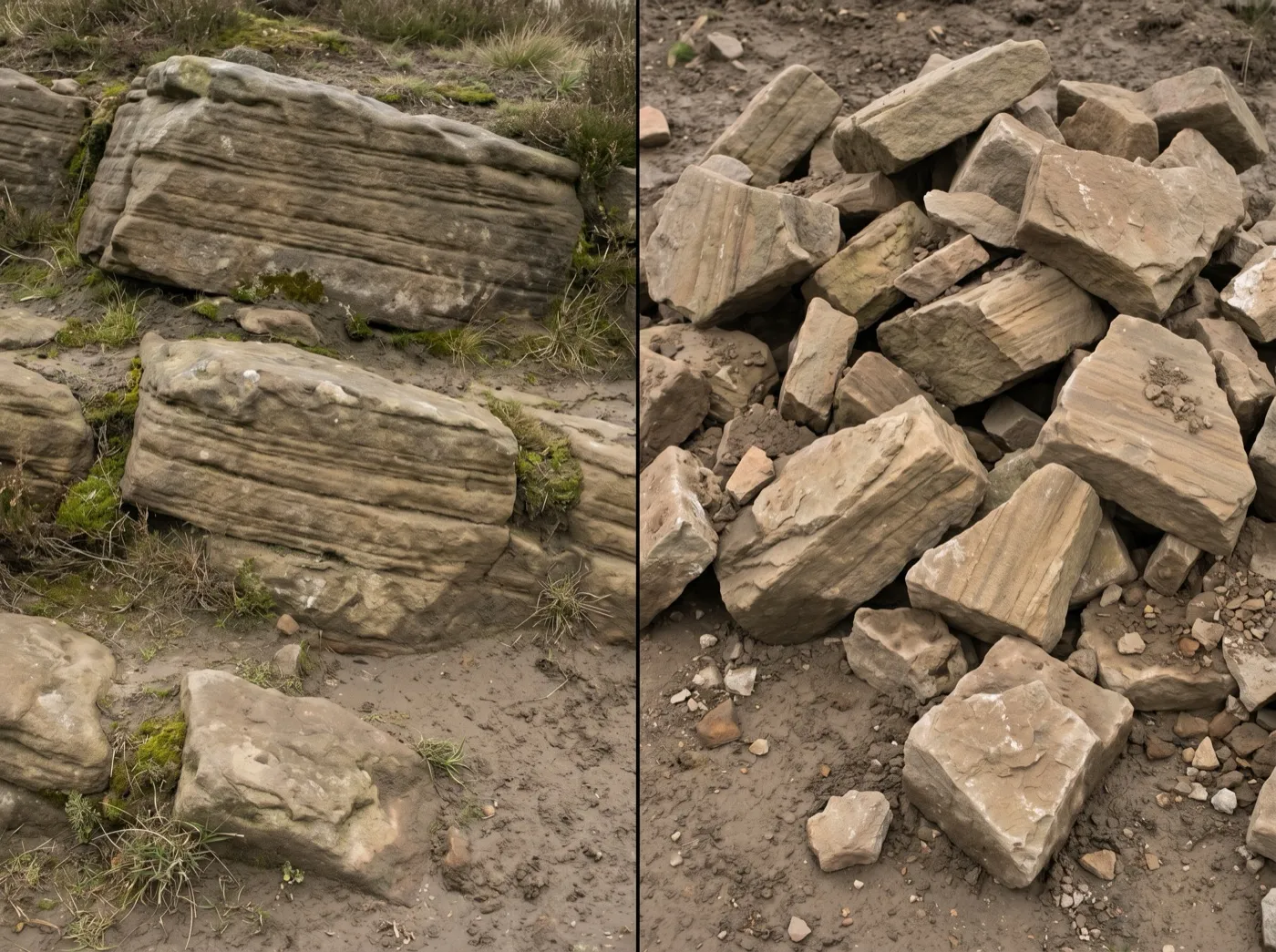 Left: rocks part-buried with strata aligned, reading as a natural outcrop. Right: rocks dumped on the surface with random grain, the classic beginner mistake.
Leave planting pockets between and beside the rocks as you go. Backfill these with your gritty mix, firming gently so no air gaps remain around the roots.
Best alpines and rockery plants for UK gardens
Choose plants that want sun and sharp drainage and stay small. The classic UK rockery plants are tough, low, and spreading, knitting the soil together and softening the stone.
| Plant | Spread | Flowering | Sun and drainage need |
|---|---|---|---|
| Sempervivum (houseleek) | 10-30cm | Summer | Full sun, very sharp drainage |
| Sedum (stonecrop) | 15-40cm | Summer to autumn | Full sun, dry, lean soil |
| Saxifraga (saxifrage) | 10-25cm | Spring | Sun to part shade, gritty, never wet |
| Aubrieta | 30-60cm | Spring | Full sun, free-draining, alkaline |
| Dianthus (alpine pink) | 15-30cm | Early summer | Full sun, sharp, slightly limy |
| Armeria (thrift) | 15-30cm | Late spring | Full sun, tolerates coastal salt |
| Phlox subulata | 30-50cm | Spring | Full sun, free-draining |
| Campanula (alpine) | 15-40cm | Summer | Sun to light shade, gritty |
Gardener’s tip: Plant alpines through the grit mulch, not under it. Set the plant, firm it in, then tuck grit right up to the collar so the neck stays bone dry. A dry collar is what stops crown rot over a wet British winter.
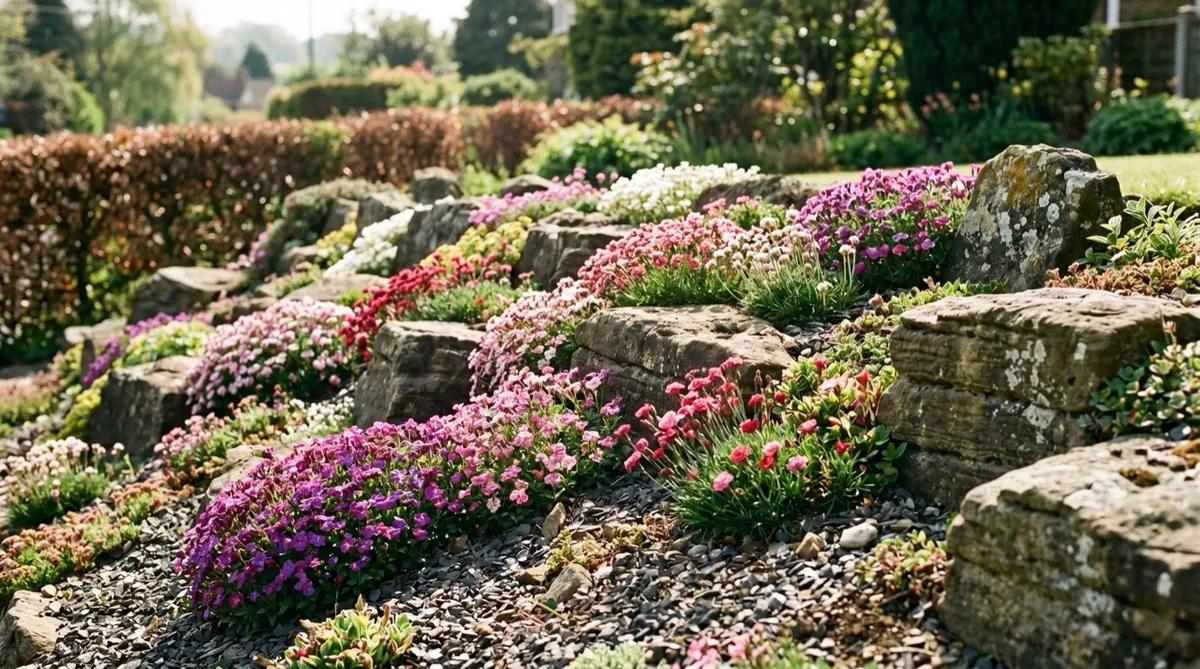
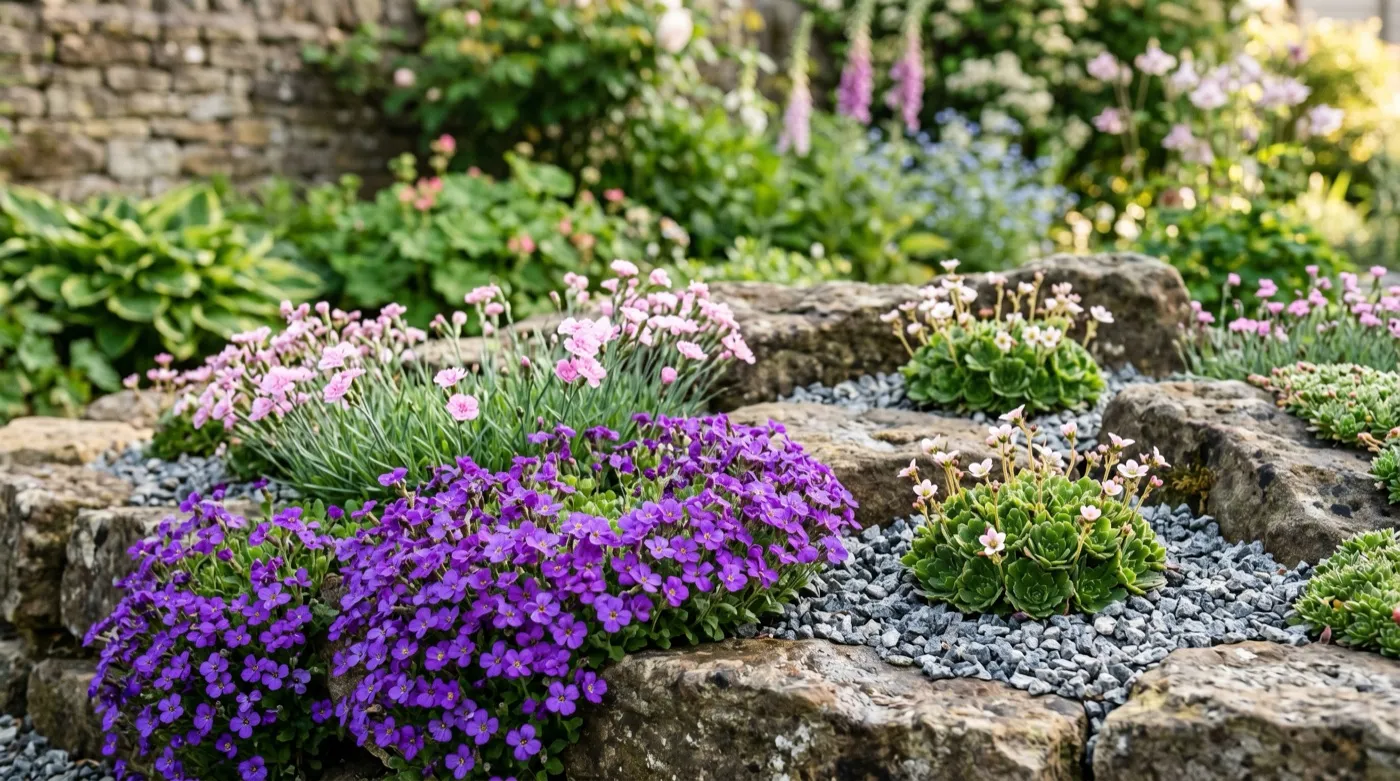 A two-year-old rockery in May, with Aubrieta, alpine Dianthus, and Saxifraga softening the stone. Grit mulch keeps every plant’s neck dry.
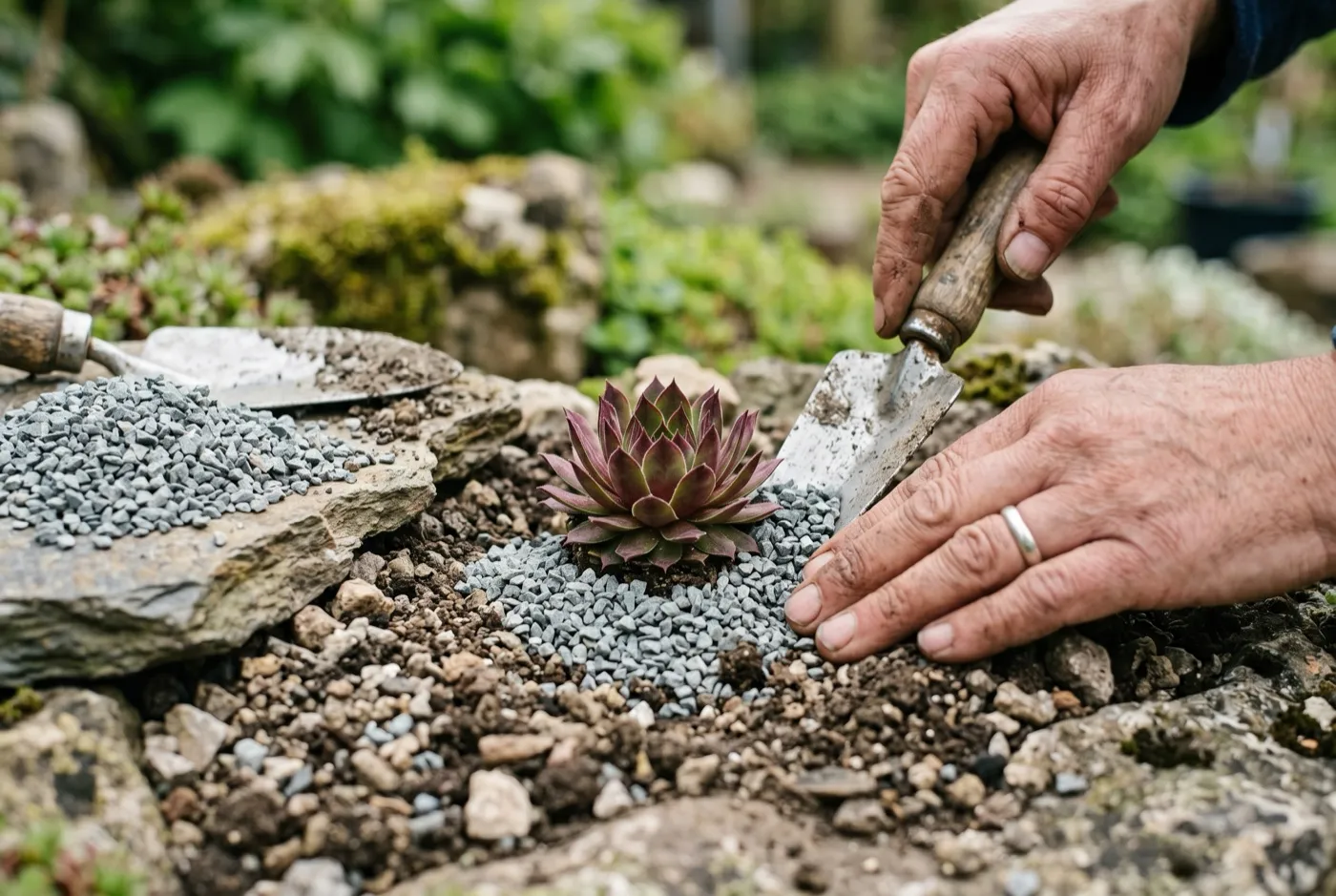 Tuck a 3-4cm grit collar right up to each plant’s neck. A dry collar is the single best defence against winter crown rot.
Top-dressing also finishes the rockery visually, blending the gritty soil into the stone so no bare earth shows.
A month-by-month rockery calendar for the UK
A rockery needs little once built, but the jobs fall in a clear seasonal rhythm.
| Month | Task |
|---|---|
| January | Clear fallen leaves off cushions; check no rock has shifted in frost |
| February | Top up grit mulch where rain has thinned it |
| March | Plant spring alpines; sow alpine seed in a gritty seed tray |
| April | Weed thoroughly before growth covers the ground; first feed if very lean |
| May | Peak flowering; deadhead Aubrieta and trim after the first flush |
| June | Plant summer alpines; water new plants only in dry spells |
| July | Trim spreading plants like Phlox subulata after flowering |
| August | Take Sempervivum offsets and cuttings of cushion alpines |
| September | Best month to plant pot-grown alpines; refresh grit mulch |
| October | Clear leaves promptly; cut back any soft growth before winter wet |
| November | Cover the most rot-prone cushions with a pane of glass if very wet |
| December | Leave well alone; ensure no debris traps water on the crowns |
Common rockery mistakes to avoid
Most rockery failures trace back to drainage or to rocks that never looked natural. These are the errors that cost the most.
- Skipping the drainage base on clay. This is the killer. Plants rot in a wet winter and you cannot fix it without rebuilding. Always dig out 15-20cm and lay rubble and grit first.
- Using rich garden soil. Fertile soil makes alpines leggy and soft, then they flop and rot. Keep the mix lean and gritty.
- Dumping rocks on the surface. Rocks that sit on top look like rubble. Bury a third to a half of each and align the strata so it reads as an outcrop.
- Building too steep. A bank steeper than 30 degrees washes its soil out before plants bind it. Keep slopes gentle, or terrace a steep site with stone first.
- Forgetting the grit mulch. Bare soil around the necks invites crown rot and weeds. Always finish with 3-4cm of grit tucked to each collar.
The science of why alpines need sharp drainage
Alpine plants evolved on mountain scree and rock ledges where snowmelt and rain drain away in seconds. Their roots are adapted to air-filled, gritty substrate, not the dense, water-holding soil of a typical British border. Understand that and every rockery rule makes sense.
The lifecycle of a rockery failure runs in clear stages. In autumn, rain saturates poorly drained soil. Through winter, that water sits cold around the roots and crown, excluding oxygen. The critical mistake most people make is assuming alpines fail from cold; they do not. Most UK alpines tolerate well below freezing in dry conditions. What kills them is water plus cold together, which rots the crown from the base up. By spring, the gardener finds a brown, collapsed rosette where a healthy cushion stood.
Frequently asked questions
How do you build a rockery for beginners?
Pick a sunny, free-draining spot and lay a rubble base first. Build a low mound of gritty soil, set your largest rock as a keystone, then arrange the rest with their strata lines running the same way. Bury a third of each rock, fill the pockets, and top-dress with grit before planting alpines.
What soil do you use in a rockery?
Use a free-draining gritty mix, not ordinary garden soil. Combine equal parts topsoil or loam, horticultural grit, and leaf mould or compost by volume. Add extra grit for true alpines, which want very lean conditions. Heavy clay alone holds too much water and rots alpine roots over winter.
Which way up should rockery stones go?
Set rocks with their strata lines all running the same way. Most rocks have visible layers or grain; aligning them mimics a natural outcrop. Tilt each rock slightly back into the slope so rain drains towards the roots, and bury a third to half so it looks anchored, not dumped.
What plants are best for a UK rockery?
Choose sun-loving alpines that tolerate sharp drainage. Sempervivum, Sedum, Saxifraga, Aubrieta, Dianthus, Armeria, and Phlox subulata all thrive. Add dwarf spring bulbs for early colour. Avoid anything that wants rich, moist soil, as it will sulk or rot in a lean, gritty rockery.
When is the best time to plant a rockery?
Plant in spring or early autumn, avoiding hard frost and summer drought. Spring planting lets roots establish before winter wet arrives. Autumn suits container-grown alpines on lighter soils. Water in well, then leave well alone; most rockery plants resent fussing once settled into their grit.
Can you build a rockery on clay soil?
Yes, but you must add a deep drainage base first. Dig out 15-20cm and fill with rubble and coarse grit before the gritty soil mix. Without it, clay holds water against the roots and alpines rot. Raising the whole rockery as a mound improves drainage further on wet sites.
Our team produces practical UK gardening guidance from source research, contributor records and established horticultural practice. Editorial standards are overseen by Matt W.