Key takeaways
- Pinks need full sun and soil that drains freely, as wet winter soil kills them
- Border pinks flower from May to September and fade after a few years
- Pipings taken in June or July root easily and give you free plants
- Sweet Williams are sown in June to flower the following May or June
- Alpine pinks in gritty soil or raised beds live longer than border types
- For scent, choose old-fashioned pinks like 'Mrs Sinkins' and 'Gran's Favourite'
Dianthus is a huge family of plants, but for UK gardens it comes down to four main groups. Each has its own lifespan, soil needs and uses. Picking the right group matters more than picking the perfect variety. An alpine pink in a gritty raised bed, for example, will outlive a border pink in heavy clay by years. For more perennial ideas, see our guide to the best perennial plants for UK gardens.
What types of dianthus grow best in the UK?
Four groups do well in British gardens, and each has its own place.
Border pinks are the classic cottage garden pinks. They grow 20 to 40cm tall with silvery, grassy leaves and fringed flowers in June and July. Older kinds flower once, while modern ones repeat until September. After a few years the middle goes bare and woody. They’re the backbone of a traditional border.
Alpine pinks form tight little cushions just 5 to 15cm tall. They’re perfect for rock gardens, troughs, raised beds and gaps in paving. They’re the longest-lived pinks when grown in gritty soil that drains well, and they shrug off cold winters. ‘Inshriach Dazzler’ and ‘La Bourboule’ are reliable choices.
Sweet Williams are biennials. Sow in June, plant out in autumn, and they flower the following May and June before dying. They grow 30 to 60cm tall with dense, flat flower heads in rich reds, pinks and two-tones. They often seed themselves and are the best pinks for cutting.
Modern hybrids, such as the Ideal, Telstar and Sunflor series, are bred to flower from May until the frosts. They’re compact, 15 to 25cm, and great as bedding or in pots. Most fade after two or three years, and they have little scent. But they make up for it with masses of flowers. They’re ideal for container gardening when you want colour from spring to autumn.

Border pinks, alpine pinks and modern hybrids side by side. Flower shape, size and leaves vary a lot between groups.
Dianthus varieties at a glance
| Variety | Type | Flowers | Scent | Best for |
|---|---|---|---|---|
| ’Mrs Sinkins’ | Border pink | June to July | Very strong clove | Borders, cutting |
| ’Doris’ | Border pink | June to September | Strong clove | Borders, edging |
| ’Gran’s Favourite’ | Border pink | June to August | Strong clove | Borders, cutting |
| ’Haytor White’ | Border pink | June to September | Medium | Borders, white gardens |
| ’Inshriach Dazzler’ | Alpine pink | May to July | Light | Rock gardens, troughs |
| ’La Bourboule’ | Alpine pink | May to June | Light | Paving gaps, troughs |
| Cheddar pink (D. gratianopolitanus) | Alpine pink | May to July | Strong | Walls, raised beds |
| Auricula-eyed sweet William | Sweet William | May to June | Medium | Borders, cutting |
| ’Nigrescens’ (black sweet William) | Sweet William | May to June | Light | Dark borders, cutting |
| Ideal Select series | Modern hybrid | May to October | None | Pots, bedding |
| Sunflor series | Modern hybrid | May to October | Light | Patio pots |
| Telstar series | Modern hybrid | May to October | None | Bedding, window boxes |
What soil do dianthus like?
Pinks need soil that drains freely and is neutral to chalky. Wet winter soil kills more pinks than frost ever does.
On chalk and limestone, they grow happily with no help at all. If you garden on chalk, pinks are among the easiest perennials you can grow. Our guide to plants for chalky alkaline soil has more ideas.
On sandy and loamy soils, drainage is usually fine. Check with a cheap soil test kit. If your soil is acid, sprinkle some garden lime in autumn, following the pack.
Raised beds are the easiest answer on heavy clay. Fill with a mix of compost, plenty of grit and some garden soil. Alpine pinks like an even grittier mix.
Pots suit every kind of pink. Use a loam-based compost like John Innes No. 2 with extra grit or perlite. Terracotta is better than plastic, as it dries out faster between waterings.

Pinks in terracotta pots on a sheltered patio. Silver leaves look lovely against warm terracotta.
How to plant dianthus
Plant in March or April, or September or October. Autumn is best, as roots settle over winter and give stronger flowering in May.
Spacing: Border pinks 25 to 30cm apart, alpine pinks 15 to 20cm, sweet Williams 20 to 25cm. Modern hybrids in pots can go 15cm apart for a packed display.
Depth matters. Set the base of the plant, where stems meet roots, exactly at soil level. Too deep and it rots in wet weather. Too shallow and the roots dry out. It’s easy to get wrong with small plants.
Mulch with grit, not bark. Pinks hate soggy mulch against their base. A 2cm layer of grit or gravel keeps the base dry, stops weeds and looks great with silver leaves. It works well for other drought-tolerant plants too.
Go easy on feed. Pinks aren’t hungry. A light sprinkle of general fertiliser in March is plenty. Skip high-nitrogen feeds, which give soft, leggy growth and fewer flowers.
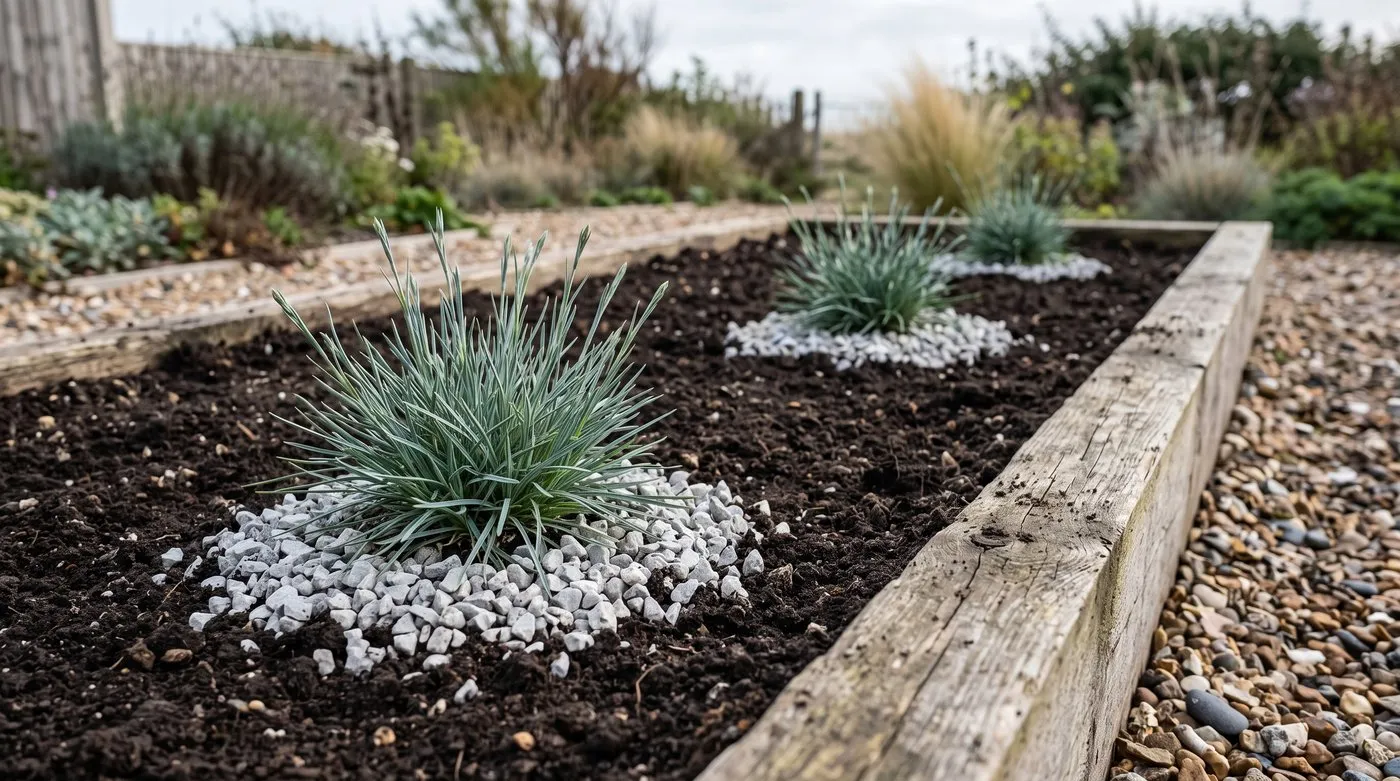
A collar of grit keeps the base of each pink dry through winter. It also shows off those silvery leaves nicely.
How to take pipings from dianthus
Pipings are the easiest way to get free pinks. They’re simpler than cuttings, faster than seed, and give plants just like the parent.
When: June or July, while plants are growing strongly and the stems are firm but not woody.
Pick a shoot: Choose a healthy shoot about 8 to 10cm long with no flower buds.
Pull it: Grip the stem just below a leaf joint and pull sharply upwards. It should snap off cleanly at the joint.
Prepare it: Strip off the lowest two or three pairs of leaves. You don’t need rooting powder, though a little can help. Our guide to plant propagation techniques covers other ways to make new plants.
Pot it: Push it into a 9cm pot of half perlite and half multi-purpose compost. Water lightly and put it in a cold frame or on a shady windowsill. Keep the compost moist but never soggy.
Wait: Roots usually form in about three weeks. Give it a gentle tug, and if it resists, it’s rooted. Pot each one into John Innes No. 2 and grow on for a month or so before planting out.

Pulling a piping from a mature plant. It snaps off cleanly at the leaf joint and roots easily.
Which dianthus smell the best?
Scent is one of the joys of old-fashioned pinks, but it varies hugely. Some have a rich clove perfume, while others have almost none.
‘Mrs Sinkins’ is the classic for scent, an old Victorian variety that’s still hard to beat. The white, double flowers often split their green outer casing, which gives them a charmingly messy look. It flowers once, in June and July. It isn’t the tidiest plant, but the scent makes up for it.
‘Gran’s Favourite’ is the best scented two-tone. It has white petals edged in deep raspberry-pink and a strong clove scent, and holds the RHS Award of Garden Merit. Deadhead it and it flowers again in August.
Modern hybrids have little or no scent, which is the trade-off for their long flowering. If scent matters most, choose an old-fashioned named pink. Our list of the best scented plants for UK gardens has more ideas.
For the best perfume, plant scented pinks in full sun by a warm wall or seat. The scent is strongest on warm afternoons. A group of the same variety smells stronger than a single plant.
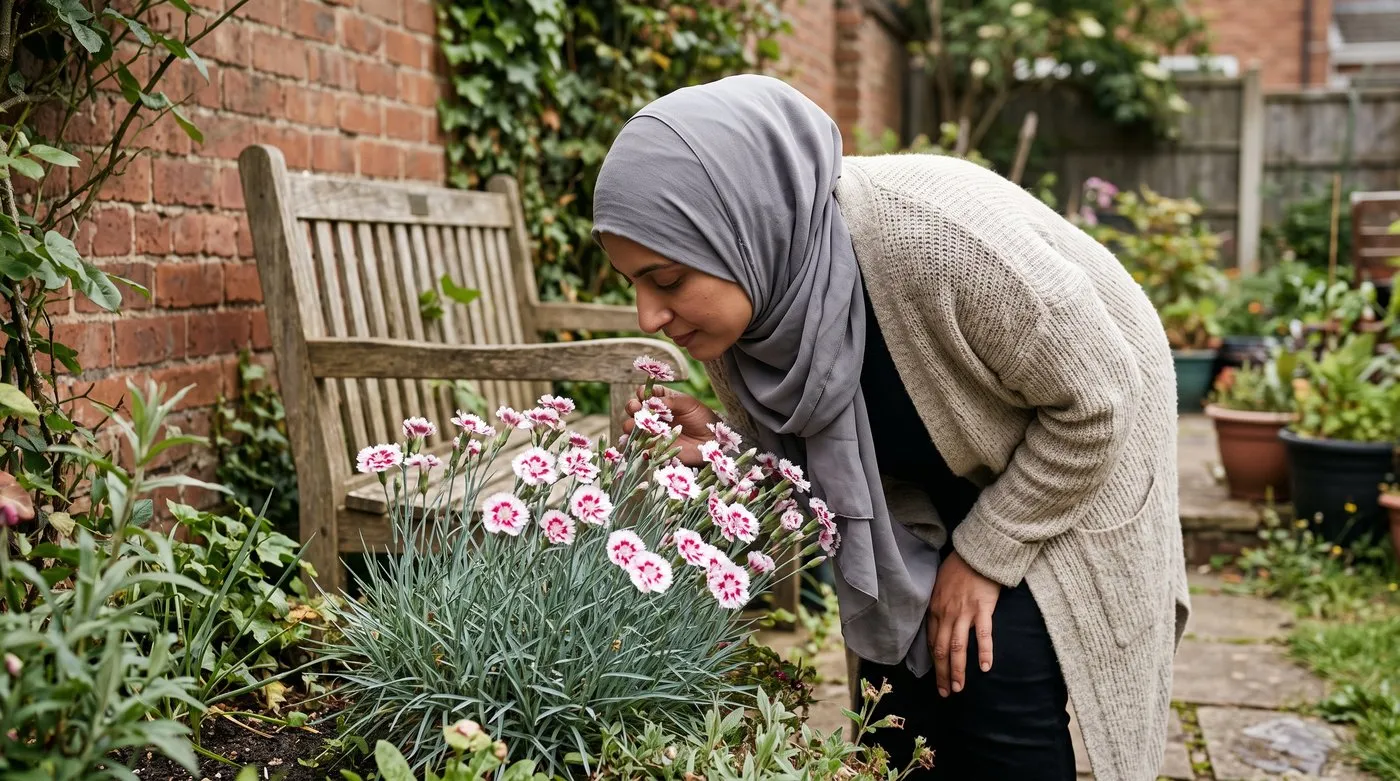
Plant scented pinks by a seat or a warm wall. The clove perfume is at its best on a warm afternoon.
Scent at a glance
| Variety | Scent | Plant it |
|---|---|---|
| ’Mrs Sinkins’ | Strong, pure clove | Near a seat |
| ’Gran’s Favourite’ | Strong, spicy clove | Near seats and paths |
| ’Doris’ | Good clove | Borders, edging |
| ’Haytor White’ | Light and sweet | Borders |
| Cheddar pink | Warm clove | Walls, raised beds |
| ’Inshriach Dazzler’ | Faint | Rock gardens |
| Ideal Select series | Little or none | Pots |
How to grow dianthus in pots
Pinks are some of the best flowering perennials for pots. In areas with heavy clay or lots of rain, they often do better in pots than in the ground.
Pots: Terracotta is ideal, as it dries out faster between waterings. A 20cm pot fits three border pinks. Alpine pinks love shallow pans and troughs. For more ideas, see our best plants for pots.
Compost: John Innes No. 2 with extra perlite or grit. Peat-based composts slump and stay too wet over time.
Drainage: Every pot needs drainage holes. Raise pots on pot feet over winter so they don’t sit in water.
Watering: Water when the top 2cm of compost is dry. That’s every few days in summer, weekly in spring and autumn, and hardly ever in winter. Too much water kills more potted pinks than too little.
Feeding: A tomato feed every couple of weeks from April to August helps flowering. Stop in September so the plants can toughen up for winter.
Winter: Move pots against a warm, sheltered wall. Pinks are hardy, but cold, wet and wind together are tough on plants in pots. In a hard freeze, wrap pots in bubble wrap or move them under cover for a while.
Common dianthus problems
Crown rot is the number one killer. It’s caused by wet soil around the base over winter. Add grit, mulch with gravel rather than bark, and don’t plant too deep. There’s no cure, so take pipings from any healthy shoots and replace the plant.
Rabbits love pinks, especially young plants. Protect new plantings with chicken wire until they’re established.
Short lives are normal for border pinks, not a disease. Expect to replace them every few years. Take pipings regularly and you’ll never run out.
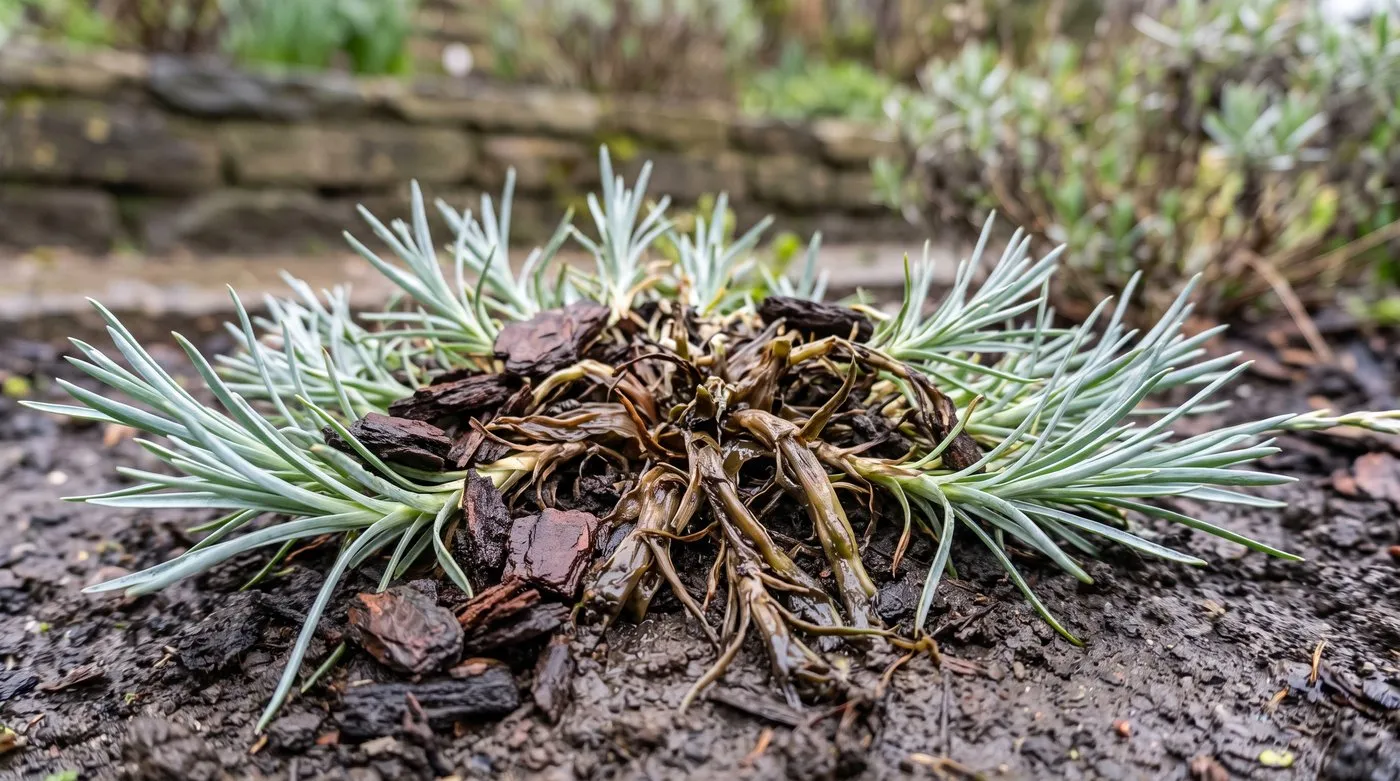
A soft, brown middle in wet soil means crown rot. Take pipings from any healthy shoots before the plant goes.
Dianthus care month by month
| Month | What to do |
|---|---|
| January | Order plants from specialist nurseries. |
| February | Add grit (and lime on acid soil) where you plan to plant. |
| March | Plant new pinks. Lightly feed established plants. |
| April | Watch for aphids on new growth. Water pots. |
| May | First flowers open. Deadhead spent blooms. |
| June | Take pipings from shoots without flowers. |
| July | Deadhead to keep repeat flowerers going. |
| August | Last feed for pots. Take late pipings. |
| September | Autumn planting time. Move tender types under cover. |
| October | Cut back old flower stems. Top up the gravel mulch. |
| November | Move pots somewhere sheltered. |
| December | Resting, so nothing to do. |
How to grow sweet Williams from seed
Sweet Williams are the easiest pinks to grow from seed, and the one group where seed is the usual way to grow them.
Sow in June in trays or modules of seed compost. Cover lightly with vermiculite and keep at around 15 to 18C. Seedlings appear in one to two weeks.
Prick out when they have two true leaves and grow on in 9cm pots through summer. Harden off in September.
Plant out in October, 20 to 25cm apart. They root well over winter and flower for several weeks the following May and June. Most die after flowering.
Let them seed: Leave a few old flower heads on, and they’ll seed themselves. Within a few years you’ll have a patch that comes back every year with no effort. It’s perfect for cottage garden planting plans. A packet of seed is far cheaper than buying plants.
Where to buy dianthus
Specialist nurseries have the widest choice of named pinks, including scented old varieties, and often send plants by mail order from autumn to spring.
Garden centres stock modern hybrids most of the year. They’re great for pots and bedding, but the range is small and they lack the scent of older varieties.
Plant fairs and flower shows are a fun way to find unusual varieties from specialist growers.
Seed of sweet Williams and species pinks is easy to find. Named border pinks don’t come true from seed, so grow those from pipings.
Buy from reputable UK nurseries and look for the UK plant passport label, which helps keep plant pests and diseases out.
Pinks look lovely in summer flower borders, and their silver leaves suit the colours in our guide to pink, purple and blue flowers for UK gardens. For pairing ideas, see our article on plant combinations for UK borders.
Next steps
New to pinks? Start with ‘Doris’ in a sunny border and a packet of sweet William seed. Between them, you’ll have scented flowers from May to September and plenty of pipings to grow your collection. For vase ideas, see our guide to the best flowers for cutting in UK gardens.
Frequently asked questions
What is the difference between dianthus and pinks?
Dianthus is the plant’s family name, and pinks are one group within it. The group also includes carnations and sweet Williams. Garden pinks are low, hardy border plants with fringed, scented flowers in early summer. Carnations are taller with bigger flowers and are often grown under glass. Sweet Williams are usually grown as biennials. Many have grey-green leaves and a clove scent.
Can dianthus grow in shade in the UK?
No, they need full sun to flower well. Aim for at least six hours of direct sun a day. In part shade, stems get leggy, flowers are few and plants are more likely to get ill. For shady borders, try astrantia or aquilegia instead. Pinks also need soil that drains freely.
How do you take pipings from dianthus?
Take them in early to midsummer from healthy shoots without flowers. Hold the stem just below a leaf joint and pull the tip sharply upwards. It should snap off cleanly at the joint. Strip the lowest leaves and push the piping into a gritty mix of compost and perlite or sand. Keep it moist but not wet. Roots usually form within a few weeks.
Why are my dianthus dying after two years?
Border pinks are often short-lived and fade after a few years. The middle of the plant goes woody and bare. That’s normal, not your fault. Take pipings every couple of years so you always have young plants ready. Wet soil is the other common cause, as pinks sitting wet over winter rot at the base. Add grit when planting.
What soil do dianthus need in the UK?
Soil that drains freely and is neutral to chalky. They love chalk and limestone soils. On heavy clay, mix plenty of grit into each planting hole, and add a little garden lime if your soil is acid. Raised beds with gritty compost suit alpine pinks perfectly. Avoid peat-based composts for permanent plantings, as they stay too wet.
When is the best time to plant dianthus in the UK?
Spring or early autumn are best. Autumn planting lets roots settle before winter, which means stronger flowering the next year. Spring planting works well if the soil isn’t waterlogged. Avoid planting in hot, dry summer weather. Pot-grown plants can go in whenever the soil is workable, as long as you water them in.
Are dianthus safe for pets in the UK?
They’re thought to be mildly toxic to cats and dogs. Eating them can cause a mild upset tummy, such as vomiting or diarrhoea. Serious poisoning is rare. If your pet chews plants, grow pinks in raised beds or pots out of reach. Call your vet if your pet eats a lot or seems unwell.
Our team produces practical UK gardening guidance from source research, contributor records and established horticultural practice. Editorial standards are overseen by Matt W.