Key takeaways
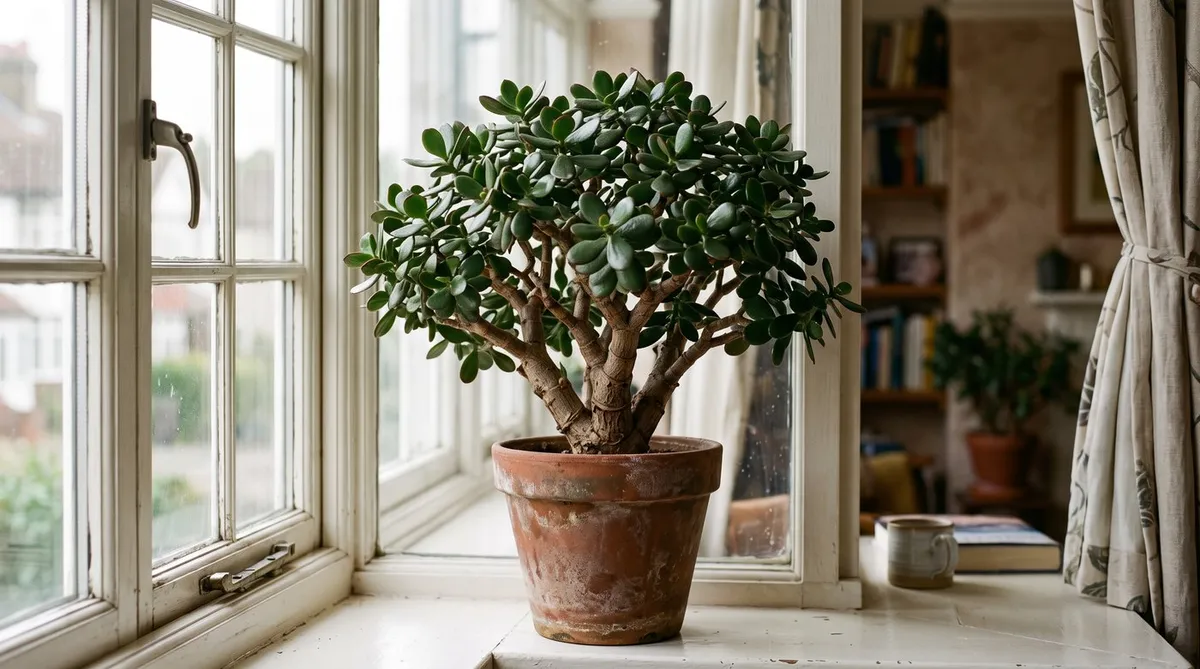
- Jade plant (Crassula ovata) is a long-lived succulent that grows slowly into a little tree
- Give it a sunny south or west-facing windowsill with several hours of direct sun
- Water only when the compost is completely dry; overwatering is the usual killer
- Water very little in winter and keep it above about 10C
- A heavy terracotta pot and gritty compost stop it rotting or toppling over
- It is mildly toxic to cats and dogs, so keep it out of reach of plant-chewers
Jade plant care in the UK comes down to two things: plenty of sun and much less water than you think. The jade plant, Crassula ovata, is a succulent that stores water in its thick, glossy leaves. That makes it brilliant at coping with neglect, but quick to rot if it sits wet. Get the light and watering right and it will grow slowly into a little tree that lasts for decades.
What is a jade plant?
The jade plant is a succulent shrub from the dry parts of southern Africa. Indoors it usually grows 30cm to 1m tall, slowly forming a thick trunk and a tree-like crown. You’ll also see it sold as the money plant, money tree or friendship tree.
Look for oval, smooth, jade-green leaves on stubby branches. In strong light the leaf edges blush red. That’s normal and a sign it’s getting plenty of sun.
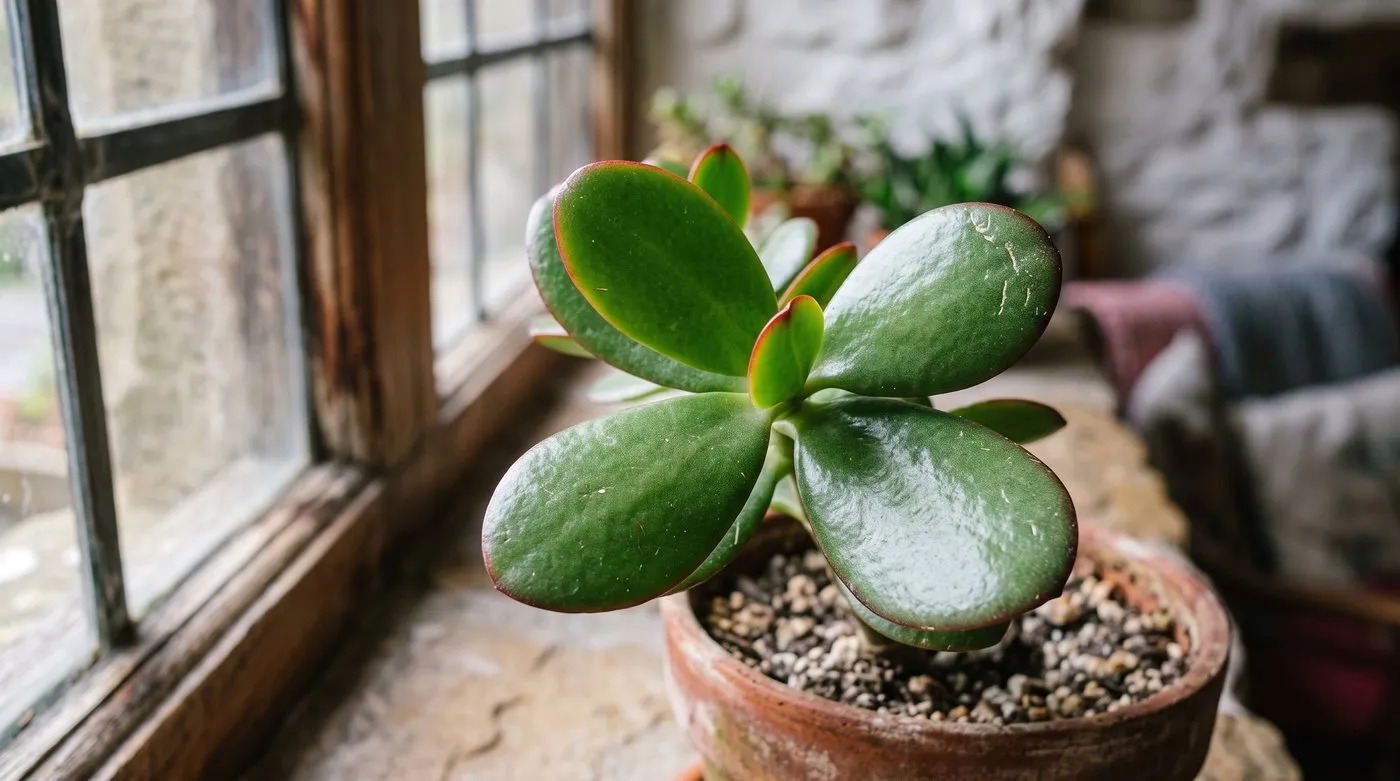
Those thick leaves are the plant’s water tank. Red edges just mean it’s enjoying the sun.
Where to put a jade plant
Give it bright light with direct sun, ideally several hours a day. A south or west-facing windowsill is perfect in the UK. An east window can work if it gets good morning sun. A north window is too dark.
In good light the stems stay short and sturdy and the leaves sit close together. In poor light the stems stretch, the leaves spread out and the plant leans towards the glass. Give the pot a quarter turn every couple of weeks so it grows evenly.
If you only have a dim spot, choose something else from the best low-light houseplants.
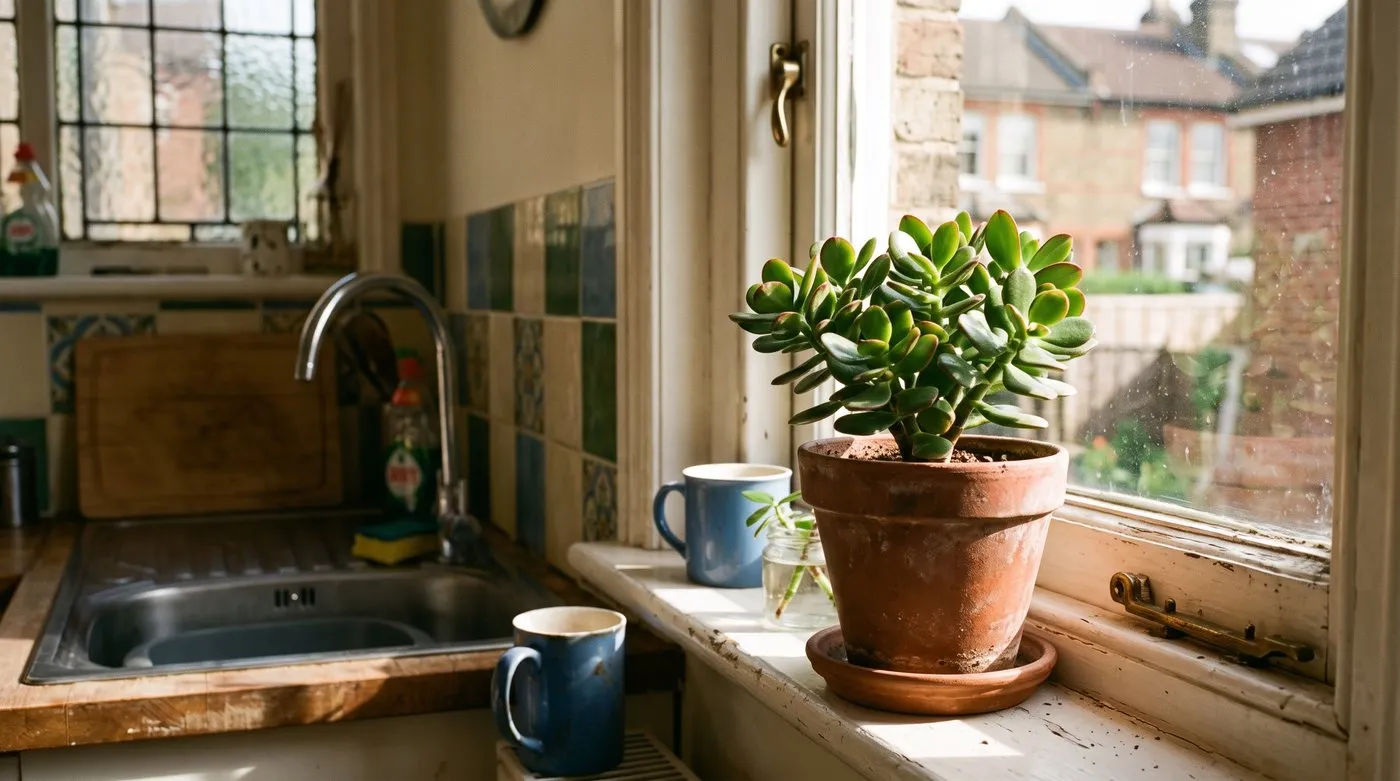
A sunny kitchen windowsill is just right. Plenty of direct sun keeps the growth short and tidy.
How to water a jade plant
Water only when the compost has dried right out. Then soak it, let all the water drain away and wait until it’s dry again. This soak-and-dry rhythm suits a plant used to short rains and long dry spells.
- Summer: often about every two weeks, but check first. Push a finger a few centimetres into the compost. If it feels damp, wait.
- Winter: from November to February the plant barely grows. Water only a little, roughly once a month, or when the leaves start to look slightly wrinkled.
- Always: tip out any water left in the saucer.
Too much water, especially in winter, is how most jade plants die. Soft, yellow, see-through leaves and a mushy stem base mean the roots are rotting. When in doubt, don’t water.
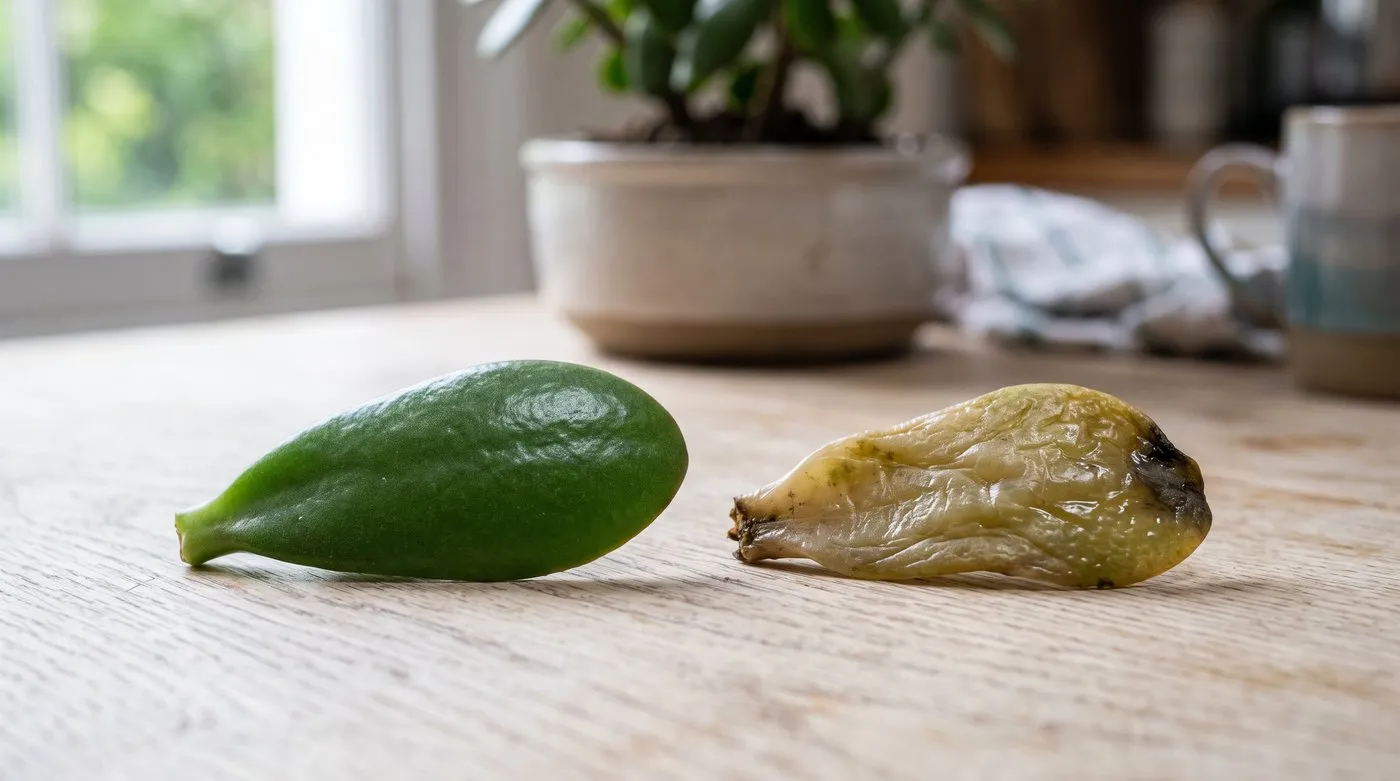
Firm and green on the left, soft and yellow on the right. That mushy leaf is a sign of too much water.
The best compost and pot for a jade plant
Use a gritty, free-draining compost. Ready-made cactus and succulent compost is ideal. Or mix two parts peat-free multipurpose compost with one part horticultural grit or perlite. Plain multipurpose compost on its own stays too wet.
Choose a heavy terracotta pot with a drainage hole. Jade plants get top-heavy and tip over in light plastic pots. Terracotta is heavy and also lets the compost dry out faster, which the plant likes.
Jade plants are happy a little snug in their pots. Repot only every two to three years, in spring, and go up just one pot size. The guide to repotting houseplants has the step-by-step. For more on succulents in general, see caring for succulents indoors.
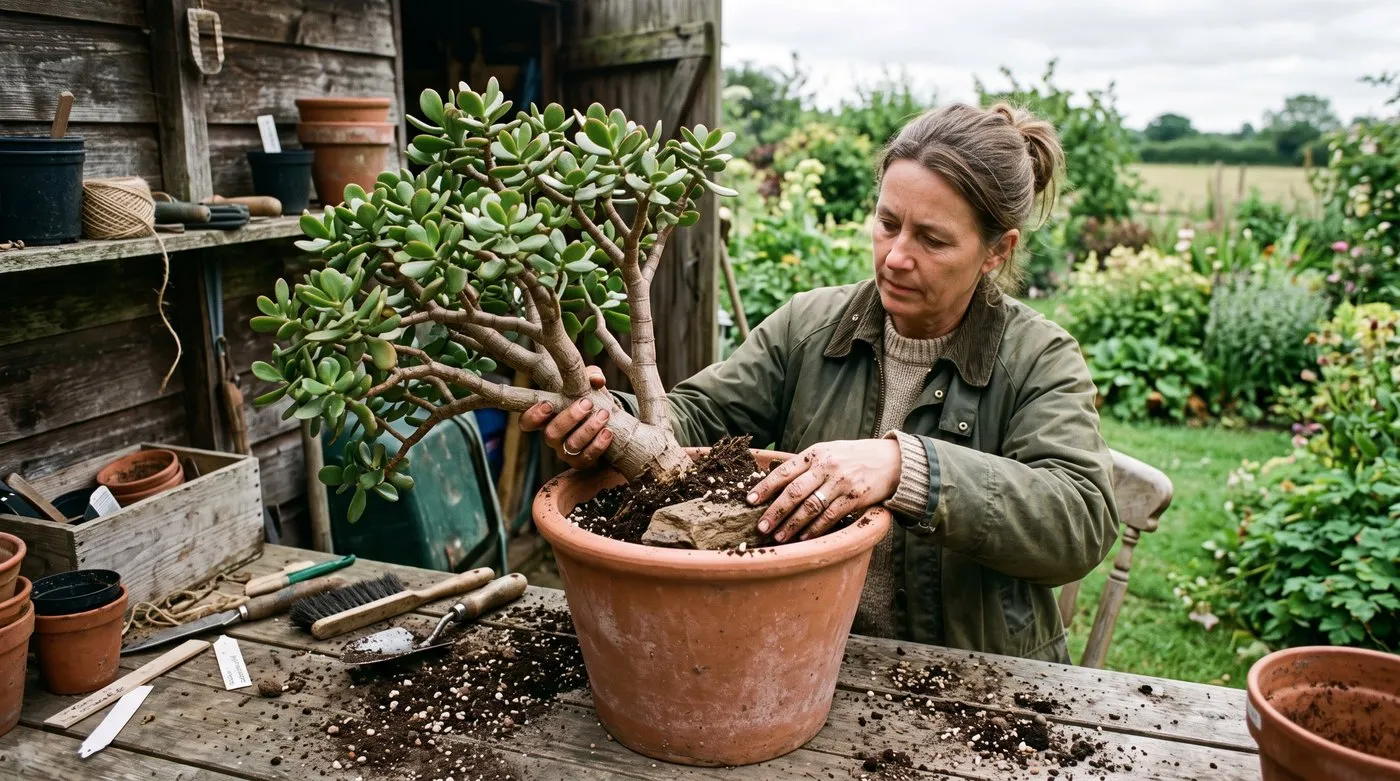
A heavy terracotta pot keeps a big, top-heavy jade from toppling over. Wait a week before watering after repotting.
What’s wrong with my jade plant?
Most jade plant problems show in the leaves, and most come down to water or light.
| What you see | Likely cause | What to do |
|---|---|---|
| Wrinkled, shrivelled leaves | Too dry | Give a thorough soak |
| Soft, yellow, see-through leaves, mushy stem | Too wet, root rot | Stop watering. Take cuttings from healthy parts |
| Leaves dropping | Cold draught or erratic watering | Move away from cold glass and doors. Water steadily |
| Long, stretched stems | Too little light | Move to a sunnier window |
| Brown, dry patches | Sun scorch after a sudden move | Move it into stronger sun gradually |
| White fluffy blobs in leaf joints | Mealybug | Wipe off and check often |
Mealybugs like to hide where the leaves meet the stem. The guide to spotting and clearing mealybug shows what to look for. If rot has taken hold, don’t try to save the roots. Snap off firm, healthy leaves or stem tips and start again.
How to propagate a jade plant
Jade plants are one of the easiest houseplants to propagate. You can grow a new plant from a single leaf, or get a bigger plant faster from a stem cutting.
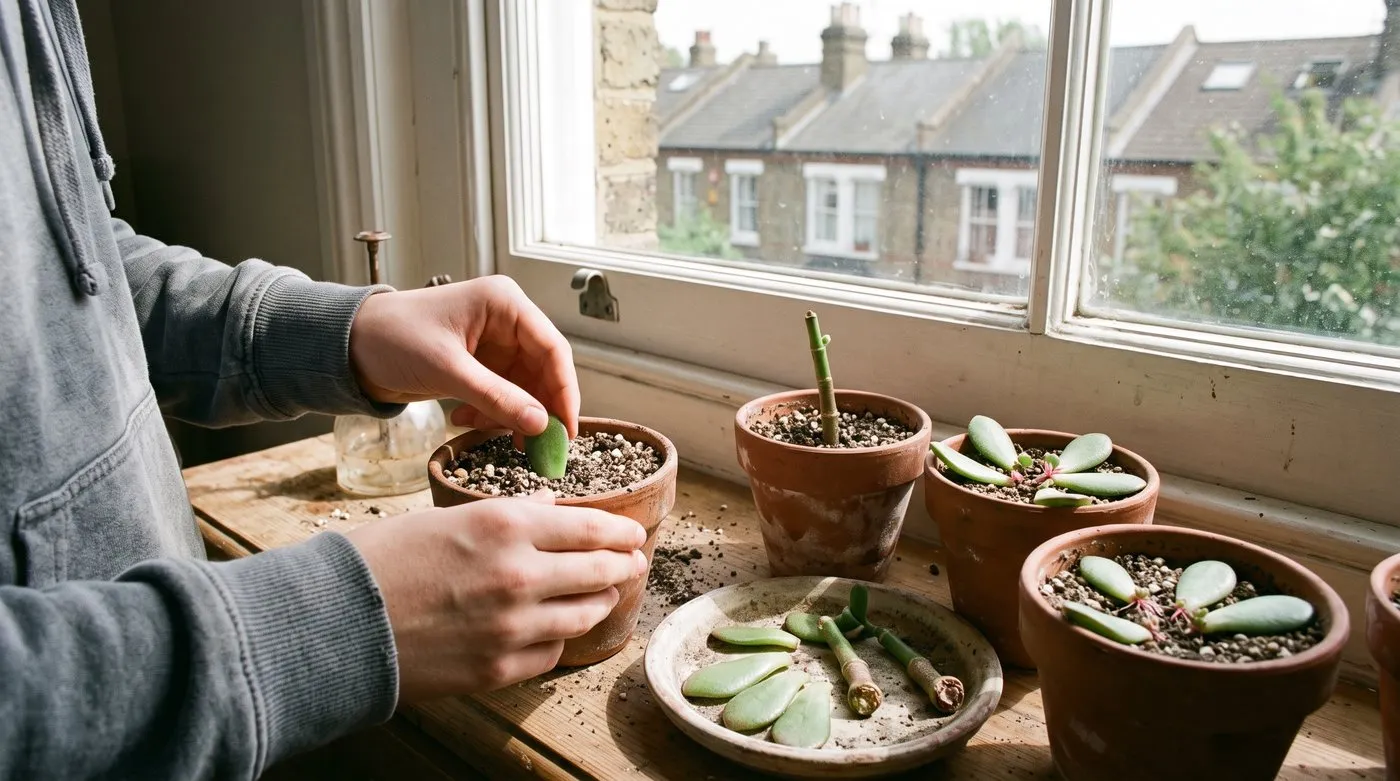
Let the cut ends dry for a few days first. Then single leaves soon send out roots and tiny new plants.
- Take a healthy leaf, or snip off a stem tip 5-8cm long, in spring or summer.
- Leave it somewhere dry for a few days until the cut end seals over.
- Lay the leaf on, or push the stem into, gritty compost.
- Water very sparingly until you see new growth.
Roots usually form within a few weeks. Skipping the drying step is the main reason cuttings rot. The guide on how to propagate houseplants covers more methods.
How to get a jade plant to flower
Jade plants usually flower only after a cool, dry, bright winter rest. Kept warm and watered all winter, most never bloom.
From late autumn, move a mature plant somewhere bright and cool, at about 10-13C, such as a frost-free porch, a conservatory or a cool spare room. Water only now and then. With luck, clusters of small white or pink star-shaped flowers appear in winter. Older plants that are a little snug in their pots are the most likely to flower. It’s a similar trick to getting a Christmas cactus to bud.
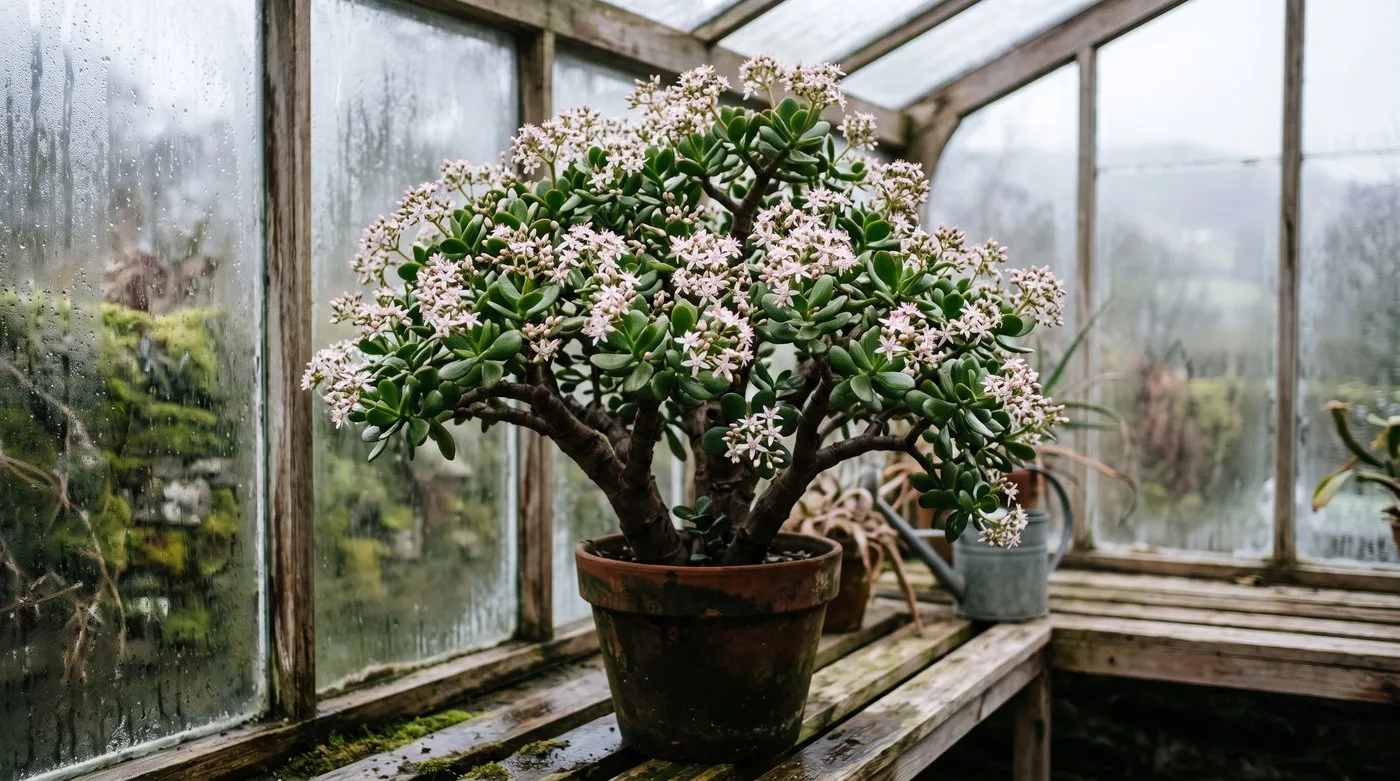
A cool, bright, dry winter is what tempts an older jade plant into flower.
Jade plant care through the year
| Month | What to do |
|---|---|
| December to February | Rest period. Keep cool and bright. Water very little |
| March | Growth restarts. Water a little more as the compost dries faster |
| April | Repot if needed, every two to three years |
| May to August | Water when dry. Feed monthly with a diluted cactus feed. Take cuttings |
| June | Stand outside in a sheltered sunny spot if you like |
| September | Bring outdoor plants back in. Stop feeding |
| October to November | Cut watering right down. Move to a cool, bright spot for winter |
If you put it outside for summer, move it into full sun gradually over a week or two so the leaves don’t scorch.
Common mistakes with jade plants
- Watering too often, especially in winter. Wait until the compost is completely dry.
- A dark spot. It needs direct sun to stay compact.
- Ordinary compost. Use a gritty cactus mix so the roots don’t sit wet.
- A light plastic pot. A heavy terracotta pot stops it toppling.
- Cold glass or draughts. Keep it above about 10C and pull it back from cold windows on frosty nights.
Is a jade plant safe for pets?
Jade plant is mildly toxic to cats and dogs. Chewing the leaves can cause vomiting and lethargy. Keep it on a high shelf or windowsill out of reach, which also suits its love of light. Call your vet if a pet eats some and seems unwell. The list of plants toxic to cats is worth checking for other houseplants too.
For more indoor plant ideas, browse the houseplants section. Now your jade plant is happy, read the guide to kalanchoe care for a flowering succulent cousin that loves the same sunny windowsill.
Frequently asked questions
How often should I water a jade plant?
Water only when the compost has dried right out. That’s often every two weeks or so in summer and roughly once a month in winter. Soak it, let it drain fully, and never leave it standing in water.
Why are my jade plant leaves going soft and wrinkly?
Wrinkled, shrivelled leaves usually mean the plant is thirsty. Give it a good soak and the leaves should plump up within days. Soft, yellow, see-through leaves are different. That’s overwatering and possible root rot.
How much light does a jade plant need in the UK?
It needs bright light with several hours of direct sun. A south or west-facing windowsill is ideal. In low light the stems stretch, go pale and lean towards the glass.
Can a jade plant survive outside in the UK?
Only in summer, never through winter. Stand it in a sheltered, sunny spot from June, then bring it in by September, before nights turn cold. Frost kills it.
How do you propagate a jade plant?
Take a healthy leaf or a short stem cutting. Let the cut end dry for a few days, then set it on or in gritty compost. Water sparingly until roots form, usually within a few weeks.
Why won’t my jade plant flower?
Usually it’s too warm and too well watered in winter. Give a mature plant a cool, bright, dry rest from late autumn, at about 10-13C. Clusters of small white or pink flowers may then appear in winter.
Is a jade plant poisonous to cats and dogs?
Yes, jade plant is mildly toxic to cats and dogs. Eating it can cause vomiting and lethargy. Keep it out of reach, and call your vet if a pet eats some and seems unwell.
How long do jade plants live?
A well-kept jade plant can live for decades. It grows slowly into a small tree with a thick trunk, and many are passed down through families or shared as cuttings.
Our team produces practical UK gardening guidance from source research, contributor records and established horticultural practice. Editorial standards are overseen by Matt W.