Key takeaways
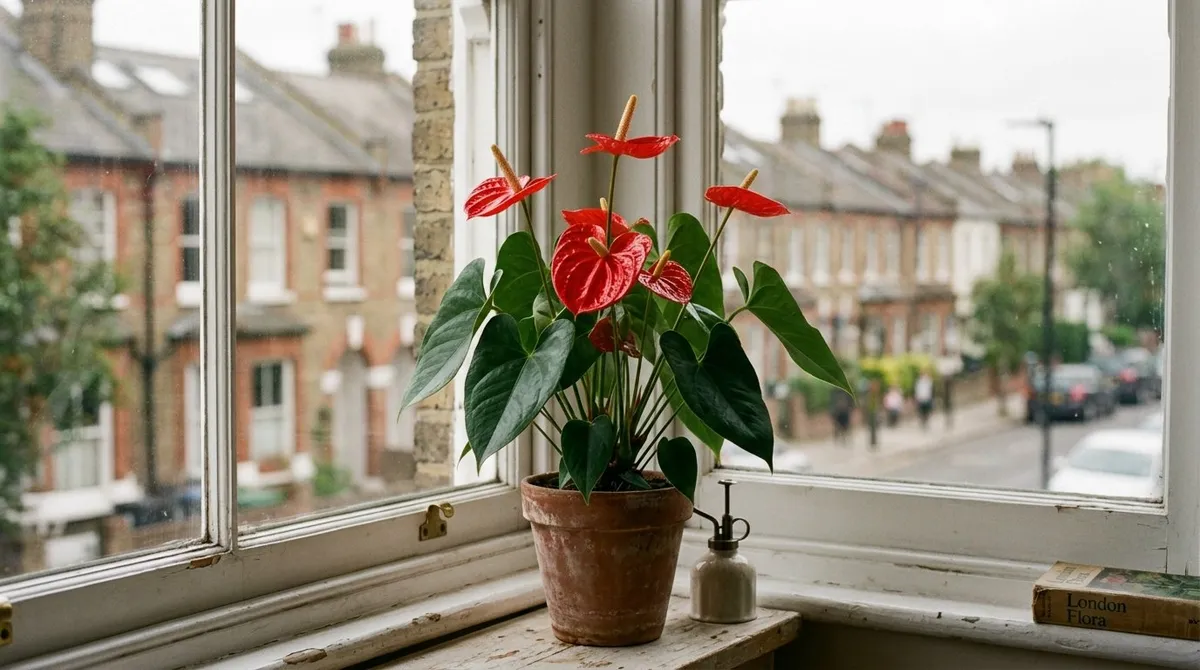
- The red "flower" is a spathe, a coloured leaf, which is why each one lasts for weeks
- Plants flower in flushes with rests in between, so a pause of a few months is normal
- A plant with leaves but no flowers almost always needs more light
- Water only when the pot feels light, and never leave it sitting in water
- Keep it above 15°C and away from radiators and cold winter windows
- All parts are toxic to cats and dogs, so keep it on a high shelf
Is the anthurium flower really a flower?
Not quite. The glossy coloured heart is a spathe, a modified leaf that acts like a signpost for pollinators. The true flowers are the tiny bumps packed onto the central spike, called the spadix.
That’s why anthurium blooms last so long. A spathe is built like a leaf, not a petal, so it holds its colour for weeks. Anthuriums flower in flushes, then rest. A pause of a few months between flushes is completely normal, and a happy plant in good light flowers more than once a year.
The common flamingo flower, Anthurium andraeanum, comes from the rainforests of Colombia and Ecuador. There it often grows perched on trees, with roots that cling to bark rather than sitting in soil. It’s a cousin of the monstera, and they share the same dislikes: soggy compost and cold.
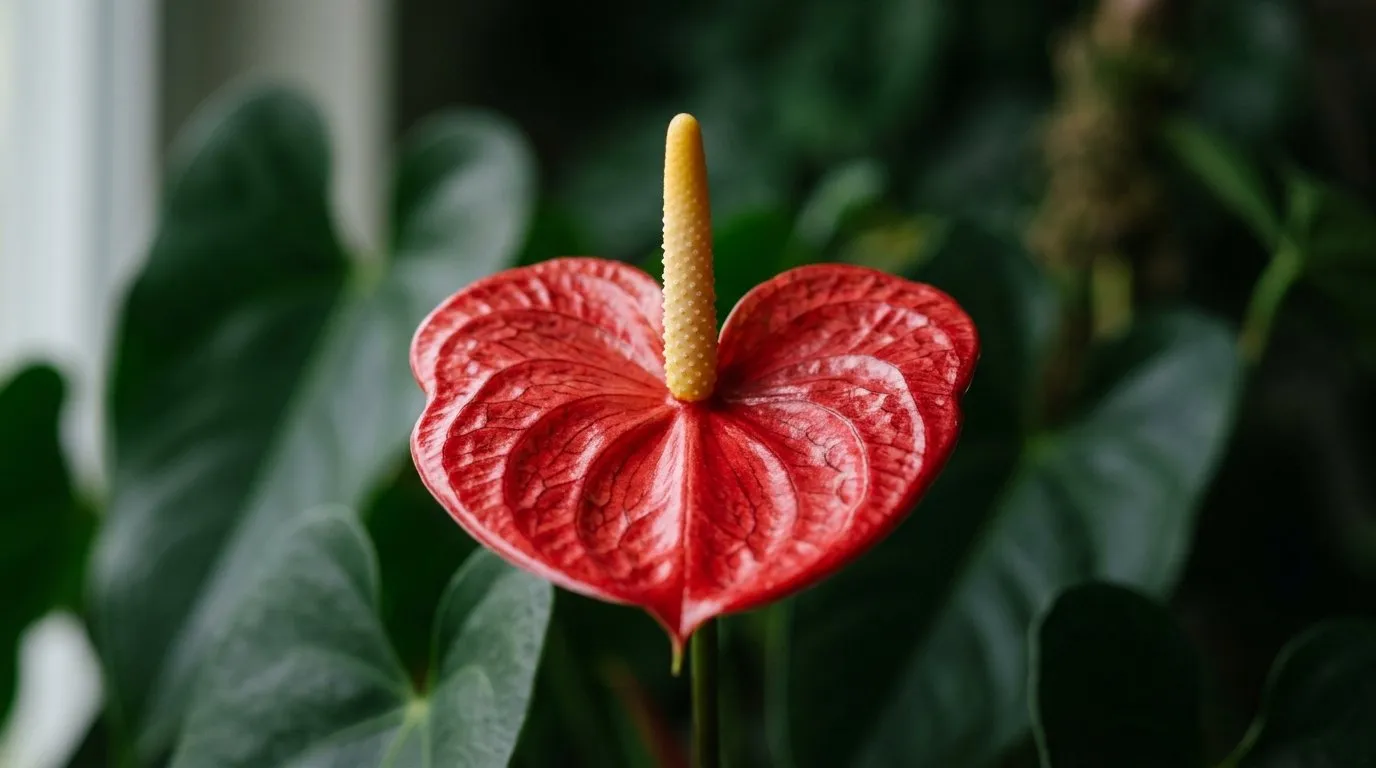
The cream spike carries the real flowers. The red heart behind it is a leaf, which is why it lasts so long.
Where should an anthurium go in a UK home?
A bright east or west windowsill is the best spot in most UK homes. Anthuriums want bright light but not hot midday sun. A south-facing window works if the plant sits a metre or two back from the glass, or behind a net curtain, as strong summer sun scorches the leaves.
North-facing rooms are where most anthuriums stop flowering. The plant can live there for years but will barely bloom. If a dim room is all you have, choose one of the best low-light houseplants for it and give the anthurium the brightest sill.
Keep it between about 18°C and 25°C, and never below 15°C. Watch out for:
- windowsills trapped behind curtains on winter nights, where the glass gets very cold
- spots right next to a radiator, which turns leaf tips brown
- draughty hallways and doorways
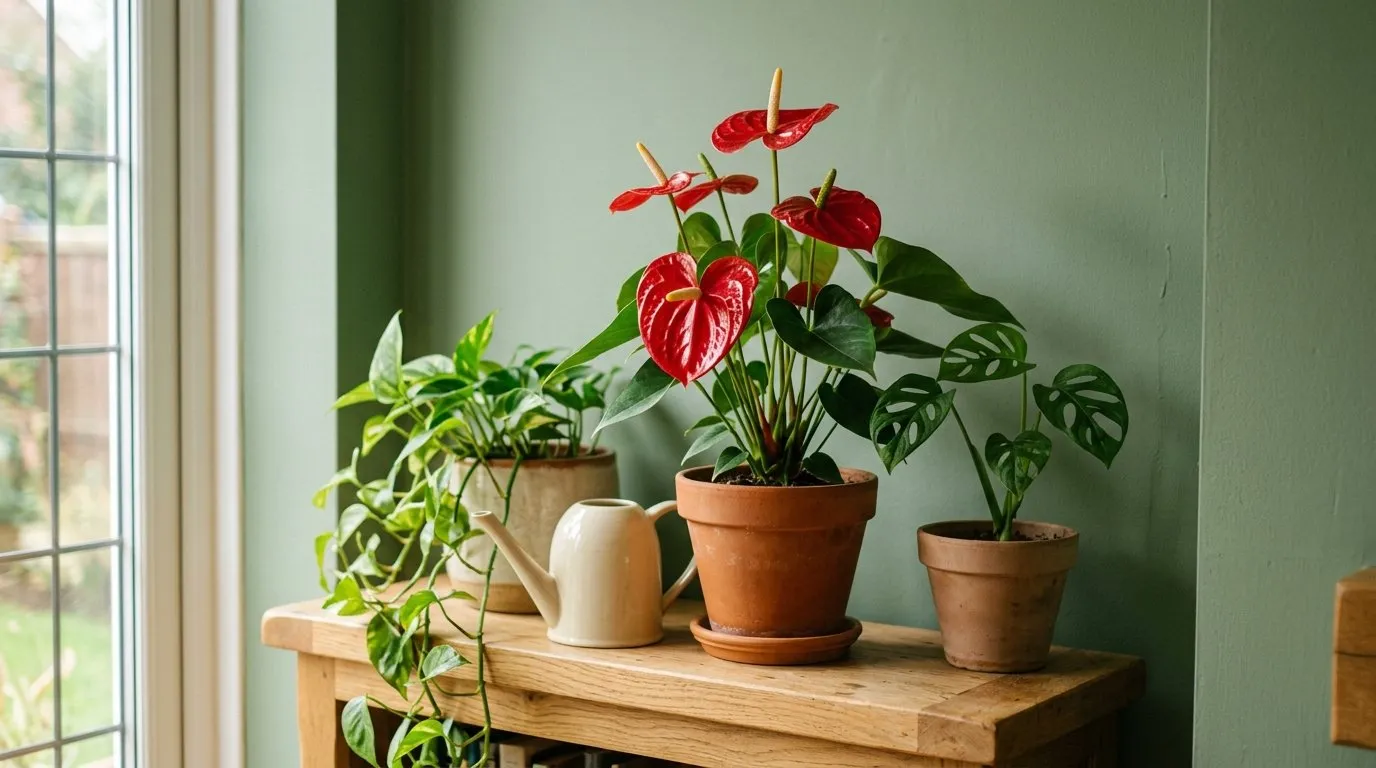
A bright shelf out of direct sun suits an anthurium well. Grouping it with other plants keeps the air around it a little moister.
Why has my anthurium stopped flowering?
Light is the usual answer. A plant that makes healthy leaves but no flowers is getting enough light to live, not enough to bloom. Move it to a bright east or west windowsill and be patient. New buds usually appear within a few months.
First, check it isn’t just resting. If it flowered well a few weeks ago, it’s probably between flushes. A few months without blooms after a good show is normal.
If more light and patience don’t help, check these:
- Feeding. Give a half-strength orchid or houseplant feed every couple of weeks from spring to late summer. The houseplant feeding guide explains why little and often works best.
- Roots. A plant that’s been in the same pot for years may need fresh compost.
- Cold. Rooms that drop below 15°C at night in winter push the plant into survival mode, and flowering stops first.
Why are the flowers turning green?
A green spathe means one of two things. The bloom is old, or the plant is short of light.
An old bloom opened in full colour and has been on the plant for weeks. Fading to green, then brown, is its natural end. Cut the whole stem off at the base with clean snips. This tidies the plant and helps it put energy into new flowers.
New blooms opening green or pale mean the plant needs a brighter spot. Some shop-bought plants also arrive with green-tinged blooms. The next flush should colour up properly if the light is right.
| What you see | Likely cause | What to do |
|---|---|---|
| Old red spathe slowly fading | Natural ageing | Cut the stem off at the base |
| New spathes open green or pale | Too little light | Move to a bright east or west window |
| Bleached, crispy patches on spathes or leaves | Hot direct sun | Move it back from a south window |
| Brown leaf tips | Dry heat from a radiator | Move it away from the heat |
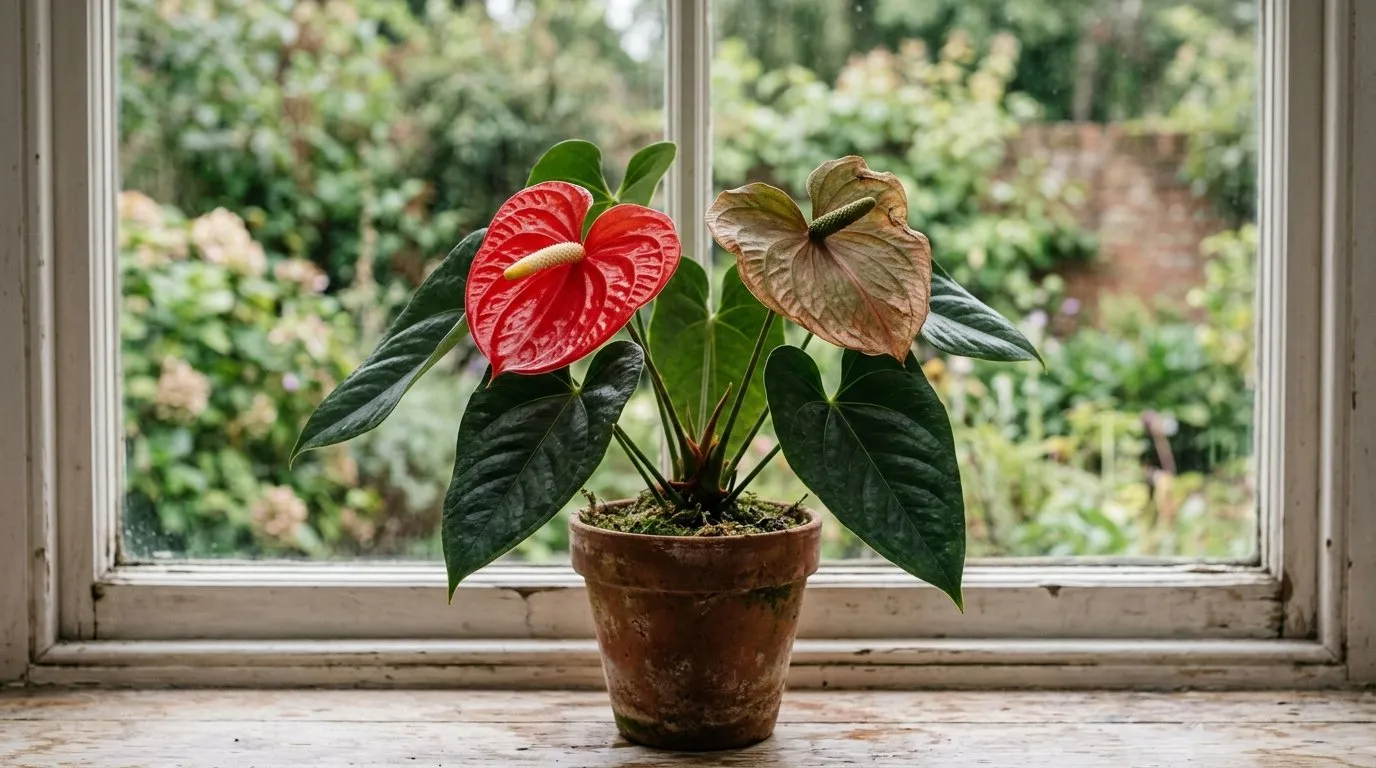
Old and new on one plant. When a spathe starts fading, snip the stem off at the base.
How often should you water an anthurium?
Water by weight, not by the calendar. Those thick roots are made to grip tree bark, soak up a downpour and then dry off. Left in wet compost, they rot, and root rot is the most common way to lose an anthurium.
Lift the pot. Just after watering, it feels heavy. When it’s dry, it feels surprisingly light. Water only when it feels light. In a typical home that’s often about once a week in summer and every fortnight or so in winter.
Water well at the sink with tepid water, let it drain for ten minutes and never leave it standing in a full saucer.
Overwatering shows as yellowing lower leaves, a sour smell from the compost and mushy brown roots. If in doubt, err on the dry side. A thirsty anthurium droops a little and perks up after a drink. A drowned one rarely recovers.
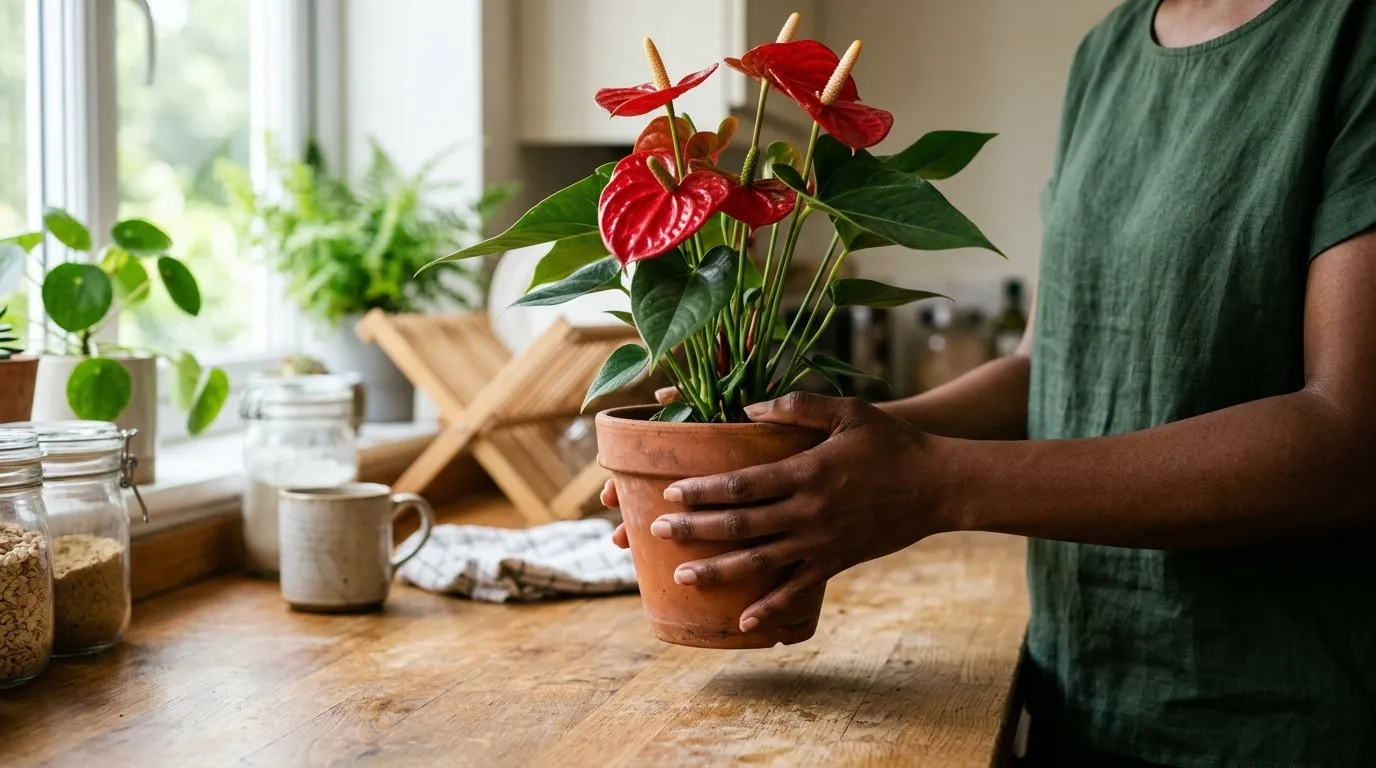
The lift test is the simplest way to water. A light pot gets a drink, a heavy one goes back on the sill.
Does an anthurium need misting?
No. Anthuriums are happier with normal room humidity than their reputation suggests. Most UK living rooms suit them for much of the year.
Winter is the tricky time, when central heating dries the air. That’s when brown, crispy leaf tips appear, usually on plants near a radiator. First, move the plant away from the heat. Then raise the humidity around it by standing the pot on a tray of damp gravel, grouping it with other plants, or moving it to a bright bathroom or kitchen.
Misting only helps for a few minutes and can leave limescale spots on glossy leaves in hard-water areas.
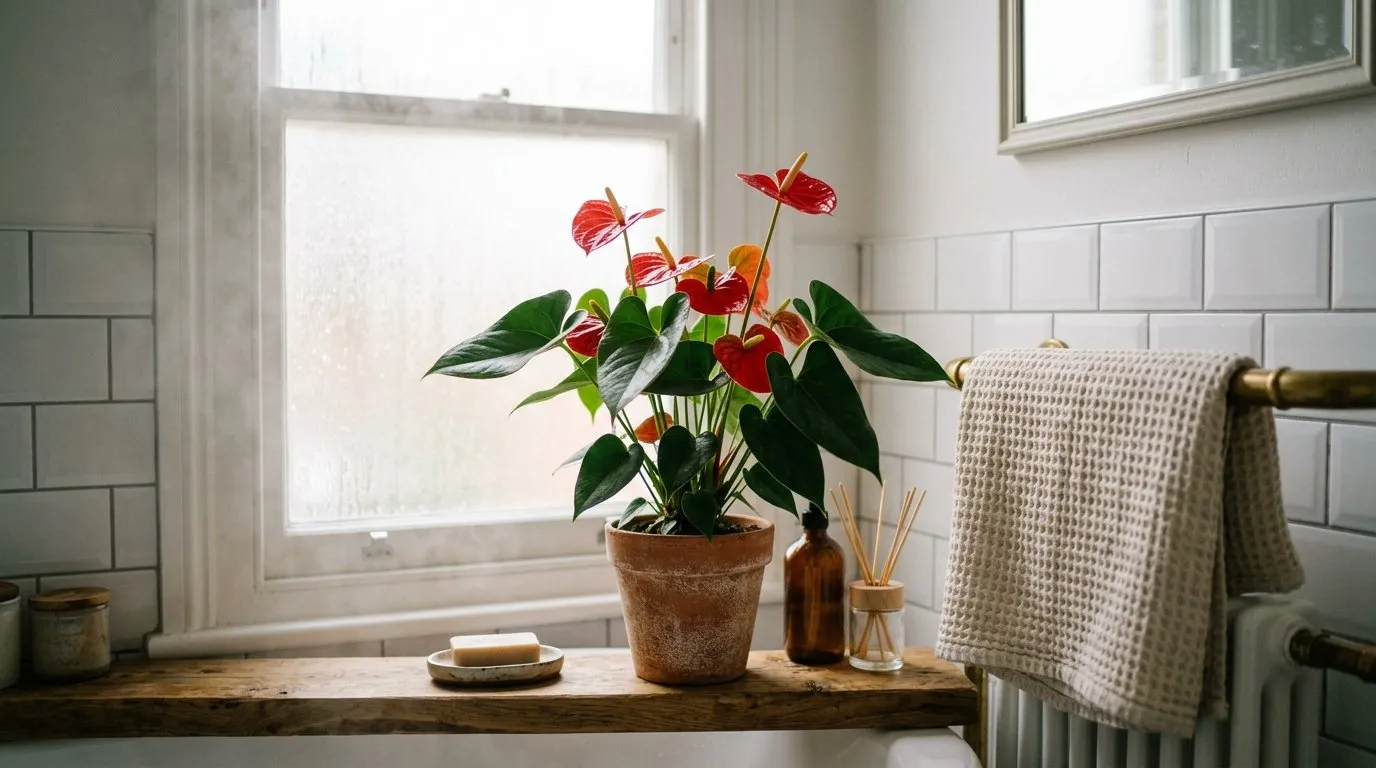
A bright bathroom is the easiest humid spot in the house. Keep the plant away from the hot towel rail.
When should you repot an anthurium?
Repot every two to three years in spring, and only go up one pot size each time, a couple of centimetres wider. Anthuriums flower best when slightly snug. A small root ball in a big pot of wet compost is a recipe for rot.
The mix matters more than the pot. Ordinary multipurpose compost holds too much water for these roots. Use a chunky mix, such as two parts peat-free houseplant compost to one part orchid bark and one part perlite. Leave any aerial roots above the surface alone. They’re normal, and burying them can make them rot. The repotting guide covers the basic technique step by step.
Wear gloves. The sap can irritate skin.
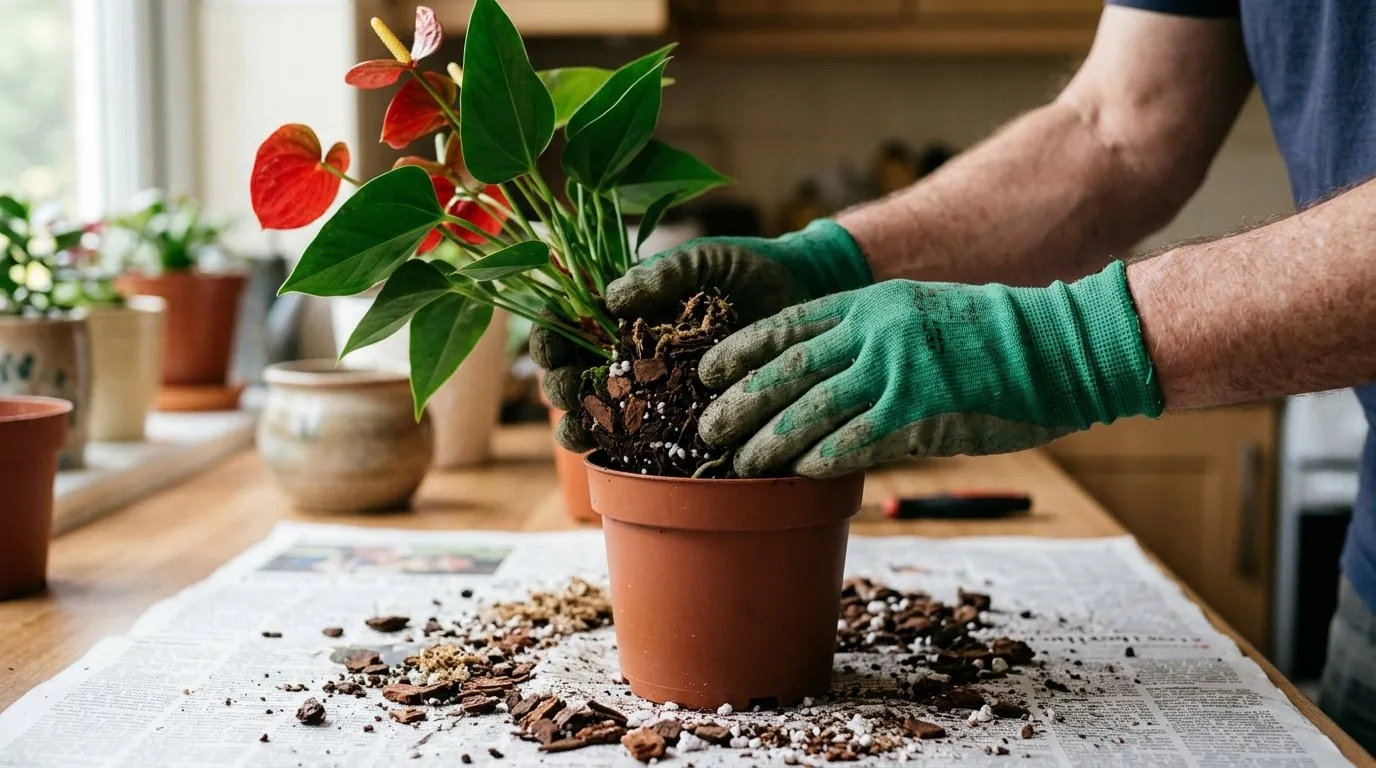
Bark and perlite keep plenty of air around roots that are made for clinging to trees, not sitting in soil.
Is anthurium safe around cats and dogs?
No. Every part of an anthurium contains tiny needle-like crystals called calcium oxalate. Chewing it causes instant mouth pain, drooling, pawing at the mouth and sometimes vomiting.
Because the pain is instant, most pets stop after one bite and serious poisoning is rare. Still, keep it on a high shelf or bookcase in a pet household. Call your vet if drooling or vomiting carries on. The guide to plants toxic to cats covers other houseplants to watch.
If you want a long-flowering plant that’s safe with pets, a moth orchid is the one to choose.
Which anthurium should you buy?
Supermarket and garden centre anthuriums are all fine. A small plant grows into a big one in a couple of years with ordinary care.
Breeders have taken the flamingo flower well beyond red. The ‘Champion’ series comes in red, pink and white. ‘Livium’ and ‘Zizou’ have narrow, tulip-shaped lilac or pink spathes on smaller plants. For leaves rather than flowers, Anthurium clarinervium has velvety, heart-shaped leaves with silver-white veins. It needs exactly the same care, especially the chunky bark mix.
Anthurium vs peace lily vs moth orchid
These are the three long-flowering houseplants people most often choose between.
| Anthurium | Peace lily | Moth orchid | |
|---|---|---|---|
| Flowers | Repeat flushes, each bloom lasting weeks | White spathes, mostly spring and summer | Long-lasting sprays, often more than once a year |
| Care | Easy once watering is right | Easiest of the three | Moderate, needs bark and careful watering |
| Light | Bright, no hot sun | Copes with shade | Bright, no hot sun |
| Safe with pets? | No | No | Yes |
A peace lily suits a shady flat and forgives neglect. A moth orchid is the pet-safe pick. The anthurium gives more colour choice and the most reliable repeat flowering in a bright room.
Common anthurium mistakes
- A dark spot. The plant lives but won’t flower. Give it the brightest sill without hot sun.
- Watering on a schedule. Lift the pot instead, and only water when it feels light.
- Ordinary compost and a big pot. Both hold too much water. Use a chunky bark mix, one size up.
- Next to a radiator. Leaf tips go brown and crispy. Move it a metre or two away.
- Within reach of pets. Keep it on a high shelf.
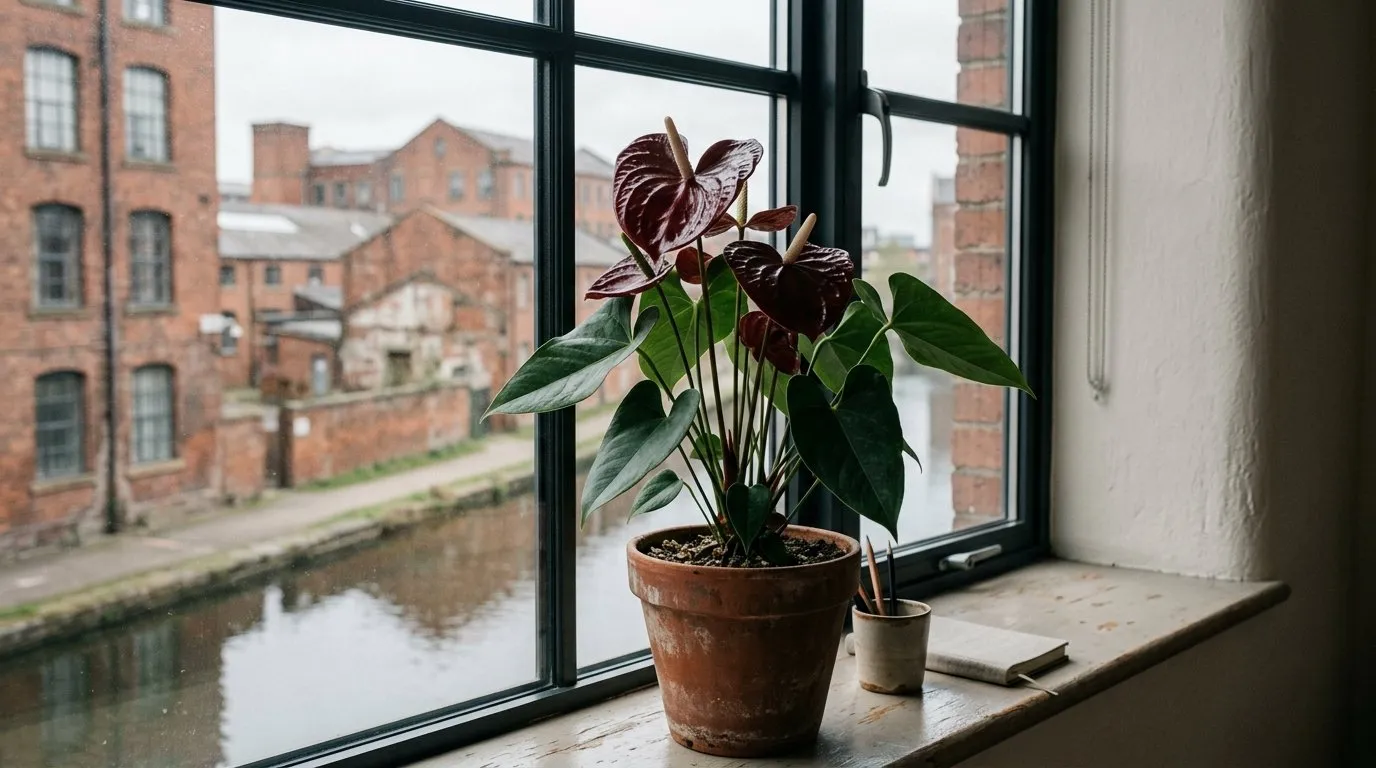
Warm, bright modern flats suit anthuriums well. Dark-flowered varieties look striking against a big window.
Frequently asked questions
How long do anthurium flowers last?
Each bloom lasts several weeks, often six or more. That’s longer than most flowering houseplants. The plant then rests, sometimes for a few months, before the next flush. Cut stems also last well in a vase, which is why florists love them.
Why is my anthurium not flowering?
Too little light is the usual reason. A plant that only makes leaves has enough light to live, but not to bloom. Move it to a bright east or west windowsill and feed it lightly in spring and summer. New flowers usually follow within a few months.
Why are my anthurium flowers turning green?
Either the bloom is old or the plant needs more light. A spathe that opened red and fades after several weeks is just finishing, so cut it off at the base. New spathes that open green or pale mean the plant needs a brighter spot.
How often should I water an anthurium?
Water when the pot feels light, not by the calendar. That’s often about once a week in summer and every fortnight or so in winter. Its thick roots rot in wet compost, so let it drain well and never leave it standing in water.
Are anthuriums poisonous to cats and dogs?
Yes, every part can harm pets. Chewing a leaf causes mouth pain, drooling and sometimes vomiting. The pain usually stops pets after one bite. Keep the plant on a high shelf, or choose a pet-safe moth orchid instead.
Can anthuriums go outside in the UK in summer?
No, it’s better to keep them indoors. UK summer nights often drop below 15°C, which anthuriums dislike, and direct sun scorches the leaves. Leave it on its bright windowsill all year.
Curious which houseplants really help indoor air? Read our honest guide to air-purifying houseplants, or browse more houseplant guides.
Our team produces practical UK gardening guidance from source research, contributor records and established horticultural practice. Editorial standards are overseen by Matt W.