Key takeaways
- A Christmas cactus is a forest plant, so keep the compost lightly moist and out of hot sun
- Cool, dark autumn nights from mid-September are what make it set flower buds
- Once buds form, don't move or turn the plant, or the buds may drop
- Most shop-bought "Christmas cacti" are really Thanksgiving cacti, with pointed teeth on the segments
- Two- or three-segment cuttings root easily in spring or summer
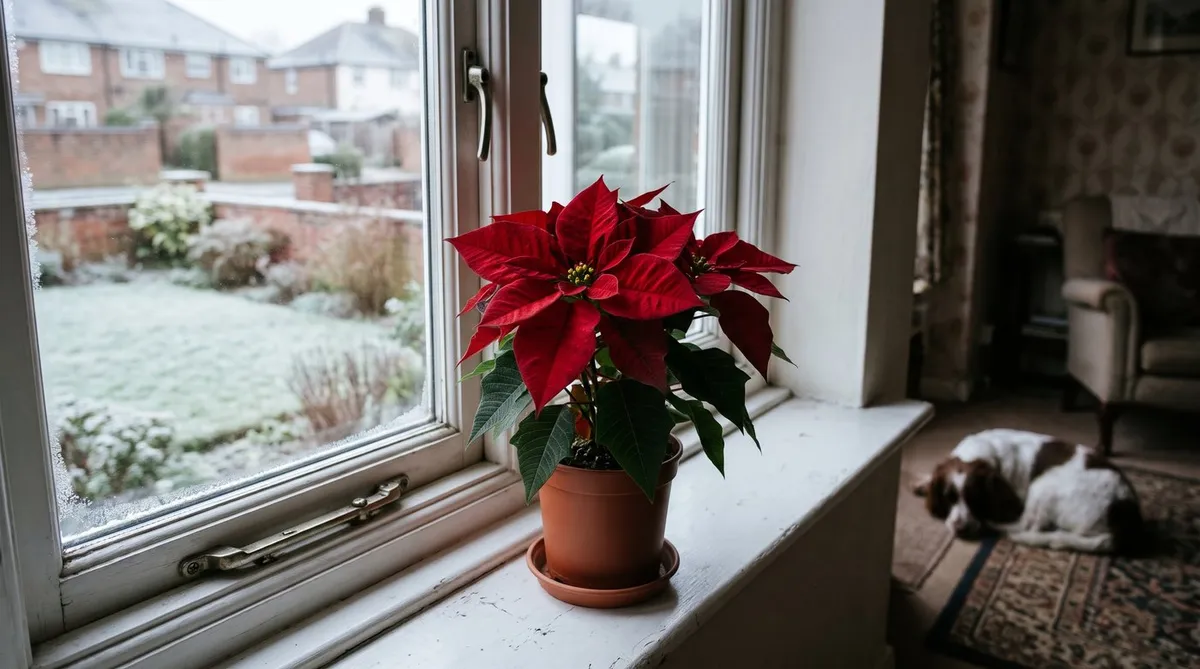
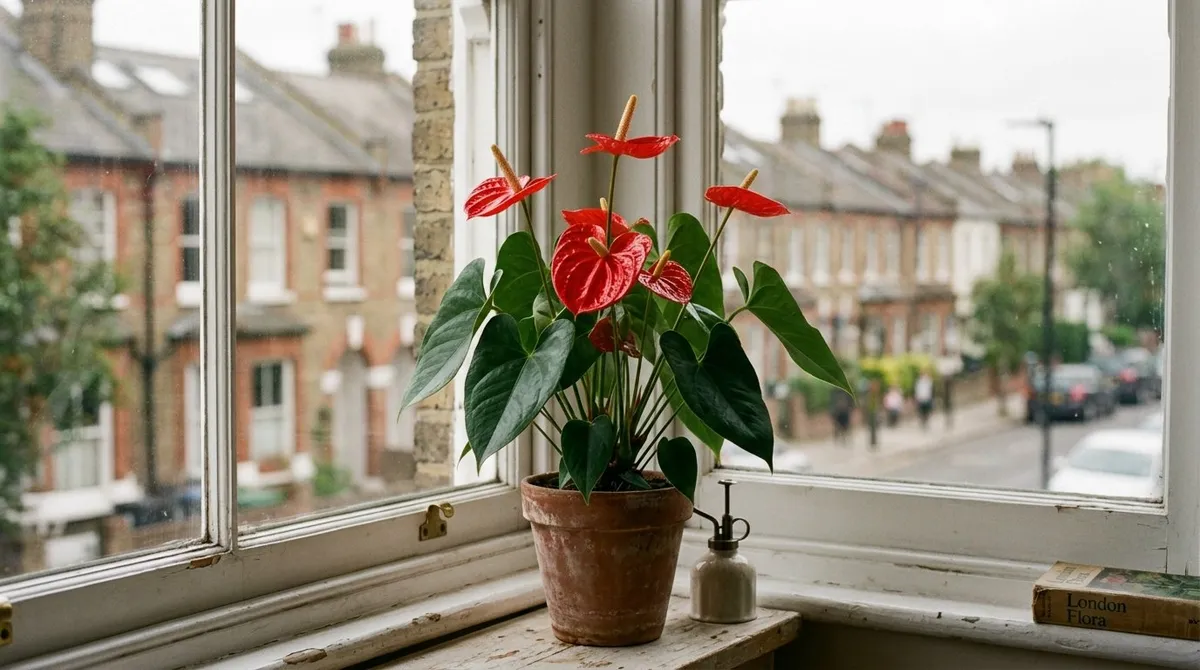
- It is non-toxic to cats and dogs, unlike poinsettia and amaryllis
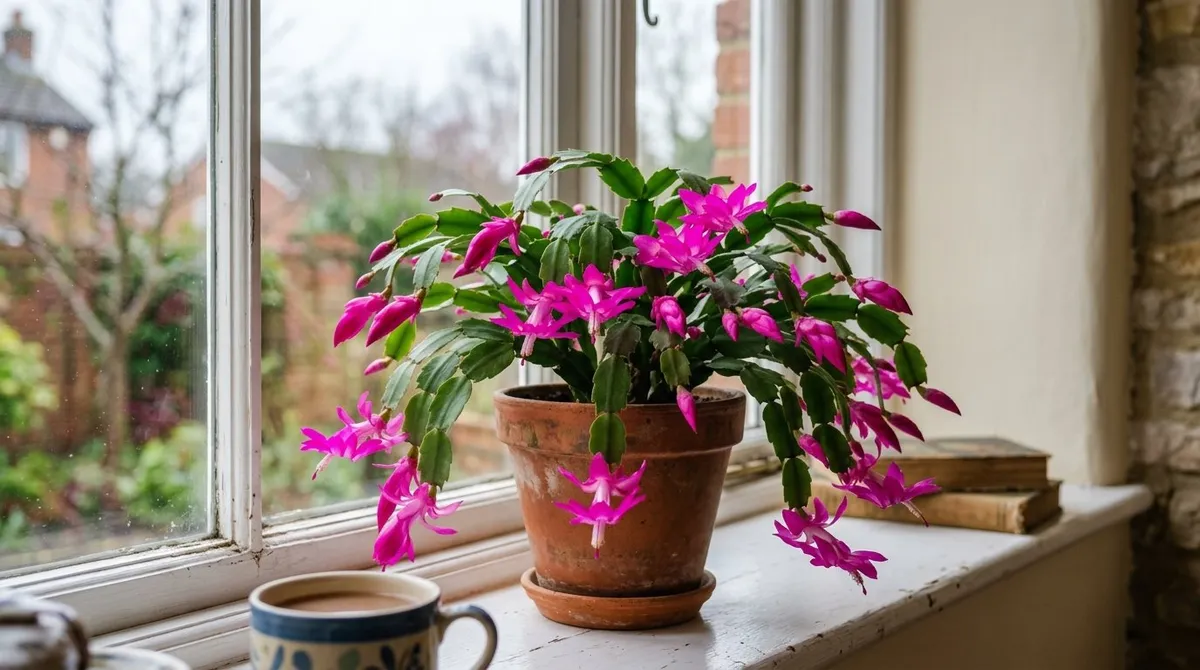
Christmas cactus care is simple once you know one thing: it’s a forest plant, not a desert cactus. Give it bright light out of hot sun, water when the top of the compost dries, and a cool, dark spell in autumn. Then it should flower every winter for years.
Most problems come from treating it like a desert cactus, or moving it once the buds appear. Below you’ll find watering, light, how to get buds, why they drop, repotting and taking cuttings.
Is a Christmas cactus really a cactus?
Yes, but it’s a forest cactus. In the wild, Schlumbergera grows perched on tree branches and mossy rocks in the shady mountain forests of south-east Brazil. It gets frequent rain and never bakes in the sun.
It has flat, green, leaf-like stem segments, no spines and no swollen water store. So it needs more water and less sun than a desert cactus. If you also grow desert types, the guide to caring for succulents indoors explains their very different, drier routine.
Christmas, Thanksgiving or Easter cactus?
Most plants sold in UK shops as Christmas cactus are actually Thanksgiving cactus. Look at the edges of the stem segments to tell them apart.
| Feature | Christmas cactus | Thanksgiving cactus | Easter cactus |
|---|---|---|---|
| Name | Schlumbergera x buckleyi | Schlumbergera truncata | Schlumbergera gaertneri (often sold as Hatiora or Rhipsalidopsis) |
| Segment edges | Rounded, scalloped | Sharp, pointed teeth | Rounded, with tiny bristles at the tips |
| Flowers | December to January | November to December | April to May |
| Flower shape | Hanging | Held out sideways | Star-shaped |
The good news is that Christmas and Thanksgiving cacti need the same care, so everything here works for both. The Easter cactus likes the same watering and light but sets buds in late winter instead of autumn.
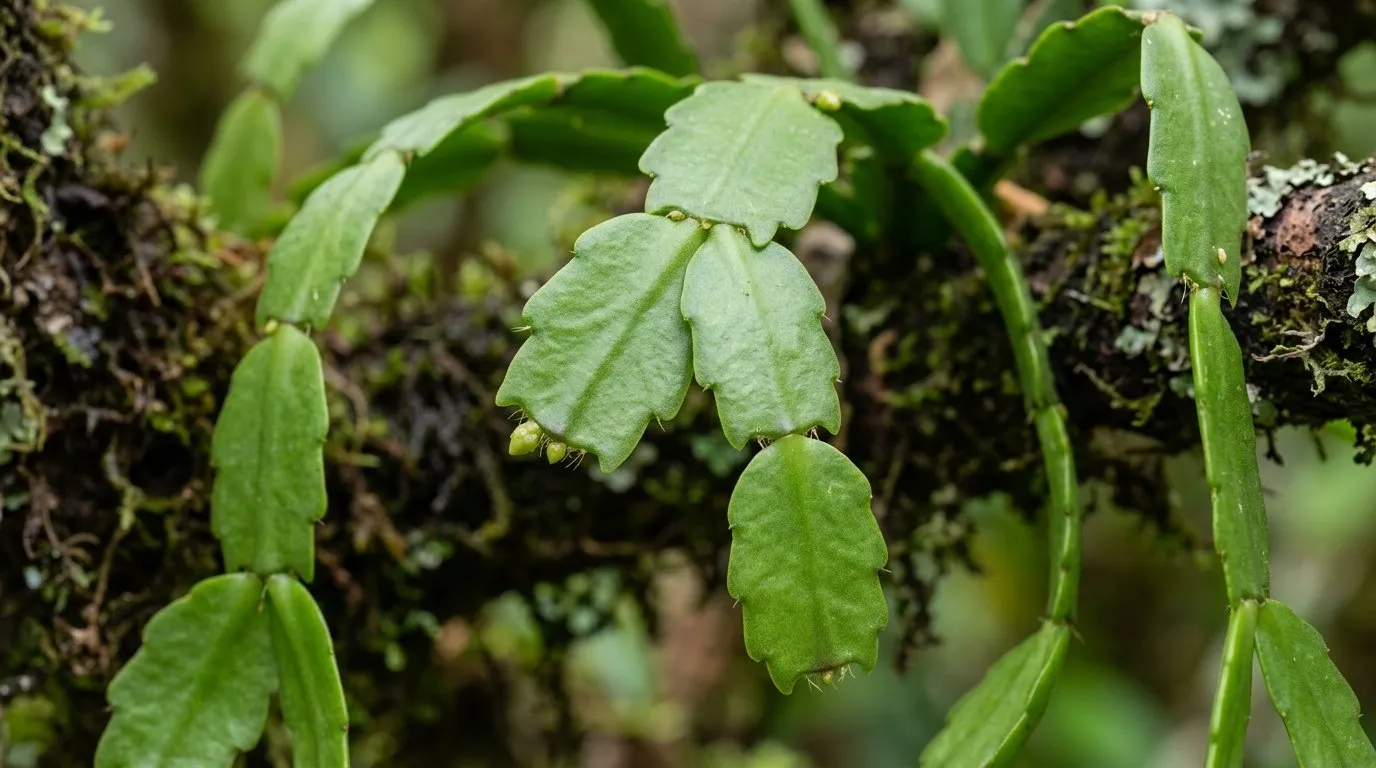
Pointed teeth on the segment edges mean a Thanksgiving cactus. A true Christmas cactus has smooth, rounded edges. Both grow wild on mossy branches like this.
How do you water a Christmas cactus?
Water when the top 2-3cm of compost feels dry. In spring and summer that is often about once a week. Water until it runs out of the drainage holes, then empty the saucer after ten minutes. Never leave the pot standing in water, as the roots rot quickly.
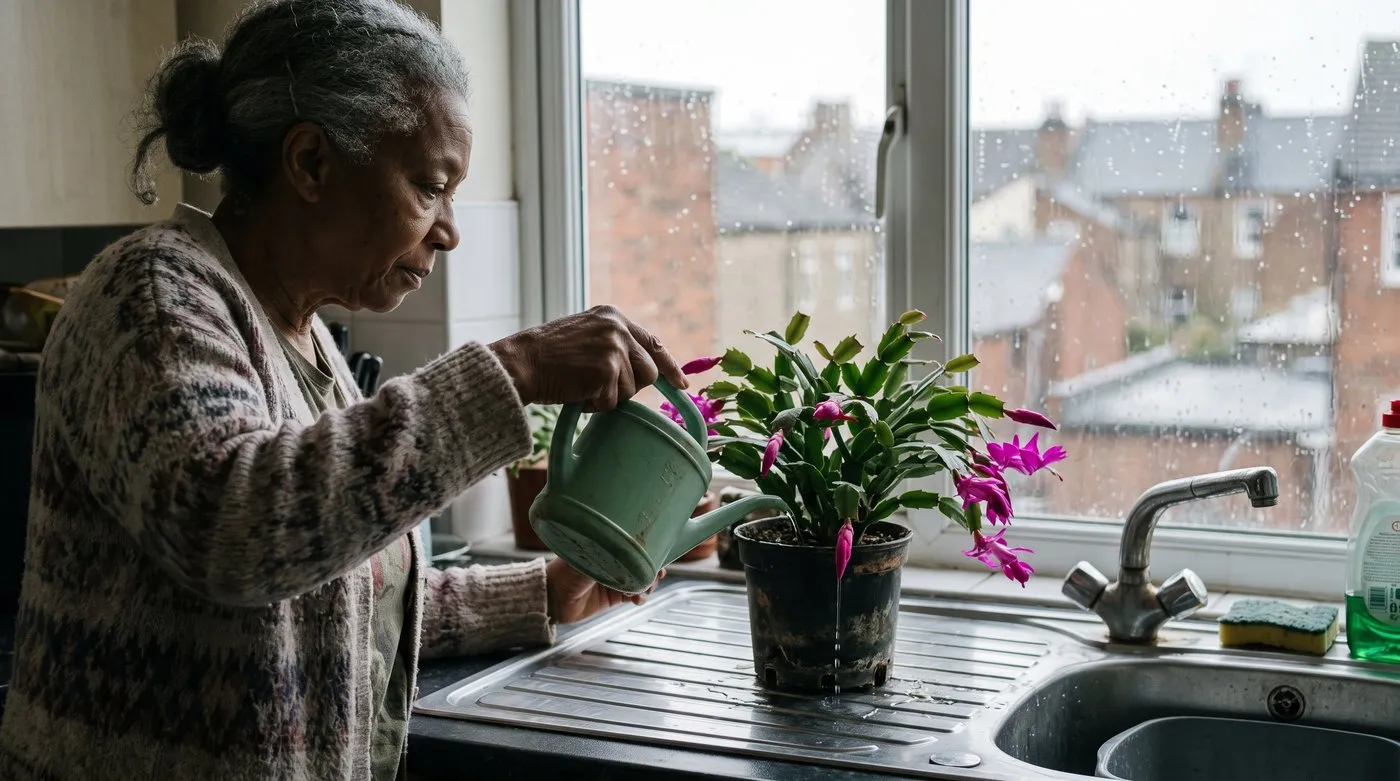
Water until it runs out of the bottom, then let it drain. Never leave the pot sitting in water.
After flowering, give it a rest and water less, perhaps every 10-14 days. Even then, don’t let the compost go bone dry, or the segments shrivel. Room-temperature water is kinder than cold water straight from the tap.
It likes humid air too. In a centrally heated room, stand the pot on a tray of damp gravel or group it with other plants.
Gardener’s tip: Read the segments. Plump and glossy means all is well. Limp and wrinkled in summer means it’s thirsty. Limp and wrinkled in a cold, wet pot in winter usually means the roots are too wet, so hold off watering.
How much light does a Christmas cactus need?
Give it bright light, but out of hot, direct sun. An east-facing windowsill is ideal, with gentle morning sun.
In the dull UK winter, move it to your brightest window to help the flowers. In summer, pull it back from hot glass or use a net curtain. Too much sun turns the segments red or purple. Like orchids, it grows wild under a canopy of leaves. The guide to caring for orchids indoors covers the same kind of light.
How do you get a Christmas cactus to flower?
Give it cool, dark nights from mid-September. A Christmas cactus sets flower buds when the nights get long, and cool temperatures help the process along.
For about six weeks from mid-September:
- Keep it somewhere cool, ideally about 10-15°C at night. A spare bedroom, porch or cool landing is perfect.
- Make sure it gets long, dark nights, about 12-14 hours. Lamps or a TV on in the evening can stop buds forming.
- Water lightly but evenly. Don’t feed during this time.
A plant left in a chilly porch or conservatory often flowers with no extra effort, because cool nights alone can do the job.
Once you can see small buds, move it to where you want it to flower, then leave it alone. A high-potash feed, such as tomato feed at half strength every two weeks, helps the flowers along. The guide to feeding houseplants covers timing through the year.
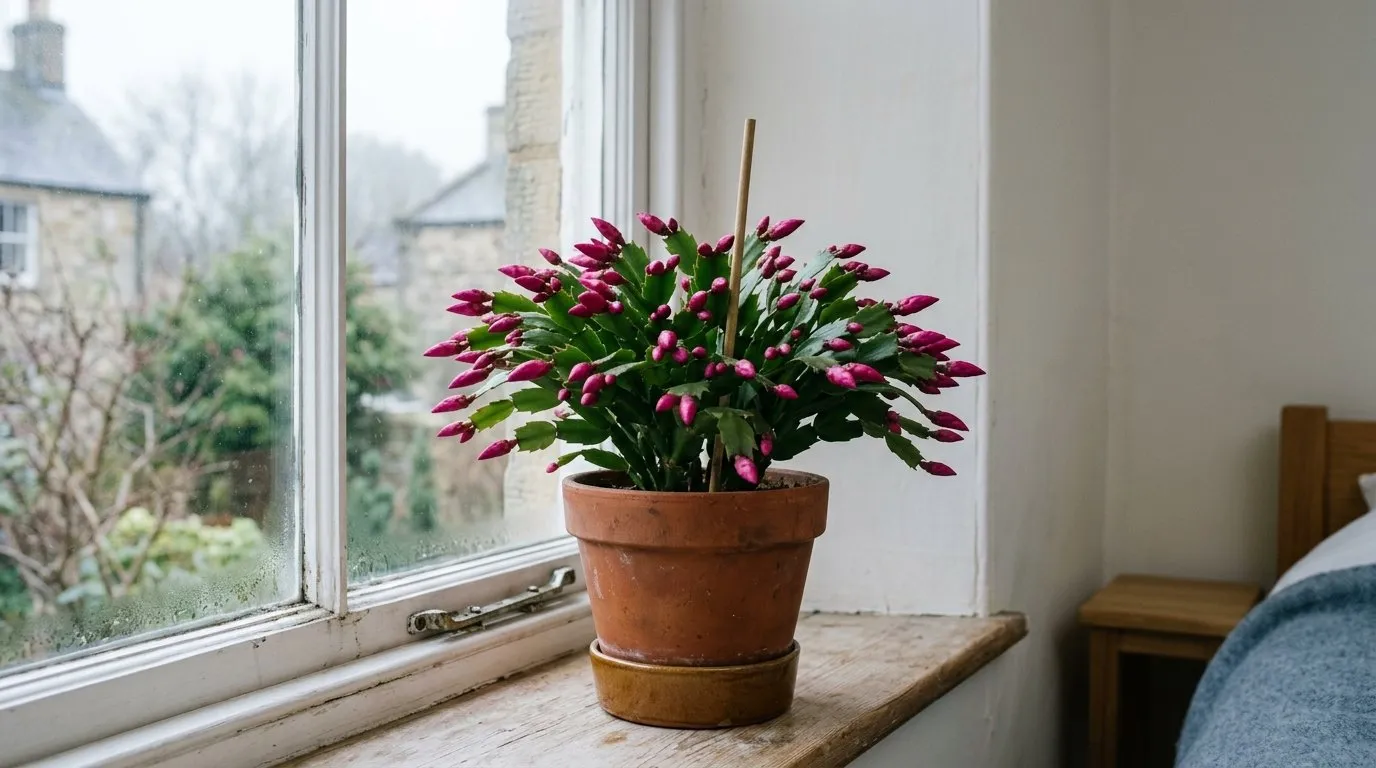
Six weeks in a cool spare room with dark nights, and the buds appear. This is the step most people miss.
Why is my Christmas cactus dropping its buds?
Buds drop when the plant gets a shock. It may set dozens of buds, then shed them almost overnight.
The usual causes are:
- Moving or turning the plant once buds have formed
- Sudden changes in temperature
- Cold draughts from a door or window
- Hot, dry air from a radiator
- Uneven watering, from bone dry to soaking wet
The fix is to keep things steady. Choose its flowering spot before the buds get big, then don’t move it. Keep it away from radiators and cold glass at night. Water evenly, so the compost stays lightly moist.
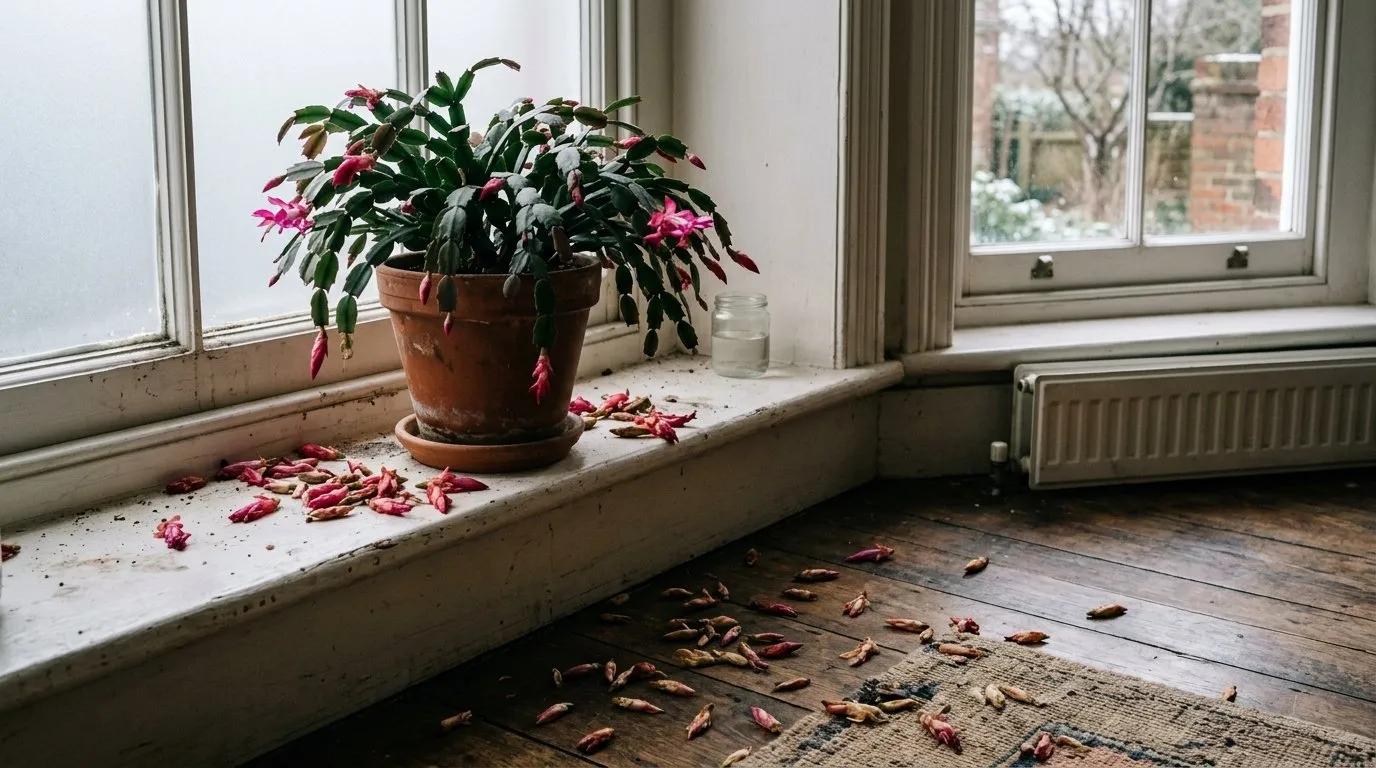
Dropped buds after a move to a spot near the radiator. A steady, cool spot keeps them on the plant.
When and how to repot a Christmas cactus
Repot only every three or four years. A Christmas cactus flowers best when its roots are a little snug in the pot.
Repot in spring, after flowering and before new growth starts. Go up just one pot size, for example from 12cm to 14cm. Use peat-free multipurpose compost mixed with about a third grit or perlite, or a ready-made cactus or orchid mix. It needs an open, free-draining compost like the moss and bark it grows on in the wild.
A shallow pan or half-pot suits top-heavy plants and drains well. Handle the stems gently, as segments snap off easily. Any that break make free cuttings. The guide to repotting houseplants walks through the basics.
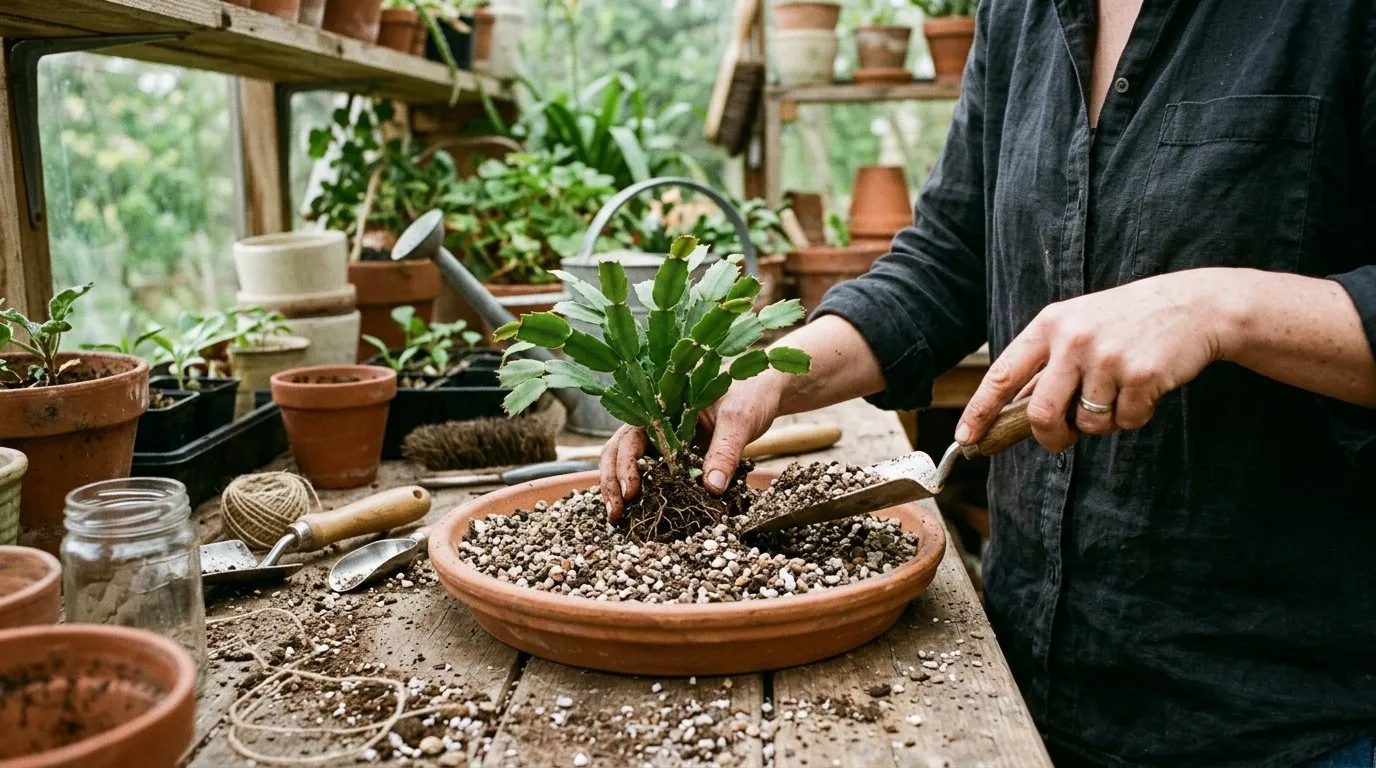
A shallow terracotta pan and gritty compost suit its roots. Only repot every three or four years.
How do you take Christmas cactus cuttings?
Christmas cactus is one of the easiest houseplants to grow from cuttings. It’s a lovely way to share an old family plant.
- In late spring or summer, twist off a piece with two or three segments. A Y-shaped piece works well.
- Leave it on a windowsill for a day or two so the cut end dries.
- Push the base about 1cm into a small pot of moist, gritty compost. Three or four cuttings fit a 9cm pot.
- Keep them warm, in bright light out of direct sun, and only just moist.
Roots usually form within a few weeks, and new segments follow. A cutting taken in summer can flower by its second winter. The guide to propagating houseplants has more methods.
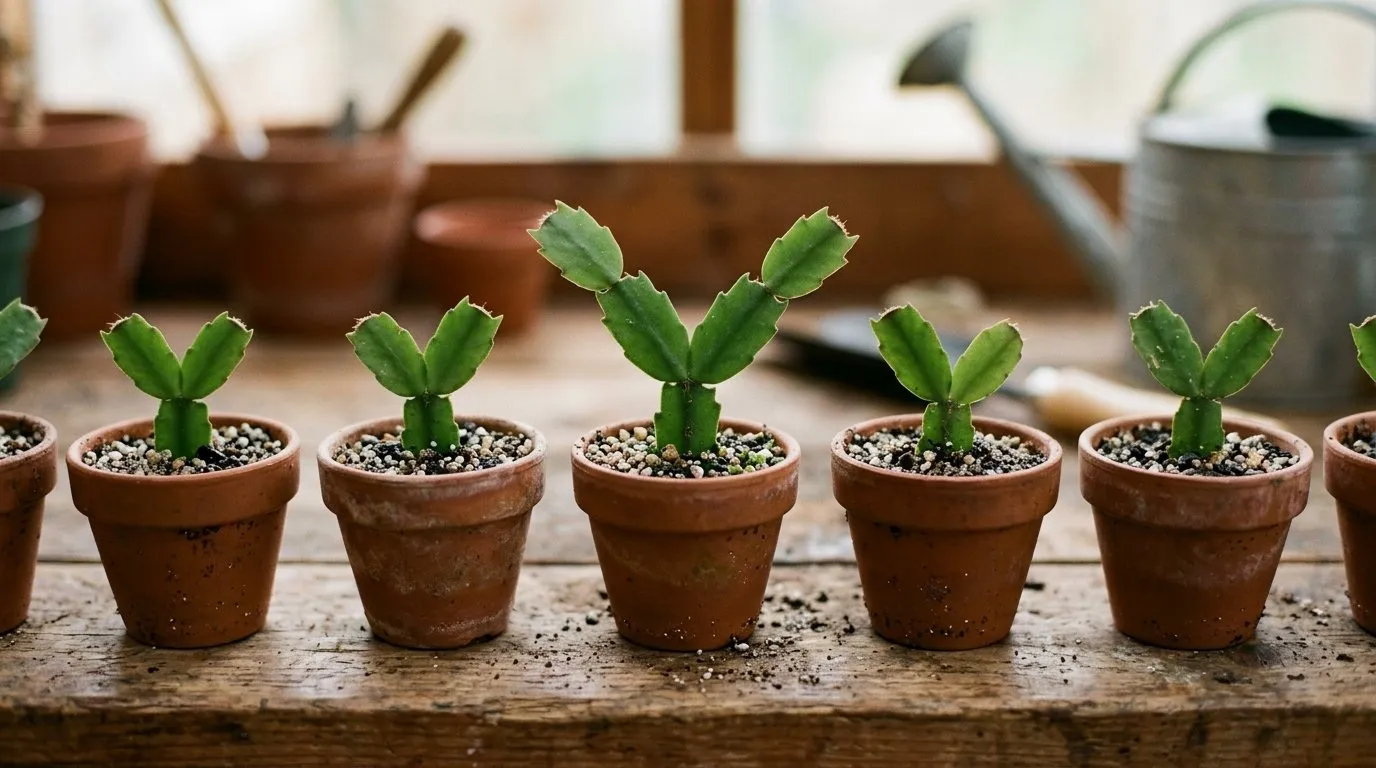
Two- or three-segment cuttings root easily. Let the ends dry for a day before potting them up.
Common Christmas cactus problems
Limp, wrinkled segments. Either too dry in summer or too wet and cold in winter. Check the compost before you water.
Red or purple segments. Too much direct sun. Move it somewhere a little shadier.
Mealybugs. White, fluffy patches in the joints between segments. Wipe them off with a damp cotton bud and check weekly. The guide to mealybug covers other options.
Rotting at the base. The compost has stayed too wet and cold. It is hard to save, so good drainage is key. Take healthy cuttings as a back-up.
No flowers. It hasn’t had its cool, dark autumn. Try again from mid-September.
Christmas cactus care through the year
| Month | What to do |
|---|---|
| March to May | Repot if needed. Start watering a little more as growth starts |
| June to August | Bright shade, indoors or out. Water when the top dries. Take cuttings |
| Mid-September to October | Cool, dark nights for about six weeks. Water lightly, no feed |
| November | Buds form. Choose its spot and stop moving it |
| December to January | Flowering. Water evenly and feed every two weeks |
| February | Rest. Water a little less, but don’t let it dry out |
With steady care, a Christmas cactus can live for decades. It’s also safe with cats and dogs, so it’s a good festive choice for pet owners. Browse more ideas in the houseplants hub.
Frequently asked questions
Is a Christmas cactus a real cactus?
Yes, but it is a forest cactus, not a desert one. In the wild it grows on trees and mossy rocks in the mountains of south-east Brazil. That’s why it likes shade, humid air and steady moisture.
How often should I water a Christmas cactus?
Water when the top 2-3cm of compost feels dry. In summer that is often about once a week. Water until it drains, then empty the saucer. Water less after flowering, but don’t let it dry out completely.
Why won’t my Christmas cactus flower?
It probably hasn’t had cool, dark autumn nights. From mid-September, keep it somewhere cool, about 10-15°C, with no lights on in the evening. After about six weeks, buds should appear.
Why is my Christmas cactus dropping its buds?
Bud drop is usually caused by a sudden change. Moving or turning the plant, draughts, a hot radiator or uneven watering can all do it. Once buds form, leave it in one spot and water evenly.
Is a Christmas cactus poisonous to cats and dogs?
No, Christmas cactus is listed as non-toxic to cats and dogs. A pet that chews a lot of it might get a mild upset stomach. Poinsettia and amaryllis are less pet-friendly festive plants.
Can a Christmas cactus go outside in summer?
Yes, a sheltered, shady spot outside suits it from June. Keep it out of hot midday sun, which turns the segments red. Bring it in before nights turn cold in autumn.
How do I tell a Christmas cactus from a Thanksgiving cactus?
Look at the edges of the stem segments. A true Christmas cactus has rounded, scalloped edges. A Thanksgiving cactus has sharp, pointed teeth and flowers a little earlier, from November.
For another winter-flowering houseplant that’s easy to bring back into bloom, read the guide to kalanchoe care.
Our team produces practical UK gardening guidance from source research, contributor records and established horticultural practice. Editorial standards are overseen by Matt W.