
Key takeaways
- A few houseplants make very little difference to the air in a real room
- The air-purifying idea came from tests in small sealed chambers, not homes
- Plants still add a little humidity, look lovely and lift the mood
- Opening a window, using extractor fans and cutting pollution at source work far better
- Spider plant, areca palm and Boston fern are safe with cats and dogs
- Peace lily, pothos, snake plant, dracaena and English ivy are not pet-safe
Air-purifying houseplants don’t noticeably clean the air in a normal home. That’s the honest answer. The idea came from NASA tests in small sealed chambers, where plants did take some pollutants out of the air. A real living room, with windows, doors and draughts, swaps its air far faster than a few pots can work.
The good news is that houseplants are still well worth growing. They look lovely, lift the mood and add a little moisture to dry, heated rooms. This guide picks the easiest of the “air-purifying” plants, says which are safe with pets, and explains what really freshens indoor air.
Do houseplants really purify the air?
Not in a way you’d notice. The plants in the NASA tests sat in small sealed boxes with pollution pumped in. In that tiny space, levels dropped.
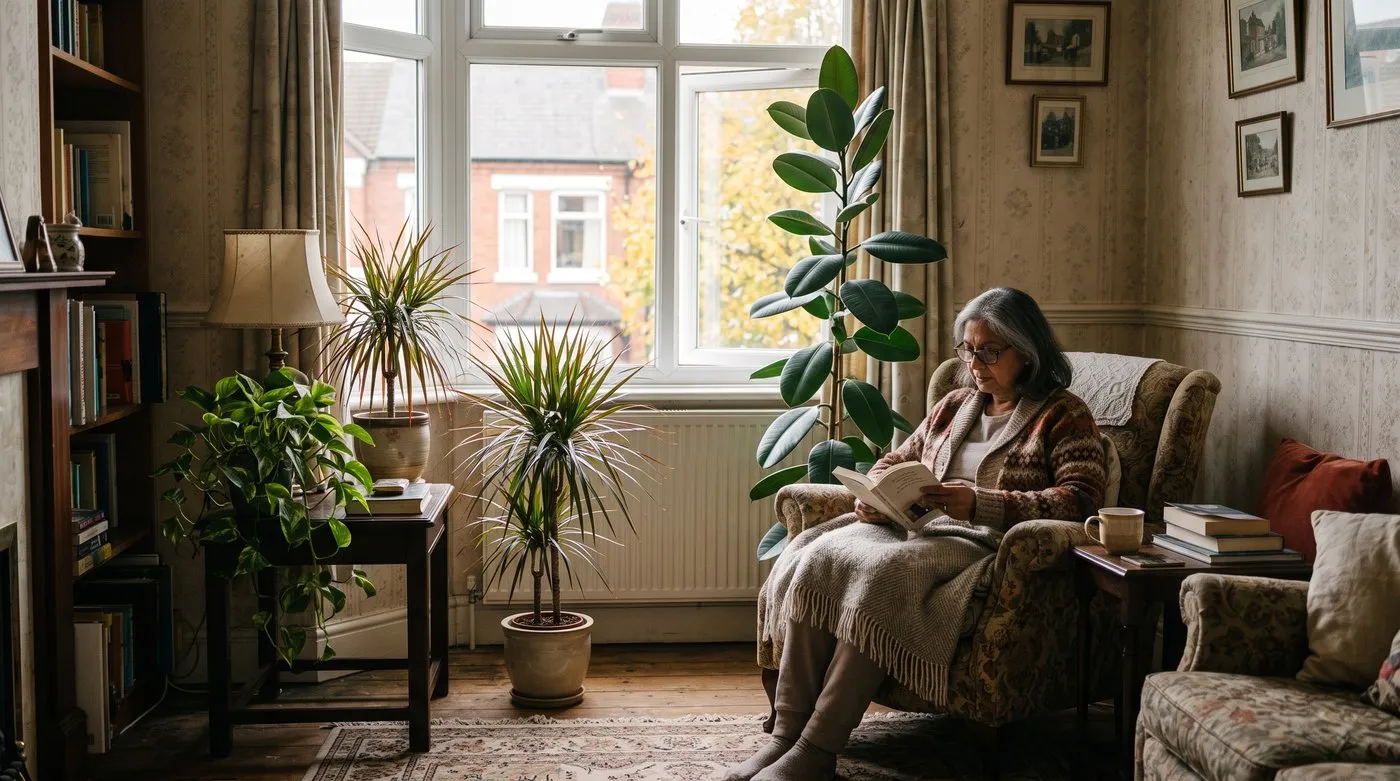
Plants make a room feel calm and lived-in. Leave the window open a crack, though, as that does the real air-freshening.
Your home is very different. Air leaks in and out through gaps, vents, doors and windows all day. That fresh air does far more than any realistic number of plants. To match it, you’d need a room packed wall to wall with pots.
Gardener’s tip: Buy a plant because you like it and it suits the spot, not to filter the air. Then open a window too.
What houseplants are actually good for
Plants still earn their place in a UK home, just for different reasons.
- A little humidity. Plants give off water vapour through their leaves. A group of leafy plants makes the air around them slightly moister, which helps in centrally heated rooms.
- Mood. Most people simply feel better with some green around them. That’s reason enough.
- A nicer room. Plants soften corners, fill empty shelves and bring life to a dull windowsill.
For desks and workplaces, the guide to office plants that survive desk life picks tough ones for dry, air-conditioned rooms.

Grouping plants together looks fuller and keeps the air around them a little moister than single pots dotted about.
Ten “air-purifying” houseplants worth growing anyway
These are the plants that did well in the lab tests. Here they’re sorted by how easy they are to keep alive in a UK home.
| Plant | Light | Watering | Pet-safe? | How easy |
|---|---|---|---|---|
| Snake plant | Low to bright | Every 2-4 weeks | No | Very easy |
| Spider plant | Bright, no hot sun | Weekly in summer | Yes | Very easy |
| Pothos | Low to bright | When top few cm are dry | No | Very easy |
| Peace lily | Low to medium | When leaves start to droop | No | Easy |
| Aloe vera | Sunny windowsill | Every 2-3 weeks | No | Easy |
| Dracaena | Bright, no hot sun | When top few cm are dry | No | Easy |
| Chinese evergreen | Low to medium | When top few cm are dry | No | Easy |
| Rubber plant | Bright, no hot sun | When top few cm are dry | No | Moderate |
| Areca palm | Bright, no hot sun | Keep lightly moist | Yes | Moderate |
| Boston fern | Bright, no hot sun | Keep moist | Yes | Fussy |
Snake plant tops the list because it survives low light, dry air and forgetful watering. The snake plant care guide covers the few things that do upset it. Spider plant and pothos are the next easiest. Boston fern sits last because it sulks as soon as the air or compost dries out.
Snake plant is a popular bedroom pick for the same reasons. For more ideas, see the guide to the best plants for bedrooms.
If you fancy something that flowers for months in similar conditions to peace lily, try anthurium. It wasn’t on the original test list, but it’s a cheerful, glossy alternative.

Snake plant is happy in a dim bedroom and forgives weeks of neglect. Just keep it away from pets that chew.
Which air-purifying plants are safe for pets?
Several of the best-known “air-purifying” plants can make cats and dogs ill if chewed.
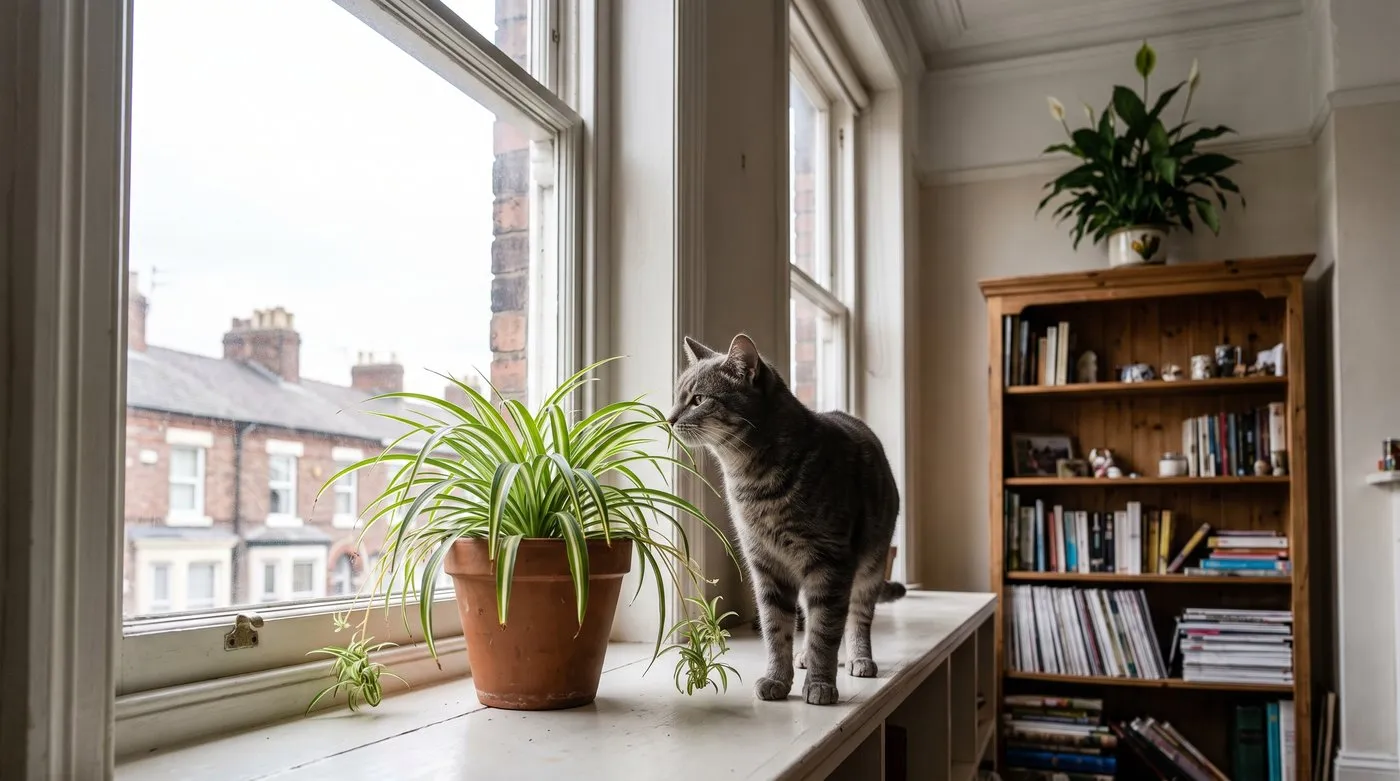
Spider plant is safe if your cat has a nibble. Keep peace lilies and pothos up high, out of paws’ reach.
Not pet-safe: peace lily, pothos, snake plant, dracaena, Chinese evergreen, aloe vera, rubber plant and English ivy. Most cause mouth irritation, drooling or an upset stomach.
Pet-safe: spider plant, areca palm and Boston fern. Cats often nibble spider plant babies, which is harmless, if a bit messy.
Warning: Peace lily isn’t a true lily, but true lilies (Lilium) are deadly to cats. Even the pollen can cause kidney failure. Keep them out of any home with a cat. If a pet chews a toxic plant, ring your vet straight away.
The guide to plants toxic to cats has a longer list to check before you buy.
How to actually freshen your indoor air
Since plants won’t do the job, here’s what will, in order of how much difference it makes.
| What to do | Why it works |
|---|---|
| Open windows for a few minutes, twice a day | Swaps stale air for fresh, and it’s free |
| Use extractor fans when cooking and showering | Takes steam and smells straight outside |
| Cut pollution at the source | Choose low-VOC paint, air new furniture, go easy on candles and sprays |
| Use an air purifier with a HEPA filter | Helps with allergies, dust and traffic fumes |
| Grow houseplants | Adds a little humidity and a lot of cheer |
If you have asthma or live by a busy road, a purifier with a HEPA filter is the real technical fix. Plants can’t remove traffic fumes, dust or smoke in any useful amount.

A few minutes with the window open does more for the air than any plant. Fresh air and houseplants make a great team.
Caring for houseplants through a UK year
Most of these plants come from the tropics. In the UK, the challenges are dark winters and dry central heating.
| Season | Watering | Main job |
|---|---|---|
| Spring | Water more as growth starts | Repot if needed, start feeding |
| Summer | Most often, check twice a week | Feed monthly, shade from hot midday sun |
| Autumn | Water less as growth slows | Last feed, move plants nearer the light |
| Winter | Sparingly, let the top dry out | Stop feeding, move away from cold glass at night |
In winter, plants grow slowly and use far less water. That’s when most houseplants die, usually from overwatering rather than cold. Let the top few centimetres of compost dry before watering. Move plants off cold windowsills at night.
Wipe dust off broad leaves, such as rubber plant and peace lily, every few weeks. Clean leaves catch more light. The guide on how to feed houseplants covers what to give them and when.

Push a finger into the compost before you water. If it still feels damp, especially in winter, leave it a few more days.
Common mistakes with air-purifying houseplants
- Overwatering in winter. Soggy compost rots the roots. Let the surface dry first and never leave a pot sitting in water.
- Buying for the label, not the spot. A Boston fern sold as “air-purifying” soon dies in a dry, dark hallway. Match the plant to the light and humidity you have.
- Forgetting about pets. A peace lily on a low table near a curious cat is an avoidable risk.
- Relying on misting. A quick mist dries in minutes. Grouping plants or standing them on a tray of wet pebbles works better.
- Ignoring fungus gnats. Tiny black flies around the compost mean it’s too wet. Water less often. The fungus gnats guide covers the rest.
Frequently asked questions
Do air-purifying houseplants actually clean the air?
Not noticeably in a normal home. The famous NASA tests used small sealed chambers. A real room swaps its air through windows, doors and draughts far faster than a few plants can work. Grow them for pleasure, not as air filters.
Which houseplant cleans the air the most?
None cleans a real room enough to matter. Spider plant, peace lily and snake plant did well in sealed lab tests. In a home, pick whichever plant suits your light and routine, as a healthy plant beats a struggling one.
What is the best houseplant for a bedroom?
Snake plant is a good bedroom choice. It copes with low light, dry air and weeks without water. It won’t change the air quality much, but it looks smart and needs almost no care. Keep it away from pets that chew.
Are air-purifying houseplants safe for cats and dogs?
Many are not, so check before you buy. Peace lily, pothos, snake plant, dracaena, aloe and English ivy can make pets ill. Spider plant, areca palm and Boston fern are safe choices. If a pet chews a toxic plant, ring your vet.
How many plants do I need to purify a room?
Far more than anyone could fit in a room. Even a houseful of plants can’t match a window open for a few minutes. Grow as many as you enjoy, and keep the room aired.
Do houseplants increase humidity in UK homes?
Yes, a little, especially when grouped together. Plants give off water vapour through their leaves. A cluster of leafy plants, such as ferns and palms, makes a slightly moister pocket of air in a centrally heated room.
To find the right plant for every room in your home, read our guide to the best indoor plants for UK homes, or browse more plant guides.
Our team produces practical UK gardening guidance from source research, contributor records and established horticultural practice. Editorial standards are overseen by Matt W.


