Key takeaways
- Snake plant, ZZ plant and aspidistra tolerate lower light and missed watering better than most houseplants
- No living plant thrives indefinitely in a windowless office without suitable artificial growing light
- Check the compost before watering; low-light plants usually use water slowly
- Keep foliage away from radiators and direct air-conditioning draughts
- Assign one person to plant care so shared pots are not watered repeatedly
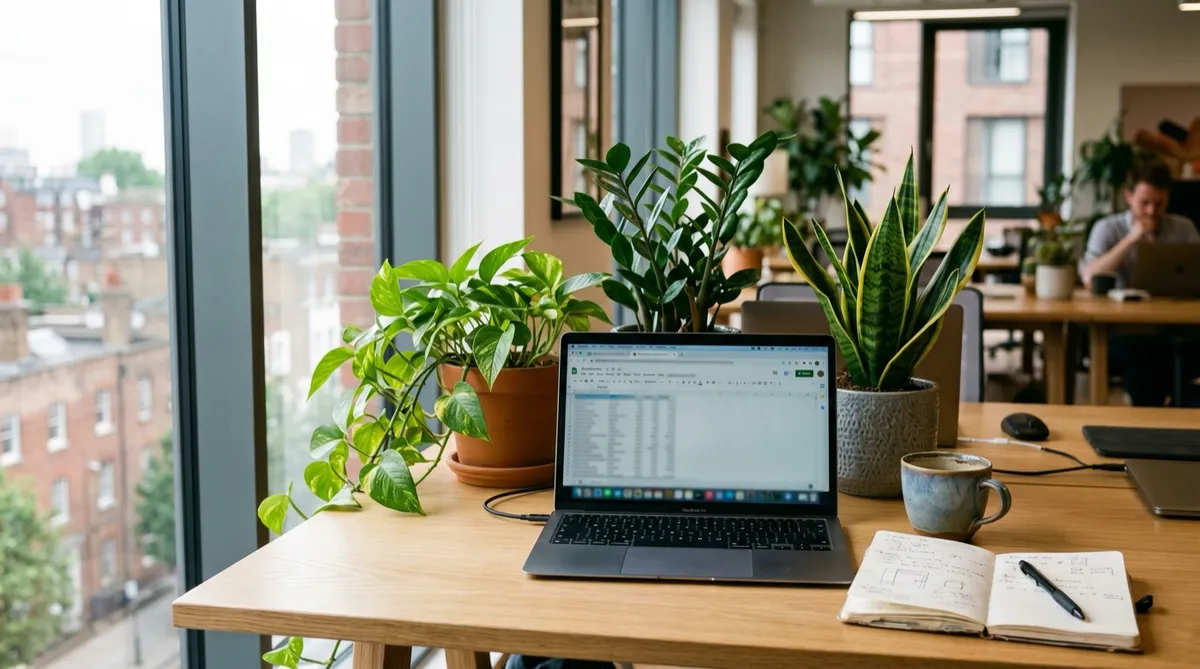
The best office plants are snake plant, ZZ plant, aspidistra, pothos and Chinese evergreen. They tolerate lower light and irregular attention better than most desk plants. The right choice still depends on distance from a window, temperature and who is responsible for watering.
The RHS office-plant guide recommends choosing for the available light and avoiding shared, uncoordinated watering. This guide compares 12 practical choices, explains the warning signs of insufficient light and gives simple watering checks. For rooms outside work, see our guide to the best indoor plants for UK homes.
Why offices kill most houseplants
Offices combine three stresses that homes rarely stack together. The first is light shortage. Window light falls away sharply with distance, and ceiling lights designed for people are not necessarily suitable growing lights. Check the position at different times of day rather than assuming a bright room gives every desk useful plant light.
The second stress is dry, moving air. Radiators and air-conditioning outlets can dry leaves and compost unevenly. Keep plants out of the direct airflow and check exposed pots more often.
The third is neglect by design. Nobody waters on Saturday. Heating drops to 12-14C over winter weekends in many buildings. Then the office empties for two to three weeks at Christmas. A plant that needs attention every three days has no chance. The survivors below were chosen because they shrug off all three stresses.
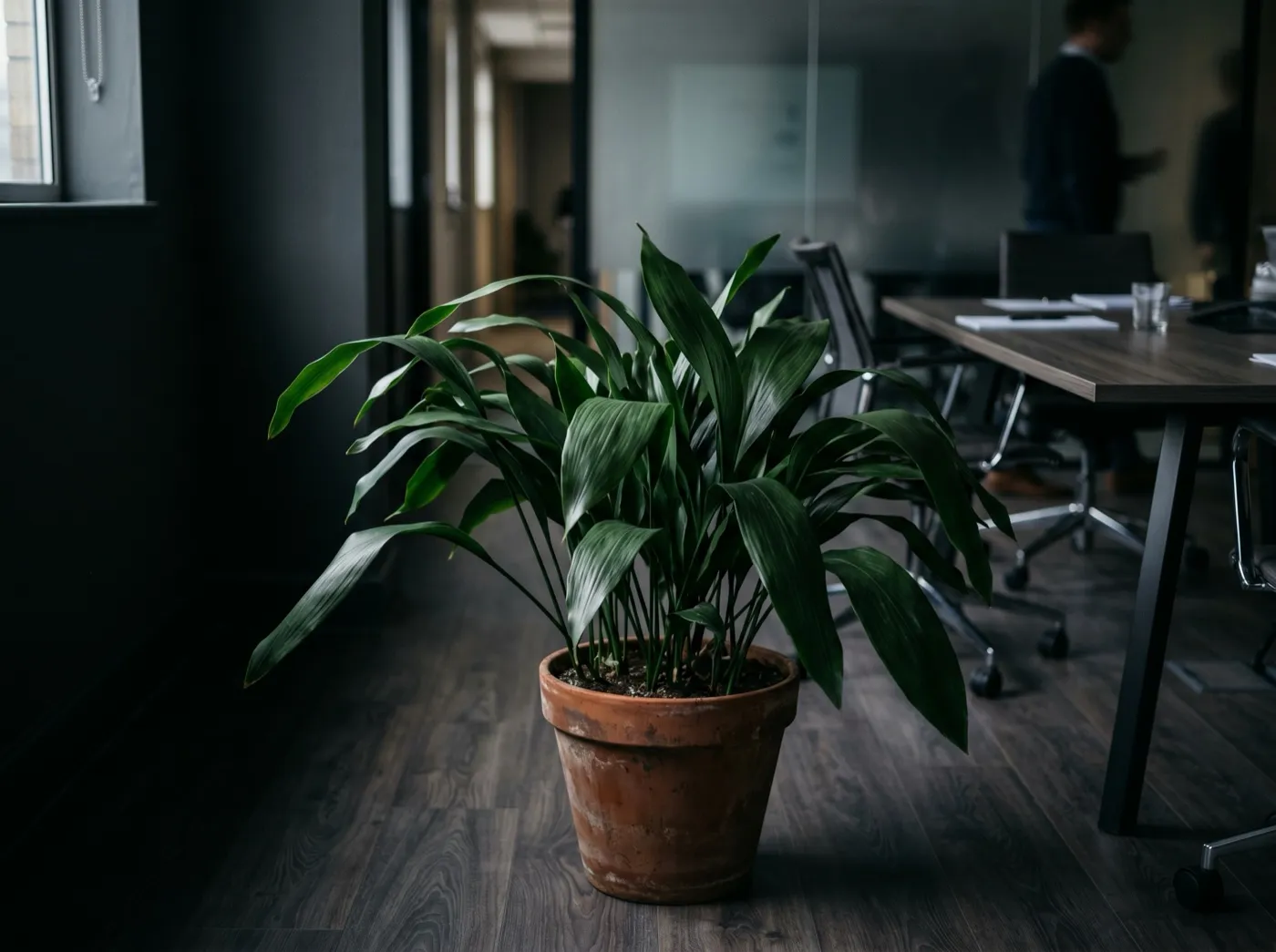 Aspidistra is a slow-growing choice for lower-light office positions, but it still needs useful light.
The 12 best office plants ranked by survivability
The table compares 12 plants for office conditions: lower light, irregular attention and dry air. The snake plant (Dracaena trifasciata, still sold as Sansevieria) is a practical starting point because it grows slowly and stores water in its leaves.
| Rank | Plant | Light tolerance | Water every | Max desk size | Toxicity | Role |
|---|---|---|---|---|---|---|
| 1 | Snake plant | 50 lux | 21-28 days | 30-70cm | Mildly toxic to pets | Desk corner, gold standard |
| 2 | ZZ plant | 100 lux | 21-28 days | 60-90cm | Toxic sap, irritant | Statement plant |
| 3 | Aspidistra | 50 lux | 14-21 days | 50-60cm | Non-toxic | Meeting room corner |
| 4 | Pothos | 150 lux | 10-14 days | Trails to 2m | Toxic if eaten | Shelf trailer |
| 5 | Chinese evergreen | 150 lux | 10-14 days | 40-50cm | Toxic if eaten | Desk corner |
| 6 | Philodendron heartleaf | 200 lux | 10-14 days | Trails to 1.5m | Toxic if eaten | Shelf trailer |
| 7 | Spider plant | 300 lux | 7-10 days | 30cm plus runners | Non-toxic | Cabinet top trailer |
| 8 | Parlour palm | 200 lux | 7-10 days | 60cm | Non-toxic | Desk corner |
| 9 | Dracaena marginata | 300 lux | 10-14 days | Prune to 1m | Toxic to pets | Meeting room statement |
| 10 | Peace lily | 200 lux | 5-7 days | 40-60cm | Toxic if eaten | Meeting room, signals thirst |
| 11 | Haworthia | 1,000 lux | 21-28 days | 10-15cm | Non-toxic | Bright windowsill only |
| 12 | Air plant | 500 lux | Weekly soak | 10-20cm | Non-toxic | Bright sill, away from vents |
The ZZ plant (Zamioculcas zamiifolia) stores water in its rhizomes and suits people who tend to water too little rather than too often. Our full guide covers snake plant care through the UK year in detail. A peace lily needs more regular checks, but its drooping leaves give a visible warning when the compost becomes dry. There is more on getting a peace lily to flower indoors in our growing guide.
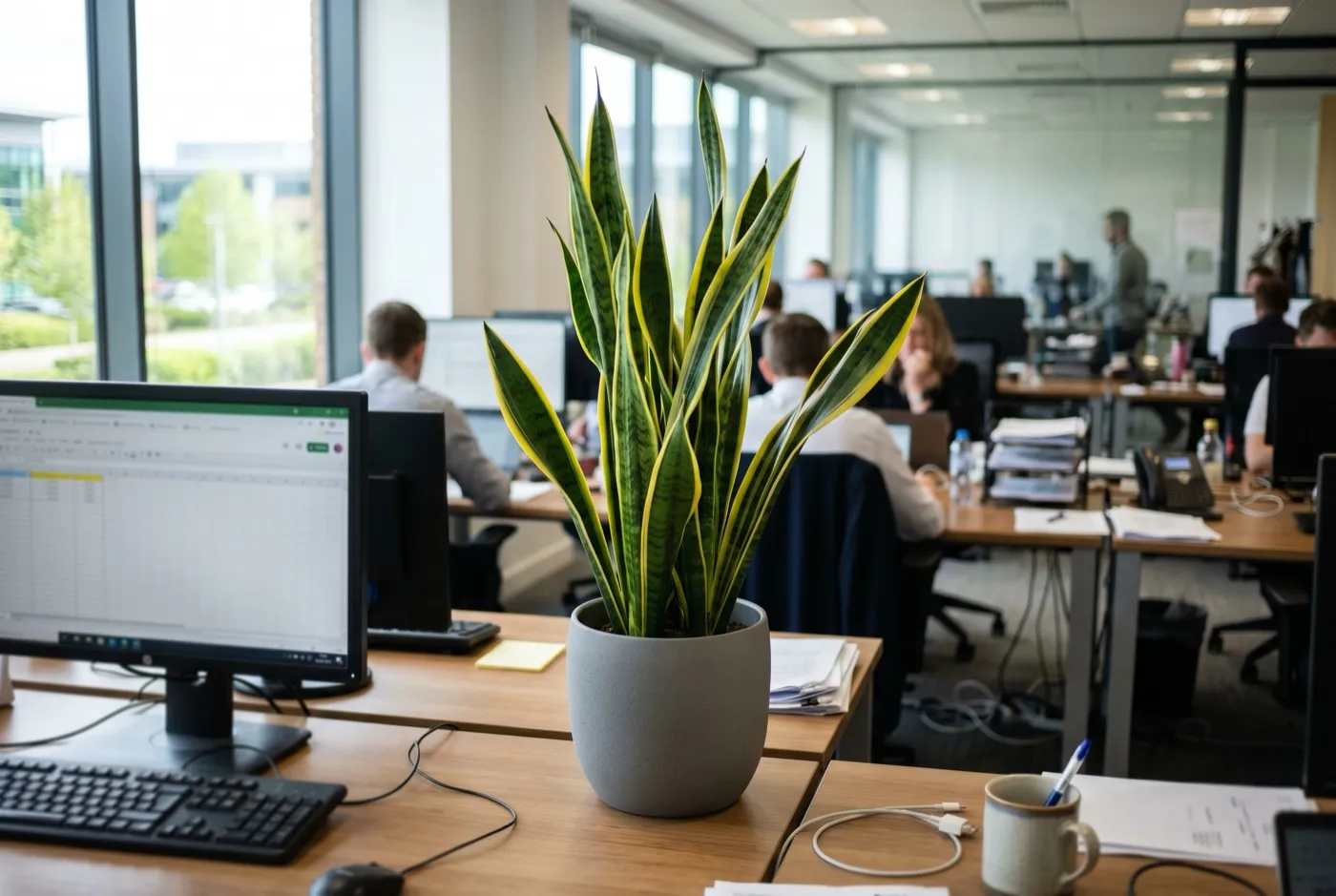 A snake plant’s upright habit and slow growth make it useful where desk space is limited.
Why succulents and air plants disappoint on desks
Succulents look like the obvious office choice because they tolerate dry compost and stay small. The usual problem is light, not water. An echeveria loses its compact shape in a dim position, stretching towards the nearest useful light. The RHS houseplant guidance recommends matching every plant to the light available.
Haworthia is more tolerant of indirect light than many rosette succulents, but it still belongs near a bright window rather than in a dark meeting-room corner.
Air plants (Tillandsia) absorb moisture through their leaves, so direct heated or conditioned airflow can dry them quickly. Keep them in a bright position away from vents and follow species-specific soaking and drying guidance.
How to water an office plant
Watering kills more office plants than drought does. The fix is the two-finger test. Push your index finger into the compost to the second knuckle, about 5cm down. If you feel any moisture, walk away. If it is dry at 5cm, water until roughly 10% drains from the base, then empty the saucer after 20 minutes. Standing water rots roots within a fortnight.
Timing matters less than the moisture check. Water when the compost has dried to the level appropriate for that species, let excess drain, and do not add more simply because it is a particular weekday.
Position changes the drying rate. Heating and moving air can dry exposed pots quickly, while plants in a cool, dim corner may remain wet for much longer. Move a plant out of a vent’s airstream and always check before pouring: the calendar is a prompt, the compost decides.
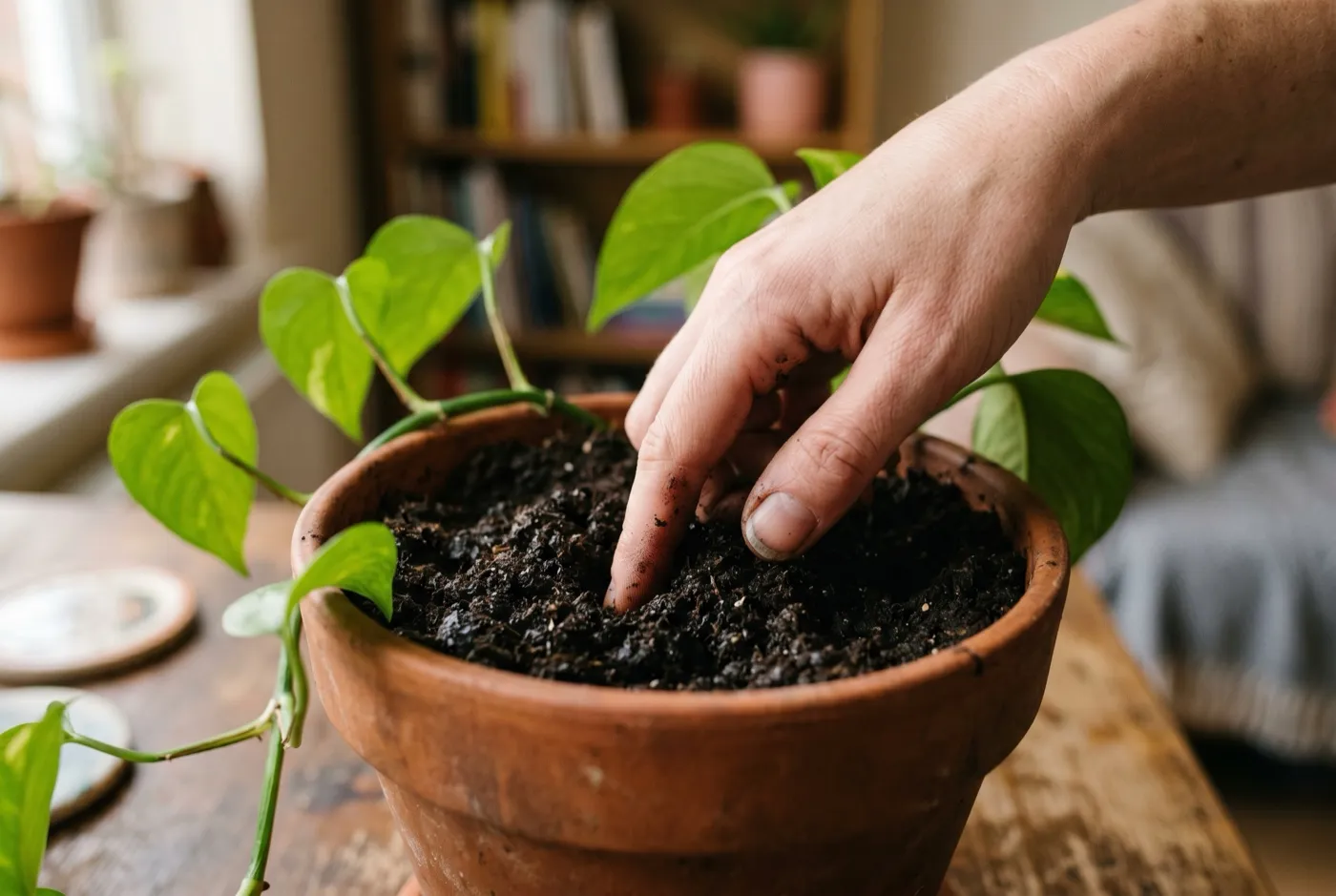 The two-finger test: push to the second knuckle, about 5cm down, and water only if the compost feels dry.
How low light changes the way a plant grows
A plant moved from a bright nursery to a 240 lux desk goes through a predictable adjustment. Understanding it stops you panicking, and stops you overwatering.
- Days 1-14: acclimatisation shed. The plant drops leaves it grew for brighter conditions. Losing 20-30% of foliage in the first fortnight is normal, not a crisis.
- Weeks 2-6: etiolation begins. Below its comfort level, the plant stretches. Internodes lengthen, stems lean toward the window and new leaves emerge 30-50% smaller and paler.
- Weeks 6-12: growth nearly stops. Below about 200 lux most species sit at their light compensation point, where photosynthesis barely exceeds respiration. Water use falls by 50-70% compared with a bright sill.
- Month 3 onward: survival mode or slow decline. Tolerant species hold steady for years. Light-hungry ones keep stretching until they flop.
The critical mistake is watering a dark-corner plant at its old bright-room rate. A plant growing slowly uses less water, so wet compost can linger and damage the roots. Our guide to growing pothos indoors shows what compact, adequately lit growth should look like.
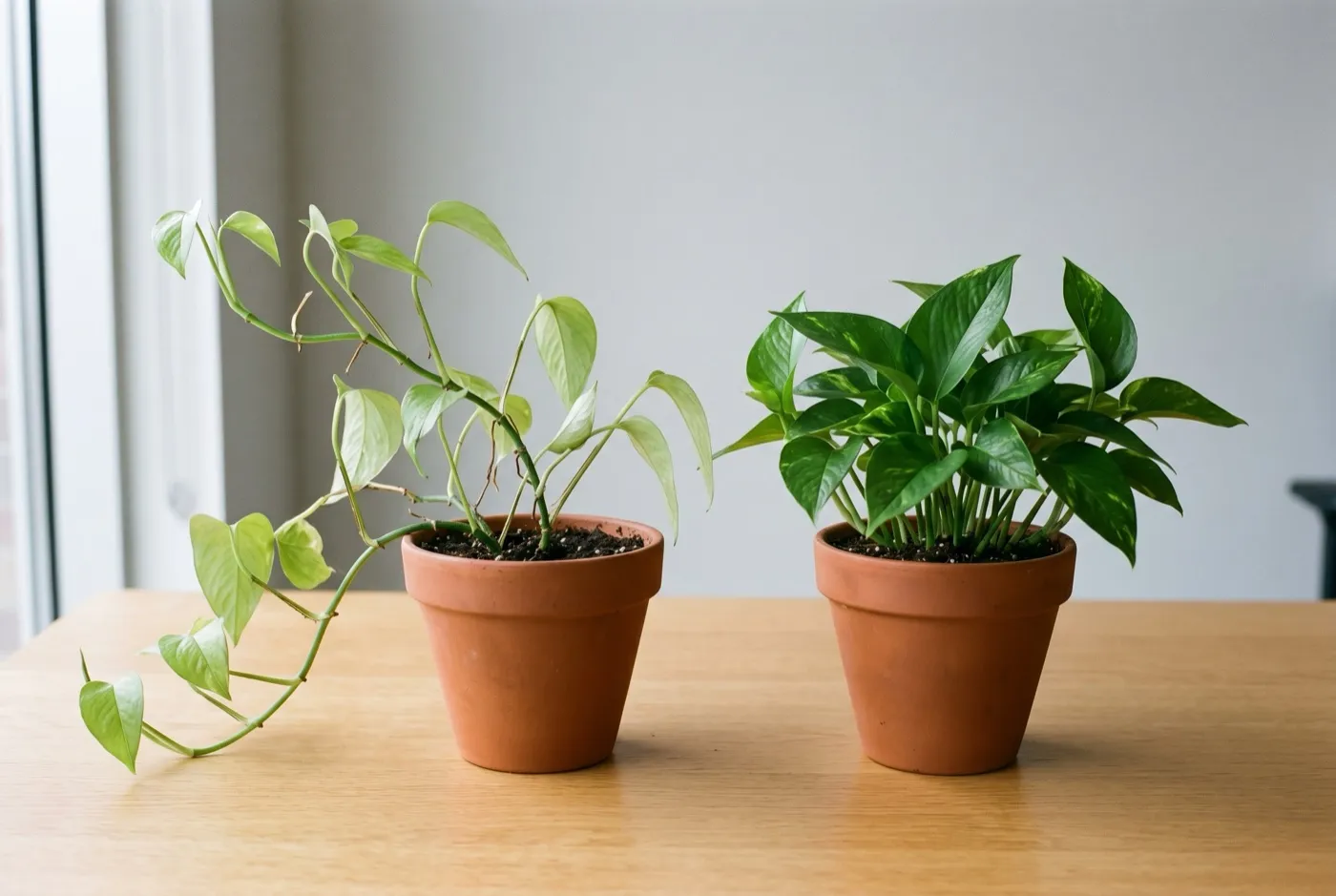 Etiolation in practice: the stretched plant on the left received too little light; the compact one sat nearer the window.
An office plant calendar for the UK year
 The Friday routine in action: a quick finger test, then water until a little drains, and the weekend takes care of itself.
Why the snake plant is our gold standard
Why snake plant is a practical first choice: Its thick leaves tolerate missed watering better than many desk plants, and its slow growth suits limited space. It still needs useful light and must not be left in wet compost.
If 70cm of upright leaf is too much for your desk, the dwarf form ‘Hahnii’ stays under 30cm and tolerates the same neglect. The variegated ‘Laurentii’ with yellow leaf edges keeps its banding even at 200 lux.
The root cause: match the plant to measured light
Most office plant deaths get blamed on neglect. The real cause is usually a light mismatch that no amount of care can fix. A calathea or fiddle leaf fig on a 150 lux desk is dying from day one, however attentively it is watered.
The permanent fix costs nothing. Download a free lux meter app, lay your phone flat where the pot will sit, and take a reading at midday on an ordinary day. Phone sensors run within about 20% of a dedicated meter, which is accurate enough. Then buy off the table above. A 90 lux meeting room corner gets an aspidistra or nothing. A 300 lux desk opens up pothos, Chinese evergreen and spider plants. A sill at 1,000 lux can hold Haworthia.
Two follow-up habits keep things stable. Reposition plants in October when the sun drops and readings can fall by half. And choose by measured light rather than marketing claims; our guide to air purifying houseplants explains why the NASA-study sales pitch should not drive your choice either.
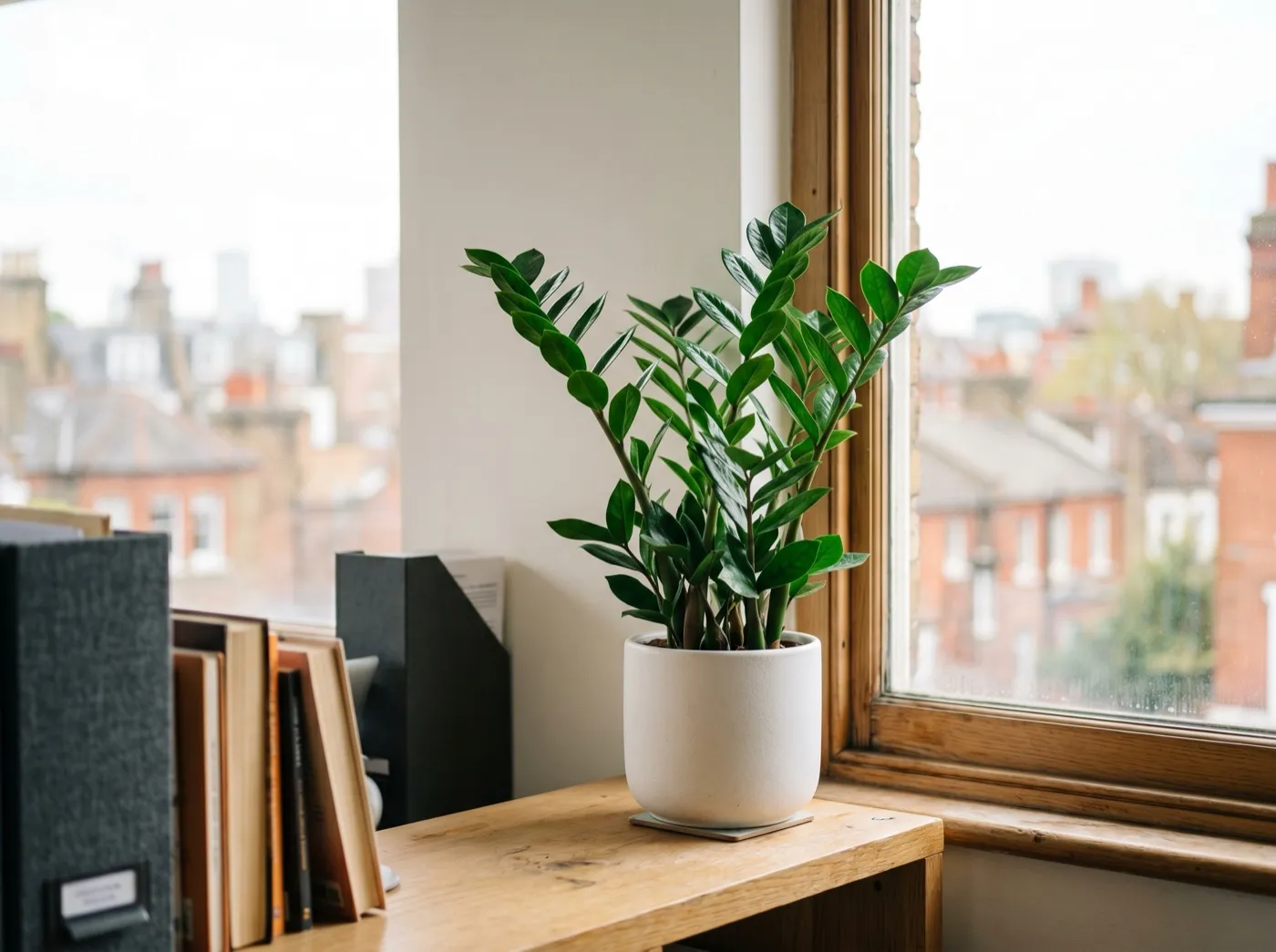 Position is prevention: this ZZ plant was moved to within 2m of the glass after a lux reading, and grew three stems in a year.
Common office plant mistakes
- Parking a plant on a radiator-side sill. From October the sill surface can pass 35C and the compost dries in 3-4 days. Leaves scorch and curl within a fortnight. Move pots to a side table the day the heating comes on.
- Adding a gravel “drainage layer” in the pot. Gravel does not improve drainage. Water only moves into it once the compost above is saturated, so the soggy zone sits 3-5cm closer to the roots. Use a pot with holes and skip the gravel, as covered in our guide to repotting houseplants properly.
- Watering dark corners on a bright-room schedule. Below 200 lux a plant uses 50-70% less water. Wet compost then lingers for two to three weeks, inviting root rot and fungus gnats around your houseplants. Always finger-test first.
- Leaving plants unwatered through a 3-week Christmas shutdown. Water deeply on the final working day, group pots together away from cold glass, and the tough species cope. For thirstier plants, the slow-release tricks in our holiday watering solutions guide bridge the gap for under £10.
- Buying for looks instead of light. Ferns, calatheas and fiddle leaf figs top the wish lists and the casualty lists. Meter the spot first, then pick the highest-ranked plant from the table that suits it.
Frequently asked questions
What is the best plant for an office desk far from a window?
A snake plant is the safest choice for a dim office desk. It tolerates missed watering and grows slowly, while the dwarf ‘Hahnii’ form stays compact. No houseplant thrives indefinitely without useful natural or artificial growing light.
How often should I water an office plant?
Check the compost rather than following a fixed timetable. Water when the root zone is becoming dry for that species, let excess drain, and empty the cover pot. Plants near radiators or moving air may need checking more often.
Will office plants survive three weeks unwatered over Christmas?
Choose drought-tolerant plants for long office closures. Snake plants, ZZ plants and aspidistras are safer choices than thirstier species. Check them before the break, move pots away from cold glass and heating, and arrange cover where needed.
Why is my office plant leggy and stretched?
Stretched, pale growth is usually caused by insufficient light. Move the plant closer to useful daylight or provide a suitable grow light, then reassess watering because a dimmer plant uses water more slowly.
Which office plants are safe around pets and children?
Spider plants, parlour palms, aspidistras and Haworthia are all non-toxic. Snake plants, ZZ plants, pothos, philodendrons and peace lilies are toxic if chewed. That matters for offices that allow dogs. Keep toxic trailers on high shelves rather than desk edges.
Our team produces practical UK gardening guidance from source research, contributor records and established horticultural practice. Editorial standards are overseen by Matt W.