Key takeaways
- Give it bright light, but keep it out of hot midday sun
- Water only when the top 5cm of compost feels dry, and less in winter
- Keep it warm and away from cold draughts and radiators
- Repot every two or three years in spring, one pot size up
- Brown edges usually mean dry air, while dark soggy patches mean too much water
- The milky sap can irritate skin and upset pets, so keep it out of reach
The fiddle-leaf fig is one of the most loved houseplants around, with big, violin-shaped leaves that make a real statement. It has a reputation for being fussy, but it’s really just particular about a few things.
Give it bright light, careful watering, steady warmth and a draught-free spot, and it’ll reward you with lovely new leaves every year. Get those wrong and you’ll see the dreaded leaf drop. The RHS page on Ficus lyrata confirms it’s an indoor plant in the UK. For more ideas, see our guide to indoor plants for UK conditions.
What light does a fiddle-leaf fig need?
 Bright light keeps the big leaves a rich, deep green.
Bright light, without harsh direct sun on the leaves, is the most important thing. In the wild it grows where light is plentiful but filtered, so aim for a bright spot near a window.
Best rooms and positions
A south or west-facing room is best. Stand the plant a metre or two back from the window, or closer with a net curtain to soften the sun. East-facing rooms are fine in summer but can be a bit dim in winter.
North-facing rooms are usually too dark. The plant may survive, but it’ll grow slowly and gangly, with big gaps between the leaves.
Seasonal light changes
UK winters are dark. Move your plant closer to the window in autumn, then back a little in spring. Hot midday sun through glass in summer can scorch the leaves, leaving pale, papery patches that don’t recover.
How to water a fiddle-leaf fig
Too much water is the most common way to kill a fiddle-leaf fig. It’s tempting to water often, especially in winter, but soggy roots soon rot.
The 5cm rule
Push your finger into the compost before you water. If the top 5cm feels dry, water well until it runs out of the bottom. If it still feels damp, wait. In summer that often means about once a week. In winter, it’s much less. Bigger pots and cooler rooms need watering less often.

Always check before you water. If the top 5cm still feels damp, leave it a few more days.
Watering method
Use water at room temperature. Very cold tap water in winter can give the roots a shock, so fill the can and leave it to stand for an hour first. Water the compost, not the leaves, and tip away any water left in the saucer.
Signs of overwatering vs underwatering
| Sign | Too much water | Too little water |
|---|---|---|
| Leaf colour | Yellowing, lower leaves first | Brown, crispy edges |
| Leaf feel | Soft and limp | Dry and curling |
| Compost | Damp, maybe smelly | Bone dry, shrinking from the pot |
| Roots | Brown and mushy | Pale but dry |
Humidity and temperature for UK homes
Fiddle-leaf figs come from warm, humid places. Central heating dries the air in winter, which is why brown leaf edges are such a common complaint.
Raising humidity
Group your houseplants together, as they help keep the air around each other moist. Stand the pot on a tray of wet pebbles, with the water just below the top of the pebbles. Misting only helps for a few minutes. If a room is very dry all winter, a small humidifier nearby makes a real difference.
Temperature requirements
Normal room warmth suits it. The things to avoid are chills and sudden changes. Keep it away from cold windows on winter nights, unheated rooms and outside doors.
Keep it about a metre from radiators, as the hot, dry air crisps the leaves. Conservatories are lovely in spring and autumn but can get too hot in summer and too cold on winter nights. New to houseplants? Our beginner’s guide to house plants is a great place to start.
How to repot a fiddle-leaf fig
 Repot in spring when roots start circling the pot. Go up one size only.
Repot every two or three years in spring, when the plant starts growing again. Signs it’s time include roots poking out of the drainage holes, water running straight through, and roots circling the pot. Our guide to repotting houseplants walks you through it.
Choosing the right pot
Go up just one pot size, a few centimetres wider. A much bigger pot holds too much wet compost around the roots. Make sure it has drainage holes. Terracotta is great, as it lets extra moisture escape. Plastic stays wetter, so water a little more carefully.
Best compost mix
Use peat-free houseplant compost with a few handfuls of perlite mixed in. That gives a mix that drains well but still holds some moisture.
Repotting method
- Water the plant the day before.
- Ease it out of its pot and gently loosen any circling roots.
- Put a layer of fresh compost in the new pot.
- Set the plant so the top of the root ball sits a little below the rim.
- Fill in around the sides and firm gently.
- Water well and let it drain.
- Hold off feeding for about six weeks, as fresh compost has food in it.
Pruning and shaping
Pruning keeps the height in check, helps it branch and tidies damaged leaves. Do it in spring or early summer, when the plant is growing.
Creating a tree form (standard)
Most fiddle-leaf figs are sold as a single stem. For a tree shape, let the stem reach the height you want, then snip off the tip just above a leaf. New branches usually appear below the cut within a couple of months.
Creating a bush form
For a bushy plant, cut several stems at different heights in spring, and pinch out the tip of each new branch every year. Over a few years you’ll get a full, rounded plant. Bushy plants suit smaller rooms well.
 From left: bush, small tree and tall tree. Where you prune decides the shape.
Pruning rules
Use clean, sharp secateurs. The milky sap can irritate skin, so wear gloves. Cut just above a leaf. Don’t take off more than a third of the leaves at once, as the plant needs them to recover.
How to propagate a fiddle-leaf fig
Growing new plants from cuttings is easy and free. Spring and early summer are the best times. Our propagation guide covers lots of other houseplants too.
Stem cutting method
- Cut a piece of stem about 15-20cm long with two or three leaves.
- Take off the lowest leaf.
- Stand the cutting in a jar of room-temperature water, with the bare joint under water and the leaves above.
- Keep it somewhere bright and warm, out of direct sun.
- Change the water every few days.
- Roots usually appear within a month or two.
- Once the roots are about 5cm long, pot it up in compost.
- Keep it warm and bright while it settles in.
Not every cutting takes, so try two or three at once.
Common problems and troubleshooting
Most problems come down to light, water or temperature. The leaves will give you clues.
Leaf drop
The one everybody dreads. Cold draughts are the usual cause, especially in winter. Check windows, doors, letterboxes and gappy sash windows. Too much water is the next most likely reason. If a happy plant suddenly drops leaves, think about what changed around it.
Brown spots and edges
Here’s how to read the spots:
| What you see | Where | Likely cause | What to do |
|---|---|---|---|
| Dry, crispy brown edges | Leaf edges | Dry air | Pebble tray or humidifier |
| Dark, soggy patches | Middle of the leaf | Too much water | Water less, check the roots |
| Pale, papery patches | Sunny side | Sun scorch | Move it back from the window |
| Small pale spots | Dotted about | Water sitting on leaves | Pick off bad leaves, water the compost only |
| Little red-brown dots | New leaves | Uneven watering | Water more steadily |
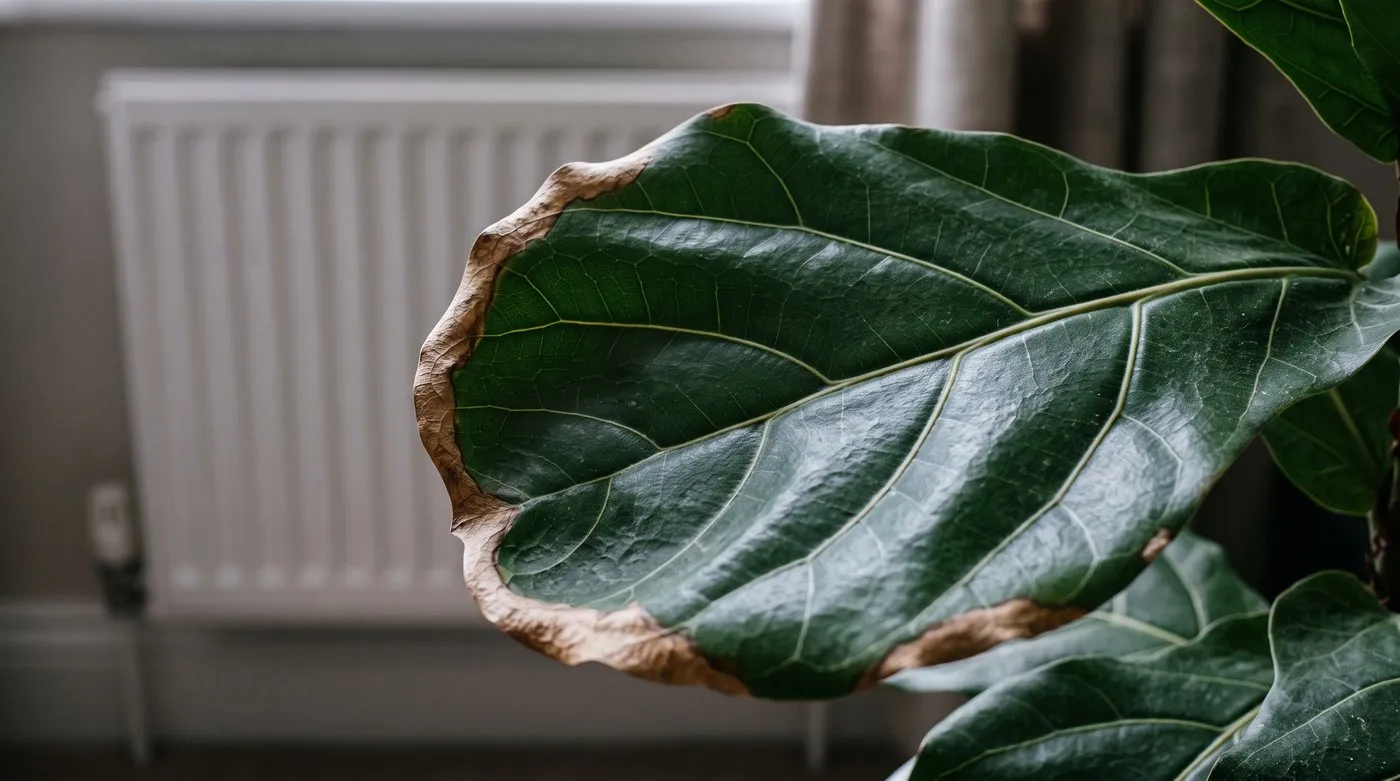
Crispy brown edges in winter usually point to dry air, not watering. Move it away from the radiator and try a pebble tray.
Root rot
If the base of the stem feels soft or the compost smells musty, the roots may be rotting. Ease the plant out, cut away brown, mushy roots and repot in fresh compost in a clean pot. Water less from now on. If most of the roots have gone, it may not pull through.
Feeding your fiddle-leaf fig
Feed only while it’s growing, from spring to late summer. Use a houseplant feed at half strength every few weeks. Don’t feed in autumn and winter.
If the lower leaves turn yellow in summer and it’s growing slowly, it may be hungry. As long as you’re not overwatering, feed a little more often.
Month-by-month care calendar
| Month | Jobs |
|---|---|
| January | Water sparingly. No feeding. Keep away from cold glass. |
| February | Check for pests. Wipe the leaves with a damp cloth. |
| March | Water a little more as days lengthen. Start feeding at half strength. |
| April | Best month to repot. Prune for shape. |
| May | Take cuttings. Make sure it has plenty of light. |
| June | Main growing time. Water and feed regularly. |
| July | On warm, settled nights it can go outside in a sheltered, shady spot. |
| August | Keep watering and feeding. |
| September | Bring any outdoor plants back in. Feed less. |
| October | Stop feeding. Water less. Move away from cold windows. |
| November | Water sparingly. Check for draughts. |
| December | Water only when the compost is clearly dry. Keep it warm at night. |
Common mistakes with fiddle-leaf figs in the UK
Moving the plant too often
Fiddle-leaf figs don’t like change, and a move can lead to dropped leaves. Find a good spot and leave it there. Give the pot a quarter turn every couple of weeks so it grows evenly.
Overwatering in winter
In winter the plant drinks much less. Sticking to a summer routine is the fastest way to rot the roots. Water less often from autumn to spring, and always check the compost first.
Ignoring humidity
Central heating dries the air. Those brown, crispy edges that appear every January are usually down to dry air, not watering.
Using cold tap water
Winter tap water can be very cold. Let it stand until it reaches room temperature before you water.
Placing near a radiator
It seems kind to give a tropical plant some heat, but radiators blast hot, dry air that crisps the leaves. Keep it about a metre away. A snake plant copes with dry air much better if you need something for that spot.
The milky sap can upset cats and dogs if they chew the leaves, so keep it out of reach. Our peace lily growing guide covers another popular houseplant to keep away from pets.
Bush form vs standard tree form
| Bush | Tree | |
|---|---|---|
| Size | Short and wide | Tall with a clear stem |
| Best room | Bedroom, small living room | Open-plan living room, hallway |
| Light | Bright | Very bright |
| Pruning | Pinch tips each spring | Cut the main tip once, then shape the top |
| Ease | Easier for beginners | Needs steadier care |
Fancy another big, leafy statement plant? Our guide to growing Monstera in the UK is a great next read.
Frequently asked questions
Why is my fiddle-leaf fig dropping leaves?
Cold draughts are the usual cause in UK homes. Fiddle-leaf figs hate sudden chills and big swings in temperature. Check for draughts from windows, outside doors and letterboxes, and move the plant away from them. Too much water is the next most likely cause, and you’ll often see lower leaves turn yellow before they drop.
How much light does a fiddle-leaf fig need in the UK?
Lots of bright light, but not harsh midday sun. A south or west-facing room with a net curtain is ideal. North-facing rooms are usually too dark, especially in winter, and plants there tend to grow slowly and gangly.
How often should I water a fiddle-leaf fig?
Water when the top 5cm of compost is dry. In summer that’s often about once a week. In winter it’s much less often. Always check with your finger first rather than sticking to a routine. Use water at room temperature and empty the saucer afterwards.
Can I put my fiddle-leaf fig outside in the UK?
Only in high summer, and only somewhere sheltered and shady. Wait until nights are reliably warm. Keep it out of direct sun, as outdoor sun can scorch the leaves. Bring it back in before the nights turn cool in late summer.
Why does my fiddle-leaf fig have brown spots?
The type of spot tells you the cause. Dry, crispy brown edges usually mean the air is too dry, which is common with central heating. Dark, soggy-looking patches in the middle of leaves mean too much water. Small pale spots can follow water sitting on the leaves.
How do I make my fiddle-leaf fig bushier?
Snip off the growing tip in spring. Cut just above a leaf with clean secateurs. New branches usually sprout from below the cut within a couple of months. Repeat on the new branches each spring for a fuller plant.
Is fiddle-leaf fig toxic to pets?
Yes, it can upset cats and dogs. The milky sap can irritate a pet’s mouth and tummy if they chew the leaves. It can also irritate skin, so wear gloves when pruning. Keep the plant out of reach of pets and small children.
Our team produces practical UK gardening guidance from source research, contributor records and established horticultural practice. Editorial standards are overseen by Matt W.