Key takeaways
- Bearded iris need full sun and the top of the rhizome left uncovered to flower well
- Plant or divide from July to September, about six weeks after flowering ends
- Free-draining, neutral to alkaline soil suits them; wet ground causes rot
- Divide every three to four years, or the clump crowds itself and stops flowering
- Dwarf types flower in April, tall bearded in late May and June
- Too much nitrogen and burying the rhizome are the usual reasons for no flowers
Bearded iris (Iris germanica) are one of the best early-summer flowers for UK gardens, but plenty of clumps grow leaves and no flowers. The reason is nearly always the same: the rhizome has been buried when it wants to sit in the sun. Plant it shallow, give it full sun and divide it every few years, and it’ll flower every May and June.
Three rules matter most. Leave the top of the rhizome showing. Divide every three to four years. Go easy on the feed.
What makes a bearded iris different?
Bearded iris grow from a rhizome, a fat stem that creeps along the soil surface. That makes them quite different from Dutch and Reticulata iris, which grow from bulbs and are covered in our guide to growing iris bulbs.
The name comes from the fuzzy line of hairs, the beard, on each of the three lower petals (the falls). The three upright petals are the standards. They come in almost every colour except true red. For Siberian, water and other iris, see our guide to the whole iris family.
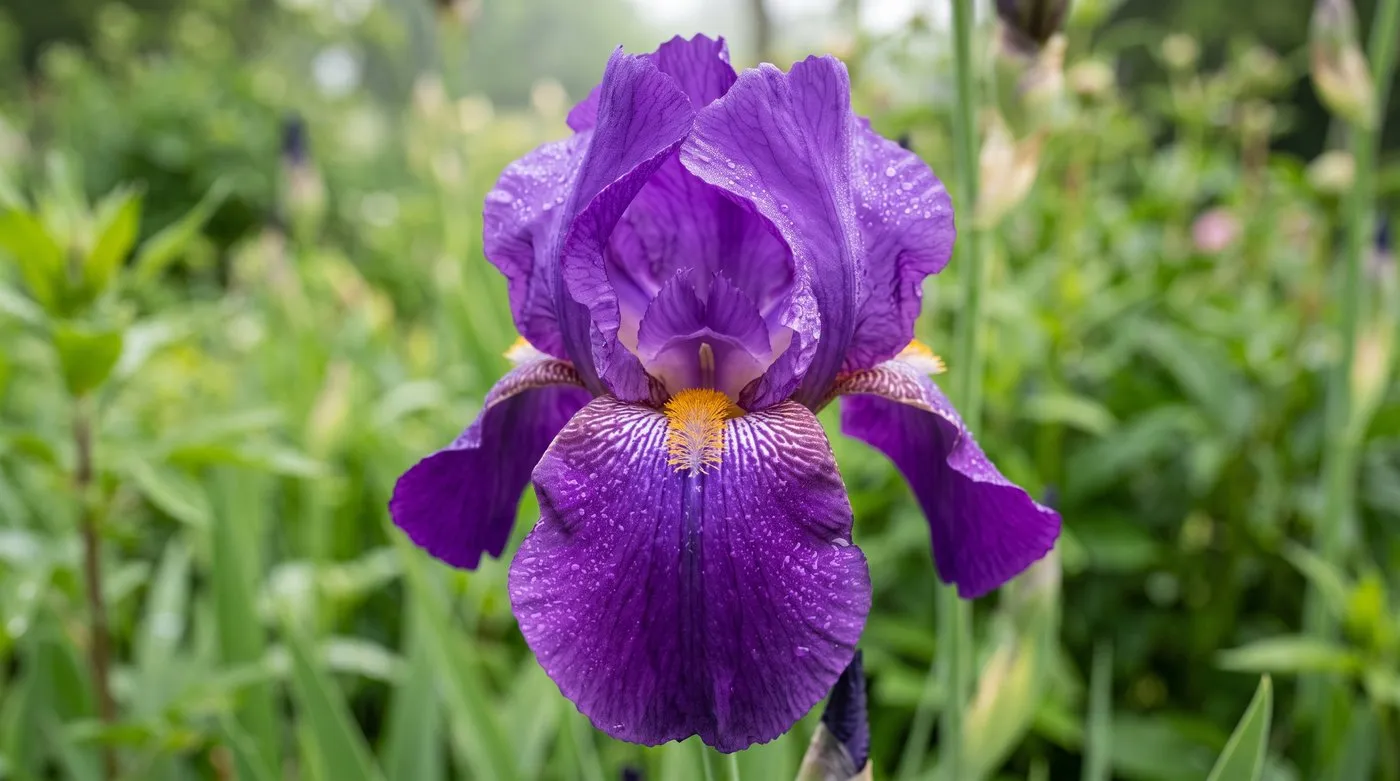
The upright petals are the standards, the drooping ones are the falls, and the fuzzy stripe is the beard that gives the plant its name.
Which type of bearded iris should you grow?
Bearded iris are grouped by height, and each group flowers at a slightly different time. Grow a few types and you’ll have iris flowers from April to late June.
| Type | Height | Flowers | Good for |
|---|---|---|---|
| Miniature dwarf bearded (MDB) | Under 20cm | Early April | Pots, rock gardens |
| Standard dwarf bearded (SDB) | 20-40cm | Late April | Front of border, pots |
| Intermediate bearded (IB) | 40-70cm | May | Windy spots, middle of border |
| Border bearded (BB) | 40-70cm | Late May | Smaller borders |
| Tall bearded (TB) | 70cm and over | Late May to June | Back of a sunny border |
Tall bearded iris have the biggest flowers and are the classic border choice. They can flop in wind, so give them a sheltered spot or a discreet stake. Dwarf types flower a month earlier and are perfect at the front of a border, in gravel or in a pot.
How to plant bearded iris rhizomes
Planting depth decides whether a bearded iris flowers. Get this right and most other things look after themselves.
- Plant from July to September, after flowering, when the plants are resting
- Pick a spot in full sun, with nothing tall shading the clump
- Dig a shallow hole and make a small ridge of soil in the middle
- Sit the rhizome on the ridge, with the roots spread down each side
- Cover the roots, but leave the top of the rhizome showing
- Firm in, water once, then leave it fairly dry
Space tall bearded iris 30-45cm apart and dwarf types 15-20cm apart. On heavy or wet soil, plant on a raised ridge or mix in horticultural grit, because the rhizome rots in standing water. Bearded iris love limey ground, so they’re a natural choice from our list of plants for chalky soil.
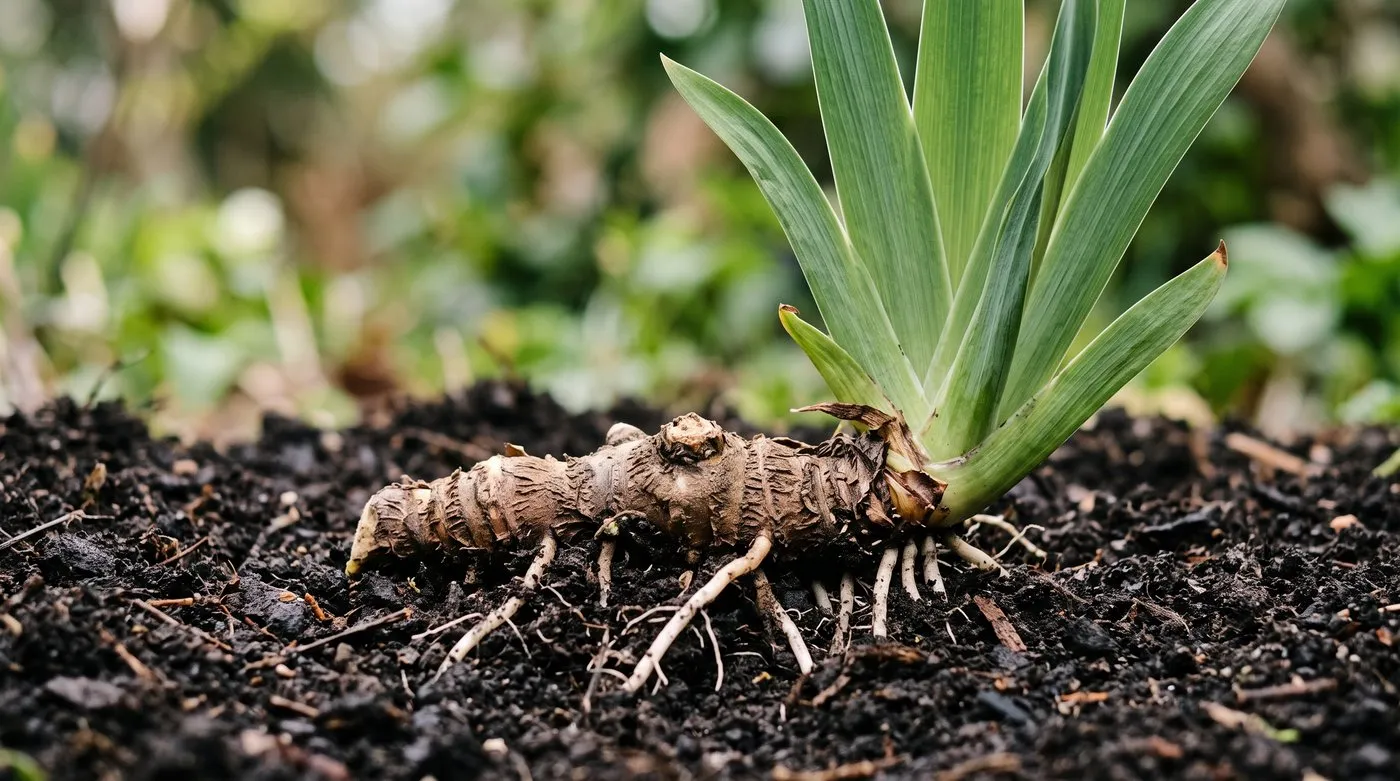
The roots go under, but the top of the rhizome stays on show. This one detail makes the biggest difference to flowering.
Why bearded iris stop flowering
A bearded iris full of leaves but with no flowers is telling you something. Three causes cover nearly every case.
Buried or shaded rhizomes. The rhizome needs sun on its top to set flower buds. Bury it, mulch over it, or let nearby plants shade it, and flowers dwindle within a year or two. This is the most common cause.
Overcrowding. Each rhizome flowers once, then makes new side rhizomes. After a few years the middle of the clump is a mat of old, spent rhizomes. Only the young growth at the edge flowers well.
Too much nitrogen. Rich feeding and manure give lots of soft leaves, few flowers and more rot. Use a light, low-nitrogen feed instead.
Fix the cause and flowering usually returns within a season or two.
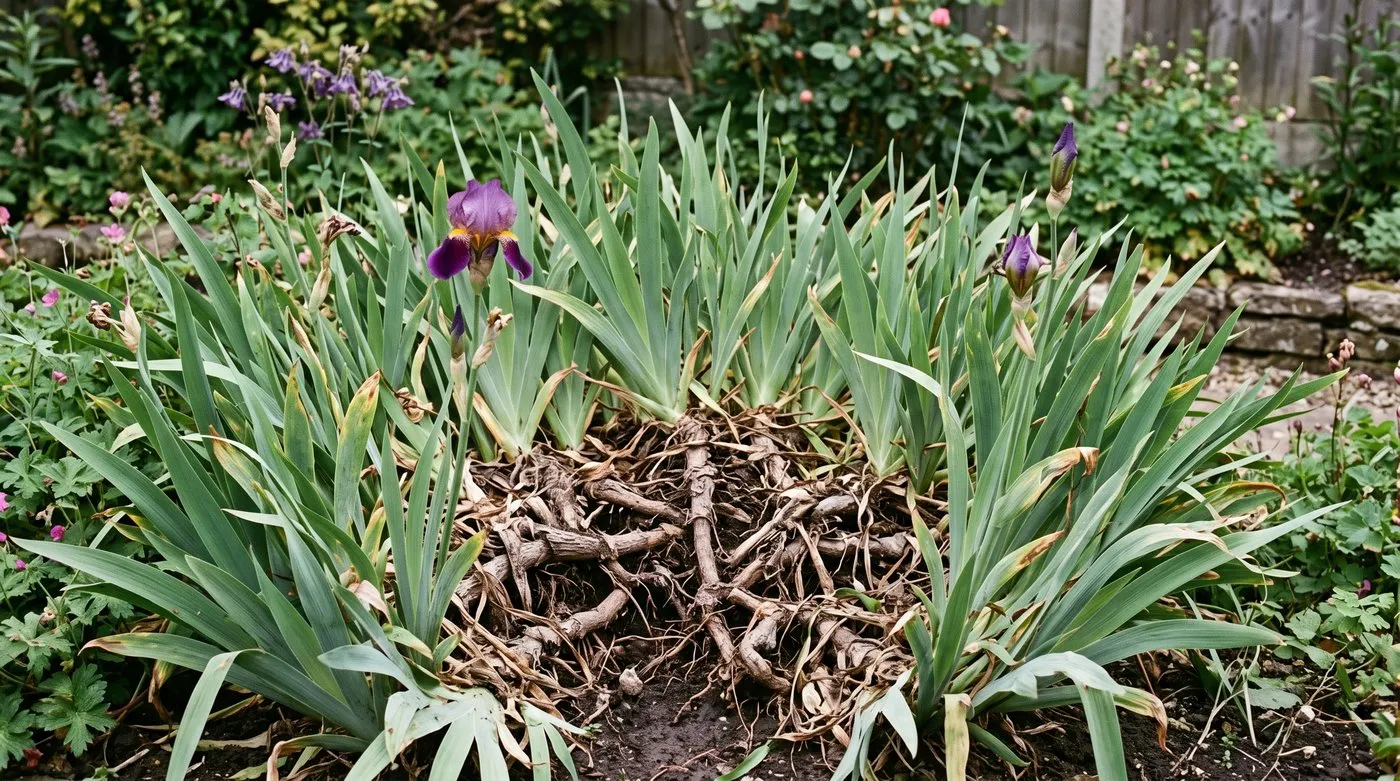
A tired clump with a bare middle and only a couple of flowers. It’s time to lift and divide.
How to divide bearded iris step by step
Dividing is the main job in growing bearded iris, and the cure for a clump that’s stopped flowering. Do it about six weeks after flowering.
- In July or August, lift the whole clump with a fork
- Shake off the soil so you can see the rhizomes
- Snap or cut off young, firm rhizomes from the outside, each with a fan of leaves and its own roots
- Throw away the old, woody rhizomes from the middle, as they won’t flower again
- Cut out any soft or rotten parts back to firm, pale tissue
- Trim the leaves to a fan about 15cm tall, so the wind can’t rock the new plants
- Let the cut ends dry for a few hours, then replant shallowly in full sun
Water the new plants once and they’ll usually flower the next year or the year after. Most perennials are divided in spring, as our guide to perennials to divide in May explains, but bearded iris are the exception and wait until summer.
Warning: Iris rhizomes are poisonous to cats and dogs if chewed. Don’t leave lifted rhizomes or trimmings lying around where pets can get at them.

Cut young rhizomes, each with its own leaf fan and roots, from the edge of the old clump. The woody middle goes on the compost heap.
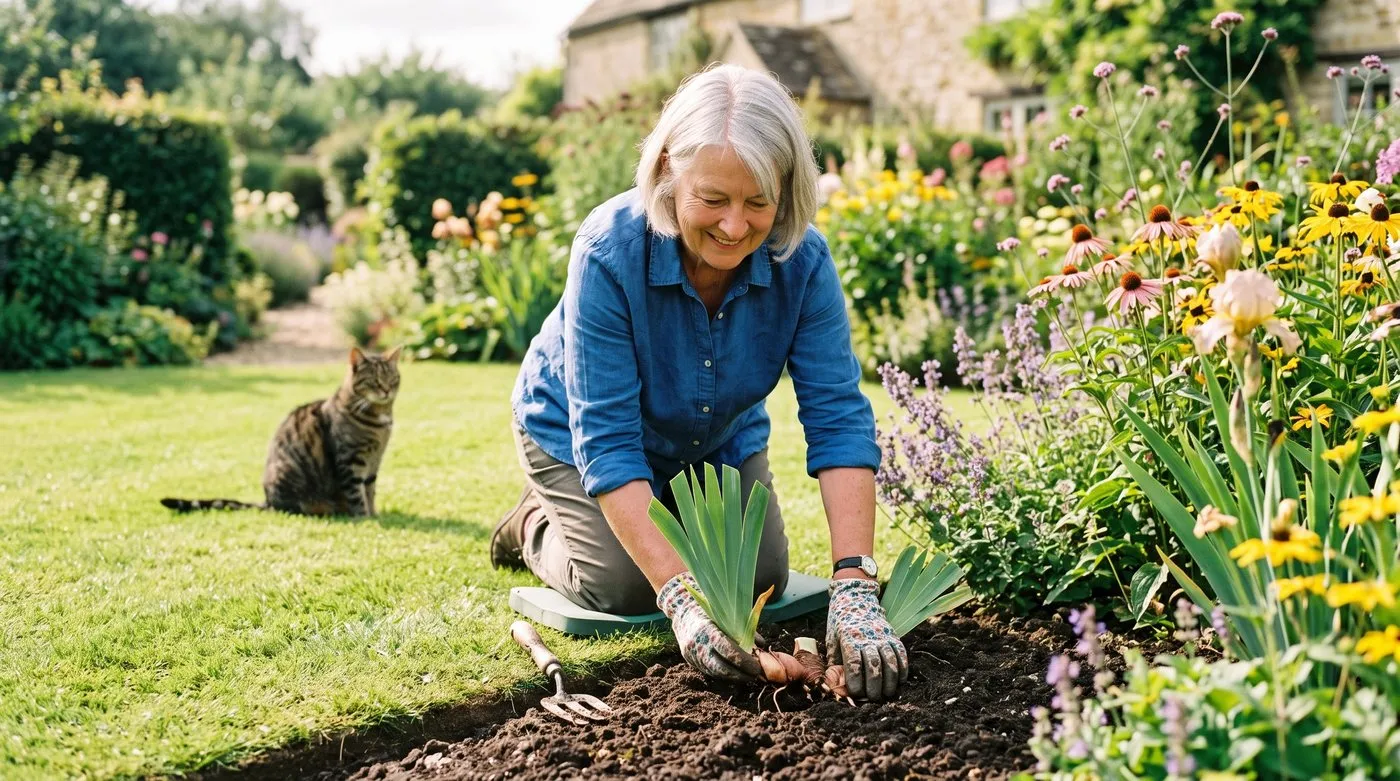
Replant each trimmed fan straight away, shallowly and in full sun. Planted in summer, they root before winter.
Feeding, watering and aftercare
Bearded iris need less care than most perennials, and too much fuss does more harm than too little.
Feeding: give a light sprinkle of a low-nitrogen feed, such as sulphate of potash, in early spring and again after flowering. Keep feed and mulch off the rhizomes.
Watering: water newly planted divisions in dry spells during their first few weeks. Established clumps rarely need watering in a UK summer.
Deadheading: snap off faded flowers, then cut the whole stem to the base once all the buds are over. Leave the leaves to feed the rhizome.
Autumn tidy: remove brown or spotty leaves, but keep healthy green fans. Bearded iris make a lovely partner for the plants in our drought-tolerant plants guide, which like the same sunny, dry spot.
Common bearded iris pests and problems
Bearded iris are tough, but three problems turn up in UK gardens.
Rhizome rot turns the rhizome soft, mushy and smelly. It’s worst in wet soil or after damage. Cut out all the soft tissue back to firm flesh and let the cut dry in the sun. Better drainage stops it coming back.
Iris leaf spot causes brown spots, often with a yellow edge, in damp weather. Pick off and bin affected leaves rather than composting them.
Slugs and snails nibble new spring shoots and flower buds, especially on dwarf types. Our guide to getting rid of slugs covers the controls that work.
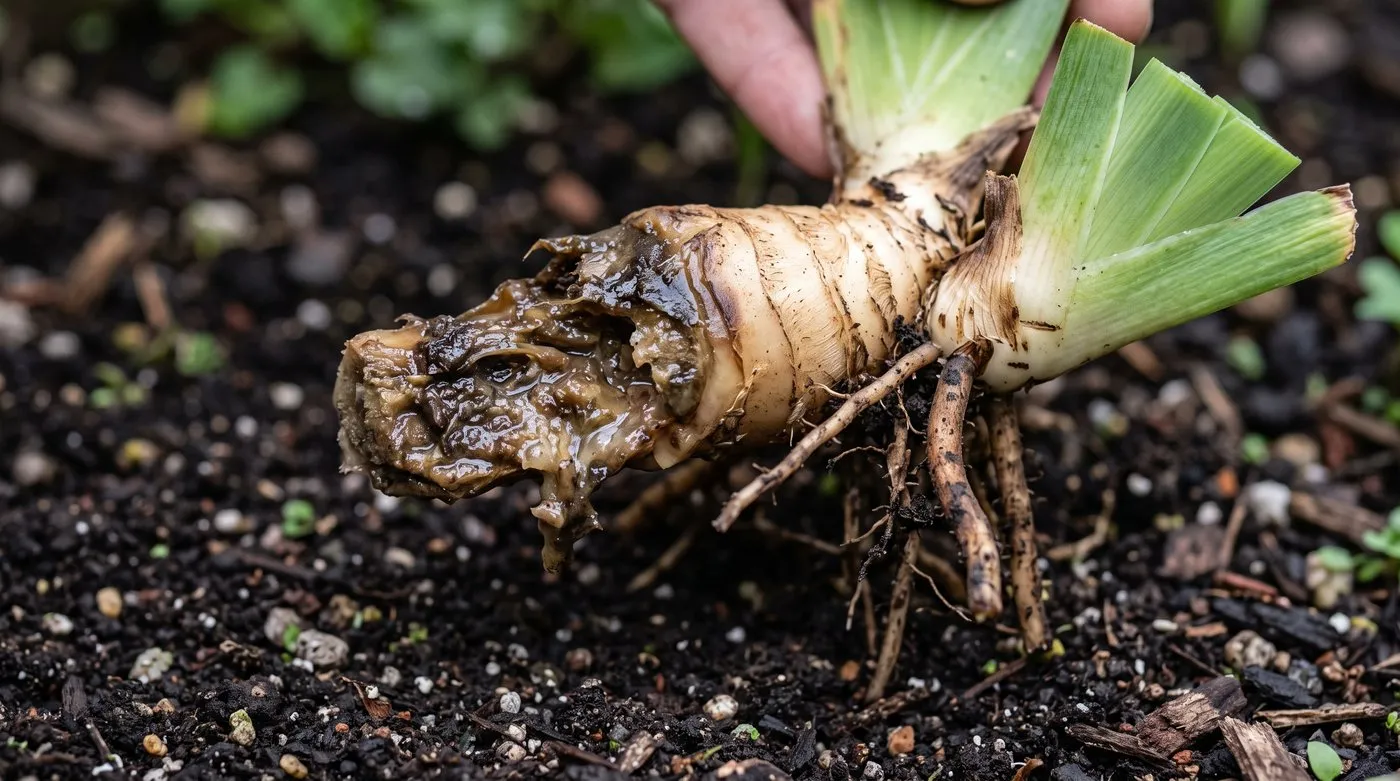
Rhizome rot after a wet spell. Cut back to firm, healthy tissue and improve the drainage.
Bearded iris calendar, month by month
| Month | What to do |
|---|---|
| January to February | Clear fallen leaves and debris off the rhizomes |
| March | Sprinkle a low-nitrogen feed; watch for slugs |
| April | Dwarf types flower |
| May | Intermediate and early tall types flower |
| June | Tall bearded iris peak; cut off faded flower stems |
| July | Lift and divide crowded clumps; feed lightly |
| August | Keep dividing and planting new rhizomes |
| September | Last planting; remove spotty leaves |
| October to December | Tidy foliage; keep leaves and mulch off the rhizomes |
Common mistakes with bearded iris
- Planting too deep. A buried rhizome grows leaves but no flowers. Keep the top showing.
- Mulching over the rhizomes. Bark or compost shades them and keeps them damp. Mulch around the clump, never over it.
- Never dividing. Clumps crowd themselves and flower less every year. Divide every three to four years.
- Rich feeding. High-nitrogen feed gives leaves, not flowers, and invites rot.
- A shady or wet spot. Bearded iris need sun and good drainage. A damp, shady corner will never suit them.
Frequently asked questions
Why are my bearded iris not flowering?
Usually the rhizomes are buried too deep or sitting in shade. They need sun on the top of the rhizome to form flower buds. Crowded clumps and rich, high-nitrogen feed also stop flowering. Lift, divide and replant shallowly in full sun.
How deep do you plant bearded iris rhizomes?
Barely at all. Set the rhizome so its top sits level with, or just above, the soil. Only the roots go underground. Burying the rhizome is the most common reason bearded iris fail to flower.
When should I divide bearded iris?
About six weeks after flowering, usually July or August. That gives the pieces time to root before winter. Lift the clump, keep young rhizomes from the edge, trim the leaves to about 15cm and replant straight away.
What soil do bearded iris like?
Free-draining, neutral to slightly alkaline soil in full sun. They hate waterlogged ground and shade. On clay, plant on a low ridge or mix in grit so water drains away from the rhizome.
Do bearded iris come back every year?
Yes, they’re hardy perennials that come back for many years. Each rhizome flowers once, then makes new side rhizomes that flower later. Without dividing every few years, the clump gets crowded and flowers less.
Should I cut back bearded iris after flowering?
Cut the flower stem off at the base, but leave the leaves. The leaves feed next year’s flowers. Only trim them into a fan when you divide, or remove any that are brown and spotty.
Can bearded iris grow in pots?
Yes, dwarf and intermediate types grow well in pots. Use gritty, free-draining compost with the top of the rhizome showing. Choose a wide pot in full sun, water sparingly, and divide every two to three years.
Now your iris are sorted, plan the rest of the border with our pick of the best perennial plants for UK gardens, or browse more ideas in our plants hub.
Our team produces practical UK gardening guidance from source research, contributor records and established horticultural practice. Editorial standards are overseen by Matt W.