Key takeaways
- Reticulata iris are among the first flowers of the year, from February
- Plant all iris bulbs in autumn, pointed end up, about 8-10cm deep
- Dutch iris are cheap, easy and brilliant for cutting
- Good drainage is the key, as most iris bulbs rot in wet soil
- English iris cope with heavier, moister soil than Dutch or Reticulata
- Reticulata iris are easy to bring into flower early indoors
Iris bulbs are some of the easiest spring flowers you can grow, giving jewel-bright blooms from February to July depending on the type. They’re quite different from the tall bearded iris that grow from rhizomes. Bulb irises are smaller and earlier, and they need two things above all: good drainage and a dry rest after flowering.
Below you’ll find the main bulb irises grown in UK gardens and how to grow them. For bearded and Siberian iris, see our separate iris growing guide. Planning a run of spring bulbs? Our spring bulb planting guide has timings for all the main types.
Little Reticulata iris flower from February, perfect for pots, rockeries and the front of a border.
What are the main types of iris bulbs?
There are four groups of bulb iris, and each likes slightly different conditions. Knowing which you have makes looking after them much easier.
- Reticulata iris: Tiny, about 10-15cm tall, flowering from February. Perfect for pots, rockeries and gravel. They need sharp drainage.
- Dutch iris: Taller, at about 50-60cm, flowering in May and June. The classic florist’s iris and great for cutting. They need free-draining soil.
- English iris: Flower in June and July and cope with heavier, moister soil than the others. Best in sun or light shade.
- Juno iris: Unusual, with leafy stems. They need a very dry summer rest, so they’re more one for keen collectors.
When and how to plant iris bulbs
Plant all iris bulbs in autumn, from September to November. Reticulata iris like to go in early, in September. Dutch and English iris can go in any time up to November. The earlier you plant, the better the roots before winter.
Plant about 8-10cm deep, pointed end up. Space Reticulata iris 5-7cm apart and Dutch iris about 10cm apart.
Soil: Reticulata and Dutch iris need free-draining soil. On heavy clay, grow them in raised beds with plenty of grit, or in pots. English iris are happier in heavier, moister ground.
Plant in groups of 10-15. A single bulb gets lost in a border, and a drift of one variety looks much better than a mix. For layers of colour, try combining iris with other bulbs using the bulb lasagne technique.
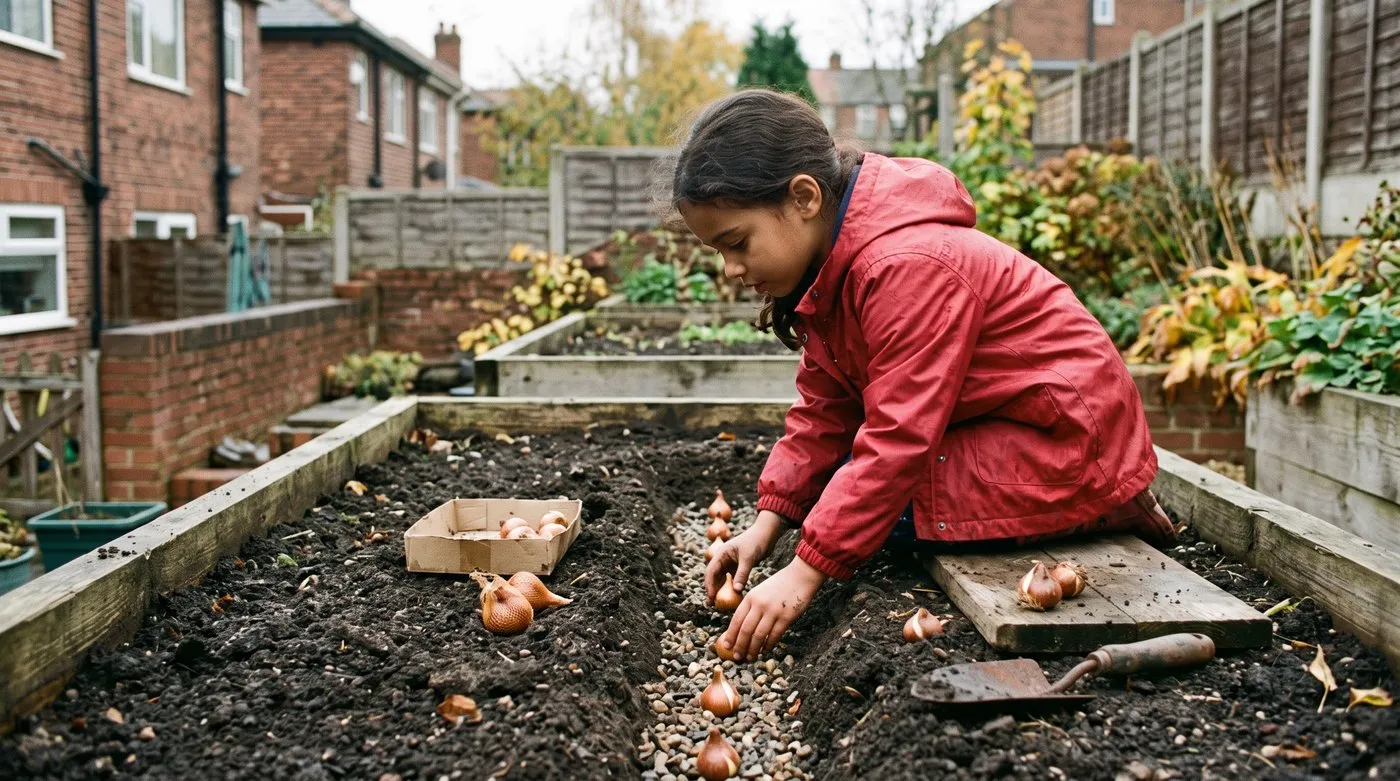
Plant iris bulbs 8-10cm deep with the pointed end up, in groups of 10-15. A drift of one variety looks far better than single bulbs dotted about.
Best iris bulb varieties by colour
Bulb irises come in near-black purples, blues, whites, clear yellows and two-tone mixes. Here are some lovely ones to try.
Blues and purples
- ‘Harmony’ (Reticulata): Royal blue with yellow markings, February. Widely sold and reliable.
- ‘George’ (Reticulata): Rich red-purple, February to March. Darker and more dramatic than ‘Harmony’.
- ‘Professor Blaauw’ (Dutch): Intense violet-blue, May to June. A great deep blue for cutting.
- ‘Blue Magic’ (Dutch): Mid-blue with a yellow flash, May. Vigorous and free-flowering.
Whites and yellows
- ‘White Excelsior’ (Dutch): Pure white with a small yellow blotch, May to June. Clean and elegant in a vase.
- ‘Katharine Hodgkin’ (Reticulata type): Pale blue-grey with yellow and green markings, February. Bulks up well.
- Iris danfordiae (Reticulata type): Bright yellow, February. It often flowers once and then splits into tiny bulbs that don’t flower. Planting it deeper helps.
- ‘Golden Harvest’ (Dutch): Deep yellow, May. Strong-stemmed and reliable.
Two-tone
- ‘Eye of the Tiger’ (Dutch): Bronze-purple and yellow, June. Unusual and striking.
- ‘Apollo’ (Dutch): White and yellow, May to June. Bright and cheerful, and goes with anything.
Growing iris bulbs as cut flowers
Dutch iris are among the best bulbs for cutting. They’re cheap to buy in bulk, quick to flower (planted in autumn, cut in May) and give you plenty of stems without stripping the border.
Cut when the first bud shows colour but hasn’t fully opened. Cut early in the morning with clean secateurs. Strip any leaves that would sit under the water and get the stems into cool water with flower food straight away.
For a cutting row, plant Dutch iris 10cm apart in rows 30cm apart. That leaves room to get in and cut.
Reticulata iris are too short for cutting, but they look sweet in a tiny vase or egg cup.
For more cut flower ideas, see our cut flower growing guide and our tips on conditioning stems for longer vase life.
Dutch iris are cheap, generous and look wonderful in a vase.
How to force iris bulbs indoors
Reticulata iris are easy to bring into flower early indoors. They stay compact and don’t flop in a warm room.
Pot them up in early October in shallow pans or bulb bowls with drainage holes. Use half multipurpose compost and half perlite. Set the bulbs 2-3cm apart, just covered with compost, and water lightly.
Put the pots somewhere cold and dark, such as an unheated garage, cold frame or shed, at around 5-9°C, for 10-12 weeks. Check them monthly and water a little if the compost dries out completely.
In early January, move them to a cool, bright windowsill, away from radiators. Shoots should already be showing, and flowers follow a few weeks later.
After flowering, keep watering until the leaves turn yellow. Then let them dry off and plant them outside in September. They rarely force well a second time but often flower again outdoors after a year’s rest. Our bulb forcing guide has more tips.
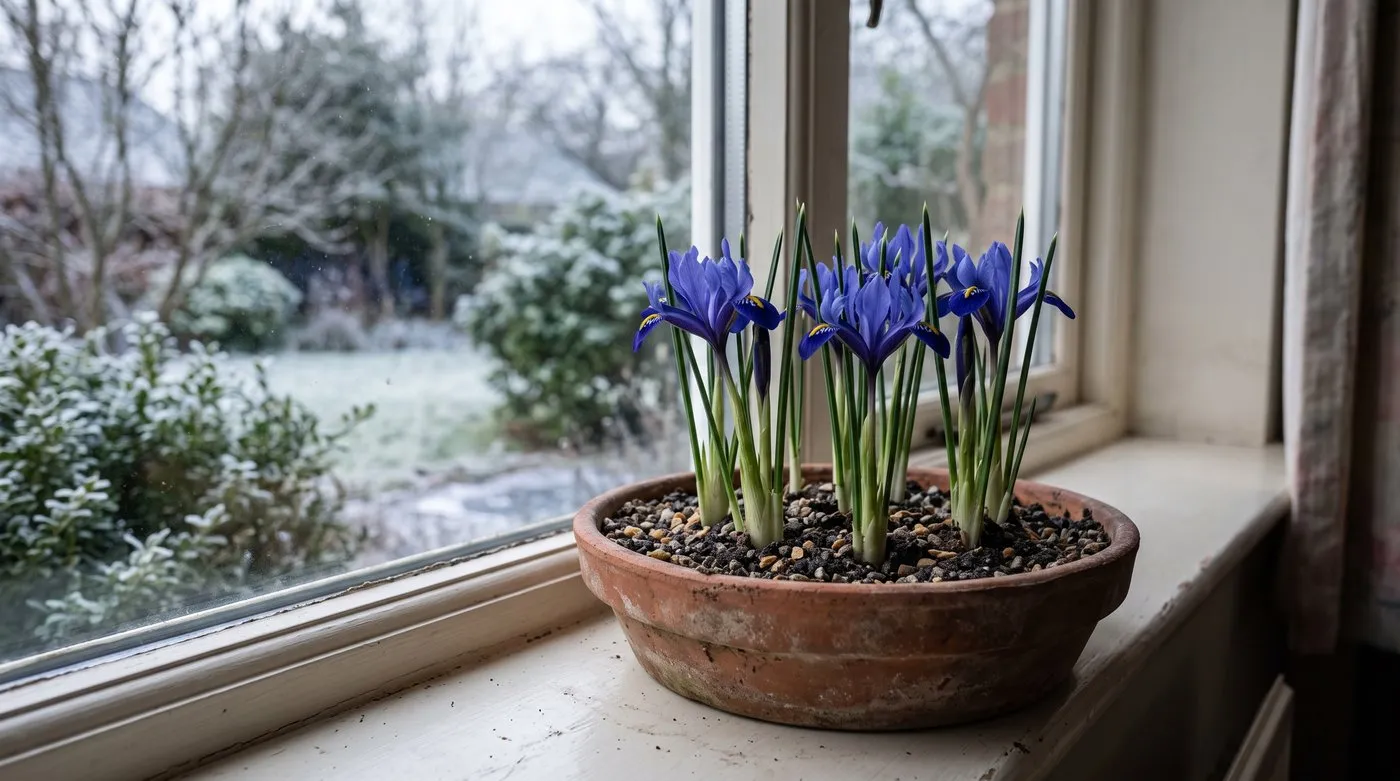
Move pots onto a cool windowsill in early January once shoots show. A warm spot by a radiator makes the flowers fade fast.
Naturalising iris bulbs in the garden
English iris are the best for naturalising in most UK gardens, as they cope with heavier, moister soil. Dutch and Reticulata iris only settle in for good in well-drained, sunny spots that stay dry in summer.
English iris spread slowly in moist borders and light woodland edges. Plant them in drifts of 20-30 for a natural look. Let the leaves die back on their own after flowering, as they feed the bulb for next year.
Reticulata iris settle well at the foot of a sunny wall, in rockeries, raised beds and gravel gardens. The secret is a dry summer. ‘Katharine Hodgkin’ bulks up steadily, and ‘Harmony’ is reliable too.
Dutch iris do best on sandy or chalky soil. On clay they often fade after a couple of years as the bulbs rot in wet winters. Think of them as cheap and cheerful, and plant fresh bulbs every few years.
Reticulata iris are among the first flowers of the year, alongside snowdrops and winter aconites. See our guide to early spring flowers for more.
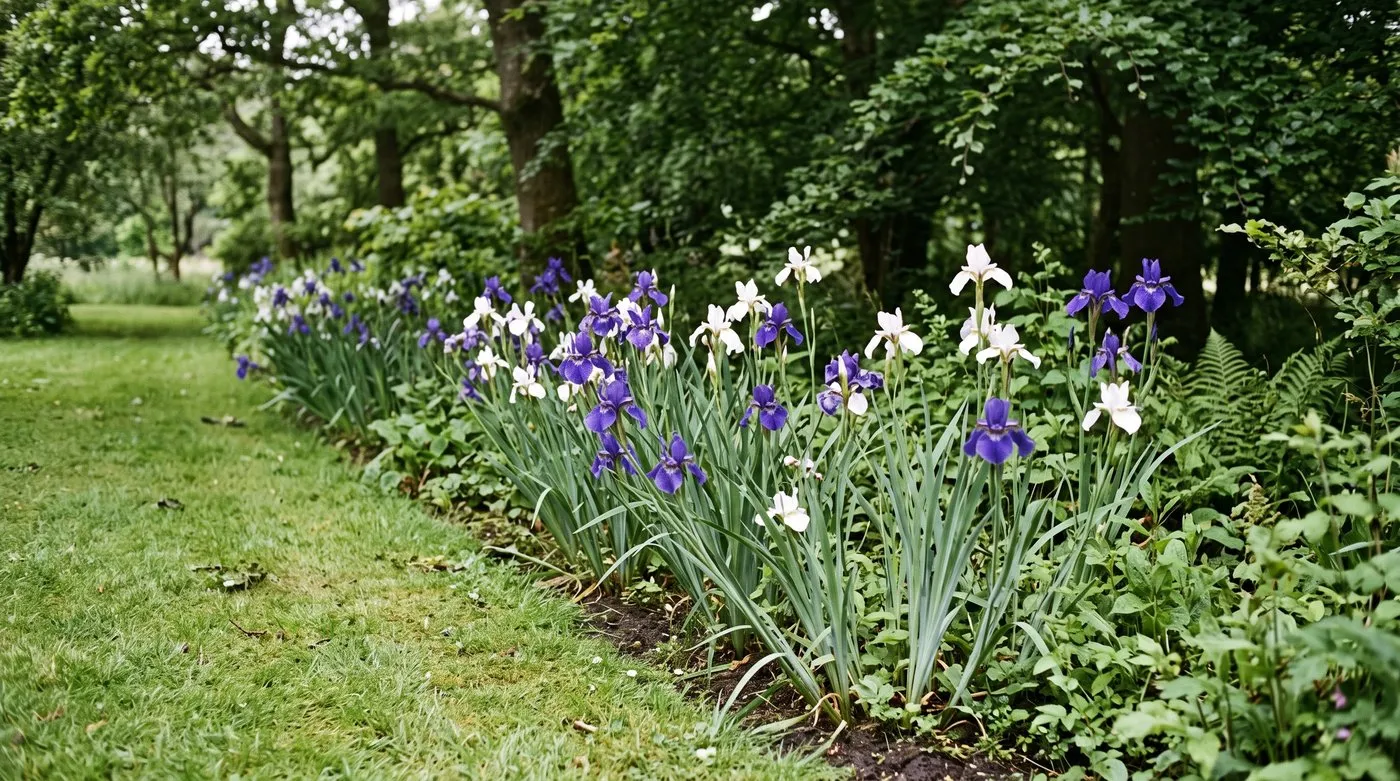
English iris are the best ones for settling in on heavier, moister soil. Let the leaves die back on their own so the bulbs can feed for next year.
Iris bulbs in pots and containers
Pots are the most reliable way to grow Reticulata and Dutch iris if you have heavy clay. You control the drainage, and you can move pots into view when they flower and tuck them away afterwards.
For Reticulata iris, use shallow pans and plant the bulbs close together, 2-3cm apart, covered with gritty compost. Packed in tight, they make a mini carpet of colour. Stand pots on feet so they drain freely.
For Dutch iris, use deeper pots, at least 20cm. Plant about 10cm deep in John Innes No. 2 mixed with some perlite. Push in a few twiggy sticks if stems lean in the wind.
After flowering, keep watering until the leaves turn yellow, usually by July. Then stop and lay the pots on their sides somewhere dry and sheltered. That dry summer rest is what these bulbs get in the wild, and it’s important.
Every two or three years in September, repot, separating any small offset bulbs and refreshing the compost. Throw away any soft or damaged bulbs.
English iris cope with moister soil, where Dutch and Reticulata iris would rot.
Common problems with iris bulbs
Rot from wet soil is the number one killer of iris bulbs in the UK. Good drainage prevents most problems. Here are a few others to watch for.
Ink spot disease: Dark patches on leaves and bulbs, mostly on Reticulata iris. Dig up and bin affected bulbs rather than composting them, and plant iris somewhere else for a few years.
Blind bulbs (leaves but no flowers): Usually from planting too shallow, too much shade or very rich soil. It can also happen if bulbs are lifted before the leaves have died down. Feed with a tomato feed after flowering rather than a high-nitrogen feed.
Slugs and snails: They go for new shoots in late winter and spring. A ring of grit around pots helps, and slug nematodes can help in borders.
Iris mosaic virus: Yellow streaks or mottling on the leaves, spread by aphids. There’s no cure, so dig up and bin affected plants. Buying from good suppliers lowers the risk.
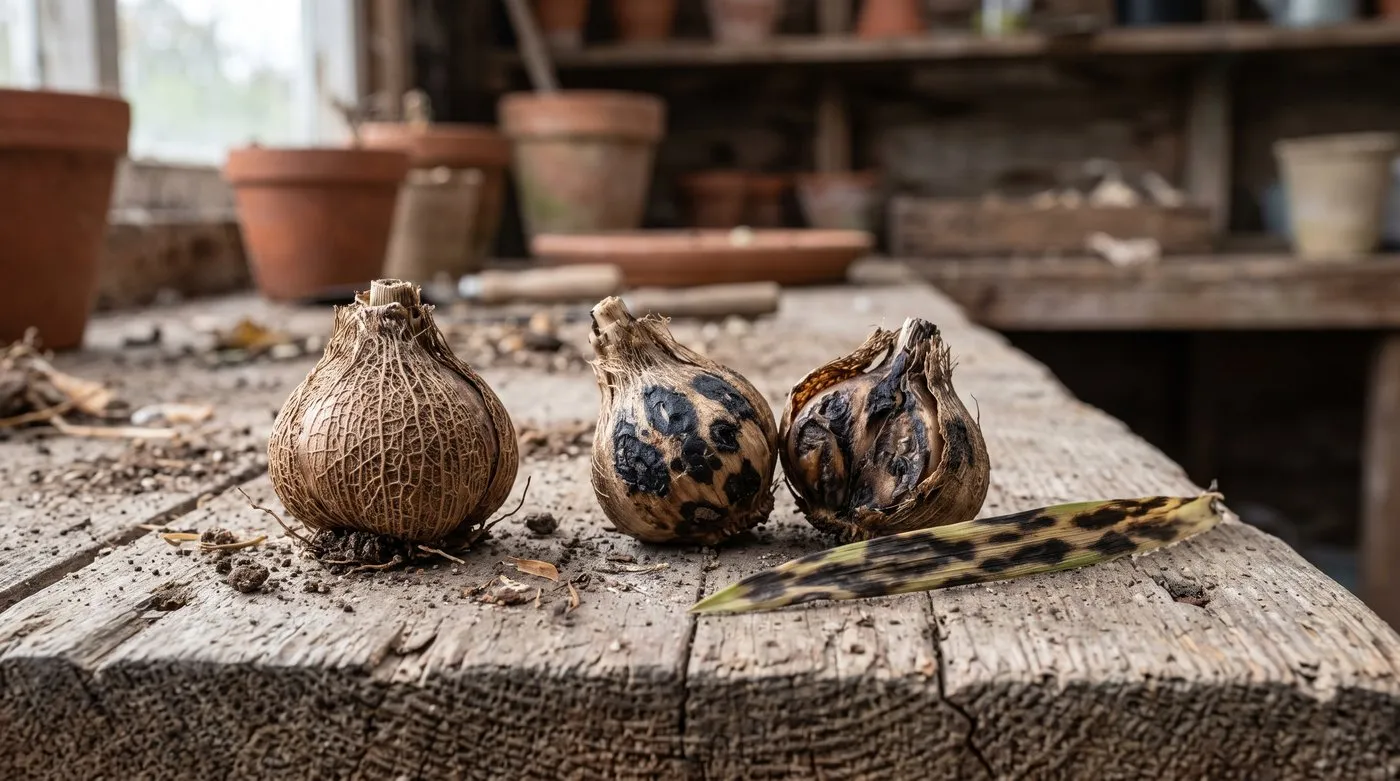
Black, inky patches like these mean ink spot. Bin affected bulbs rather than composting them, and grow iris somewhere new for a few years.
Iris bulbs month-by-month calendar
Iris bulbs mainly need you at planting time and after flowering. The rest of the year is pretty hands-off.
| Month | What to do |
|---|---|
| September | Plant Reticulata iris. Pot up bulbs for forcing. |
| October | Plant Dutch and English iris. Put forcing pots somewhere cold and dark. |
| November | Last chance to plant. Top pots with grit. |
| December to January | Check forced bulbs. Make sure outdoor plantings are draining well. |
| February to March | Reticulata iris flower. Bring forced pots onto a bright windowsill. |
| April to May | Dutch iris come up. Give a tomato feed as buds form. |
| May to June | Dutch iris flower. Cut some for the house. |
| June to July | English iris flower. Let all the leaves die back naturally. |
| August | Bulbs rest. Lift and split crowded clumps if needed. |
Frequently asked questions
When should I plant iris bulbs in the UK?
Plant iris bulbs from September to November. Reticulata iris go in first, in September or October, for February flowers. Dutch and English iris can go in any time up to November. Get them in before the ground freezes so the roots can settle.
How deep do you plant iris bulbs?
Plant iris bulbs about 8-10cm deep, pointed end up. Space Reticulata iris 5-7cm apart and Dutch iris about 10cm apart. On heavy clay, sit the bulbs on a layer of sharp grit so water doesn’t collect around them.
Can you force iris bulbs indoors?
Yes, Reticulata iris are easy to force. Pot them in October and keep them somewhere cold and dark, around 5-9°C, for 10-12 weeks. Then bring them into a cool, bright room and they’ll flower a few weeks later. Dutch iris can be forced too, but they need longer in the cold and get floppy indoors.
What is the difference between bulbous and rhizomatous iris?
Bulbous iris grow from bulbs, rhizomatous iris from thick creeping stems. Bulb types include Dutch, Reticulata and English iris. Rhizome types include bearded, Siberian and Japanese iris. Bulb types are usually smaller, flower earlier and need sharper drainage.
Do iris bulbs come back every year?
Many do, if the soil drains well. Reticulata iris often come back for years in a dry, sunny spot. Dutch iris tend to fade after a few years on heavy soil but last longer on sandy or chalky ground. English iris settle in well in moist borders.
Why have my iris bulbs stopped flowering?
Usually too shallow, too shady or too wet. Crowded clumps flower less too. Feed with a tomato feed after flowering, make sure drainage is good, and lift and split crowded clumps in late summer.
Can I grow iris bulbs in pots?
Yes, they grow really well in pots. Use gritty, well-drained compost. Reticulata iris look great packed into shallow pans, while Dutch iris need deeper pots. Keep pots outside over winter, and store them dry on their sides once the leaves have died back.
Our team produces practical UK gardening guidance from source research, contributor records and established horticultural practice. Editorial standards are overseen by Matt W.