Key takeaways
- Paperwhites and amaryllis are the easiest because they need no chilling
- Hyacinths need a cool, dark spell first, so start them in September or early October for Christmas
- Prepared hyacinths flower sooner than ordinary ones, so check the timing on the pack
- Keep chilling bulbs away from fruit in the fridge, as ripening fruit spoils the flowers
- Move bulbs from cold to warm in stages, or the flowers open stunted among the leaves
Forcing bulbs is a lovely way to get colour and scent indoors in the middle of winter. You give spring bulbs a short, fake winter in the cold, then bring them into the warm, and they flower weeks early. It works with hyacinths, paperwhites, amaryllis, crocus and tulips. Scented freesias like a similar cool-then-warm start.
Which bulbs can I force for indoor flowers?
Five bulbs force reliably in UK homes: hyacinths, paperwhites, amaryllis, crocus and tulips. Some need a cold spell first and some don’t.
| Bulb | Cold spell needed? | When to start | How easy? |
|---|---|---|---|
| Hyacinth (prepared) | Yes, shorter | September to early October | Easy |
| Hyacinth (ordinary) | Yes, longer | September | Medium |
| Paperwhite | No | October to February | Very easy |
| Amaryllis | No | October to November | Easy |
| Crocus | Yes, long | September | Medium |
| Tulip | Yes, long and cold | September to October | Hard |
How does bulb forcing work?
Spring bulbs need a spell of winter cold before they’ll flower. Forcing gives them that cold in a fridge, shed or garage, then moves them into the warm so they think spring has come.
There are three simple stages.
1. Chill them. Keep the potted bulbs cool and dark, below about 9C. A fridge, cold shed or unheated garage all work, as long as it stays cold. In this stage the bulbs grow roots and the flower starts forming inside.
2. Ease them into the warm. When the pale shoots are a few centimetres tall, move them to a cool, dim room for about a week. The shoots turn from pale yellow to green.
3. Let them flower. Move them to a bright windowsill out of hot sun. The stems grow and the flowers open. Cooler rooms make the flowers last longer. A spot above a radiator makes them go over fast.
Don’t chill bulbs in a fridge next to ripening fruit. Apples, pears and bananas give off a gas that spoils the flowers inside the bulbs. Keep them in a paper bag well away from the fruit drawer.
How to force hyacinths indoors step by step
Hyacinths are the most rewarding bulb to force. One chunky spike of flowers fills a room with scent. ‘Delft Blue’, ‘Jan Bos’ (red), ‘Carnegie’ (white) and ‘Pink Pearl’ are all good choices.
 Paperwhites planted in pebbles and water. They need no chilling and flower in about 4-6 weeks.
You’ll need:
- Prepared hyacinth bulbs for Christmas flowers (in shops from late summer)
- Bulb fibre, multipurpose compost, or a glass forcing vase
- Pots or bowls, ideally with drainage holes
- Paper bags to keep them dark
How to do it:
- Fill the pot with bulb fibre or compost to a couple of centimetres below the rim.
- Set the bulbs in, pointed end up, close but not touching. The tips should sit about level with the rim.
- Water until damp, like a wrung-out sponge, not soggy.
- Pop the pot in a paper bag and keep it somewhere cool and dark, below 9C. Prepared bulbs need a shorter spell than ordinary ones, so check the timing on the pack.
- Check every week and water if the surface feels dry.
- When the pale shoots are about 5cm tall, move the pot to a cool room for a week or so.
- Then move it to a bright windowsill. The shoots green up and the flowers open within a few weeks.
Glass forcing vases are another way. Fill the vase with water to just below the bottom of the bulb, so only the roots reach the water. Top it up every week. Flowers are often a little smaller than in compost, but it’s lovely watching the roots grow. If you’d like a bulb display outside too, our bulb lasagne planting guide shows how to layer them in a pot.
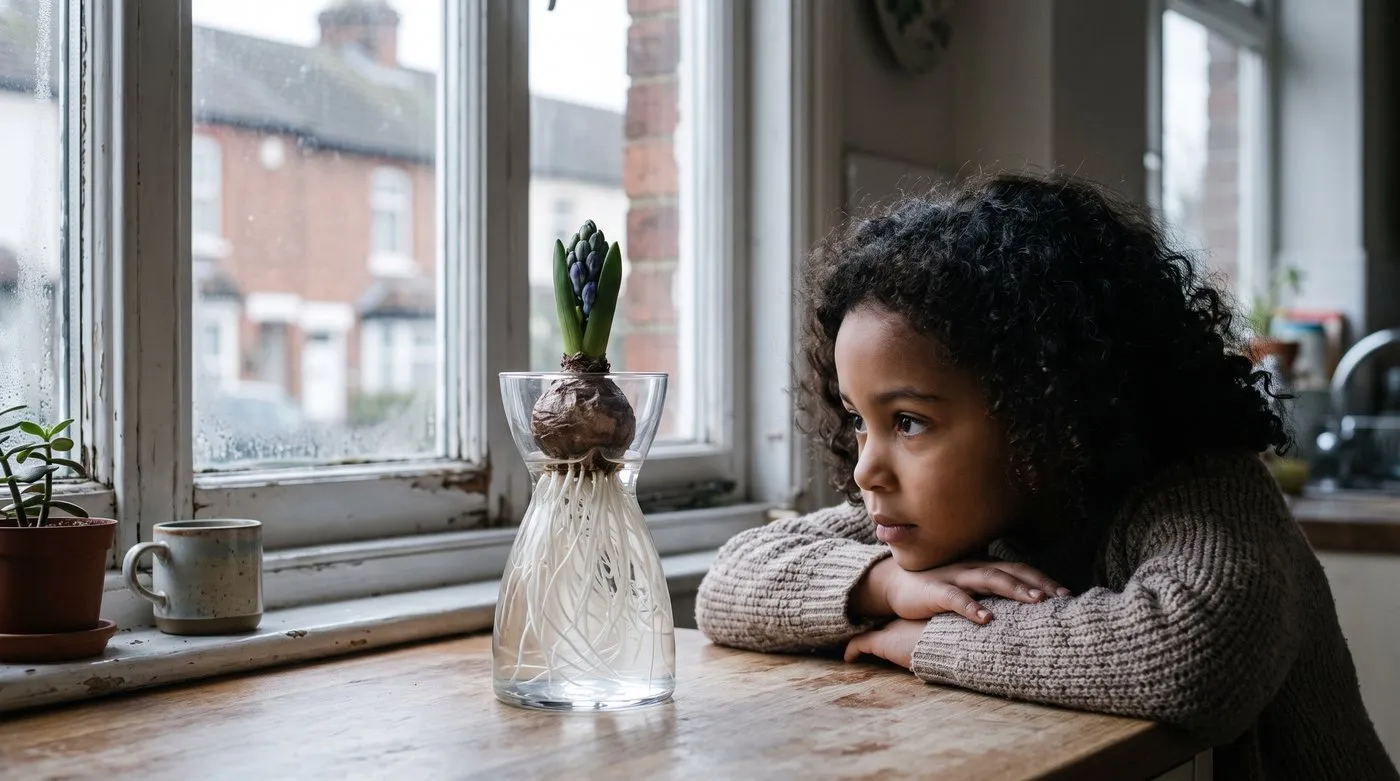
Keep the water just below the base of the bulb so only the roots reach it. Watching them grow is half the fun, especially for children.
How to force paperwhites without chilling
Paperwhites (Narcissus papyraceus) are the quickest and easiest. They need no cold at all and flower in about 4-6 weeks. That makes them perfect for a last-minute Christmas display.
- Pick a shallow bowl. It doesn’t need drainage holes.
- Add a few centimetres of clean pebbles, gravel or glass beads.
- Nestle the bulbs into the pebbles, pointed end up, shoulder to shoulder.
- Add water to just below the bottom of the bulbs. The roots want water, but the bulbs shouldn’t sit in it.
- Stand the bowl on a bright windowsill. Growth starts within days.
- Top up the water often, and change it every week.
Stop them flopping: paperwhites tend to grow tall and lean indoors. A well-known trick is to water them with a weak mix of vodka (or gin) and water once the shoots are about 10cm tall. Mix 1 part spirit to 7 parts water. It keeps the stems shorter without harming the flowers.
For flowers all winter, start a new bowl every few weeks from October to January. If you enjoy growing flowers for cutting, paperwhites make pretty little posies too.
How to force amaryllis for Christmas
Amaryllis (Hippeastrum) gives the biggest show of all. Tall stems carry huge trumpet flowers, and there’s no chilling needed. Just warmth, water and a little patience.
 A red amaryllis in full bloom. One bulb can carry several huge flowers on each tall stem.
- Choose a pot only a little wider than the bulb. Amaryllis likes a snug fit.
- Use multipurpose compost with some perlite mixed in for drainage.
- Plant with the top third of the bulb sitting above the compost.
- Water once, then wait until you see green growth before watering again.
- Once it’s growing, water when the top of the compost feels dry. Feed weekly with a weak tomato feed.
- Give it the warmest, brightest spot you have.
Plant in late October for flowers around Christmas. It takes about 6-8 weeks from planting to flowers. A second stem often follows the first, so the show goes on for weeks.
Good varieties include ‘Red Lion’ (classic red), ‘Apple Blossom’ (pink and white), ‘Mont Blanc’ (white) and ‘Minerva’ (red with a white star). Bigger bulbs usually give more stems and bigger flowers.
How to force crocus and tulips indoors
Crocus and tulips need a longer, colder chill than hyacinths, so they’re a bit trickier. Tulips flowering on the table in late winter are well worth the wait, though.
 Bulbs chilling in the fridge. Paper bags keep the light out but let air in, which helps stop mould.
Forcing crocus
Plant crocus corms in September in a shallow pan of compost, a few centimetres deep and close together. They need a long cold spell, roughly 14-16 weeks, for flowers in late winter.
Big Dutch crocus such as ‘Flower Record’ (purple) and ‘Jeanne d’Arc’ (white) give the biggest blooms. Our crocus growing guide covers growing them outside.
After chilling, give them a few days in a cool room, then a bright windowsill. The flowers open in the warmth and close at night. A cool room makes them last longer.
Forcing tulips
Tulips need a long, cold chill, colder than hyacinths. The salad drawer of the fridge is ideal. Choose single early tulips, as fancy double and parrot types are unreliable indoors.
Plant five bulbs to a pot, just under the surface, in September or October. Put the flat side of each bulb facing outwards, so the first big leaf hangs neatly over the edge. After chilling, warm them up slowly, a few days in a cool room before the windowsill. Rushing them can leave you with stems and no flowers.
For tulips in the garden too, plant outdoor bulbs in November. Your indoor pots will give you a sneak preview weeks before.
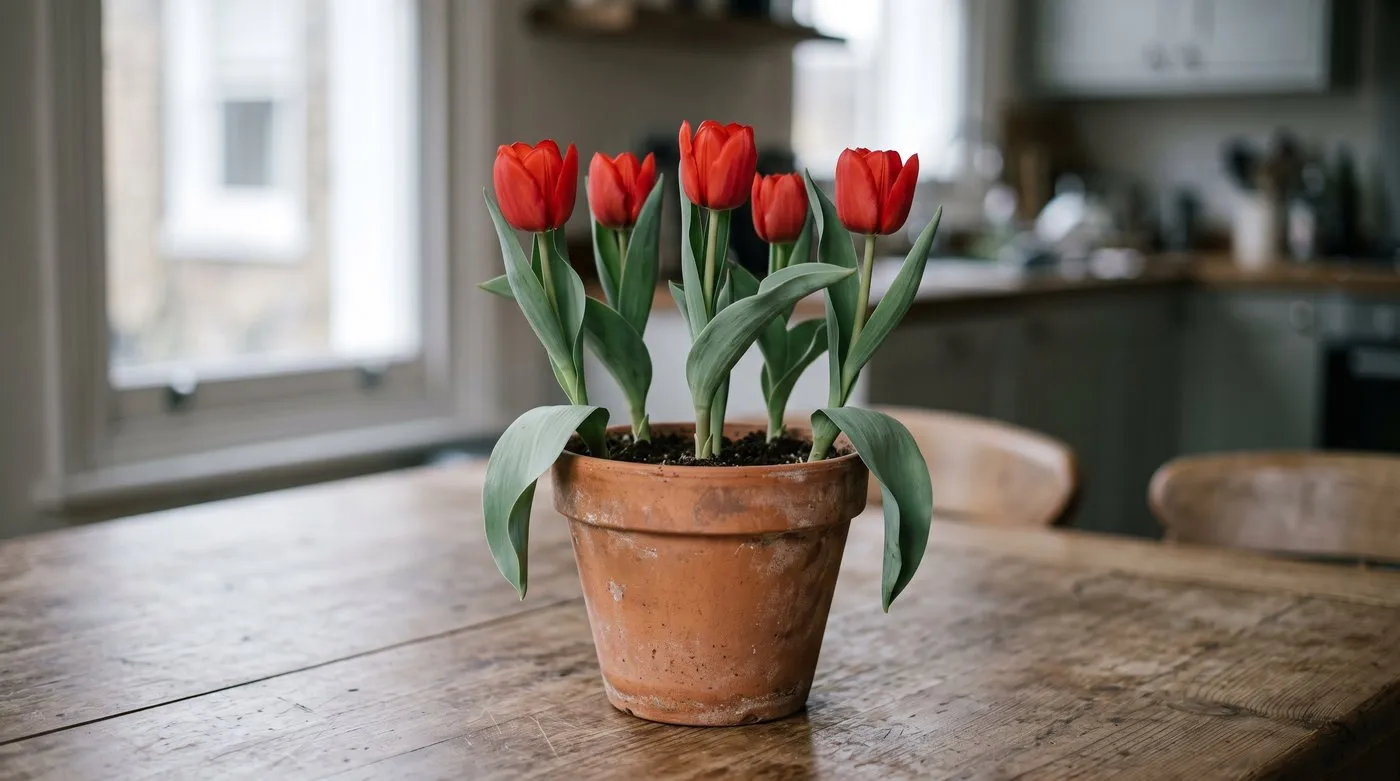
Single early tulips are the ones to force. Plant them with the flat side facing out and the first big leaf hangs neatly over the rim.
Month-by-month forcing calendar
| Month | What to do |
|---|---|
| August | Order prepared hyacinths and amaryllis. Buy forcing vases. |
| September | Plant hyacinths, crocus and tulips and start chilling them. |
| October | Last chance for Christmas hyacinths. Plant amaryllis and the first paperwhites. |
| November | Check chilling bulbs weekly and water if dry. First paperwhites flowering. |
| December | Bring hyacinths into the warm in stages. Amaryllis in flower. Plant more paperwhites. |
| January | Bring crocus and tulips out of the cold. Late hyacinths flowering. |
| February | Last paperwhites. Keep feeding amaryllis leaves. |
| March | Move finished bulbs somewhere cool and keep feeding the leaves. |
| April | Plant hyacinths, tulips and crocus outside once the leaves die down. |
| May | Finish planting out. Mark where they are so you don’t dig them up. |
Use it alongside our spring bulb planting schedule for outdoor displays.
Common mistakes when forcing bulbs
Rushing them into the warm. Skipping the week in a cool room is the most common reason hyacinths flower stunted, low down among the leaves. A cool hallway, porch or spare room makes all the difference.
Overwatering while they chill. Cold, wet compost rots bulbs from the bottom. Keep it just damp.
Buying the wrong bulbs. Single early tulips force well, fancy ones don’t. Ordinary hyacinths need a longer chill than prepared ones, so they won’t make Christmas. The RHS forcing bulbs guide suggests good varieties.
Too much hot sun. On a sunny south-facing sill the stems stretch and topple. An east or north-facing sill is better, and a quarter turn every day keeps them straight. Our best indoor plants guide explains how light varies window by window.
What to do with forced bulbs after flowering
Don’t throw them away. Hyacinths, tulips and crocus can go into the garden and flower again, and amaryllis can flower again indoors next winter. Paperwhites are best treated as one-offs.
Cut off the dead flower stalk but keep the leaves. They feed the bulb for next year. Give a weak tomato feed every week and keep the compost just moist.
When the leaves have yellowed, plant hyacinths, tulips and crocus out in the garden at about twice their own depth. Our guide on spring bulb care after flowering covers the details. Forced hyacinths often skip a year, then come back with smaller spikes. Crocus usually recover fastest.
Choosing pots and what to grow them in
Bulb fibre is the traditional choice. It holds moisture without going soggy.
Multipurpose compost with some perlite mixed in works just as well and costs less. Avoid compost with added slow-release feed.
Glass forcing vases are made for hyacinths. The narrow waist holds the bulb above the water while the roots dangle below. Coloured glass ones make lovely Christmas gardening gifts.
Shallow bowls with pebbles suit paperwhites and crocus. Any watertight bowl will do, filled with gravel, pebbles or glass marbles.
Now you know how to force bulbs for indoor flowers, read our guide to hyacinth growing for planting them outside and the best varieties for your borders.
Frequently asked questions
When should I plant bulbs for forcing indoors?
September to early October for hyacinths at Christmas. Paperwhites can go in any time from October to February, as they need no chill. Plant amaryllis 6-8 weeks before you want flowers. Crocus and tulips need planting in September for their long cold spell.
Do forced bulbs need sunlight?
They need bright light, but not hot direct sun. Keep them dark while they chill. Once they come into the warm, an east or north-facing windowsill is ideal. Turn the pots a little each day so the stems grow straight.
Can I reuse forced bulbs after flowering?
Yes, most can go out into the garden. Snip off the dead flower but leave the leaves to die down, and feed weekly with a weak tomato feed. Then plant hyacinths, tulips and crocus in the garden. They may skip a year before flowering again. Paperwhites are best treated as one-offs, and amaryllis stays indoors to flower again next winter.
Why did my forced hyacinth flower stay short?
It usually didn’t get enough cold, or came into the warm too fast. Keep hyacinths cool and dark, below 9C, until the shoots are a few centimetres tall. Then give them a week in a cool room before the warm windowsill.
What is the difference between prepared and unprepared bulbs?
Prepared bulbs have been specially treated to flower early. That gives them a shorter cold spell indoors, which makes Christmas flowers much easier. They cost a little more. Ordinary bulbs need a longer chill and usually flower later.
Can I force bulbs in water without soil?
Yes, hyacinths, paperwhites and crocus all grow happily in water. Use a forcing vase so the bulb sits just above the water and only the roots dip in. Grow paperwhites on pebbles with water just below the bulbs. Change the water every week.
Which bulbs are best for beginners to force?
Paperwhites, because they need no chilling at all. Set them on pebbles and water on a windowsill and they flower in about 4-6 weeks. Prepared hyacinths and amaryllis are easy too. Leave tulips and crocus until you’ve had a go, as they need a long, cold chill.
Our team produces practical UK gardening guidance from source research, contributor records and established horticultural practice. Editorial standards are overseen by Matt W.