Key takeaways
- Plant corms 5cm deep, indoors from March or outdoors from mid-April
- Flowers arrive about 10-12 weeks after planting
- Pots of gritty compost in full sun suit them better than heavy garden soil
- Cut stems when the first two buds open for a scented vase that lasts about a week
- Plant in September in a cool greenhouse for flowers in January and February
- Freesias aren't frost hardy, so lift the corms in autumn and store them dry
Freesias have some of the sweetest scent you can grow in a British garden. One stem in a vase fills a whole room. They’re tender corms from South Africa, and they do well here in pots or under glass, flowering about 10-12 weeks after planting.
Here’s how to grow them, from spring planting to forcing them for winter flowers in a cool greenhouse.
Freesia corms planted 5cm deep and 5cm apart in a terracotta pot of gritty compost.
When to plant freesia corms in the UK
Plant freesia corms from March to June for flowers from summer into autumn. Pots started indoors in March flower first. Outdoors, wait until mid-April once the soil has warmed, or May in northern England and Scotland.
Plant a new batch every few weeks and you’ll have cut flowers all summer.
| Planting time | Where | Flowers |
|---|---|---|
| March | Pots indoors on a sunny windowsill | Early summer |
| April | Pots on the patio or in a cold frame | Mid-summer |
| May | Borders or pots outdoors | Late summer |
| June | Outdoors, last batch | Early autumn |
| September | Pots in a cool greenhouse | January to February |
How to plant freesia corms
In pots (the easiest way)
Pots work best in the UK because you control the drainage and can move them under cover. Use a 20cm pot and plant 7-9 corms. Mix two parts multipurpose compost with one part grit, so it drains like the sandy soils they come from.
Plant the corms 5cm deep with the pointed end up. Water once, then only lightly until shoots appear. Once they’re growing, water regularly, but don’t leave pots standing in water. Soggy compost rots the corms.
In garden borders
Freesias can go in the ground in a warm, sheltered, south-facing spot with free-draining soil. On heavy clay, mix in a bucket of grit per square metre first. Plant 5cm deep and 5cm apart in groups of 10-15 so they make a show.
In a greenhouse or conservatory
A cool greenhouse is where freesias are happiest. You’ll get taller stems and lots of scent. Grow them in big pots or straight into the greenhouse border, and keep them cool rather than hot. Open the vents on warm days, because too much heat gives weak, floppy stems.
Best freesia varieties for UK growers
Double-flowered varieties
Doubles have extra petals and make showy, well-scented cut flowers.
| Variety | Colour | Height |
|---|---|---|
| ’Oberon’ | Deep red | 30-40cm |
| ’Ballerina’ | White | 35-40cm |
| ’Royal Blue’ | Violet-blue | 30-35cm |
| ’Fantasy’ | Cream-yellow | 35-40cm |
| ’Gold River’ | Golden yellow | 30-35cm |
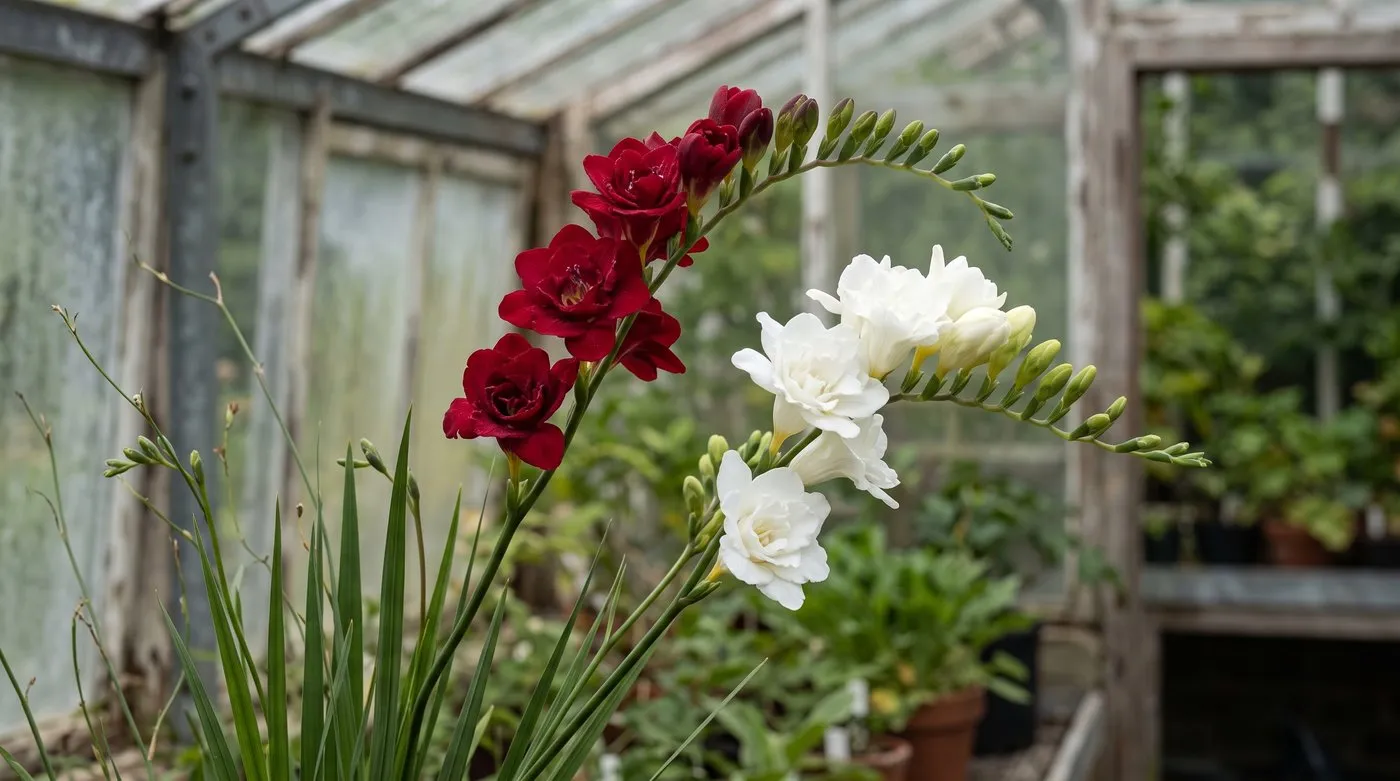
Doubles have extra petals and make showy, scented stems for the vase. The buds open one by one along each spike.
Single-flowered varieties
Singles have simpler flowers but plenty of buds on each stem. Their thinner petals dry faster after rain, so they’re less prone to grey mould outdoors.
| Variety | Colour | Good for |
|---|---|---|
| ’Aladdin’ | Scarlet red | Strong stems |
| ’Blue Heaven’ | Lavender blue | Long vase life |
| ’Snowdon’ | Pure white | Wedding flowers |
| ’Golden Flame’ | Orange-gold | Bright border colour |
| ’Athene’ | Pink | Soft colour |
Mixed collections
A mixed bag of corms is the cheapest way to start. You’ll get whites, yellows, pinks, reds, blues and purples, and the surprise is half the fun.
Caring for freesias during the growing season
Watering
Water regularly once shoots appear, but never keep the soil soggy. In warm weather, check pots daily and water when the top 2cm feels dry. In borders, water only in dry spells. Overwatering and rotten corms are the most common reason freesias fail.
After flowering, water less as the leaves yellow. Stop once they’ve died back. The corms need a dry rest.
Feeding
Feed every two weeks with tomato feed once you see flower buds, until the last flowers fade. It encourages flowers rather than leaves. Avoid high-nitrogen feeds, which give lots of leaf and few blooms.
Staking
Freesia stems are thin and need support. In pots, use a plant support ring or twiggy sticks around the edge. In borders, use thin canes and tie the stems loosely with soft string every 15cm or so.
In a greenhouse, stretch netting across at about 20cm high. The stems grow up through it and hold themselves upright.
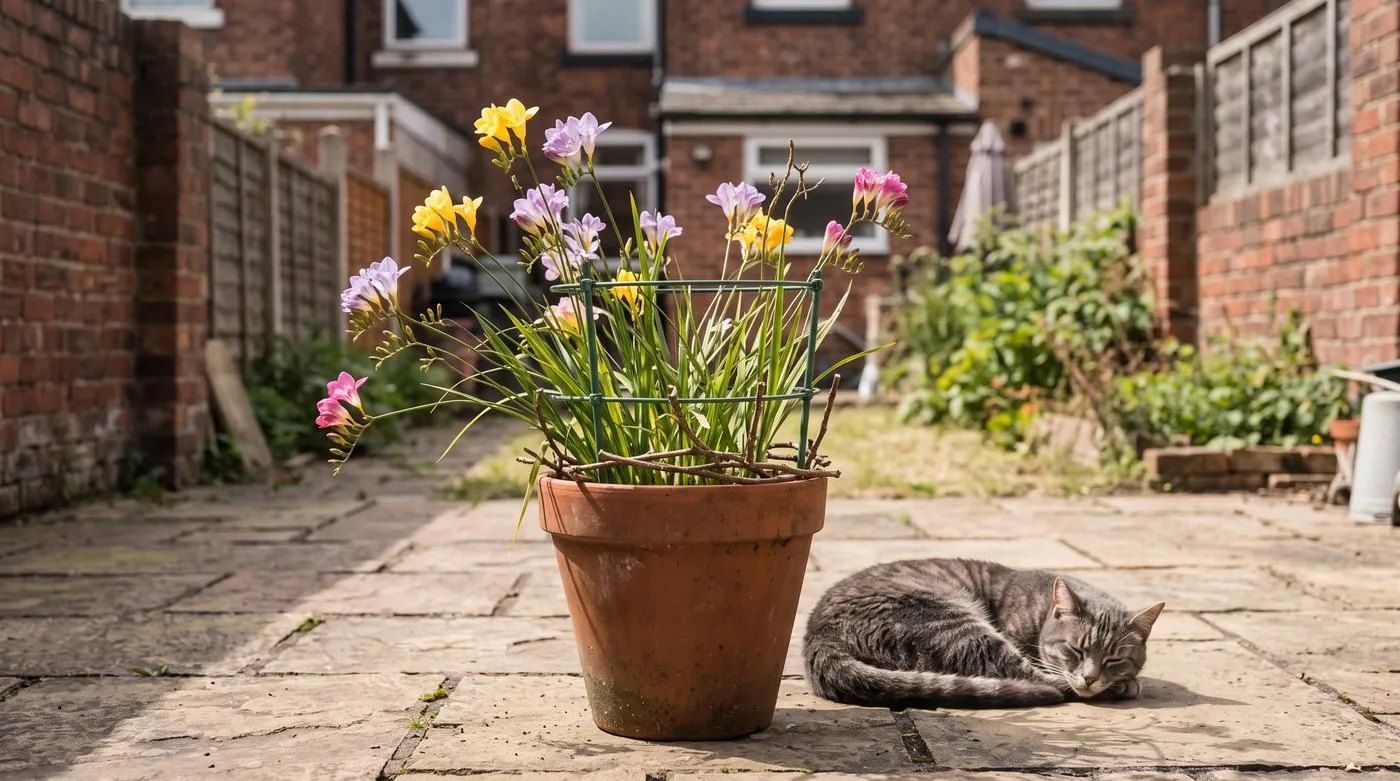
Freesia stems are thin and flop easily. A support ring or a few twiggy sticks round the pot keeps them upright.
Freesias as cut flowers
Freesias are one of the best cut flowers you can grow in a British garden. The scent alone makes them worth it.
Cut in the morning, once the first two buds on the spike have opened. Use a sharp, clean knife and put the stems straight into water. The buds open one after another up the stem, so the vase keeps going for about a week.
To help them last, condition the stems: recut at an angle and stand them in tepid water with flower food. Change the water every two or three days and pinch off faded flowers.
They’re lovely with roses, sweet peas and other garden-grown flowers in a relaxed, scented vase.
Mixed freesias from the garden in a simple glass vase. The buds keep opening for days.
Forcing freesias for winter flowers
Plant corms in September for scented flowers in January and February. It’s a real treat when little else is flowering.
Step-by-step forcing method
- September: Plant corms 5cm deep in pots of gritty compost. Water once and keep them somewhere cool but frost-free, such as an unheated greenhouse or porch
- October to November: Roots form in the cool. Water lightly. Shoots appear after a few weeks
- December: Move the pots to a bright spot at about 12-15C, like a cool windowsill. Water regularly
- January to February: Flowers open. Keep them cool for the sturdiest stems
- After flowering: Keep watering until the leaves yellow, then dry the pots off and store the corms
Keeping them cool is the secret. Too much warmth makes the stems shoot up, go weak and flop. A greenhouse kept just frost-free to cool gives the sturdiest plants.
It’s the same cool-then-warm idea as forcing bulbs for indoor flowers. Freesias take to it well, because they naturally flower in the cool South African winter.
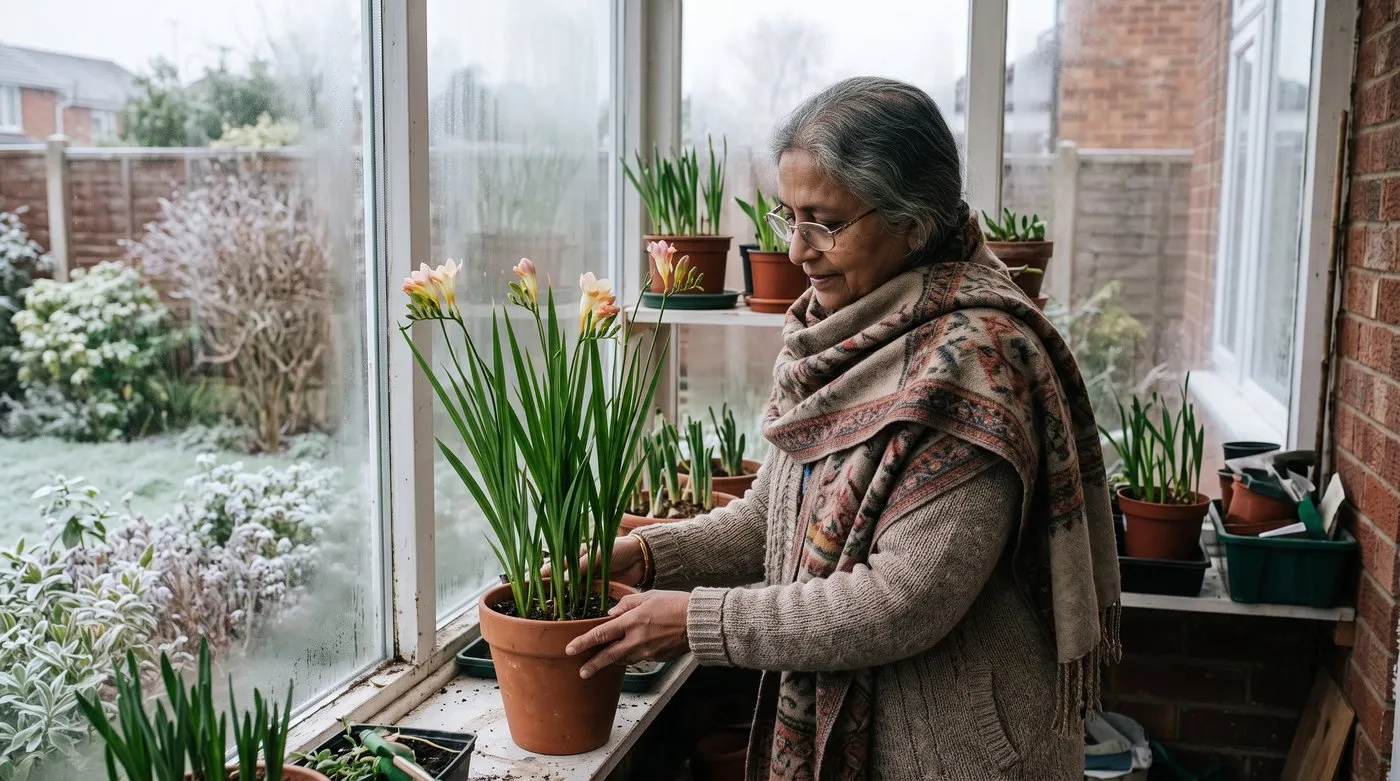
Keep forced freesias cool, around 12 to 15C, once they’re in a bright spot. Too much warmth gives weak, floppy stems.
Overwintering freesia corms
In mild areas (southern and western England)
Freesias aren’t frost hardy, so leaving them in the ground over winter is a gamble even in mild gardens. If you try it, choose a sheltered spot with very free-draining soil and cover with a thick mulch in November. Corms in wet clay will rot.
In colder areas (Midlands and north)
Lift the corms once the leaves have died back in autumn. Clean off the soil, snap off the old shrivelled corm from under the new one, and dry them in a warm room for a week. Throw away any that are soft or damaged.
Keep them in paper bags or open trays somewhere warm and dry for several weeks. This warm, dry rest copies a South African summer and helps them flower next year. Then move them somewhere cool, dry and frost-free until spring.
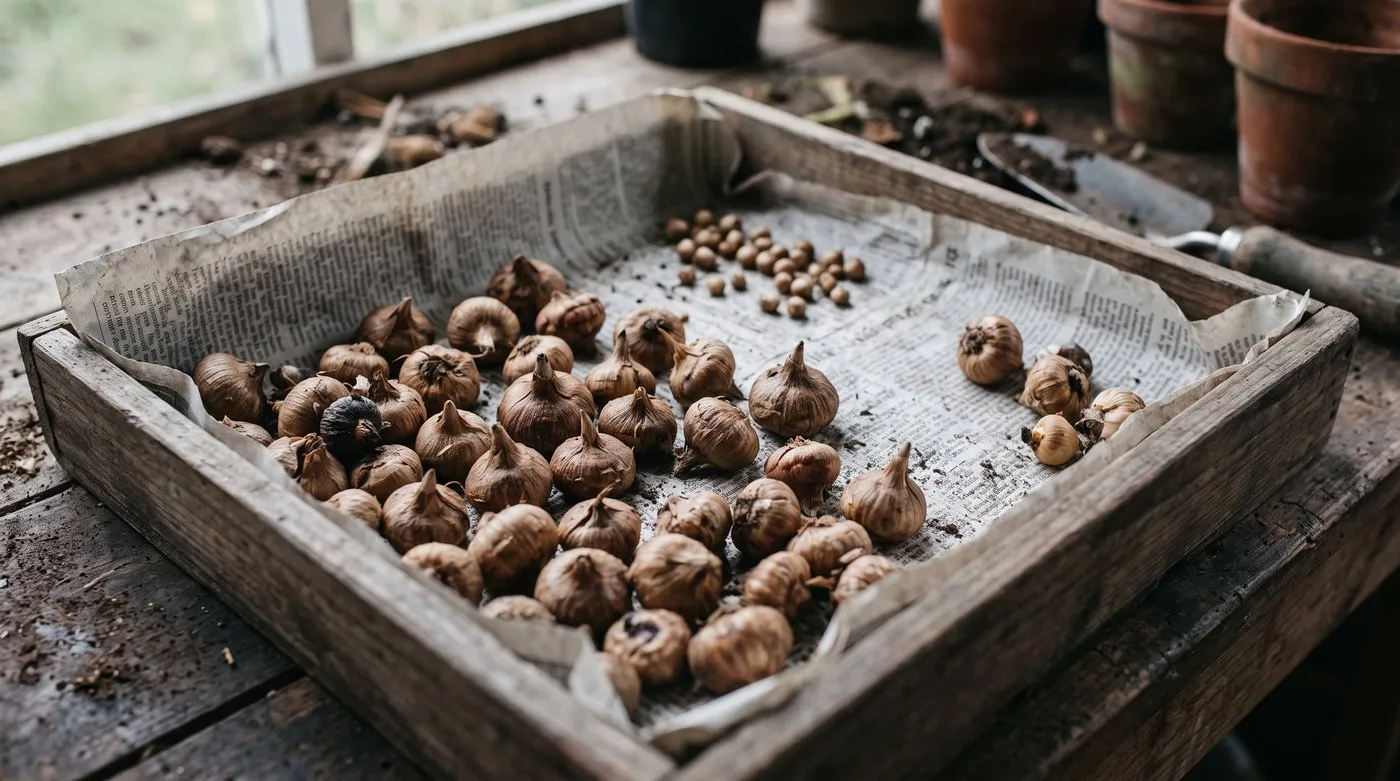
Snap the old shrivelled corm off the bottom of each new one, then give them a warm, dry rest. It’s the secret to flowers next year.
Corm multiplication
Each corm makes a new corm plus a few tiny cormlets each year. The new corm flowers next year. Cormlets need a year or two of growing in pots before they’re big enough to flower. Lift and store them with the main corms.
You can also tuck freesias into a bulb lasagne planting with other bulbs and corms for a longer display.
Common problems with freesias
| Problem | Likely cause | What to do |
|---|---|---|
| Leaves but no flowers | Lifted corms without a warm, dry rest | Store warm and dry for several weeks after lifting |
| Floppy, weak stems | Too warm | Keep them cool and open the vents |
| Rotten corms | Too much water, poor drainage | Add grit and water only when the compost is dry |
| Yellow leaves mid-season | Overwatering or hungry plants | Water less and feed with tomato feed |
| Grey mould | Damp, still air | Space pots out and improve airflow |
| Greenfly on buds | Warm weather | Rub or wash them off, or use an approved product as the label says |
| Weak scent | Plants too hot | Grow them cooler |
Growing freesias alongside gladioli
Freesias and gladioli are both tender corms from southern Africa. They both like free-draining soil and full sun, and both need lifting in autumn in colder areas. Grow them together in a cutting patch and you’ll have scented and showy flowers from summer into autumn.
Plant freesias in March and April and gladioli in April and May. The same gritty compost suits both. Give gladioli sturdy canes, and finer supports to the thinner freesia stems.
Frequently asked questions
When should I plant freesia corms in the UK?
Plant them from March to June for summer flowers. Start pots indoors in March for the earliest blooms. Plant outdoors from mid-April once the soil has warmed up, or May further north. Planting a batch every few weeks gives you flowers from summer into autumn.
Can freesias grow outdoors in the UK?
Yes, in summer, in a warm and sheltered spot. Give them full sun and free-draining soil. They aren’t frost hardy, so treat them like summer bulbs and lift the corms in autumn. Store them somewhere dry and frost-free until spring.
How deep do I plant freesia corms?
Plant them 5cm deep with the pointed end facing up. Space them 5cm apart. A 20cm pot takes 7-9 corms. Use free-draining compost with added grit. Planting at this depth helps anchor the thin stems.
Why are my freesias not flowering?
Lifted corms often need a longer warm, dry rest. Corms stored cool straight after lifting may make leaves but no flowers. Too much shade, too much water and too much nitrogen feed can also stop flowering. Give them full sun, water sparingly and feed with tomato food.
How do I force freesias for winter flowers?
Plant corms in pots of gritty compost in September. Keep them somewhere cool but frost-free, like a cold greenhouse, while they root. Move them to a bright spot at about 12-15C in December. Flowers follow in January or February. Too much heat gives weak, floppy stems.
Are freesias good cut flowers?
Yes, they’re among the best scented cut flowers. Cut stems when the first two buds on the spike have opened. They last about a week in clean water with flower food. The buds open one after another up the stem, so the display keeps going.
How do I store freesia corms over winter?
Lift them once the leaves turn yellow and die back. Clean off the soil, remove the old shrivelled corm from under the new one, and dry them for a week. Keep them somewhere warm and dry for several weeks, then somewhere cool, dry and frost-free until spring planting.
Our team produces practical UK gardening guidance from source research, contributor records and established horticultural practice. Editorial standards are overseen by Matt W.