
Key takeaways
- A bulb has onion-like layers, a corm is solid, a tuber has eyes and a rhizome runs sideways
- Plant most at two to three times their own height, growing point up
- Bearded iris rhizomes sit half-exposed on the soil surface, never buried
- Dahlia tubers only shoot from the crown, so every division needs a piece of it
- Lift tender dahlias, gladioli and begonias before the first frost and store them frost-free
- Lift and divide crowded clumps every three to four years to keep them flowering
Bulbs, corms, tubers and rhizomes all look like lumpy brown packages in a net bag. The quick way to tell them apart is to look inside. A bulb has layers like an onion, a corm is solid, a tuber has little eyes, and a rhizome grows sideways.
Once you know which one is in your hand, you know which way up it goes, how deep to plant it and how to split it for free plants. This guide covers all three. For when to plant, see the guide to when to plant spring bulbs.
Why it matters which type you’ve got
All four are underground food stores. They let the plant sleep through summer heat or winter cold, then shoot up again when conditions suit. A daffodil dies back in early summer and waits as a bulb until autumn rains wake its roots.
The type decides three things: which way up it goes, how deep, and how you divide it. Most plants forgive a slightly wrong depth. Plant a dahlia crown-down or bury a bearded iris, though, and you can lose the whole season.

From left: layered daffodil bulbs, crocus corms, a knobbly dahlia tuber clump and a sideways iris rhizome. Once you’ve seen them together, they’re easy to tell apart.
Warning: Many bulbs are harmful if eaten. Keep daffodil, tulip and allium bulbs away from dogs, and never grow lilies where a cat can reach them, as every part can kill a cat.
What is a true bulb?
A true bulb is a whole plant packed into a parcel. Slice a daffodil in half and you’ll see rings of fleshy scales around a central shoot. The scales are swollen leaves full of food. They all sit on a flat basal plate at the bottom, where the roots grow from.
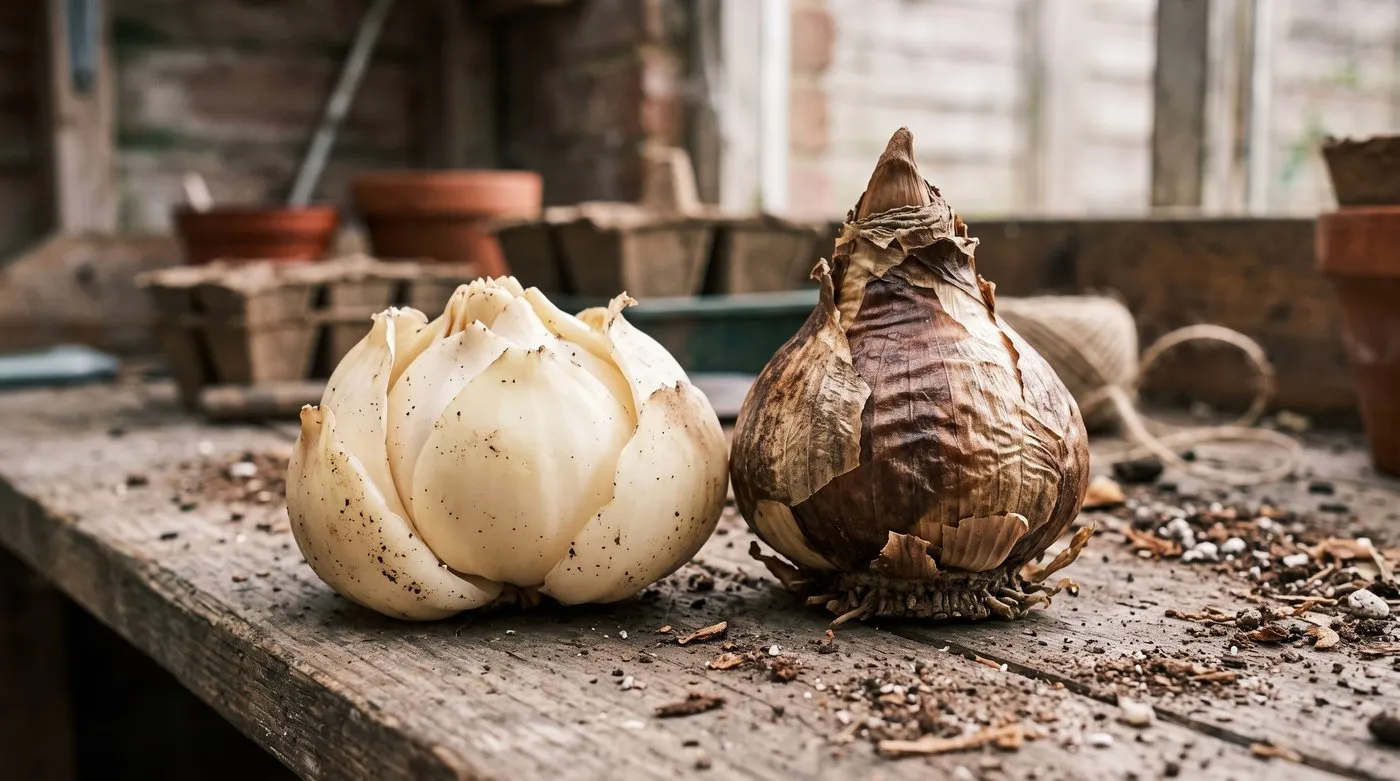
Lilies (left) have loose scales and no papery skin, so plant them soon after buying. Daffodils keep well in their dry tunic.
Most bulbs, such as daffodils, tulips, alliums, hyacinths and onions, wear a dry papery skin called a tunic. It stops them drying out, so they store well in a bag. Lilies and fritillaries have no tunic and loose fleshy scales. They dry out quickly, so plant them soon after buying.
Plant bulbs pointy end up. The tip is next year’s shoot.
Gardener’s tip: Pick bulbs that feel firm and heavy for their size. A soft, light bulb or one with blue mould has rotted inside and won’t flower.
How to tell a corm from a bulb
A corm looks like a bulb from outside but is solid all the way through. Cut a crocus corm in half and there are no rings, just firm pale flesh. That’s the quickest test on the potting bench.
Corms have a clever trick. The plant uses up the old corm during the season, then grows a brand new one on top of it. Lift a gladiolus in autumn and you’ll find a fat new corm sitting on a shrivelled brown disc. Tiny cormels, or baby corms, cluster around the base too.
Crocus, gladiolus, freesia and crocosmia all grow from corms. Plant them with the growing point up and the flatter side down. Crocus go in 5-7cm deep. Large gladiolus corms go 10-15cm deep, which helps the tall stems stand up to wind.

The cut test: a bulb (left) shows rings like an onion, while a corm (right) is solid all through.
What is a tuber, and which way up does a dahlia go?
A tuber is a swollen stem or root that stores food. Instead of a flat base, it has eyes, or buds, that shoot. A seed potato shows this best: the eyes are the little dimples that sprout. Tubers have no papery skin and no layers.
Some tubers carry eyes over the surface, like begonias and cyclamen. Dahlias are different. Their fleshy roots have no eyes at all. The buds sit only at the crown, the stump of last year’s stem. Plant a dahlia crown up, 10-15cm deep, and never split off a tuber without a slice of crown, or it won’t grow.
Anemone tubers and ranunculus claws look like dried twigs. Plant ranunculus with the claws pointing down. Anemone tubers give no clue, so soak them for a few hours and plant them on their side. The guide to growing dahlias covers spacing, staking and feeding.
Warning: Frost turns dahlia and begonia tubers to mush. Lift them once the first frost blackens the leaves, let them dry for a week or two, then store them in dry compost somewhere frost-free.

Dahlia buds only grow from the crown at the top of the clump. Cut so every piece keeps a bud and a bit of crown.
What is a rhizome, and why does iris sit on top?
A rhizome is a swollen stem that grows sideways at or just below the soil surface. It sends shoots up from points along its length and roots down from its underside. Bearded iris, canna, mint, bamboo and lily of the valley all spread this way. That’s why some of them can take over a bed.
The bearded iris breaks the usual rules. Its rhizome must sit half above the soil, with the roots tucked underneath. Summer sun on the top helps it set next year’s flowers. Bury it like a bulb and it tends to rot or stop flowering. The guide to growing bearded iris covers spacing and splitting.
To multiply rhizomes, lift the clump, snap off healthy outer pieces with a fan of leaves, and throw away the old woody middle.

A bearded iris planted the right way: the top of the rhizome sits in the sun and only the roots go into the soil.
Bulb, corm, tuber and rhizome compared
Use this table to identify what’s in your hand and plant it the right way.
| Type | How to spot it | Examples | Which way up | How it multiplies |
|---|---|---|---|---|
| True bulb | Onion-like rings when cut | Daffodil, tulip, allium, lily | Pointy end up | Offsets beside the base |
| Corm | Solid when cut, papery or netted skin | Crocus, gladiolus, freesia, crocosmia | Growing point up | New corm on top, plus cormels |
| Tuber | Eyes or buds, no skin, no layers | Dahlia, begonia, cyclamen, anemone | Crown or eyes up | Cut into pieces, each with a bud |
| Rhizome | Runs sideways, shoots along its length | Bearded iris, canna, mint, lily of the valley | Roots down, top near or at the surface | Spreads, then split the clump |
How deep to plant bulbs, corms and tubers
The rule of thumb is two to three times the organ’s own height. Bearded iris is the one big exception. Get the right way up first, as most plants forgive a slightly wrong depth.
| Plant | Typical size | Planting depth | Spacing | Which way up |
|---|---|---|---|---|
| Daffodil bulb | 4-6cm | 10-15cm | 10-15cm | Pointy tip up |
| Tulip bulb | 4-5cm | 15-20cm | 10cm | Pointy tip up |
| Crocus corm | 1-2cm | 5-7cm | 5cm | Growing point up |
| Gladiolus corm | 4-6cm | 10-15cm | 12-15cm | Flat side down |
| Dahlia tuber | 10-20cm clump | 10-15cm | 60cm | Crown up |
| Bearded iris rhizome | 5-10cm | Half on the surface | 30cm | Roots down, top in sun |
If you’re filling a border or a lawn, the guide to bulb planting density tells you how many to buy.

Pointy end up and two to three times its own height deep. A trowel with depth marks makes it easy to get right.
Bulb, corm and tuber calendar for UK gardens
Spring bulbs go in during autumn. Tender summer types go out once frosts are over, and come back in before winter.
| Month | Job |
|---|---|
| January | Order summer bulbs and tubers. Check stored dahlias for rot |
| February | Start dahlia and begonia tubers in pots under cover |
| March | Divide crowded snowdrops after flowering. Plant gladioli in mild areas |
| April | Plant gladioli and lilies. Keep dahlias under cover |
| May | Plant out dahlias once frosts are over, usually late May. Leave daffodil leaves for six weeks |
| June | Lift tulips on heavy, wet soil once leaves yellow |
| July | Lift and divide bearded iris from now until September. Feed dahlias |
| August | Order spring bulbs. Plant autumn crocus and colchicum |
| September | Plant daffodils, crocus and alliums |
| October | Plant tulips from now into November |
| November | Lift dahlias and begonias after the first frost. Finish tulip planting |
| December | Check stored tubers and corms for rot |
How each type multiplies into free plants
Every one of these increases on its own, but you split each in a different way. Do it while the plant is dormant or just after the leaves die back.
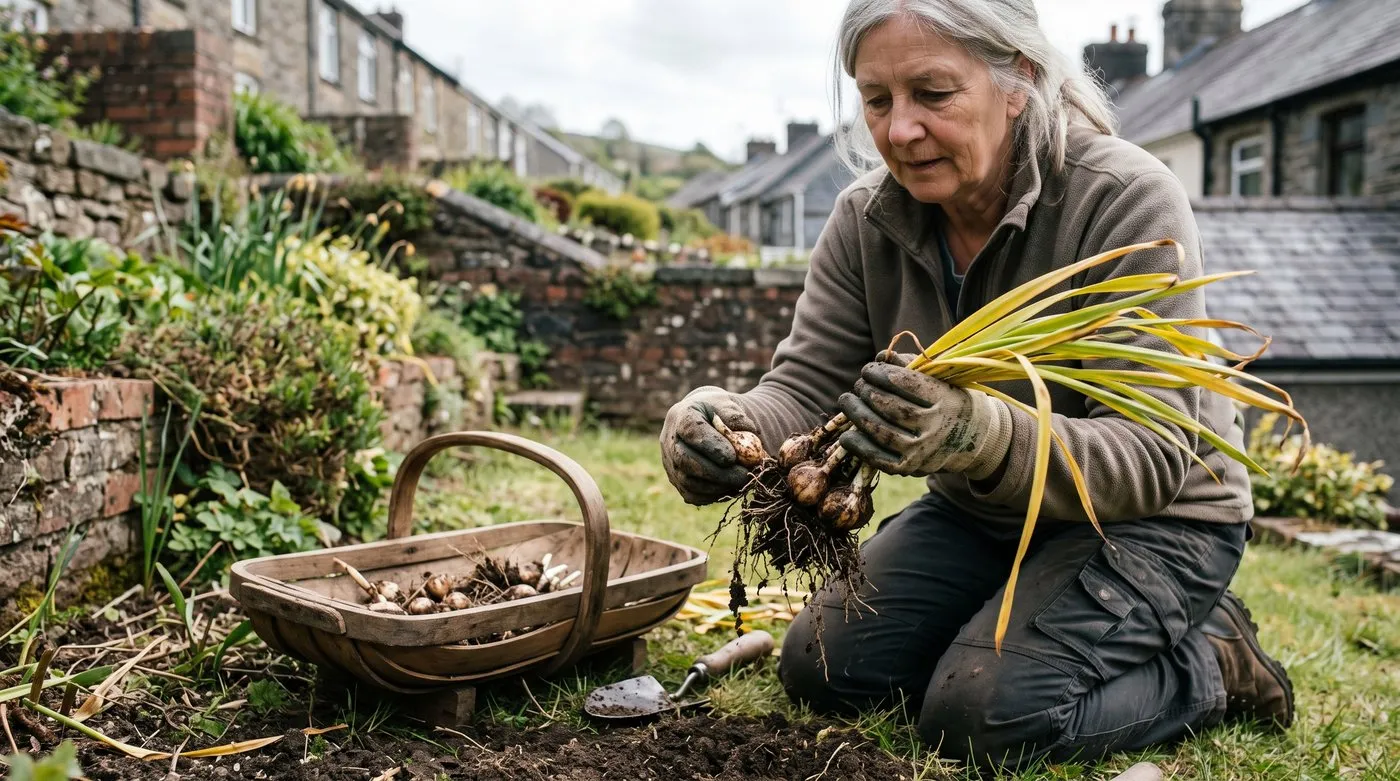
Lift crowded clumps once the leaves yellow and twist off the daughter bulbs. The biggest ones should flower next spring.
- Bulbs grow offsets, small daughter bulbs pressed against the parent. Lift the clump after the leaves yellow and twist them off. Big ones flower the next year. Small ones take two or three years.
- Corms leave cormels around the base. Grow them on in a spare row and they reach flowering size in two to three seasons.
- Tubers are cut into pieces so each keeps at least one bud. One dahlia clump can give you several new plants.
- Rhizomes are snapped into healthy outer pieces, with the woody middle thrown away.
Lift and divide most clumps every three to four years, before they get crowded and stop flowering. After flowering, leave the leaves for at least six weeks so the bulb can refill. The guide to spring bulb care after flowering explains the aftercare.
Common mistakes with bulbs, corms and tubers
- Planting too shallow. Shallow bulbs often split into small non-flowering bulbs. Plant at two to three times their height, and tulips deeper still.
- Burying an iris rhizome. A buried bearded iris tends to rot or stop flowering. Leave the top showing.
- Splitting a dahlia without crown. A tuber with no crown has no bud and never shoots.
- Cutting the leaves off too soon. Bulbs refill through their leaves. Wait six weeks, and don’t knot or fold daffodil leaves.
- Leaving tender types out. Dahlias and begonias rot if frozen. Lift them and store them dry and frost-free. The guide to storing flower bulbs shows how.
Frequently asked questions
What is the difference between a bulb, corm, tuber and rhizome?
It comes down to how each is built inside. A bulb has layered scales on a flat base, a corm is a solid swollen stem, a tuber has eyes over its surface, and a rhizome runs sideways underground. Cut one in half and only a true bulb shows onion-like rings.
Which way up do you plant bulbs and tubers?
Pointy end or growing tip up for most of them. Daffodil and tulip bulbs go pointy end up, dahlia tubers go crown up, and bearded iris rhizomes sit flat with roots below. If you really can’t tell, as with anemone tubers, plant on the side and the shoot will find its way up.
How deep should you plant bulbs?
Plant at two to three times the bulb’s own height. A 5cm daffodil bulb goes 10-15cm deep and a small crocus corm 5-7cm. Tulips like it deeper, at 15-20cm on well-drained soil, which helps them come back each year.
Are dahlias bulbs or tubers?
Dahlias grow from tubers, not bulbs. The fleshy roots store food, but the buds sit only at the old stem base, called the crown. A tuber snapped off without a piece of crown will never sprout, so always divide through the crown.
Do you need to lift bulbs over winter in the UK?
Only the tender ones need lifting. Daffodils, crocus, tulips and most alliums stay in the ground all year. Dahlias, begonias and cannas should be lifted after the first frost blackens the leaves, dried and stored frost-free. Lift gladioli in autumn too, especially on cold or wet soil.
Why did my bulbs come up with leaves but no flowers?
Crowding or shallow planting is the usual cause. As clumps multiply they compete for food and stop flowering, which gardeners call going blind. Lift and divide every three to four years, replant at the right depth, and leave the leaves for six weeks after flowering.
Now you can tell them all apart, try an easy corm first with the guide on how to grow crocus, or browse more seasonal guides in the growing section.
Our team produces practical UK gardening guidance from source research, contributor records and established horticultural practice. Editorial standards are overseen by Matt W.


