
Key takeaways
- Plant corms 8 to 10cm deep and 8cm apart from September to November
- Crocus are one of the first meals for bumblebees after winter
- Dutch crocus give the boldest colour, while species crocus spread best in lawns
- Leave crocus in grass unmown for about six weeks after flowering
- Autumn crocus add colour in October and November
- Cover new plantings with chicken wire to keep squirrels off
Crocus are one of the easiest ways to brighten the garden after winter. The little corms push up flowers from as early as February, sometimes through frost or the last of the snow. Each flower only lasts a week or so, but planted in big drifts they put on a show that gets better every year.
They’re great for wildlife too. On a mild February afternoon, a patch of open crocus will be buzzing with bees just out of hibernation. Below you’ll find spring and autumn types, the best varieties, how to plant them, how to grow them in lawns and how to stop squirrels spoiling the fun. For timings of other bulbs, see our guide to when to plant spring bulbs in the UK.
Why are crocus good for bees?
Crocus flower when hardly anything else does, so they’re a vital early meal for bees. Bumblebee queens wake on mild days in February and March and need food straight away to start their nests.
The open, cup-shaped flowers are easy for all sorts of bees and hoverflies to reach. Plant them in a sunny spot where the flowers can open wide.

A bumblebee tucking into a crocus on an early spring day.
What types of crocus can I grow?
There are three main groups, and each has its own job in the garden.
Dutch large-flowered crocus
These are the big, bold ones you see in every garden centre from late summer. They grow about 10 to 12cm tall, in strong purples, yellows, whites and stripes. They give the biggest splash of colour, but they spread more slowly than species types and squirrels love them.
Species crocus
Smaller and daintier, about 5 to 8cm tall, but tougher and longer lasting. Crocus tommasinianus is the star. It seeds itself around, slowly forming drifts of lilac flowers, and squirrels tend to leave it alone. It’s the best choice for lawns.
Autumn-flowering crocus
These flower in October and November, just when you think the bulb season is over. Crocus speciosus and the saffron crocus, Crocus sativus, are the ones most often grown.
Which crocus varieties should I grow?
| Variety | Type | Colour | Flowers | Good in lawns? |
|---|---|---|---|---|
| ‘Remembrance’ | Dutch | Deep purple | February to March | Fairly |
| ’Jeanne d’Arc’ | Dutch | Pure white | February to March | Fairly |
| ’Pickwick’ | Dutch | Pale lilac with dark stripes | February to March | Fairly |
| ’Cream Beauty’ | Species hybrid | Creamy yellow | February | Yes |
| C. tommasinianus | Species | Pale lilac to purple | February | Very good |
| C. speciosus | Autumn | Violet-blue | October to November | Yes |
| C. sativus | Autumn | Purple with red threads | October to November | Fairly |
‘Remembrance’ is a great Dutch crocus for impact. Its deep purple looks brilliant next to yellow daffodils. ‘Jeanne d’Arc’ is a lovely clean white.
Crocus tommasinianus is the one to choose for spreading. The thin buds don’t look much at first, but they open into wide lilac stars in the sun. In the right spot it forms carpets of colour within a few years. The RHS crocus growing guide is a good place to read more.
‘Cream Beauty’ often flowers a little earlier than the Dutch types, with soft yellow flowers the bees love.
How do I plant crocus?
Plant corms from September to November. October is ideal, as the soil is still warm enough for roots to grow.
Planting depth and spacing
Plant each corm 8 to 10cm deep, pointy end up, and 8cm apart. On heavy clay, put a handful of grit under each corm. In pots, you can plant them closer, almost touching.
Choosing a spot
Give them sun or light shade. The flowers only open properly in sunshine and close on dull days and at night. A sunny border, the foot of a warm wall or an open lawn are all good. Avoid deep shade and soggy ground.
Step-by-step planting
- Clear any weeds from the spot.
- Make holes 8 to 10cm deep with a dibber or narrow trowel.
- Pop a corm in each, pointy end up. If you can’t tell which way is up, plant it on its side and the shoot will sort itself out.
- Fill in with soil (plus grit on heavy ground) and firm gently.
- Water if the soil is dry, and mark the spot so you don’t dig into it later.
For a natural look, scatter a handful of corms and plant each one where it lands. Avoid straight lines. Loose groups of 15 to 25 with gaps between look lovely.

Plant corms 8 to 10cm deep and 8cm apart in autumn for a spring display.
How do I grow crocus in a lawn?
A lawn full of crocus is a real February treat. Choose the right varieties and be ready to leave the grass uncut for about six weeks after flowering. Our naturalising bulbs in grass guide covers other bulbs that do well in turf.
Planting in grass
Use a bulb planter or narrow trowel to cut holes through the turf. Plant each corm 8 to 10cm deep, put the plug of turf back and firm it down. For a bigger area, lift a flap of turf with a spade, loosen the soil, scatter corms and lay the turf back.
Crocus tommasinianus is the best for lawns, slowly spreading into carpets. ‘Pickwick’ and ‘Remembrance’ work too, but spread more slowly. Mixing species and Dutch types gives a longer show, as the species ones flower a little earlier.
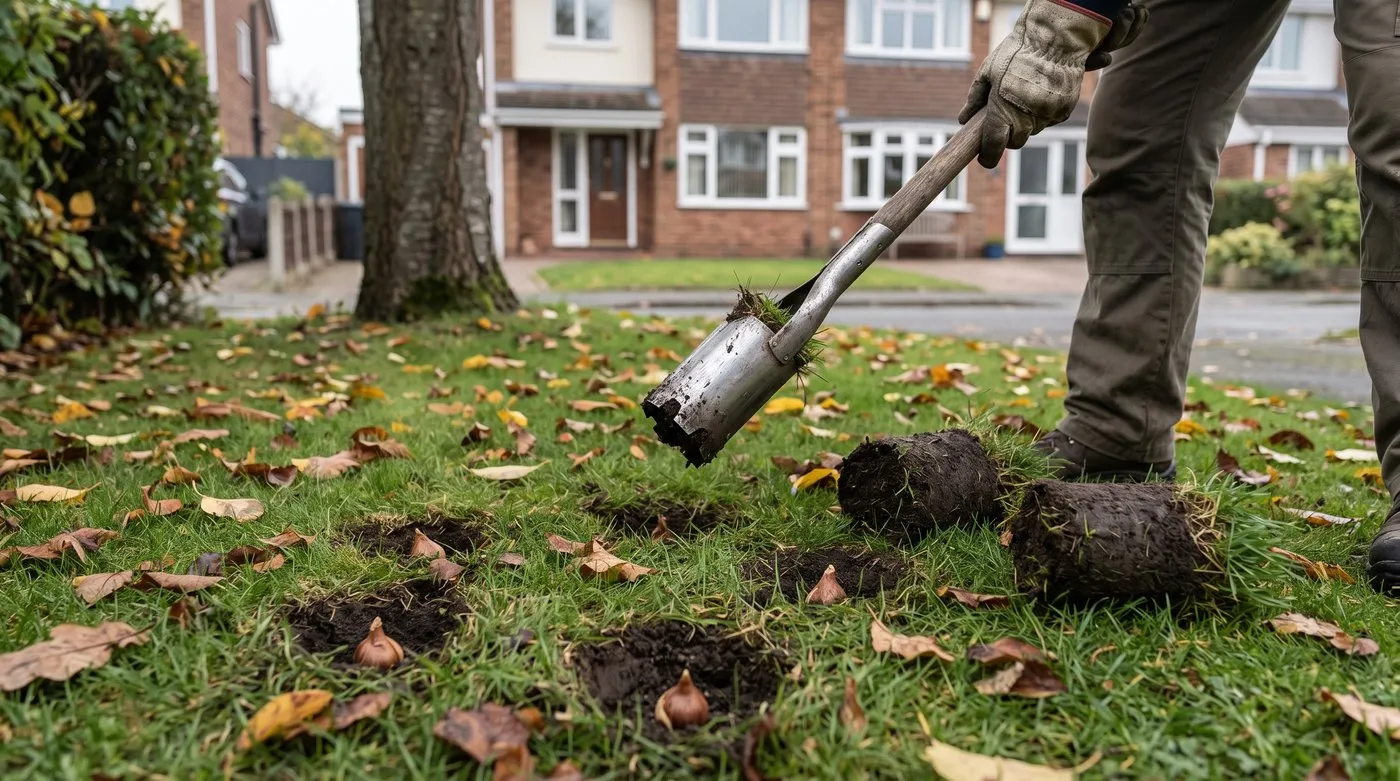
Pop each corm 8 to 10cm deep, then put the turf plug back and firm it down. Scatter the holes loosely for a natural-looking drift.
When to mow
Leave the grass until the crocus leaves have died back, about six weeks after flowering. That usually means a first mow in late April or early May, with the blade set high. If you like a neat lawn all year, plant crocus only in spots you can leave, such as around trees, along edges or in a wildflower strip.
For a longer show in grass, add snowdrops for January and February and daffodils for March and April. Together they give months of colour before the grass needs cutting.
Can I grow crocus in pots?
Yes, and Dutch crocus look especially good up close in a pot. Use one at least 15cm deep with drainage holes.
Fill it with multi-purpose compost mixed with grit, about three parts compost to one part grit. Plant the corms 5 to 8cm deep, almost touching. A 20cm pot takes 15 to 20 corms. Water once after planting and leave the pot outside all winter, as crocus need the cold to flower well.
Try a bulb lasagne. Put tulip bulbs at the bottom (15cm deep), daffodils in the middle (10cm) and crocus near the top (5 to 8cm). You get three waves of flowers from one pot, from February to May. Our guide to bulb lasagne planting shows you how. For another pot favourite that flowers a little later, try growing auriculas in pots.

Pots of crocus bring a burst of spring colour to a patio or doorstep.
How do I grow autumn-flowering crocus?
Autumn crocus flower in October and November, filling the gap between summer flowers and winter bulbs.
Crocus speciosus
The easiest autumn crocus to grow. Violet-blue flowers with darker veins appear in October on bare stems, with the leaves following in spring. It spreads happily in soil that drains well and in light shade. Plant corms 8 to 10cm deep in August, and a handful soon becomes a little colony.
Crocus sativus (saffron crocus)
Saffron has been grown in England for centuries, and the Essex town of Saffron Walden is named after it. Each purple flower has three red threads, and those are the saffron. You need around 150 flowers for a gram, so think of it as a fun treat rather than a crop.
Plant the corms in July or August in a warm, sunny spot with soil that drains well. A sunny raised bed is ideal. It flowers best after a hot summer and can be shy after a cool, wet one.
How do I protect crocus from squirrels and mice?
Squirrels are the biggest problem. They dig up newly planted corms in autumn and eat them. Mice and voles take them too, especially in the countryside.
Prevention
- Chicken wire: peg it flat over the planted area, then take it off when shoots appear in late winter.
- Plant deep: a good 10cm down makes corms harder to find.
- Choose wisely: Crocus tommasinianus seems to tempt squirrels far less than Dutch crocus.
Looking after crocus year after year
Crocus need almost nothing once they’re settled.
- Leave the leaves until they die back, usually by mid-May. They feed the corm for next year.
- Feed lightly with a general fertiliser after flowering if they’re in a border or pot. Crocus in grass manage on their own.
- Divide crowded clumps every four or five years. Lift them in summer once the leaves have gone and replant straight away.
- Refresh pot compost every couple of years, as corms in pots use it up faster.
For more early colour, see our spring flowers guide.
Frequently asked questions
When should I plant crocus bulbs?
Plant the corms from September to November, ideally by mid-October. This gives them time to grow roots before winter. You can plant into December in mild areas, but late corms may give shorter stems and fewer flowers the first spring. Autumn-flowering crocus are different, so plant those in August or early September.
How deep do I plant crocus?
Plant them 8 to 10cm deep, pointy end up. On heavy clay, go towards the shallower end and add some grit under each corm. On light, sandy soil, go a little deeper. Planting too shallow makes it easy for squirrels to dig them up.
Do crocus come back every year?
Yes, they come back every year in UK gardens. Each corm also makes little new corms around it, so clumps get bigger. Species crocus like Crocus tommasinianus also seed themselves about, slowly building into lovely drifts.
How do I stop squirrels digging up crocus?
Peg chicken wire flat over the planted area. Take it off when the shoots appear in late winter. Planting a good 10cm deep helps too. Crocus tommasinianus seems to tempt squirrels far less than the big Dutch crocus.
Can I grow crocus in pots?
Yes, they’re lovely in pots. Use one at least 15cm deep with drainage holes and gritty compost. Plant the corms 5 to 8cm deep and almost touching for a packed display. Water after planting and leave the pot outside over winter. Dutch crocus give the boldest colour in pots.
When can I mow grass with crocus in it?
Wait about six weeks after the last flowers fade. The leaves need that time to feed the corms for next year. That usually means a first mow in late April or early May. Set the mower high for the first cut.
Can I grow saffron crocus in the UK?
Yes, especially in southern and central England. Plant Crocus sativus corms in July or August in a warm, sunny spot with soil that drains well. Each flower has three red threads, which are the saffron. You need around 150 flowers for a gram, so it’s a fun treat rather than a big harvest. It flowers best after a hot summer.
Related articles
Our team produces practical UK gardening guidance from source research, contributor records and established horticultural practice. Editorial standards are overseen by Matt W.


