
Key takeaways
- Pick in the cool of the morning and put each stem straight into a bucket of water
- Rest the stems in deep water for a few hours before arranging
- Build in three layers - foliage first, then focal flowers, then airy fillers
- Odd numbers of focal flowers and stems at different heights look most natural
- Strip leaves below the waterline and change the water every two days
- A jug, sharp secateurs and a bucket are all the kit you need
Flower arranging from your garden is easier than it looks. Pick in the cool of the morning, give the stems a long drink, then build a jug in three layers: foliage, focal flowers and airy fillers. You don’t need florist’s foam, special tools or training, just a jug, sharp secateurs and a bucket.
This guide is about the arranging itself. If you are still deciding what to grow, the guide to growing cut flowers covers sowing and planting.
Which garden flowers are best for arranging?
Every good arrangement uses three kinds of stem. Focal flowers are the big, eye-catching blooms. Fillers are smaller, airy stems that add movement. Foliage gives structure and a green backdrop that makes the colours glow.
- Focal flowers: roses, dahlias, peonies, sunflowers, tulips and chrysanthemums.
- Fillers: cosmos, ammi (bishop’s flower), nigella, feverfew, astrantia and scabious.
- Tall spires: foxgloves, snapdragons and delphiniums for height at the back.
- Foliage: pittosporum, eucalyptus, rosemary, lady’s mantle and herbs such as mint.
Sweet peas are a treat in a small jug on their own. Keep picking them every few days, or they set seed and stop flowering. The guide to growing sweet peas explains how to keep them coming. For a longer list of what to grow, see the best flowers for cutting.

A few rows of easy flowers give you something new to pick every week from early summer to autumn.
Pet warning: Lilies are deadly to cats, even the pollen or the vase water. Foxgloves, daffodils, hydrangeas and dahlias are also harmful if chewed. Keep these out of reach, and wear gloves when handling foxgloves.
How and when to pick flowers for a vase
Pick early in the morning, when stems are full of water. Evening is the next best time. Avoid the middle of a hot day, when flowers are already thirsty.
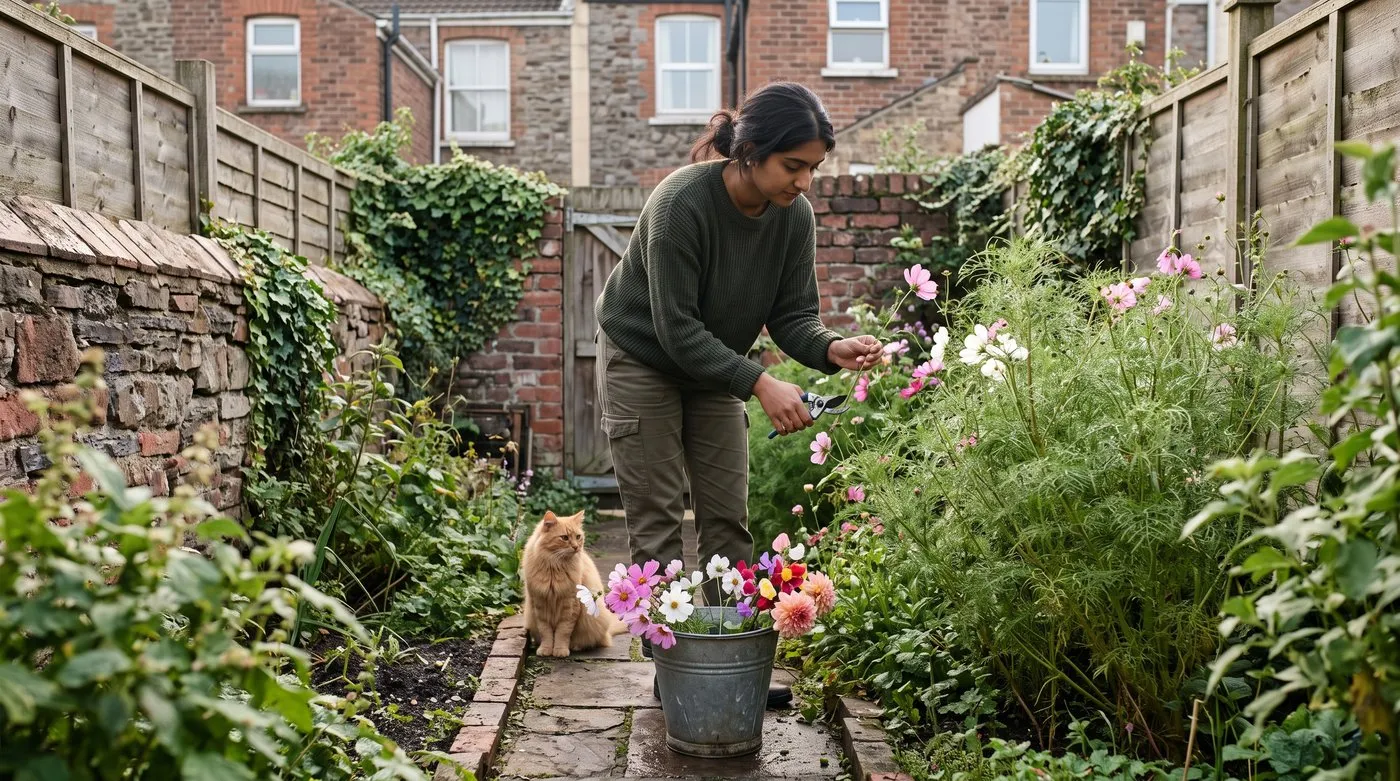
Take a bucket of water out with you and pop each stem straight in. Early morning is the best time to pick.
Take a bucket of cool water with you. Cut each stem with clean, sharp secateurs, at a slant, and put it straight into the water. Pick a little longer than you think you need, as you’ll trim the ends again indoors.
Pick each flower at the right stage:
- Roses: when the bud is starting to open and the outer petals unfurl.
- Dahlias: when almost fully open, as they don’t open much more in the vase.
- Sweet peas: when two or three flowers on the stem are open.
- Cosmos: when the petals are just opening.
- Foxgloves and snapdragons: when the bottom few flowers are open.
- Tulips and daffodils: in bud, just showing colour.
How to prepare stems before arranging
Preparing stems, which florists call conditioning, helps them drink and last longer. It takes a few minutes, then the bucket does the work.
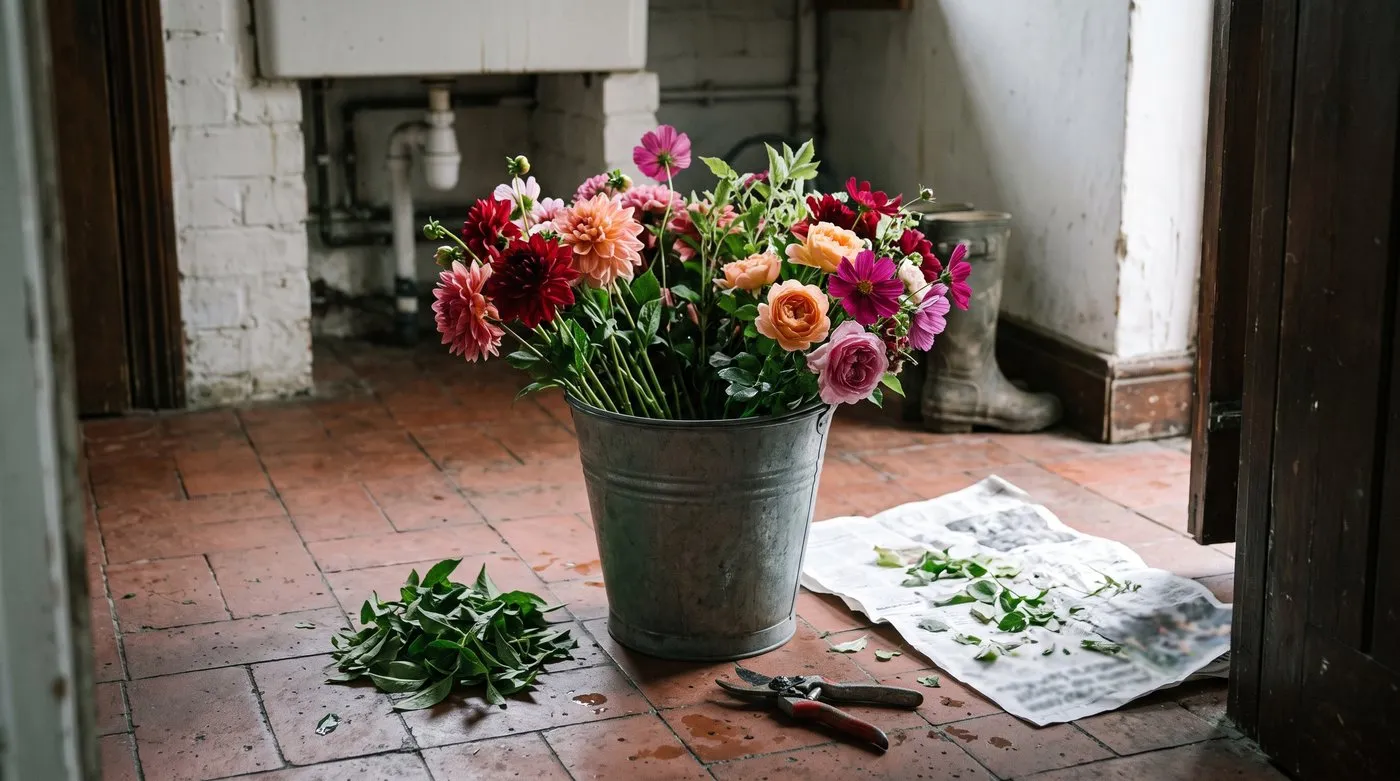
A few hours in deep water somewhere cool lets the stems drink their fill before you arrange them.
- Strip off any leaves that would sit below the water in the vase.
- Re-cut each stem at a slant, taking a couple of centimetres off.
- Stand the stems in a clean bucket of deep water with a sachet of cut-flower food.
- Leave them somewhere cool and out of the sun for a few hours, or overnight.
Woody stems such as roses and lilac drink better if you cut them at a steep slant. Daffodils ooze sap that shortens the life of other flowers, so stand them on their own for a few hours first. The guide to conditioning cut flowers covers special treatments flower by flower.
How to arrange garden flowers in a jug
The easiest method for beginners is to build in three layers. It works in any jug, jar or vase.
Start with a foliage grid
Criss-cross five to seven foliage stems in the jug, leaning at different angles. Their stems tangle under the water and hold everything else in place. In a wide-necked jug, a loose ball of chicken wire pushed into the neck does the same job. There’s no need for floral foam.
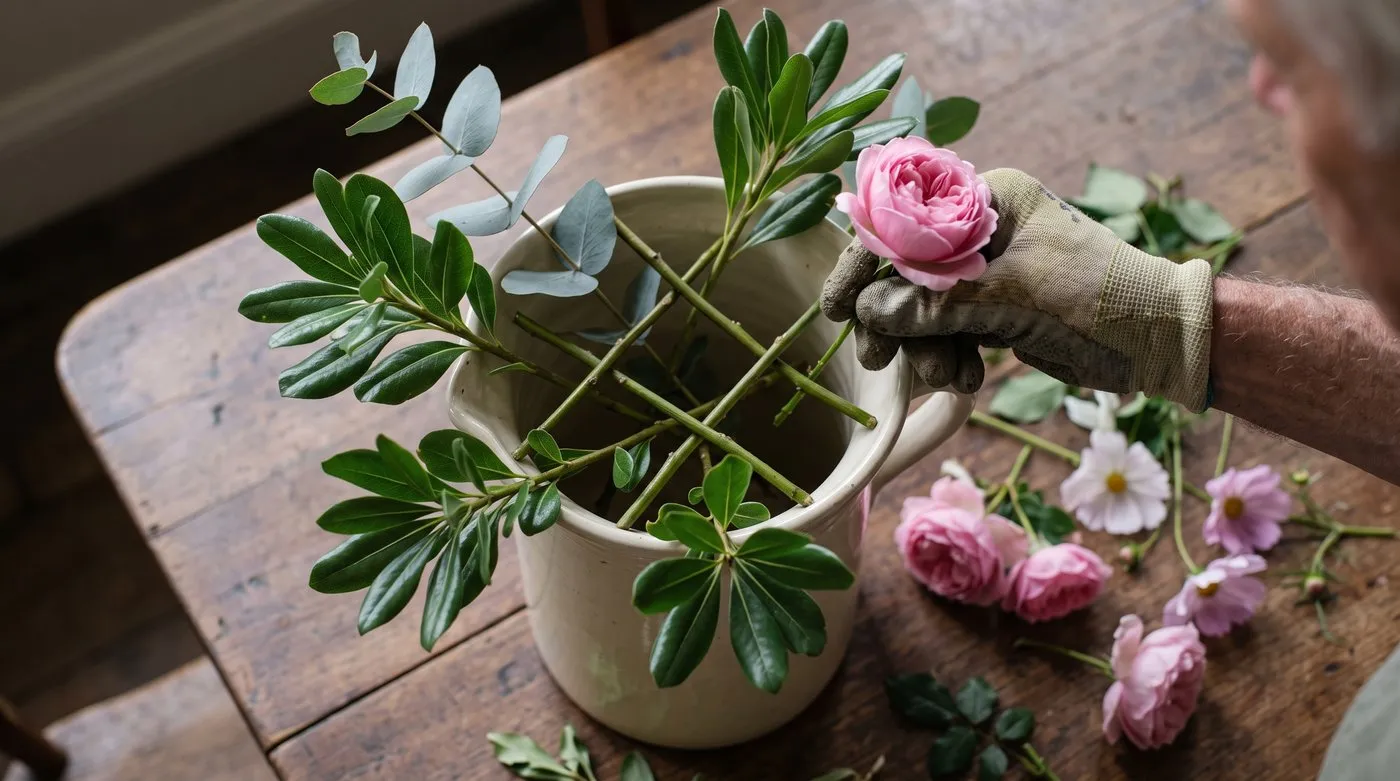
Criss-cross a few foliage stems first. They lock together under the water and hold every flower you add.
Add height and focal flowers
- Set the height. Add your tallest stems first, such as foxgloves or snapdragons. As a rough guide, the arrangement looks balanced at about one and a half to two times the height of the jug.
- Add focal flowers. Place roses or dahlias at slightly different heights, a little below the tallest stems. Odd numbers, such as three or five, look more natural than pairs.
Fill in and finish
- Tuck in the fillers. Add cosmos, ammi, nigella or astrantia around and between the big flowers. They soften the shape and give depth.
- Turn and check. Look at the jug from all sides and fill any holes with short foliage.
- Step back. Look from across the room. Trim anything that sticks out too far.

Tall spires at the back, roses and dahlias in the middle and airy cosmos in the gaps. Three simple layers give this relaxed, just-picked look.
How to make a garden arrangement last longer
Most garden arrangements last about a week with a little care. A minute every couple of days makes the difference.
- Change the water every two days, adding fresh flower food if you have it.
- Re-trim the stems by a couple of centimetres when you change the water.
- Pull out faded flowers as they go over. Swap in fresh ones from the garden.
- Keep it cool. Sun and radiators shorten vase life. A cool hallway is ideal overnight.
- Keep it away from the fruit bowl. Ripening fruit gives off a gas called ethylene, which makes flowers fade faster.
Sweet peas usually fade first, after a few days. Roses and chrysanthemums often outlast everything else. A good arrangement changes gently over its life rather than collapsing all at once.

No leaves below the waterline means clear water and longer-lasting flowers. Top it up and change it every couple of days.
What to pick for arranging each month
| Month | Focal flowers | Fillers | Foliage and extras |
|---|---|---|---|
| March to April | Tulips, daffodils | Forget-me-nots, honesty | Pittosporum, pussy willow |
| May | Peonies, alliums | Aquilegia, sweet rocket | Lady’s mantle, euphorbia |
| June | Roses, sweet peas | Ammi, nigella | Eucalyptus, mint |
| July | Dahlias, sunflowers | Cosmos, feverfew | Pittosporum, fennel |
| August | Dahlias, gladioli | Cosmos, scabious | Eucalyptus, rosemary |
| September | Dahlias, asters | Cosmos, verbena | Cotinus, berries |
| October | Chrysanthemums | Grasses, seed heads | Rosehips, ivy |
| November to February | Hellebores, winter shrubs | Dried hydrangeas | Holly, ivy, evergreens |
Euphorbia sap irritates skin, so wear gloves and sear or rinse the cut end. In winter, dried hydrangea heads are a great standby. The guide to drying hydrangea flowers shows how to keep them.
Common flower arranging mistakes
- Skipping the drink. Stems that go straight from garden to vase wilt sooner. Give them a few hours in a bucket first.
- Leaves in the water. They rot and cloud the water. Strip them off below the waterline.
- No foliage. Flowers on their own look stiff. Greenery adds depth and props stems up.
- All the same height. Cut focal flowers to a few different lengths so the jug has shape.
- Too many stems. Packed stems can’t drink and the shape gets lost. Leave a little air between them.
- A dirty vase. Leftover bacteria cut the next arrangement short. Wash vases in hot soapy water between uses.
Need more light, frothy stems? The guide to filler flowers for cutting lists the best ones to sow.
Frequently asked questions
How do I start flower arranging as a beginner?
Start with a plain jug and three kinds of stem from your garden. Pick some foliage, a few big focal flowers such as roses or dahlias, and some airy fillers such as cosmos. Criss-cross the foliage in the jug first, add the focal flowers, then tuck the fillers into the gaps.
When should I cut flowers from my garden for arranging?
Cut early in the morning while it is still cool. Stems are full of water then and wilt less. Evening is the next best time. Take a bucket of water into the garden, put each stem in straight away, then leave them somewhere cool to drink for a few hours.
How long do garden flower arrangements last?
Most garden arrangements last about a week. Sweet peas fade sooner, while roses and chrysanthemums often last longer. Change the water every couple of days, re-trim the stems and keep the vase away from sun, radiators and the fruit bowl.
Do I need expensive equipment for flower arranging?
No, a jug, sharp secateurs and a bucket are enough. Jam jars, teapots and old vases all make good vessels. You don’t need floral foam either. A criss-cross of foliage stems or a loose ball of chicken wire holds stems in place.
What foliage should I grow for flower arranging?
Pittosporum, eucalyptus, rosemary and lady’s mantle are four easy choices. Pittosporum gives glossy leaves all year. Eucalyptus adds silvery texture and scent. Rosemary brings fragrance, and lady’s mantle fills gaps with frothy lime-green flowers in early summer.
Can I arrange flowers from my garden in winter?
Yes, using evergreens, berries, seed heads and winter flowers. Holly, ivy, rosehips and dried hydrangea heads make lovely displays. Hellebores add fresh flowers but can flop. Picking the older flowers, once the seed pods start to swell, helps them last.
Which garden flowers are not safe around cats and dogs?
Lilies are the big one, as they are deadly to cats. Even pollen or vase water can poison them, so keep lilies out of homes with cats. Foxgloves, daffodils, hydrangeas and dahlias are also harmful if pets chew them.
Ready to grow more to pick? The guide to creating a cutting garden shows how to plan a patch just for the vase. There’s plenty more inspiration in the flowers and plants hub.
Our team produces practical UK gardening guidance from source research, contributor records and established horticultural practice. Editorial standards are overseen by Matt W.


