Key takeaways
- Pick when the heads feel papery, usually September to October, not when fresh in summer
- Strip the leaves and stand stems in just 2-3cm of water to dry slowly
- Mophead and paniculata hydrangeas dry best; lacecaps tend to shed
- On mopheads, cut just above a pair of fat buds to keep next year's flowers
- Display out of direct sun and away from damp to hold the colour
To dry hydrangea flowers, let them age on the plant until they feel papery, then cut them and stand them in a little water to dry slowly. That’s the whole secret. Timing matters far more than method.
Picked fresh and soft in summer, hydrangeas wilt within days. Picked in early autumn, once the colours have turned dusky, they hold their shape and tones for months. This guide covers when to pick, how to cut without losing next year’s flowers, the easiest drying methods and how to keep the colour.
When to pick hydrangeas for drying
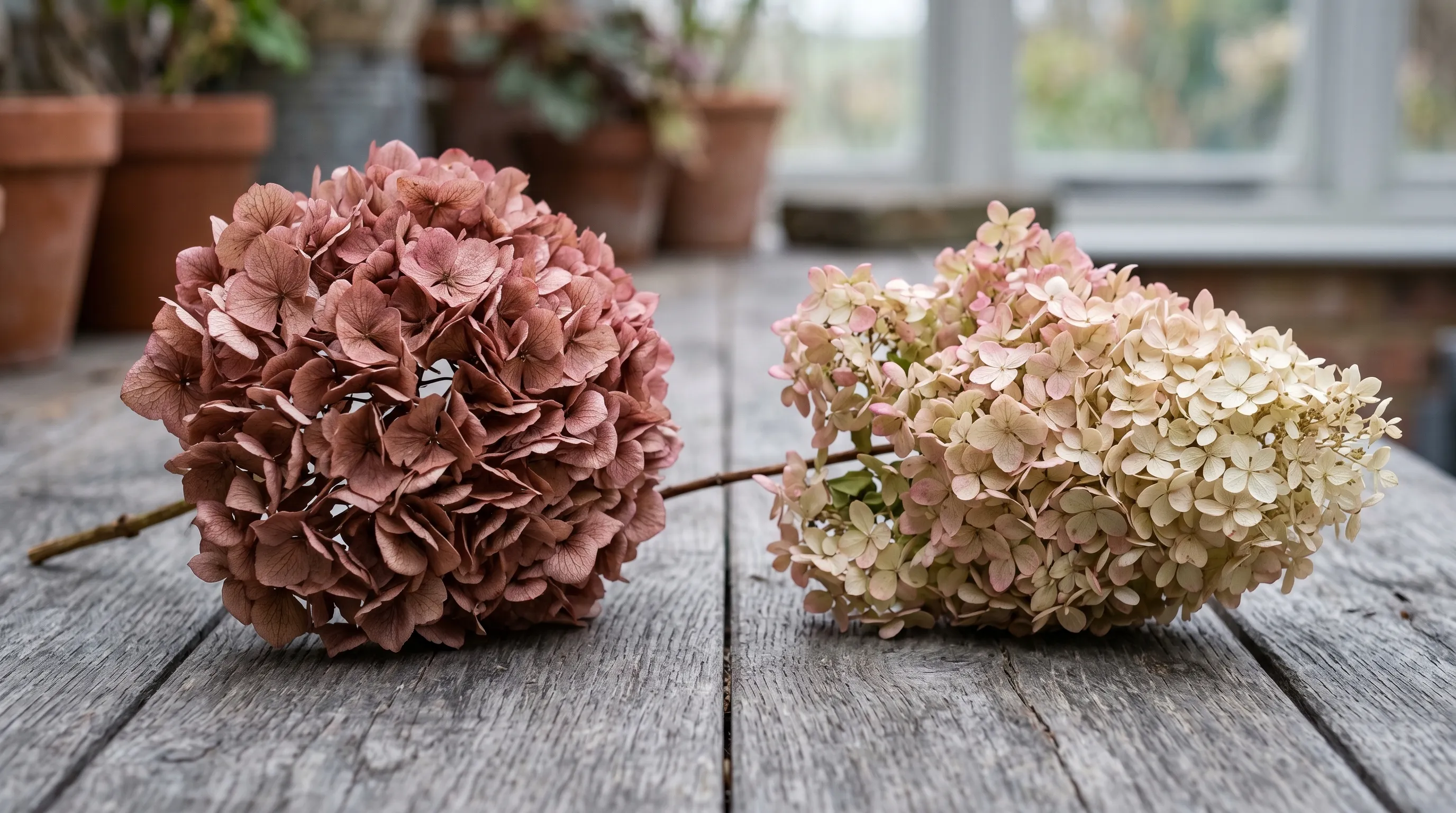
Pick once the heads have aged on the plant. A fresh summer mophead is soft and full of water. By early autumn the petals (strictly, sepals) feel dry, papery and slightly leathery, a bit like tissue paper. The colours also start to fade to dusky pinks, greens, blues and parchment.
Squeeze a petal between finger and thumb. If it feels crisp rather than soft, it’s ready. In most UK gardens that’s September to October. Sheltered southern gardens get there sooner, and northern or exposed ones later.
Pick on a dry morning, once the dew has gone. Try to beat the first hard frost, which browns the heads.
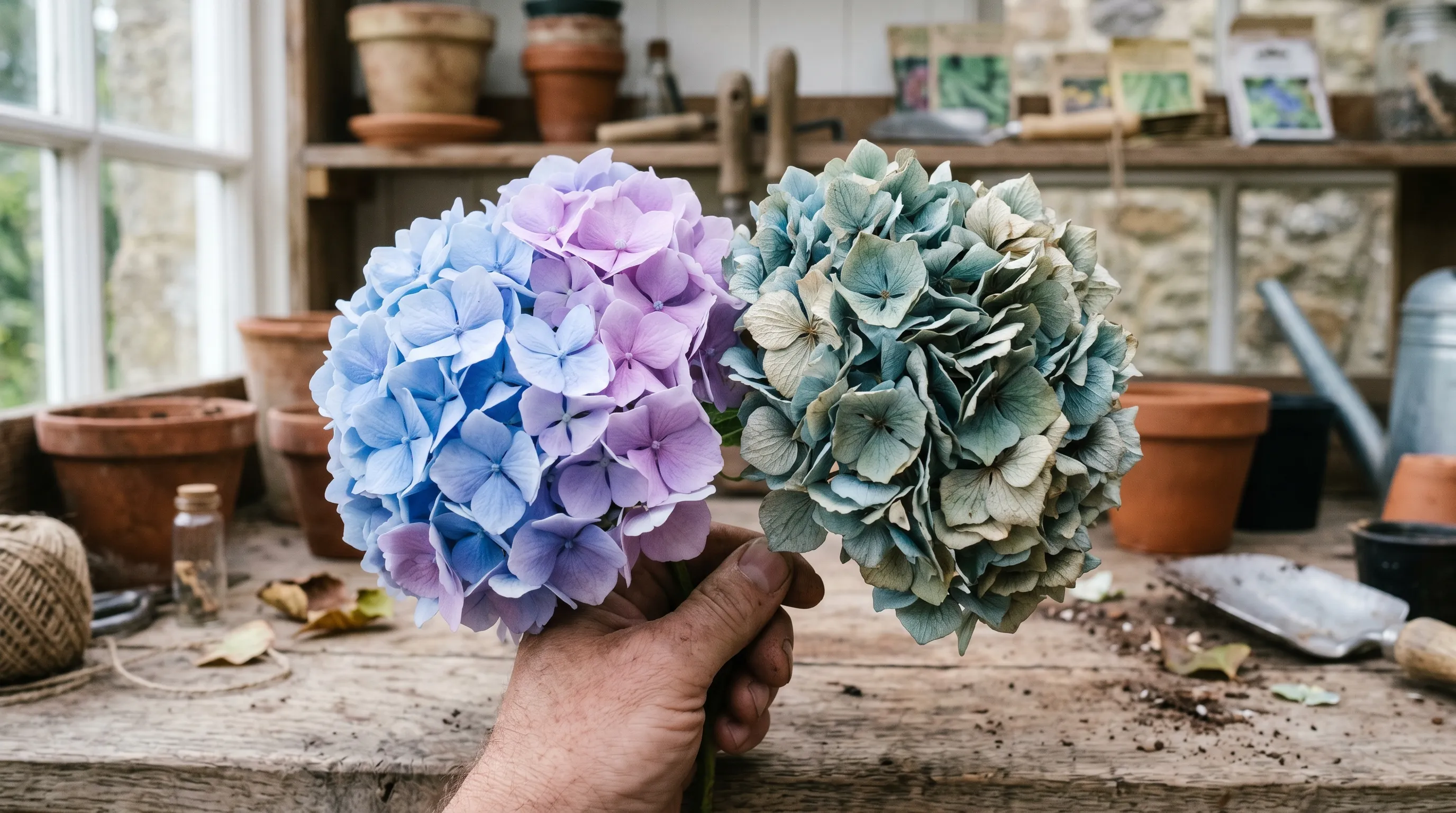
The soft, bright head on the left will wilt. The papery, faded one on the right is ready to dry.
How to cut hydrangeas for drying without losing next year’s flowers
How you cut depends on the type.
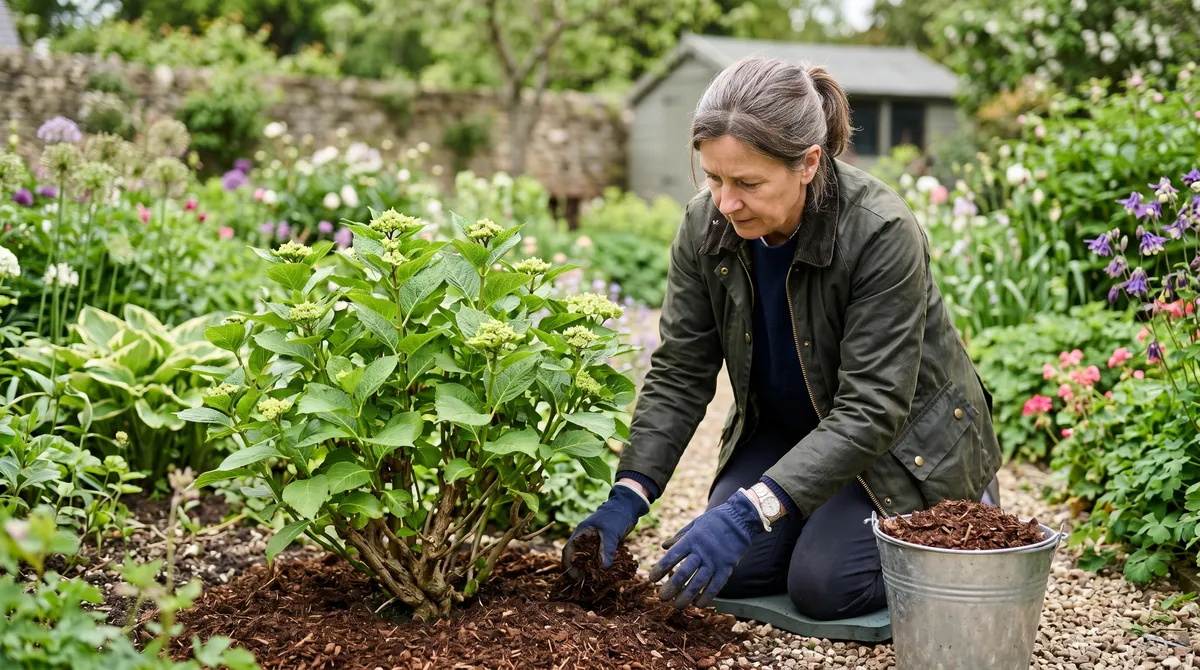
Mophead and lacecap hydrangeas (Hydrangea macrophylla) flower on last year’s stems. Next year’s flower buds sit near the tips of this year’s growth. Cut each stem just above a pair of fat, healthy buds, and take only the length you need. Cutting long stems low down removes next summer’s flowers.
Paniculata hydrangeas such as Limelight flower on new growth. You can cut longer stems without harming next year’s display. The hydrangea pruning guide explains which type is which.
Then get the stems ready:
- Strip every leaf. Leaves rot first and invite mould.
- Trim the stems to the length you want to display.
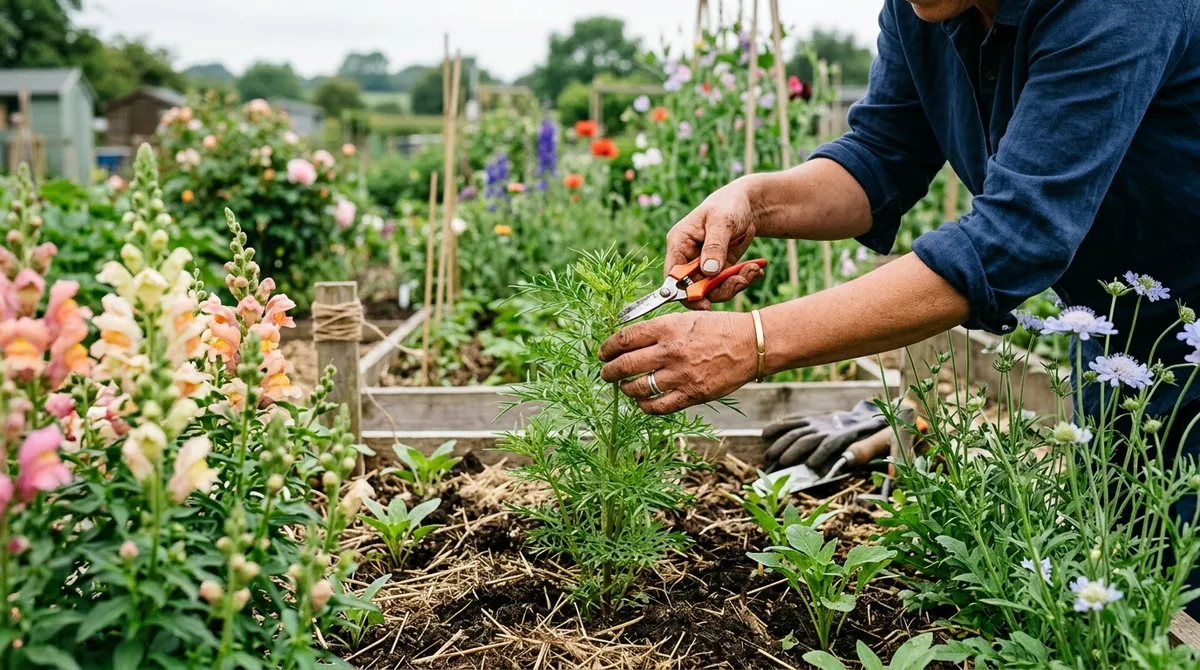
- Pinch out any browned florets, so they don’t spoil the head.
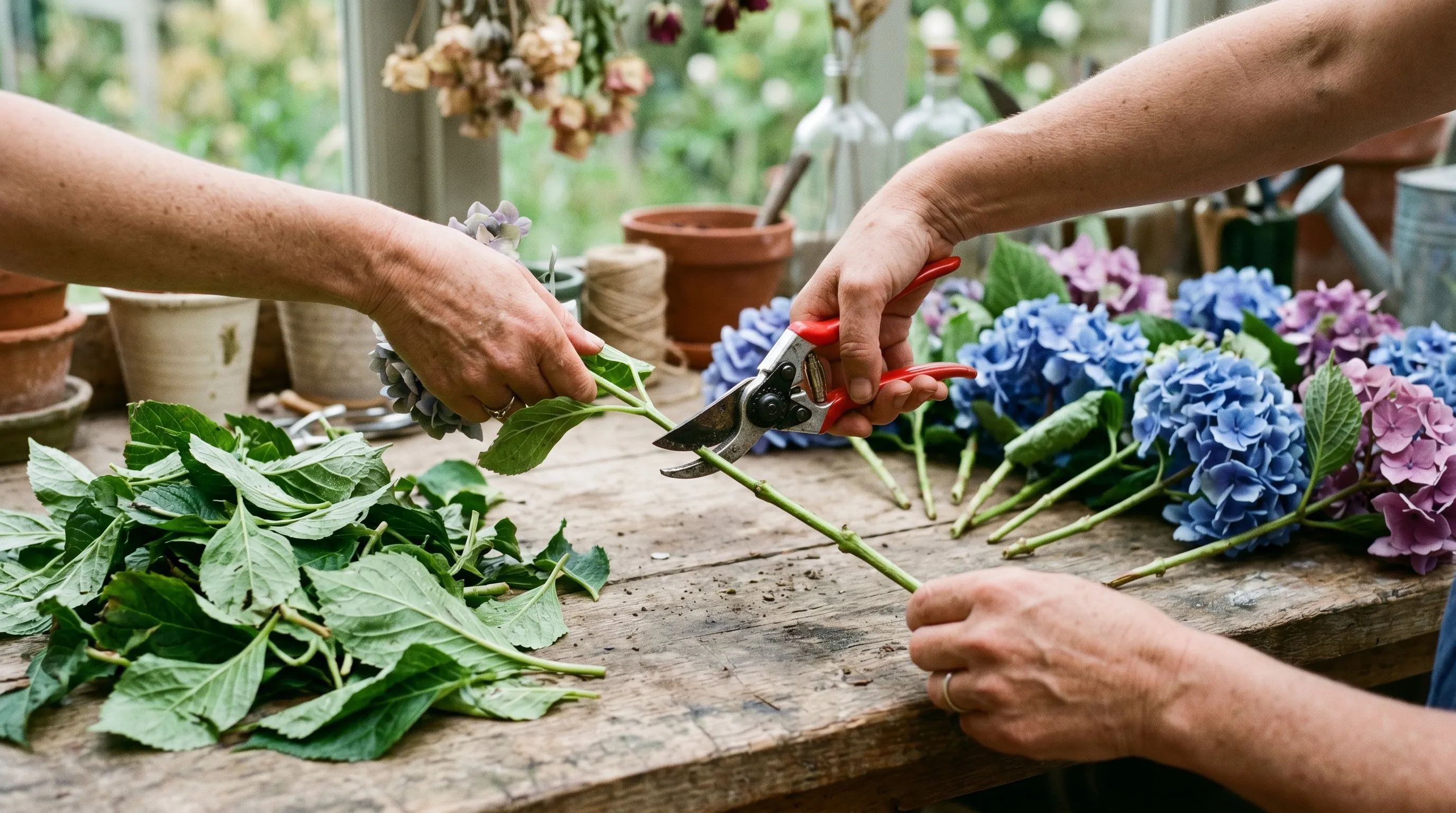
Strip off every leaf before drying. They hold far more water than the flowers and go mouldy first.
The easiest way: drying hydrangeas in a little water
Stand the stems in a vase with just 2-3cm of water. Put it somewhere bright but out of direct sun, away from radiators and steam. Then leave it alone and don’t top up.
The stems drink a little at first, so the heads dry gently rather than shrivelling. Over about two to three weeks the water goes and the heads turn stiff and crisp. When the vase is dry and the petals rustle, they’re done.
This is the most forgiving method for most people, and it needs no kit at all.
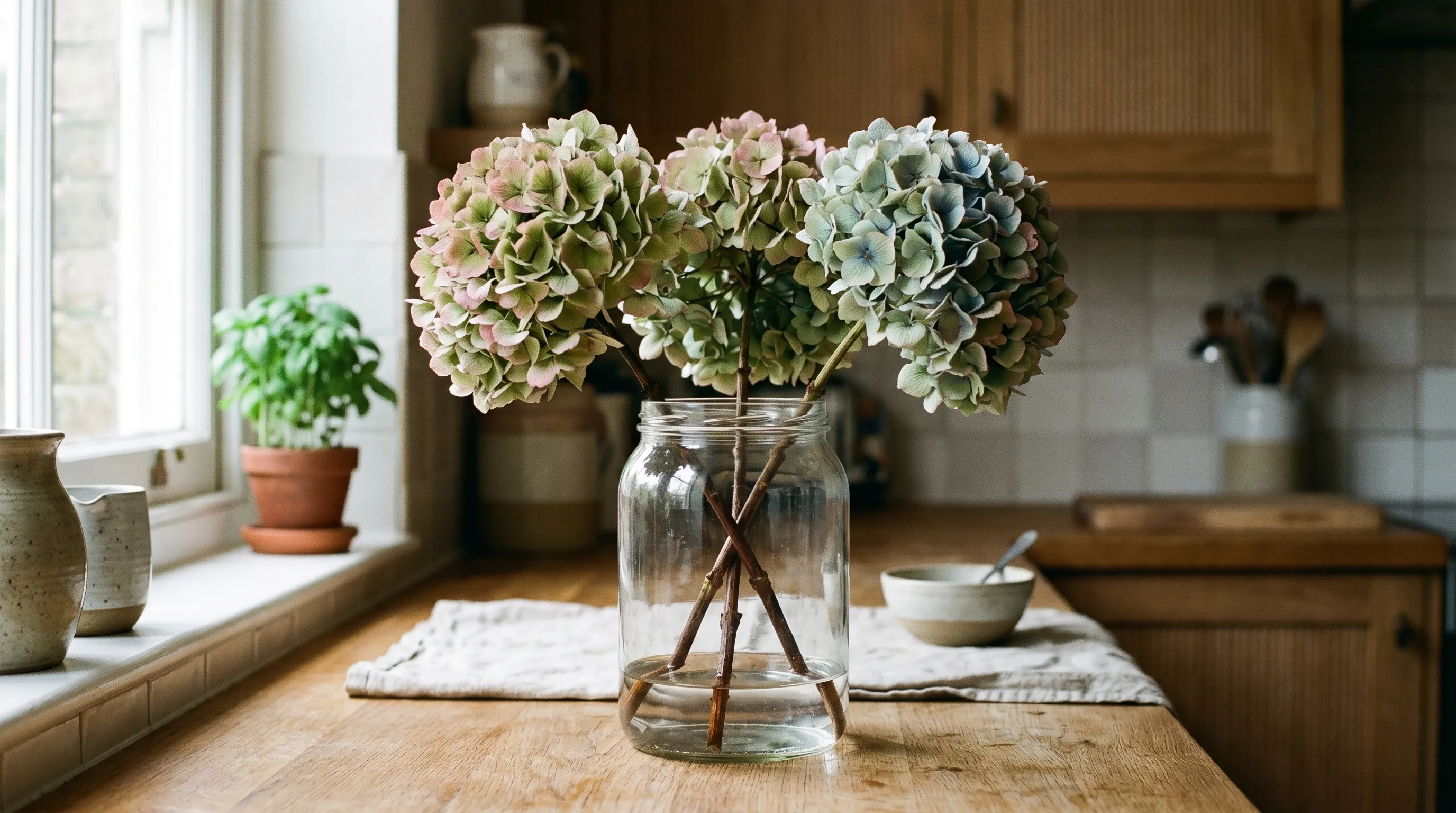
Just a few centimetres of water, left to dry up. The slow drying keeps the heads full and round.
Other ways to dry hydrangeas
| Method | How it works | Good for |
|---|---|---|
| Water method | Stand in 2-3cm of water, let it dry up | Most heads, the easy choice |
| Hanging upside down | Small bunches in a dark, airy room | Heads already papery when picked |
| Silica gel | Bury heads in drying crystals in a sealed tub | One special head, best colour |
| Glycerine | Stand stems in a glycerine and hot water mix | Supple stems and leaves, colour turns beige |
| Microwave with silica gel | Short bursts in a microwave-safe tub | A single small head in a hurry |
Hanging works well for heads that were already papery when picked. Tie bunches of three or four, so air can move between them, and hang them upside down somewhere dark, dry and airy. Darkness keeps the colour. A spare room or a dry shed is ideal. Avoid kitchens, bathrooms and damp garages.
Silica gel crystals, sold for drying flowers, keep colour and shape best. They’re fiddly, though, and only manage a head or two at once.
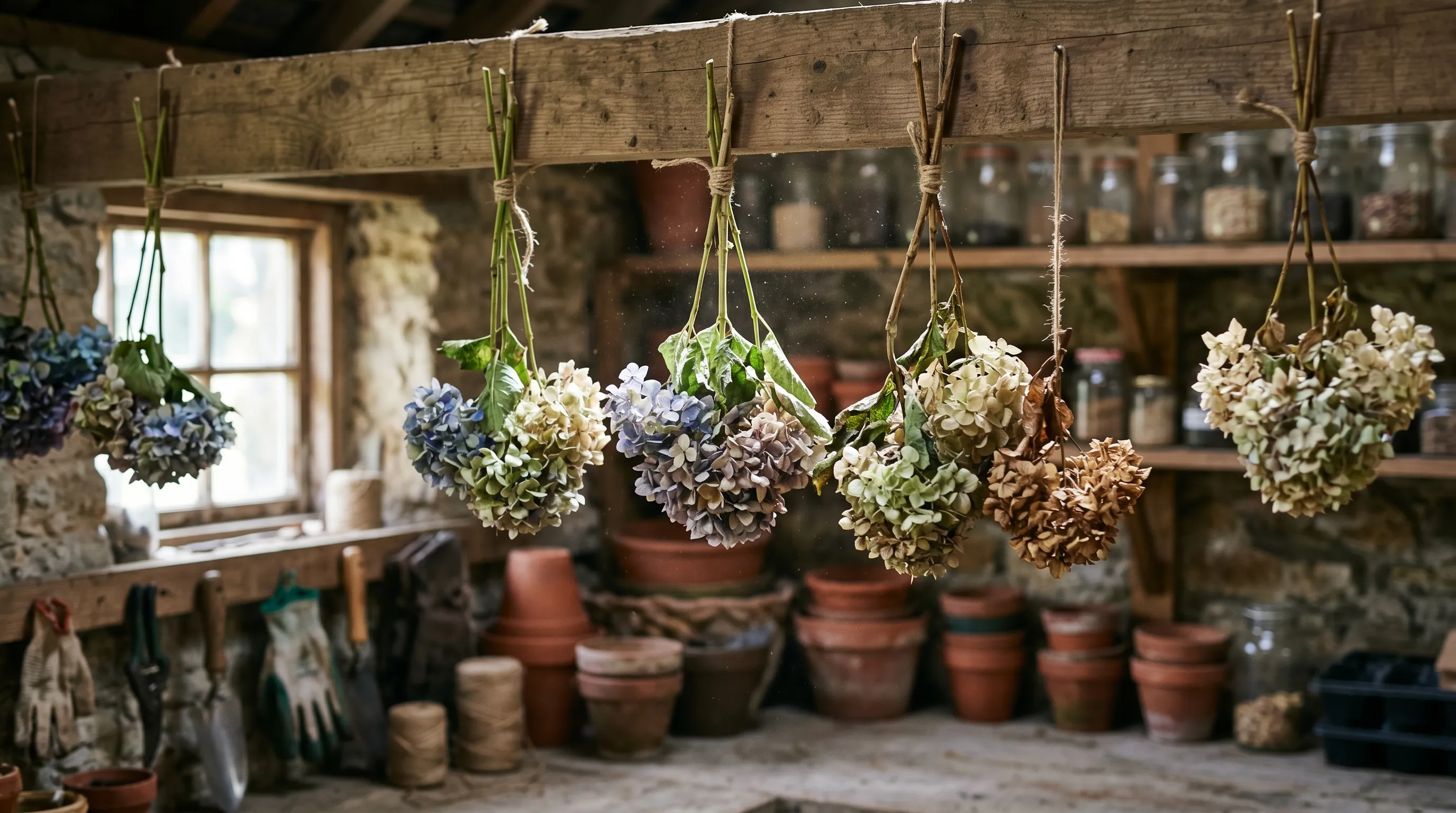
Small bunches hung in a dark, airy shed. Keep them out of the light so the colour lasts.
Which hydrangeas dry best?
Mopheads dry beautifully. Their dense, rounded heads hold together as they stiffen.
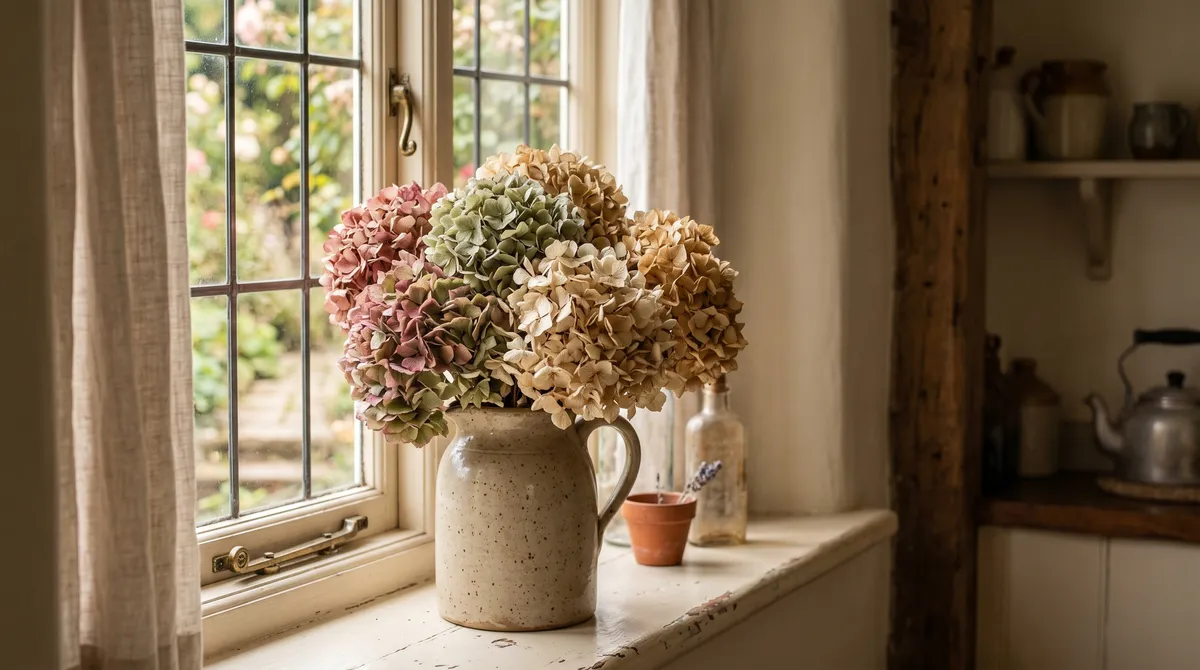
Paniculatas are just as good. Cone-shaped types such as Limelight and Vanille Fraise dry to cream, lime and blush tones and barely shrink. Oakleaf hydrangeas (Hydrangea quercifolia) also dry well.
Lacecaps are trickier. Their flat heads have a ring of showy florets around tiny true flowers, and the outer florets tend to drop as they dry. Try silica gel for a lacecap you love. The guide to types of hydrangea helps you tell them apart.
Round mopheads and cone-shaped paniculatas are the two types that dry most reliably.
How to keep the colour in dried hydrangeas
Pick at the right moment. Heads picked once they’ve turned dusky on the plant dry to the prettiest tones. Picked too green, they dry flat and dull.
Keep them out of the sun. Direct sunlight bleaches dried heads to straw in a few weeks. A shady shelf, hallway or north-facing windowsill keeps colour much longer.
Keep them dry. Damp rooms make the petals limp and dull. A light mist of hairspray, sprayed outdoors, can help stop petals dropping.
The fresh colour of a mophead depends on your soil. The guide to changing hydrangea colour explains how acid soil gives blue and alkaline soil gives pink.
Hydrangeas are mildly toxic to cats and dogs if chewed, so keep dried arrangements out of reach of curious pets.
Common mistakes when drying hydrangeas
Picking too early. Soft summer heads collapse. Wait for that papery feel.
Too much water in the vase. Fill it deep and the stems keep drinking, so the heads never dry and the stems rot. 2-3cm is plenty.
Drying somewhere damp. Bathrooms, steamy kitchens and damp garages bring grey mould. Choose a dry, airy spot.
Leaving the leaves on. They rot first. Strip them every time.
Cutting mophead stems too low. You lose next year’s flower buds. Cut above a pair of fat buds.
When to pick hydrangeas, month by month
| Month | Flower stage | Pick for drying? |
|---|---|---|
| July to August | Fresh, soft and bright | No, too early |
| Early September | Starting to firm up | Check the feel, often not quite ready |
| Mid September to October | Papery and turning dusky | Yes, the main window |
| November | Often frosted or browning | Too late in most years |
Frequently asked questions
When should you pick hydrangeas to dry them?
Pick when the heads feel papery, usually September to October. Fresh summer flowers are full of water and wilt. Wait until the petals feel dry and slightly leathery and the colours turn muted, then cut before a hard frost.
What is the best method for drying hydrangeas?
Stand the stems in a little water and let it dry up. Use just 2-3cm in a vase, somewhere cool and out of sun. The heads dry slowly over two or three weeks, which stops the petals shrivelling.
Do you dry hydrangeas with the leaves on or off?
Take the leaves off. They hold a lot of water, rot first and can bring mould into the bunch. Strip every leaf before drying.
Why do my dried hydrangeas go limp and shrivel?
They were most likely picked too early. Soft summer heads are full of water and collapse as they dry. Wait until they feel papery on the plant before cutting.
How long do dried hydrangeas last?
Usually a year or so before they fade badly. Kept out of direct sun and away from damp, they hold their colour well through the first winter. After that they pale and turn brittle.
Can you dry blue hydrangeas and keep the colour?
Yes, though the blue softens to a dusky grey-blue. Pick once the heads are papery and keep them out of direct sun. Silica gel holds the colour best for a special head.
Can you dry hydrangeas in the microwave?
Yes, for a single small head, but results are hit and miss. Bury it in silica gel in a microwave-safe tub and heat in short bursts, checking often. The water method is easier for a bunch.
Now your heads are drying, read the guide to growing hydrangeas to get even more flowers next year, or see why a hydrangea won’t flower if yours held back this summer. There are more seasonal projects in the how-to guides.
Our team produces practical UK gardening guidance from source research, contributor records and established horticultural practice. Editorial standards are overseen by Matt W.