Key takeaways
- Only mophead and lacecap hydrangeas change colour. White types stay white
- Acid soil gives blue flowers, chalky or limy soil gives pink
- For blue, start a blueing product in March and mulch with ericaceous compost
- For pink, scatter garden lime in autumn
- Test your soil first with a cheap kit from the garden centre
- Stick with it, as the best colour usually comes in the second summer
Can you change hydrangea colour? Yes, if it’s a mophead or lacecap. The same plant can be bright blue, deep pink or purple, and it all depends on your soil.
Here’s how to push it towards blue or pink, when to do each job, which varieties respond best, and the mistakes that waste a whole summer.
Why hydrangeas change colour
Acid soil makes hydrangeas blue. Chalky or limy soil makes them pink. In acid soil, the roots can take up aluminium from the ground, and that turns the flowers blue. In limy soil, the aluminium gets locked up, so the flowers stay pink.
In between, you get purple, mauve or a mix of both. Lots of UK gardens sit in this middle ground, which is why so many hydrangeas end up a muddy mauve.
Watch your plant feed too. Ordinary all-purpose feeds are high in phosphorus, which ties up aluminium in the soil and stops flowers going blue. Use an ericaceous or hydrangea feed on plants you want blue.
Which hydrangeas can change colour?
Only Hydrangea macrophylla changes colour. Good news: it’s the one most often sold in UK garden centres, so yours probably can. It comes in two shapes.
Mophead hydrangeas (H. macrophylla)
Mopheads have big, round, pom-pom flower heads. These are the classic colour-changers. Good ones include ‘Endless Summer’, which flowers again through summer, ‘Ami Pasquier’, which is deep red in limy soil and purple in acid, and ‘Ayesha’, with its unusual cupped petals.
Lacecap hydrangeas (H. macrophylla)
Lacecaps have flat heads, with tiny flowers in the middle and a ring of bigger ones around the edge. They change colour in just the same way. ‘Bluebird’ and ‘Mariesii Perfecta’ (also sold as ‘Blue Wave’) both turn a lovely blue in acid soil.
White hydrangeas that do NOT change colour
White hydrangeas are simply white. Changing the soil won’t turn them blue or pink:
- H. paniculata (‘Limelight’, ‘Vanilla Fraise’, ‘Little Lime’), with cone-shaped flowers
- H. arborescens (‘Annabelle’, ‘Incrediball’), with big round white heads
- Oakleaf hydrangea (H. quercifolia), with white cones and oak-shaped leaves
- Climbing hydrangea (H. petiolaris), with flat white flowers
If yours is white, just enjoy it.
 In acid soil, a mophead hydrangea turns this lovely deep blue.
How to make hydrangeas blue
Turning hydrangeas blue needs acid soil and aluminium the roots can get at. Most UK soils aren’t acid enough, so you need to help. Aluminium sulphate, sold as hydrangea blueing compound, does both jobs at once.
Step 1: Test your soil pH
Test before you buy anything. A cheap kit from the garden centre takes a few minutes. Take soil from a spade’s depth at the base of the plant, from a few spots around it.
Step 2: Apply aluminium sulphate
Use a hydrangea blueing product, mixed with water at the rate on the pack. Water it around the roots of each plant, on moist soil only. Concentrated solution on dry ground can burn roots.
Repeat as the pack directs from March to June. The flowers set their colour before they open, so early spring is the time that counts.
Step 3: Mulch with ericaceous compost
Spread a 5-8cm layer of ericaceous compost around the base in March. It helps keep the soil acid and slows the drift back towards limy.
Step 4: Water correctly
Use rainwater where you can. Hard tap water slowly makes soil more limy and undoes your good work. A water butt near the hydrangeas makes this easy.
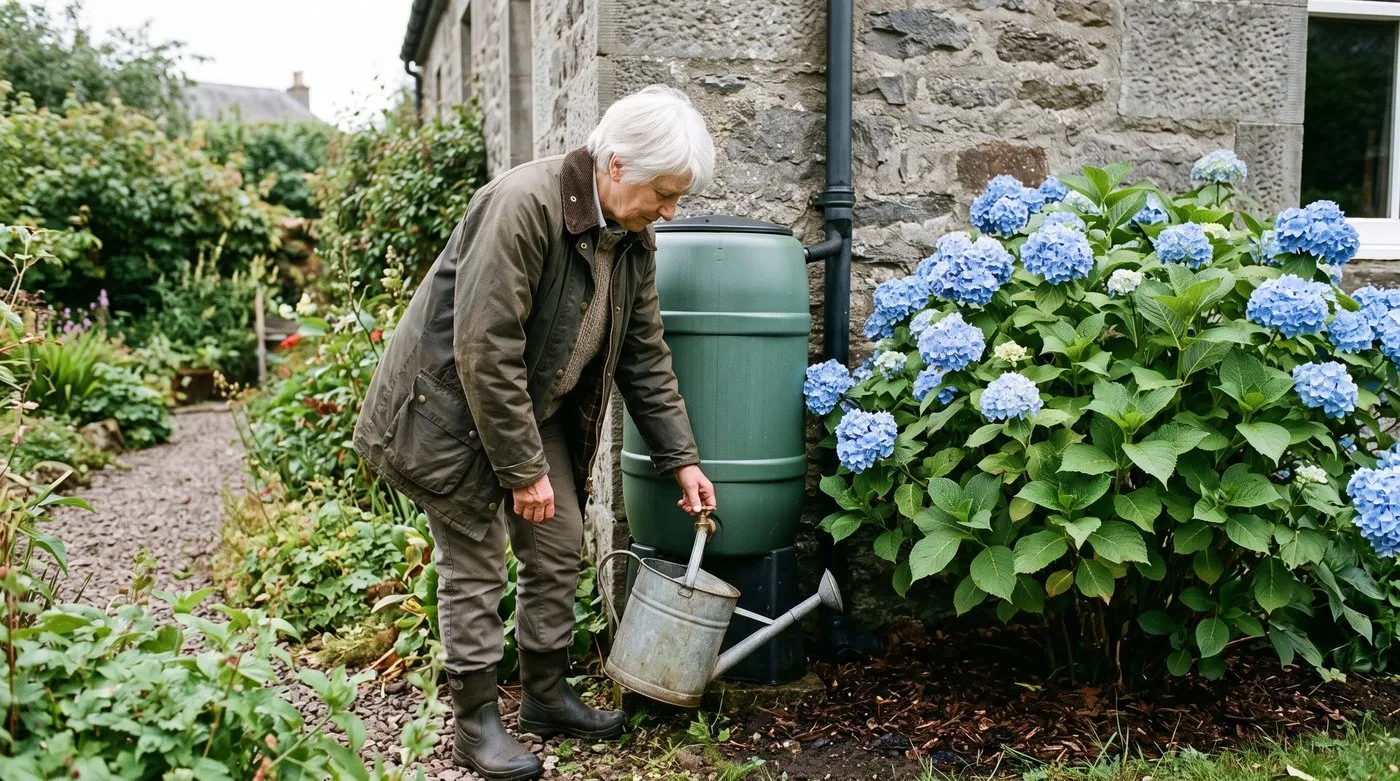
Rainwater keeps the soil acid, so your blue hydrangeas stay blue. Hard tap water slowly adds lime and nudges them back towards pink.
Step 5: Use a low-phosphorus fertiliser
All-purpose feeds hold too much phosphorus for blue hydrangeas. Pick an ericaceous plant feed or a hydrangea blueing feed, and check the label.
How to make hydrangeas pink
Pink is easier than blue. You just need to make the soil more limy so the aluminium stays locked up. Garden lime is the go-to product.
Apply garden lime
Scatter garden lime around the roots in October or November, following the rate on the bag. It works slowly over winter. On very acid soil, a second dose in February may help.
Use alkaline compost
Keep ericaceous compost away from hydrangeas you want pink. Mulch with ordinary multipurpose compost or mushroom compost instead. Mushroom compost contains lime, so it nudges the soil the right way.
Water with tap water
In hard-water areas, tap water helps keep the soil limy. For once, hard water is your friend. In soft-water areas such as Scotland, Wales and Cornwall, you may need to lime more often.
Avoid aluminium sources
Skip aluminium sulphate, sulphur and ericaceous feeds. Also keep pink hydrangeas away from acid-lovers like rhododendrons, blueberries and heathers, as their ericaceous mulch can make the soil more acid.
 Next to a limestone wall, the soil stays limy and the flowers stay a strong pink.
How to keep hydrangeas purple
Purple comes from soil that sits between acid and limy. It’s the hardest colour to keep, because any drift either way pushes it blue or pink.
Try a lighter dose of blueing product than you’d use for blue, from March to May only. Test the soil every so often and adjust.
Expect some variety, with different heads on the same plant showing different shades. That’s part of the charm. Darker varieties like ‘Ami Pasquier’ hold purple best.
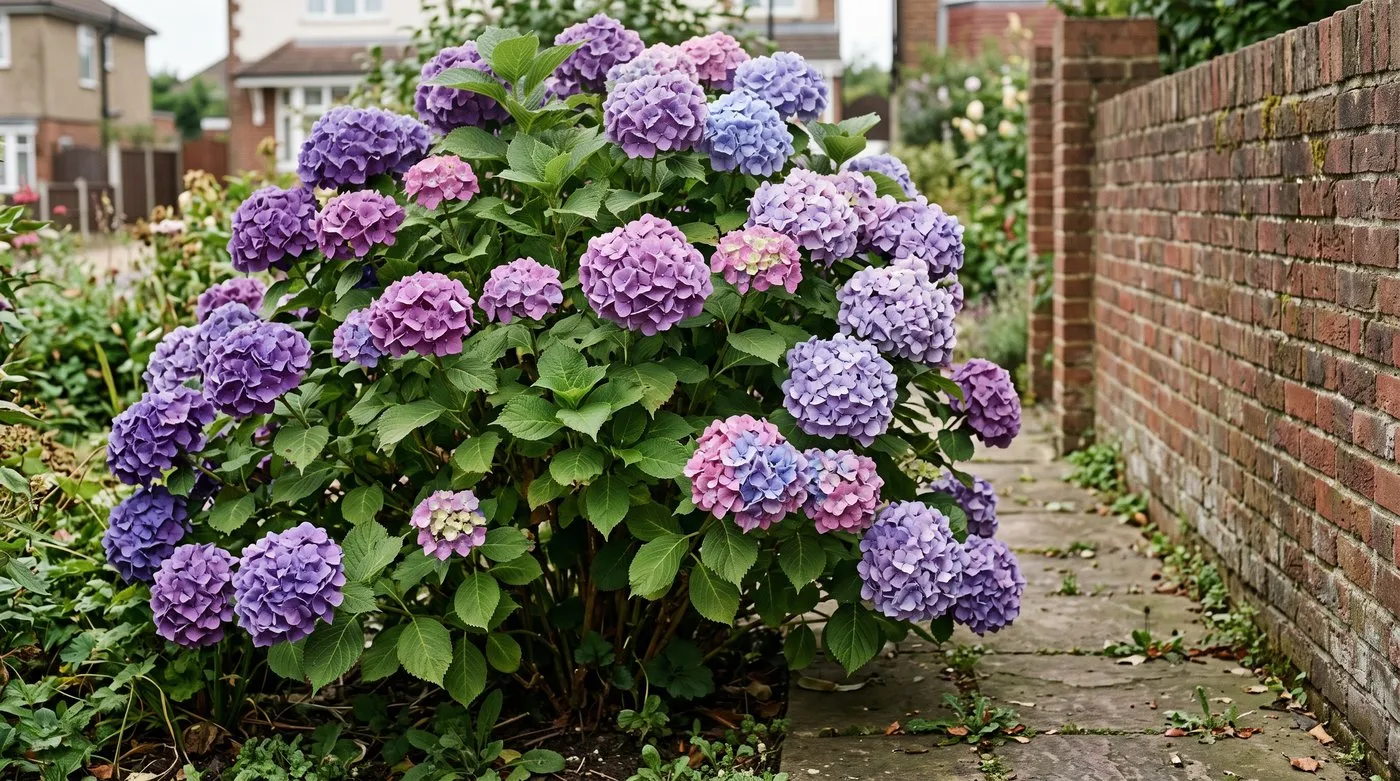
Purple hydrangeas often show a mix of shades on one plant. Small, regular tweaks to the soil work better than big doses.
Blue vs pink treatment comparison
Here’s the difference between the two at a glance.
| Blue | Pink | |
|---|---|---|
| Soil you want | Acid | Chalky or limy |
| Main product | Aluminium sulphate (blueing compound) | Garden lime |
| When | Regularly, March to June | Once in autumn, again in spring if needed |
| Mulch | Ericaceous compost | Mushroom compost or multipurpose |
| Water | Rainwater | Tap water is fine |
| Feed | Ericaceous or hydrangea feed | Ordinary balanced feed |
| Effort | Medium, a few jobs each spring | Easy, once or twice a year |
Month-by-month hydrangea colour treatment calendar
A simple year for UK gardens.
| Month | For blue | For pink |
|---|---|---|
| January | Buy blueing product and ericaceous compost. | Nothing to do. |
| February | Test your soil. | Second dose of lime if the soil is still acid. |
| March | First blueing feed. Mulch with ericaceous compost. | Nothing to do, the autumn lime is working. |
| April | Keep up the blueing feeds. | Test the soil. Add a little lime if needed. |
| May | Keep going. Buds are forming their colour. | Balanced feed for general health. |
| June | Last regular feeds. Colour starts to show. | Flowers open pink. |
| July | Enjoy the flowers and note the colour. | Note the colour to compare next year. |
| August | Stop the blueing feeds. Water with rainwater. | Trim lacecaps if needed. Leave mopheads until spring. |
| September | Test the soil and plan for next year. | Test the soil. |
| October | Top up the ericaceous mulch. | Scatter garden lime. This is the most important job. |
| November | Leave or tidy old flower heads. Fleece in exposed gardens. | Tidy old flower heads. |
| December | Order supplies for next year. | Nothing to do. |
 A quick soil test before you start saves money and a wasted season.
Which hydrangea varieties change colour best?
Some mopheads and lacecaps change colour more readily than others. These are all good choices.
| Variety | Type | In acid soil | In limy soil |
|---|---|---|---|
| ’Endless Summer’ | Mophead | Blue, flowers again | Rose pink, flowers again |
| ’Bluebird’ | Lacecap | Clear sky blue | Soft pink |
| ’Ami Pasquier’ | Mophead | Purple-blue | Crimson red |
| ’Mariesii Perfecta’ | Lacecap | Bright blue | Pale pink |
| ’Mathilda Gutges’ | Mophead | Rich royal blue | Mid-pink |
Common mistakes when changing hydrangea colour
These five slip-ups cause most disappointments. Each can cost you a whole summer.
Mistake 1: Too much aluminium sulphate
What goes wrong: Too strong a dose burns the roots. The leaves wilt and go brown and crispy at the edges, a bit like drought.
Why: It’s tempting to double up for quicker results. It doesn’t work.
The fix: Stick to the rate on the pack. Little and often beats one big dose. If you see scorch, give the area a really good soak with plain water and pause for a few weeks.
Mistake 2: Treating the wrong species
What goes wrong: You treat ‘Limelight’ or ‘Annabelle’ hoping for blue. Nothing happens.
Why: Labels don’t always say which hydrangea it is.
The fix: Check first. Round or flat heads in blue, pink or purple mean it can change. Cone-shaped heads or big white balls mean it can’t. The RHS guide to hydrangea colour helps if you’re unsure.
Mistake 3: Starting treatment too late
What goes wrong: You start in June or July. This year’s flowers don’t change, and it looks like the treatment failed.
Why: The buds set their colour weeks before they open.
The fix: Start in March for blue, and lime in autumn for pink.
Mistake 4: Using high-phosphorus fertiliser
What goes wrong: The soil is acid, but the flowers stay pink or patchy.
Why: All-purpose feeds are high in phosphorus, which locks up the aluminium.
The fix: Use an ericaceous or hydrangea feed, and check the label on anything you put near them.
Mistake 5: Ignoring water source pH
What goes wrong: The blue works for a few months, then fades back over summer.
Why: Most of England has hard water, and every watering adds a little lime to the soil.
The fix: Water hydrangeas with rainwater. A water butt on a nearby downpipe is the easy answer. See our water-efficient gardening guide for setup tips.
Why so many hydrangeas end up the wrong colour
Most UK hydrangeas are a muddy mauve because of the soil, not the plant. Lots of British soils, especially clay across the Midlands, southern England and East Anglia, sit in the middle ground between acid and limy. Add hard tap water and all-purpose feed, and you get neither a clear blue nor a strong pink.
The answer is to pick a direction and stick with it. Go fully acid for blue or fully limy for pink. Test once a year, keep up your routine, and think of it as a yearly job rather than a one-off fix.
For more on how soil affects everything you grow, read our UK soil types guide.
Now you know how to change hydrangea colour, read our guide on how to prune hydrangeas to keep your plants in shape for next year’s flowers.
Frequently asked questions
Can you change the colour of any hydrangea?
No, only mopheads and lacecaps change colour. White hydrangeas such as ‘Annabelle’, ‘Limelight’, oakleaf and climbing hydrangea stay white whatever soil they’re in.
How long does it take to change hydrangea colour?
You’ll see some change in the first summer. The strongest colour usually comes in the second year if you keep the treatment going. Start in March, before the buds form their colour.
Why are my blue hydrangeas turning pink?
Your soil isn’t acid enough. Hard tap water slowly makes soil more limy, which stops the plant taking up what it needs to stay blue. Test your soil, switch to rainwater, and use a blueing product from March to June.
Is aluminium sulphate safe for hydrangeas?
Yes, when you follow the rate on the pack. Using more than it says can burn the roots and scorch the leaves. Only apply it to moist soil, never dry ground.
Can I use vinegar to make hydrangeas blue?
No, it won’t work. Any effect wears off quickly, and vinegar doesn’t supply the aluminium that makes the flowers blue. Use a proper hydrangea blueing product instead.
What is the best compost for blue hydrangeas?
Ericaceous compost is best. Spread a 5-8cm layer around the base each spring and mix some into the planting hole. It keeps the soil acid but doesn’t add aluminium, so use it alongside a blueing product.
Do coffee grounds change hydrangea colour?
Not really, they make little difference. Used grounds are close to neutral and don’t supply aluminium. A hydrangea blueing product works far better.
Our team produces practical UK gardening guidance from source research, contributor records and established horticultural practice. Editorial standards are overseen by Matt W.