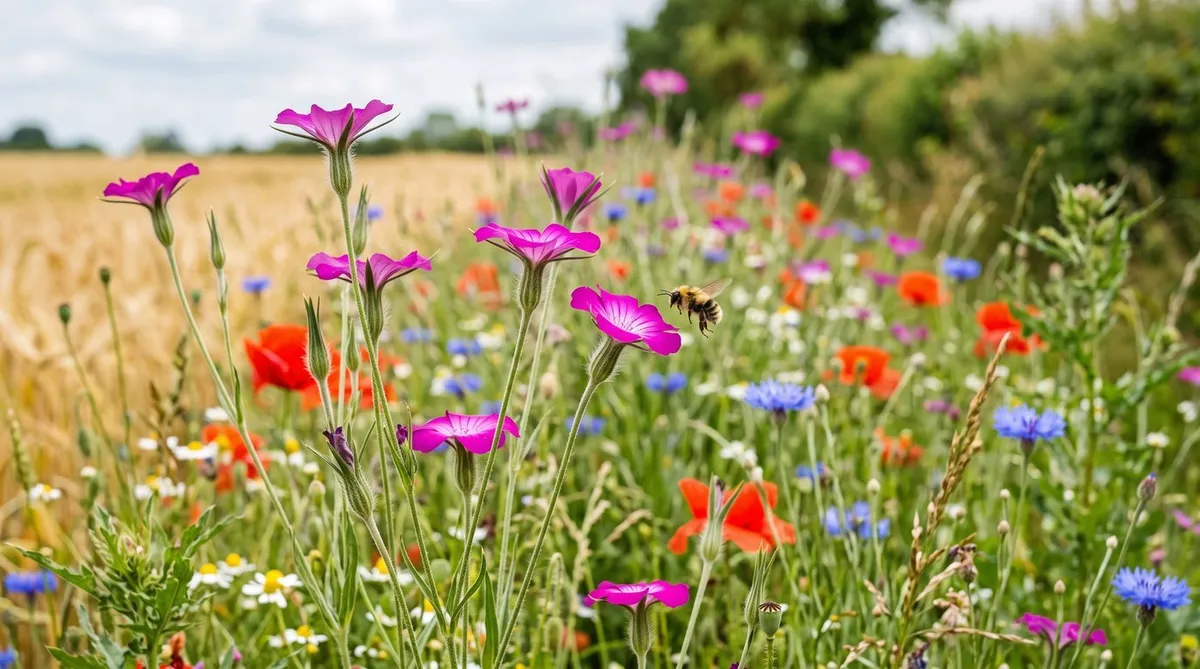
Key takeaways
- Sweet peas, dahlias, cosmos and cornflowers are four of the most reliable cut flowers
- A patch about 3m by 2m can give you a weekly bunch from June to October
- Cornflowers, ammi and nigella can be sown straight outdoors in March
- The more you cut dahlias and cosmos, the more flowers they make
- Pick sweet peas every two or three days or they stop flowering
- Stand stems in deep water for a few hours before arranging for longer vase life
The best flowers for cutting in UK gardens are sweet peas, dahlias, cosmos, cornflowers, roses, ammi, zinnias and sunflowers. Even a small patch about 3m by 2m can give you fresh flowers for the house most weeks from June until the first frosts. Here are the top picks, a month-by-month calendar and some easy tricks for making your flowers last.
Which flowers are best for cutting in UK gardens?
The best cut flowers last well in a vase, give you lots of stems and keep flowering for weeks. Not every pretty garden flower works indoors. Hydrangeas can wilt quickly, lavender drops its buds and poppies are over in a day.
For sowing, feeding and picking in more detail, see our guide on how to grow cut flowers in the UK.

An allotment cutting garden with rows of cosmos, zinnias and sunflowers, ready for picking from June to October.
The 10 best cut flowers for UK gardens: comparison table
Here’s how the favourites compare, so you can pick what suits you.
| Flower | Sow or plant | Cut | Vase life | How easy |
|---|---|---|---|---|
| Sweet pea | Sow October or February to March | June to September | Short | Medium |
| Dahlia | Plant tubers in May | July to first frost | Short to medium | Medium |
| Cosmos | Sow indoors in March | July to first frost | Medium | Easy |
| Cornflower | Sow outdoors from March | June onwards | Medium | Very easy |
| Ammi | Sow outdoors from March | June onwards | Medium | Easy |
| Zinnia | Sow indoors in spring | July to September | Medium to long | Medium |
| Sunflower | Sow April to May | July to September | Long | Easy |
| Rose | Plant bare-root in winter | June to October | Medium | Medium |
| Nigella | Sow outdoors from March | June onwards | Medium | Very easy |
| Chrysanthemum | Plant in spring | September to November | Long | Medium |
Sweet peas: the queen of UK cut flowers
Sweet peas have the loveliest scent of any cut flower you can grow. One wigwam gives you armfuls of stems from June to September. The golden rule: pick every two or three days. Once they start making seed pods, they stop flowering.
Sow in October in deep pots or root trainers and keep them in a cold frame over winter for the strongest plants. Or sow indoors in February or March. Plant out once the frosts are over, with something to climb: an obelisk, hazel sticks or netting. Pinch out the growing tip when plants are about 15cm tall so they bush out. Give a weekly tomato feed once they start flowering.
See our guide to how to grow sweet peas for the full method. Great cutting varieties include ‘Beaujolais’ (deep burgundy), ‘Mollie Rilstone’ (cream, flushed pink) and ‘Matucana’ (purple and maroon, with a wonderful scent).
Dahlias: highest stem count per plant
Dahlias give you more stems per plant than any other cut flower, as long as you keep cutting and feed them every fortnight with tomato feed. They flower from July until the first hard frost. Nothing else gives you so much for so long.
Great cutting varieties include ‘Café au Lait’ (blush peach and huge), ‘Wizard of Oz’ (pink ball), ‘Sam Hopkins’ (dark burgundy) and ‘Cornel’ (deep red ball). Ball and decorative types have the strongest, straightest stems for vases.
Cosmos, cornflowers, and the hardy annuals
Hardy annuals are the quickest way to a cutting garden: sow in March, cut from June, no indoor space needed. Cornflower, ammi, nigella and larkspur can all be scattered straight onto prepared soil outdoors. Cosmos and zinnias need sowing indoors from March, but reward you with months of flowers.
Cornflowers like ‘Blue Ball’ and ‘Black Ball’ have stiff, straight stems that need no staking. Ammi is a florist’s favourite, and its lacy white flower heads go with everything. Our hardy annuals guide covers lots more to try.
Cosmos (‘Purity’, ‘Dazzler’, ‘Double Click’) starts flowering in July and keeps going until the frost. It’s the most generous cut flower for beginners, because the more you cut, the more it branches. See our cosmos growing guide for pinching tips. Sow a new batch every few weeks for a steady supply.

Home-grown roses, sweet peas, cornflowers and nigella in a kitchen jug, all from a small cutting patch.
Month-by-month UK cutting calendar
Here’s what to sow, plant and cut each month for flowers from spring to late autumn.
| Month | Sow | Plant out | Cut |
|---|---|---|---|
| January | Sweet peas (cold greenhouse) | Nothing | Hellebores, snowdrops |
| February | Sweet peas, snapdragons (indoors) | Nothing | Hellebores, winter jasmine |
| March | Cornflower, ammi, nigella (outdoors); cosmos, zinnia (indoors) | Nothing | Daffodils, tulips |
| April | Larkspur, calendula (outdoors); sunflowers (indoors) | Sweet pea plants | Tulips, wallflowers |
| May | More cornflowers and cosmos | Dahlias, cosmos, zinnias | First sweet peas, alliums |
| June | More cornflowers and calendula | Late dahlias | Sweet peas, cornflowers, ammi, roses |
| July | Nothing | Nothing | Dahlias start, cosmos, zinnias, sweet peas |
| August | Nothing | Nothing | The best month: dahlias, cosmos, zinnias, sunflowers |
| September | Nothing | Spring bulbs | Dahlias, cosmos, chrysanthemums |
| October | Sweet peas (to overwinter) | Nothing | Dahlias until frost, chrysanthemums |
| November | Nothing | Tulip bulbs | Chrysanthemums, late dahlias in mild areas |
How to design a small cutting garden
A patch about 3m by 2m is enough for a weekly bunch. The trick is growing upwards and planting closely. Sweet peas climb obelisks, dahlias go about 45cm apart, and cornflowers and cosmos fill every gap.
Plant in rows rather than drifts. It makes cutting, weeding and re-sowing much easier. Leave about 30-40cm between rows. Make a grid of twine and canes to hold up taller stems. A good layer of homemade compost dug in each spring is all most UK soils need.

A front garden border of dahlias, snapdragons and verbena bonariensis: great for cutting and a cheerful sight from the street.
Sunflowers and tall stems for statement arrangements
Sunflowers give you the biggest blooms of any annual cut flower. For vases, pick branching kinds that give lots of smaller heads rather than one giant. ‘Valentine’ (lemon yellow), ‘Velvet Queen’ (deep rust) and the pollen-free ‘ProCut’ series are all great.
Sow indoors in April or outdoors from May once the soil has warmed. Space branching types about 30-45cm apart. Our sunflower growing guide covers sowing, slugs and staking. Cut when the petals have just opened but the centre is still tight. They last surprisingly well in a vase.
Team sunflowers with tall cosmos, larkspur and ammi for big, airy arrangements.
How to condition cut flowers for maximum vase life
Conditioning, which just means giving stems a long drink before you arrange them, is the best way to make flowers last.
Cut early in the morning, when stems are full of water. Use sharp secateurs or a clean knife, not scissors, which squash the stem. Strip off any leaves that would sit below the water. Cut stems at an angle so they can drink more easily.
Stand the stems in a bucket of deep, lukewarm water and leave them somewhere cool and dark for a few hours before arranging. A dark shed with one light source also helps tiny pollen beetles crawl out of the flowers towards the light, as our guide to removing pollen beetles before they reach the vase explains. Roses, dahlias and zinnias like a quick dip in very hot water first: just the bottom 2cm, for a few seconds. Take care with boiling water.
| Method | Good for | When |
|---|---|---|
| Deep lukewarm water for a few hours | All flowers | Every time |
| Quick hot-water dip (bottom 2cm) | Roses, dahlias, zinnias | Before the deep soak |
| Searing the stem end over a flame | Poppies, euphorbias (wear gloves, as the sap irritates skin) | Straight after cutting |
| Splitting the stem base | Woody stems like lilac | Before the deep soak |
| Flower food in the vase | Most flowers | When arranging |
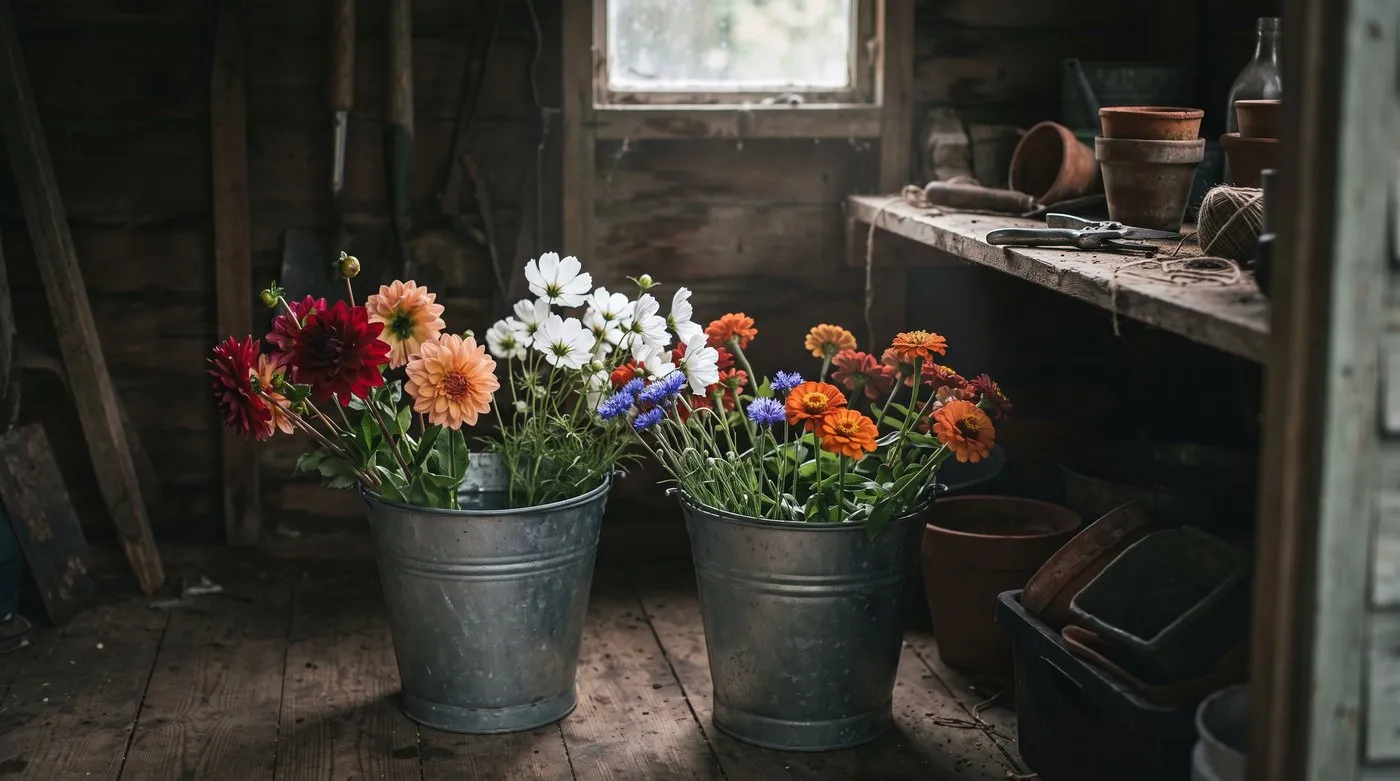
A few hours in deep water somewhere cool and dark makes cut flowers last much longer. Strip any leaves that would sit below the waterline first.
Best roses for cutting in UK gardens
Roses are a joy to cut, flowering from June to October if you pick the right ones. You want long stems, good scent and repeat flowering. Hybrid teas and many English roses are great; ramblers and ground cover roses are not.
Lovely cutting roses include ‘Desdemona’ (white, with a myrrh scent), ‘Boscobel’ (salmon pink), ‘Munstead Wood’ (dark crimson) and ‘The Lark Ascending’ (apricot-gold). ‘Queen Elizabeth’ (pink) is an old favourite that gives lots of stems.
Feed every couple of weeks with a high-potash feed from May. Deadhead faded flowers to keep new ones coming. Cut for the vase when the bud is just showing colour but not fully open, and it’ll last longer indoors.
Growing cut flowers on an allotment
An allotment is perfect for a cutting garden: full sun, open space and room for proper rows. Even half a plot gives you space for lots of varieties. Most allotment societies are happy for you to grow flowers, and some now have plots just for them.
Try four beds: one for hardy annuals sown outdoors in March, one for half-hardy annuals like cosmos, zinnias and sunflowers planted out in May, one for dahlias, and one for roses and chrysanthemums. Swap the annual beds round each year.
Water is the main allotment challenge. Mulch between rows with straw to hold moisture in. Dahlias and sweet peas are the thirstiest, so give them a good soak each week in dry spells. A water butt on the shed saves lots of trips to the tap.
Frequently asked questions
What are the best flowers for cutting in the UK?
Sweet peas, dahlias, cosmos, cornflowers, roses, ammi and zinnias are the best. Sweet peas give you weeks of scented stems if you pick them every few days. Dahlias give the most stems per plant. Cornflowers are the easiest, sown straight outdoors in March.
When should I start a cutting garden in the UK?
Start in March. Sow hardy annuals outdoors and half-hardy ones indoors from late March. Plant dahlias and sweet peas out once the frosts are over in late May. Start in March and you’ll be cutting flowers from June to October the same year.
How long do cut flowers last in a vase?
From a few days to a few weeks, depending on the flower. Sweet peas are short-lived, while chrysanthemums can last two to three weeks. Most last about a week if you look after them. Strip the lower leaves, cut stems at an angle, add flower food and change the water every couple of days.
Do I need a big garden to grow cut flowers?
No, a small bed is plenty. A raised bed about 3m by 2m can give you a weekly bunch from June to October. Grow sweet peas up an obelisk, plant dahlias about 45cm apart and fill the gaps with cosmos and cornflowers. Even a single row along a fence is worth it.
Which cut flowers can I sow directly outdoors?
Cornflower, ammi, nigella, larkspur, calendula and California poppy can all go straight outdoors. Sow from March in short rows about 20cm apart, then thin them out. No propagator or windowsill needed. Expect flowers about three months later.
Why have my sweet peas stopped flowering?
Usually because they’ve started making seed pods. Once a plant sets seed, it thinks its job is done. Pick every two or three days and pinch off any pods you spot. Keep them watered and give a weekly tomato feed, and they’ll keep flowering for weeks.
What is the best cut flower for beginners?
Cornflower is the best one to start with. Sow it outdoors in March, thin to about 30cm apart and start cutting in June. It needs no staking, no feeding and no indoor sowing. ‘Blue Ball’ is the classic variety.
Our team produces practical UK gardening guidance from source research, contributor records and established horticultural practice. Editorial standards are overseen by Matt W.