Key takeaways
- Sow in September for taller, stronger plants that flower earlier
- Sow it where it's going to flower, as it hates being moved
- Thin seedlings to 25-30cm apart in March
- Cut spikes when the bottom third is open and they last about a week in a vase
- Leave a few plants to set seed and it'll come back year after year
- All parts are poisonous if eaten, so wear gloves and keep it away from nibbling pets
Larkspur gives you delphinium-style spires in a single season. Delphiniums take a few years to get going, but larkspur goes from seed to a tall, flowering plant in under a year. For cottage gardens, cutting beds or anyone who wants height fast, it’s the quickest way to get spires of blue, white, pink and purple.
Here’s how to sow it in autumn for the best plants, which varieties to grow, how to keep it fresh in a vase, and how to let it seed itself around. There’s also a quick word on safety, because it’s poisonous if eaten.
What is larkspur and how does it differ from delphinium?
Larkspur (Consolida ajacis) is a hardy annual in the buttercup family. Its tall flower spikes look just like a delphinium’s, but it grows from seed, flowers and dies in one season.
The main differences are that larkspur is an annual with a long taproot, while delphinium is a perennial that comes back from a crown. In the garden they look and grow much the same.
Autumn-sown larkspur grows tall, often around a metre or more. Spring sowings are shorter. Perennial delphiniums can grow taller still, but take years to get there.
Larkspur comes from the Mediterranean. It’s happy in UK gardens, but the seed needs a cold spell to come up well. That’s why autumn sowing works so nicely: winter does the chilling for you.
When to sow larkspur in the UK
Sow straight into the ground in September. Autumn-sown plants grow deep roots over winter and race away in spring. You get taller, sturdier plants that flower a few weeks earlier than spring sowings.
The autumn sowing method
- Pick a sunny, well-drained spot where you want the flowers. Don’t sow in pots to move later
- Rake the soil fine and firm it gently with the back of the rake
- Make shallow drills 1cm deep, 25-30cm apart
- Sprinkle seed thinly along each drill
- Cover with 1cm of fine soil and firm lightly
- Water gently if the ground is dry
- Thin to 25-30cm the following March
Seedlings usually show in a few weeks if the soil is moist. They sit as small green rosettes through winter, and frost doesn’t bother them. They shoot up from March and flower from late May.

Sow straight where you want them to flower, as the long taproot hates being moved. Winter does the chilling the seed needs.
Spring sowing alternative
Missed September? Sow in March, but first chill the seed in the fridge for 10-14 days. That stands in for winter. Sow straight into the ground as above. Spring sowings flower later, in July and August, and grow shorter. Our hardy annuals from seed guide has more timing tips.
Which larkspur variety is best for UK gardens?
Most seed mixes do well here. These are the easiest to find and the most rewarding.
Giant Imperial Mix
The best all-rounder. Tall, strong spikes in blue, white, pink and purple. Great for borders and cutting, and it self-seeds freely.
Earl Grey
A lovely smoky grey-mauve, much loved by florists and cut flower growers. Strong stems. The unusual colour looks gorgeous with cream roses and dusty pink ranunculus.
Sublime Mix
A cut flower strain bred for long, straight stems. Clear colours including dark blue, lilac, salmon pink and white. Best in a cutting bed where long stems matter most.
White King
Pure white spikes. Perfect for cottage gardens where a drift of one colour looks smart. Lovely with nigella, cornflowers and old-fashioned roses. It self-seeds well.
Misty Lavender
Soft pale lavender, the gentlest larkspur colour. Great in pastel schemes and in smaller gardens where Giant Imperial would look too big.
Rocket Mix
A shorter strain, so it’s handy in windy gardens where tall stems might snap. Less good for cutting, but useful nearer the front of a border.
Best larkspur varieties compared
| Variety | Height | Colours | For cutting | Self-seeds |
|---|---|---|---|---|
| Giant Imperial Mix | Tall | Blue, white, pink, purple | Excellent | Freely |
| Earl Grey | Medium-tall | Smoky mauve | Excellent | Some |
| Sublime Mix | Tall | Mixed clear colours | Best for florists | Some |
| White King | Tall | Pure white | Very good | Freely |
| Misty Lavender | Medium | Pale lavender | Good | Some |
| Rocket Mix | Shorter | Mixed | Fair | Freely |
How to grow larkspur in the UK
Give it full sun and soil that drains well. In shade or soggy ground, the plants go weak and flop over in the first storm.
Choosing the right spot
Pick a sunny spot with as much direct sun as you can give it. It copes with a little afternoon shade but gives fewer, shorter spikes. Avoid windy corners where tall stems might snap. A sheltered bed by a sunny wall is ideal.
Soil preparation
Larkspur likes neutral to slightly chalky soil that drains well. On heavy clay, fork in some compost and grit before sowing so it doesn’t sit wet in winter. Skip freshly manured ground, which gives you leaves rather than flowers.
Thinning and spacing
Thin autumn seedlings to 25-30cm apart in March, when they’re about 10cm tall. Crowded plants get mildew and flop. It feels harsh, but you’ll get stronger plants. Don’t bother replanting the thinnings, as they rarely recover.
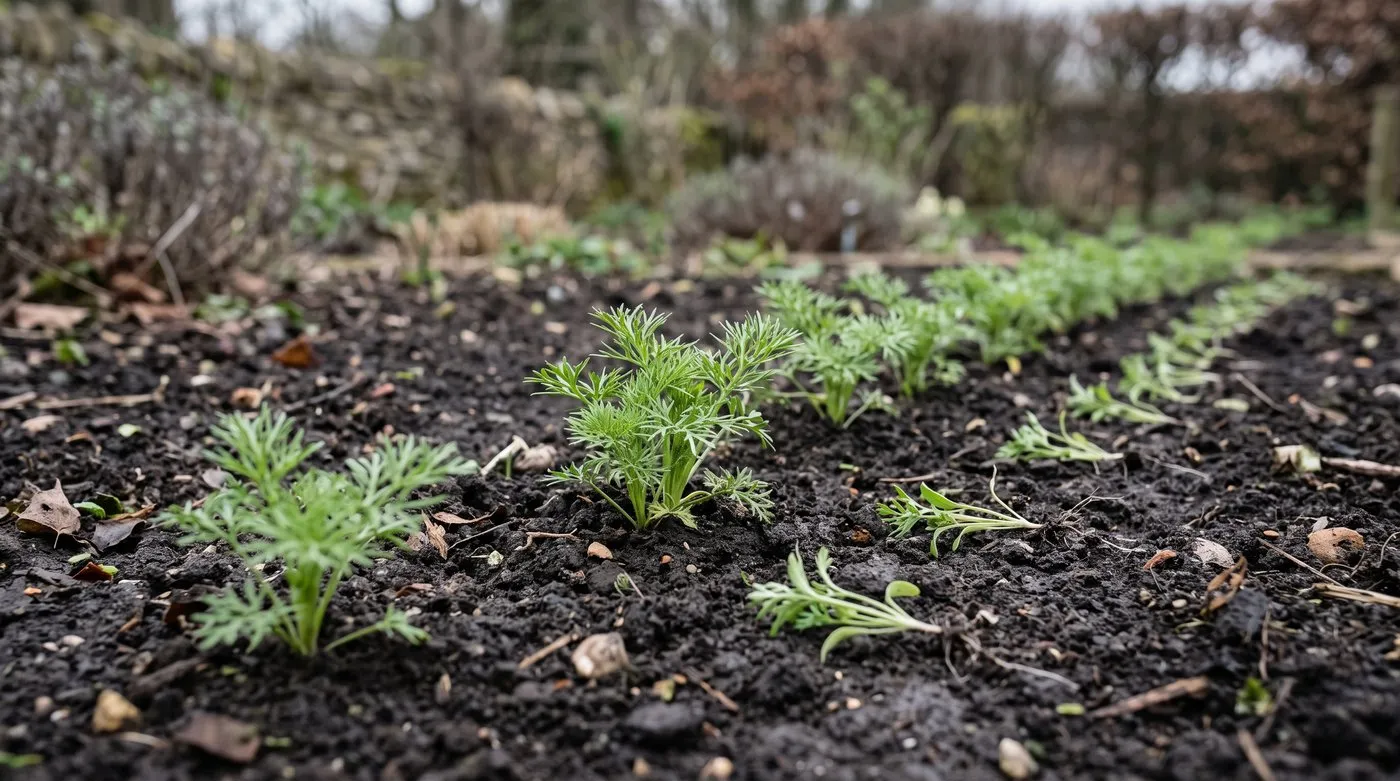
Thin to 25-30cm in March, even though it feels harsh, as crowded plants flop and get mildew. Wear gloves, because all parts are poisonous.
Staking tall varieties
Tall kinds like Giant Imperial may need support in open spots. Push pea sticks or canes between the plants in May and tie in loosely with soft twine. In a sheltered spot with good spacing, you often don’t need to.
First-year care
Water weekly in dry spells in April and May while buds form. Once it flowers, water the soil, not the leaves, to help keep mildew away. Don’t feed. Rich feeds make soft, floppy growth.
How to grow larkspur as a cut flower
Larkspur is one of the best annual cut flowers you can grow. Tall, straight stems, clean colours and a good vase life make it a florist favourite. A short row gives you plenty of stems to cut.
When and how to cut
Cut when the bottom third of the spike is open. Any earlier and it won’t last as long. Any later and there are fewer buds left to open in the vase. Cut early in the morning when the stems are full of water.
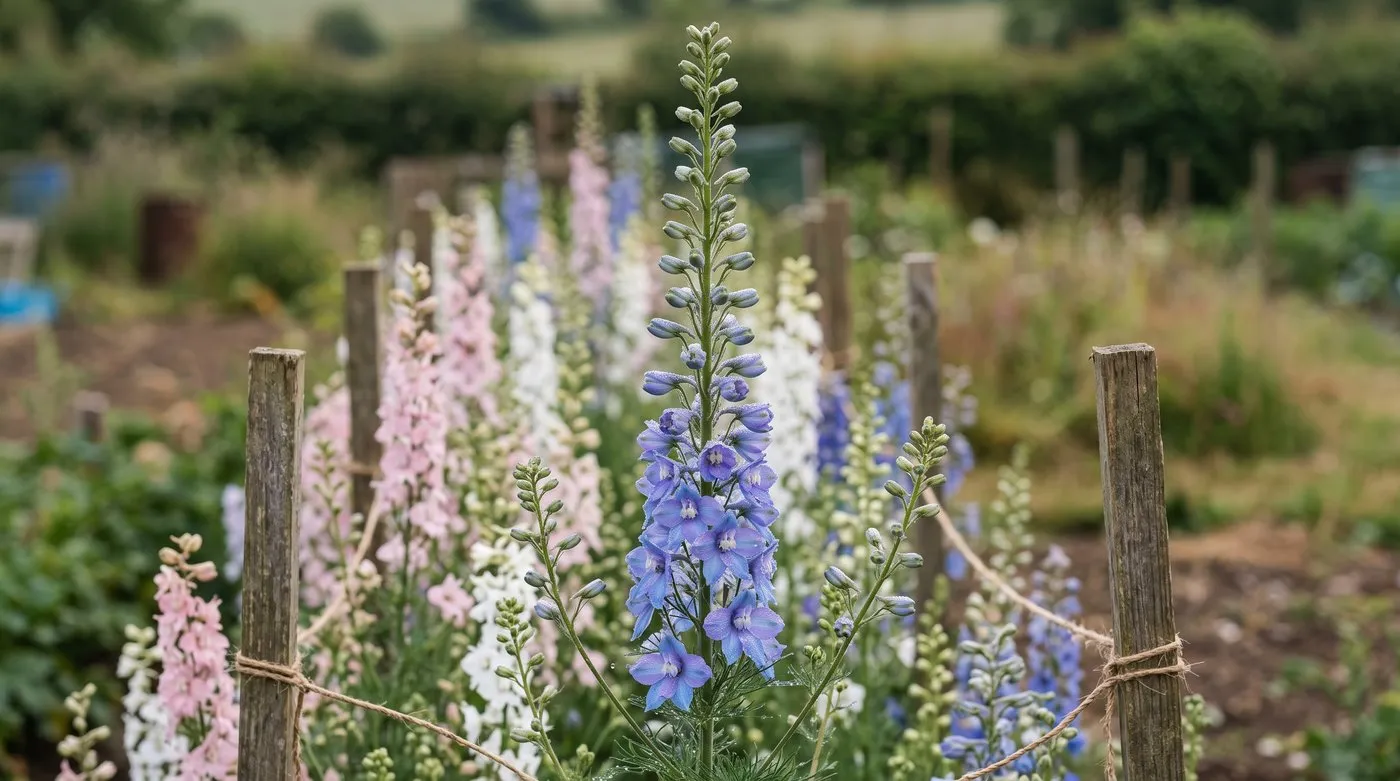
Cut when the bottom third of the spike is open, early in the morning. The rest of the buds keep opening in the vase.
Conditioning for long vase life
- Cut stems at a slant with sharp scissors
- Strip off all leaves below the water line
- Put them straight into a bucket of cold water
- Leave somewhere cool and dark for a few hours
- Trim 2cm off the stems before arranging
- Use flower food, or change the water every 2 days
Treated like this, larkspur lasts about a week in a vase, and the buds keep opening from the bottom up. Our cut flower conditioning guide has tips for all your garden flowers.
Drying larkspur for winter arrangements
Larkspur dries beautifully. Cut when about two-thirds of the spike is open, strip the leaves and hang small bunches upside down somewhere dark and airy. They’re dry in about 2 weeks. Blues and purples keep their colour best, and white dries to cream.
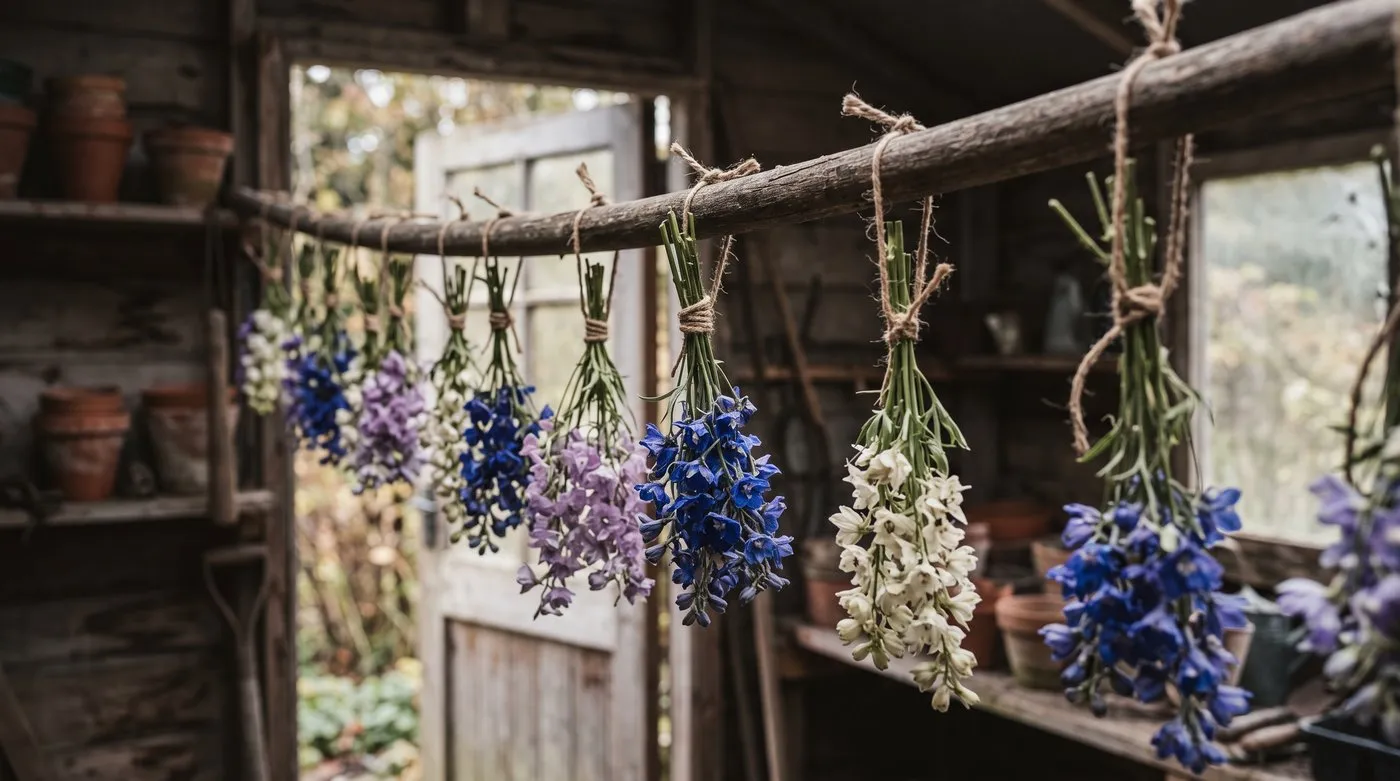
Hang small bunches somewhere dark and airy for about two weeks. Blues and purples hold their colour best.
How to use larkspur in cottage garden borders
Larkspur is cottage garden through and through. The tall spires rise above softer plants and add height without looking heavy. A drift of 5-10 plants looks far better than a few dotted about.
Classic cottage combinations
| Partner plant | Flowers | Why it works |
|---|---|---|
| Nigella | Summer | Soft froth beneath tall spires |
| Cornflower | Summer to early autumn | Round blue heads against spikes |
| Calendula | Late spring to autumn | Bright orange against blue |
| Old-fashioned roses | Early summer | The classic cottage pairing |
| Sweet william | Late spring to summer | Flat flower heads against spires |
| Lady’s mantle | Summer | Lime-green froth at the front |
Toxicity warning
All parts of larkspur are poisonous if eaten, by people, pets and livestock. The seeds and young shoots are the worst.
Who should avoid growing larkspur
Think twice if you have toddlers who put things in their mouths, pets that chew plants, or grazing animals next door.
Safe handling
Wear gloves when thinning and collecting seed, and wash your hands afterwards. The RHS larkspur growing guide has more on growing it.
Month-by-month larkspur care calendar
| Month | What to do |
|---|---|
| February | Chill seed in the fridge for spring sowing |
| March | Thin autumn sowings to 25-30cm. Sow chilled seed |
| April | Water in dry spells. Push in pea sticks |
| May | First flowers on autumn sowings |
| June | Peak flowering. Cut for the house |
| July | Still flowering. Deadhead some to keep it going |
| August | Last flowers. Leave some to set seed |
| September | Sow fresh seed for next year |
| October | Autumn seedlings appear as little rosettes |
| November | Seedlings sit out the winter, no cover needed |
| December | Nothing to do. Put your feet up |
Common mistakes when growing larkspur
Sowing in pots for transplanting
Larkspur’s long taproot hates being disturbed. Moved plants sulk and flower poorly. Sow where you want them to flower.
Spring sowing without chilling seed
Unchilled spring seed often comes up patchily or not at all. Give it 10-14 days in the fridge first, or sow in September.
Not thinning seedlings
Crowded plants get mildew, flop in the wind and give weaker spikes. Thin to 25-30cm in March.
Forgetting it’s poisonous
The seeds can look tempting to small children. Keep it away from play areas and pets that nibble.
Harvesting too late for cut flowers
Fully open stems only last a few days in water. Cut when a third of the spike is open.
Now you know how to grow larkspur, read our guide to the best hardy annual flowers to grow from seed for more cottage favourites that come back year after year.
Frequently asked questions
What is the difference between larkspur and delphinium?
Larkspur is an annual, while delphinium is a perennial. Both are in the buttercup family and look alike, with tall spikes in blue, white, pink and purple. Larkspur grows from seed, flowers and dies in one season. Delphinium comes back every year. They like much the same conditions.
When should I sow larkspur seed in the UK?
Sow in September for the strongest plants and earliest flowers. Sow it where it’s to flower, as it hates being moved. Autumn seedlings sit as small rosettes over winter and shoot up in spring. March sowings work too, but give shorter plants that flower later. Chill spring seed in the fridge for a couple of weeks first.
Why is my larkspur not germinating?
Usually because the seed hasn’t had a cold spell. That’s why autumn sowing works so well. For spring sowing, chill the seed in the fridge for 10-14 days first. Old seed also comes up poorly, so use fresh seed from this year or last.
Is larkspur toxic to dogs and children?
Yes, all parts are poisonous if eaten. The seeds and young shoots are the worst. Wear gloves when handling it, especially when collecting seed. Think twice if you have small children who put things in their mouths or pets that chew plants.
How do you grow larkspur as a cut flower?
Cut the spikes when the bottom third has opened. Pick in the cool of early morning and strip off any leaves below the water line. Stand them in cold water for a few hours before arranging. Change the water every couple of days and they’ll last about a week. They dry well too.
Does larkspur self-seed?
Yes, it self-seeds freely once it’s settled in. Leave a few plants to set seed rather than deadheading them all. Seedlings pop up in autumn and spring, and in a few years you’ll have a lovely drift. Thin them to 25cm apart in March so they don’t get crowded.
What are the best larkspur varieties for UK gardens?
Giant Imperial Mix is the best all-rounder. It gives tall spikes in blue, white, pink and purple on strong stems. For cutting, the Sublime series has long stems. ‘Earl Grey’ has unusual smoky grey-mauve flowers, and ‘White King’ gives pure white spikes. All do best from a September sowing.
Our team produces practical UK gardening guidance from source research, contributor records and established horticultural practice. Editorial standards are overseen by Matt W.