
Key takeaways
- Soak corms in cold water for about 4 hours, then plant claws down, 5cm deep
- Plant in October or November in mild areas, or February to March elsewhere
- Flowers appear from April to June and last about a week or more in a vase
- They only cope with light frost, so lift corms or grow in pots in colder gardens
- Give them full sun and soil that drains well, as soggy corms rot
Ranunculus, the Persian buttercup, gives you some of the loveliest flowers of spring. Each bloom is packed with papery petals, so they look a bit like small roses or peonies. They come in white, cream, yellow, coral, orange, red, pink and lots of two-tone mixes. They flower from April to June and last well in a vase. The RHS ranunculus growing guide is a good extra read.
Unlike tulips or dahlias, ranunculus grows from corms. These are small, dried-up storage roots that look like a bunch of claws, or a tiny shrivelled octopus. That odd shape is the key to planting them the right way up.
When should I plant ranunculus in the UK?
It depends on how cold your winters are. Ranunculus only cope with light frost, unlike tough spring bulbs such as daffodils.
Mild gardens (the south-west coast, sheltered spots and big towns): plant in October or November. The corms settle in over winter and flower from April. Autumn planting gives the earliest, biggest show.
Colder gardens: wait until February or March. Start corms in pots in a cold frame or unheated greenhouse, then move them out once the worst of winter is over. Or plant straight outside in mid-March, once hard frosts are unlikely.
Pots are the easy option if you’re unsure. You can move them under cover in a cold snap. Our spring gardening jobs guide helps you plan alongside your other spring planting.
How do I prepare ranunculus corms for planting?
Soak the corms in cold water for about 4 hours first. They come dry and dormant, and a good soak wakes them up. Unsoaked corms are slow to start and more likely to rot.
Put them in a bowl of cold tap water. After 4 hours they should look plumper and less wrinkly.
Don’t leave them in overnight. Too long in water and they go mushy.
How do I plant ranunculus corms correctly?
Which way up?
Plant them claws down. The underside looks like a little bunch of tentacles. The top is smoother and slightly domed.
This is the most common mistake. Upside-down corms often don’t come up at all. If you can’t tell which way is up, plant the corm on its side.
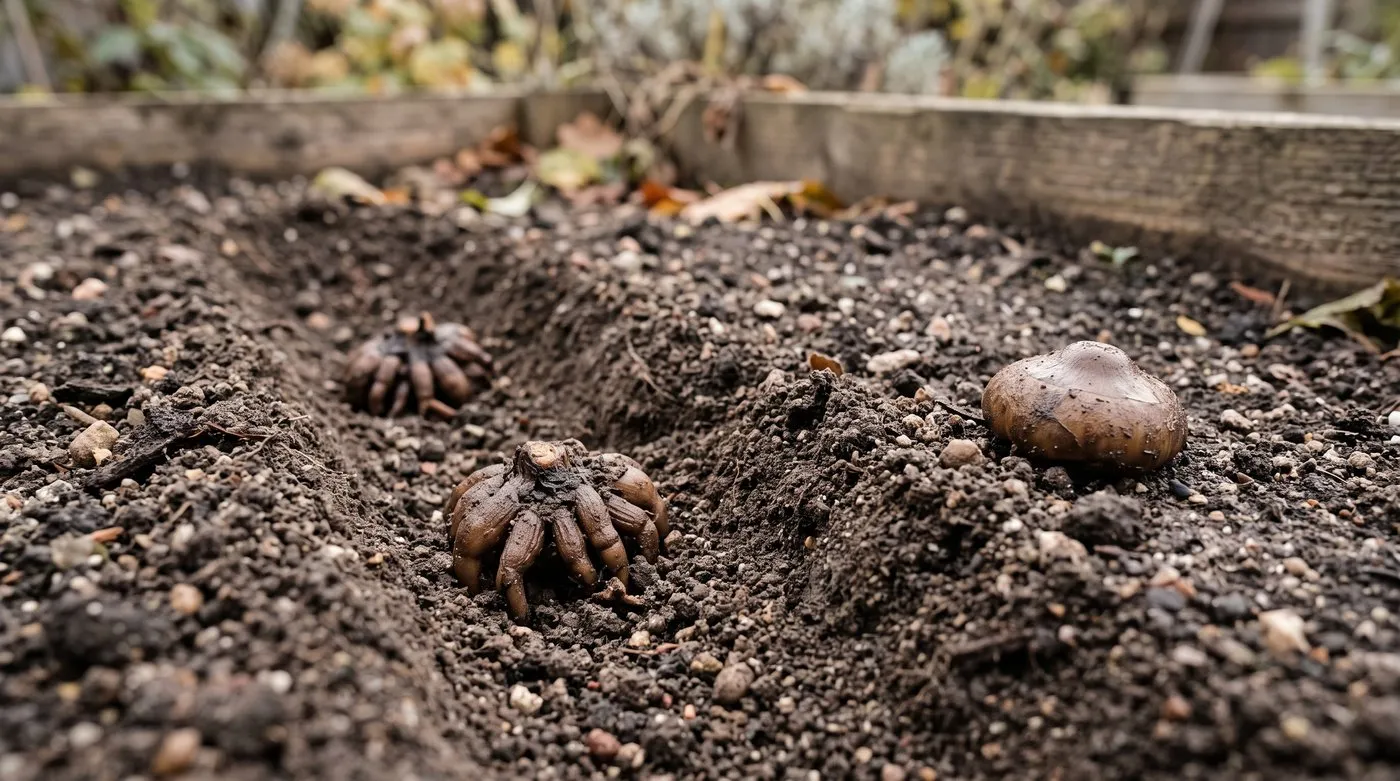
Plant corms with the claws pointing down, 5cm deep. If you really can’t tell which way is up, lay them on their side.
Depth and spacing
Plant corms 5cm deep and 15cm apart. In pots you can go a little closer, at 10-12cm, for a fuller look. Use a pot at least 20cm deep.
Soil preparation
Ranunculus must have soil that drains well. In soggy ground the corms rot before they even sprout. On heavy clay, dig in plenty of grit and compost, or grow them in raised beds.
In pots, mix multipurpose compost with some perlite or grit, and put crocks over the drainage hole. Our container vegetable gardening guide covers drainage and compost tips that work for flowers too.
Position
Give them full sun. In shade they grow tall and floppy and flower poorly. A sunny, sheltered border or a spot by a south-facing wall is perfect.
Which ranunculus variety should I grow?
There are four main types you’ll come across in the UK:
| Variety | Flower | Best for |
|---|---|---|
| Elegance | Bowl-shaped, bold single colours | Borders and cutting |
| Amandine | Full and peony-like, pastel shades | Cutting and pots |
| Cloni Success | Big, ruffled heads | Cutting |
| Tecolote | Lots of colours, including two-tones | Borders and pots |
Elegance is the garden classic, with bold blooms in clear reds, yellows, whites, oranges and pinks on strong stems.
Amandine has soft, peony-like flowers in blush, cream, apricot, rose and lilac. A great pick if you mainly want flowers to cut.
Cloni Success is a florist’s favourite with big, ruffled heads and long stems. The corms cost a bit more, but the flowers are stunning.
Tecolote is the one you’re most likely to spot in garden centres. It comes in mixes or single colours, including pretty edged flowers.
If you like growing anemones, you’ll enjoy ranunculus too. Both grow from corms, like similar spots and make great spring cut flowers.
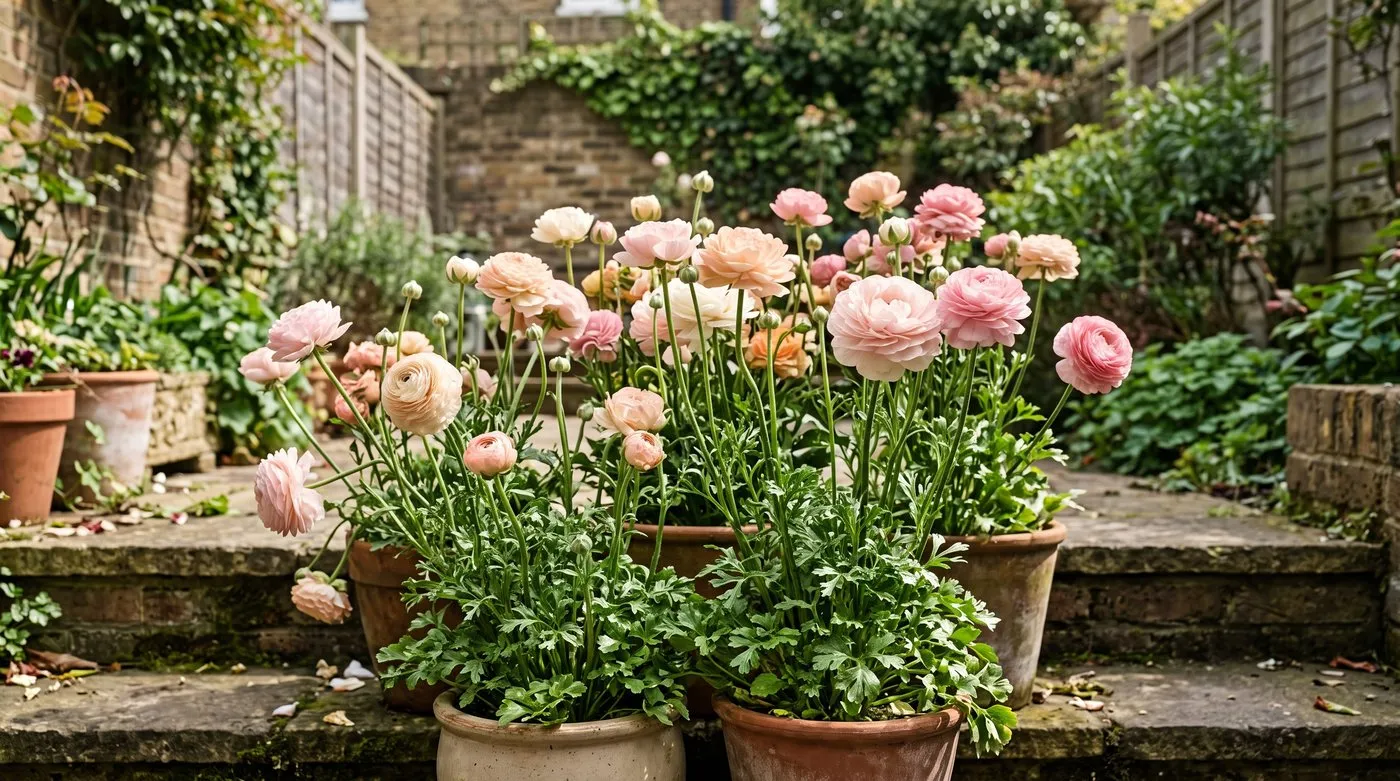
Pastel types like these are lovely for cutting and pots. Give them full sun, as in shade they grow floppy and flower poorly.
How do I care for ranunculus through spring?
Watering
Go easy on the water until shoots appear, as wet corms rot. Once they’re growing, water regularly but let the top of the soil dry a little in between. Don’t let them dry out while they’re flowering.
Feeding
Once buds appear, give a liquid feed every 10-14 days. A high-potash feed like tomato food is ideal, as it helps flowers rather than leaves. A sprinkle of general fertiliser at planting time gives them a good start.
Frost protection
If frost is forecast once shoots are up, cover them with fleece overnight. Move pots into a greenhouse or shed. Young shoots are the most at risk. If you enjoy pots of spring colour that you can move under cover, you might like auriculas, the alpine primulas traditionally displayed in a theatre.
Deadheading
Cut faded flowers back to the base of the stem. This keeps new flowers coming for longer.
Month-by-month ranunculus calendar
| Month | What to do |
|---|---|
| October | Plant in mild gardens. Soak 4 hours first, claws down |
| November | Keep planting in mild areas. Get pots ready in colder areas |
| December | Corms settling in. Nothing to do |
| January | In colder areas, start corms in pots under glass, frost-free |
| February | Move pot-started plants somewhere brighter. Plant out in mild areas |
| March | Plant outdoors in most areas once hard frosts are unlikely |
| April | First flowers on autumn-planted corms |
| May | Peak flowering. Feed every 10-14 days and deadhead |
| June | Flowering ends and leaves start to yellow |
| July | Lift corms once the leaves have died down. Dry them well |
| August | Store dry corms in paper bags somewhere cool and frost-free |
| September | Check stored corms. Order new ones for autumn |
How do I lift and store ranunculus corms?
Lift the corms once the leaves turn yellow and die back, usually in June or early July.
Let the leaves die down naturally first. They’re feeding the corms for next year, so don’t cut them off early.
When the leaves are brown and dry, dig the corms up gently with a hand fork. Brush off the soil and spread them out somewhere warm and airy, like a greenhouse bench or shed window. Leave them for 2-3 weeks until fully dry.
Store them in paper bags, net bags or open trays, never sealed plastic. Keep them somewhere cool, dry and frost-free. Check now and then and throw out any soft or mouldy ones.
In mild gardens you can try leaving them in the ground. Cover the spot with a thick mulch of bark or straw. How well they come back depends on how cold and wet your winter is.
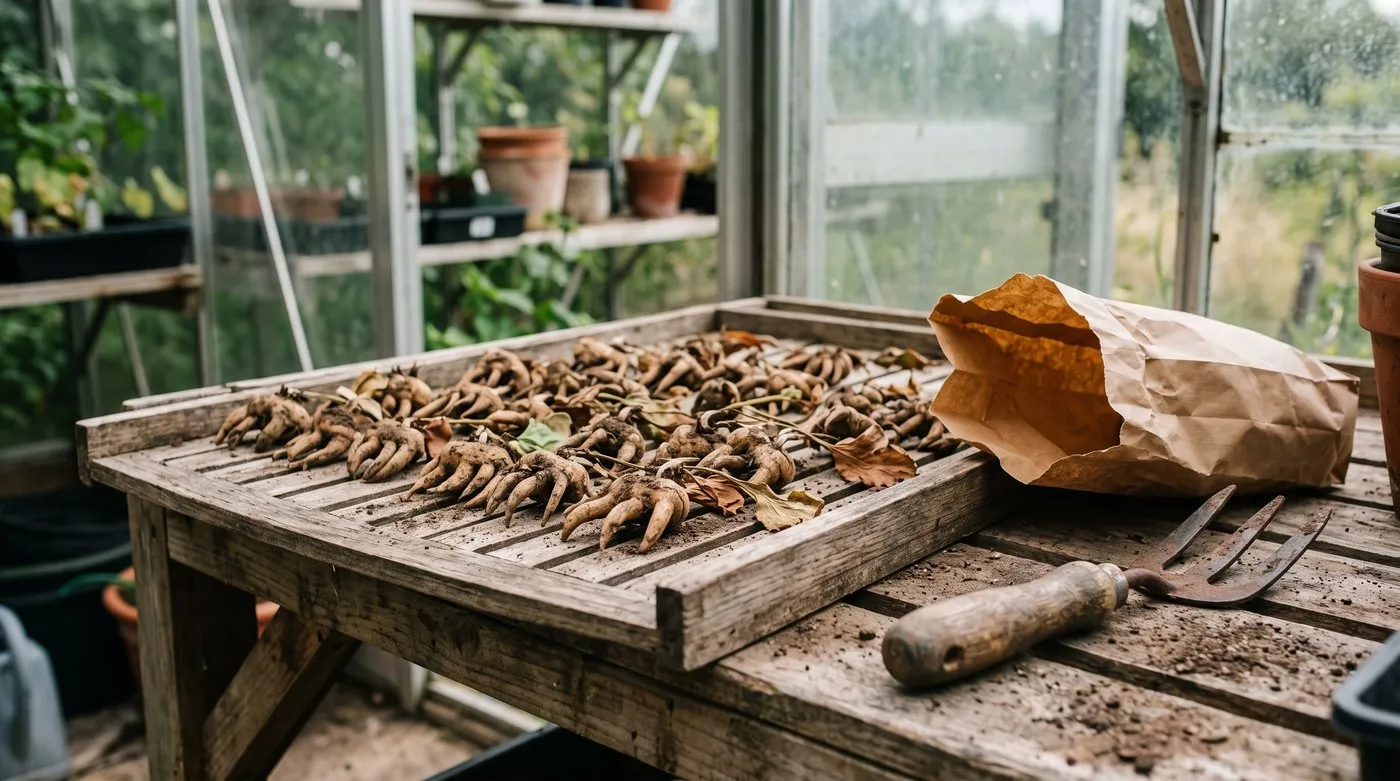
Let lifted corms dry for two or three weeks somewhere warm and airy. Then store them in paper bags, never sealed plastic.
Growing ranunculus as cut flowers
Ranunculus are one of the best cut flowers you can grow. They last well in a vase, and the double ones look just like florist peonies. Growing your own costs far less than buying bunches.
Cut in the morning, when the buds show colour but haven’t opened yet. They’ll open indoors over a few days. Cut the stem right at the base and pop it straight into cool water for a couple of hours before arranging.
Change the water every couple of days and trim the stems each time. Keep the vase out of sun, away from heaters and away from the fruit bowl.
For lots of flowers to cut, grow them in rows in a cutting patch. Space corms 15cm apart in rows 25cm apart, and keep cutting. If you love growing flowers to cut, our guide to growing sweet peas covers another lovely spring flower that looks great in the same bunch.
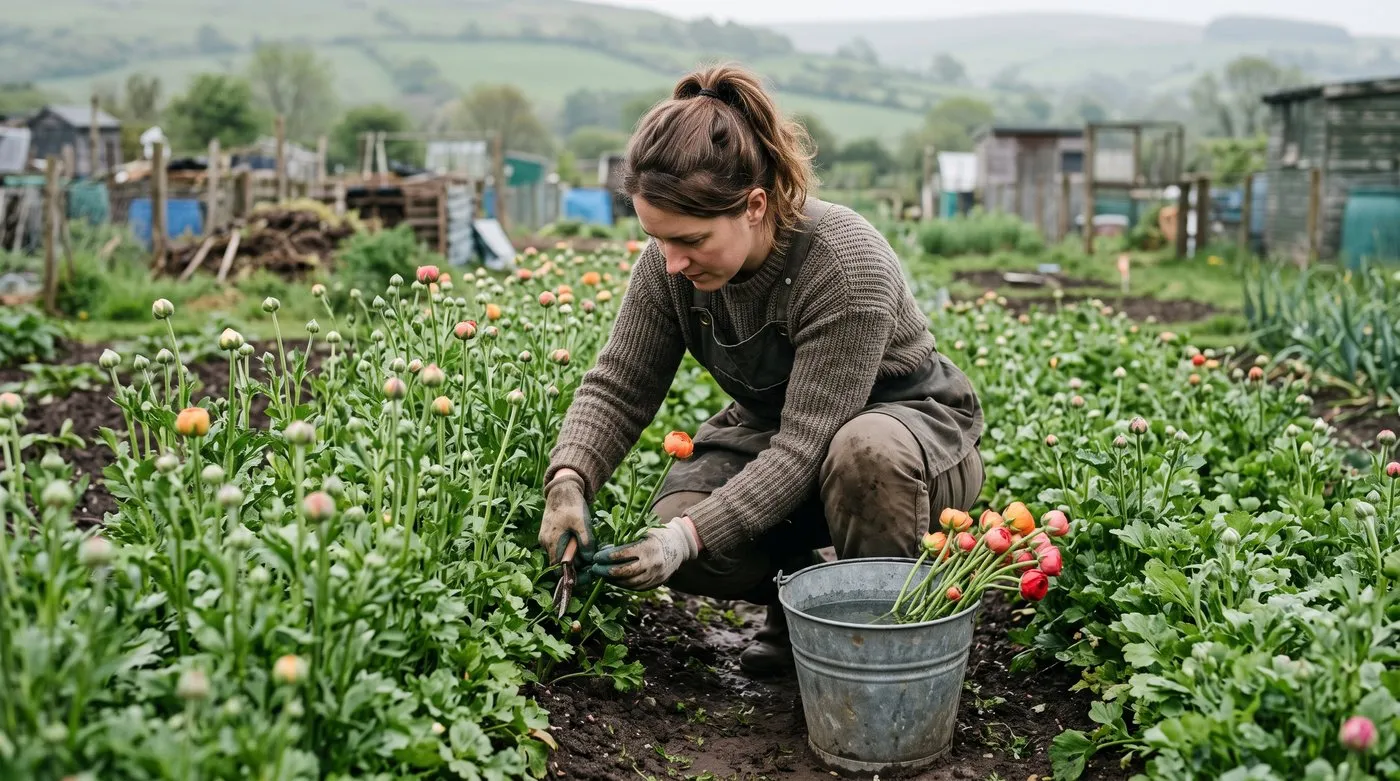
Cut in the morning when the buds show colour but haven’t opened. Straight into cool water, they’ll open indoors over a few days.
Troubleshooting common ranunculus problems
Corms not sprouting
Most often they’re upside down, weren’t soaked, or the soil is too wet. Check they’re claws down at 5cm deep. If everything looks right, be patient. Spring-planted corms can take several weeks to show.
Yellowing leaves during growing season
A few yellow lower leaves are normal. Lots of yellowing before flowering usually means too much water or poor drainage. Water less, improve drainage, and give a balanced liquid feed.
Powdery mildew
A white, powdery coating on leaves in dry weather is powdery mildew. Thin crowded plants so air can move. Water the soil, not the leaves, and don’t let the roots dry out. Pick off badly affected leaves. Home-made milk sprays aren’t approved as fungicides in the UK, so if you do spray, use an approved product exactly as the label says.
Small or sparse flowers
Usually it’s not enough sun. Plants in part shade give fewer, smaller flowers. Crowding doesn’t help either, so keep them 15cm apart. A high-potash feed from bud stage makes a real difference.
Now you’ve got the hang of ranunculus, try our guide to growing sweet peas in the UK for another spring cutting favourite.
Frequently asked questions
When should I plant ranunculus corms in the UK?
Plant in October or November if your garden is mild. That gives flowers from April. In colder gardens, wait until February or March, either in pots under cover or outdoors once hard frosts are over.
Do I need to soak ranunculus corms before planting?
Yes, it really helps them get going. Soak the corms in cold water for about 4 hours, until they look plump. Don’t leave them overnight, as they can go mushy.
Which way up should I plant ranunculus corms?
Plant them with the claws pointing down. The claws look like a little bunch of tentacles. If you really can’t tell, plant the corm on its side and it will sort itself out.
Can I leave ranunculus corms in the ground over winter?
Only in mild, sheltered gardens with well-drained soil. Everywhere else, lift them once the leaves die back. Dry them well and store them somewhere cool, dry and frost-free.
How long do ranunculus flowers last in a vase?
About a week, often longer with a little care. Cut when the buds show colour but haven’t opened. Change the water every couple of days and keep the vase away from radiators and sunny windows.
Why are my ranunculus not flowering?
Usually too little sun, too much wet or upside-down corms. They want full sun and free-draining soil. Check they went in claws down, about 5cm deep.
What is the difference between ranunculus varieties?
Mainly flower shape and size. Elegance has bold, bowl-shaped blooms in single colours. Amandine has full, peony-like flowers in soft pastels. Cloni Success has big ruffled heads for cutting. Tecolote comes in a huge range of colours and is easy to find.
Related articles
Our team produces practical UK gardening guidance from source research, contributor records and established horticultural practice. Editorial standards are overseen by Matt W.


