Key takeaways
- Soak blanda and coronaria corms in water for a few hours before planting
- Plant Anemone blanda 5cm deep in autumn for March and April flowers
- Plant De Caen anemones in autumn for spring flowers or spring for summer ones
- Japanese anemones flower August to October and are happy in part shade
- Japanese anemones spread, so plant them where they have room
“Anemone” covers three very different garden plants. Mix them up and you might plant the wrong one at the wrong time. Here’s how to tell them apart and grow each one well in the UK.
The three are Anemone blanda, a small spring flower from a corm; Anemone coronaria, the bold cut-flower type; and Japanese anemones, tall perennials that flower in late summer. Each has its own planting time and favourite spot.
The three types of anemone at a glance
| Type | Height | Flowers | Hardy? | Position | Grown from |
|---|---|---|---|---|---|
| Anemone blanda | 15cm | March-April | Yes | Sun or part shade | Corms |
| Anemone coronaria (De Caen, St Brigid) | 30cm | Spring or summer | Less so | Full sun | Corms |
| Japanese anemone | 60-120cm | August-October | Yes | Sun or part shade | Potted plants |
Once you know which type you have, the rest falls into place. Blanda carpets the ground under trees. Coronaria is a cutting garden favourite. Japanese anemones brighten the border in late summer when lots else has finished.
If you’ve grown tulips or daffodils, blanda will feel familiar: plant in autumn, enjoy in spring. Coronaria is more like ranunculus, and the two look great together in a cutting bed.
How to grow Anemone blanda

Anemone blanda is the little one, about 15cm tall, with daisy-like flowers in blue, white and pink in March and April. Left alone, it spreads happily under deciduous trees, in grass and along shady borders, and comes back every year.
When to plant Anemone blanda
Plant corms in September and October. Plant them in drifts of 20 or 30 for a natural look, rather than dotting them about.
Soil and position
It likes well-drained soil in sun or part shade. Under deciduous trees is perfect, as it flowers before the leaves come out overhead. Avoid soggy ground, where corms rot over winter.
How deep to plant
Plant corms 5cm deep and 8-10cm apart. The corms are knobbly, and it’s hard to tell which way is up, so just plant them on their side. They’ll sort themselves out.
Soaking corms before planting
Soak the corms in plain water for a few hours before planting. They’re sold hard and dry, and soaking gets them going much faster. Don’t leave them in water for more than about six hours.
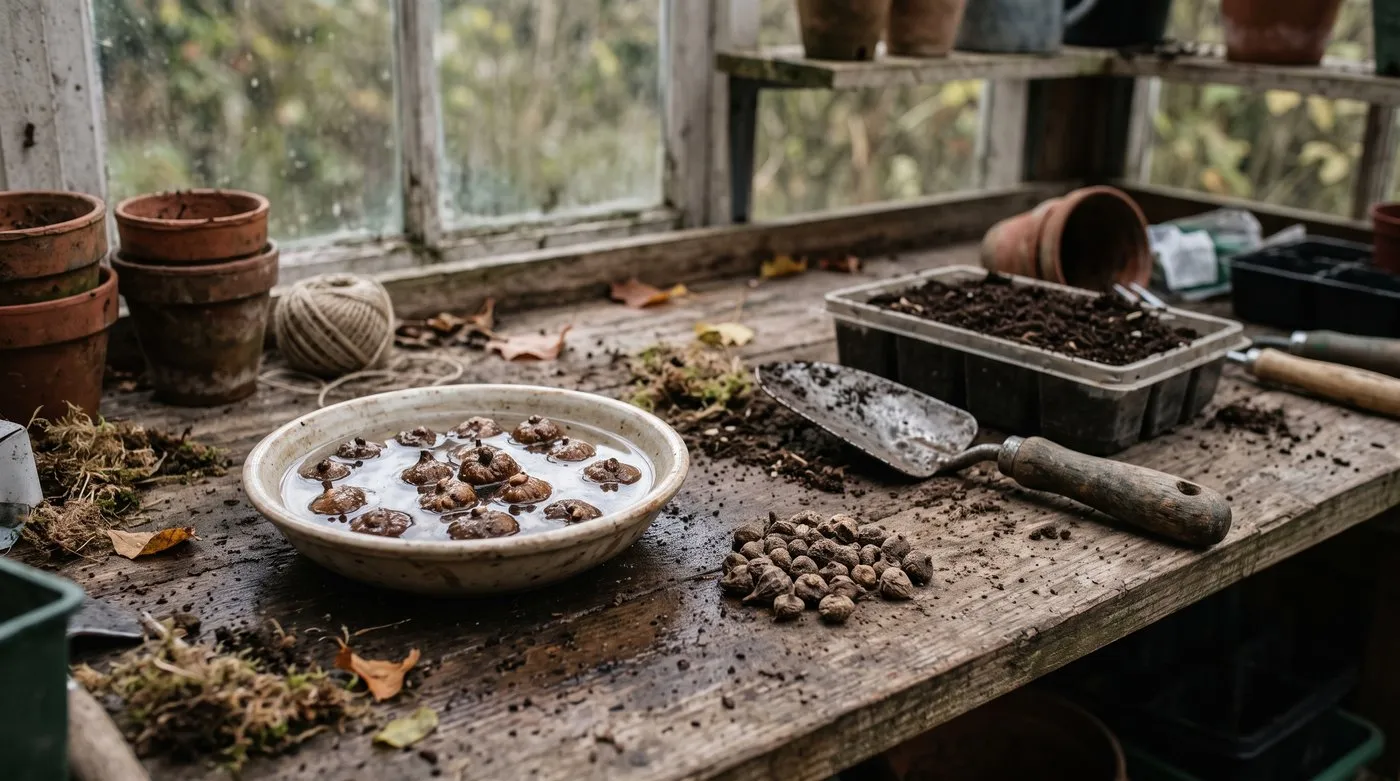
A few hours in plain water wakes up hard, dry anemone corms. Don’t leave them soaking for much more than six hours.
After flowering
Let the leaves die back on their own, as they feed the corm for next year. Blanda is fully hardy and doesn’t need lifting. Divide crowded clumps every four or five years in autumn.
The RHS plant search for Anemone blanda lists named varieties, including ones with the Award of Garden Merit.
How to grow Anemone coronaria (De Caen and St Brigid)

This is the anemone most people picture: bold, poppy-like flowers in red, blue, purple and white on 30cm stems. De Caen types have single flowers. St Brigid types have frilly, semi-double ones.
They’re classic cut flowers. They’re less hardy than blanda, so give them a sheltered, sunny spot.
When to plant Anemone coronaria
You can plant at two times of year:
- Autumn (October-November): flowers from March to May. In colder areas, cover with a cloche or fleece from December to February.
- Spring (March-April): flowers from June to August. No frost worries, so it’s the easier option.
Plant one batch in autumn and another in spring for cut flowers from March to August. You can also start corms off under cover in February. Our guide on how to sow seeds indoors covers the same idea of getting plants going early.
Soil and position
Coronaria needs full sun and very well-drained soil. On heavy clay the corms tend to rot. If your soil stays wet, use a raised bed or add grit. They do well in pots of free-draining compost too.
Planting and soaking
Soak the corms for a few hours first. Plant them 5cm deep with the pointed end facing down, and 10-15cm apart.
Picking for the vase
Pick De Caen stems when the bud is just showing colour, before it opens. Cut long stems and put them straight into deep water. They keep opening indoors and last about a week in a vase. A small patch gives you weeks of flowers.
Winter care
In milder parts of the UK, well-drained soil is usually enough. In colder areas, lift the corms once the leaves die down after flowering. Dry them for a week and store them in a paper bag somewhere frost-free until it’s time to replant.
How to grow Japanese anemones

Japanese anemones are a totally different plant. They’re tall, hardy perennials, 60-120cm, with elegant saucer-shaped flowers in white and pink from August to October.
They fill a real gap, as few perennials flower this late. They also do well in part shade, where sun-lovers like rudbeckias struggle.
Best Japanese anemone varieties for UK gardens
| Variety | Colour | Height | Flowers | Notes |
|---|---|---|---|---|
| Honorine Jobert | White, yellow centre | 90-120cm | Aug-Oct | The classic white |
| September Charm | Pink, single | 60-90cm | Aug-Oct | Neater, long season |
| Pamina | Deep pink, semi-double | 75cm | Aug-Sep | Compact |
| Hadspen Abundance | Deep pink | 90cm | Aug-Oct | Rich colour |
| Wild Swan | White, blue on the back | 40-60cm | Jun-Oct | Very long season |
Honorine Jobert is the one you’ll see most, and it holds the RHS Award of Garden Merit. Its white flowers shine in shady corners. September Charm is a good pick for a smaller border.
The RHS guide to Japanese anemones lists more varieties if you’d like to browse.
When and how to plant Japanese anemones
Buy plants in pots. Plant in spring (April-May) or autumn (September-October). They’re slow to start: expect little in year one, more in year two and a proper show from year three. After that they’re long-lived and need very little help.
Any decent garden soil in sun or part shade will do. Dig a hole twice the width of the pot, add some compost and plant at the same depth. Water well, and keep watering in dry spells for the first summer.
They’re lovely in a cottage garden planting plan, carrying colour from summer into autumn. They also sit well with other shade-tolerant plants in a north or east-facing border.
Managing spread
Japanese anemones spread by underground roots and can cover a fair bit of ground over time. They’re not invasive, but they’re hard to get rid of, as any bit of root left behind regrows.
Plant them where spreading is welcome: between shrubs, in a wilder border or under a hedge. Keep them away from slow-growing plants they might swamp. In a tidier border, divide them every three or four years to keep them in check.
Month-by-month anemone calendar
| Month | What to do |
|---|---|
| January | Order corms. Check stored coronaria corms for rot |
| February | Get beds ready. Start coronaria under cover if you like |
| March | Blanda in flower. Plant coronaria outside in mild areas |
| April | Plant coronaria for summer flowers. Blanda still flowering |
| May | Let blanda leaves die back on their own |
| June | Spring-planted coronaria flowers. Start picking |
| July | Keep picking. Water Japanese anemones in dry spells |
| August | Japanese anemones start flowering |
| September | Japanese anemones at their best. Plant blanda corms |
| October | Keep planting blanda. Plant coronaria for spring flowers |
| November | Finish planting. Mulch Japanese anemones in colder areas |
| December | Rest and plan next year |
Where to plant anemones in the garden
Under deciduous trees: Blanda is perfect here. It flowers before the trees leaf up, then vanishes underground for summer. Pair it with other spring bulbs like snowdrops and crocuses for a lovely spring carpet.
In a cutting patch: Coronaria belongs in a cutting bed. Plant it in rows for flowers from spring into summer. Grown alongside dahlias and cosmos, it makes a cheerful, mixed bed in the spirit of companion planting.
In a late-season border: Japanese anemones work best in the middle or back of the border. They look lovely with grass seedheads and late bee-friendly plants like sedums and agastache. Bees and hoverflies visit them in September and October, when other flowers are fading.
In shady borders: Japanese anemones and blanda both brighten shade, including spots by a north-facing wall or fence.
Common anemone problems
Corms don’t sprout: Usually they weren’t soaked, were planted the wrong way up, or sat in wet soil. Soak first and make sure the ground drains well.
Japanese anemones don’t flower in year one: Totally normal. They put roots down first. Expect flowers from the second or third year.
Powdery mildew on Japanese anemones: A white, dusty coating that’s common in dry summers. Water the roots in drought, keep air moving and bin affected leaves rather than composting them.
Slugs on new shoots: Young coronaria and blanda shoots are at risk in March and April. Water nematodes into the soil in spring, go on a torch-lit slug hunt on damp evenings, or scatter a few ferric phosphate pellets thinly. Established Japanese anemones are less bothered.
For more spring colour, have a look at our guide on how to grow tulips in the UK.
Frequently asked questions
When should I plant anemone corms in the UK?
Plant Anemone blanda corms from September to November. They flower in early spring. Plant Anemone coronaria, including De Caen types, in autumn for spring flowers or in early spring for summer flowers. Japanese anemones don’t grow from corms, so buy them in pots and plant in spring or autumn.
Do anemones need to be soaked before planting?
Yes, soak blanda and coronaria corms for a few hours first. They’re sold hard and dry, and may not sprout without it. Soaking plumps them up and gets them growing faster. Don’t leave them soaking much longer than about six hours, or they may start to rot.
Are anemones hardy in the UK?
Blanda and Japanese anemones are, coronaria less so. Anemone blanda and Japanese anemones are fully hardy and grow well across the UK. Anemone coronaria is more tender, so mulch it or cover it with a cloche in cold areas, or lift the corms after flowering.
Can anemones grow in shade?
Japanese anemones are the best choice for shade. They’re happy in part shade and dappled light under deciduous trees, where few late flowers do well. Anemone blanda copes with dappled shade too. Anemone coronaria wants full sun for the best flowers.
Are Japanese anemones invasive?
They’re not classed as invasive, but they do spread. Once settled, they creep outwards by underground roots and can be hard to remove. Plant them where spreading is welcome, like between shrubs or in a wilder border, rather than in a neat, formal bed.
How do I grow De Caen anemones as cut flowers?
Plant soaked corms in a sunny, sheltered spot. Do this in autumn or early spring. Pick stems when the buds show colour but haven’t fully opened, and pop them straight into deep water. They last well in a vase and keep opening indoors. The more you pick, the more flowers you get.
Why are my anemone corms not sprouting?
Usually they were planted dry or the wrong way up. Soak the hard, dry corms for a few hours before planting. Plant Anemone coronaria with the pointed end down. With Anemone blanda it’s hard to tell, so plant them on their side. Soggy soil can also make corms rot.
Related articles
Our team produces practical UK gardening guidance from source research, contributor records and established horticultural practice. Editorial standards are overseen by Matt W.