Key takeaways
- Plant corms 8 to 10cm deep in March or April, or pot-grown plants from April to June
- 'Lucifer' is the classic choice, with tall stems of fiery red flowers from July
- Give it full sun and soil that drains well
- Most varieties stay in the ground over winter, with no need to lift them
- Divide crowded clumps every three or four years in spring to keep flowers coming
- Bees and butterflies love the tubular flowers
Crocosmia is one of the easiest ways to add a blaze of late-summer colour. Plant the corms in spring, give them sun, and arching sprays of red, orange or yellow flowers appear from July. It comes back year after year and bulks up on its own.
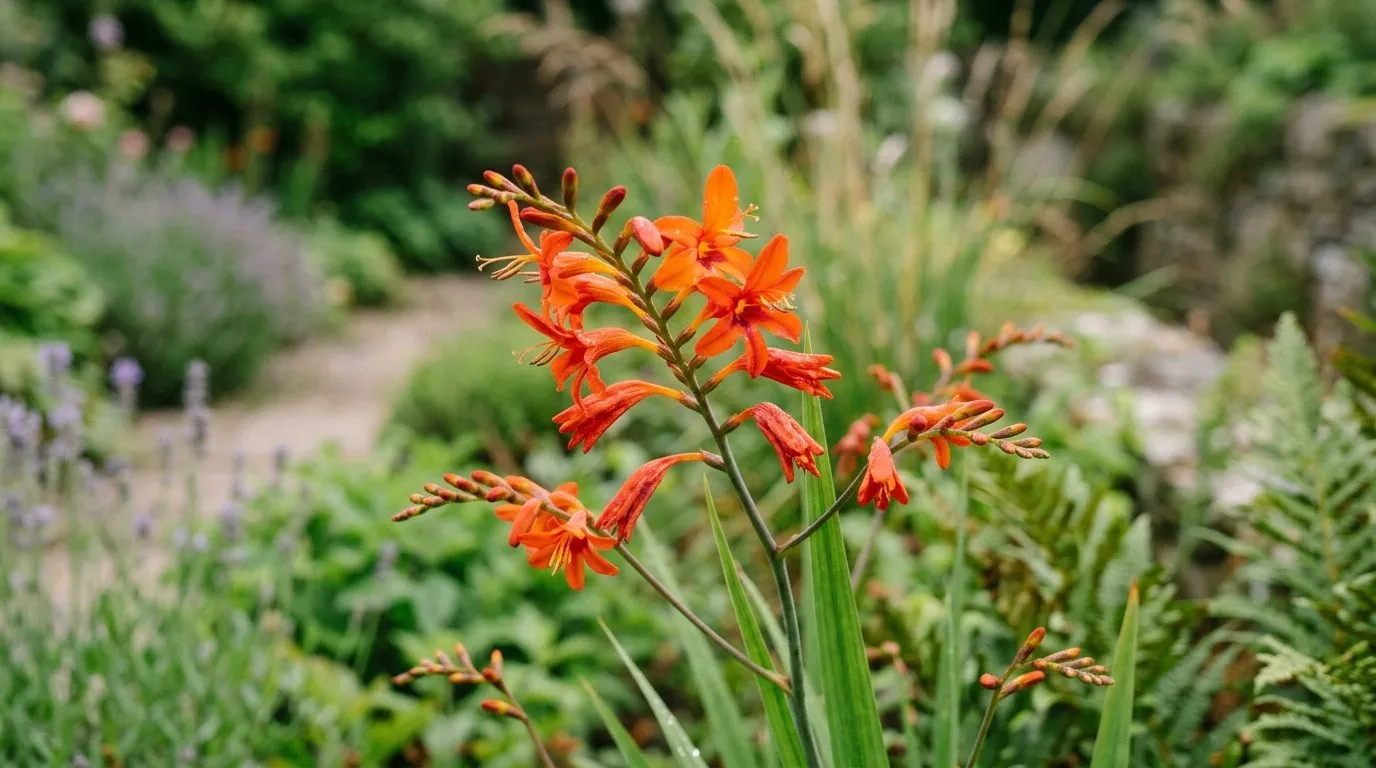
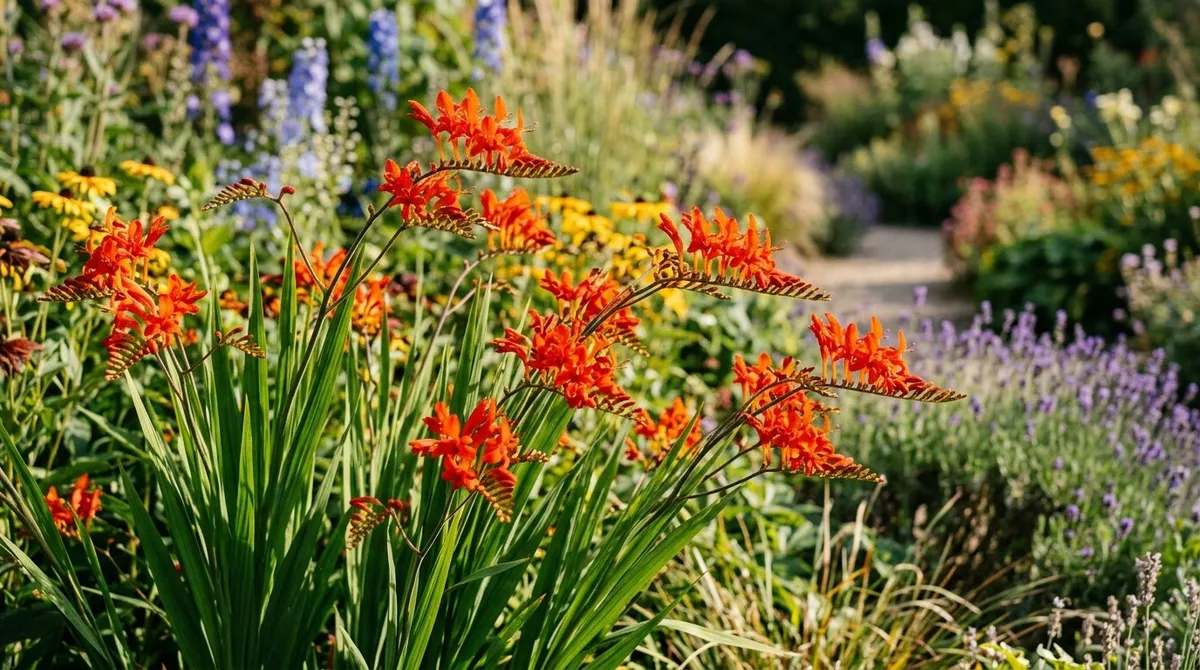
Crocosmia ‘Lucifer’ in full bloom in July, its arching stems lighting up a sunny border.
What is crocosmia?
Crocosmia is a summer-flowering perennial that grows from corms, a bit like small bulbs. It comes from the grasslands of southern Africa and belongs to the iris family.
The one you often see on roadsides and hedge banks, especially in Cornwall, Devon, Wales and Ireland, is common montbretia. It’s a vigorous orange hybrid that escaped from gardens long ago and now spreads in the wild.
Garden varieties are much better behaved. They have bigger flowers in more colours, from deep scarlet to amber and gold. Heights run from compact 40cm plants to the tall ‘Lucifer’, which holds an RHS Award of Garden Merit. They spread slowly and are easy to keep in check.
When and how to plant crocosmia corms
Plant the corms 8 to 10cm deep in March or April, once the soil starts to warm up. They’ll then flower from July.
Choosing and buying corms
Buy corms from late winter to spring. Look for firm, plump ones and avoid any that are soft, shrivelled or mouldy.
Pot-grown plants are in garden centres from spring to midsummer. They cost a little more but settle in faster and flower in their first year. They’re the safer choice on clay soil, where corms can rot in cold, wet spring ground.
Planting step by step
- Pick a spot in full sun. Crocosmia copes with light shade but flowers much better in sun.
- On heavy clay, mix some horticultural grit into the planting hole. On sandy soil, add garden compost to help hold moisture.
- Plant corms 8 to 10cm deep and 10 to 15cm apart, pointy end up. Planting deep helps the stems stand up and keeps the corms safe from frost.
- Water well, then keep the soil moist but not soggy through the first spring.
- Spread a bark mulch on top to keep weeds down and moisture in.
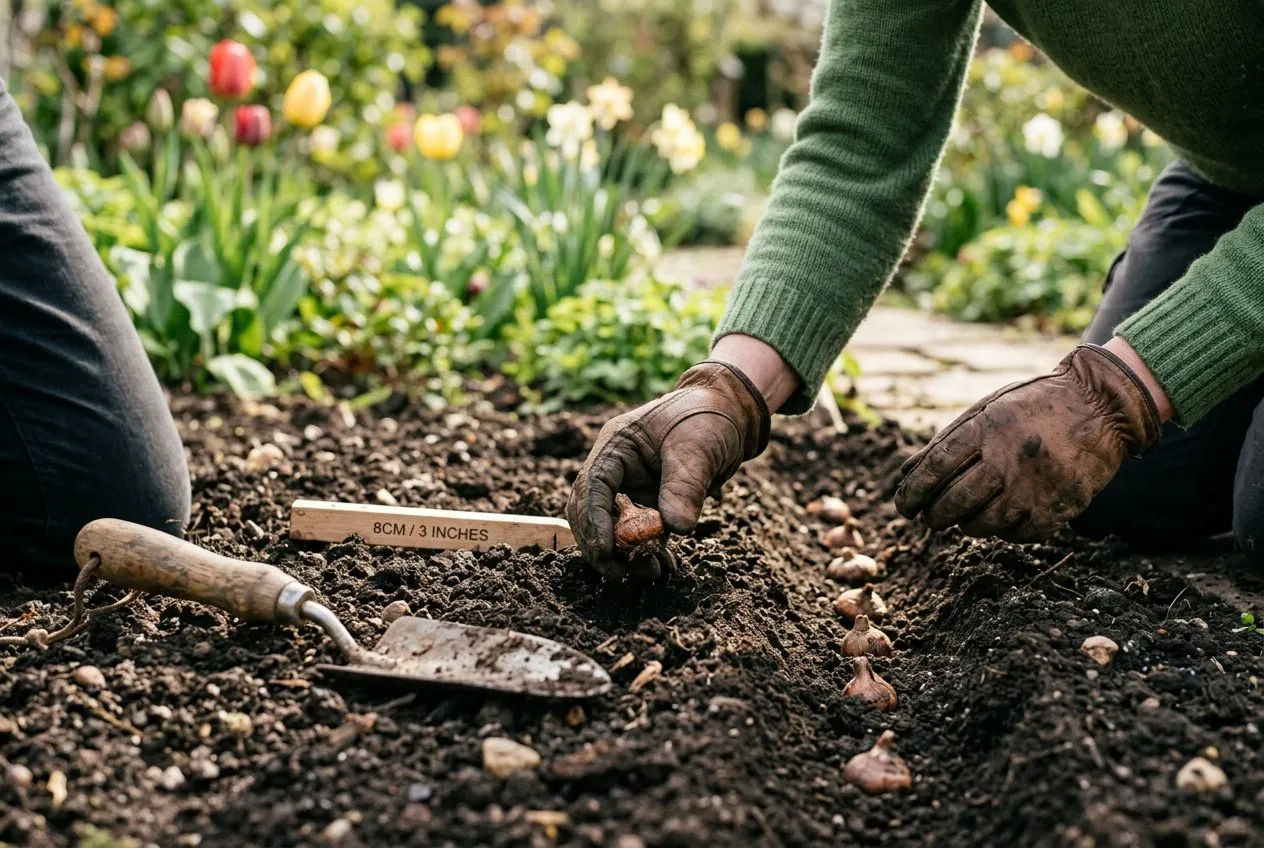
Planting corms in early spring, 8 to 10cm deep with the pointy end facing up.
Planting in pots
Use a pot at least 30cm deep and wide. Fill with peat-free compost mixed with some perlite or grit. Five to seven corms fit nicely in a 30cm pot. Stand it in full sun, water regularly through summer and give a liquid tomato feed every couple of weeks from June. Move it against a house wall for winter.
Best crocosmia varieties for UK gardens
The classic: ‘Lucifer’ is tall, tough and a brilliant fiery red. It’s the one most people start with.
For small gardens and pots: ‘Emily McKenzie’ stays compact and has big orange flowers with dark mahogany markings. It looks wonderful in a cottage garden planting plan.
For cutting: ‘George Davison’ has graceful amber-yellow sprays that last well in a vase. It goes beautifully with dahlias and rudbeckias. Our guide to growing cut flowers has more ideas.
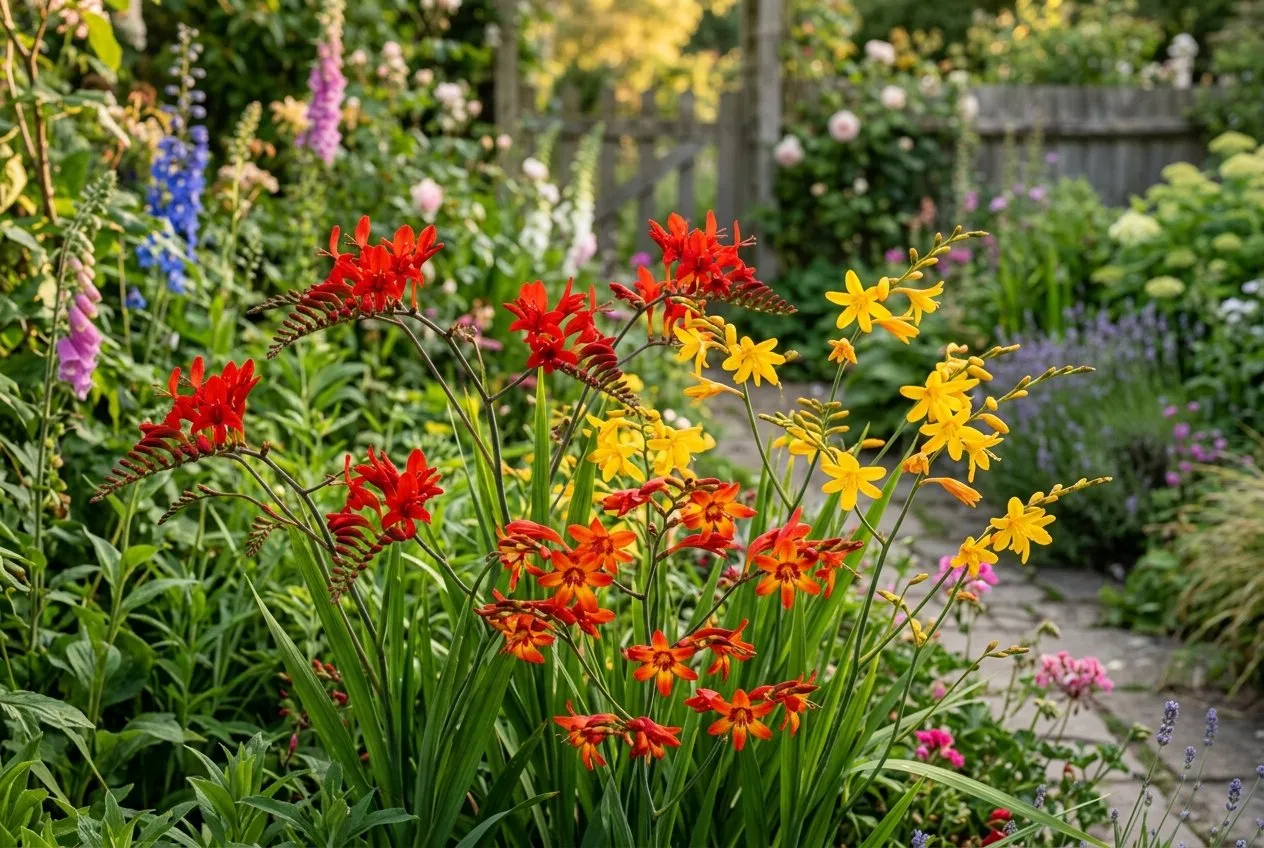
A mix of crocosmia in a cottage border, from fiery red to amber-yellow.
Looking after crocosmia through the year
Spring (March to May)
Pull back any winter mulch in March. Thin, grassy shoots appear from late March. Scatter a general fertiliser around the plants in April. Spring is also the time to divide crowded clumps.
Summer (June to September)
Water in dry spells. Established plants cope with some drought, but they flower better with steady moisture. Feed plants in pots every couple of weeks with liquid tomato feed. In windy spots, give tall varieties like ‘Lucifer’ a cane or a grow-through support.
Deadheading is up to you. It tidies the plant but won’t bring more flowers. Leave some seed heads if you like the look of them in winter, along with other bee-friendly garden plants.
Autumn and winter (October to February)
Leave the leaves until they die back, usually by late November. They feed the corms for next year. Cut the dead stems to the ground in December or January. In northern England, Scotland or an exposed garden, pile a thick bark mulch over the clump in November. In milder areas, they need no protection.
No need to lift them. Unlike gladioli and dahlias, most crocosmia varieties are happy left in the ground all winter.
How to divide crocosmia
Dividing every three or four years keeps clumps flowering and stops them spreading too far.
Division step by step
- Lift the whole clump with a fork in March and shake off loose soil.
- Pull the corms apart by hand, or cut with a sharp knife. Keep pieces with several healthy corms and visible buds.
- Throw away any soft, damaged or tiny corms.
- Replant straight away, 8 to 10cm deep and 15cm apart. Water in well.
- Leaves appear within a few weeks, with flowers the next July.
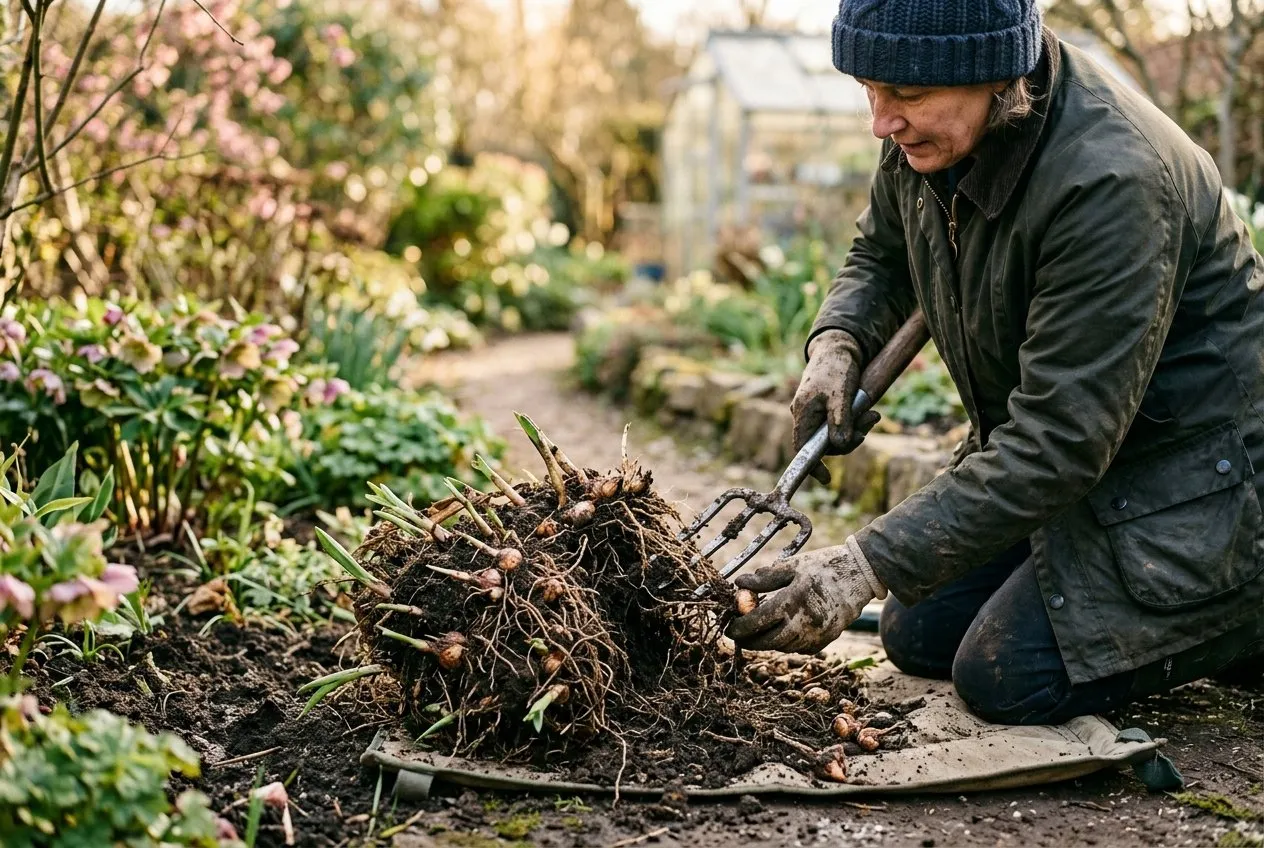
Splitting a crowded clump in March, ready to replant the healthy corms.
New corms form every year, so an undivided clump keeps getting wider. If you plan a mixed border with set spaces, regular dividing keeps crocosmia in its patch.
Crocosmia problems and fixes
Not flowering?
A crowded clump is the usual reason. Packed corms make plenty of grassy leaves but few flower stems. Lift and divide in March.
Other things to check:
- Too much shade. Crocosmia needs plenty of sun. Move it, or cut back overhanging branches.
- Planted too shallow. Shallow corms give weak stems and fewer flowers. Replant them deeper.
- Too much nitrogen feed. It gives lush leaves instead of flowers. Switch to a high-potash feed like tomato food.
Pests
Crocosmia rarely has pest problems. Red spider mite can mottle the leaves in hot, dry summers, so water plants in dry spells. Slugs sometimes nibble new shoots in spring. Our guide on how to get rid of slugs has gentle ways to protect them.
Diseases
Corm rot is the main worry in soggy soil. The leaves yellow and the corms turn soft and brown. Good drainage is the best defence. Dig out and bin affected corms, and don’t replant crocosmia in that spot for a few years.
Crocosmia as a cut flower
Crocosmia makes a lovely, long-lasting cut flower. Cut stems when the bottom few flowers have opened, and the buds above keep opening in the vase. The arching stems look great with dahlias, grasses and achillea.
Cut in the early morning, strip the lower leaves and stand them straight in deep water with flower food. Change the water every few days. Our best flowers for cutting guide has more summer flowers for the vase.
What to plant next
Crocosmia stars in our roundup of the best orange flowers for UK gardens.
If you’ve caught the bug for summer perennials, add dahlias for colour from August to October, or gladioli for tall spikes beside the arching crocosmia. Our best plant combinations for UK borders guide shows how to weave crocosmia into a border that flowers from spring to autumn. For arching stems of dangling bells, try dierama, another summer-flowering corm. And for another exotic-looking flower spike, try growing kangaroo paw.
Frequently asked questions
When should I plant crocosmia corms in the UK?
Plant the corms in spring, in March or April. In the south, mid-March is usually fine. In colder northern gardens, wait until April. Pot-grown plants can go in from spring to early summer. Autumn planting can work in mild gardens with free-draining soil, but corms may rot in wet clay over winter.
Is crocosmia invasive in UK gardens?
Common montbretia is, especially in the west of the UK. It is listed on Schedule 9 of the Wildlife and Countryside Act, so it’s illegal to plant it or let it spread in the wild. Named varieties such as ‘Lucifer’ spread more slowly and are easy to keep in check by dividing. Never dump spare corms.
Why has my crocosmia stopped flowering?
Usually because the clump has become too crowded. Packed corms make lots of leaves but few flowers. Lift and divide the clump in March, then replant the biggest corms 8 to 10cm deep and 10 to 15cm apart. Flowers usually return the next summer.
Can I grow crocosmia in pots?
Yes, it does well in pots. Use one at least 30cm deep and wide, with drainage holes. Plant several corms in peat-free compost mixed with grit or perlite. Water regularly in the growing season and give a liquid tomato feed in summer. Move the pot somewhere sheltered for winter, as roots in pots feel the frost more.
Do I need to lift crocosmia corms in winter?
No, most varieties are fine left in the ground. Popular ones like ‘Lucifer’ are hardy in most UK gardens. A few of the more delicate types like a little protection in cold areas. In northern or exposed gardens, a thick mulch over the clump in late autumn helps. Good drainage matters most.
How do I stop crocosmia spreading too much?
Lift and divide clumps every few years. You can also plant them in a large bottomless pot sunk into the border to keep the corms together. Dig out any that pop up where you don’t want them. Named varieties spread far less than common montbretia. Bin or compost spare corms, never dump them in the wild.
What grows well with crocosmia in a border?
Late-summer flowers in contrasting colours work brilliantly. Blue and purple salvias and agapanthus look great against the hot reds and oranges. Grasses such as Miscanthus add lovely movement. Dahlias, rudbeckias and heleniums carry on the warm colours into autumn. Plant crocosmia in groups for the best show.
Our team produces practical UK gardening guidance from source research, contributor records and established horticultural practice. Editorial standards are overseen by Matt W.