
Key takeaways
- Dierama is hardy in most of the UK and stays in the ground all year
- Plant corms 8 to 10cm deep and 30 to 45cm apart in full sun
- It hates being disturbed and can sulk for a couple of years after moving
- Plants from seed take three or four years to flower
- Dierama pulcherrimum is the tallest, with deep pink to purple bells
Dierama is one of the most graceful plants you can grow. Its common name, angel’s fishing rod, says it all: slender stems arch over, hung with dangling bell-shaped flowers from June to August. Few plants bring such lovely movement to a border or pond edge.
What is dierama?
Dierama is a member of the iris family from the grasslands and stream banks of southern and eastern Africa. It grows from corms, a bit like crocus or gladiolus, and makes tufts of narrow, evergreen, grassy leaves.
The flower stems are the star. Each corm sends up thin, wiry stems that bend under the weight of their dangling bells, just like a fishing rod with a catch. Flowers come in white, pink and deep magenta-purple. A big clump in full flower is a real showstopper.
The RHS dierama growing guide is a handy extra read.
 Dierama flowers dangle like bells on a wire, in shades from shell pink to deep purple.
Why isn’t dierama grown more?
It’s simply not very showy in a garden centre pot. The long, grassy leaves don’t look like much next to bright bedding plants, so it’s rarely stocked. Most people first fall for it at a public garden, where big clumps in flower stop visitors in their tracks.
It also needs patience, as it takes a couple of years to settle in and flower well. But once it’s happy, it gives years of graceful summer colour for very little work. It looks lovely with other summer-flowering perennials in a mixed border.
Kinds to grow in the UK
Three kinds make up most of the dierama grown in Britain, and named varieties give you particular colours.
Dierama pulcherrimum
The most popular and the tallest. Its stems reach 1.2 to 1.5m and arch over with bunches of deep pink to magenta bells. This is the classic angel’s fishing rod. It flowers from June to August. Give it a spot at the back or middle of a border where the stems can sweep forward freely.
Dierama pendulum
A little shorter, at 90cm to 1.2m, with paler pink to lilac flowers. The bells are wider and more open, so it looks lighter and airier. It flowers at the same time. A good choice for smaller gardens. It blends well with other perennials for UK borders.
Dierama dracomontanum
The small one, at about 60 to 90cm, with smaller coral-pink to salmon flowers. It comes from the Drakensberg mountains. Great for the front of a border or a raised bed. It’s harder to find, so try a specialist nursery.
Named varieties
| Variety | Flower colour |
|---|---|
| ’Blackbird’ | Deep wine-purple |
| ’Merlin’ | Dark rosy purple |
| ’Guinevere’ | White |
How to plant dierama
When to plant
Plant corms or pot-grown plants from September to November or in March and April. Autumn is best, as the soil is still warm and roots get going before winter. Never plant into frozen or soggy ground.
Depth and spacing
Set corms 8 to 10cm deep and 30 to 45cm apart, pointy end up. Plant pot-grown plants at the same depth they sat in the pot. Firm gently and water in well. On heavier soil, a layer of grit around the base helps drainage.
Choosing the spot
Give dierama full sun, at least six hours a day. It’s perfect at the edge of a border, beside a path or leaning over a pond, where the stems can sway in the breeze. Don’t let other plants crowd or shade it.
 Dierama at the water’s edge, its arching stems reflected in the pond. A classic spot for angel’s fishing rod.
Soil
Dierama wants moist but well-drained soil. That means soil that stays damp in summer but doesn’t sit wet in winter. Sandy loam is perfect. Clay works if you mix in plenty of coarse grit and organic matter when planting.
It prefers neutral to slightly acid soil and doesn’t love very chalky ground. If you garden on chalk, try it in a raised bed of good loam. Our guide to the best plants for clay soil has tips for heavy ground.
Watering and feeding
Water new plants regularly through their first spring and summer. Once settled, after a couple of years, they cope with dry spells. In a long dry spell, a deep soak every week or so is better than little and often.
Feed once in April with a balanced fertiliser worked into the surface, or spread a 5cm mulch of garden compost, which feeds and holds moisture at the same time. Skip high-nitrogen feeds, which give leaves instead of flowers.
Why dierama hates being moved
This is the most important thing to know. Dierama hates having its roots disturbed. Moving it, dividing it or even digging too close can stop it flowering for two or three years while it recovers.
So plant it somewhere it can stay put, away from plants you’ll be lifting or dividing. The edge of a border or beside a pond is ideal.
Growing dierama from seed
Seed is the cheapest way to get lots of plants, and a single seed head holds plenty. The catch is time: expect three to four years to the first flowers.
Step by step:
- Collect seed in September or October when the pods turn brown and split. Sow straight away.
- Fill deep pots with seed compost mixed half and half with perlite.
- Sow on the surface, cover with a thin layer of grit and put the pots in an unheated cold frame.
- Seedlings usually appear within a couple of months. Don’t use bottom heat.
- Grow them on in pots for two years, potting up as they grow.
- Plant out in their third autumn, in their permanent spot.
Fresh seed comes up best. If you can’t sow straight away, keep it in a sealed bag in the fridge. Our guide to plant propagation methods covers seed-raising and division in more detail.
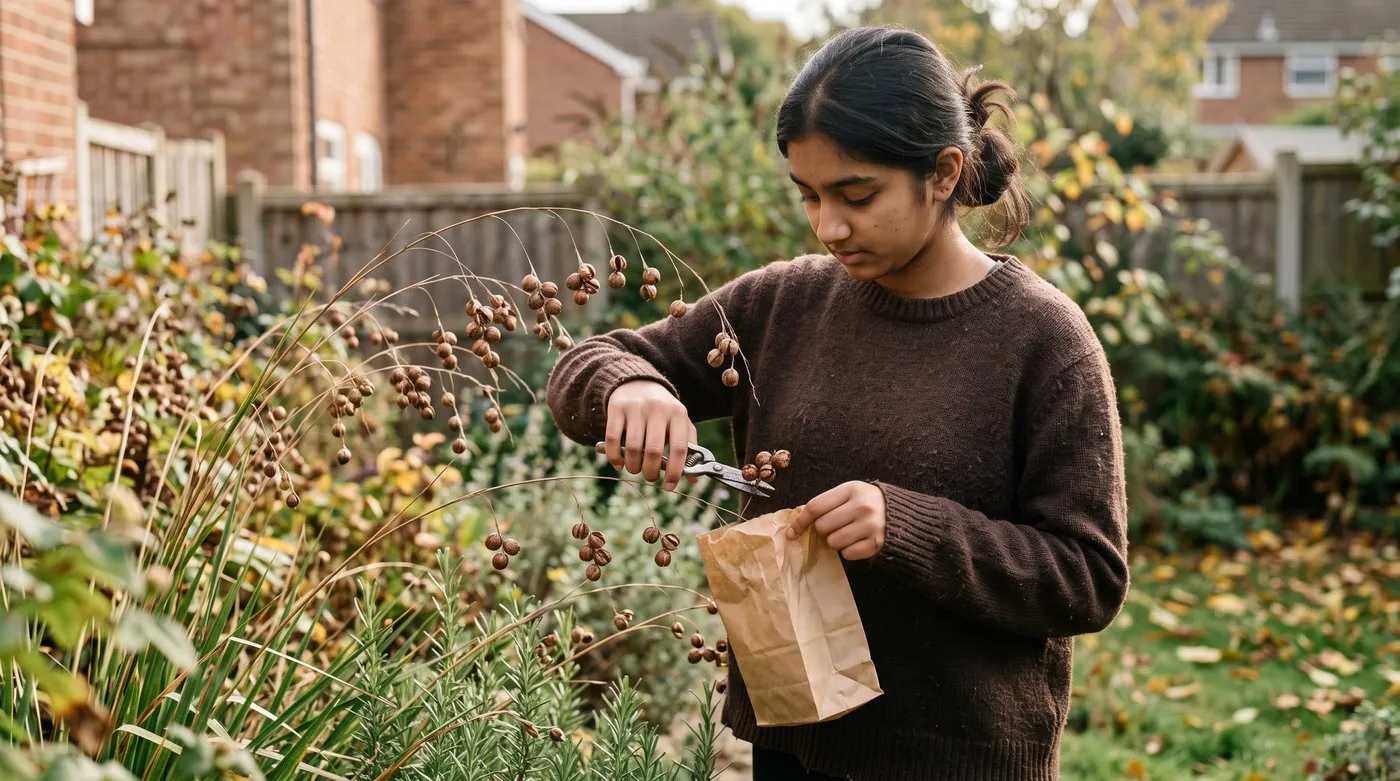
Collect the pods once they turn brown and split, then sow straight away. Fresh seed comes up best.
Dividing dierama
Only divide when a clump gets very crowded and flowering drops off, usually every five to seven years. Do it in March or early April when new growth is just showing.
Lift the whole clump with a fork, taking as big a root ball as you can. Split it with a sharp knife into pieces of three to five corms with roots attached. Replant straight away at the same depth, water well, and expect fewer flowers for a year or two. Spare pieces are great for trying new plant combinations.
 Dierama in a mixed border with echinacea and fine grasses. Late summer sun brings out the colour.
Common problems
Poor flowering
The most common complaint. It’s usually down to being disturbed in the last couple of years, not enough sun, soggy winter soil or a crowded clump. Feed in April and make sure it gets full sun. Young plants often make leaves but few flowers for their first couple of years, so be patient.
Brown leaves in winter
Hard frosts can brown the leaf tips. It looks untidy but does no real harm. Don’t cut the leaves back in winter, as they protect the plant. Trim off the brown tips in March as new growth appears. In cold northern gardens, a thick bark mulch over the corms from November to March helps.
Slugs and snails
New spring shoots can be nibbled, especially after a mild, wet winter. Scatter ferric phosphate slug pellets thinly around the base from February. Big, established clumps with tough leaves suffer less.
Corm rot
Caused by soggy soil in winter. The corms go soft and brown, and can’t be saved. Plant in soil that drains well and add grit to heavy clay. If rot strikes, dig out the bad corms, improve the drainage and replant healthy ones.
Dierama at a glance
| Kind | Height | Flowers | Best spot |
|---|---|---|---|
| D. pulcherrimum | 1.2 to 1.5m | Deep pink to magenta | Back or middle of a border |
| D. pendulum | 90cm to 1.2m | Pink to lilac | Middle of a border |
| D. dracomontanum | 60 to 90cm | Coral-pink to salmon | Front of a border |
Planning your dierama planting
Dierama rewards a patient gardener with years of graceful summer colour. Put it where the stems catch the afternoon sun and a light breeze, such as beside a pond, at a border’s edge or along a path. Pair it with grasses, low hardy geraniums and irises for a relaxed cottage garden planting scheme.
Plant in autumn, water through the first summer, feed each April, then step back. The less you fuss, the better it does. That patience is the real secret to growing angel’s fishing rod.
Frequently asked questions
Is dierama hardy in the UK?
Yes, it’s hardy in most of the UK. Dierama pulcherrimum and Dierama pendulum stay outside all year in southern and central England with no protection. In northern Scotland and very exposed gardens, spread a thick bark mulch over the corms from November to March. The evergreen leaves may brown in a hard winter but regrow in spring.
When should I plant dierama corms?
Autumn or early spring are best. September to November is ideal, as the soil is still warm and autumn rain keeps it moist while roots grow. Planting in March or April works too, but flowering may be a season later. Plant corms 8 to 10cm deep and 30 to 45cm apart, and don’t let them dry out before planting.
Why has my dierama stopped flowering?
Being disturbed is the most common reason. Dierama hates being moved, divided or dug around. A moved clump can take two or three years to flower again. Too much shade, soggy soil rotting the corms, or a very crowded clump can also stop flowering. A balanced feed each April helps.
Can I grow dierama in a pot?
It doesn’t do well in pots for long. The deep roots need at least 45cm of soil, and pots dry out quickly in summer. If you want to try, use a pot at least 45cm deep filled with John Innes No. 3, and water daily in summer. It’s always happier in the ground.
How do I divide dierama?
Only divide it when you really need to, in March or April. Lift the whole clump with a fork, keeping as much root and soil as you can. Split it into pieces of three to five corms with a sharp knife. Replant straight away at the same depth and water well. Expect no flowers for a season or two while it settles.
How long does dierama take to grow from seed?
Usually three to four years to flower. Sow fresh seed in autumn in a cold frame, in compost that drains freely. Seedlings usually appear within a couple of months. Grow them on in deep pots for two years before planting out. It takes patience, but seed-grown plants settle in well.
Does dierama self-seed?
Yes, it often seeds itself in a spot it likes. Leave the old flower stems on through autumn and seedlings may pop up around the parent plant the following spring. They take a few years to flower and may be a different colour. Pull out unwanted ones while small, or move them while they’re young.
Further reading
Our team produces practical UK gardening guidance from source research, contributor records and established horticultural practice. Editorial standards are overseen by Matt W.


