Key takeaways
- Perennial Rudbeckia fulgida comes back every year; annual Rudbeckia hirta is sown each spring
- 'Goldsturm' is the classic reliable perennial for UK borders
- Rudbeckia likes full sun and soil that doesn't dry out, and copes with clay
- Sow annual types indoors in March or April and plant out after the last frost
- Deadhead through summer, then leave the last seedheads standing for winter
- Dry roots invite powdery mildew, so water in dry spells and mulch in spring
Rudbeckia is the golden daisy that keeps a border bright from midsummer into autumn. Just as many plants fade, its yellow and orange flowers with dark centres hit their stride.
The thing that trips people up is that rudbeckia isn’t one plant. Some types come back every year, and others are annuals you sow each spring. This guide sorts out which is which, the best varieties to grow, and how to keep them flowering. If you want other easy late-summer colour from seed, our guide to growing zinnias is a good companion read.
Is rudbeckia an annual or a perennial?
Rudbeckia can be either, and the Latin name on the label tells you which.
- Rudbeckia fulgida is a fully hardy perennial. It dies down in winter and comes back each spring, slowly spreading into a wider clump. ‘Goldsturm’ belongs here.
- Rudbeckia laciniata and Rudbeckia maxima are also perennials, and both grow tall.
- Rudbeckia hirta is grown as an annual in the UK. It rarely survives a wet winter. You sow it in spring and it flowers the same year.
The upside of hirta is colour. It comes in mahogany reds, bronzes and two-tone flowers that the perennials can’t match.
Gardener’s tip: Grow both. Plant ‘Goldsturm’ for a reliable clump that returns, then sow a few hirta varieties each spring for a changing splash of colour.
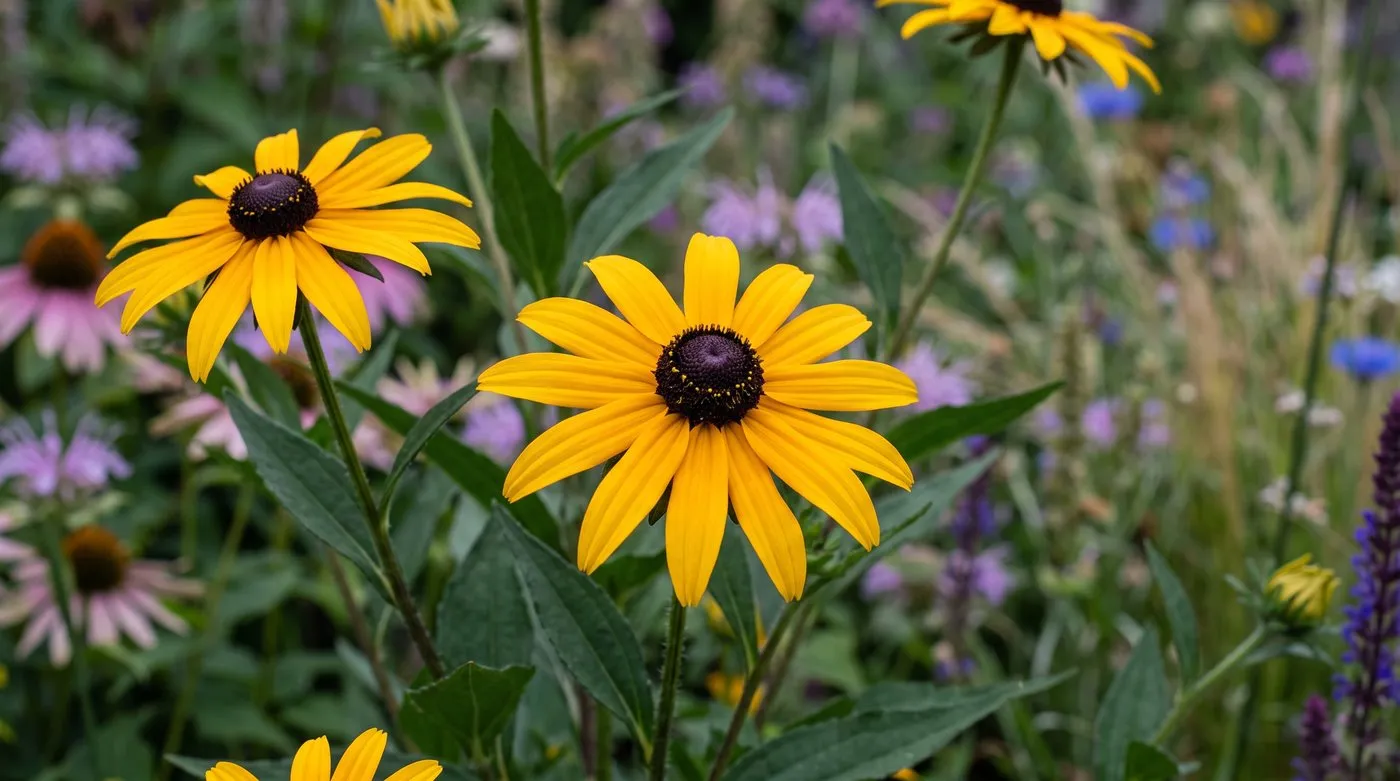
‘Goldsturm’ is the dependable perennial rudbeckia. Plant it once and it comes back every summer.
What does rudbeckia need to grow well?
Rudbeckia wants full sun and soil that stays moist but not waterlogged. That’s the big difference from its cousin echinacea, which prefers drier, free-draining ground. Our echinacea growing guide covers that plant’s needs.
- Sun: a sunny, open spot. In shade, plants flop and flower poorly.
- Soil: fertile and moisture-holding. Rudbeckia copes with clay as long as it doesn’t sit in water all winter. On sandy soil, dig in garden compost.
- Water: it dislikes drying out. Dry roots in summer mean wilting, fewer flowers and mildew.
- Feeding: a spring mulch of compost is enough. Rich nitrogen feeds give soft, floppy stems.
Best rudbeckia varieties for UK gardens
Choose perennials for a long-lasting clump and annuals for the widest range of colours.
| Variety | Type | Flower colour | Rough height | Good for |
|---|---|---|---|---|
| ’Goldsturm’ | Perennial | Golden yellow, black centre | 60-75cm | Reliable border clump |
| ’Little Goldstar’ | Perennial | Golden yellow | About 40cm | Front of a border |
| ’Herbstsonne’ | Perennial | Lemon yellow, green centre | Up to 2m | Back of a border |
| Rudbeckia maxima | Perennial | Yellow, tall dark cone | Up to 2m | Blue-grey leaves, bold seedheads |
| ’Marmalade’ | Annual | Golden orange | 45-60cm | Cutting, quick colour |
| ’Cherry Brandy’ | Annual | Cherry red | About 60cm | Unusual red tones |
| ’Sahara’ | Annual | Dusky pink, bronze, caramel | About 60cm | Soft vintage colours, cutting |
| ’Prairie Sun’ | Annual | Yellow tipped, green centre | About 80cm | A softer, lighter look |
| ’Toto’ | Annual | Golden yellow | 25-30cm | Pots and window boxes |
Perennials are best bought as plants, as named varieties like ‘Goldsturm’ don’t come true from seed. Annuals are cheap and easy from seed, and seed is the only easy way to get ‘Cherry Brandy’ and ‘Sahara’.
How to grow rudbeckia from seed
Annual rudbeckia is easy from seed. Start it indoors in spring for flowers the same summer.
- Sow in March or April in trays or modules of seed compost.
- Scatter the fine seed thinly and only just cover it with a sprinkle of vermiculite.
- Keep it somewhere warm, around 20°C, such as a propagator or warm windowsill.
- Prick seedlings out into small pots once they have two true leaves.
- Grow them on somewhere cool and bright, so they stay sturdy.
- Harden off for a week or two and plant out after the last frost, usually mid to late May.
Our guide to sowing seeds indoors covers propagators, light and pricking out in more detail.

Hold seedlings by a leaf, never the stem, when you move them into their own pots.
How to plant rudbeckia in the garden
Plant young annuals out in late May or June, once frosts have passed. Pot-grown perennials can go in during spring or early autumn.
- Prepare the soil by digging in a bucket of garden compost per square metre.
- Space plants 30-45cm apart. Compact varieties can go closer. Good spacing lets air move and helps prevent mildew.
- Plant at the same depth the plant sat in its pot. Burying the crown can cause rot.
- Water well and keep watering in dry spells through the first summer.
Rudbeckia is a mainstay of naturalistic schemes, so it fits perfectly into prairie-style planting with grasses and echinacea.
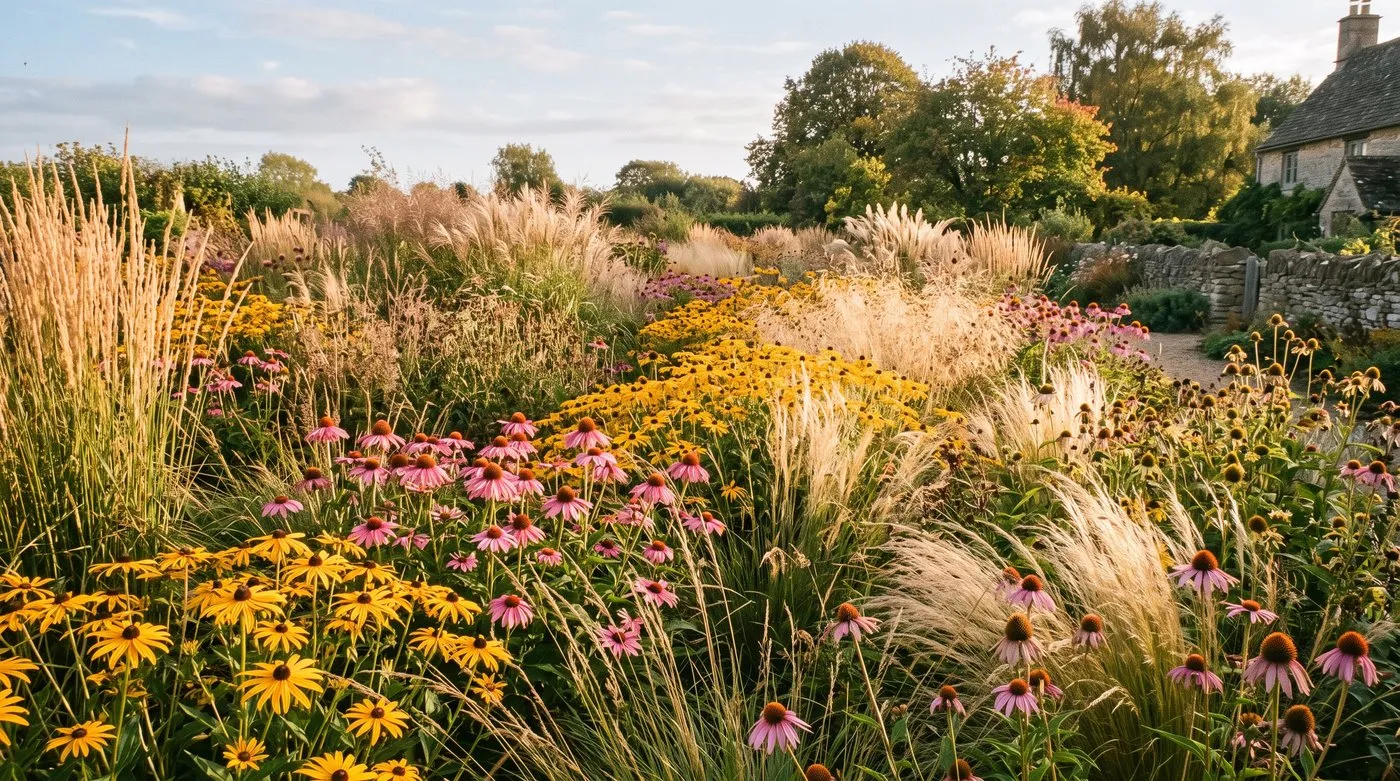
Rudbeckia’s gold looks great against pink echinacea and soft grasses in a prairie-style border.
How to keep rudbeckia flowering longer
Deadheading is the easiest way to get more flowers. Removing faded blooms stops the plant setting seed, so it makes more buds instead.
Annual rudbeckia responds best. Snip off each flower as it fades, cutting back to the next bud or leaf. A clean snip with sharp secateurs or scissors is all it takes.
Perennial rudbeckia flowers well anyway, but a tidy-up keeps it looking fresh. From early October, stop deadheading and let the last flowers form seedheads.

Snip off faded heads through summer for more flowers, then let the last ones stand from October.
Month-by-month rudbeckia calendar
| Month | What to do |
|---|---|
| January | Order seed. Leave perennial clumps alone |
| February | Cut perennial clumps down to the ground before new growth starts |
| March | Sow annuals indoors. Mulch perennials with compost. Divide crowded clumps |
| April | Keep sowing annuals. Prick out earlier seedlings |
| May | Harden off and plant out after the last frost. Watch for slugs |
| June | Water in dry spells. Pinch tips of annuals for bushier plants |
| July | Flowering starts. Deadhead regularly |
| August | Peak flowering. Keep roots moist. Cut stems for the house |
| September | Flowering carries on. Plant or divide perennials |
| October | Stop deadheading. Leave seedheads standing |
| November to December | Enjoy the seedheads. Pull up spent annuals |
Common rudbeckia problems
Rudbeckia is generally easy, but a few problems crop up.
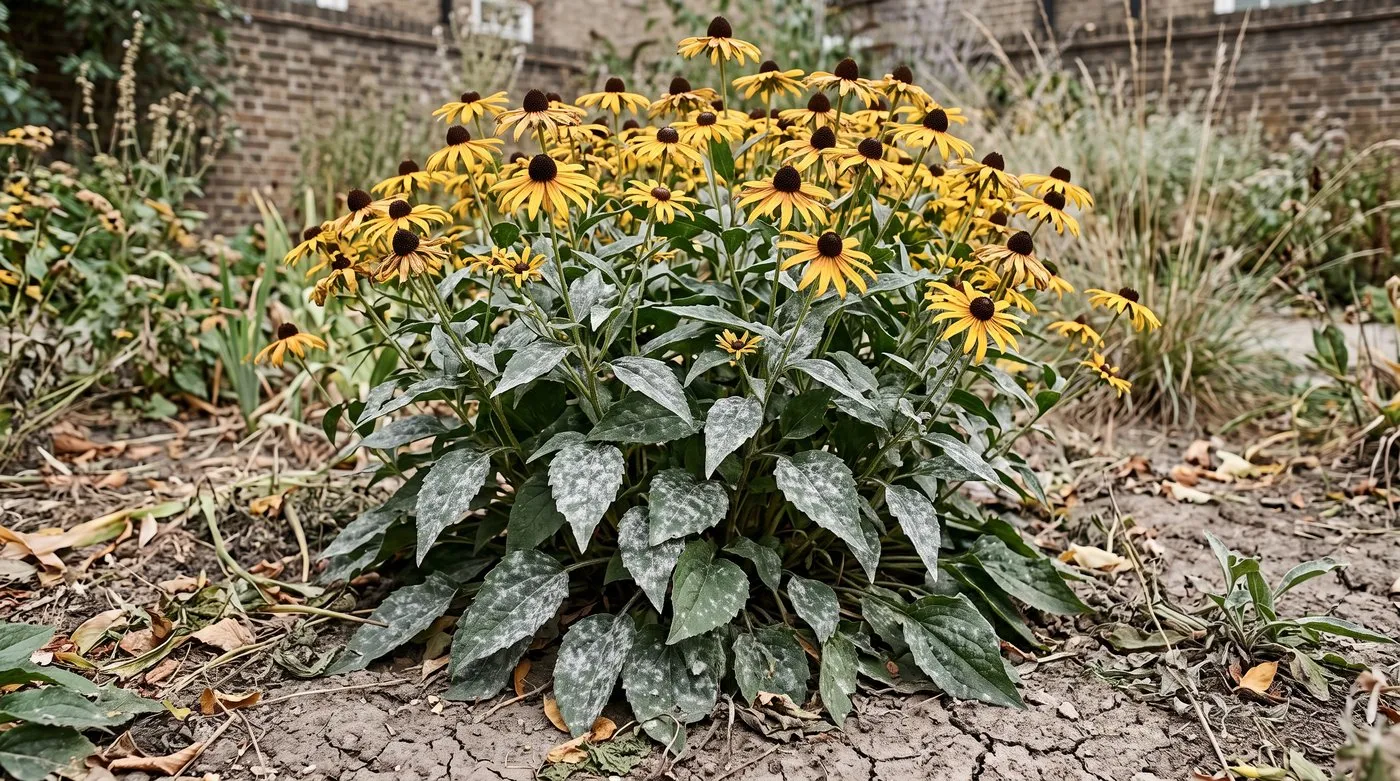
That white dusting is powdery mildew. It’s a sign the roots are too dry, so water and mulch to keep it in check.
- Slugs and snails are the biggest threat to young plants and new spring shoots. Check on damp evenings and protect seedlings. Our slug control guide covers safe options.
- Powdery mildew is a fungal disease that leaves a white coating on leaves, usually from August. It takes hold when roots are dry and air is still. Water in dry spells, mulch and space plants well. Cut off the worst stems.
- Leaf spot causes dark brown blotches on the leaves of ‘Goldsturm’ in wet summers. Remove badly spotted leaves and clear old foliage in winter.
- Aphids sometimes cluster on soft shoots. Squash them or let ladybirds and birds deal with them.
Rudbeckia for wildlife and winter interest
The open flowers are easy for bees and hoverflies to feed from. They’re especially useful in late summer and early autumn, when there’s less around.
Once the petals drop, the dark cones dry on the stems. Left standing, they look great in frost, and birds such as goldfinches may pick at the seed. That makes rudbeckia one of the best plants for winter seedheads.
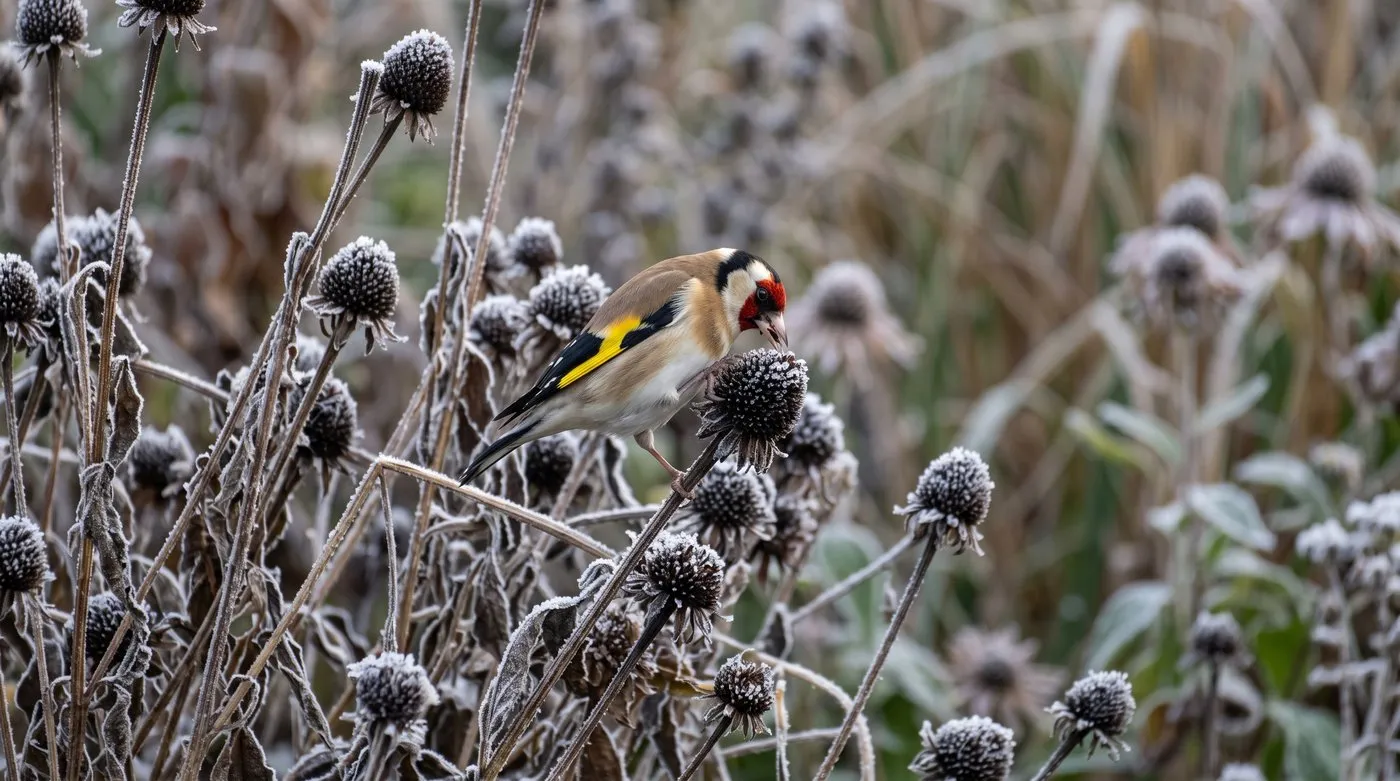
Leave the seedheads standing and you may get visiting goldfinches on frosty mornings.
Rudbeckia also makes a long-lasting cut flower. Add a few annual plants to your cut flower patch and pick stems as the flowers open.
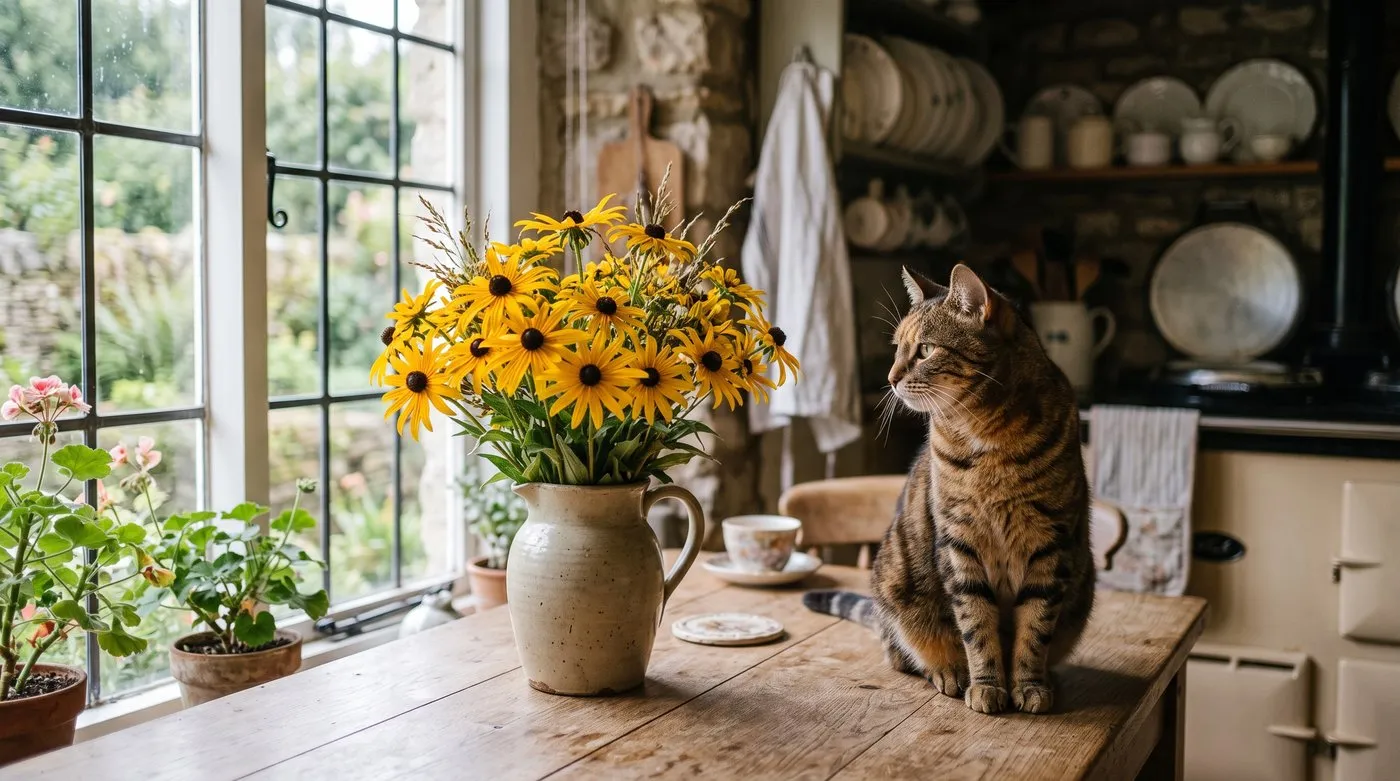
A jug of rudbeckia brightens the kitchen for days. Pick in the cool of the morning for the longest vase life.
Common mistakes with rudbeckia
- Buying the wrong type. Hirta usually dies over winter, which disappoints people expecting a perennial. For a plant that returns, buy fulgida.
- Letting the soil dry out. Treating it like drought-tolerant echinacea leads to wilting and mildew. Water and mulch.
- Cutting back too early. Clearing seedheads in autumn loses winter interest. Wait until late winter.
- Burying the seed. The seed is fine, so sow it on or near the surface.
- Planting in shade. Rudbeckia needs sun to stand up and flower well.
Planning the rest of your late-summer border? Browse more plant guides, or see our pick of the best yellow flowers for UK gardens for more sunny partners.
Frequently asked questions
Is rudbeckia a perennial or an annual?
Both, depending on the type. Rudbeckia fulgida and R. laciniata are hardy perennials that return every year. Rudbeckia hirta is usually grown as an annual and sown fresh each spring. Check the Latin name on the label.
When does rudbeckia flower in the UK?
Rudbeckia flowers from about July to October. Annuals sown in spring start in mid to late summer. Perennial ‘Goldsturm’ is at its best from August into autumn. Deadheading keeps new flowers coming.
Does rudbeckia come back every year?
Perennial types do, but annual types usually don’t. Rudbeckia fulgida ‘Goldsturm’ returns reliably and slowly spreads into a bigger clump. Rudbeckia hirta usually dies over a wet UK winter, so sow fresh seed each spring.
Where should I plant rudbeckia?
Plant rudbeckia in full sun in moist, fertile soil. In shade it grows floppy and flowers poorly. Unlike echinacea, it copes well with heavier soil and clay, but dislikes ground that dries out in summer.
Why is my rudbeckia not flowering?
Too little sun is the usual reason. Plants in shade grow leafy with few flowers. Dry soil, very poor ground and slugs eating young shoots also hold flowering back. New divisions may flower lightly in their first year.
How do I stop powdery mildew on rudbeckia?
Keep the roots moist and let air move around the plants. Powdery mildew is a fungal disease that takes hold when roots are dry. Water in dry spells, mulch in spring, space plants well and cut off badly affected stems.
Should I cut rudbeckia back in autumn?
No, leave the seedheads standing over winter. They look lovely in frost and birds may pick at the seed. Cut perennial rudbeckia down to the ground in late winter, before new shoots appear.
Can rudbeckia grow in pots?
Yes, especially compact annual varieties. ‘Toto’ and ‘Becky’ suit pots at least 30cm wide. Use a loam-based compost that holds moisture, water often in summer and feed every two weeks with a tomato feed.
Our team produces practical UK gardening guidance from source research, contributor records and established horticultural practice. Editorial standards are overseen by Matt W.