Key takeaways
- Daffodils, primroses and forsythia give the big burst of spring yellow
- Rudbeckia 'Goldsturm' and Coreopsis 'Zagreb' flower for months from midsummer and come back every year
- Heleniums and goldenrod keep yellow going into autumn
- Winter jasmine, mahonia and witch hazel give yellow from November to March
- Daffodils, chrysanthemums and dahlias are not safe for pets that chew plants
The best yellow flowers for UK gardens include daffodils in spring, rudbeckia and coreopsis in summer, heleniums in autumn and winter jasmine in the cold months. Mix a few from each season and you can have yellow in the garden all year round.
Yellow is cheerful, shows up from a distance and brightens grey days. This guide picks the best yellow flowers season by season, then covers shade, pots, cutting and bees. Want bolder oranges and reds too? The guide to the best orange flowers picks up where this one stops.
Best yellow flowers for spring
Spring is the big yellow season, led by daffodils, forsythia and primroses.
Daffodils are the backbone of spring yellow. Early varieties such as ‘February Gold’ open in late winter, and late doubles such as ‘Cheerfulness’ carry on into May. ‘Tête-à-tête’ is a little 15cm daffodil for pots and edges. Plant bulbs in September or October, about two to three times their own depth, which is usually 10-15cm. They grow in most soils except waterlogged ground. The guide to growing daffodils covers naturalising them in grass. All parts, especially the bulbs, are toxic to pets.
Forsythia covers its bare stems in bright yellow in March and April. It grows 2-3m tall in sun or part shade. Prune straight after flowering, taking some of the oldest stems out at the base.
Primroses (Primula vulgaris) are a native wildflower with soft, pale yellow flowers from late winter into spring. They like dappled shade and moist soil under trees or along a hedge, and they are an early food for bumblebees.
Yellow tulips such as ‘Strong Gold’ follow the daffodils in April and May. Plant the bulbs in November in a sunny, well-drained spot.

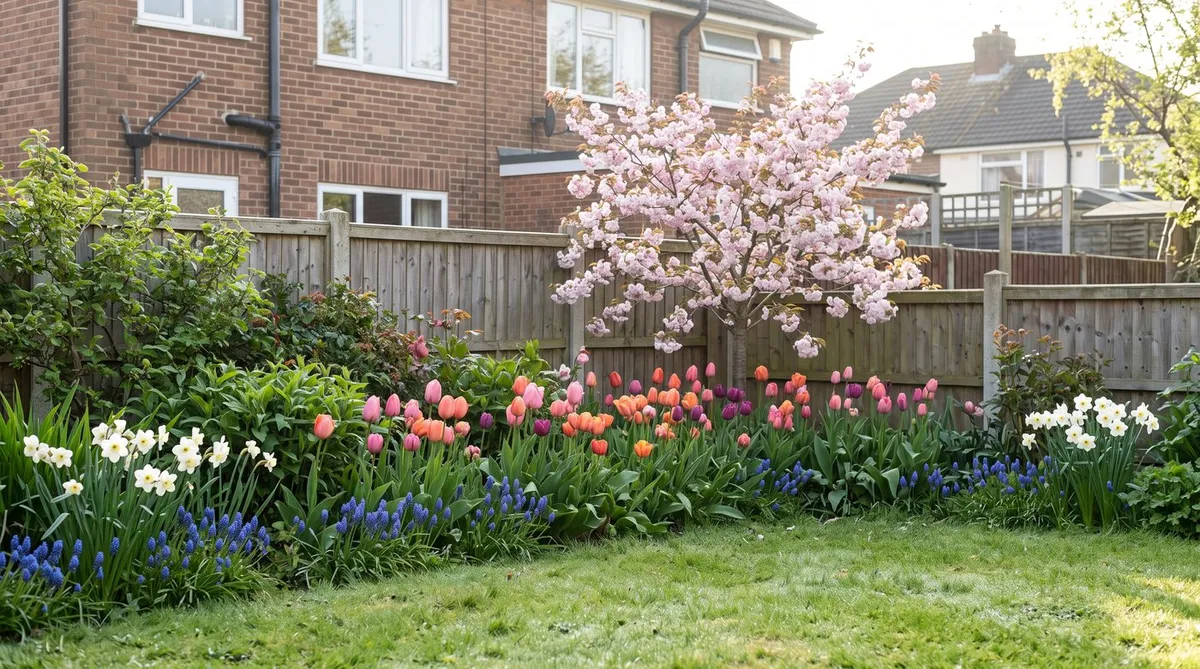
Daffodils in grass with forsythia behind make a classic spring picture. Leave daffodil leaves for six weeks after flowering so the bulbs flower again.
Best yellow flowers for summer
Summer has the widest choice of yellow flowers, from tall sunflowers to neat front-of-border daisies.
Rudbeckia ‘Goldsturm’ has golden daisies with dark centres from July to October. It grows about 60cm tall, holds an RHS Award of Garden Merit and comes back every year. It likes sun or light shade and soil that doesn’t dry out.
Coreopsis ‘Zagreb’ makes a neat 30-40cm mound of fine leaves covered in small golden daisies from June to September. ‘Moonbeam’ is a paler lemon. It likes sun and well-drained soil, and dislikes wet winter clay. The guide to growing coreopsis covers dividing it.
Sunflowers are easy annuals for children and adults alike. Tall types such as ‘Russian Giant’ can reach 3m. Branching types such as the lemon-yellow ‘Valentine’ give lots of smaller flowers for cutting. Dwarf, fluffy ‘Teddy Bear’ suits pots. Sow indoors in April or outdoors in May. Leave a few seed heads standing for goldfinches. The guide to growing sunflowers has the full method.
Yellow dahlias bring big, late-summer colour from July until the frosts. ‘Bishop of York’ has single yellow flowers over dark leaves, and ‘Kelvin Floodlight’ has huge yellow blooms. They need lifting or a thick mulch in winter. The guide to growing dahlias explains how.
Yellow roses repeat-flower through summer. David Austin’s ‘Graham Thomas’ and ‘Golden Celebration’ are scented and well loved. Some yellow roses are prone to blackspot, so look for a variety described as disease-resistant and give it good airflow.

A summer yellow border gives plenty to cut. Picking sunflowers and dahlias often keeps new flowers coming.
Best yellow flowers for autumn
Autumn yellow keeps the garden bright as summer fades.
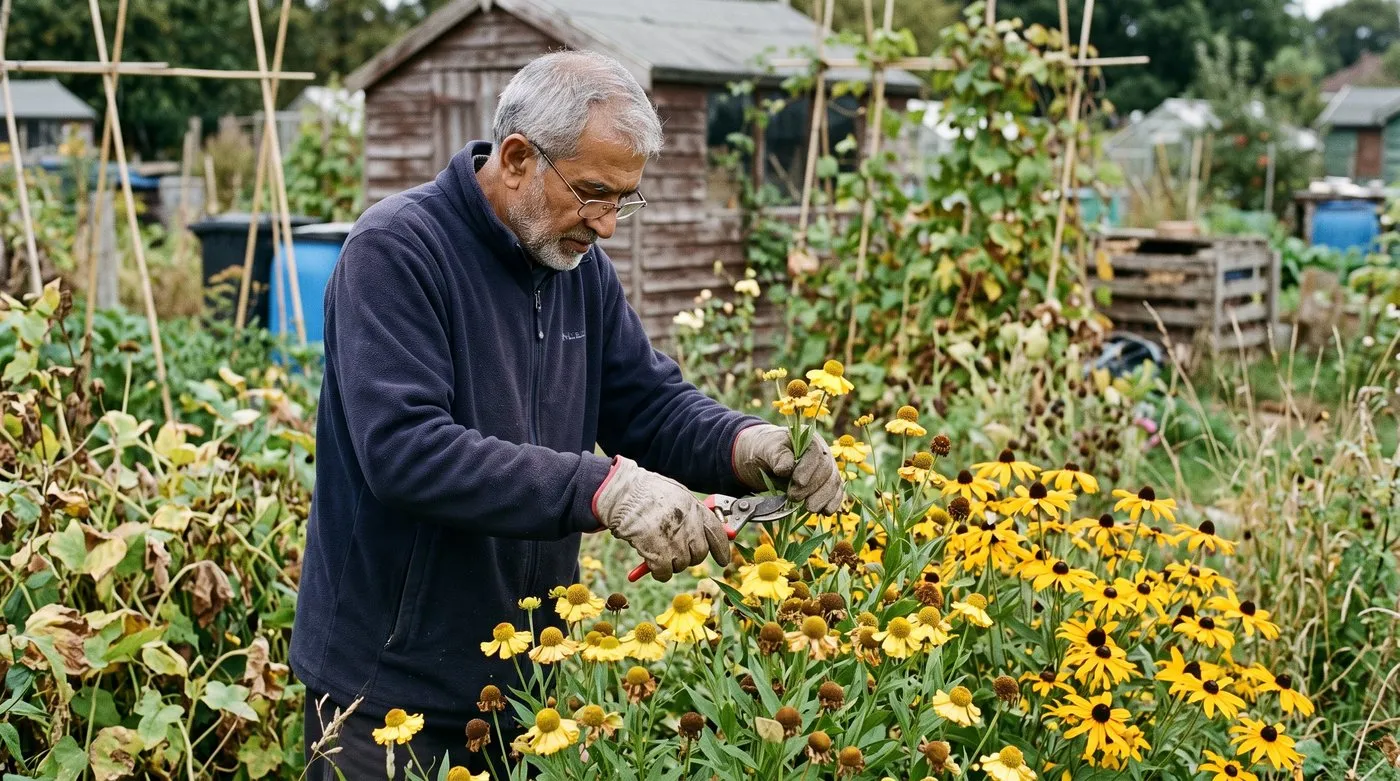
Heleniums and rudbeckia keep the yellow going into autumn. Snip off faded flowers and more will follow.
Heleniums have daisy flowers with a raised centre from late summer into autumn. ‘Butterpat’ is a clear yellow about 90cm tall. ‘Sahin’s Early Flowerer’ mixes gold with orange-red. They like sun and moist soil. Divide clumps every few years in spring to keep them flowering well.
Hardy chrysanthemums flower from September into November. ‘Mary Stoker’ has soft apricot-yellow single flowers. Pinch the tips in late spring for bushier plants with more flowers. Chrysanthemums can upset pets that chew them.
Goldenrod (Solidago) has feathery yellow plumes from August to October. Compact varieties such as ‘Golden Baby’ stay smaller and tidier than the wild type. It suits poor soil in full sun, and late bees love it.
Best yellow flowers for winter
Winter yellow is rare, so a little goes a long way.
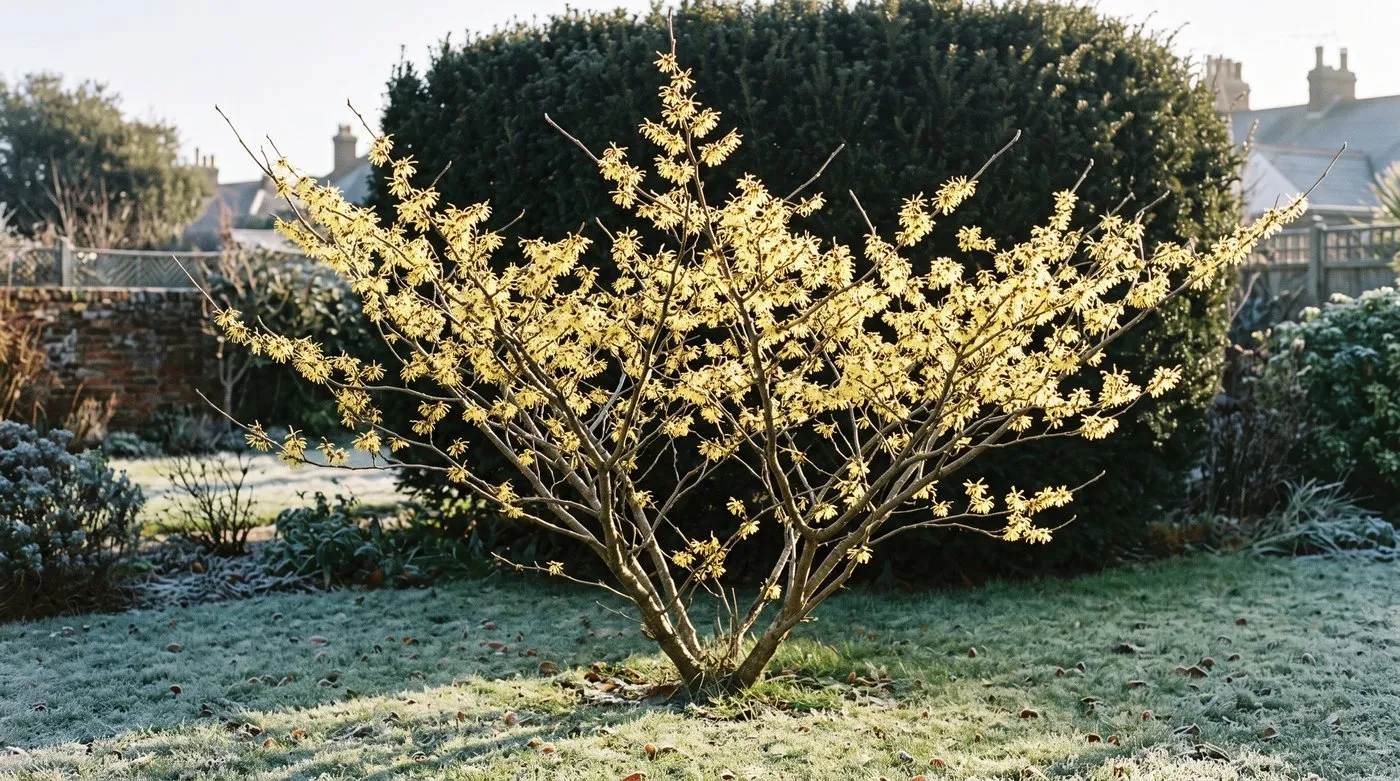
Witch hazel glows against a dark hedge on a sunny winter day. Plant it where you can see it from the house.
Winter jasmine (Jasminum nudiflorum) has bright yellow flowers on bare green stems from November to March. It copes with any aspect, even a north-facing wall. Tie it to wires, as it can’t climb on its own. Trim after flowering.
Mahonia x media ‘Charity’ has sprays of scented yellow flowers from November, above spiny evergreen leaves. It grows in shade and most soils. ‘Winter Sun’ is similar.
Witch hazel ‘Pallida’ has spidery, scented pale yellow flowers on bare branches in midwinter. It prefers neutral to acid soil and a spot where you can see it from the house.
Yellow flowers for shade
Yellow brightens shady spots well, because pale, bright flowers show up in low light.
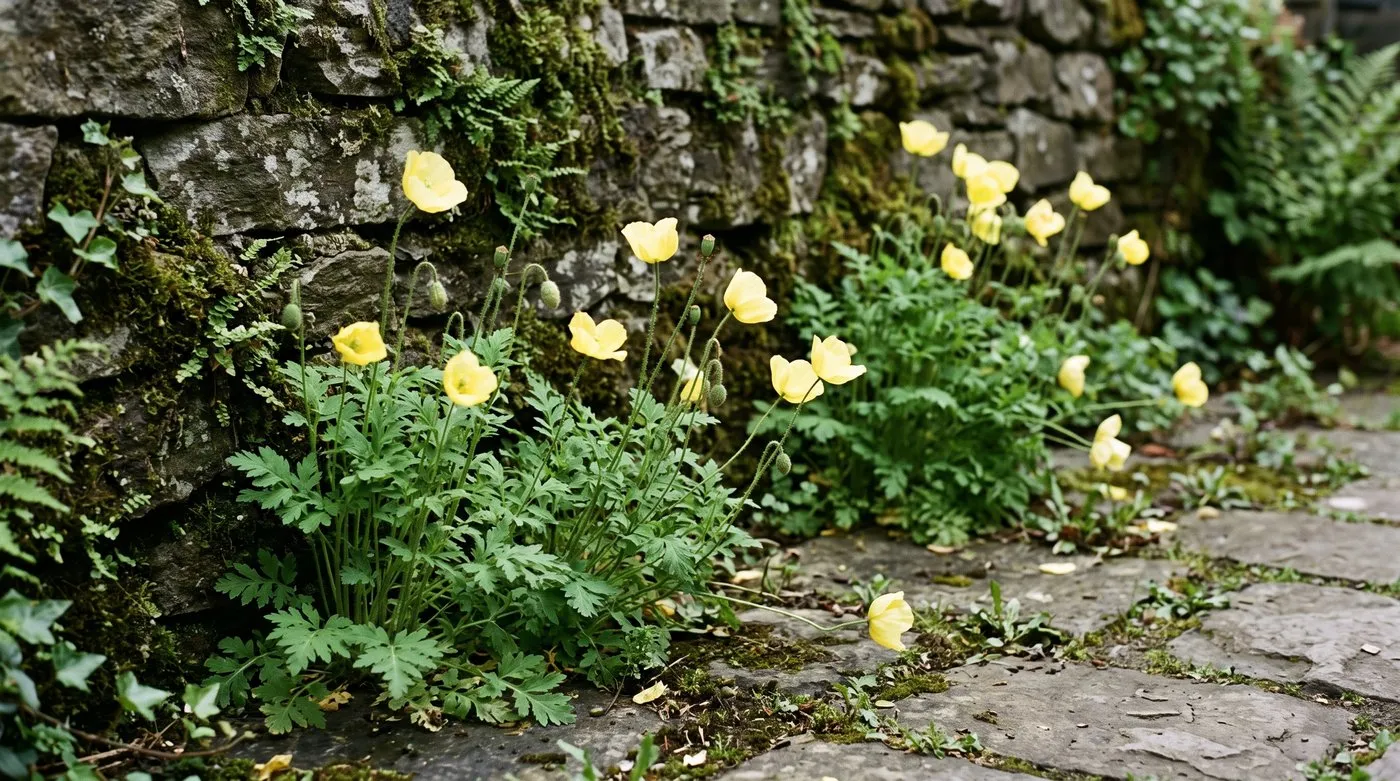
Welsh poppies seed themselves into shady corners and cracks. They brighten spots where little else will flower.
| Plant | Flowers | Height | Shade | Notes |
|---|---|---|---|---|
| Primrose | February to May | 10-15cm | Dappled | Native, early food for bees |
| Welsh poppy | Late spring to summer | 30-45cm | Part | Self-seeds freely |
| Winter jasmine | November to March | Up to 3m on a wall | North walls | Tie in to wires |
| Mahonia | November to February | 2-3m | Part to deep | Evergreen, scented |
| Yellow loosestrife | Summer | About 90cm | Part | Spreads fast in moist soil |
Welsh poppies have lemon or orange cup-shaped flowers and seed themselves into cracks and corners. They’re charming but can pop up everywhere, so deadhead if you want fewer. Yellow loosestrife (Lysimachia punctata) spreads quickly, so plant it where it can roam. The guide to the best plants for shade has more ideas.
Yellow flowers for pots and cutting
For pots, try trailing bidens in baskets and window boxes, French marigolds for compact orange-yellow colour, and dwarf daffodils for spring. Deadhead marigolds regularly and keep pots watered in hot spells.

Pots of yellow flowers light up a small courtyard. Group them together so they’re easier to water.
For cutting, pick daffodils when the buds are just turning yellow. Cut sunflowers as the petals start to open. Dahlias are best picked in the cool of the morning. Hardy chrysanthemums last two weeks or more in a vase.
Yellow flowers for bees and other pollinators
Open, single yellow flowers are great for bees, hoverflies and butterflies. Good choices are coreopsis, rudbeckia, single sunflowers, heleniums and goldenrod in summer and autumn. Mahonia feeds bumblebees on mild winter days, and primroses help early spring bees.
Fully double flowers, such as some dahlias and marigolds, are harder for insects to use. Mix in plenty of singles if you want a bee-friendly border.
Yellow flowers month by month
| Month | Yellow flowers to enjoy |
|---|---|
| January to February | Winter jasmine, witch hazel, mahonia, early daffodils |
| March | Daffodils, forsythia, primroses |
| April to May | Late daffodils, yellow tulips, primroses |
| June | Coreopsis, yellow roses, Welsh poppies |
| July to August | Rudbeckia, sunflowers, dahlias, heleniums |
| September | Rudbeckia, heleniums, goldenrod, dahlias |
| October to November | Chrysanthemums, late dahlias, mahonia starts |
| December | Winter jasmine, mahonia |
Common mistakes with yellow flowers
- Too many bright yellows together. A whole border of golden yellow can glare. Mix in soft lemons, creams and green foliage.
- Planting coreopsis on wet clay. It often rots in winter. Add grit or choose rudbeckia instead.
- Cutting off daffodil leaves early. The bulbs need them to flower next year. Wait about six weeks.
- Letting spreaders loose. Yellow loosestrife and Welsh poppies can take over. Plant them where that’s welcome.
- Forgetting winter. Winter jasmine and mahonia fill the gap from November to March.
Yellow looks wonderful next to purple and blue. See the guide to the best purple, pink and blue flowers for partners, or browse the plants hub.
Frequently asked questions
What are the best yellow flowers for a UK garden?
Daffodils, Rudbeckia ‘Goldsturm’ and sunflowers are three of the best. Daffodils give spring colour, rudbeckia flowers from July to October, and sunflowers bring height in late summer. Add winter jasmine for winter yellow.
Which yellow flowers bloom all summer in the UK?
Coreopsis ‘Zagreb’ and Rudbeckia ‘Goldsturm’ flower for months. Coreopsis starts in June and rudbeckia runs from July to October. In pots, bidens and French marigolds flower from early summer to the frosts.
What yellow flowers grow in shade?
Primroses, Welsh poppies, mahonia and winter jasmine all cope with shade. Primroses like dappled shade in spring. Welsh poppies self-seed into shady corners. Mahonia and winter jasmine flower through winter on shady sides of the garden.
Are yellow flowers good for bees?
Many yellow flowers are excellent for bees and hoverflies. Open, single flowers such as coreopsis, rudbeckia, single sunflowers and heleniums are easy for insects to feed from. Mahonia helps bumblebees active on mild winter days.
What are the best yellow flowers for pots?
Bidens, French marigolds and dwarf daffodils are easy choices. Bidens trails over the edge of pots and baskets. Plant ‘Tête-à-tête’ daffodil bulbs in autumn for small yellow flowers in early spring.
Which yellow flowers come back every year?
Daffodils, rudbeckia, coreopsis, heleniums, forsythia and winter jasmine all return each year. Use these as the backbone of a yellow scheme. Fill gaps with annuals such as sunflowers and marigolds.
When should I plant yellow flowers?
Plant daffodil bulbs in September or October. Sow sunflowers indoors in April or outdoors in May. Plant perennials such as rudbeckia and coreopsis in spring or early autumn.
Ready to turn up the heat? Read the guide to hot colour borders to combine yellows with orange and red.
Our team produces practical UK gardening guidance from source research, contributor records and established horticultural practice. Editorial standards are overseen by Matt W.