
Key takeaways
- Dahlias flower from August until the first hard frost, so deadhead them often
- Japanese anemones are the go-to autumn flower for shady spots
- Rudbeckia 'Goldsturm' flowers for months and never needs staking
- Sedum 'Autumn Joy' is about as easy as it gets, and bees love it
- Hardy chrysanthemums keep going into November and often December
- Plant nerines and colchicums in summer for flowers the same autumn
Autumn flowers keep UK gardens bright from August to December, long after summer bedding has given up. Dahlias, Japanese anemones, rudbeckia, sedum, asters and chrysanthemums are the stars. Plenty of them actually like the cooler, damper weather a British autumn brings.
Which autumn flowers perform best in the UK?
Dahlias, Japanese anemones, rudbeckia, sedum, New England asters and hardy chrysanthemums are the most reliable. Between them they cover sun and shade, and every month from August to December. Add a few autumn bulbs and some heather, and you’ve got colour right through the season. Here’s what each one brings.
Dahlias: the star of the autumn garden
Dahlias give you more flowers per plant than almost anything else in autumn. They bloom from August until the first hard frost, in every colour except true blue. Flowers range from small pompons to huge dinner-plate blooms.
Plant tubers 10-15cm deep in late April or early May, once frosts are over. Space bush types 45-60cm apart and tall ones about 90cm. They like rich, moist soil. Feed every fortnight with tomato feed from July, and deadhead often.
For autumn garden planning, dahlias are the anchor plant. Single-flowered kinds like ‘Bishop of Llandaff’ or ‘Moonfire’ are best for bees, because the open centre lets them reach the pollen.
 Crimson dahlias and bronze chrysanthemums in a raised bed. Keep deadheading and both flower well into autumn.
Japanese anemones for shade
Japanese anemones are the best autumn flower for shady borders. They cope with part shade, heavy clay and dry soil under trees, where most autumn flowers sulk. ‘Honorine Jobert’ (white, tall) and ‘September Charm’ (pink, shorter) are both lovely.
They’re slow in their first year, better in their second, and really get going from their third. They flower from mid-August to late October, and slowly spread into a good-sized clump.
Plant them in spring, about 45cm apart. They like moist, rich soil and a bit of shade from the midday sun. Once settled, they need no staking, feeding or dividing for years.
Their airy, branching stems look great next to the solid shapes of dahlias and sedum.
Rudbeckia: the longest-flowering autumn perennial
Rudbeckia fulgida ‘Goldsturm’ flowers for months, from mid-July to late October. It has golden daisies with black centres, and grows to about 60-70cm in neat clumps that never need staking.
It’s tough and dependable, coping with clay, chalk, wet spells and dry ones. Plant it in full sun or light shade, about 45cm apart. Cut the dead stems to the ground in late February. Dig up and split the clumps every four or five years in spring to keep them going strong.
 Pink Japanese anemones and golden rudbeckia flowering together from August to October.
Sedum and asters for late season
Sedum ‘Autumn Joy’ is the easiest autumn flower you can grow. It needs no watering, feeding, staking or deadheading. The flat flower heads open pink in September, turn rusty red in October, then dry to bronze heads that last all winter. Finches love the seeds, and frost on the old heads looks magical.
It grows to about 30-45cm and copes with anything from sand to clay. Full sun gives the sturdiest stems; in shade they tend to flop. Bees and butterflies flock to it on sunny autumn days.
New England asters (Aster novae-angliae) bring purple, pink and crimson from September to November. ‘Andenken an Alma Pötschke’ (bright cerise-pink) is a favourite. They get powdery mildew far less than Michaelmas daisies do. Pinch out the tips in late May for bushier plants that don’t go leggy.
Sedum and asters are two of the best bee-friendly garden plants for autumn, feeding bees when most summer flowers have finished.
Autumn bulbs: Colchicum, Nerine, and Cyclamen
Autumn bulbs flower within weeks of planting. Plant them in July or August and they bloom the same year.
Colchicum (autumn crocus, or meadow saffron) sends up lilac goblet flowers in September and October, with no leaves in sight. Plant 10cm deep and 15cm apart in July. They spread happily in grass and under trees.
Take care: every part of colchicum is very poisonous. Wear gloves when planting, keep it away from children and pets, and don’t mix it up with the saffron crocus. The RHS guide to potentially harmful plants has more detail.
Nerine bowdenii has clusters of pink trumpet flowers on tall stems from September to November. Plant the bulbs in August with their tips at soil level, ideally at the foot of a sunny, south-facing wall. They need really good drainage and a hot summer to flower well. A small clump slowly builds up over the years.
These bulbs fit neatly into a flower planting calendar, bridging the gap between summer and winter.
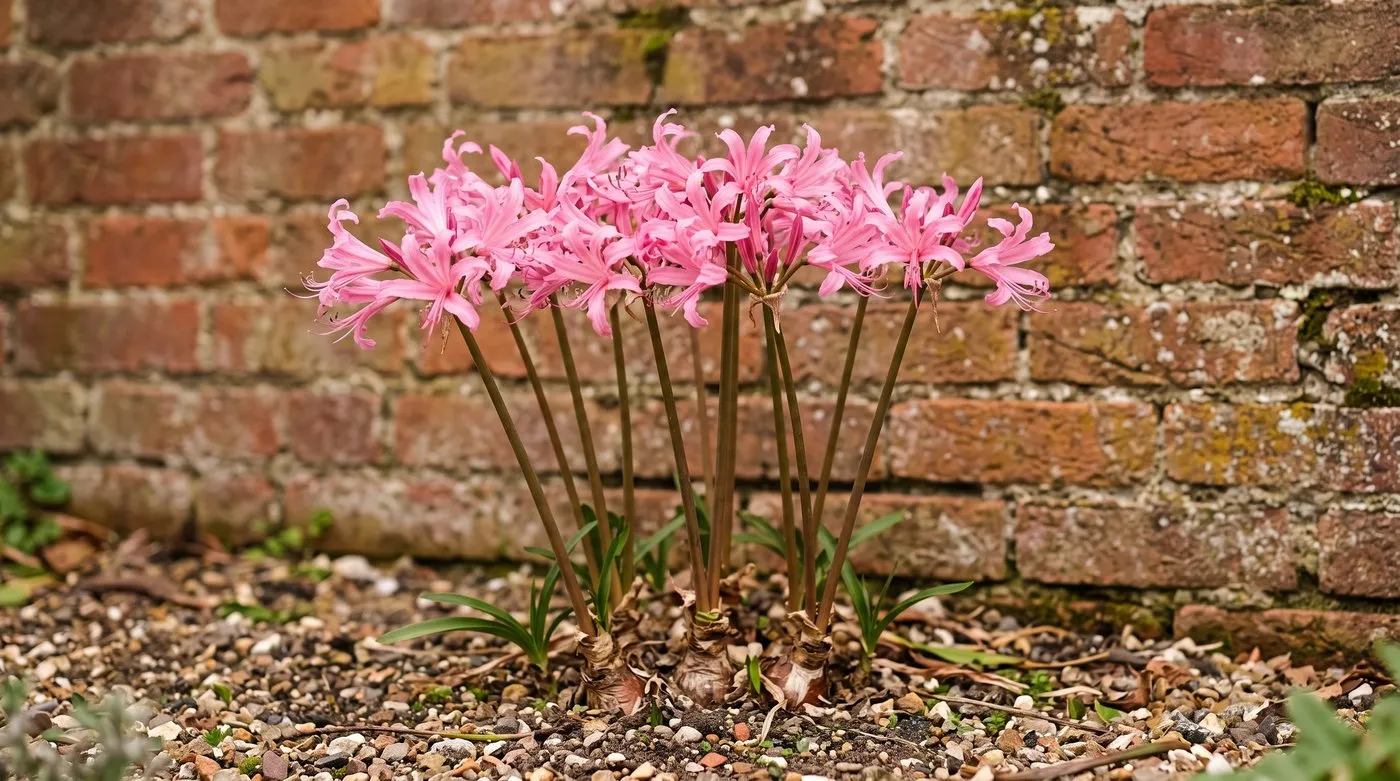
Nerines flower best tucked against a sunny wall with their bulb tips at soil level. Give them sharp drainage and leave them to clump up.
Hardy chrysanthemums for November colour
Hardy chrysanthemums are still going strong in November. Dahlias blacken at the first frost and asters fade, but chrysanthemums often carry on into December in a mild year. Korean and rubellum types are the toughest.
Good ones for UK gardens:
- ‘Clara Curtis’: pink single daisies, September to November
- ‘Mary Stoker’: apricot-yellow flowers that change colour as it gets colder
- ‘Emperor of China’: rose-pink flowers in October to December, and leaves that turn crimson
- ‘Duchess of Edinburgh’: copper-red flowers on strong stems, October to November
Plant in spring, in full sun and well-drained soil. Pinch out the tips twice before July for bushier plants. They look great with autumn-colouring trees behind them.
 Hardy cyclamen and heather in terracotta pots. Both are happy in containers and flower from September.
Heathers for acid soil
Autumn heathers (Calluna vulgaris) flower from August to November and love acid soil. They need full sun. If your soil is chalky or neutral, grow them in pots of ericaceous (lime-free) compost.
Good autumn heathers include ‘Darkness’ (crimson), ‘Peter Sparkes’ (double pink) and ‘Silver Knight’ (lavender flowers and silvery leaves). Plant about 30cm apart for ground cover, and give them a light trim in spring to keep them neat.
They look natural with other acid-loving plants. If you garden on clay soil, a raised bed filled with ericaceous compost makes heathers easy.
How to plan an autumn border
A 3m autumn border needs about 15-20 plants of five or six kinds. Plant in three rows by height so everything can be seen.
Back row (90-120cm): dahlias, New England asters, tall Japanese anemones. About 60cm apart.
Middle row (45-75cm): rudbeckia, hardy chrysanthemums, nerines. About 45cm apart.
Front row (10-45cm): sedum, hardy cyclamen, colchicum, dwarf heathers. About 30cm apart.
A simple planting list for a 3m by 1.5m border:
| Plant | How many | Where |
|---|---|---|
| Dahlia tubers | 3 | Back |
| Japanese anemone | 2 | Back |
| Rudbeckia ‘Goldsturm’ | 3 | Middle |
| Hardy chrysanthemum | 2 | Middle |
| Nerine bulbs | 5 | Middle, sunniest end |
| Sedum ‘Autumn Joy’ | 3 | Front |
| Colchicum corms | 5 | Front |
This works nicely as part of a cottage garden planting plan, or as an autumn corner in a bigger garden. A Hydrangea paniculata at the back adds shape from August to October.
Month-by-month autumn flower calendar
| Month | What’s in flower | Jobs to do |
|---|---|---|
| August | Dahlias, rudbeckia, heather, early asters | Deadhead dahlias weekly. Plant colchicums and nerines. |
| September | Almost everything | Keep feeding dahlias. Split old sedum clumps if they flop. |
| October | Dahlias (until frost), asters, chrysanthemums, sedum, nerines, cyclamen | Stop feeding dahlias. Save rudbeckia seed. |
| November | Chrysanthemums, late asters, sedum (drying), cyclamen, heather | Lift dahlias after the first frost in cold areas. Mulch anemones. |
| December | Chrysanthemums (mild years), cyclamen, dried sedum heads | Cut back aster stems. Order dahlia tubers for spring. |
To keep colour going after December, see our winter flowering plants guide.
Common mistakes with autumn flowers
Planting dahlias too early. Tubers planted into cold, wet soil in early spring can rot. Wait until late April or May, when the soil has warmed up.
Putting up with mildewy asters. Michaelmas daisies often go white with powdery mildew by September. New England asters such as ‘Andenken an Alma Pötschke’ and ‘Harrington’s Pink’ are much less bothered by it.
Forgetting to pinch chrysanthemums. Without pinching, they grow tall single stems that flop in autumn rain. Pinch the tips twice before mid-July for a bushy plant with many more flowers.
Leaving tender bulbs bare. Nerines and dahlias are only just hardy in many UK gardens. A thick layer of bark mulch in November helps them through the winter.
Planting heathers on chalky soil. Autumn heathers turn yellow and die on chalk or lime. Check your soil first, and use pots of ericaceous compost if it isn’t acid.
Now your autumn border is sorted, read our guide to best plant combinations for UK borders to pair autumn flowers with evergreens and grasses.
Frequently asked questions
What flowers bloom in autumn in the UK?
Dahlias, asters, chrysanthemums and Japanese anemones all bloom in a UK autumn. Rudbeckia, sedum, cyclamen, nerines, colchicums and heathers are great too. Grow a mix and you’ll have colour from August to December.
When should I plant autumn-flowering bulbs?
Plant them in July or August for flowers the same year. Colchicums go in about 10cm deep in July. Nerines go in during August with their tips just at soil level. Hardy cyclamen tubers go in about 3-5cm deep in August. All three come back year after year.
Can dahlias survive winter outdoors in the UK?
They can in milder areas with a thick mulch. In much of southern England, tubers left in well-drained soil under a deep layer of bark often come through fine. In colder areas or on wet clay, lift them after the first frost, let them dry, and store them somewhere cool and frost-free in barely damp compost.
What is the best low-maintenance autumn flower?
Sedum ‘Autumn Joy’ is the easiest of the lot. It copes with dry spells, poor soil and full sun. It doesn’t need staking or deadheading, and you can leave it alone for years. The dried flower heads look great in winter and feed the birds.
Do Japanese anemones spread too much?
They spread steadily, but they’re not invasive. They creep outwards by roots underground, faster in moist soil and slower on heavy clay. Keep them in check by slicing round the clump with a spade in spring. They’re great for filling gaps under trees.
Which autumn flowers are best for pollinators?
Sedum and single dahlias are the top autumn picks. Sedum pulls in butterflies, honeybees and hoverflies in September and October. Single dahlias have open centres that bees can get into. Asters and heathers keep the nectar coming into November.
How do I plan a border for autumn colour?
Mix early, mid and late autumn flowers so something is always out. Put tall dahlias at the back, asters and anemones in the middle, and sedum and cyclamen at the front. Plant in groups of three to five so each plant makes a splash.
Our team produces practical UK gardening guidance from source research, contributor records and established horticultural practice. Editorial standards are overseen by Matt W.


