Key takeaways
- Asters flower from August to November, when bees and butterflies really need the food
- Pick mildew-resistant varieties like 'Monch' and 'Little Carlow' and space plants 45-60cm apart
- A Chelsea chop in late May gives shorter, bushier plants that don't flop
- Divide clumps every three years in March or April and replant the lively outer bits
- Leave old stems over winter and cut them down in late February
Asters are the last big show of the British gardening year. When the dahlias have been blackened by frost and summer flowers are over, asters keep going. A border full of them gives colour from August right through to November, and sometimes beyond in a mild year.
They’re also brilliant for wildlife. Bees, butterflies and hoverflies flock to them in September and October, stocking up before winter. The RHS aster growing guide is a handy extra read.
Below you’ll find the best varieties, how to keep mildew away, how to do the Chelsea chop, and when to divide your clumps.
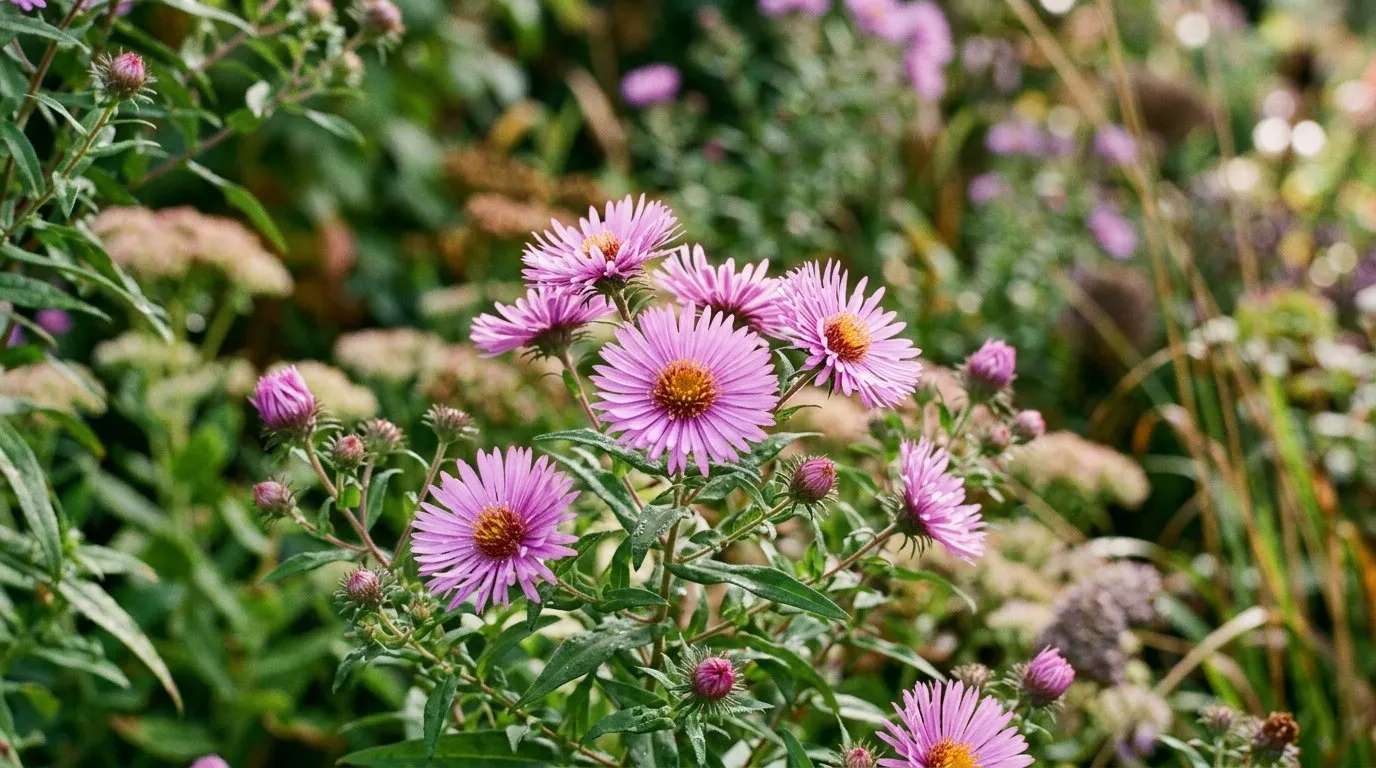 Michaelmas daisies in full autumn flower, keeping the border bright from August to November.
Are asters and Michaelmas daisies the same thing?
Yes. Michaelmas daisy is the old common name for autumn-flowering asters. It comes from Michaelmas Day, 29 September, when they’re usually in full flower.
Botanists have since moved most of the North American asters to a new name, Symphyotrichum. So the plant once called Aster novi-belgii is now Symphyotrichum novi-belgii on paper. The European Aster amellus and the hybrid Aster x frikartii kept the old name.
Don’t let that bother you. Garden centres, the RHS and most gardeners still call them all asters, and they’re grown the same way. We’ll stick with “aster” here too.
Which asters grow best in the UK?
Go for varieties that resist mildew and stand up without much help. These six are all good choices.
Aster x frikartii ‘Monch’ (AGM)
A brilliant all-rounder with lavender-blue daisies from late July into October. It grows about 75cm tall, rarely gets mildew and doesn’t need staking. If you only grow one aster, make it this one.
Aster ‘Little Carlow’ (cordifolius hybrid, AGM)
Clouds of small violet-blue flowers on arching stems about 120cm tall, from September to November. It shrugs off mildew well. Its billowing shape looks lovely at the back of a border or weaving through late roses. A great first aster.
Aster novi-belgii ‘Rosa Sieger’
Big semi-double pink flowers on stems about 100cm tall, in September and October. The lower leaves can get some mildew, but the flowers make up for it. Give it the Chelsea chop in late May so it doesn’t flop, and stake it on a windy site.
Aster ericoides ‘Monte Cassino’
Clouds of tiny white starry flowers on wiry 90cm stems, in October and November. Florists love it, and it’s perfect for a cutting garden. It resists mildew well and prefers lighter, well-drained soil.
Aster ‘Purple Dome’ (novae-angliae hybrid)
Just 45cm tall, so it’s the one for pots and the front of a border. Deep purple flowers in September and October, on a neat dome that needs no staking. Ideal for small gardens and patio planting.
Aster laevis ‘Lady in Black’
Dark purple-bronze leaves with pale lavender flowers in September and October. It reaches about 120cm and the stems are stiff enough to stand on their own. A real eye-catcher in a cottage garden border.
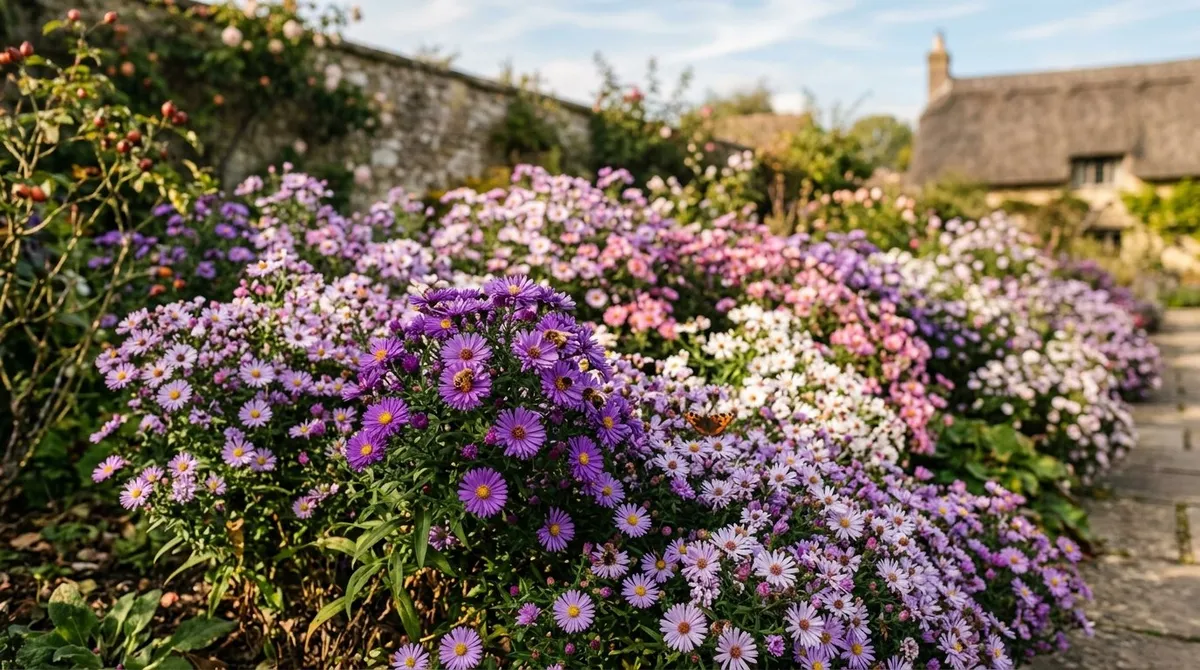
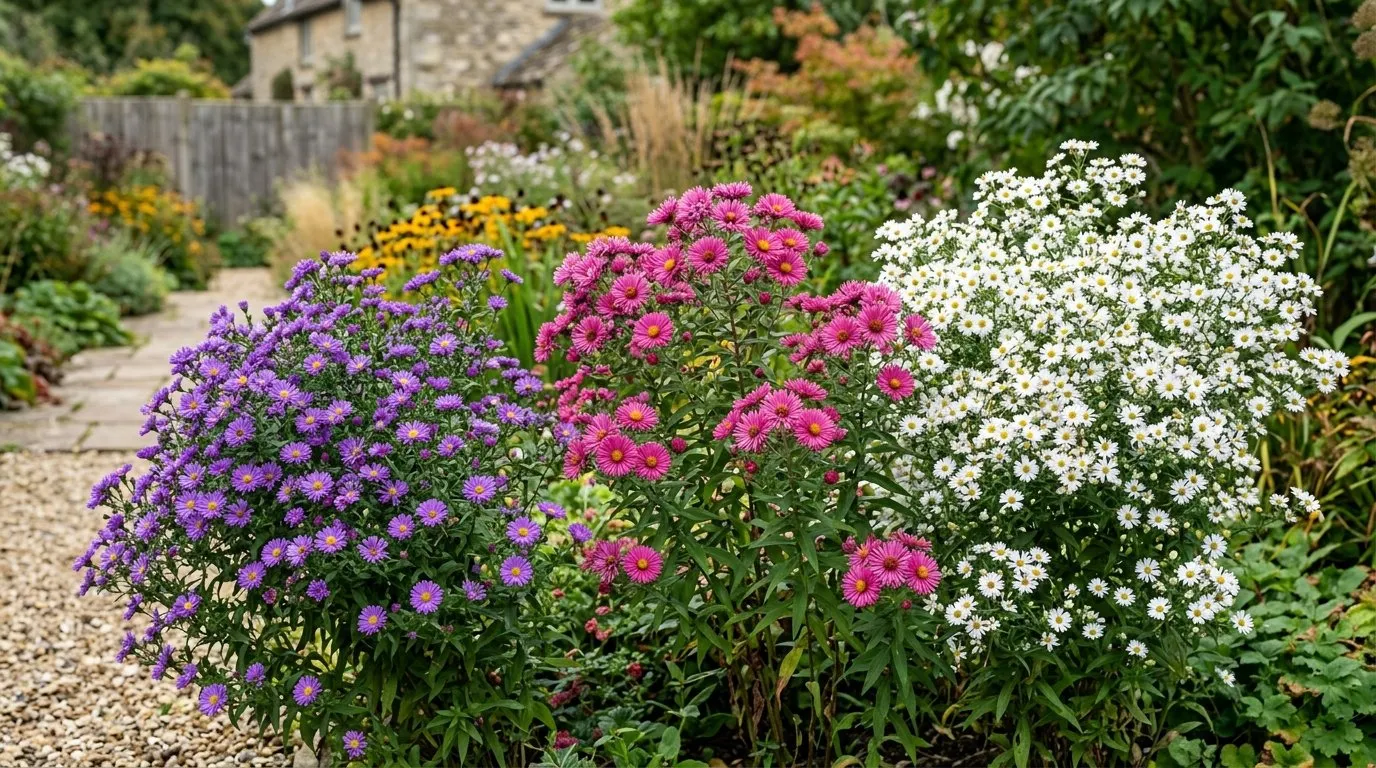 Purple, pink and white asters together. Mixing varieties spreads the colour over more weeks.
Best aster varieties compared
| Variety | Height | Flowers | Mildew | Needs staking? |
|---|---|---|---|---|
| ‘Monch’ | 75cm | Late Jul to Oct | Rarely | No |
| ’Little Carlow’ | 120cm | Sep to Nov | Rarely | No |
| ’Rosa Sieger’ | 100cm | Sep to Oct | Sometimes | Yes |
| ’Monte Cassino’ | 90cm | Oct to Nov | Rarely | No |
| ’Purple Dome’ | 45cm | Sep to Oct | Rarely | No |
| ’Lady in Black’ | 120cm | Sep to Oct | Rarely | No |
How to plant asters in the UK
Plant bare-root asters in March or April. Potted plants can go in any time from March to October, but spring planting gives them the best start.
Choosing the right spot
Give asters full sun. They cope with a little shade but flower less and get leggy. Good airflow helps keep mildew away, so avoid tucking them tight against a wall or fence.
Soil preparation
Asters grow in most soils, including heavy clay, loam and chalk. They just don’t like sitting in water. On heavy clay, dig in some garden compost before planting to help drainage.
Planting method
- Space plants 45-60cm apart, depending on the variety
- Dig a hole twice as wide as the rootball
- Plant at the same depth as it was in the pot
- Water in well
- Mulch with bark or compost, keeping it off the stems
First-year care
Water weekly through the first summer. After that, asters root deeply and cope with dry spells much better. Don’t feed in the first year, as lots of soft leafy growth is more prone to mildew.
How to prevent powdery mildew on asters
Powdery mildew is the main aster headache. A white, dusty coating appears on the leaves from July, starting low down and creeping up. A bad attack turns the whole plant grey and spoils the flowers.
Mildew loves dry roots and damp, still air, which many British summers serve up. Preventing it is much easier than curing it.
Simple ways to keep mildew away
- Choose resistant varieties. This makes the biggest difference. ‘Monch’, ‘Little Carlow’ and Aster amellus types are good bets
- Give them space. Plant 45-60cm apart so air can move through
- Mulch in spring. Keeping the roots moist means less stress in dry weather
- Do the Chelsea chop. Bushier plants let more air through
- Water the soil, not the leaves. Aim the can at the base
- Pick off lower leaves if they start to whiten from July
What to do if mildew appears
Pick off affected leaves straight away and put them in the bin rather than the compost heap. Keep the plant watered at the roots in dry spells. For more help, see our powdery mildew guide. If the same plant suffers every year, replace it with a resistant variety.
 Powdery mildew starts on the lower leaves. Pick them off quickly to slow it down.
How to do the Chelsea chop on asters
The Chelsea chop turns tall, floppy asters into shorter, bushier plants that flower a little later. It’s named after the timing: Chelsea Flower Show week, usually the last week of May.
The method
- In the last week of May, cut all the stems back by a third
- Use sharp secateurs and cut just above a leaf
- Each cut stem sends out a few side shoots
- You end up with a bushier, more compact plant
Why it works
Snipping off the growing tip makes the plant branch out lower down. You get more flowering stems, each shorter and sturdier, and flowering starts a couple of weeks later.
The half-and-half approach
For a longer show, chop just the front half of each clump. The uncut stems flower first, and the chopped ones follow a couple of weeks later. Our full Chelsea chop guide has more ideas.
Which asters respond best
Any aster taller than about 60cm benefits. It’s most useful on novi-belgii types, which are prone to mildew and like the extra airflow. Short varieties like ‘Purple Dome’ don’t need it, and ‘Monch’ is already a good shape, so leave it be.
When and how to divide asters
Divide aster clumps every three years in March or April. Left alone, clumps get woody and crowded in the middle, flower less and get more mildew. Dividing gives them a fresh start.
Step-by-step division
- Lift the whole clump with a garden fork when new shoots are 5-10cm tall
- Shake off loose soil so you can see the roots
- Throw away the woody centre. It won’t recover
- Pick the lively outer pieces, each with a few healthy shoots
- Trim long roots with clean secateurs
- Replant straight away at the same depth, 45-60cm apart
- Water in well
- Mulch with garden compost
A good clump gives you several new plants, so it’s an easy way to get more asters for free.
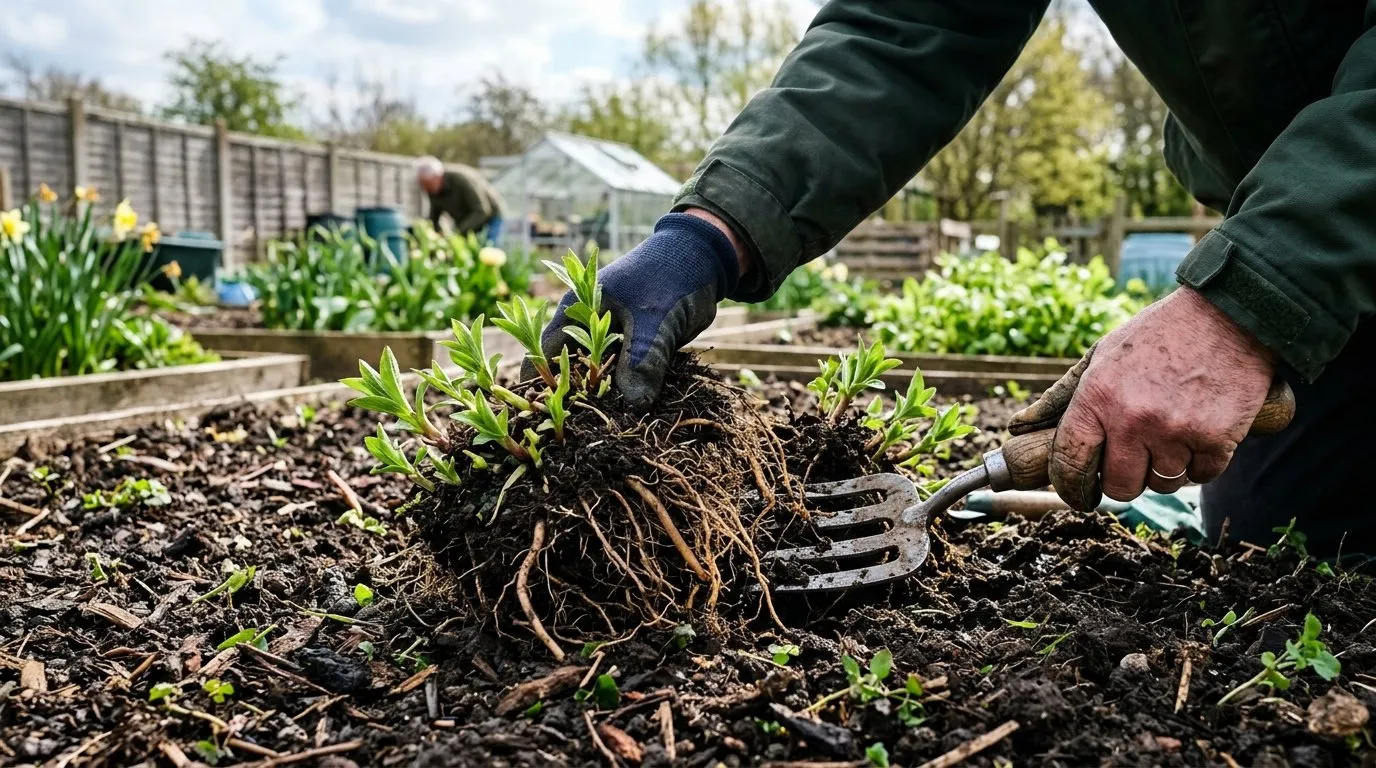 Dividing asters in spring. Replant the healthy outer pieces and throw away the woody centre.
Asters as pollinator plants
Asters are one of the best late flowers for wildlife. By October most other plants have finished, so asters are a welcome source of nectar and pollen as insects get ready for winter.
What visits asters
- Honeybees collecting the last nectar of the year
- Bumblebees, including big queens fattening up before winter
- Red admiral butterflies, which love a sunny aster in autumn
- Hoverflies, often in large numbers on a warm day
 A red admiral on asters in October. Single-flowered varieties are easier for insects to feed from than doubles.
Companion planting for autumn borders
Asters look their best with other late flowers around them. Mix heights, flower shapes and textures for a border that stays colourful until the first hard frost.
Winning combinations
| Partner plant | Height | Why it works with asters |
|---|---|---|
| Rudbeckia fulgida ‘Goldsturm’ | 60cm | Golden flowers against purple asters |
| Sedum ‘Autumn Joy’ | 45cm | Flat flower heads next to daisy shapes |
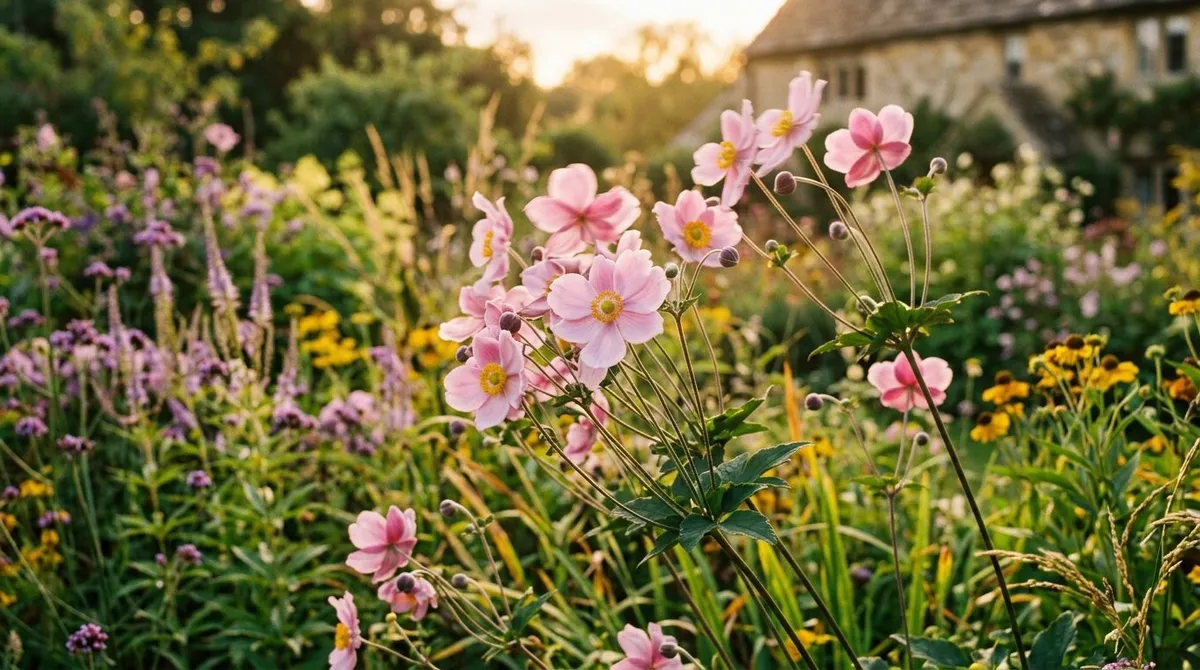
| Japanese anemone | 90cm | Soft pink or white, a different flower shape |
| Verbena bonariensis | 150cm | Airy purple heads floating above |
| Miscanthus sinensis | 180cm | Feathery grass plumes for structure |
| Persicaria amplexicaulis | 120cm | Red spikes for contrast |
Plant asters in groups of three to five of the same variety. One of everything looks bitty, while repeated drifts look far more striking.
For more ideas, see our guide to the best autumn flowers for UK gardens.
Month-by-month aster care calendar
| Month | What to do |
|---|---|
| February | Cut old stems down to about 5cm |
| March | Divide crowded clumps. Mulch with compost |
| April | Plant new bare-root or potted asters |
| May (late) | Chelsea chop: cut stems back by a third |
| June | Look out for aphids. Water in dry spells |
| July | Early varieties start flowering. Watch for mildew |
| August | Main flowering begins. Give a tomato feed if needed |
| September | Peak flowering. Enjoy the bees and butterflies |
| October | Late varieties still going. Leave seedheads |
| November | Flowering ends. Leave stems standing |
| December | Nothing to do. The stems shelter insects |
Common mistakes when growing asters
Choosing mildew-prone varieties
The asters you see most in garden centres are often novi-belgii types, which are the most prone to mildew. People buy them in flower in September, and mildew strikes the next summer. Look for resistant varieties instead, often from specialist perennial nurseries.
Never dividing
Undivided clumps go woody with a dead middle, flower less and get more mildew. Divide every three years and they’ll stay lively.
Planting too close together
Cramming asters close together looks full at first but traps damp air and invites mildew. Space them 45-60cm apart. The gaps fill quicker than you’d think.
Cutting back in autumn
Tidying stems away in autumn takes away winter shelter for ladybirds and other helpful insects, and some protection for the crown. Leave it until late February.
Over-feeding
Rich, high-nitrogen feeds give soft, lush leaves that mildew loves. If you feed at all, use a high-potash liquid feed such as tomato feed from July.
Now you know how to grow asters that dodge mildew and flower for months, read our guide on the best perennial plants for UK gardens to build a border that looks good from spring to winter.
Frequently asked questions
When do asters flower in the UK?
Asters flower from August to November in most UK gardens. ‘Monch’ can start in late July, while some novi-belgii types carry on into November. A Chelsea chop in late May pushes flowering back a couple of weeks, so a mix of varieties gives you months of colour.
Are asters the same as Michaelmas daisies?
Yes, Michaelmas daisies are autumn-flowering asters. Botanists have moved most of them to a new name, Symphyotrichum, but nurseries and gardeners still call them asters. The growing advice is the same whatever the label says.
How do I stop asters getting powdery mildew?
Start by choosing varieties that rarely get it. ‘Monch’, ‘Little Carlow’ and most Aster amellus types are good picks. Space plants 45-60cm apart, water at the base, mulch in spring to keep the roots moist, and pick off affected lower leaves as soon as you see them.
Should I cut back asters after flowering?
No, wait until late February or early March. The old stems shelter helpful insects over winter and protect the crown. By late February you can see the new shoots at the base, so cut the old stems down to about 5cm and compost them.
How often should I divide asters?
Divide aster clumps every three years in March or April. Lift the clump with a fork, throw away the woody middle, and replant the healthy outer pieces at the same depth. Water them in and mulch with compost. Clumps left too long flower less and get more mildew.
Can I grow asters in pots?
Yes, compact varieties do well in pots 30cm across or bigger. Try ‘Purple Dome’, ‘Wood’s Pink’ or ‘Prof. Anton Kippenberg’. Use John Innes No. 3 with some perlite, water often in warm weather, and give a tomato feed every fortnight from July. Divide or repot every couple of years.
What is the Chelsea chop for asters?
It means cutting asters back by a third in late May. The plants come back shorter and bushier, flop less and need less staking. Flowering starts a couple of weeks later. Chop just the front half of a clump if you want the flowers to come in two waves.
Our team produces practical UK gardening guidance from source research, contributor records and established horticultural practice. Editorial standards are overseen by Matt W.