Key takeaways
- Hardy types like 'Clara Curtis' stay in the ground all year in most UK gardens
- Pinch out the tips in May and again in June for bushy plants with lots of flowers
- Feed every two weeks in summer, switching to tomato feed from August
- Good drainage matters more than cold, as winter wet kills more plants
- Show types are tender, so lift and store them frost-free over winter
- Single-flowered types are a great late food source for bees
Chrysanthemums are the stars of the autumn garden. They flower just as everything else is winding down, keeping the colour going from August into November. A clump of ‘Clara Curtis’ glowing in October sun makes all that summer pinching and feeding worth it.
There are two kinds of chrysanthemum growing. Hardy garden types are easy and come back every year. Show types need more care but give huge, eye-catching blooms. This guide covers both, plus spray types for cutting. The RHS chrysanthemum page is a good place to browse more varieties.
What are the best hardy chrysanthemum varieties for UK gardens?
Start with hardy Korean and Rubellum types. They stay in the ground all year in most UK gardens. All they ask for is sun and soil that drains well.
Korean and Rubellum group varieties
‘Clara Curtis’ is the classic. Soft pink single flowers with yellow middles open from August. It grows 60-75cm tall and slowly spreads into a good clump. Pick this one for easy, reliable autumn colour.
‘Mary Stoker’ has soft yellow flowers that age to warm apricot. It flowers from September and looks lovely with grasses and sedums. About 70cm tall.
‘Emperor of China’ is a treat. Its leaves turn bronze-red in October, just as the small pink double flowers open. About 90-100cm tall.
‘Duchess of Edinburgh’ has deep red semi-double flowers in October and November. It’s one of the later ones and often keeps going into November in the south. About 70cm tall.
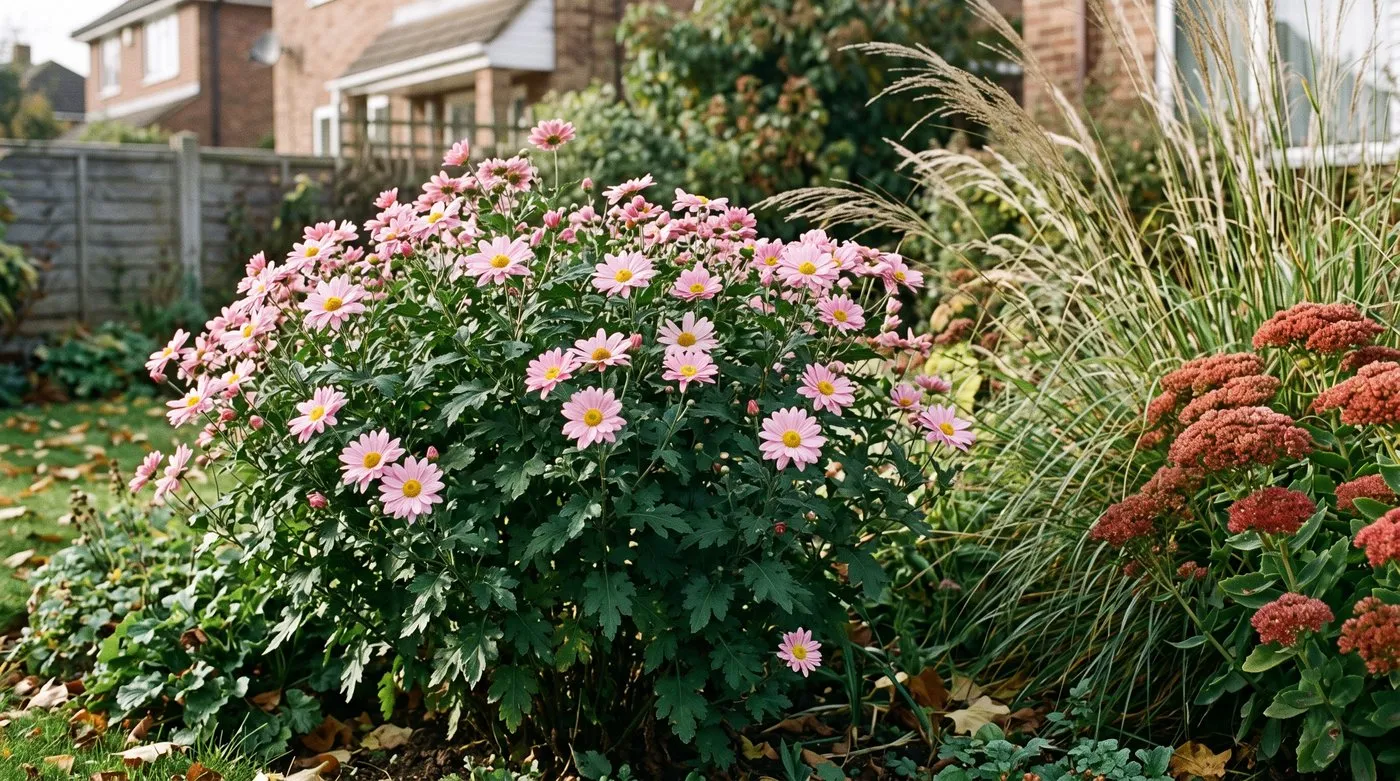
Hardy Rubellum types like Clara Curtis stay in the ground all year in most gardens. Sun and well-drained soil are about all they ask for.
Hardy chrysanthemum variety comparison
| Variety | Flowers | When | Height | Good for |
|---|---|---|---|---|
| ’Clara Curtis’ | Soft pink, single | Aug to Oct | 60-75cm | Easy, reliable colour |
| ’Mary Stoker’ | Apricot-yellow | Sep to Oct | 65-75cm | Cutting |
| ’Emperor of China’ | Pink, double | Oct to Nov | 90-100cm | Late colour, bronze leaves |
| ’Duchess of Edinburgh’ | Deep red | Oct to Nov | 65-75cm | Cottage gardens |
| ’Pennine Jade’ | White | Sep to Oct | 80cm | Cutting |
| ’Anastasia’ | Pale pink | Sep to Oct | 90cm | Cutting, needs a sheltered spot |
How and when should I plant chrysanthemums?
Give them full sun and rich soil that drains well. On heavy clay, dig in plenty of garden compost and some grit. Wet soil in winter kills even the toughest varieties.
Plant in April or May once the soil has warmed. In the north, wait until early May. Space plants 45-60cm apart so air can move between them, which helps keep mildew away. A handful of general fertiliser at planting helps on poor soil. Cover new plants with fleece if a late frost is forecast.
They look great with other late flowers. Try them beside dahlias, which like the same conditions, or with grasses. In a cottage garden planting scheme they sit happily with asters, sedums and rudbeckias.
When and how should I pinch out chrysanthemums?
This is the job that makes the biggest difference. Skip it and you get one or two tall stems with a few flowers on top. Pinch twice and you get a bushy plant covered in blooms.
First pinch: In May, when shoots are 20-25cm tall, nip off the tip with your finger and thumb, just above the third or fourth leaf. This makes the plant branch out.
Second pinch: In June, when those new side shoots are 15-20cm long, nip their tips too.
Stop pinching by the end of June, or mid-June in the north. Any later and the plant may not flower before the frosts.
Show growers often pinch once in late April. When buds form, they remove the small side buds next to the main one on each stem. That gives fewer but much bigger flowers.
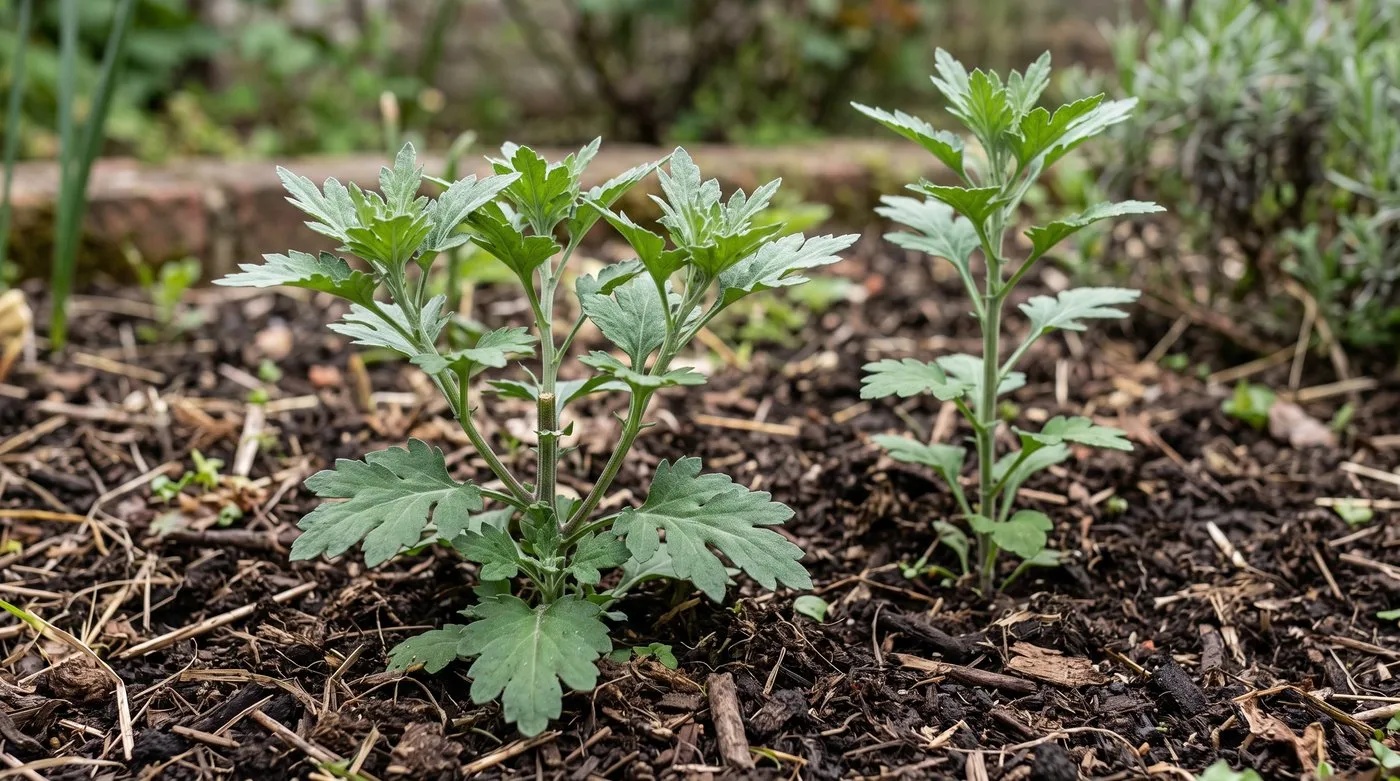
One pinch in May and another in June turns a single stem into a bushy plant covered in flowers. Stop by the end of June so it still flowers in time.
How do I take chrysanthemum cuttings?
Cuttings give you free plants that look just like the parent. It’s how show growers keep their favourites going.
Once stored plants are back in the warmth in late winter, fresh shoots grow from the base. Take them when they’re 8-10cm long.
Cut just below a leaf joint with a sharp knife and remove the lowest leaves. Rooting powder is optional, as they root easily. Push them into small pots of half compost, half grit. If you’ve ever sown seeds indoors, the same warm, humid set-up works here.
Cover with a clear bag or propagator lid and keep somewhere warm, out of strong midday sun. They usually root in three to four weeks. Pot them up once roots show at the bottom.
How do I feed and water chrysanthemums?
Chrysanthemums are hungry, and feeding really shows in the flowers.
Start in May once plants are growing well. Use a balanced liquid feed every two weeks through May, June and July. From August, switch to tomato feed to help the flowers. Stop feeding by late September, as late feeding just makes soft leaves that frost will damage.
Water regularly in summer. They droop and can drop buds if they dry out. A mulch of compost in June keeps the soil moist and the weeds down. Never let pots dry right out.
They’re handy in companion planting schemes too. Late flowers feed bees, butterflies and hoverflies when little else is around, so they fit well in a bee-friendly garden. Grow them alongside summer flowers like sweet peas and the bees have food for months.
How do I overwinter chrysanthemums?
Hardy garden types
Hardy types need very little help. After the first hard frost blackens the leaves, cut the stems back to 15cm and leave the roots in the ground. In heavy clay or a cold garden, cover the crown with a mulch of dry compost or bark. Pull it back in March when new shoots show.
A very hard winter can still kill some plants, so take a few cuttings each spring as a backup. Every two or three years, dig up big clumps in spring and split them. Replant the young outer pieces and throw away the old woody middle.
Exhibition and late-flowering types
These are tender. Lift them before the first hard frost, usually in October. Cut the stems back to 20cm, dig up the roots with a fork and pack them into boxes of barely damp compost. Keep them in a frost-free greenhouse, cold frame or porch.
These stored roots are called “stools”. Check them monthly and keep the compost just damp, never wet. In February, bring them somewhere warmer to wake them up and grow shoots for cuttings.

Tender types are lifted in October and stored as stools in barely damp compost. Keep them frost-free and they’ll give you shoots for cuttings in spring.
How do I grow chrysanthemums as cut flowers?
Chrysanthemums last ages in a vase, often two weeks or more. Spray types, with lots of smaller flowers per stem, are the best for cutting.
Cut stems when the first bud in the cluster starts to open. Fully open flowers won’t last as long, and tight buds may never open.
Cut in the cool of the morning. Strip any leaves that would sit in the water. Trim the stem ends and pop them straight into a clean vase. The sap clouds the water, so change it every couple of days and trim the stems a little each time.
Sprays like ‘Anastasia’ and ‘Pennine Jade’ are good choices. Grow them in rows in the veg patch or in containers where they’re easy to look after.
Month-by-month chrysanthemum calendar
| Month | Jobs |
|---|---|
| February | Bring stored stools somewhere warmer to grow new shoots |
| March | Take cuttings. Pot up rooted ones |
| April | Plant out hardy types. Harden off young plants |
| May | First pinch. Start feeding every two weeks |
| June | Second pinch. Keep watering and feeding |
| July | Keep feeding. Stake tall show types. Check for aphids |
| August | Switch to tomato feed. Hardy types start flowering |
| September | Cut sprays for the house. Deadhead faded flowers |
| October | Hardy types at their best. Lift tender types before hard frost |
| November | Cut back hardy types after frost. Mulch crowns in cold spots |
| December | Check stored stools. Keep them frost-free and not too wet |
| January | Check stools for rot. Choose new varieties |
What pests and diseases affect chrysanthemums?
Aphids cluster on soft tips and buds from May. Check plants weekly and squash small groups with your fingers. A ready-made insecticidal soap, used as the label says, helps with bigger outbreaks. Ladybirds and hoverflies are great helpers, so make your garden welcoming for them.
Earwigs nibble petals and buds. Trap them in upturned pots stuffed with straw on canes among the plants. Empty the traps each morning.
Powdery mildew shows up in dry weather or when plants are crowded. Space plants well and water the soil, not the leaves. Pick off affected leaves.
White rust is a serious disease that shows as pale pustules under the leaves. If you spot it, don’t compost the plant. Bin it instead.
Once your chrysanthemums are sorted, try growing dahlias too. They flower at the same time and love the same sunny, well-fed borders.
For more autumn and winter colour, see our best winter-flowering plants, and add chrysanthemums to your list of spring gardening jobs.
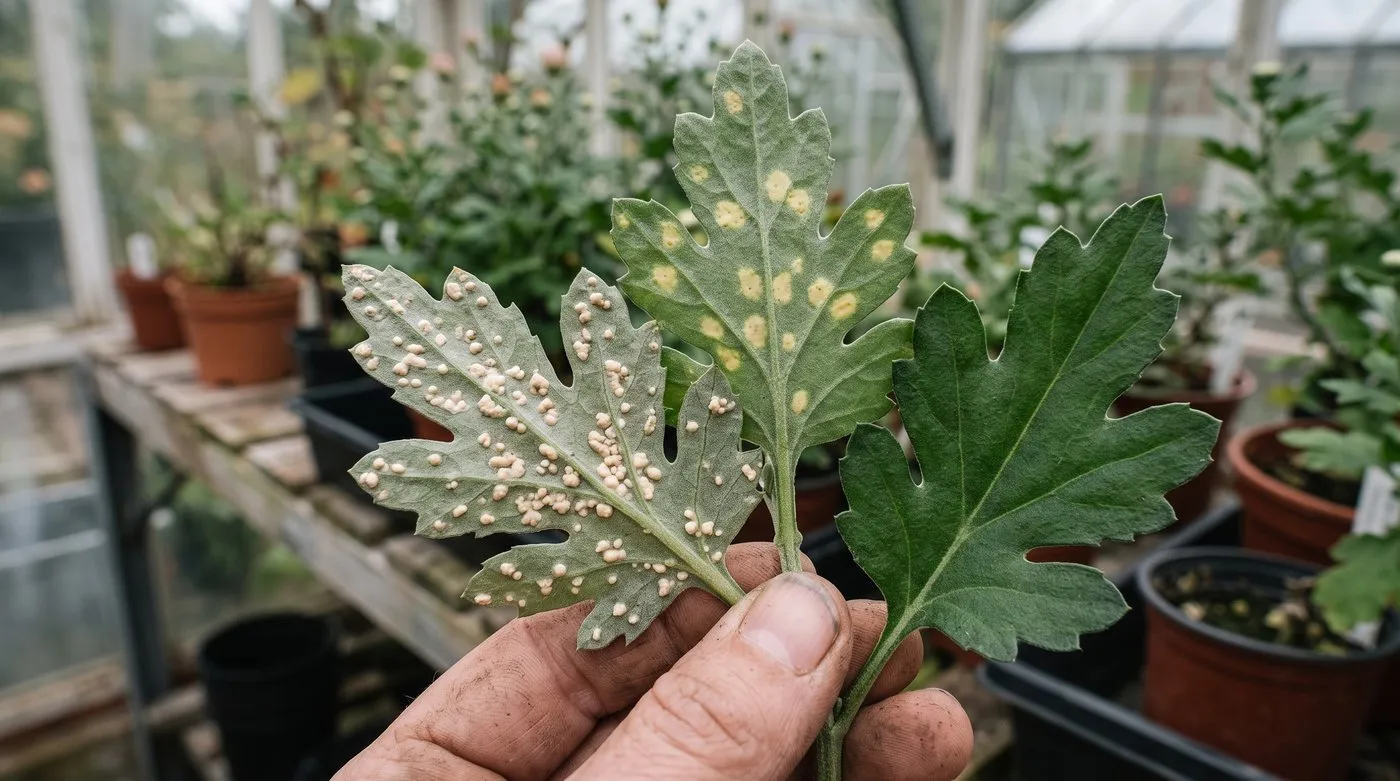
Pale raised pustules under the leaves are the sign of white rust. It’s serious, so bin affected plants rather than composting them.
Frequently asked questions
Are chrysanthemums hardy in the UK?
Some are and some aren’t. Hardy garden types, like the Korean and Rubellum groups, stay outside in most gardens. Give them well-drained soil, as winter wet kills more than cold. Show and late-flowering types are tender, so lift them and keep them under glass.
When do chrysanthemums flower in the UK?
From late summer into November, depending on the variety. ‘Clara Curtis’ starts in late summer. ‘Emperor of China’ flowers in October and November, often until the first hard frosts.
How do I grow chrysanthemums for cutting?
Grow spray types, which carry lots of flowers per stem. Give them full sun and rich, well-drained soil. Cut stems when the first bud in each cluster starts to open. Strip the lower leaves and stand them in fresh water. They often last two weeks or more.
Do chrysanthemums need feeding?
Yes, they’re hungry plants. Feed every two weeks from late spring with a balanced liquid feed. Switch to tomato feed from August to help the flowers. Stop feeding by late September.
Can I grow chrysanthemums in pots?
Yes, compact sprays and hardy Korean types do well in pots. Choose one 30-40cm across and use John Innes No.3, which is heavy enough to stop it tipping. Feed and water more often than plants in the ground. Move tender types under glass before frost.
Are chrysanthemums good for bees?
Yes, single-flowered types are great late food for bees. ‘Clara Curtis’ and other open, daisy-like flowers are easiest for bees to feed from. Fully double show types are much less use, as the pollen is hidden under the petals.
Why are my chrysanthemum leaves turning yellow?
In summer, it’s usually too much water or poor drainage. Check that pots drain freely and the border doesn’t puddle. Pale leaves all over can mean the plant is hungry, so feed more often. Yellowing in late autumn is just the plant winding down.
Can I grow chrysanthemums from seed?
Yes, some hardy and bedding types come as seed. Sow indoors in February or March somewhere warm, then pot seedlings on when big enough to handle. Named varieties don’t come true from seed, so grow those from cuttings.
Our team produces practical UK gardening guidance from source research, contributor records and established horticultural practice. Editorial standards are overseen by Matt W.