Key takeaways
- Leave seedheads standing over winter for frosty structure, bird food and insect shelter
- Echinacea, sedum, globe thistle, phlomis and sea holly keep their shape best
- Miscanthus and Calamagrostis 'Karl Foerster' glow when the low winter sun shines through them
- Teasel is the top seedhead for goldfinches, with echinacea and rudbeckia close behind
- Cut most plants back in late February or March, just before new growth starts
- Don't cut evergreen grasses such as Stipa gigantea to the ground; comb out dead leaves instead
The best plants for winter seedheads keep your garden interesting long after the flowers have gone. Echinacea, sedum, globe thistle, teasel and grasses such as miscanthus hold their shape through cold weather. A hard frost turns them silver, goldfinches feed on the seeds and insects shelter in the stems. All you have to do is leave them standing until late winter.
Why leave seedheads standing through winter?
Leaving seedheads gives a winter garden three things a bare border can’t: structure, food for birds and shelter for insects. Cutting everything down in autumn throws all three away just to look tidy.
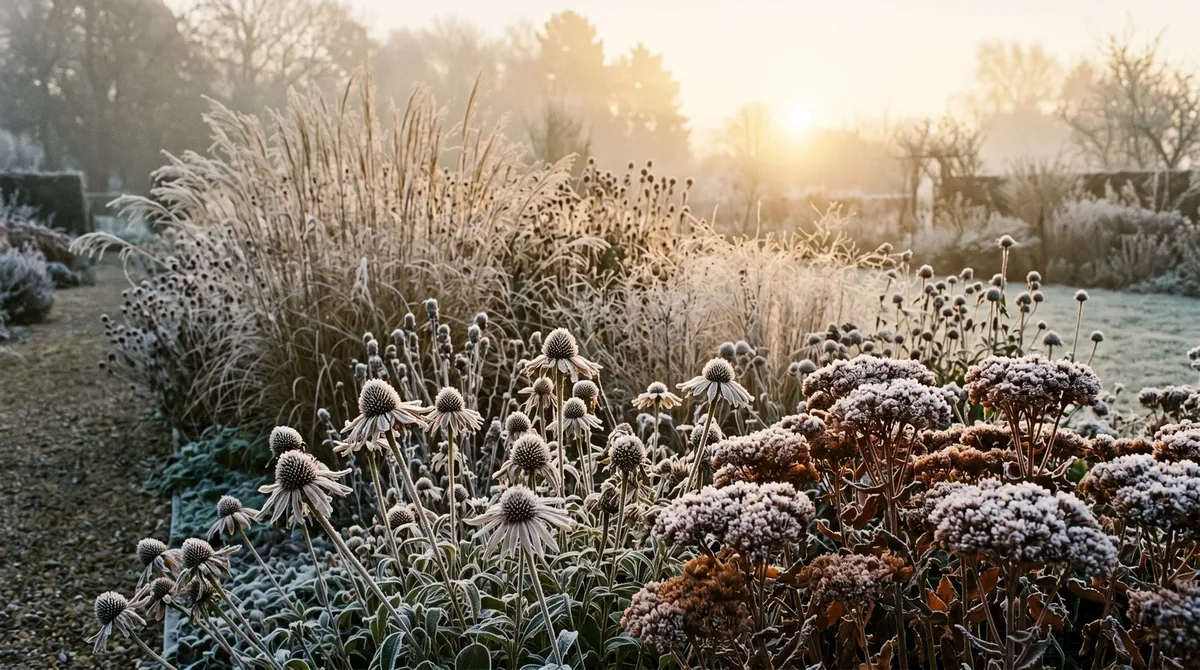
The dried heads of echinacea, sedum and grasses keep their shape in cold and snow. On a frosty morning every seedhead is outlined in white and lit by the low sun. It’s one of the best sights of the gardening year, and it costs nothing.
Some plants are worth not deadheading at all, so they can set these seedheads. Our guide to plants you should never deadhead lists them.
The 15 best plants for winter seedheads
The best winter borders mix sturdy seedhead perennials with airy grasses. Perennials give solid shapes that hold frost. Grasses add movement and catch the light.
| Plant | Winter seedhead | Good for birds? | Height |
|---|---|---|---|
| Echinacea (coneflower) | Spiky dark cones on stiff stems | Yes, goldfinches | 60-90cm |
| Rudbeckia | Dark domes on rigid stems | Yes | 60-90cm |
| Sedum (Hylotelephium) | Flat russet heads | Some | 30-60cm |
| Globe thistle (Echinops) | Round, spiky balls | Some | 90-120cm |
| Phlomis russeliana | Tiers of whorls up the stem | Some | 60-90cm |
| Sea holly (Eryngium) | Spiky silver-brown cones | Some | 60-90cm |
| Allium | Round, star-burst spheres | Mainly for looks | 60-120cm |
| Teasel (Dipsacus) | Spiny brown heads | Yes, goldfinch favourite | 1.5-2m |
| Achillea (yarrow) | Flat brown plates | Some | 60-90cm |
| Honesty (Lunaria) | See-through silver discs | Some | 60-90cm |
| Hydrangea paniculata | Papery dried flower heads | Mainly for looks | 1.2-2m |
| Verbena bonariensis | Dark, airy seed clusters | Some | 1.5-1.8m |
| Miscanthus | Silvery, feathery plumes | Shelter for insects | 1.2-2.5m |
| Calamagrostis ‘Karl Foerster’ | Stiff, upright buff plumes | Shelter for insects | 1.5m |
| Stipa gigantea | Golden, oat-like sprays | Shelter for insects | Up to 2m |
Echinacea and rudbeckia give dark, spiky cones on stems that rarely collapse. Our guide to growing echinacea covers the best varieties. Sedum fades to rich russet and holds frost on its flat heads, as our sedum guide shows.
Globe thistle keeps its round, spiky balls well into winter. See our guide to growing echinops for planting tips. Phlomis and sea holly add tiered and spiky shapes.
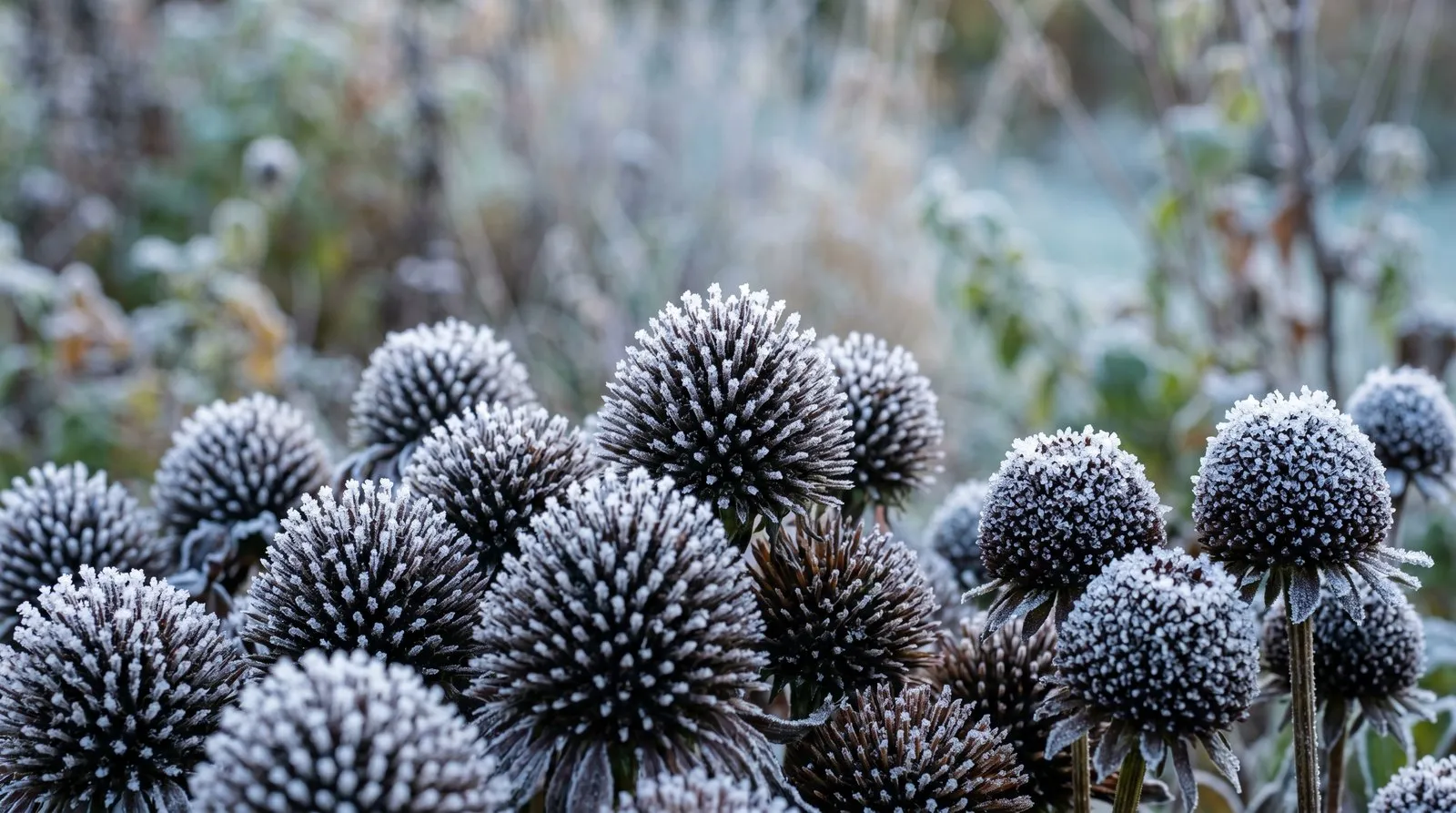
Globe thistle heads keep their spiky round shape all winter and look stunning dusted with frost.
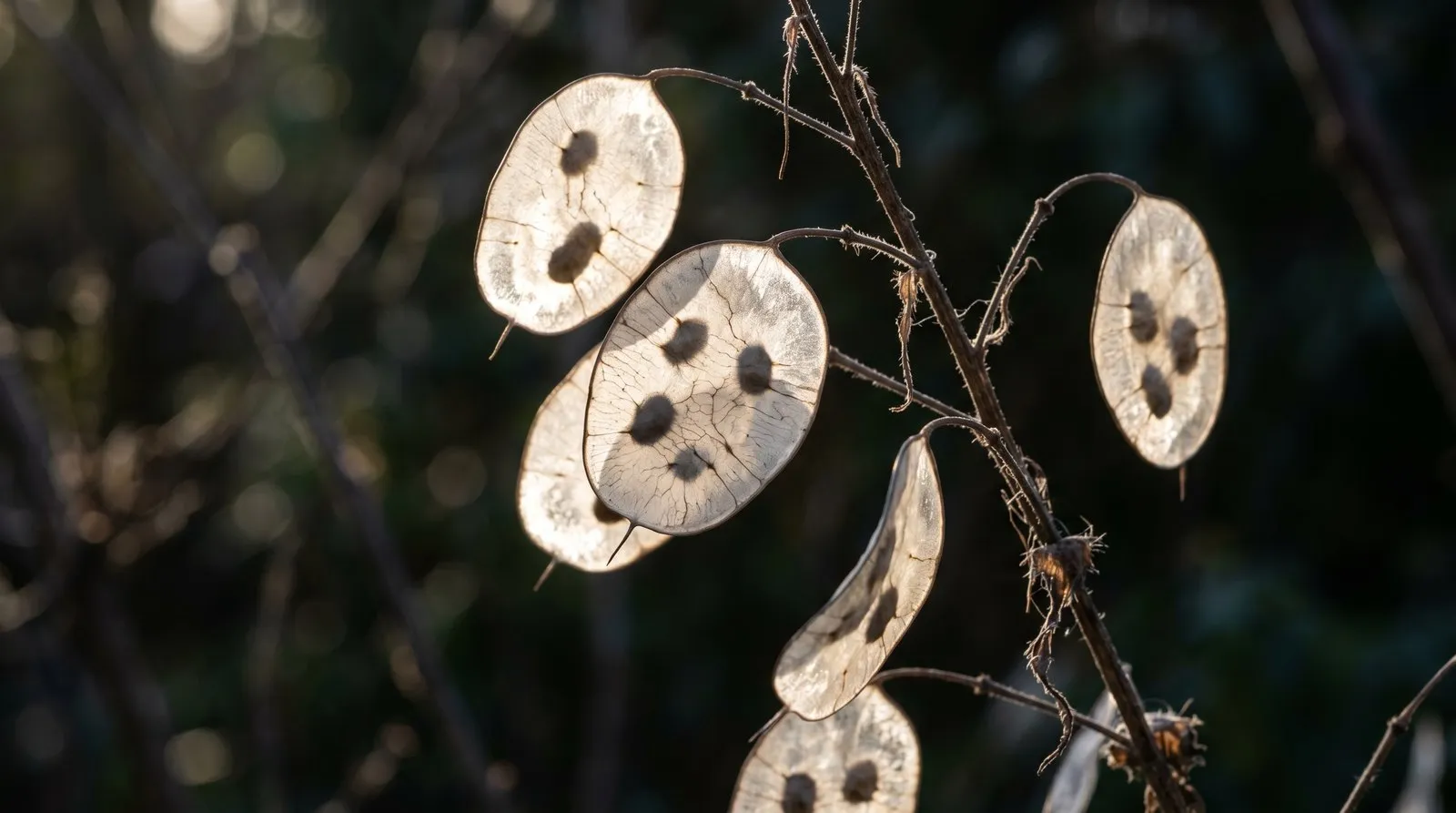
Honesty’s papery silver discs glow when the low winter sun shines through them.
Grasses for movement and winter light
Ornamental grasses are the other half of a great winter border. They move in the wind and glow in the low winter sun.
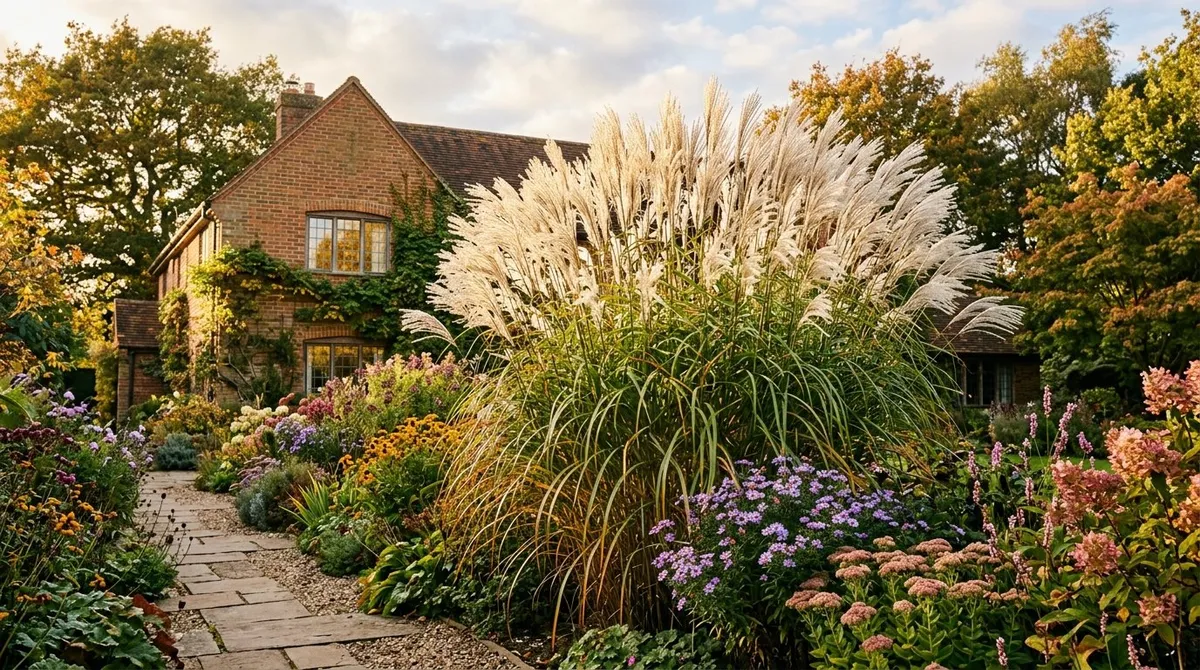
Miscanthus has silvery plumes that last from autumn well into winter. Calamagrostis ‘Karl Foerster’ stands stiffly upright and hardly ever flops. Stipa gigantea sends up golden, oat-like sprays that shimmer in low light.
Where you put grasses matters. Plant them where the low winter sun can shine through them from behind. Lit from behind they glow, but lit from the front they can look a bit beige. Our guide to ornamental grasses covers more choices.
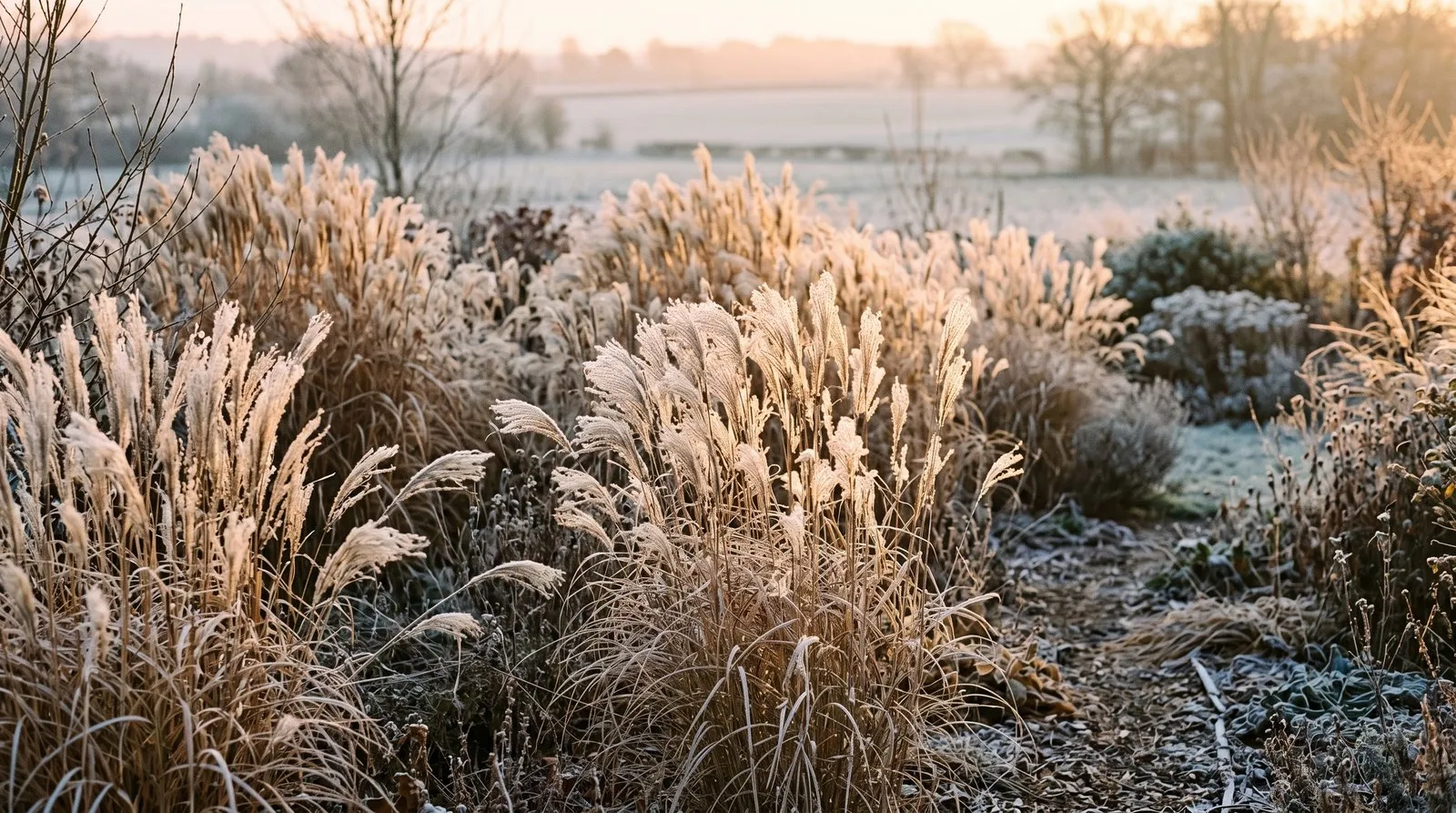
Grasses come alive when the low winter sun shines through their frosty plumes.
Which seedheads feed the birds?
Teasel is the best seedhead for birds. Goldfinches use their fine beaks to pull the seeds out of the spiny heads. Let a few teasels seed themselves at the back of a border or in a wild corner, and goldfinches will soon find them.
Echinacea, rudbeckia and many grasses feed finches through the cold months too. A border of seedheads becomes a natural bird table that refills itself. Our winter wildlife garden guide has more ways to help birds and insects through the cold months.
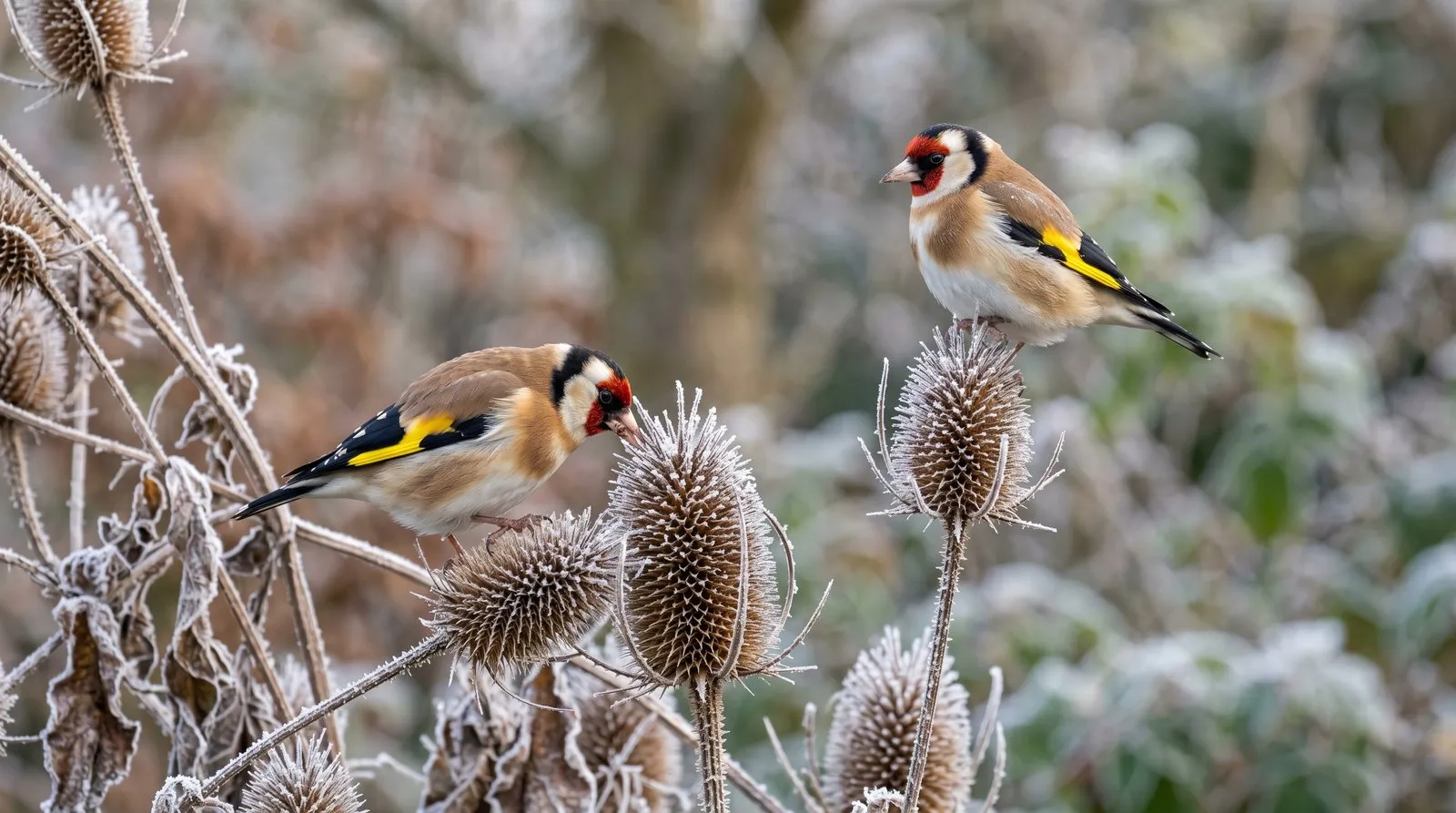
Goldfinches love teasel. Leave the heads standing and you’ll often see them feeding on frosty mornings.
Planting a border that looks good in winter
Plant seedhead perennials and grasses together in drifts of three, five or more, rather than single plants dotted about. In summer it looks like a meadow of flowers. In winter it becomes a mass of seedheads and grasses.
Plan for the winter view from the start. Put tall grasses where the low sun will light them from behind. Set sturdy perennials against a dark hedge or the sky, so their frosted heads stand out. Choose plants with strong stems that won’t collapse in the first wet gale. Our guide to prairie-style planting explains how to design a whole border this way.
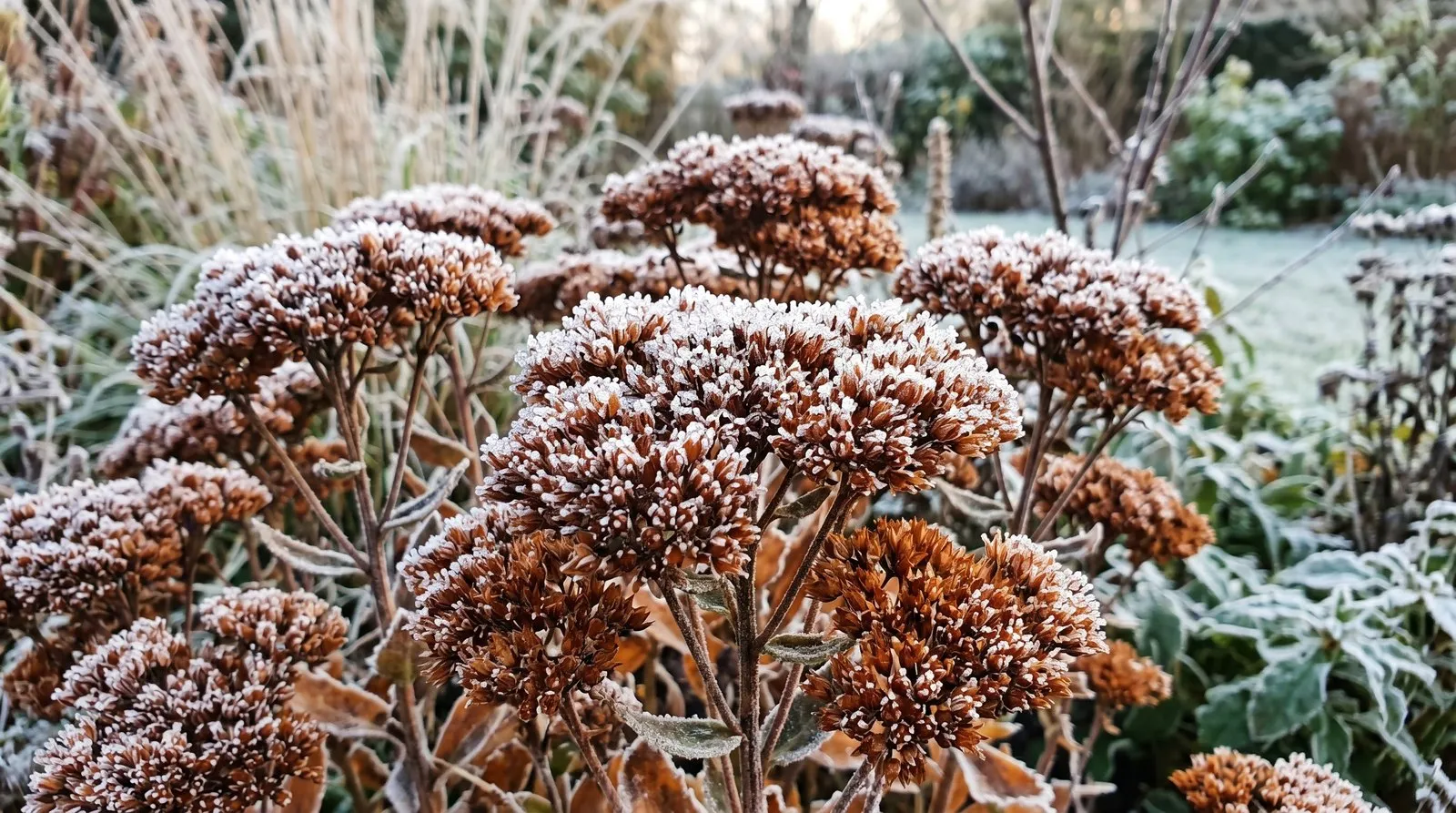
Sedum turns a rich russet and holds frost beautifully. Leave it standing all winter.
When and how to cut back seedheads
Cut back in late February or early March, just before new shoots appear. In colder northern gardens, early to mid March is fine. If you leave it too late, you risk snapping the new growth.
- Perennials such as echinacea, rudbeckia, sedum and globe thistle: cut the old stems down close to the ground.
- Deciduous grasses such as miscanthus and calamagrostis: cut the whole clump down to a few centimetres above the ground.
- Evergreen grasses such as Stipa gigantea and Stipa tenuissima: don’t cut them down. Comb out the dead leaves with gloved fingers and remove the old flower stems.
- Hydrangea paniculata: prune in late winter or early spring, back to a pair of healthy buds.
Chop the old stems and add them to the compost heap. Leaving a few hollow stems in a quiet corner gives insects somewhere to finish emerging.
Common mistakes with winter seedheads
- Cutting everything down in autumn. You lose months of interest and wildlife value.
- Choosing floppy plants. Some perennials turn to mush in the first wet spell. Pick ones with sturdy stems.
- Hiding grasses in shade. Without low sun behind them, grasses lose their glow.
- Cutting back too late. Wait until March in the north, but don’t leave it until the new shoots are tall.
- Scalping evergreen grasses. Cutting Stipa gigantea to the ground can kill it. Comb it instead.
Frequently asked questions
What are the best plants for winter seedheads?
Echinacea, rudbeckia, sedum, globe thistle and sea holly are some of the best. Phlomis, teasel and honesty add different shapes. For movement and light, add grasses such as miscanthus and Calamagrostis ‘Karl Foerster’. Mix sturdy perennials with airy grasses for the best effect.
Should I cut back seedheads in autumn or leave them?
Leave them standing and cut back in late February or March. Cutting in autumn throws away the frosty display, the bird food and the shelter for insects. Only tidy plants in autumn that flop, rot or turn to mush in the wet.
Which seedheads feed birds in winter?
Teasel is the best, as goldfinches love its seeds. Echinacea, rudbeckia, sunflowers and many grasses feed finches and other seed-eating birds too. Leaving them standing gives birds natural food when it’s scarce.
When should I finally cut back my seedheads?
Cut back in late February or early March, before new shoots appear. In colder northern gardens, early to mid March is fine. Cut deciduous grasses and perennials close to the ground so light reaches the new growth. Comb evergreen grasses instead of cutting them.
Do seedheads really help wildlife?
Yes, in two ways. The seeds feed birds such as goldfinches through winter. Hollow and standing stems give shelter to overwintering insects, including ladybirds, which help eat aphids again in spring.
Now your borders are set for winter, read our guide to creating a four-season garden to keep the interest going all year, or browse the plants hub for more ideas.
Our team produces practical UK gardening guidance from source research, contributor records and established horticultural practice. Editorial standards are overseen by Matt W.