Key takeaways
- Foxgloves, aquilegia, nigella and honesty are the easiest self-seeders to start with
- Leave some soil bare or use gravel, as thick bark mulch stops seeds coming up
- Let seed pods ripen before you cut stems down in autumn
- Thin seedlings in April and May, keeping the strongest
- Pull or hoe off seedlings you don't want while they're small
Self-seeding plants do the replanting for you. They drop seed in summer, and new plants pop up nearby the next spring. Cottage garden borders have worked this way for centuries. You get a garden that fills itself in, looks a little different each year and costs next to nothing.
Here’s which plants self-seed well in the UK, how to manage them and how to plan a border around them. Whether you’re starting a border from scratch or just want more life in an existing one, self-seeders bring a relaxed, natural feel.
Which plants self-seed reliably in the UK?
The best self-seeders ripen seed in a British summer, survive winter as seed and then hold their own among other plants. The RHS guide to self-sowing plants is a good place for more ideas.
Here are the most dependable ones, grouped by type.
Biennials
Biennials grow leaves in year one, flower in year two, set seed and die. Then the cycle starts again on its own.
- Foxglove (Digitalis purpurea), 60-150cm. Flowers June to July. Happy in shade or sun. The wild purple one self-seeds best. Hybrids like ‘Camelot’ and ‘Excelsior’ self-sow too, but drift back to purple after a few years. All parts are poisonous, so wear gloves and keep children from nibbling.
- Honesty (Lunaria annua), 60-90cm. Flowers April to May. The purple form is the strongest. Copes with deep shade.
- Verbascum (Verbascum bombyciferum), 120-180cm. Flowers June to August. Silvery, furry rosettes appear in autumn. Space seedlings about 40cm apart for big flower spikes.
- Wallflower (Erysimum cheiri), 30-60cm. Flowers March to May. A short-lived perennial usually grown as a biennial. Seeds itself into chalky soil and old walls.
Hardy annuals
Hardy annuals grow, flower and seed in one year, and they make plenty of seed.
- Nigella (Nigella damascena), 40-50cm. Flowers June to July. ‘Miss Jekyll’ is the classic sky-blue one. It often sows itself in autumn, sits through winter as small plants and flowers early. One of the most reliable self-seeders you can grow.
- Pot marigold (Calendula officinalis), 30-60cm. Flowers May to October. Big, easy-to-spot seeds. Seedlings appear in March. Thin them to about 20cm apart.
- Opium poppy (Papaver somniferum), 60-100cm. Flowers June to July. Each pod holds lots of seed. Leave pods on until they rattle when shaken.
- Poached egg plant (Limnanthes douglasii), 15-20cm. Flowers May to July. Lovely along the front of a border. It self-sows so freely it can get a bit much, so pull spares in April.
Perennials that self-seed
These come back every year and scatter seedlings around themselves too.
- Aquilegia (Aquilegia vulgaris), 60-80cm. Flowers May to June. It mixes freely, giving seedlings in every shade from deep purple to white. Named varieties won’t come true. Perfect for cottage-style borders.
- Verbena bonariensis, 120-180cm. Flowers July to October. Tall, airy stems with purple flower heads. Loves to seed into gravel, paths and cracks. Seedlings appear in spring.
- Erigeron karvinskianus, 15-30cm. Flowers May to October. Also called Mexican fleabane. Tiny white-to-pink daisies that seed into walls, paving and gravel, and spread steadily.
- Welsh poppy (Papaver cambricum), 30-45cm. Flowers April to August, in yellow or orange. A British native that loves damp shade. It spreads with real enthusiasm, so watch it in a small garden.
- Astrantia (Astrantia major), 60-80cm. Flowers June to August. Seeds itself gently in moist, part-shaded borders. Seedlings of ‘Roma’ and ‘Hadspen Blood’ vary from the parent.
Self-seeding plants at a glance
| Plant | Height | Flowers | How fast it spreads | Light | Soil |
|---|---|---|---|---|---|
| Foxglove | 60-150cm | Jun-Jul | Fast | Sun or shade | Any |
| Aquilegia | 60-80cm | May-Jun | Steady | Sun or part shade | Well-drained |
| Nigella | 40-50cm | Jun-Jul | Fast | Sun | Light, free-draining |
| Verbena bonariensis | 120-180cm | Jul-Oct | Steady | Sun | Well-drained |
| Honesty | 60-90cm | Apr-May | Steady | Shade or sun | Any |
| Erigeron | 15-30cm | May-Oct | Fast | Sun | Poor, gritty |
| Welsh poppy | 30-45cm | Apr-Aug | Very fast | Shade or part shade | Moist |
| Opium poppy | 60-100cm | Jun-Jul | Fast | Sun | Any |
| Verbascum | 120-180cm | Jun-Aug | Slow | Sun | Poor, dry |
| Pot marigold | 30-60cm | May-Oct | Steady | Sun | Any |
How to encourage self-seeding in your borders
The main reason self-seeding fails is a gardener who’s too tidy. Seeds need bare soil, light and moisture. A thick layer of bark mulch blocks all three.
Leave bare soil in spring
In March, pull mulch back from around your self-seeders. Leave patches of bare soil so seedlings can come up without fighting through mulch. Scratch the surface with a hand fork to give seeds somewhere to lodge.
Stop deadheading at the right time
Keep deadheading repeat-flowering perennials through summer for more flowers. But stop deadheading your self-seeders by late July. The pods need a few weeks to ripen. Foxglove pods turn brown and split open. Nigella pods rattle when ready. Aquilegia pods open into little stars.
When the seed drops
Plants drop seed at different times, which helps you plan tidying and thinning.
- June to July: wallflower
- July to August: foxglove, aquilegia, nigella, Welsh poppy, honesty
- August to September: verbena bonariensis, verbascum, opium poppy, astrantia
- Through summer and autumn: erigeron, pot marigold
Leave stems standing until the seed has fallen. Cut them down in October or November once they’re brown and dry.
 A self-sown nigella seedling coming up through gravel between lavender plants. Gravel makes a great seedbed.
Use gravel mulch instead of bark
A thin layer of gravel, about 1-1.5cm deep, is perfect for self-seeders. It keeps seeds moist and still lets light through. Horticultural grit or pea gravel both work, and it’s a natural fit for low-maintenance garden designs.
How to manage self-sown seedlings
The difference between a lovely self-seeded border and a weedy mess is a bit of editing. Thin, move and pull seedlings with a plan in mind.
Identify seedlings early
Learn what your seedlings look like when tiny. Foxgloves make flat rosettes of oval, slightly furry leaves. Nigella has feathery, thread-like leaves. Aquilegia has scalloped leaves in threes. Not sure? Leave it until it’s 8-10cm tall and easier to spot.
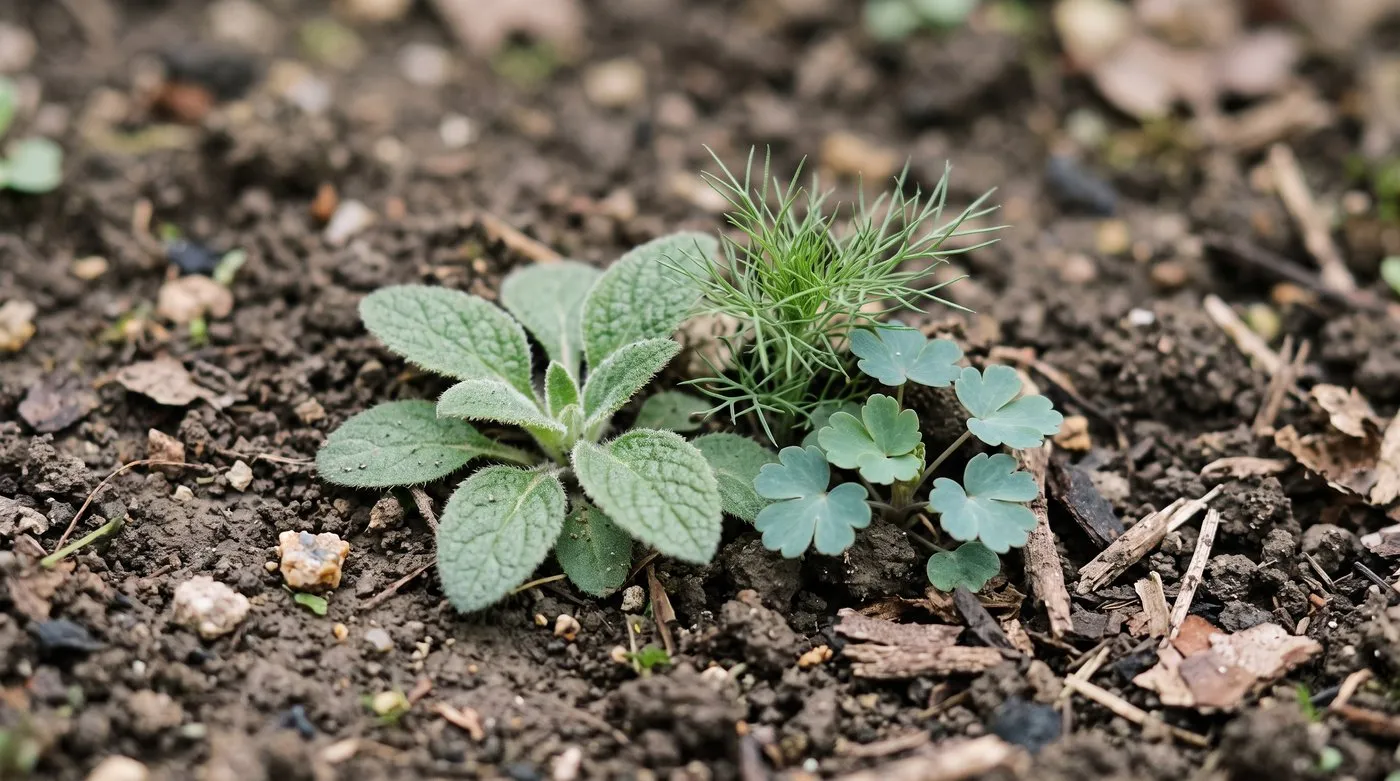
Learn the baby leaves and you’ll stop weeding out your own flowers. Furry rosettes, feathery tufts and scalloped threes are all keepers.
Thin in April and May
When seedlings are 5-8cm tall, thin them to 15-20cm apart. Keep the strongest and pull the weakest. Move spares into gaps or pot them up for friends. Water anything you move straight away, then daily for a week.
Move seedlings while small
Seedlings move best while they’re small, with 4-6 true leaves. Lift them with a hand fork and keep as much root as you can. Pick a cloudy day or an evening, then firm them in and water well. Verbascum grows a deep root quickly, so move it while it’s still small.
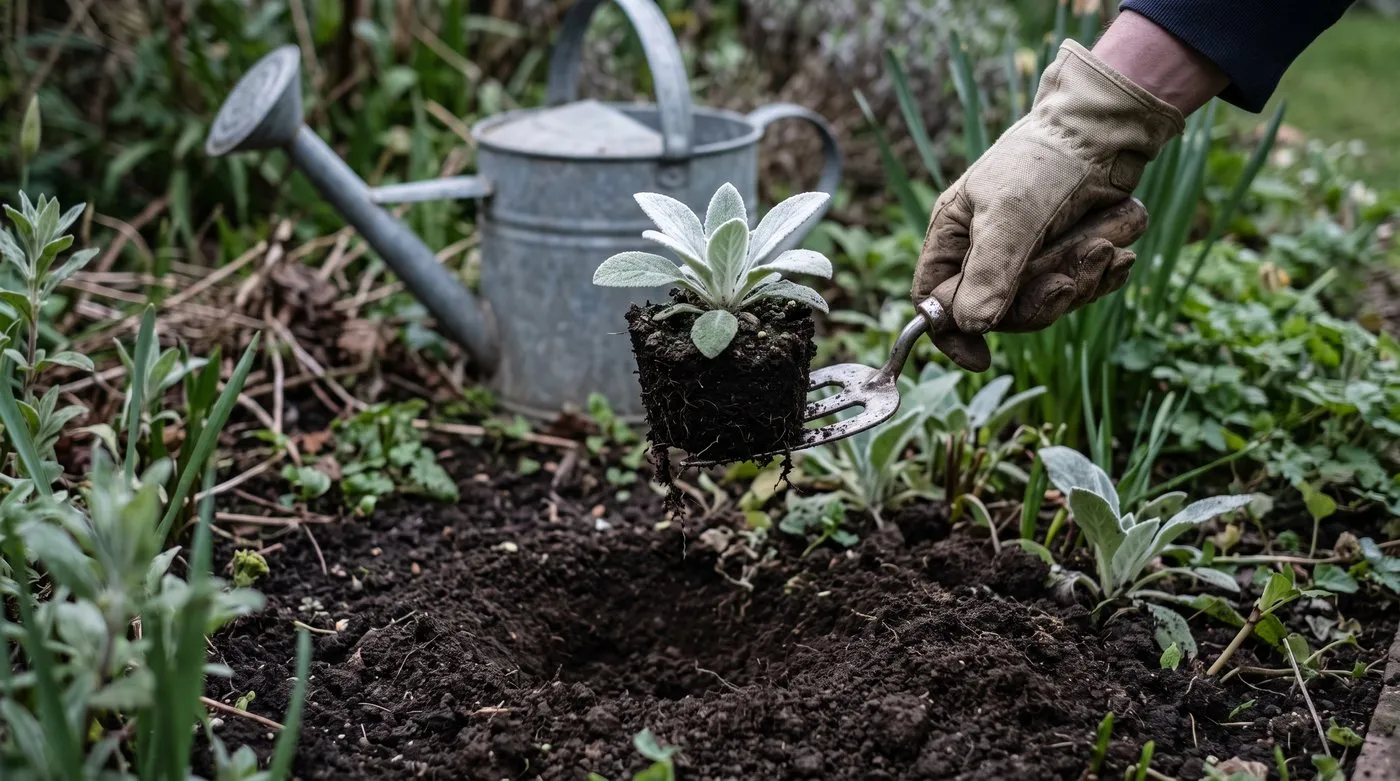
Move seedlings while they’re small, keeping plenty of soil round the roots. Water them in well and keep an eye on them for a week.
Pull out the ones you don’t want
Not every seedling deserves a spot. Hoe off spares in paths and gravel in April. Pull any that will crowd your other plants. A single foxglove can give you hundreds of seedlings, so keep just a few around each parent.
Designing with self-seeding plants
Self-seeding isn’t just a lazy gardener’s trick. Used on purpose, it gives you a natural, slightly wild look that formal planting can’t. Pair self-seeders with ornamental grasses for lovely movement and texture.
 Self-seeded verbena bonariensis and foxgloves weaving through long-lived perennials and grasses.
The matrix planting approach
Plant a base of reliable perennials at even spacing. Then add 3-4 self-seeders to weave through the gaps. They make a loose, changing layer over the permanent plants. It’s the same idea behind Piet Oudolf’s famous naturalistic gardens.
For a border about 3m by 1.5m, try this:
- Permanent plants: 5 Salvia nemorosa ‘Caradonna’ about 40cm apart, with 3 Nepeta ‘Walker’s Low’ at the front
- Self-seeders: Verbena bonariensis (3 plants to start), nigella ‘Miss Jekyll’ (scatter the seed) and 2-3 foxgloves
- Front edge: one Erigeron karvinskianus, which will spread along the edge
After a few years the self-seeders will have filled the gaps. The border will look different every summer.
Colour management
Aquilegia mixes freely and gives every colour from cream to almost black. Over the years most seedlings drift towards a muddy purple. To keep a colour you love, pull off-colour plants before they flower. Or just enjoy the mix.
Foxglove hybrids drift back to wild purple too. For white foxgloves, buy Digitalis purpurea f. albiflora and pull any purple seedlings before they flower.
Self-seeding for wildlife
Self-seeded borders are great for pollinators. Lots of the best self-seeders are on the RHS Plants for Pollinators list. Seedheads left standing over winter feed finches and other birds. Hollow stems give insects somewhere to shelter. It’s a bee-friendly garden with less effort.
Mix enough self-seeders and you’ll have flowers from spring right through to autumn. Add a wildflower lawn next to it and you’ve got a garden that almost looks after wildlife on its own.
 Seed pods at different stages. Foxglove pods split open, nigella pods rattle and honesty discs turn papery silver.
Month-by-month self-seeding calendar
| Month | What to do |
|---|---|
| January to February | Leave borders alone. Seedlings sit through winter as small rosettes. |
| March | Pull mulch back from self-seeding patches and scratch the soil. First seedlings appear as it warms. |
| April | Spot and thin seedlings to 15-20cm apart. Move spares. Hoe off seedlings in paths. |
| May | Final thinning. Stake tall verbascum in windy spots. Water moved seedlings in dry spells. |
| June | Enjoy the show. Stop deadheading biennials so foxgloves and honesty can set seed. |
| July | First pods ripen. Foxglove pods turn brown, starting with the lowest ones. |
| August | The main month for seed drop. Leave stems standing. Honesty discs turn papery. |
| September | Late seed from verbena bonariensis and erigeron. Cut back anything that has finished. |
| October to November | Clear spent stems once the seed has dropped. Leave a few hollow stems for insects. |
| December | Plan next year. Note which self-seeders did well and where the gaps are. |
Common mistakes with self-seeding plants
Mulching too thickly. A deep layer of bark stops nearly all seedlings. Use a thin layer of gravel instead, or leave some patches bare.
Cutting back too early. Clearing borders in July or August takes the pods off before they ripen. Wait until October.
Keeping every seedling. Crowded seedlings grow weak and spindly and flower poorly. Keep a few strong ones per plant.
Ignoring the thugs. Welsh poppies, green alkanet and herb Robert can swamp a border in a couple of years. Deadhead them hard, or pull them out if they start to take over.
Relying only on self-seeders. A border still needs a backbone of shrubs, grasses and long-lived perennials. Self-seeders are there to fill the gaps, not to be the whole show.
Frequently asked questions
What are the easiest self-seeding plants for UK gardens?
Foxgloves, aquilegia, nigella and honesty are the easiest. They come up on most soils without any fuss. Foxgloves and honesty flower in their second year, while aquilegia and nigella are quicker. Foxgloves, aquilegia and honesty cope with some shade, but nigella wants full sun.
How do I stop self-seeding plants taking over?
Cut off the flowers before the seed pods split. Pull out spare seedlings in spring while they’re small and easy. A thick bark mulch stops seeds coming up where you want the soil kept clear. Hoe paths and gravel now and then before seedlings settle in.
Do self-seeding plants come true from seed?
Wild types usually do. Foxgloves, nigella and verbascum seedlings mostly look like the parent. Aquilegia mixes freely, so you get a surprise range of colours. Named varieties often don’t come true and drift back towards the wild type over a few years.
When do self-sown seedlings appear?
Most pop up in spring as the soil warms. Some seed needs a cold winter before it will sprout. Others, like nigella and some poppies, come up in autumn, sit through winter as small plants and flower earlier. Learn what your seedlings look like before you weed.
Can I encourage self-seeding in a mulched border?
Yes, if you leave some soil bare or thinly mulched. Thick bark mulch stops seeds coming up. Pull it back from around your self-seeders before the seed drops, and scratch the soil a little. A thin gravel mulch actually helps, as it keeps seeds moist.
Will self-seeding plants damage paving or walls?
Most cause little or no harm. Seedlings in cracks have shallow roots and pull out easily. Mexican fleabane (Erigeron karvinskianus) and ivy-leaved toadflax live happily in wall cracks. Pull out woody seedlings like buddleja early, as their roots can damage walls over time.
What soil type is best for self-seeding?
Free-draining soil with a gritty, crumbly top suits most self-seeders. Heavy clay can form a crust that seeds struggle through. A layer of horticultural grit over clay gives them a better start. Gravel gardens are brilliant for self-seeders.
Our team produces practical UK gardening guidance from source research, contributor records and established horticultural practice. Editorial standards are overseen by Matt W.