
Key takeaways
- Aquilegia flowers in May and June and copes with sun or quite deep shade
- Plants only last a few years but seed themselves to keep the show going
- Cut flower stems straight after flowering if you don't want lots of seedlings
- Different types cross, so seedlings can come up in surprise colours
- Check under the leaves from April for sawfly caterpillars and pick them off
Aquilegia, or granny’s bonnet, is one of our native cottage-garden flowers. It nods its pretty bonnets in May and June along woodland edges, hedge bottoms and shady borders. Each plant only lasts a few years, but it seeds itself so freely that a patch keeps going for ages.
Here’s how to choose, grow and look after them. For more plants for tricky shady corners, see our best plants for shade.
What does aquilegia look like when it flowers?
Aquilegia has nodding flowers with little spurs at the back, held on thin wiry stems above mounds of blue-green leaves. Our native type comes in purple, blue, pink and white.
In flower it’s about 60-90cm tall, with a clump of leaves around 30cm wide. The leaves are split into rounded, lobed sections, so you can spot the plant before it flowers. They appear early in spring, often by late February, so aquilegia makes good cover under trees and shrubs before those leaf up.
Flowers last several weeks from mid to late May. Afterwards, seed pods form on the stems. When ripe they split and scatter tiny black seeds around the plant.
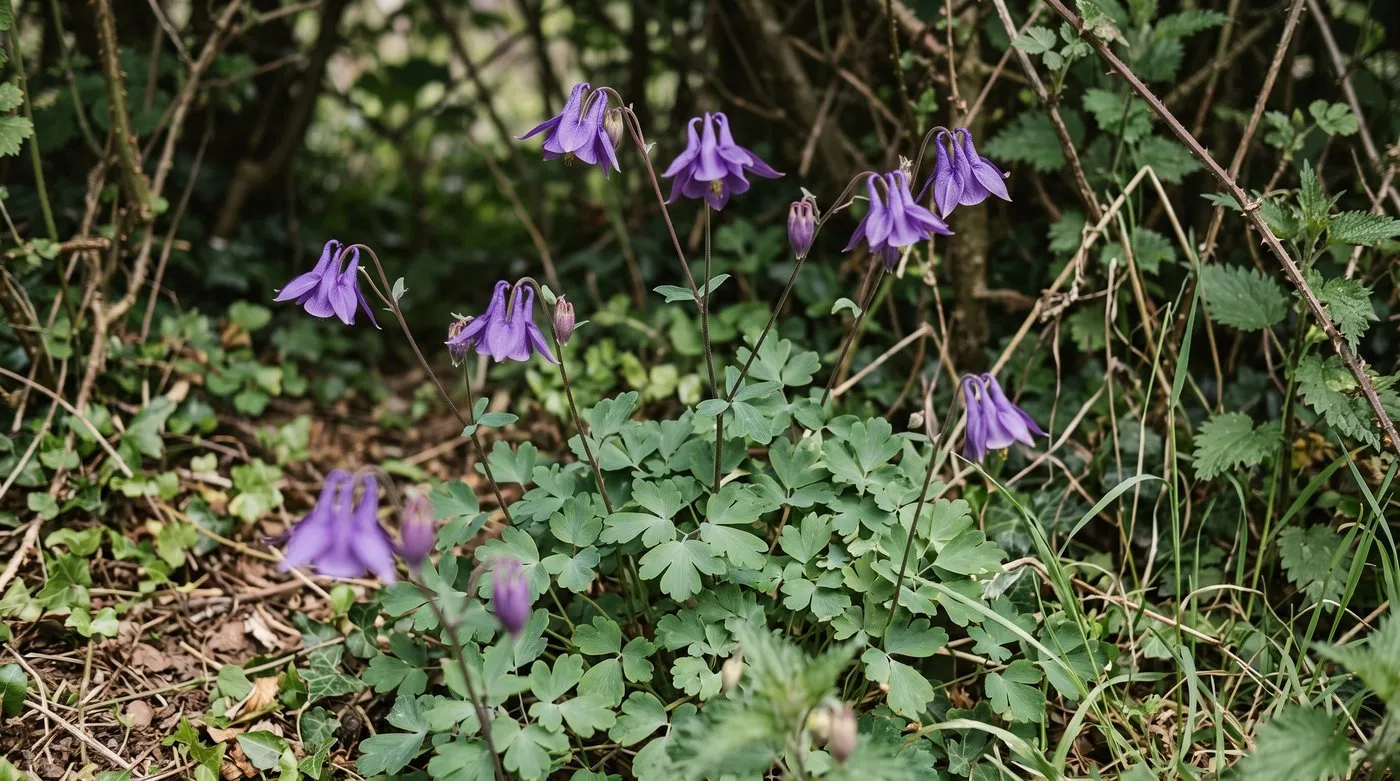
Look for the nodding bonnets with little hooked spurs, and the rounded, lobed blue-green leaves that appear early in spring.
Which aquilegia varieties are best for UK gardens?
There’s a lovely range, from our wild native to big, showy hybrids.
Aquilegia vulgaris is the native granny’s bonnet. It grows 60-90cm tall, copes with the widest range of spots and seeds itself most reliably. It comes in purple, blue, pink, mauve and white. Try ‘Nivea’ for pure white. It’s the natural choice for a cottage garden scheme.
Barlow series have double, pompom-like flowers with no spurs. They come in blue (‘Blue Barlow’), near-black (‘Black Barlow’), pink (‘Nora Barlow’) and white (‘White Barlow’). About 60-75cm tall. Their seedlings often come up with single flowers.
McKana Giants are big hybrids about 75cm tall with large, long-spurred flowers in two-tone mixes. They make the biggest splash but don’t last as long, and their seedlings are a lucky dip.
Aquilegia chrysantha (golden columbine) has pure yellow long-spurred flowers and grows about 90cm tall. It likes more sun than our native, so give it a south or west-facing spot. Our yellow flowers guide has more ideas in this colour.
Aquilegia variety comparison table
| Variety | Height | Flowers | Colours | Seeds itself? | Best spot |
|---|---|---|---|---|---|
| A. vulgaris (native) | 60-90cm | Single, short spurs | Purple, blue, pink, white | Freely | Sun to deep shade |
| Barlow series | 60-75cm | Double, no spurs | Blue, black, pink, white | Some | Sun to part shade |
| McKana Giants | 75cm | Single, long spurs | Two-tone mixes | A little | Sun to light shade |
| A. chrysantha | 90cm | Single, long spurs | Yellow | Some | Sun to light shade |
| ’Winky’ series | 40-50cm | Double, upward-facing | Two-tone mixes | Not much | Sun to part shade |
| A. alpina | 30-45cm | Single, large | Blue | Some | Sun, well-drained |
Where should I plant aquilegia in the garden?
Our native aquilegia copes with more light levels than almost any other flower. Full sun, part shade and deep shade all work.
Under trees and shrubs that lose their leaves is a great spot. Aquilegia gets going early, before the branches fill in, and has done most of its growing by the time it gets shadier.
In gravel or along path edges suits the smaller types. A. alpina and the ‘Winky’ series are good at the front of a border. Taller types belong in the middle or back.
Soil is rarely a problem. Clay, chalk and sandy soil are all fine. The only thing they hate is soil that stays waterlogged, which rots the crown. For more ideas, see our plants for clay soil.
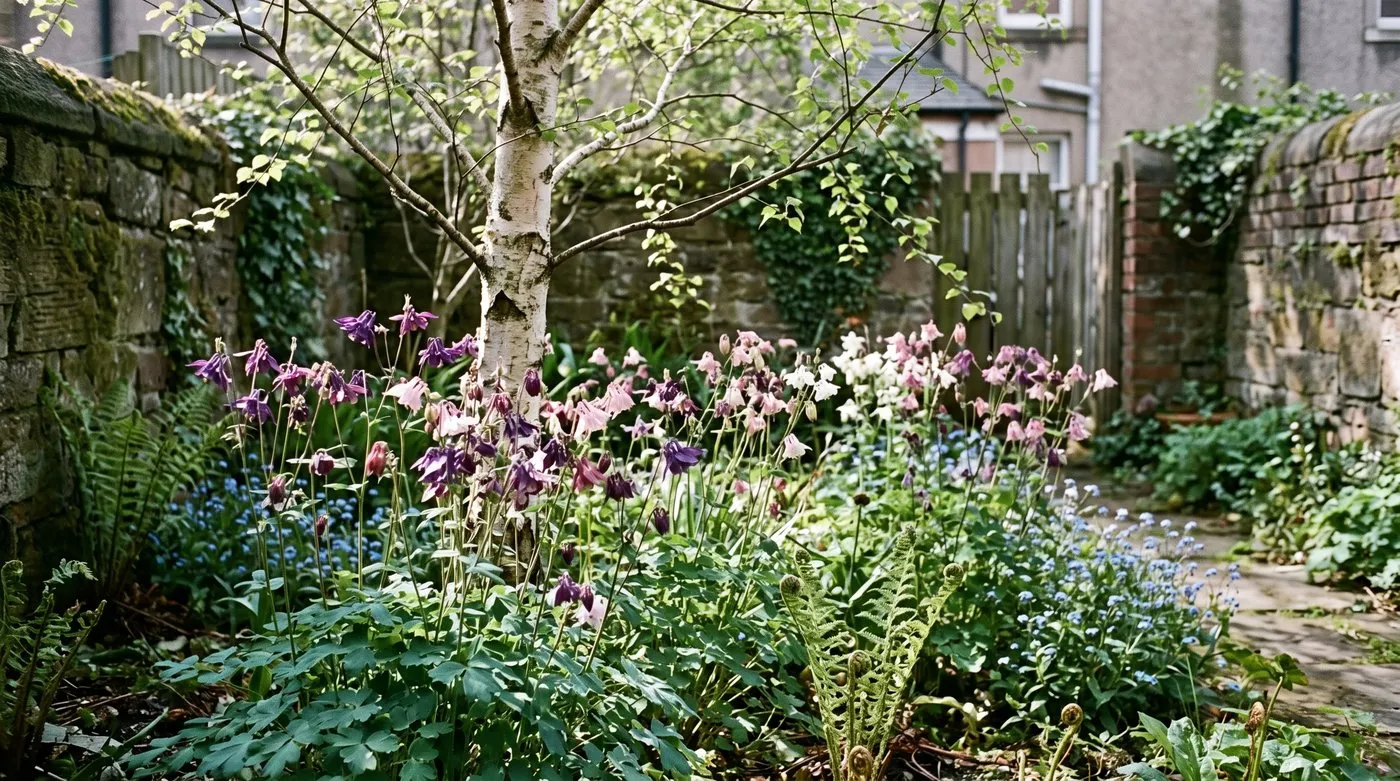
Under deciduous trees is a perfect spot. Aquilegia does most of its growing before the branches leaf up and the shade deepens.
How to grow aquilegia from seed in the UK
Growing from seed is easy, with one quirk: the seed needs a cold spell before it sprouts.
Autumn sowing outdoors is the simplest way. From September to November, scatter seed on top of pots of compost and barely cover it, as light helps it sprout. Leave the pots outside all winter. Seedlings appear in spring, just as they would in the wild.
Spring sowing works if you miss autumn. Mix the seed with damp vermiculite in a sealed bag and keep it in the fridge for three to four weeks. Then sow on the surface of seed compost in a cold greenhouse or frame.
Sowing straight into warmth without the cold spell is the most common reason seed fails. Our guide to sowing seeds indoors covers the basics.
Seedlings grow slowly at first. Move them into their own small pots once they have proper leaves. Plant out in autumn or the following spring. Expect flowers in their second spring.
How to manage self-seeding aquilegia
Self-seeding is aquilegia’s best trick, and the main thing you’ll need to manage. One plant makes loads of seed.
For more plants, leave the flower stems until the pods split and drop their seed. Seedlings pop up around the parent in a gently spreading drift.
For fewer plants, cut all flower stems to the base as soon as the petals fall. If you’d like just a few seedlings, leave two or three stems.
Colours can change. Different aquilegias cross freely. Grow purple natives next to pink Barlows and McKanas, and the seedlings are a surprise. Over a few years, colours can drift to muddier shades. Pull out seedlings in colours you don’t like before they set seed.
Hoe off unwanted seedlings in early spring while they’re small. Move any you want to keep while they’re young, as bigger plants don’t like being moved. For more plants that seed themselves around, see our self-seeding plants.
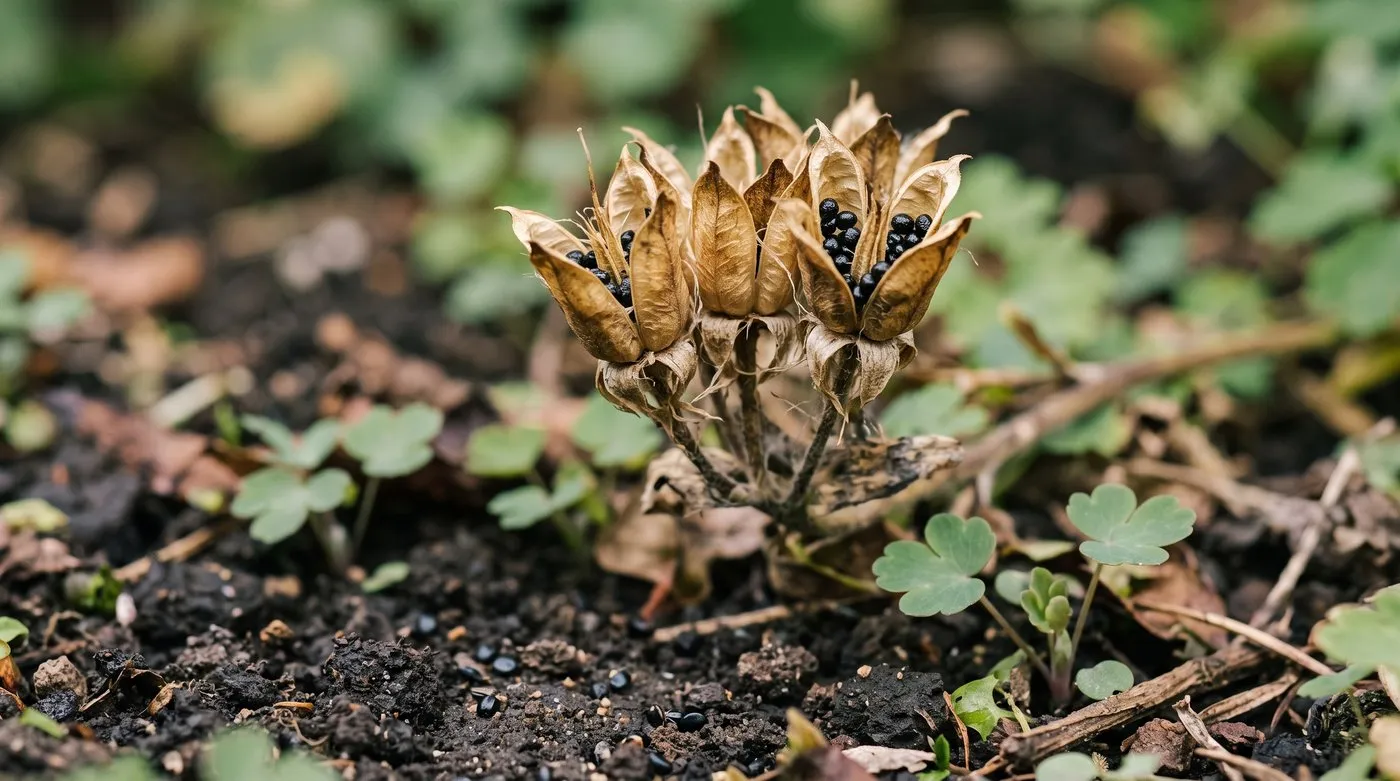
Leave the pods to split if you’d like a drift of seedlings, or cut the stems as the petals fall for fewer plants.
How to deal with aquilegia sawfly
Aquilegia sawfly is the main pest to watch for. Its small green caterpillars feed under the leaves from April and can strip a plant to bare stalks in a few days.
Look early. Check under the leaves every week from April to June. The caterpillars blend in well. Small notches in the leaf edges are the first sign.
Pick them off by hand. Check carefully, as several can hide flat under one leaf.
For a bad attack, you can use a shop-bought pyrethrum insecticide, following the label. Spray in the evening when bees aren’t about.
Plants bounce back. A fresh flush of leaves usually appears within a few weeks, and the roots survive.
Look out for aquilegia downy mildew too. Leaves go yellow-blotched with a grey fuzz underneath. Pull up and bin badly affected plants. Our organic pest control guide has more on keeping pests down.
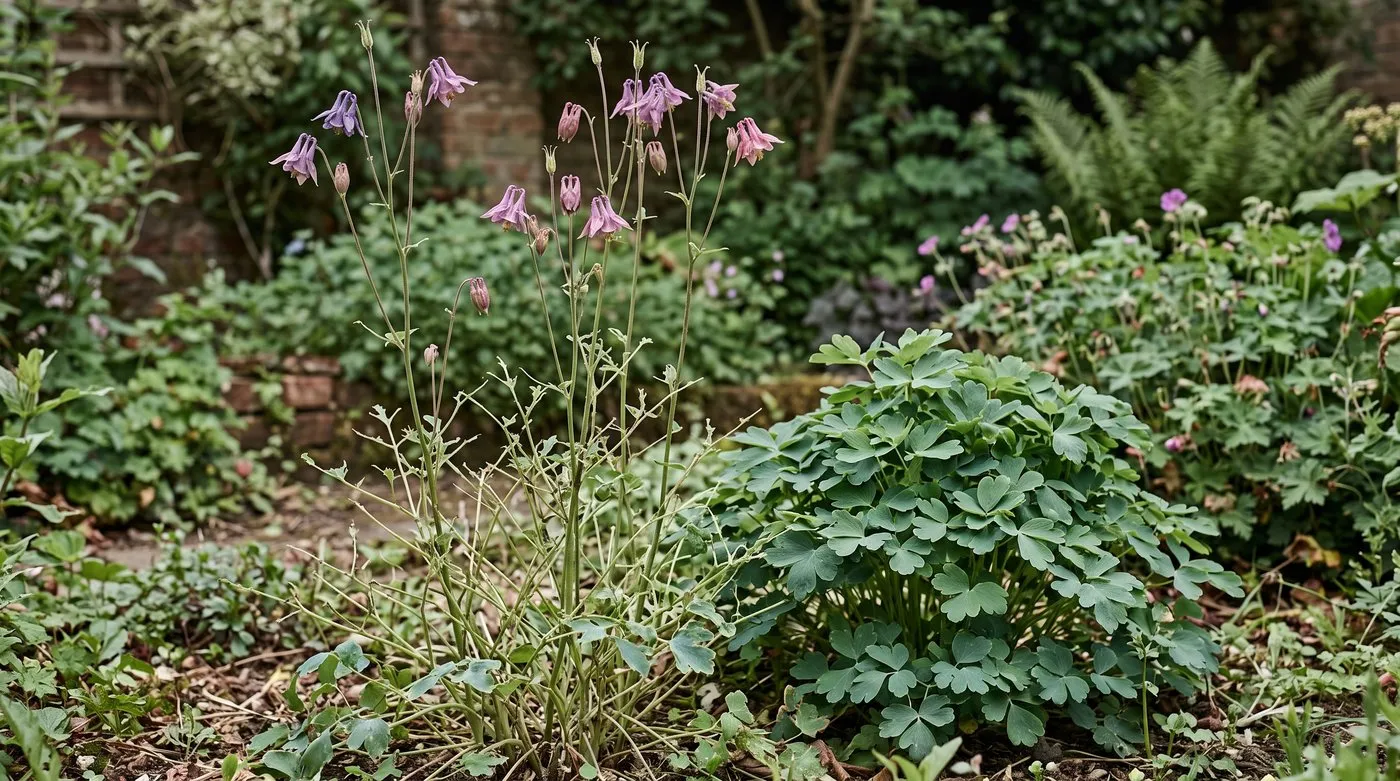
Notched leaf edges are the first sign, and a bad attack can strip a plant in days. Check under the leaves weekly from April and pick the caterpillars off.
How to combine aquilegia with other plants
Aquilegia looks best mingling with other cottage flowers. The wiry stems weave between neighbours.
In spring, pair it with bluebells, forget-me-nots and fresh hosta leaves, as they all peak in May. Add later flowers like Japanese anemones to take over from July as the aquilegia fades.
In a shady border, grow it with ferns, brunnera, epimedium and hellebores. Hellebores flower first, then epimedium, then aquilegia, with ferns looking good all season.
In a sunny cottage border, try it with lupins, hardy geraniums and early roses. The blue-purple of granny’s bonnet looks lovely with pink and apricot roses.
Seedlings need a bit of bare soil to grow, so don’t let thick ground cover smother the area around them.
When should I cut back aquilegia after flowering?
It depends on whether you want seedlings.
For seedlings, wait until the pods have split and the seed has dropped, usually a few weeks after flowering. Then cut the stems to the base. The plant puts out a fresh mound of leaves that lasts into autumn.
For no seedlings, cut the stems to the base as soon as the last flowers finish, usually in late June or early July.
Either way, leave the leaves at the base. They keep feeding the plant through summer. Only remove them if sawfly have ruined them or they’ve gone brown. Fresh ones soon follow.
Can I grow aquilegia in pots and containers?
Yes, and shorter types are best for pots. Choose a pot at least 30cm across with drainage holes.
Use John Innes No.2, which drains well. Water when the top couple of centimetres of compost feel dry. In summer that may be every other day.
The ‘Winky’ series is bred for pots, and Barlows suit large pots too. McKana Giants tend to flop without neighbours to lean on.
Give a balanced liquid feed every two weeks from April to July, then ease off after flowering.
Potted plants often only last two or three years, and seedlings struggle in a pot. Replace them when they start to fade.
Frequently asked questions
Do aquilegia come back every year in the UK?
Yes, though each plant only lasts a few years. They seed themselves so freely that new plants keep replacing the old ones. Leave a few seed heads after flowering and the colony carries on.
Can aquilegia grow in full shade?
Yes, it’s one of the best flowers for shade. Our native granny’s bonnet grows wild in woodland edges and hedge bottoms. In deep shade it gets a little taller but still flowers well, so it’s great for a north-facing border.
How do I stop aquilegia spreading too much?
Cut the flower stems off as soon as the petals drop. That stops seeds forming. If you’d like a few seedlings, leave two or three stems. Hoe off any extra seedlings in early spring while they’re small.
What is eating the leaves on my aquilegia?
It’s most likely aquilegia sawfly caterpillars. These small green caterpillars feed under the leaves from April and can strip a plant in days. Check under the leaves often and pick them off. The plant usually grows fresh leaves afterwards.
When should I plant aquilegia in the UK?
Plant potted aquilegia in spring or early autumn. March to May and September to October are ideal. Sow seed in autumn in pots left outside, as it needs a cold spell before it sprouts.
Do aquilegia cross-pollinate and change colour?
Yes, they cross freely, so seedlings come up in mixed colours. Over a few generations they often drift back towards purple-blue. To keep a colour you love, pull out seedlings in other colours before they set seed.
What soil do aquilegia need?
Almost any soil will do. Clay, chalk and sandy soil are all fine. They like it moist but not soggy. The one thing they hate is waterlogged ground in winter, which rots the crown.
Our team produces practical UK gardening guidance from source research, contributor records and established horticultural practice. Editorial standards are overseen by Matt W.


