
Key takeaways
- Hellebores flower from December to April, filling the gap when almost nothing else blooms
- Plant in part shade in moist, rich soil that drains well, like a woodland edge
- Cut old Lenten rose leaves off in January to show off the flowers and cut down leaf spot
- Leave settled plants alone, as hellebores hate being moved
- All parts are poisonous, so wear gloves and keep pets from chewing them
Hellebores are one of the most rewarding plants you can grow. They flower when almost nothing else does, from December to April, and they do it in shade, where most flowers sulk.
A big clump of Lenten roses in a shady border is a real treat in February. The nodding flowers come in pure white, cream, pink, burgundy and almost black, often with pretty speckles or edges. They ask very little once settled. Plant them in the right spot, leave them alone and they’ll flower for years.
Which hellebore varieties are best for UK gardens?
Three main kinds are grown in UK gardens, each with its own character and season.
Helleborus niger, the Christmas rose, is the earliest, flowering from December to February. Its large white flowers face outwards. It likes a sheltered spot in part shade and neutral or chalky soil. It’s a little less vigorous than the Lenten rose and appreciates some shelter from long frosts while flowering. Selections like ‘HGC Josef Lemper’ and ‘HGC Ice N’ Roses White’ have big, long-lasting flowers.
Helleborus × hybridus, the Lenten rose, is the most popular and has the widest range of colours. It flowers from February to April in white, cream, yellow, pink, mauve, plum and near-black, often with double flowers. It settles in quickly and self-seeds happily.
Helleborus foetidus, the stinking hellebore, is a British native found on chalk and limestone. Don’t let the name put you off. It only smells if you crush it. Its dark, finely cut leaves make a bold clump, and pale green bell flowers hang in clusters from February to May. It copes with drier, shadier spots than the others, so it’s useful under shrubs where little else grows.
| Hellebore | Flower colour | Flowers | Best for |
|---|---|---|---|
| Christmas rose (H. niger) | White to pale pink | December to February | Sheltered borders, pots |
| Lenten rose (H. × hybridus) | White, pink, plum, near-black | February to April | Shady borders, woodland edges |
| Stinking hellebore (H. foetidus) | Pale green | February to May | Dry shade |
| Corsican hellebore (H. argutifolius) | Apple green | February to April | Drier, sunnier borders |
For a garden full of colour in the darkest months, team hellebores with other winter stars. Our guide to the best winter flowering plants for UK gardens covers good partners such as witch hazel, winter jasmine and viburnum.
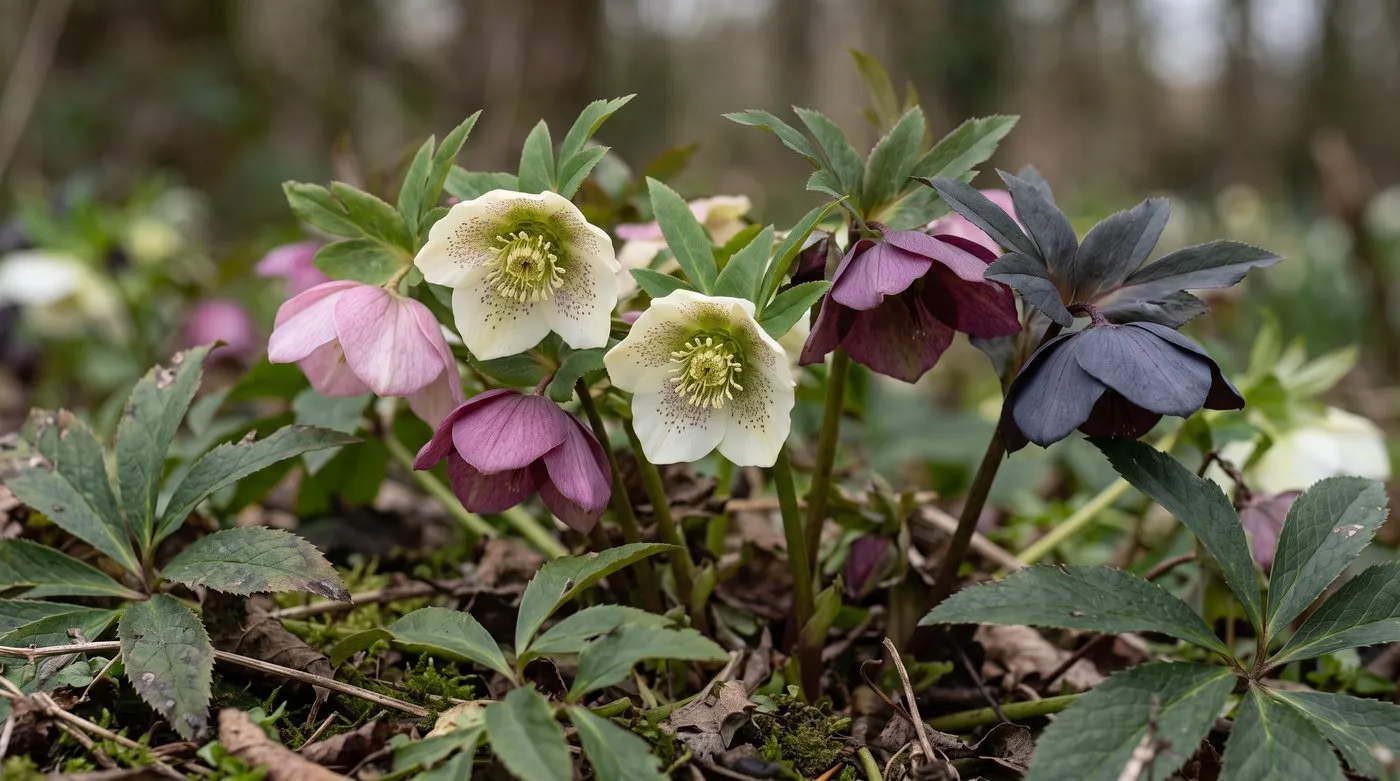
Lenten roses come in everything from white to near-black, often speckled. Tilt a nodding flower up to see the markings inside.
What conditions do hellebores need?
In the wild, hellebores grow on woodland edges, with dappled light, moist soil in winter and spring, drier summers and lots of leaf mould. Give them something similar and they’ll thrive. For a spring partner that likes the same spot, try bleeding hearts.
Light: Part shade is ideal. A deciduous tree or big shrub gives just what they want: light in winter when they flower and shade in summer to protect the leaves. Deep, year-round shade means few flowers. Full sun scorches the leaves in summer.
Soil: Moist but well drained and rich in organic matter, ideally neutral to chalky. Hellebores cope with clay better than most plants, as long as it doesn’t stay soggy in winter. Mix grit and plenty of organic matter into heavy clay. On sandy or chalky soil, dig in leaf mould or homemade compost to hold moisture.
Acid or chalky? Most hellebores like neutral to slightly chalky soil. Avoid very acid ground.
Drainage: Waterlogging kills hellebores. On heavy, wet ground, plant on a slight slope or in a raised bed.
When and how to plant hellebores
Plant in autumn (September to November) or late spring (April to May). Autumn planting lets the roots settle before flowering.
Buy potted plants, as hellebores move best with their roots intact. Avoid plants that have sat in their pots so long the roots are circling.
How to plant:
- Dig a hole twice as wide as the root ball and just as deep.
- Mix plenty of well-rotted compost or leaf mould into the soil you dug out.
- Set the plant so the crown (where the stems meet the roots) sits at soil level, not deeper.
- Fill in, firm gently and water well.
- Mulch with leaf mould or bark, keeping it off the crown.
Space Lenten roses 45-60cm apart. They’ll fill out in a couple of years. Christmas roses are a bit smaller, so 30-45cm is fine.
For shady borders where hellebores will be the stars, our guide to the best plants for shade in UK gardens has more ideas. Ferns, astrantia, pulmonaria and epimedium all look lovely with them.
How to care for hellebores through the year
January, the most important task
The most useful thing you can do for Lenten roses is cut off their old leaves in January. Snip every old leaf off at the base with sharp secateurs. You’ll see the flower buds properly, light can reach the crowns, and you’ll remove most of the leaf spot before the new season starts.
It feels drastic and the plant looks bare for a few weeks. Then the flowers open and fresh, clean leaves follow in spring. For the Christmas rose, just tidy off any tatty leaves. Don’t do this to the stinking or Corsican hellebores, which carry their flowers on leafy stems. Cut those stems out after flowering instead.
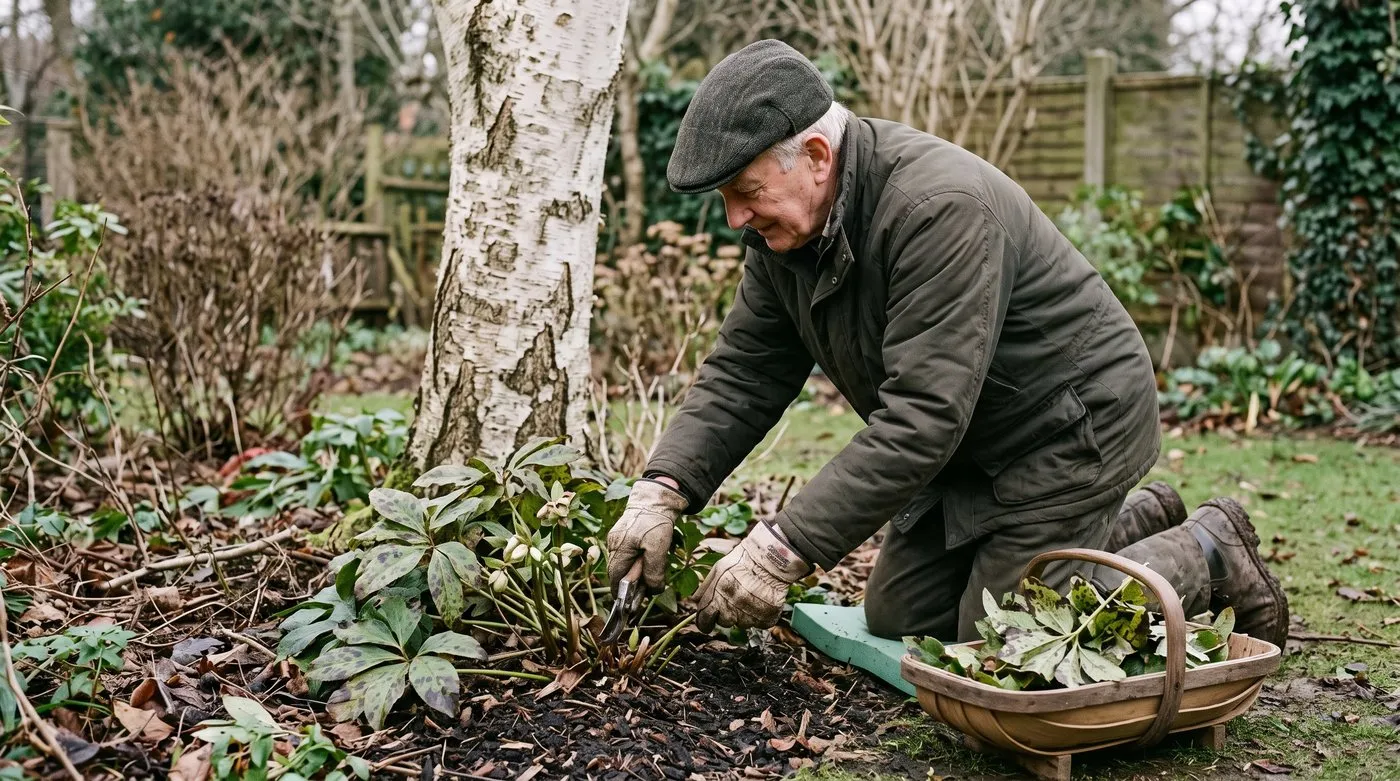
Cutting off old Lenten rose leaves in January shows off the flowers and clears away most of the leaf spot. Bin the leaves, don’t compost them.
February to April, flowering
Water if the soil dries out. Hellebores in pots need checking every few days. A sprinkle of general fertiliser or blood, fish and bone around the plant as the flowers fade helps next year’s display.
May to October, summer rest
After flowering, hellebores mostly look after themselves. Water in long dry spells, especially in their first couple of years. Mulch in late spring to keep moisture in and weeds down.
Now’s the time to pull out unwanted seedlings, or move the ones you like while they’re small. If you want to sow seeds indoors, collect ripe seed in early summer and sow it straight away, as it doesn’t keep.
September to October, division
If you need to split a clump, do it in early autumn. Lift the whole plant, divide it into pieces with three or four growing points each, and replant straight away. Water well and expect a quieter year of flowers.
Hellebores really don’t like being moved. If a plant is happy where it is, leave it. A clump left alone for years becomes a wonderful sight. Our spring gardening jobs guide fits hellebore care in with your other jobs.
Month-by-month hellebore calendar
| Month | What to do |
|---|---|
| January | Cut off old Lenten rose leaves. Clear fallen leaves from the crowns. |
| February | Enjoy the first flowers. Sprinkle on some general fertiliser. |
| March | Lenten roses at their best. |
| April | Late flowers still going. New leaves appearing. |
| May | Remove old flower heads unless saving seed. Mulch. |
| June | Seed pods split. Collect seed and sow straight away. |
| July | Water in dry spells. Remove any spotted leaves. |
| August | Keep watering if dry. Remove spotted leaves. |
| September | Divide crowded clumps. Plant new hellebores. |
| October | Plant before the soil cools. Mulch. |
| November | Remove any diseased leaves before winter. |
| December | Christmas roses start flowering. |
What problems affect hellebores?
Hellebore leaf spot
The most common problem is hellebore leaf spot, a fungal disease. It causes dark brown blotches with paler middles on leaves and stems, and badly affected leaves turn black and die. It spreads in wet weather and lives on in old leaves.
Good hygiene is the answer. Cut off and bin (not compost) affected leaves. The January leaf cut gets rid of most of it. Water the soil, not the leaves, and divide crowded clumps so air can move. The RHS page on hellebore leaf spot has pictures to help you spot it.
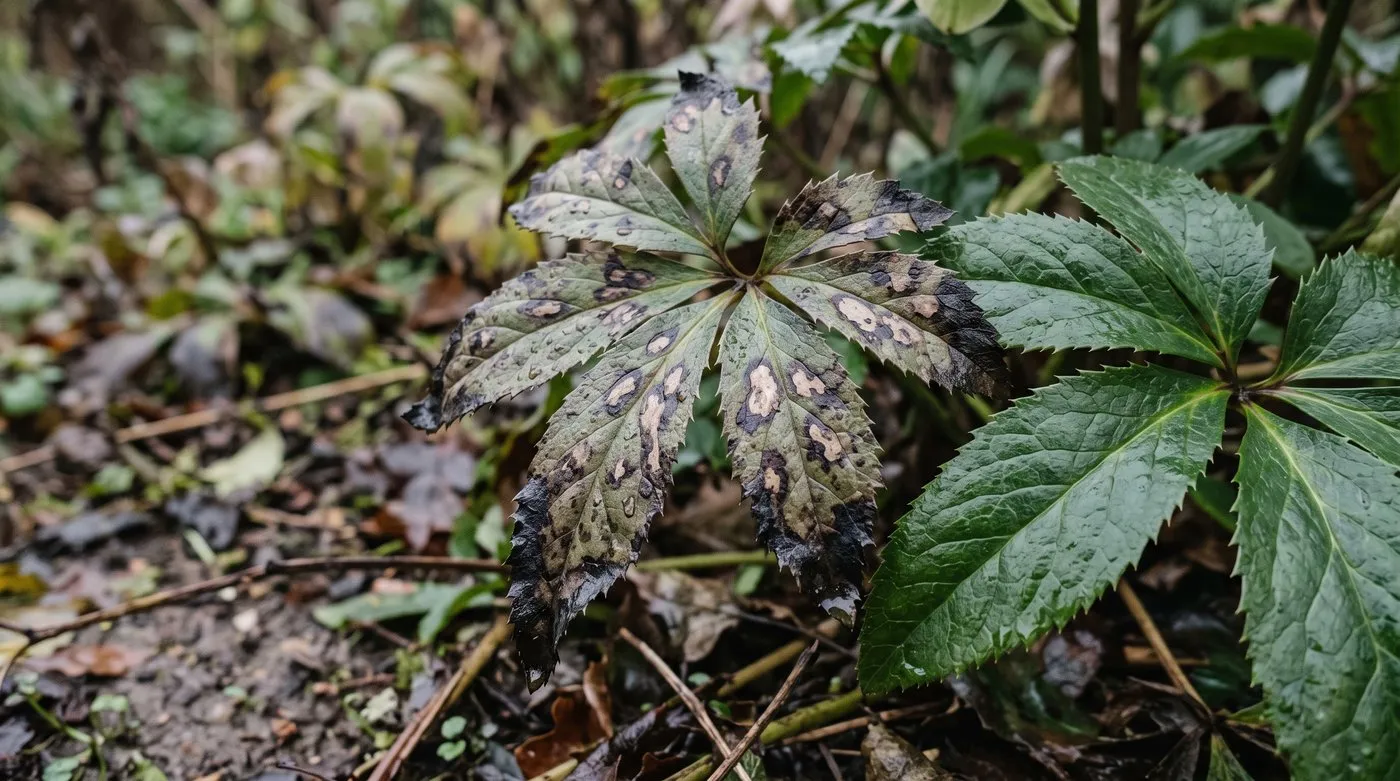
Dark brown blotches with paler middles are hellebore leaf spot. Cut affected leaves off at the base and bin them.
Slugs and aphids
Slugs nibble young shoots in spring. A ring of grit around the plants or slug pellets approved for organic use help. Greenfly sometimes gather on soft new growth, and a jet of water knocks most of them off.
Vine weevil
Vine weevil grubs eat the roots of hellebores in pots. If a potted plant wilts even though the compost is moist, look for C-shaped white grubs. Water on nematodes from late summer to autumn while the compost is still mild.
Poor flowering
If a settled hellebore flowers poorly, it’s usually too much shade, tired soil or old leaves blocking the light. Move it somewhere brighter, mulch with compost and feed, or do the January leaf cut. New or freshly divided plants can take a couple of years to flower well.
Can hellebores grow in containers?
Yes, though they’re happiest in the ground. Use a big pot, at least 30cm across, with drainage holes. Fill it with John Innes No. 3 mixed with some grit. Water regularly, as pots dry out quickly. Repot every few years to refresh the compost and check for vine weevil.
Potted hellebores look lovely on a shady patio or by the front door, where you can enjoy the flowers up close. They also suit cottage garden planting plans where a shady corner needs winter colour.
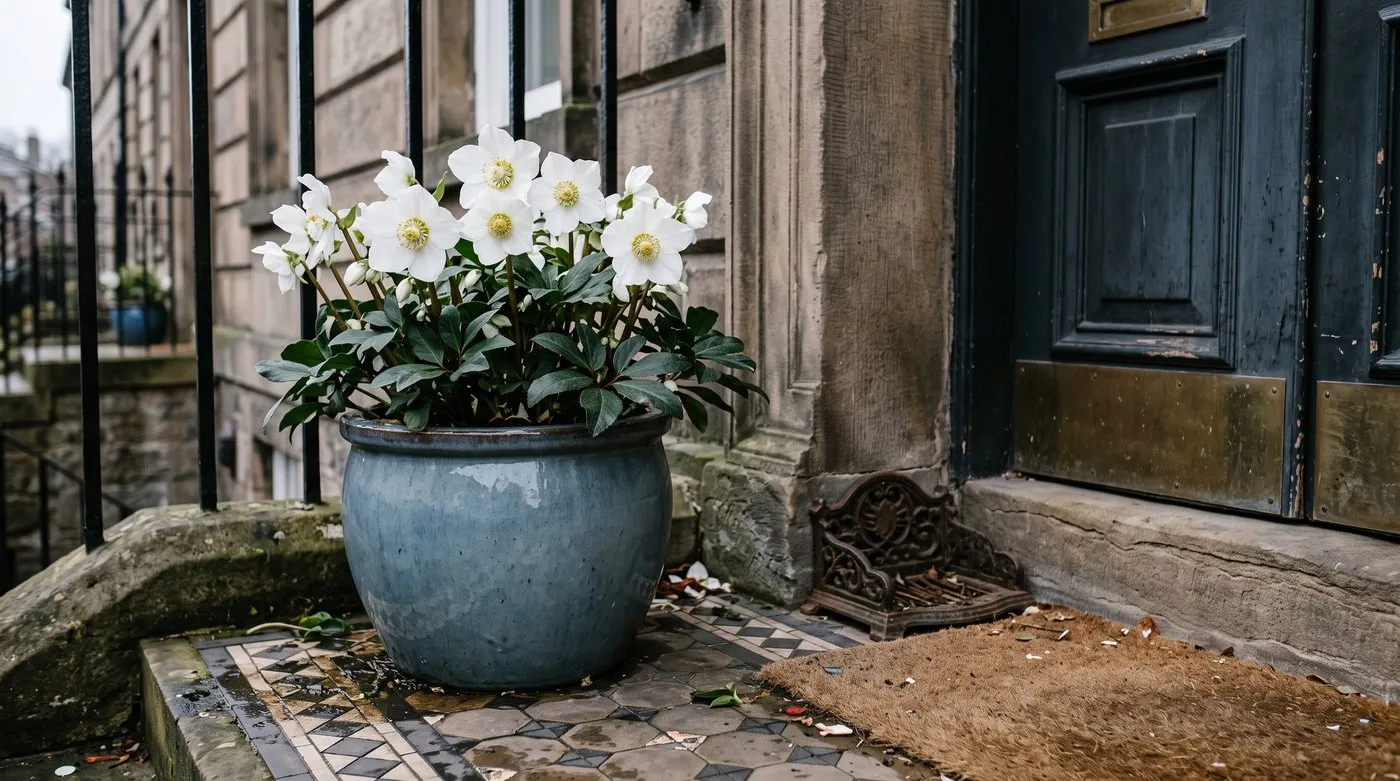
A pot by the front door lets you enjoy the flowers up close in the depths of winter. Keep it watered, as pots dry out fast.
Are hellebores good for wildlife?
Yes. Hellebores flower when there’s very little else about, so they’re a welcome early meal for bumblebees on mild winter and spring days. Single, open flowers are easiest for bees to get into.
Now you’ve got the hang of hellebores, read our guide on the best winter flowering plants for UK gardens to fill your garden with colour from November to March.
Frequently asked questions
When do hellebores flower in the UK?
Between December and April, depending on the type. The Christmas rose (Helleborus niger) flowers from December to February. The Lenten rose (H. × hybridus) flowers from February to April, and the stinking hellebore (H. foetidus) from February to May. In a mild winter, a mix of hellebores can give you flowers for months.
Where is the best place to plant hellebores?
Part shade under deciduous trees or shrubs is ideal. The leaves above shade them in summer, then drop to let winter light through. Avoid deep, year-round shade and hot summer sun, which scorches the evergreen leaves.
Do hellebores spread on their own?
Yes, settled hellebores self-seed freely. Seedlings pop up around the parent and can be moved while small. Hybrids don’t come true from seed, so the seedlings may be a different colour. To keep a named variety exactly the same, divide it instead.
Why are my hellebore flowers facing down?
That’s completely normal. Hellebore flowers nod down naturally, which keeps rain off the middle of the flower. To enjoy them up close, gently tilt a stem, or cut a few flowers and float them face-up in a shallow bowl indoors.
How do I divide hellebores?
Divide in early autumn, while the soil is still warm. Lift the clump carefully and split it with a sharp spade into pieces with three or four growing points each. Replant straight away at the same depth and water well. Expect them to sulk for a year before flowering well again.
Are hellebores toxic to dogs and cats?
Yes, all parts of hellebores are poisonous to dogs, cats and horses. Eating them can cause drooling, sickness and tiredness. Keep children and pets away, especially when you’re cutting or dividing. If you think a pet has eaten some, call your vet straight away.
What is hellebore leaf spot and how do I treat it?
It’s a fungal disease that leaves dark brown blotches on leaves. Cut off affected leaves at the base and put them in the bin, not the compost heap. Thin out crowded clumps so air can move. Good hygiene is the main way to control it.
Further reading
Our team produces practical UK gardening guidance from source research, contributor records and established horticultural practice. Editorial standards are overseen by Matt W.


