
Key takeaways
- Plant in dappled shade and moist soil, out of cold wind
- Set the crown 2 to 3cm below the soil, in early spring or autumn
- Flowers come late April to June, then the plant dies back by July
- Summer dieback is normal. Mark the crown with a cane so you don't dig into it
- The roots snap easily, so divide gently in early spring or autumn
- All parts are toxic if eaten, so wear gloves and keep pets from chewing it
Bleeding hearts are easy once you give them what they like: cool, moist shade. In spring the arching stems hang with rows of little heart-shaped flowers, pink or white, each with a white drop at the tip. They’re one of the best-loved spring plants in UK gardens.
Below you’ll find where to plant them, how deep, how to water and feed, and how to divide the brittle roots. We’ll also explain why they vanish in summer, because that catches out a lot of people. Don’t worry, it’s normal.
Dicentra or Lamprocapnos? The name change explained
The classic bleeding heart used to be called Dicentra spectabilis and is now Lamprocapnos spectabilis. You’ll see both names on labels, so don’t be put off if a nursery uses either. It’s the same plant.
The name matters a little in the garden. The tall classic is the Lamprocapnos. The lower, fern-leaved plants also sold as bleeding hearts, such as ‘Luxuriant’ and ‘King of Hearts’, are still Dicentra. They behave differently. The tall one flowers early, then dies back by mid-summer. The fern-leaved ones flower for much longer and keep their leaves into autumn.
Both have the same brittle, fleshy roots and both dislike hot, dry spots. When this guide just says “bleeding heart”, it means the tall classic.
 The heart-shaped flowers that give the plant its name, each with a little white drop at the tip.
Where to plant bleeding hearts for the best flowers
Pick dappled or part shade with moist soil that’s rich in compost or leaf mould. In the wild they grow at the edge of woodland, under a light canopy of trees. Copy that and they’ll be happy. Under a deciduous tree, beside a north-facing wall, or at the cool back of a border all work well.
Steer clear of full sun and dry soil. In a hot spot the leaves scorch and the plant dies back weeks early. The soil should stay damp but not soggy. Dig in garden compost or leaf mould before planting. On sandy soil, add extra and mulch every year to hold on to water.
Shelter from cold wind matters too. The new shoots are soft when they appear in April, and a sharp easterly can blacken them or flatten the plant. A fence, hedge or wall that blocks the wind makes a big difference.
Handy tip: Grow bleeding hearts among later plants such as hostas, ferns and hardy geraniums. When the bleeding heart dies back in July, they fill the gap and the border stays full.
Planting depth and the right time to plant
Set the crown 2 to 3cm below the soil and plant in early spring or autumn. The fleshy roots spread out from the crown like spokes on a wheel. Dig a hole wide enough to lay them out flat without bending them. Backfill, firm gently and water well.
Bare-root plants arrive dormant by post between October and March. Plant them as soon as the soil isn’t frozen. March is a great time, as the soil is warming up. Pot-grown plants can go in whenever the soil is moist, but spring and autumn are still easiest. Planted in summer, they may die back before they settle.
Space plants 45 to 60cm apart. Water every few days for the first month if it’s dry. A new plant takes two or three years to reach full size, so don’t expect a big show in the first year.
 Lay the roots out flat and set the crown 2 to 3cm below the surface. Don’t cram them into a small hole.
Why bleeding hearts die back in summer
Yellowing leaves in mid-summer are the plant going to sleep, not dying. Bleeding hearts flower early, then rest underground through the summer heat. The energy goes back into the roots, ready for next spring.
Flowering ends by June. Over two or three weeks the leaves go pale, then yellow, then brown. By July the plant has usually gone completely. It happens sooner in dry or sunny spots. In cool, moist shade the leaves may hang on into August.
Don’t cut off green leaves to tidy up. Let them yellow, because they’re feeding the roots. Once they’re brown, trim them off at ground level. Most important of all, mark the crown. Push a labelled cane in beside it as soon as flowering ends. Then you won’t forget where it is and dig into it later.
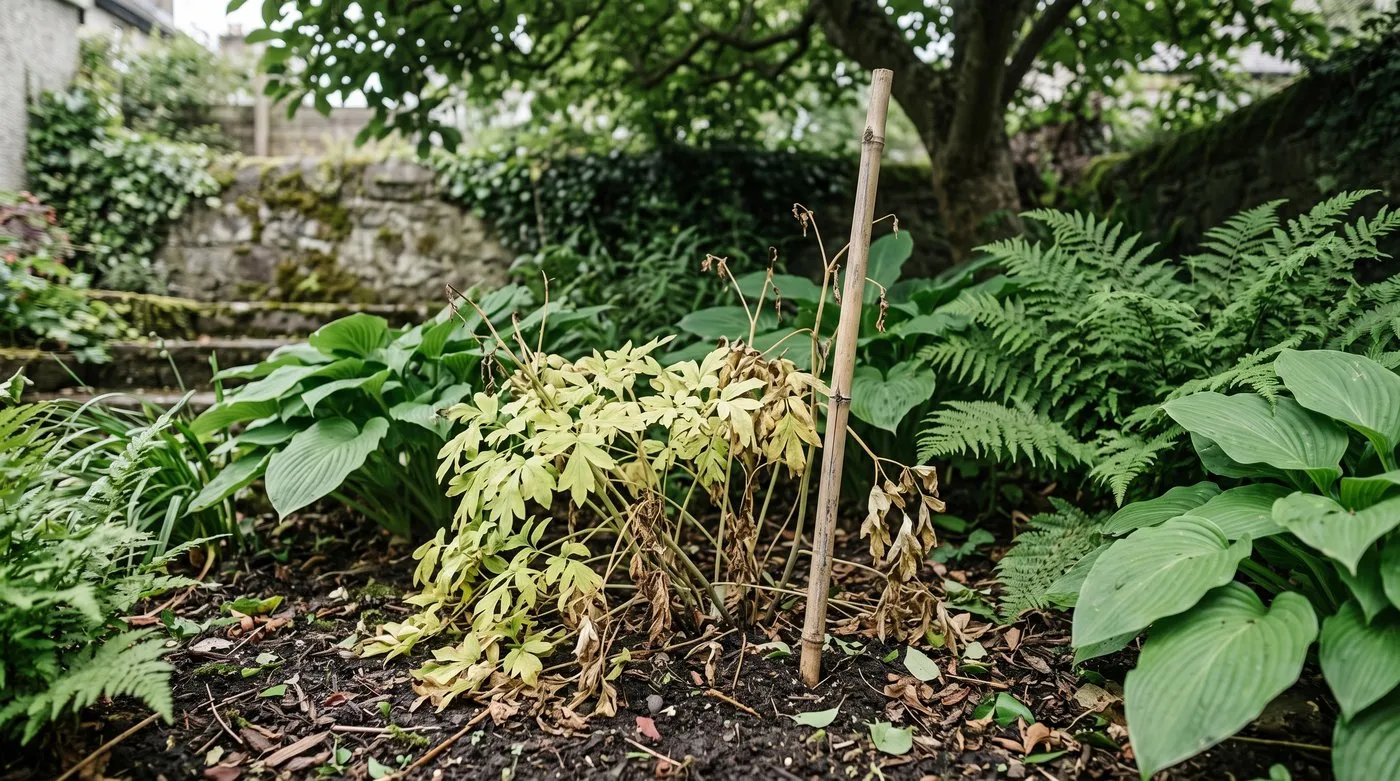
Yellow leaves in summer just mean the plant is going to sleep. Pop a cane in by the crown so nobody digs into it later.
Watering, feeding and mulching through the year
Keep the soil moist in spring, feed lightly and mulch every year. Bleeding hearts hate drying out while they’re growing. From April until the leaves die back, water well in any dry spell. A good soak once a week is better than a daily sprinkle.
Feeding is simple. Scatter a balanced general feed such as fish, blood and bone in early spring as the shoots come up, following the rate on the pack. A second light feed after flowering helps the plant store energy for next year. Skip high-nitrogen feeds, which give soft, floppy growth.
Mulch is the best job of the year. Spread 5 to 7cm of leaf mould or well-rotted compost around the plant in autumn or early spring, keeping it off the central bud. It holds in moisture, feeds the soil and copies the leafy woodland floor the plant loves. A mulched plant often keeps its leaves longer into summer.
How to divide bleeding hearts without killing them
Divide only in early spring or autumn, and treat the roots gently. The fleshy roots snap like fresh carrots. Early spring is the kindest time, when the roots are plump and full of stored energy.
Lift the whole clump with a fork, digging wide so you don’t spear the roots. Shake off loose soil so you can see the crown. Pull the clump apart by hand into pieces, each with at least one bud and some healthy roots. A clean knife helps with tough crowns, but ease them apart rather than wrenching. Replant each piece straight away at the same depth, water in and keep it moist.
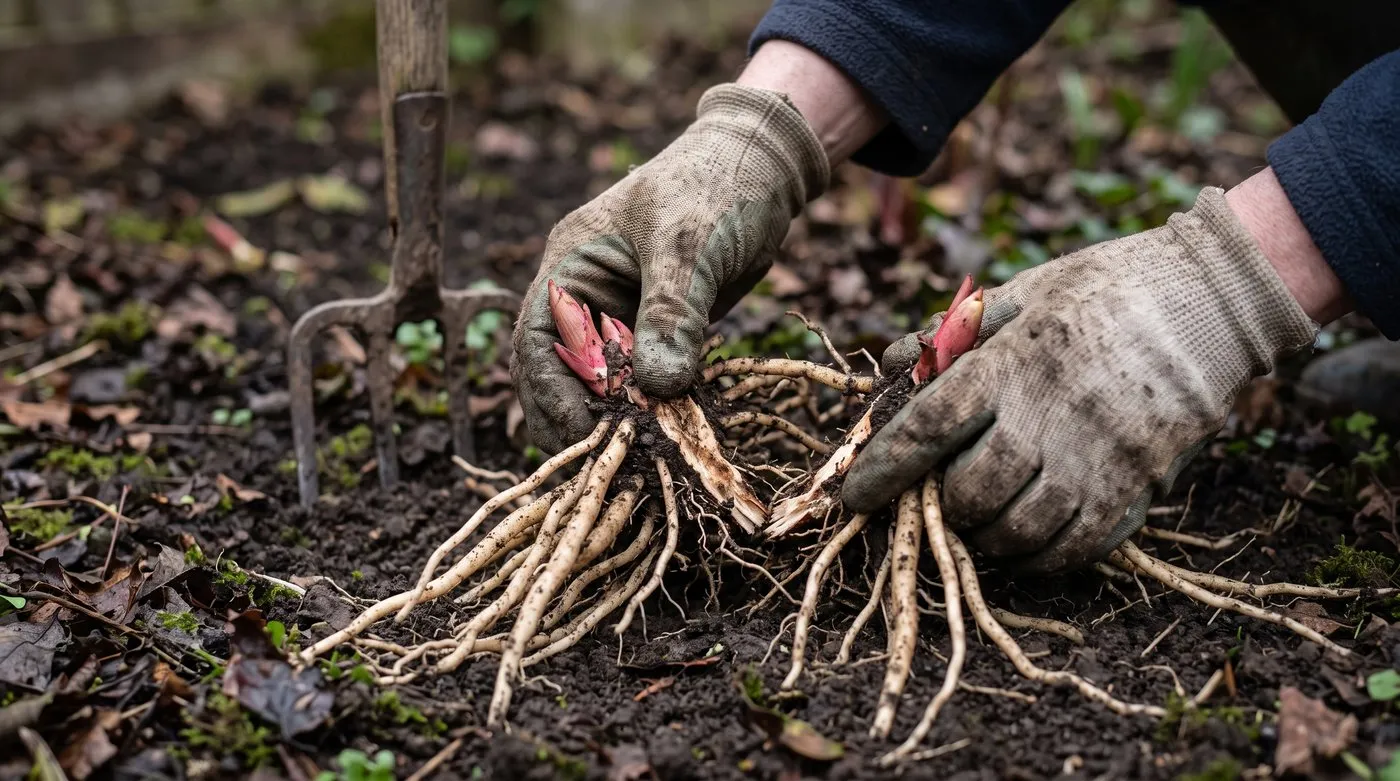
The fleshy roots snap like carrots, so ease the clump apart rather than wrenching. Wear gloves too, as the sap can irritate skin.
Propagation by division, root cuttings and seed
You can make more bleeding hearts by division, root cuttings or seed. Division, covered above, is the quickest and gives you exact copies of the parent. One big clump usually gives three or four new plants.
Root cuttings let you get more plants without splitting the whole clump. In winter, lift the plant and cut healthy roots into 5 to 8cm pieces. Lay them flat on a tray of gritty compost and cover with 1cm more. Keep just moist in a cool, frost-free place, and shoots should appear in spring.
Seed is slow but cheap. Collect it when the pods ripen in early summer. The seed needs a cold spell before it will sprout, so sow in autumn and leave the tray outside over winter. Germination is slow and patchy, and seedlings take two or three years to flower. Named varieties like ‘Alba’ and ‘Valentine’ won’t come true from seed, so divide those instead.
 Root cuttings laid flat and covered with 1cm of gritty compost. An easy way to turn one plant into several.
Pests, problems and what can go wrong
Bleeding hearts are mostly trouble-free, but slugs and snails love the new shoots. One damp night can shred a fresh batch of leaves. Protect young plants and new divisions in spring, especially in a damp, shady border. Wool pellets, beer traps or nematodes all help.
The other common worry is wilting. That’s almost always dry soil, not disease. Give it a good soak and mulch around it. If your plant always disappears by late May, the spot is too dry or too sunny, so move it in autumn.
Bleeding heart varieties compared
Go for the tall classic for a big spring show, or the fern-leaved types for a longer season. Tall ones put on a spring display and then disappear. Low, fern-leaved ones flower from late spring into autumn and keep their leaves. Lots of gardeners grow both.
| Variety | Flower colour | Height | Good to know |
|---|---|---|---|
| Lamprocapnos spectabilis | Rose pink, white tip | 90 to 120cm | The classic. Flowers in spring, dies back by July |
| ’Alba’ | Pure white | 75 to 90cm | Brightens a shady corner |
| ’Gold Heart’ | Pink | 70 to 90cm | Golden leaves, needs shelter from sun |
| ’Valentine’ | Deep cherry red | 75 to 90cm | Dark stems, rich colour |
| Dicentra ‘Luxuriant’ | Cherry red | 30 to 40cm | Fern leaves, flowers May to autumn, no summer dieback |
| Dicentra ‘King of Hearts’ | Deep pink | 20 to 25cm | Small, blue-grey leaves, flowers for ages |
| Dicentra ‘Bacchanal’ | Dark crimson | 30 to 40cm | Fern leaves, great at the front of a border |
‘Gold Heart’ is a stunner but a bit fussy. Its bright leaves scorch in direct sun, so give it the deepest shade and steadiest moisture. The fern-leaved types are the toughest and flower longest. Pop them at the front of a shady border for colour from May into September.
 The pink classic, white ‘Alba’ and golden-leaved ‘Gold Heart’, which needs the most shade.
Companion plants that cover the summer gap
Plant later-leafing shade lovers around your bleeding heart so its summer gap never shows. Because the tall type vanishes by July, a border can look bare without them.
Ferns and hostas are the classic partners. They unfurl in late spring just as the bleeding heart fades. Have a look at growing hostas in UK gardens for good shade varieties. The hardy ferns for a UK fernery make lovely neighbours too.
Brunnera and pulmonaria flower in spring alongside the bleeding heart, then cover the ground with leaves all summer. Spring bulbs like wood anemones and snowdrops add an earlier layer below. For more ideas, see our best perennial plants for UK gardens. Many easy self-seeding plants for UK gardens also weave through a bleeding heart border without crowding it.
Common mistakes when growing bleeding hearts
Most problems come from the wrong spot, panicking at dieback, or damaging the roots. Avoid these and it’s one of the easiest perennials going.
Planting in sun or dry soil. The plant scorches, dies back early and never fills out. If yours always vanishes by late May, move it somewhere shadier and moister in autumn.
Panicking when it dies back. Every summer people dig up healthy sleeping crowns, or plant on top of them. Mark the crown as soon as flowering ends and leave it be.
Damaging the roots. The roots snap easily and a broken one rarely recovers. Don’t dig near a dormant crown in summer. Only lift and divide in early spring or autumn.
Cutting back green leaves. Green leaves are still feeding the plant. Wait until they’ve yellowed before you trim.
Safety note: All parts of bleeding hearts are toxic if eaten, and the sap can irritate skin. Wear gloves when handling them and keep children and pets from chewing the leaves.
Bleeding heart care calendar for the UK
Here’s what to do each month. Timings shift by a week or two between the mild south-west and the colder north, so keep an eye on your plant too.
| Month | What to do |
|---|---|
| January | Plant bare-root crowns if the soil isn’t frozen. Order new plants |
| February | Mulch with leaf mould before growth starts |
| March | Best month to plant and divide. Feed as shoots appear |
| April | New shoots appear. Protect from slugs and cold wind |
| May | Peak flowering. Water in dry spells |
| June | Flowering ends. Mark the crown with a cane as leaves yellow |
| July | Leaves die back. Trim brown leaves at ground level. Don’t dig nearby |
| August | Plant is asleep. Companion plants fill the gap |
| September | Light feed if growth was poor. Water new divisions |
| October | Plant or divide while the soil is still warm. Mulch |
| November | Take root cuttings. Clear fallen leaves off the crown |
| December | Resting. Plan next year’s companions |
Frequently asked questions
Do bleeding hearts come back every year?
Yes, they come back from the same crown every spring. The plant dies down to the ground by mid-summer, which fools lots of people into thinking it’s dead. The roots are fine underground. A happy clump gets a little bigger each year and can last for decades.
How long does a bleeding heart flower for?
The tall classic flowers for about four to six weeks. Blooms open in late April and fade by mid-June. The low, fern-leaved types such as ‘Luxuriant’ and ‘King of Hearts’ flower much longer, often from May until the first autumn frosts.
Can you grow bleeding hearts in pots?
Yes, in a big pot at least 40cm wide. Use moisture-holding compost, keep it in dappled shade and never let it dry out. Pots dry much faster than the ground. Feed in spring and top up with fresh compost each year. It still dies back in summer, so pair it with later pot plants.
Why is my bleeding heart not flowering?
Usually too much shade, dry soil, or a plant that’s still young. It needs dappled light, not deep gloom, and moist soil in spring. A new plant can take two or three years to flower well. Old, crowded clumps flower less too, so divide them in early spring.
Why has my bleeding heart died back in summer?
It’s resting, not dead. Bleeding hearts go dormant after flowering. The leaves yellow and die down by midsummer, sooner in dry or sunny spots. It comes back from the same roots next spring. Leave it where it is and mark the spot.
Where is the best place to plant a bleeding heart?
Dappled or part shade in moist soil rich in compost. Under a deciduous tree or on the shady side of a wall is ideal. Shelter from cold spring wind protects the soft new growth. Avoid full sun and dry soil, where it dies back early and struggles.
Is bleeding heart poisonous to humans and pets?
Yes, all parts are toxic if eaten. It can cause sickness, and the sap may irritate skin. Keep children and pets from chewing it. Wear gloves when you handle or divide it, and wash your hands afterwards.
When should you divide a bleeding heart?
In early spring or autumn, while it’s dormant. The roots snap easily, so be gentle. Lift the clump and pull it into pieces that each have a bud and some roots. Replant straight away so the roots don’t dry out. Don’t divide in summer.
What to plant alongside your bleeding hearts
Next, build a shade border that stays full once your bleeding hearts go to sleep. Our guide to perennials to split in May shows you how to bulk up the hostas, ferns and brunnera that fill the gap. You can also browse all our plant growing guides for more shade-loving partners. The RHS has handy Lamprocapnos growing notes too.
Our team produces practical UK gardening guidance from source research, contributor records and established horticultural practice. Editorial standards are overseen by Matt W.


