Key takeaways
- Early May is the last good spring chance to divide most perennials, so do it early in the month
- Late-summer flowerers such as asters, heleniums and sedums divide best now
- Use two forks back to back for big clumps and a sharp knife or spade for tough crowns
- Divide primroses after flowering, but leave bearded irises until July or August
- Water divisions in well and keep them moist through any dry spells for the next month or so
Early May is your last good chance this spring to split tired, overgrown perennials. The soil is warm and usually still moist, so divisions root quickly. The trick is choosing the right plants and getting them back in the ground fast.
This guide covers which perennials to divide in May, how to split them, which ones to leave alone and how to keep the new plants going. For sowing and planting jobs this month, see our guide on what to plant in May.
Is May a good time to divide perennials?
Yes, if you get on with it early in the month. Most perennials are best divided in spring as growth starts, or in early autumn. May is the end of the spring window, so focus on plants that flower later in summer.
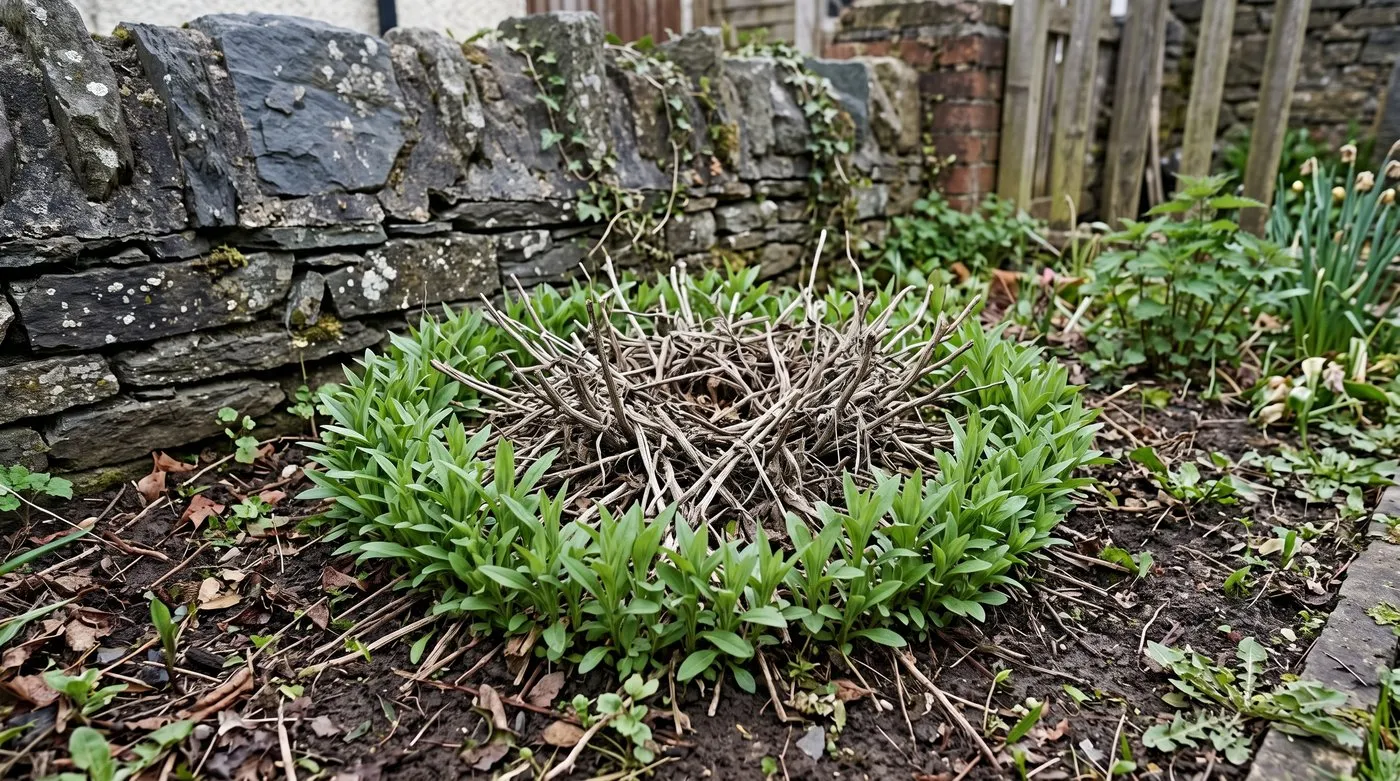
A ring of shoots round a bare middle is a sure sign a clump is ready to split.
May division has two big advantages. You can see the new shoots, so it’s easy to pick out healthy pieces. And warm soil helps roots get going quickly.
The catch is the weather. A warm, dry spell can make fresh divisions wilt. Divide on a cloudy, mild day if you can, and be ready to water. In northern England and Scotland, where growth starts later, May is often the ideal time.
Which perennials to divide in May
The best May candidates are plants that flower from midsummer onwards. They have plenty of time to settle before they bloom.
| Plant | When in May | How to split | Good to know |
|---|---|---|---|
| Hostas | Early, while leaves are still furled | Two forks or a spade | Easiest before leaves open |
| Asters (Symphyotrichum) | Early | Two forks; keep the outer bits | Throw away the woody centre |
| Heleniums | Early | Two forks | Clumps die out in the middle |
| Sedums (Hylotelephium) | Early | Pull or cut apart | Pieces root very easily |
| Monarda (bergamot) | Early | Lift outer shoots | Spreads outwards fast |
| Japanese anemones | Early | Slice off rooted pieces | Can sulk for a season |
| Rudbeckias | Early | Two forks | Replant the young outer pieces |
| Daylilies (Hemerocallis) | Early | Sharp spade or two forks | Tough, fleshy roots |
| Primroses and primulas | Late, after flowering | Tease apart by hand | Each rosette has its own roots |
| Hardy ferns | Early, as fronds unroll | Sharp knife | Each piece needs a crown |
Plants that flower in early summer, such as hardy geraniums, geums and oriental poppies, are usually in bud by May. Leave them until they finish flowering or until early autumn.
How to divide a perennial step by step
Dividing is simple. Lift, split, replant and water. The whole job takes a few minutes per clump.
- Water the clump the day before, so the roots are moist.
- Lift the clump with a fork, working round it about 15cm out from the shoots.
- Shake off loose soil so you can see where the shoots and roots join.
- Split it. Push two forks back to back into the middle and lever the handles apart. For tough crowns, slice through with a sharp spade or old bread knife.
- Pick the best pieces. Keep healthy young bits from the outside of the clump, each with several shoots and a good handful of roots. Compost the old, woody centre.
- Replant straight away at the same depth as before, in soil improved with a little compost.
- Water in well, soaking the soil around the roots.
Keep lifted pieces in the shade or under a damp sack if you can’t replant at once. Our guide to plant propagation by division, cuttings and layering covers other ways to make more plants.

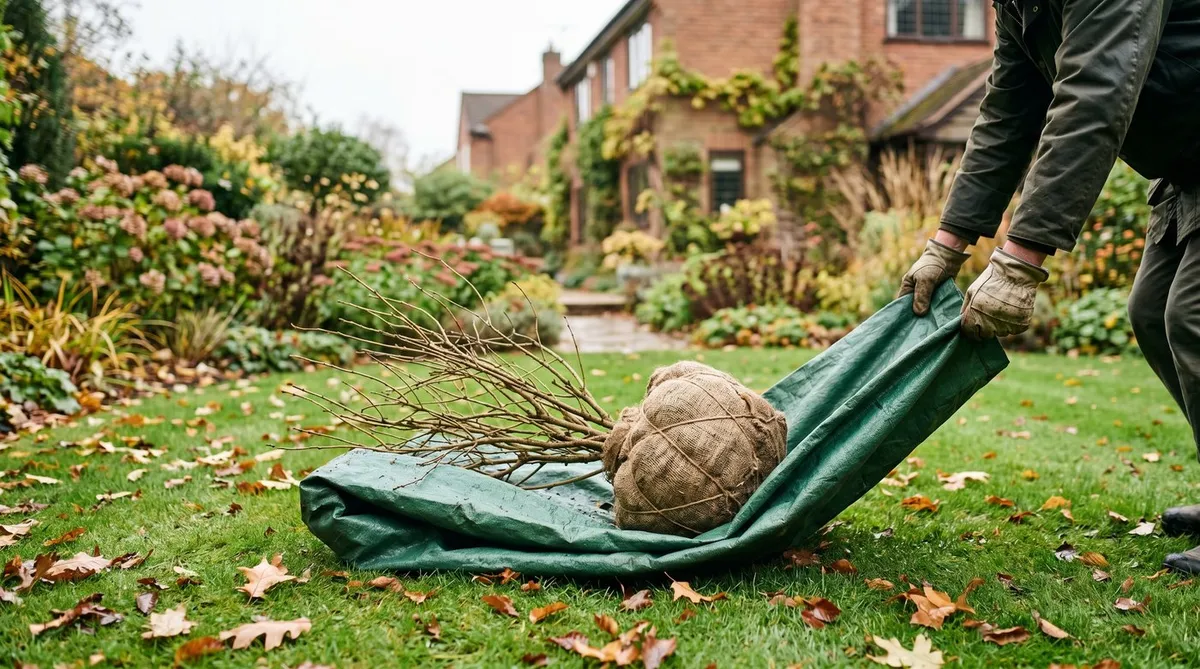
Two forks back to back give you plenty of leverage to split a big clump without hacking it to bits.
Tips for the main plants
Hostas
Divide hostas early in May, while the shoots are still tightly furled. Once the leaves open, they flop and scorch after splitting. Lift the clump, then split with two forks or a spade into pieces with three or more shoots each. Our guide on how to grow hostas covers slug protection for the new plants.
Asters, heleniums and monarda
These spread outwards and often go bare and woody in the middle. Lift the whole clump, throw away the tired centre and replant the vigorous young pieces from the edge. They usually flower the same summer. See our guide on how to grow asters for more care tips.
Daylilies
Daylilies have tough, fleshy roots, so a sharp spade is the best tool. Cut through the crown to make pieces with a few fans of leaves each. Do it early in May, before flower stems appear.

Daylily roots are tough and fleshy. A sharp spade cuts through the crown cleanly where a fork would struggle.
Primroses and primulas
Wait until the flowers finish, usually in late April or May. Lift the clump and gently pull the rosettes apart by hand. Each one has its own roots. Replant them about 20cm apart in moist, part-shaded soil.

Primroses pull apart into single rosettes after flowering. Water them in straight away and they’ll soon settle.
Perennials to leave alone in May
Some plants are better split at another time, or not at all.
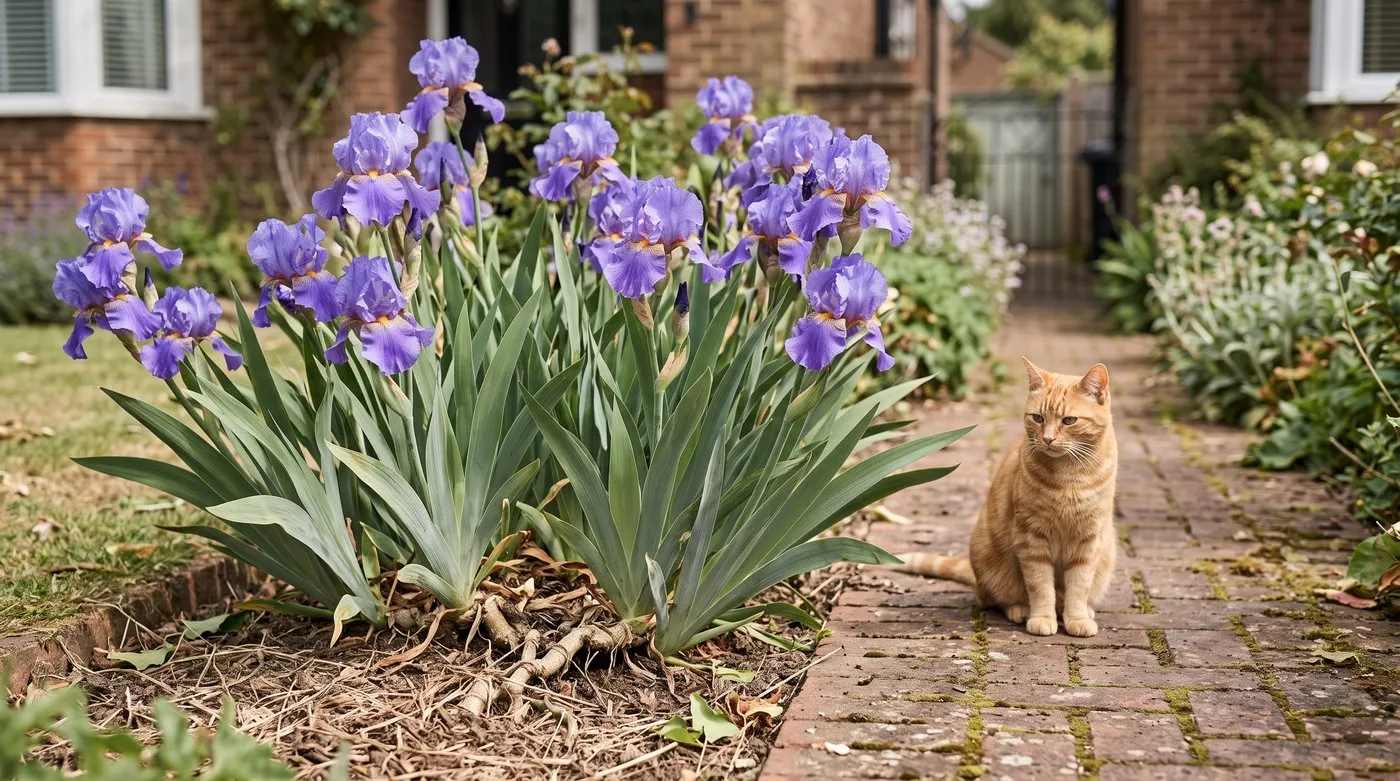
Bearded irises are flowering in May, so leave them be and divide them in July or August instead.
- Bearded irises. Divide these about six weeks after flowering, usually in July or August. Our guide on how to grow iris shows how.
- Peonies. They hate being disturbed. If you must split one, do it in early autumn and expect a year or two without many flowers.
- Hellebores. They resent disturbance and are better left as they are.
- Plants in bud or flower. Hardy geraniums, geums and oriental poppies are best divided after flowering or in early autumn.
If a plant is in the wrong place rather than too big, move it whole. Our guide on how to move perennials and shrubs explains how.
Looking after new divisions
Good aftercare matters more than anything else. Most failures come from divisions drying out in their first few weeks.
- Water well straight after replanting, then keep the soil moist for the next month or so.
- Water deeply once or twice a week in dry spells, rather than a splash every day.
- Mulch with compost, keeping it a few centimetres away from the crowns.
- Shade if needed. On a hot day, a sheet of fleece or an upturned box stops wilting.
- Don’t feed yet. Wait until you see strong new growth.
- Stake tall plants such as heleniums and asters before they need it.
Tall late flowerers that you haven’t divided can also be given the Chelsea chop in late May, to make them bushier.

Replant divisions at the same depth they were growing before, and water them in well.
Common mistakes when dividing perennials
- Leaving it too late. Plants with full-sized leaves or flower buds wilt badly. Divide early in May, or wait until autumn.
- Letting roots dry out. Lifted pieces left on a sunny path soon suffer. Replant quickly or keep them covered.
- Keeping the old centre. The woody middle of a clump grows weakly. Replant the young outer pieces.
- Planting at the wrong depth. Too deep and crowns can rot. Too high and roots dry out. Match the old depth.
- Forgetting to water. The first month is when divisions need it most.
When to divide perennials through the year
| Time of year | What to divide |
|---|---|
| March to April | Most perennials, as new shoots appear |
| May | Late-summer flowerers, hostas and daylilies early in the month; primroses after flowering |
| June | Spring flowerers once they finish, such as pulmonarias and primulas |
| July to August | Bearded irises, about six weeks after flowering |
| September to October | Most perennials, including early-summer flowerers like hardy geraniums |
| November to February | Leave plants alone while soil is cold and wet |
Frequently asked questions
Is May too late to divide perennials?
Not for most, as long as you do it early in the month. Late-summer flowerers such as asters, heleniums and sedums divide happily in May. Plants already in bud are better left until autumn. Water divisions well, because May can turn dry and warm quickly.
Which perennials should I divide in May?
Late-summer flowerers are the best May candidates. Try asters, heleniums, sedums, monarda, Japanese anemones and rudbeckias. Hostas and daylilies also divide well while new leaves are still small. Primroses can be split once they finish flowering.
Can I divide bearded irises in May?
No, wait until after they flower. Divide bearded irises about six weeks after flowering, usually in July or August. Dividing them in May means losing this year’s flowers. The fresh rhizomes then root quickly in the warm soil.
What tools do I need to divide perennials?
Two garden forks and a sharp spade or knife cover most jobs. Push two forks back to back into a big clump and lever them apart. Use a sharp spade or old bread knife for tough, woody crowns such as daylilies.
How often should I divide perennials?
Most perennials benefit from dividing every three to five years. Signs a clump needs splitting include a bare, dead centre and fewer flowers. Fast spreaders such as asters and monarda may need it more often. Slow growers such as hostas can go longer.
Will divided perennials flower the same year?
Usually, yes, though often a little later and with fewer flowers. Late-summer flowerers such as asters and heleniums normally flower well the same year. Smaller divisions may take a season to bulk up before flowering fully.
How do I look after new divisions?
Water them in well and keep the soil moist for the next month or so. Water deeply once or twice a week in dry spells rather than a little every day. A mulch of compost helps hold moisture. Hold off feeding until they show strong new growth.
Want more free plants this month? Read our guide to cuttings to take in May, or browse more jobs in our how-to guides.
Our team produces practical UK gardening guidance from source research, contributor records and established horticultural practice. Editorial standards are overseen by Matt W.