Key takeaways
- Lupins like sun and light, well-drained soil that isn't chalky
- Nick and soak seeds overnight before sowing
- Slugs are the biggest threat, so protect young plants
- Cut faded spikes back to a side shoot for a second flush
- Deadhead before seed sets, or seedlings will crowd out your colours
- Lupins last a few years, so sow a few new ones now and then
Lupins are one of the most eye-catching flowers you can grow. In June and July their chunky flower spikes shoot up to 1.2m, packed with pea-like flowers in every colour from deep crimson to pale lemon. Nothing else gives a border height quite like them.
Here’s how to grow them well, from soil and sowing to picking a variety and dealing with their two big foes: slugs and chalky soil. For what to sow when, see our seed sowing calendar.
Which lupin varieties grow best in the UK
The variety you choose decides the height, the colours and how much space they take.
Band of Nobles grows 1-1.2m, with some lovely two-tone colours such as deep purple over white. It’s grown from seed and sold in separate colours.
Woodfield Hybrids are vigorous with strong colours. They grow 90cm to 1m and give a good second flush if you deadhead promptly.
Gallery Series is best for small gardens and pots. At about 50cm, it suits the front of a border. It comes in red, pink, blue, yellow and white.
| Variety | Height | Colours | Good for |
|---|---|---|---|
| Russell Hybrids | 90cm to 1.2m | Every colour, two-tones | Classic cottage borders |
| Band of Nobles | 1-1.2m | Rich two-tones and purples | Back of the border |
| Woodfield Hybrids | 90cm to 1m | Bold single colours | A strong second flush |
| Gallery Series | About 50cm | Every colour, compact | Pots, small gardens |
| The Pages | About 90cm | Carmine red | Warm-coloured borders |
What soil do lupins need
Soil is the thing that catches most people out.
Lupins like light, well-drained soil that’s neutral or slightly acid. They don’t like lime. On chalky, limey soil their leaves turn yellow and the plants fade, however well you look after them.
A cheap soil test kit from the garden centre will tell you where you stand. If your soil is limey, you can work in sulphur chips a few months before planting, following the pack. Ericaceous compost helps at planting time too, but only for a while. On real chalk, a raised bed or a big pot is often easier. For heavy ground, see our guide on how to improve clay soil.
Drainage matters just as much. Lupins have long roots and hate wet soil in winter, which rots the crown. On heavy ground, raise the bed a little and mix in grit.
Skip high-nitrogen feeds. Lupins are in the pea family and make some of their own nitrogen. Extra nitrogen gives you leaves instead of flowers. If you feed at all, use a tomato feed.
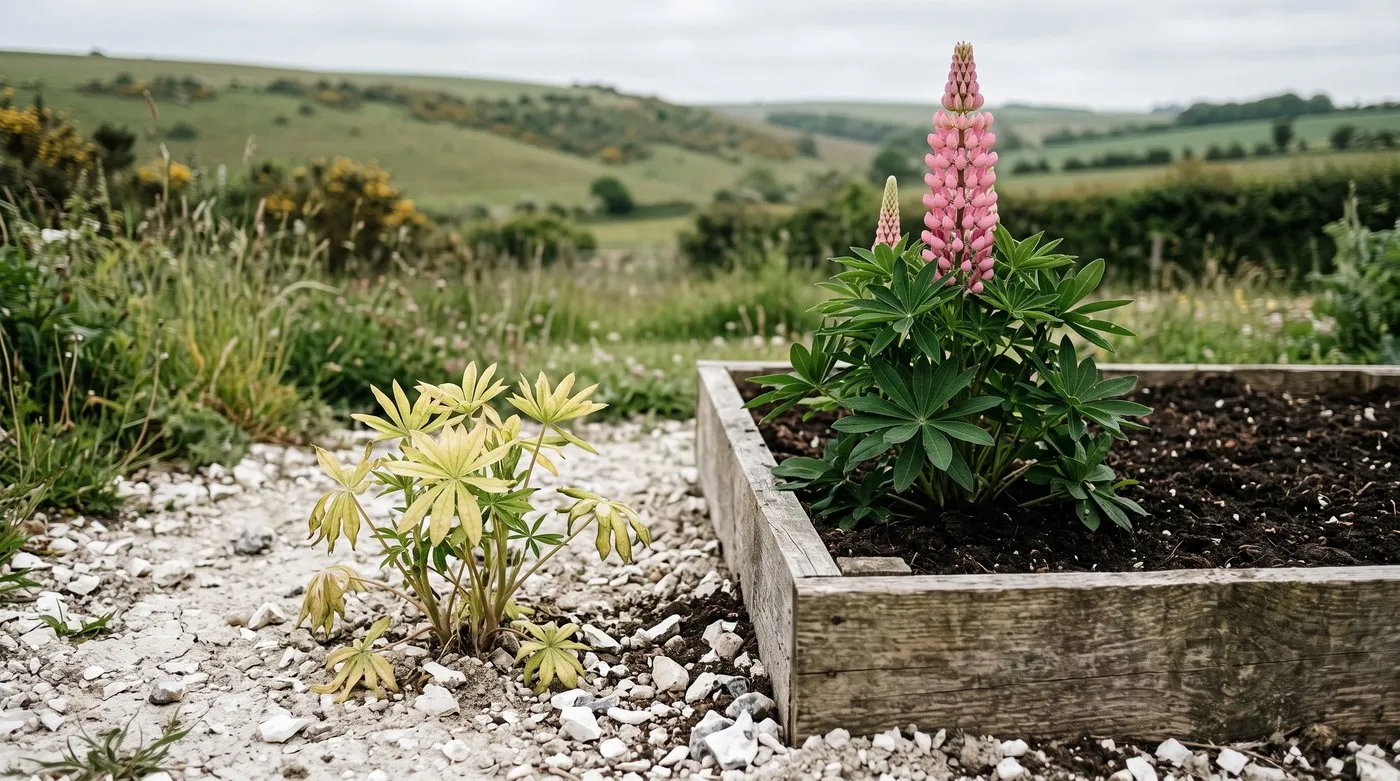
Yellow leaves on limey soil are a sign lupins aren’t happy. On real chalk, a raised bed or a big pot is the easier option.
How to grow lupins from seed
Seed is the cheapest way to get lots of healthy plants.
Get the seed ready: Lupin seeds have a hard coat. Rub each one with a nail file or sandpaper, then soak overnight in lukewarm water. This helps them sprout faster. For more tips, see our guide on how to sow seeds indoors.
When to sow:
- February to April, indoors: Sow one seed per 7.5cm pot, 1-2cm deep, in peat-free seed compost. Keep at 15-20C on a windowsill or in a propagator. Move into 9cm pots when the first true leaves appear.
- April to May, outdoors: Sow 1-2cm deep where they’re to flower. Thin to 45-60cm apart.
- September to October, outdoors: These overwinter as small plants and flower a bit earlier the next June.
Lupins hate having their roots disturbed. Sow into individual pots or straight into the ground, and handle the roots as little as you can.
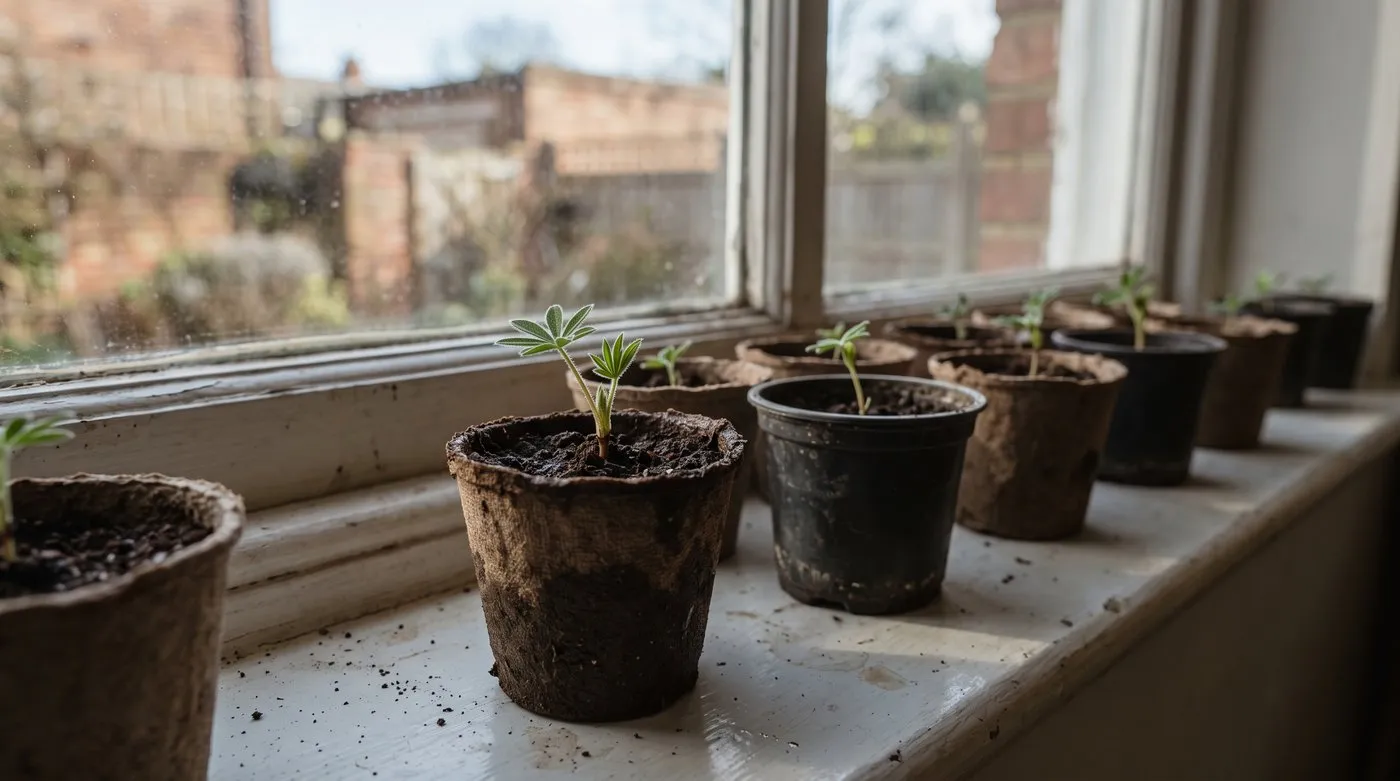
Sow one seed per pot, as lupins hate having their roots disturbed. Nick and soak the seeds first to help them sprout.
When and how to plant out lupins
Plant out from April to June, or in September.
Dig a hole twice as wide as the rootball. Set the crown level with the soil, as burying it can cause rot. Firm in and water well. Space plants 45-60cm apart. Closer planting fills a border faster but means less air around the leaves and more mildew.
Lupins quickly grow one long, deep root. That holds them steady in the wind, but it means they rarely move well later. Pick the spot carefully and leave them there.
Slug control, the most important job in May and June
Slugs are the biggest killer of young lupins. From late April to June, the new growth is soft and slugs love it.
One slug can strip a young plant overnight, and plants that get eaten again and again end up with weak flower spikes.
What helps:
- Keep seedlings in pots off the ground until they’re 15-20cm tall.
- Water slug nematodes (such as Nemaslug) into the soil around plants in April.
- Put copper tape around pots.
- Set beer traps at soil level from late April.
- Go out with a torch after dark in May and June and pick slugs off.
If you use pellets, choose ferric phosphate ones and scatter them thinly. For more ideas, see our companion planting guide.
How to care for lupins through the season
Watering: Water young plants regularly for their first six to eight weeks. Once their roots are down, they cope well with dry spells. Water the soil, not the leaves.
Staking: In windy spots, give tall varieties a single cane behind the plant and tie the spike loosely. In sheltered gardens, the stems are usually strong enough on their own.
Aphids: Lupin aphids are big and grey-green, and they gather on the flower spikes from May. They’re very common and can weaken plants. Blast them off with the hose or rub them off by hand. Ladybirds, lacewings and hoverflies all eat aphids, and planting bee-friendly plants nearby brings these helpers in. If aphids win every year, try baptisia. It has similar pea-flower spikes and lupin aphids leave it alone.
Deadheading for a second flush: When a spike finishes, cut it back to the first side shoot, not to the base. The side shoots then give you a smaller second show in late summer. Let seed form and the plant stops making new flowers.
Stop self-seeding: Named lupins don’t come true from seed. Seedlings usually come up plain blue or purple and slowly take over. Deadhead every spike before seed forms and pull out any seedlings.
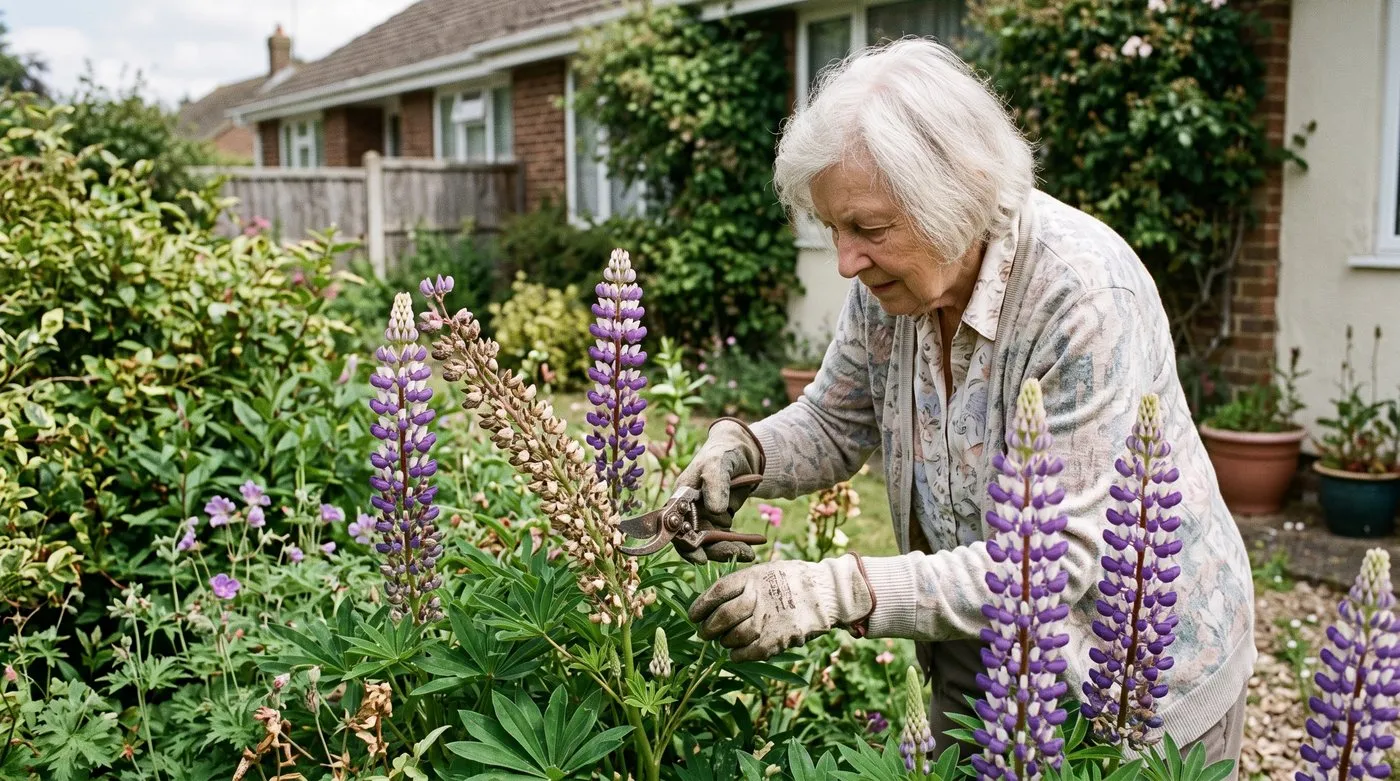
Cut faded spikes back to the first side shoot, not to the base. You’ll get a smaller second show later in summer.
Month-by-month lupin calendar
| Month | What to do |
|---|---|
| February | Sow indoors after nicking and soaking the seeds |
| March | Pot on seedlings, keep sowing on a warm windowsill |
| April | Harden off young plants, sow outdoors in the south, water in slug nematodes. Take basal cuttings from established plants |
| May | Plant out, stake tall varieties, watch for aphids |
| June | Peak flowering. Cut faded spikes back to the first side shoot |
| July | Enjoy the second flush, keep deadheading, water in dry spells |
| August | Cut back finished growth |
| September | Sow seed outdoors for next year |
| October | Cut plants back to the crown. Mulch with leaf mould in colder gardens |
| November to March | Plants are resting. Don’t dig around the crowns |
Lupins as companion plants
Lupins are in the pea and bean family. Like peas and beans, they have little nodules on their roots that capture nitrogen from the air.
When you cut the plants down, the roots break down in the soil over winter and add a little nitrogen back. Cut stems at ground level rather than pulling the plants out.
They’re lovely partners for other cottage garden favourites. Plant them with foxgloves, delphiniums and roses for a classic early summer border.
Next up, read our guide on how to grow delphiniums in the UK, the perfect tall partner for lupins.
Frequently asked questions
When should I sow lupin seeds in the UK?
Sow indoors from February to April, or outdoors in April or May. You can also sow outside in September or October for earlier flowers next year. Nick or soak the seeds overnight first. They should sprout in two to three weeks at 15-20C.
Do lupins come back every year?
Yes, for a few years. They die back in winter and regrow from the crown each spring. After a few years the plants get woody and flower less. Sow or buy a few new ones every so often to keep the show going.
Why are my lupin leaves turning yellow?
Chalky, limey soil is the usual reason. Lupins dislike lime, and it turns their leaves yellow. Soggy soil can do the same, so check the drainage too. On chalk, a raised bed or a big pot of lime-free compost is often the easiest fix.
How do I stop lupins from setting seed?
Cut faded spikes back to the first side shoot straight away. This stops seed forming and encourages a second flush of flowers in late summer. If seed does drop, the seedlings usually come up plain blue or purple and slowly crowd out your named colours.
Can I grow lupins in pots?
Yes, but choose a big pot and a dwarf variety. Use a pot at least 30-40cm wide. Lupins have long roots, so they don’t love pots long term. The dwarf Gallery Series reaches about 50cm and is the best choice. Water pots often, as they dry out fast.
What is eating my lupin leaves?
Slugs are almost certainly to blame on young plants. They can strip a plant overnight. Lupin aphids, which are large and grey-green, cluster on flower spikes from May. Blast them off with a jet of water or rub them off by hand. Protect young plants from slugs with nematodes or copper tape.
How tall do lupins grow?
Most grow 90cm to 1.2m tall. Russell Hybrids, Band of Nobles and Woodfield Hybrids are all around this height. The dwarf Gallery Series stays at about 50cm. Taller types may need a stake in a windy garden.
Further reading
- Cottage garden planting plan: classic border designs with lupins and other tall perennials
- How to grow foxgloves in the UK: another cottage garden spire that pairs well with lupins
- How to grow delphiniums in the UK: taller spikes for the back of the border
- Bee-friendly garden plants: bumblebees love lupins, so add more of their favourites
- How to improve clay soil: handy if drainage is holding your lupins back
Our team produces practical UK gardening guidance from source research, contributor records and established horticultural practice. Editorial standards are overseen by Matt W.