Key takeaways
- Plant in full sun and poor, dry, free-draining soil. Rich soil makes it flop
- Most types flower in their second year, or live for just a few years
- Sow seed on top of the compost in spring and don't cover it
- Leave one or two spikes to self-seed for free replacement plants
- Check for mullein moth caterpillars from May and pick them off by hand
Verbascum is the plant for that hot, dry, stony spot where nothing else seems happy. Tall spikes of flowers rise from rosettes of big, often silvery leaves, and they look brilliant poking up through a border. Best of all, verbascum likes being left alone: poor soil, full sun, little water.
You might know it as mullein. Our native great mullein (Verbascum thapsus) grows wild on roadsides and chalk downs across the UK. Garden types range from neat 60cm plants to giants over 2m tall. They’re easy to grow, and most will seed themselves around for years of free plants.
The silvery, woolly rosette of V. bombyciferum in its first year. The big flower spike comes the summer after.
Is verbascum a perennial or a biennial?
It depends on the type, but most don’t live long. Knowing which you have helps you plan.
Biennials make a rosette of leaves in year one, flower in year two, drop their seed and die. Great mullein, V. bombyciferum and V. olympicum all work this way. They carry on in your garden through their seedlings.
Short-lived perennials flower for two to four years before fading. V. chaixii, V. phoeniceum and most named hybrids like ‘Clementine’ and ‘Sugar Plum’ fit here.
Longer-lived types are rare. V. chaixii ‘Album’ is the best bet, lasting a few years longer in well-drained soil. It’s still worth keeping a few seedlings as back-ups.
| Type | Examples | How long it lasts | Self-seeds? |
|---|---|---|---|
| Biennial | V. thapsus, V. bombyciferum, V. olympicum | Two years | A lot |
| Short-lived perennial | V. chaixii, V. phoeniceum, hybrids | Two to four years | Some |
| Longer-lived | V. chaixii ‘Album’ | Several years | Yes |
Where to plant verbascum
The right soil
Poor, dry, free-draining soil is what verbascum wants. This matters more than anything else. In rich soil with lots of compost, it grows soft and floppy and dies young. In thin, poor soil, it stays sturdy and lives longer.
A sunny bank, gravel garden or dry border is perfect. Chalky soils suit it well, and so do sandy and stony ones. Even rubbly ground can work.
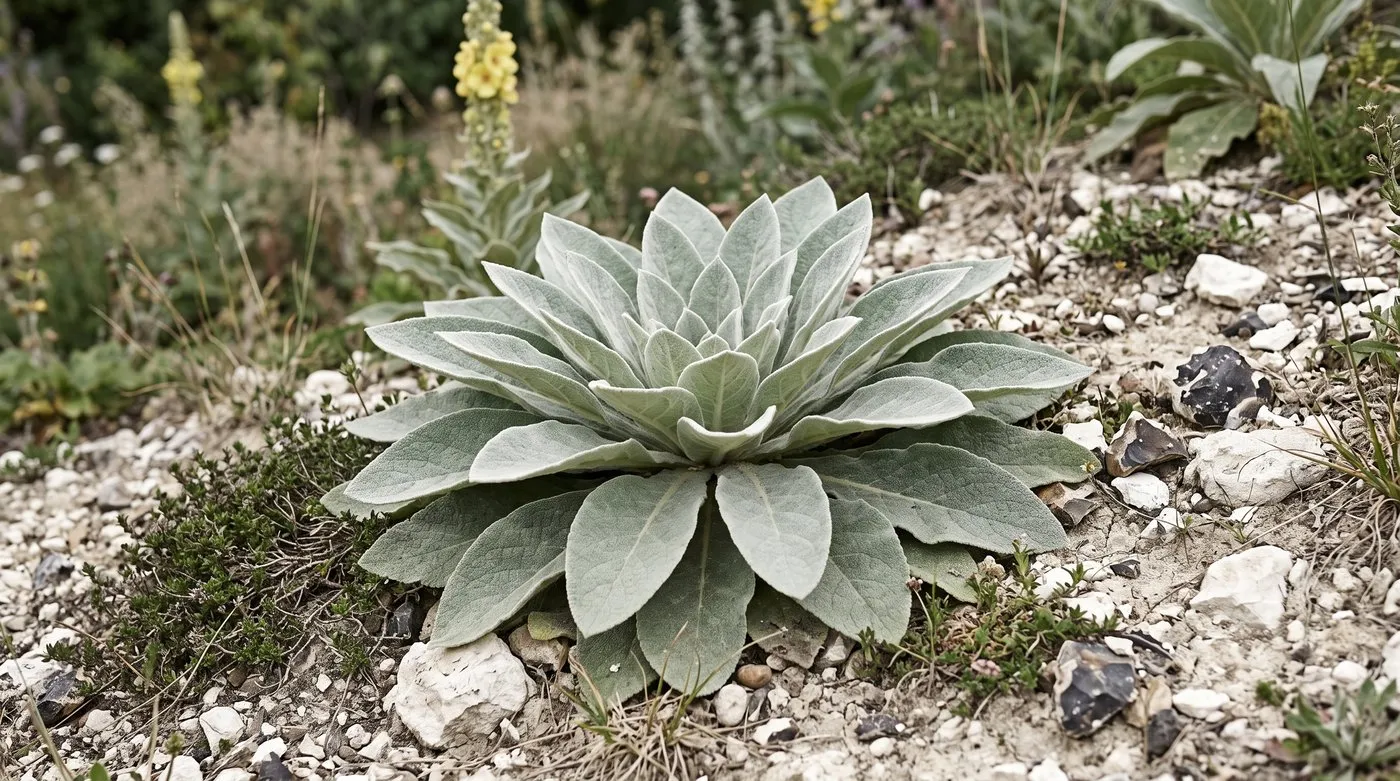
Thin, stony soil keeps verbascum sturdy and long-lived. Skip the compost, as rich soil makes it soft and floppy.
Plenty of sun
Give it full sun. In shade, plants stretch, flower poorly and are more likely to rot. South or west-facing spots are ideal.
Good partners
Low, mounding plants hide the base of the tall spikes and like the same dry, sunny conditions. Try:
- Lavender and nepeta for silver and purple at its feet
- Sedum and sempervivum in gravel
- Geranium sanguineum as low cover around the rosettes
- Stipa tenuissima (Mexican feather grass) for soft movement
- Eryngium and echinops for a full dry-garden look
Together they make the relaxed, natural look you see in cottage garden plans.
The best verbascums to grow
Verbascum bombyciferum, giant silver mullein
Grow this one for its leaves. The whole plant is covered in soft, silvery-white fuzz, as if dusted with flour. In year two it sends up a spike of sulphur-yellow flowers, 1.5 to 2m tall. ‘Polarsommer’ (also sold as ‘Arctic Summer’) is a lovely selection. It’s biennial and seeds itself around generously.
Verbascum chaixii, nettle-leaved mullein
The one to pick if you want plants that come back. Slender spikes to about 90cm carry small flowers with purple centres. The white form, ‘Album’, is the star, with white flowers and mauve centres that suit almost any border.
Verbascum olympicum, Olympic mullein
A real giant, reaching 2 to 2.5m with branching spikes. The silver-grey rosettes are a show on their own. In year two, the branched spike carries yellow flowers for weeks. Put it at the back of a deep border or as the centrepiece of a gravel garden. Seedlings pop up in autumn and sit through winter as small rosettes.
Verbascum phoeniceum, purple mullein
The colourful one, in purple, pink and white. It has smooth, dark green leaves rather than woolly ones. Spikes reach 60 to 90cm, so it fits nicely in the front or middle of a border. Look for ‘Flush of White’, ‘Violetta’ (deep purple) and ‘Cherry Helen’ (rose-pink).
V. chaixii ‘Album’ in a mixed border, with white flowers and mauve-purple centres.
Verbascum nigrum, dark mullein
A native mullein with yellow flowers and purple fuzzy centres. It’s more compact at 60 to 90cm, and grows wild on verges and chalk grassland in southern and central England. Wildlife gardeners love it, because it feeds bees and the native mullein moth. It settles in happily on poor ground and chalky soil.
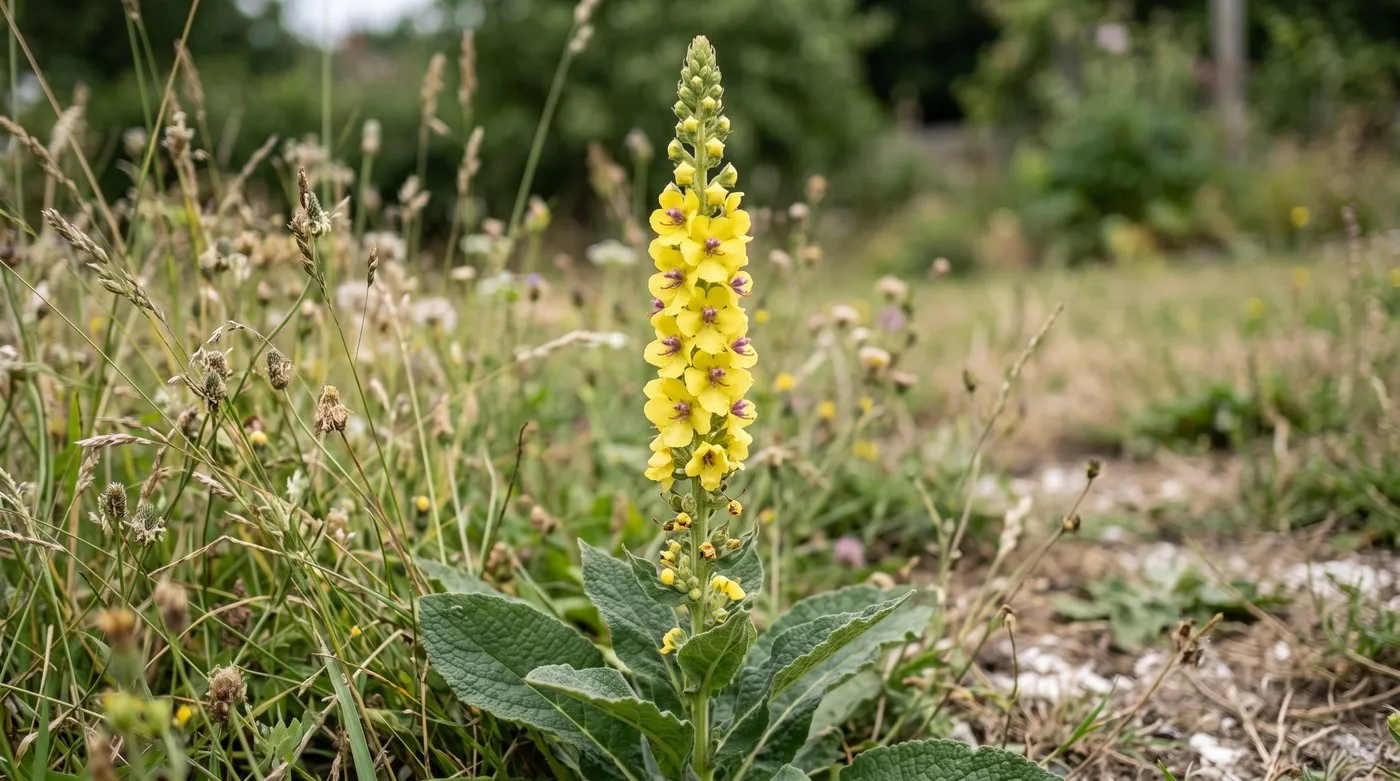
Dark mullein is a native with purple-haired centres to its yellow flowers. It’s a great choice for a wildlife-friendly patch on poor ground.
Garden hybrids
Hybrids give you more colours and tidier plants. A few favourites:
| Variety | Colour | Height | Good to know |
|---|---|---|---|
| ’Clementine’ | Burnt orange | 90cm | An unusual colour for mullein |
| ’Sugar Plum’ | Plum-purple | 120cm | Dark stems |
| ’Gainsborough’ | Soft yellow | 120cm | RHS AGM, elegant |
| ’Cotswold Beauty’ | Biscuit-amber | 120cm | Soft, subtle shade |
| ’Petra’ | Deep rose-pink | 60cm | Compact, good in pots |
Most hybrids last two to four years and don’t come true from seed. Take basal cuttings in spring to keep a favourite going.
Growing verbascum from seed
Sow on the surface and don’t cover the seed. Verbascum needs light to sprout. Press the seed gently onto damp compost so it touches the moisture but stays in the light.
How to sow
- March or April: fill 9cm pots with seed compost mixed half and half with perlite
- Scatter 10 to 15 seeds per pot and press them down lightly. Don’t cover them
- Water from below by standing the pots in a tray of water for half an hour, so the seeds don’t wash away
- Keep them at 15 to 20C somewhere bright but out of hot sun. Seedlings appear in two to four weeks
- Pot them up into their own 9cm pots of gritty compost once the first true leaves show
- Grow on through summer, watering sparingly, and plant out in September or the next March
You can also sow biennial types straight into the ground. Scatter seed on bare soil in late spring or early autumn and rake very lightly. Great mullein and V. bombyciferum are among the easiest flowers to grow from seed.
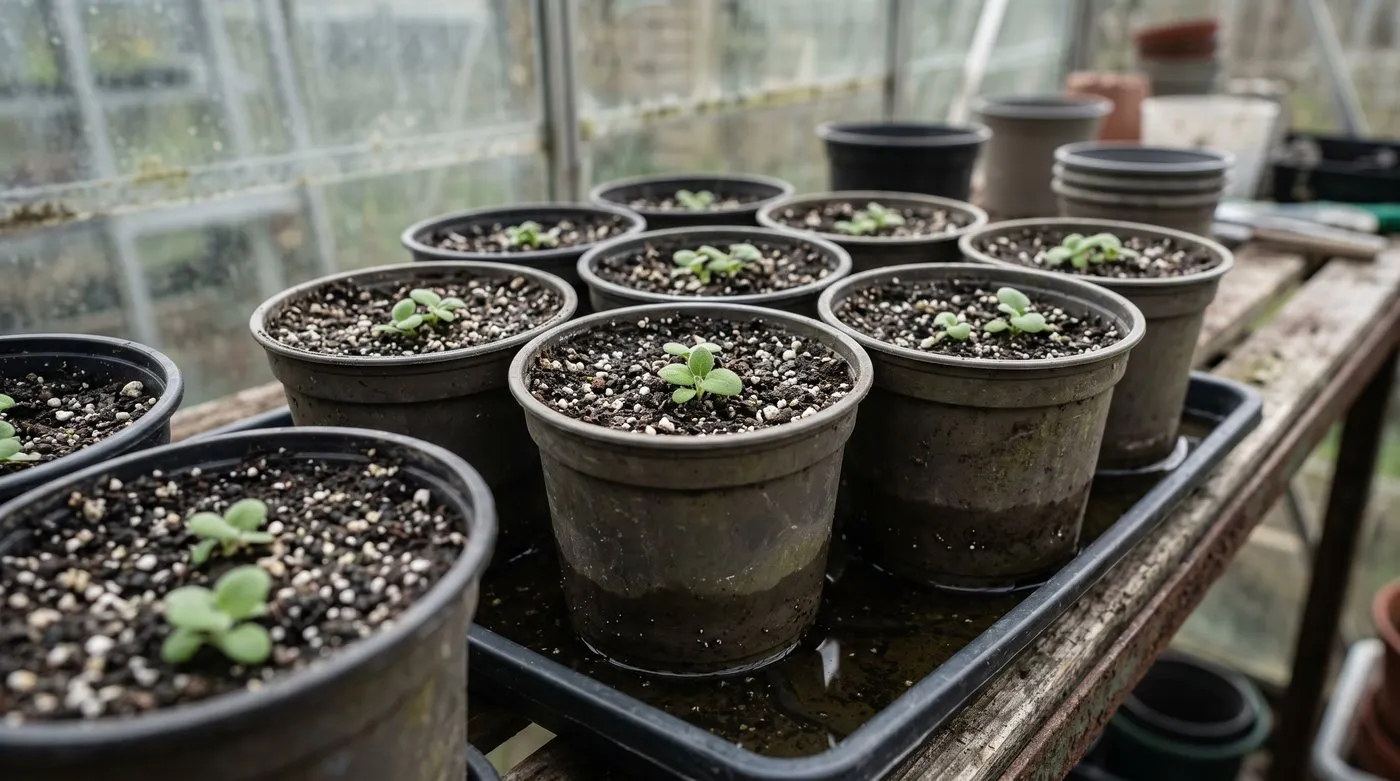
Verbascum seed needs light, so press it onto the surface and don’t cover it. Watering from below stops the tiny seeds washing away.
Taking basal cuttings
Named hybrids won’t come true from seed, so take cuttings instead. In March or April, cut a young 8 to 10cm shoot from the base with a little root attached. Pot it in half compost, half perlite and keep it just moist. Roots form in four to six weeks. Pot on and plant out in autumn.
Letting verbascum self-seed
Verbascum seeds itself around happily on bare soil and gravel. Each spike drops thousands of tiny seeds in autumn, and they can sit in the soil for years until conditions suit.
To keep things tidy, cut off all but one or two spikes before the seed ripens. Hoe out unwanted seedlings in spring while they’re small, as they’re easy to pull then. Move the ones you want when they’re about 5cm tall, before the long root gets going.
Cosmos is another cheerful self-seeder if you enjoy free plants.
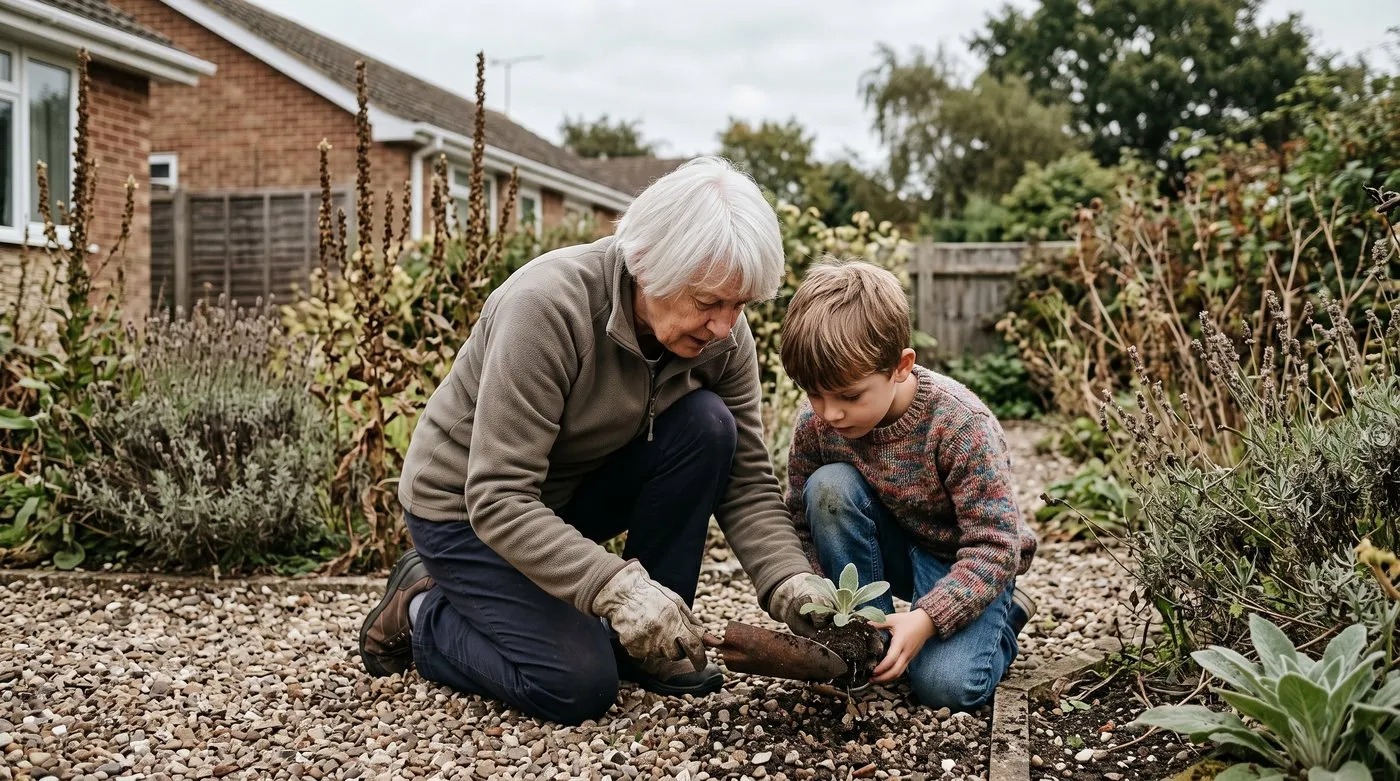
Move seedlings while they’re about 5cm tall, before the long root gets going. Hoe out any you don’t want in spring.
Mullein moth caterpillars
These are the one pest to watch for. You can’t miss them: pale grey-green with bold yellow and black spots, up to 5cm long. They’re some of the most striking caterpillars in Britain.
The moths lay eggs under the leaves in May. A group of caterpillars can strip a big plant in a few days. It looks dreadful, but established plants usually push out new leaves from the crown.
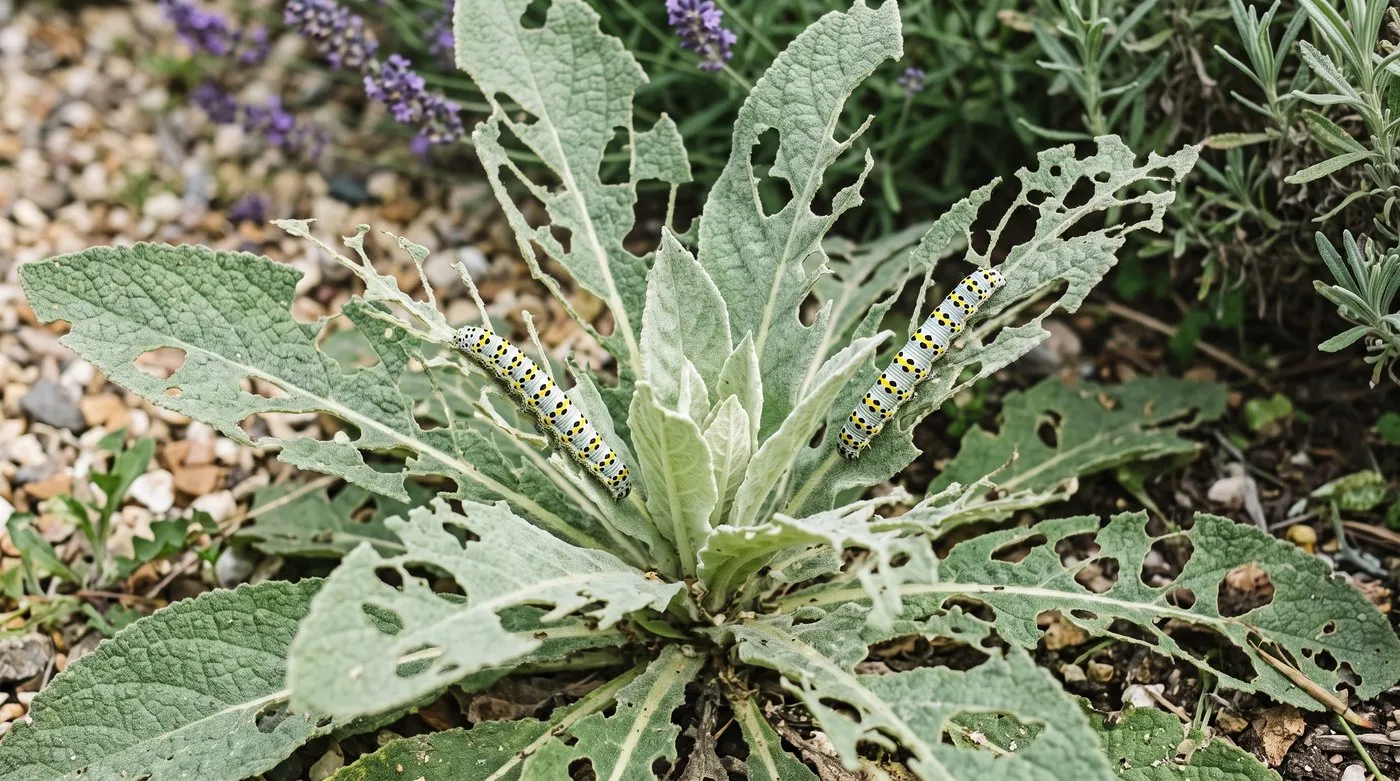
It looks dreadful, but established plants usually push out fresh leaves. Pick the caterpillars off by hand and move them to a wild mullein if you can.
How to deal with them
Pick them off by hand. The mullein moth is a native species, so there’s no need for sprays. If you can, move them to a wild mullein or figwort rather than squashing them. A bit of leaf damage is just part of growing verbascum.
| Problem | What you’ll see | What to do |
|---|---|---|
| Mullein moth caterpillars | Leaves stripped, spotty caterpillars | Pick off by hand, May to July |
| Powdery mildew | White coating on leaves in late summer | Improve airflow, remove bad leaves |
| Crown rot | Plant collapses at the base | Better drainage, less water |
| Aphids | Clusters on flower buds in June | Squash by hand or blast with water |
| Dies after flowering | Biennial types | Let it self-seed |
Using verbascum in your garden
Gravel gardens
Verbascum looks right at home in gravel. The rosettes sit neatly among the stones and the spikes need no staking. Pair it with lavender, alliums, eryngium and grasses for a low-fuss, drought-tough scheme.
Cottage gardens
The tall spikes of V. olympicum and V. bombyciferum look great at the back of cottage garden borders. Plant hardy geraniums, aquilegia and foxgloves around them. They all self-seed, giving that easy, overflowing cottage look.
Prairie-style planting
Verbascum mixes well with echinacea, rudbeckia and stipa grasses. Don’t give verbascum the Chelsea chop, but many of its neighbours will love it. Our Chelsea chop guide explains which ones.
Wildlife gardens
Native great mullein and dark mullein feed bees, host mullein moths and give goldfinches seed in autumn. The dry stems shelter insects over winter, so leave them standing until March.
V. olympicum towering over a gravel garden, its branched spike covered in yellow flowers.
Verbascum jobs month by month
| Month | Jobs |
|---|---|
| March | Sow seed indoors. Take basal cuttings. Clear old dead rosettes |
| April | Plant out pot-grown plants. Thin seedlings to 30cm apart |
| May | Check under leaves for mullein moth eggs and caterpillars |
| June | Flowering starts. No feeding needed |
| July | Keep checking for caterpillars. Cut spent spikes if you don’t want seedlings |
| August | Leave one or two seed heads and cut the rest |
| September | Move self-sown seedlings to where you want them |
| October | New rosettes settle in for next year. No watering needed |
| November to February | Leave dead spikes for wildlife. Nothing else to do |
For more on choosing types, see the RHS verbascum growing guide.
Frequently asked questions
Is verbascum a perennial or biennial?
Most are biennials or short-lived perennials. Biennials like V. bombyciferum and V. olympicum make leaves in year one, flower in year two, then die. Short-lived perennials like V. chaixii and V. phoeniceum last two to four years. They all self-seed, so you’ll rarely be without them.
What soil does verbascum need?
Poor, dry, free-draining soil in full sun. Chalky, sandy and stony ground all suit it. Rich soil makes it grow soft, flop over and die young, so don’t add compost or manure when you plant.
How do I grow verbascum from seed?
Sow it on top of damp compost in spring. Don’t cover the seed, as it needs light to sprout. Keep it at 15 to 20C and seedlings should appear in two to four weeks. Pot them up when the first true leaves show, then plant out in autumn or the next spring.
What eats verbascum leaves?
Mullein moth caterpillars are the usual culprits. They’re grey-green with yellow and black spots and can strip a plant in a few days. Check under the lower leaves from May and pick them off by hand.
Does verbascum self-seed?
Yes, it self-seeds freely on bare soil and gravel. Leave one or two spent spikes standing for replacement plants. Hoe out any seedlings you don’t want in spring while they’re small.
Can verbascum grow in clay soil?
Yes, if you improve the drainage. Dig in plenty of grit, about half and half with the soil, or grow it in a raised bed or gravel-topped border. In wet, heavy clay the roots tend to rot over winter.
Which is the best verbascum for UK gardens?
V. chaixii ‘Album’ is a lovely, reliable choice. It has white flowers with purple centres on 90cm stems and lasts longer than most. For silver leaves, try V. bombyciferum ‘Polarsommer’. For sheer height, V. olympicum reaches 2m or more.
Our team produces practical UK gardening guidance from source research, contributor records and established horticultural practice. Editorial standards are overseen by Matt W.