Key takeaways
- Penstemons flower from June to October, one of the longest seasons of any border plant
- Some are much tougher than others: Garnet copes with most winters, while Alice Hindley is more tender
- Take cuttings in September in case the parent plant doesn't survive winter
- Don't cut them back in autumn, as the old stems protect the plant through winter
- Garnet and Husker Red are great choices for colder gardens
- Soil that drains well matters most, as wet winter soil kills more penstemons than cold
Penstemon is the plant that keeps going when everything else takes a breather. From June right through to the first hard frosts, its tube-shaped flowers come in wave after wave. Each one looks like a little foxglove, flared at the mouth and held in loose spires above neat leaves.
There are lots of varieties, and the best are among the most rewarding plants you can grow. The catch is that some are much tougher than others. Knowing which is which saves you money and disappointment.
Which penstemons are hardiest in the UK?
Check how tough a variety is before you buy. It’s the difference between a plant that lasts for years and one that’s gone after its first winter.
Garnet, whose proper name is Andenken an Friedrich Hahn, is the one to start with. It copes with most UK winters and flowers reliably from June to October. A good clump is covered in wine-red flowers all summer.
Husker Red is just as tough, with a bonus: dark bronze-purple leaves that look good even when it’s not in flower. Its white flowers, with a faint pink blush, appear from July to September.
| Variety | Flower colour | Height | How tough | Notes |
|---|---|---|---|---|
| Garnet | Wine-red | 75cm | Very tough | The easy one, great for beginners |
| Husker Red | White, purple leaves | 80cm | Very tough | Grown as much for its leaves |
| Raven | Deep purple | 90cm | Fairly tough | Rich colour |
| Pensham Plum Jerkum | Plum-purple, white throat | 80cm | Fairly tough | Striking two-tone, needs good drainage |
| Alice Hindley | Lilac-blue, white throat | 100cm | Less hardy | Beautiful, so take cuttings |
| Blackbird | Deep purple-black | 90cm | Less hardy | Darkest colour, take cuttings |
| Osprey | White, pink edges | 85cm | Fairly tough | Soft colour for mixed borders |
| Stapleford Gem | Lilac, purple, mauve | 70cm | Fairly tough | Changes colour as it ages, compact |
The more tender varieties, like Alice Hindley and Blackbird, are well worth growing for their colours. Just take cuttings each September so a bad winter costs you nothing.
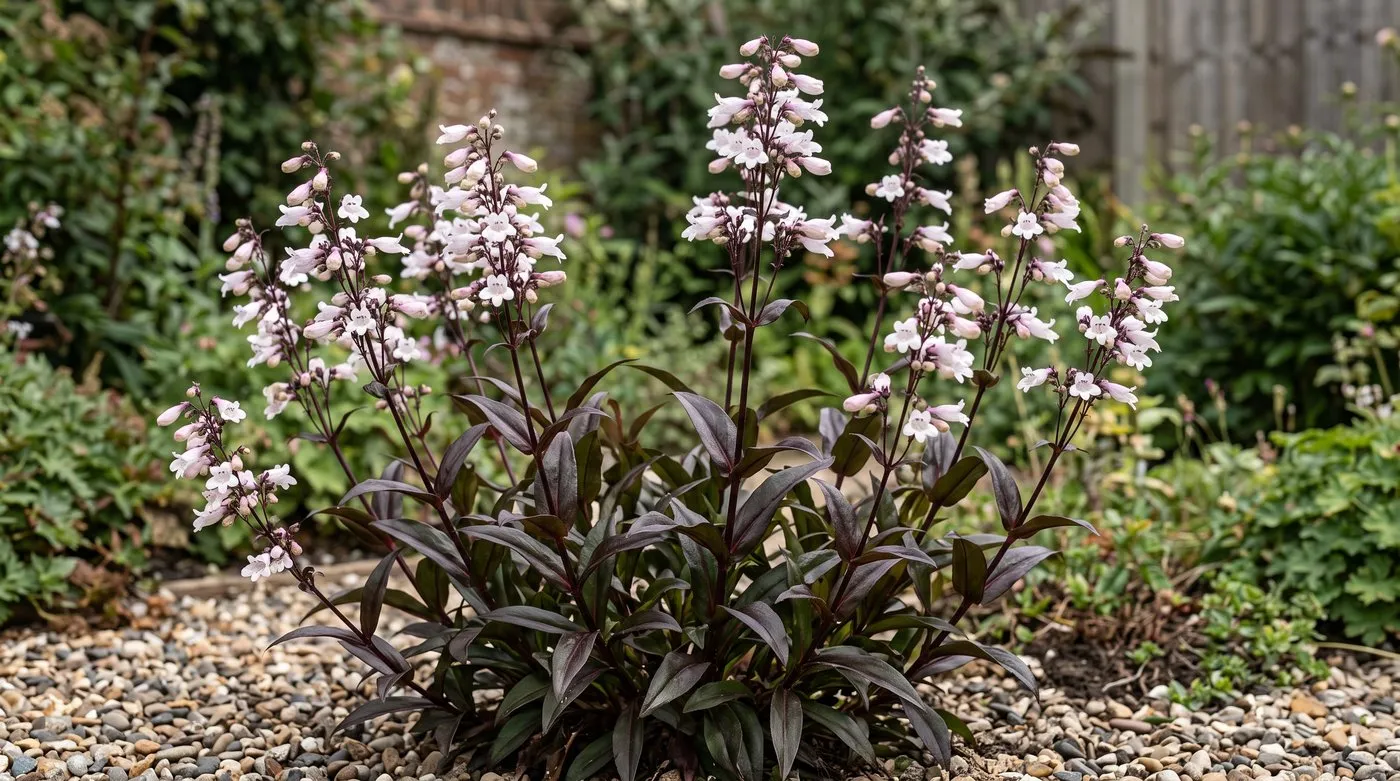
Husker Red is one of the toughest penstemons, and its dark leaves look good all season. The gravel around the base keeps it dry in winter.
How do you plant penstemon in UK gardens?
Plant in spring (April to May) after the last frost, or in early autumn (September) so the roots can settle before winter. Spring planting is safer in cold or exposed gardens, as the plant gets a whole summer to settle in.
Pick a spot in full sun or very light shade. The soil must drain well. This matters more than almost anything else. On heavy clay, dig a hole twice the width of the pot and mix the soil you dig out with an equal amount of grit. Plant so the base of the stems sits 2-3cm above the surrounding soil, so rain runs away from it.
Space plants 40-50cm apart. Water well after planting and keep the soil moist through the first summer. After that, penstemons cope well in dry spells and only need water in long dry periods. A thin layer of gravel or grit around the base looks smart and keeps the base of the plant dry in winter. Keep bark or compost mulch away from the stems.
How do you take penstemon cuttings?
September cuttings are the best habit a penstemon grower can have. Ten minutes in early autumn gives you backup plants for every variety you grow. If the parent survives winter, you’ve got spares to give away. If it doesn’t, you’ve got replacements ready.
Choose shoot tips 7-10cm long with no flowers. Cut just below a leaf joint with a clean, sharp blade. Remove the lower leaves, keeping just the top pair or two. Dip the end in rooting powder if you have some. Push the cuttings around the edge of a 9cm pot filled with a half-and-half mix of perlite and peat-free compost.
Water gently and put the pot in a cold frame, cool greenhouse or on a bright windowsill. Cover loosely with a clear plastic bag. They usually root in four to six weeks, and new growth at the tips is your sign. Take off the bag and keep them somewhere cool and bright over winter. Pot them up separately in March and plant out after the last frost in May.
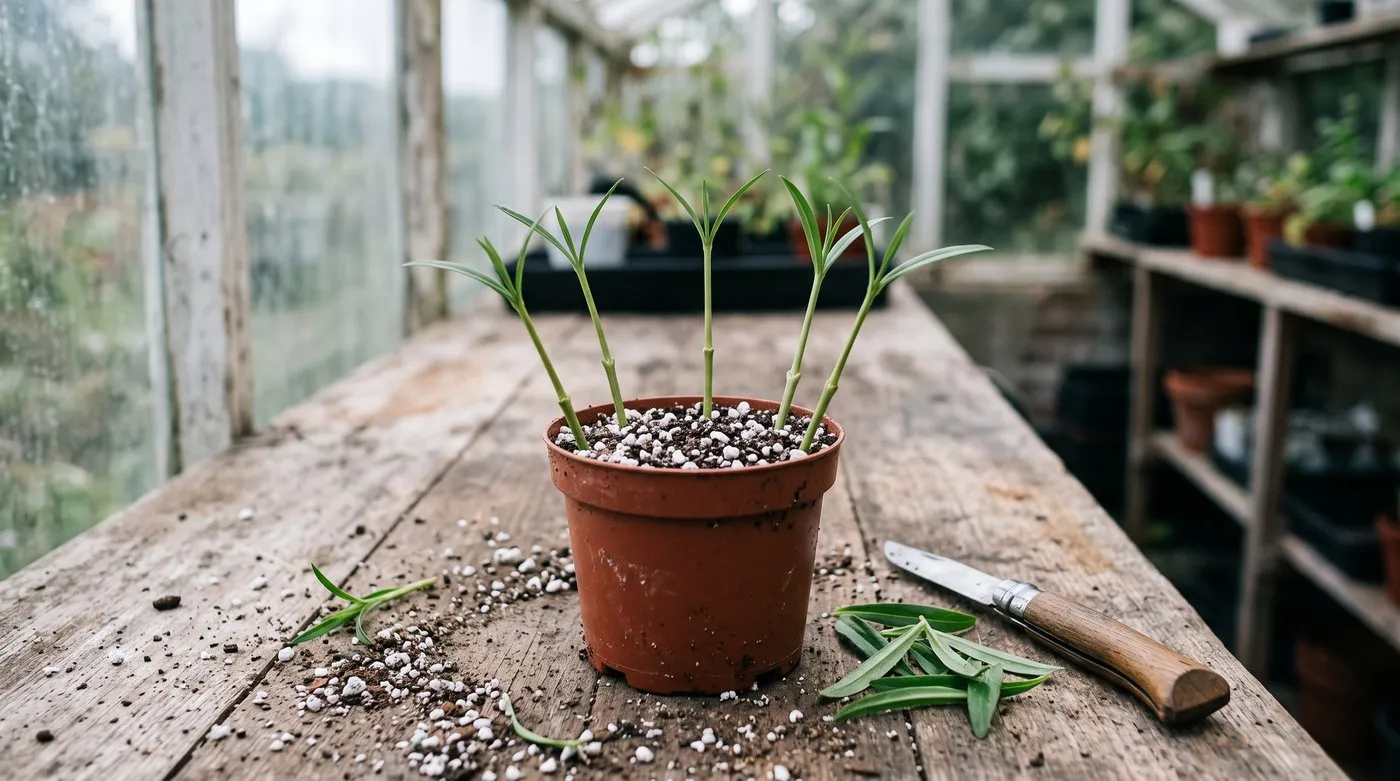
Cuttings around the edge of a pot root well, and ten minutes in September gives you backups. It’s the easy insurance for the more tender varieties.
Why should you never cut back penstemon in autumn?
This one rule saves more penstemons than any other. Leave the old stems alone in autumn and early winter, however tempting a tidy-up is.
The old growth does two jobs over winter. It wraps the base of the plant in a cosy layer of stems and leaves, protecting it from frost. And it helps rain run off, so the base doesn’t sit wet.
Wait until mid-April. By then you’ll see new shoots at the base. Cut each old stem back to just above the lowest pair of fresh leaves. If there’s no new growth by late April, gently scratch a stem with your thumbnail. Green underneath means it’s alive, just slow. Brown means it’s dead.
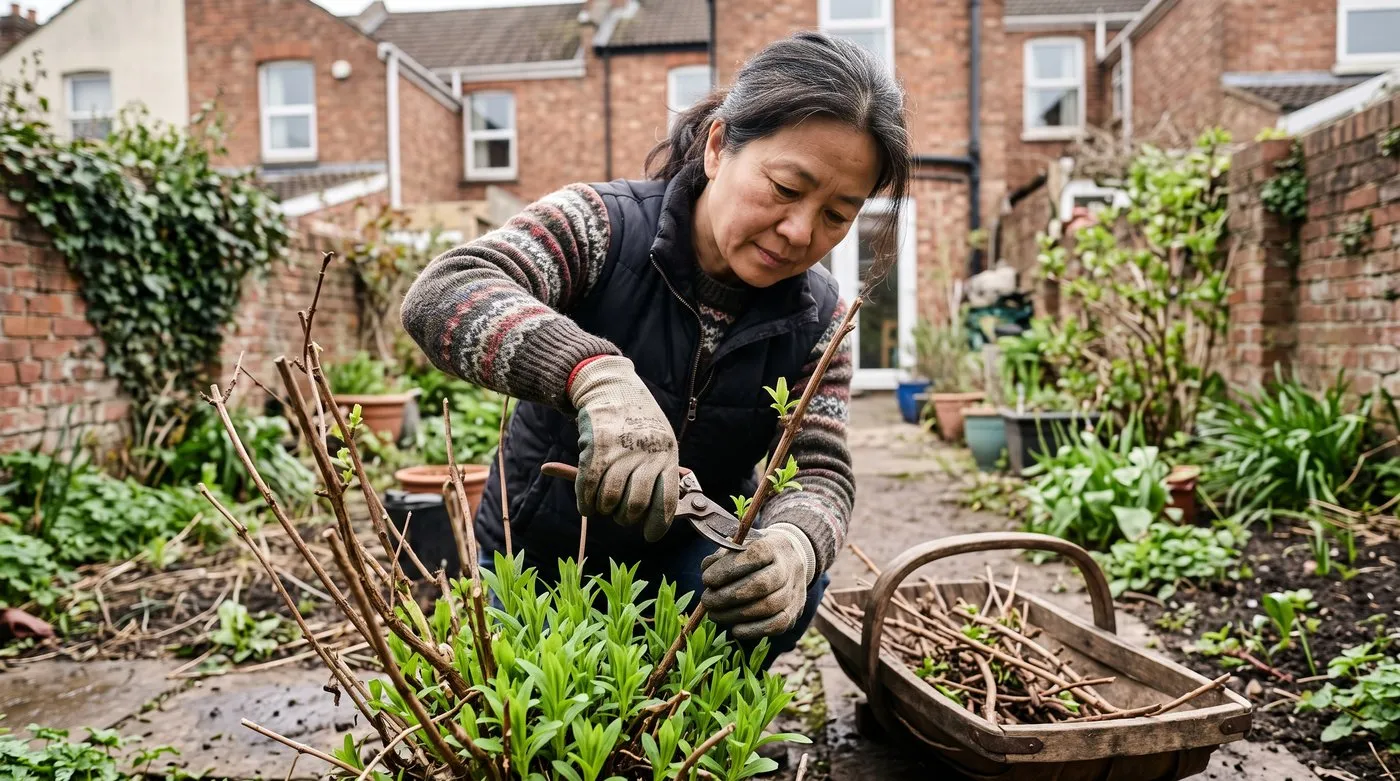
Wait until mid-April, when new shoots show at the base. Cut each old stem just above the lowest pair of fresh leaves.
What soil and conditions do penstemons need?
Good drainage is the one thing every penstemon needs. None of them like soil that stays wet through winter.
On light, sandy or loamy soil, penstemons need hardly any special care. Plant them, water them through the first summer and let them get on with it. On heavy clay, mix plenty of grit into the planting area, about one part grit to two parts soil. Plant slightly raised, or on a low mound of grit, to keep the base out of winter wet.
They don’t need rich soil. Too much feed gives lots of leaves and fewer flowers. A handful of general fertiliser worked into the soil in April is plenty. They look lovely with other sun-lovers like salvias and geraniums, which also like soil that drains well.
How do you deadhead penstemon for longer flowering?
Deadheading keeps penstemons flowering for weeks longer. Without it, the plant puts its energy into seed and flowering tails off. Keep at it and most varieties flower from June to October.
Cut faded flower spikes back to a strong side shoot or pair of leaves lower down the stem. New flower stems will grow from there within a few weeks. Don’t cut whole stems to the ground in summer, as that means fewer flowers.
From late September you can stop deadheading and let the last flowers fade on the plant. The stems then stay on over winter to protect it. You may find the odd seedling popping up nearby. It won’t match the parent, but it might surprise you with a new colour.
Deadheading keeps things tidy too. A quick weekly wander round with the secateurs keeps penstemons and other summer-flowering perennials looking sharp.
What pests and diseases affect penstemon?
Penstemons are mostly trouble-free. Their biggest enemy isn’t a pest at all, but cold, wet winter soil.
Slugs and snails sometimes nibble new shoots in spring, especially in damp weather. Penstemon leaves are less tempting than softer plants like hostas, so damage is usually minor. Check new growth on damp evenings, and see our guide to dealing with slugs if they’re a big problem in your garden.
Aphids sometimes gather on flower buds in June. A jet of water from the hose knocks them off. Ladybirds, hoverflies and lacewings will keep them down if you avoid spraying. Leaf spots can appear in wet summers but rarely do lasting harm. Pick off affected leaves and give plants a bit more space.
Rust sometimes shows up as orange spots under the leaves, mostly in crowded plantings. Thin out congested clumps, remove affected leaves and make sure taller plants aren’t shading them.
Which penstemons work best in cottage garden borders?
Penstemons are a cottage garden favourite. They flower for months, mix well with other plants and add height with their upright spires.
Garnet is the obvious place to start. Its wine-red flowers look great with roses, lavender and silver-leaved plants. Plant three together, 40cm apart, for impact. Raven does a similar job in deeper purple. Osprey brings a softer, paler touch to white and pink schemes.
For height at the back of the border, Alice Hindley grows to about 100cm, with gorgeous lilac-blue flowers. Pair it with tall foxgloves and Japanese anemones for colour from early summer into autumn. Just remember to take cuttings in September, as it’s one of the more tender ones.
Stapleford Gem is handy at the front or middle of a border, at about 70cm. Its flowers open lilac and slowly turn through mauve to purple, so one plant looks like several colours at once.
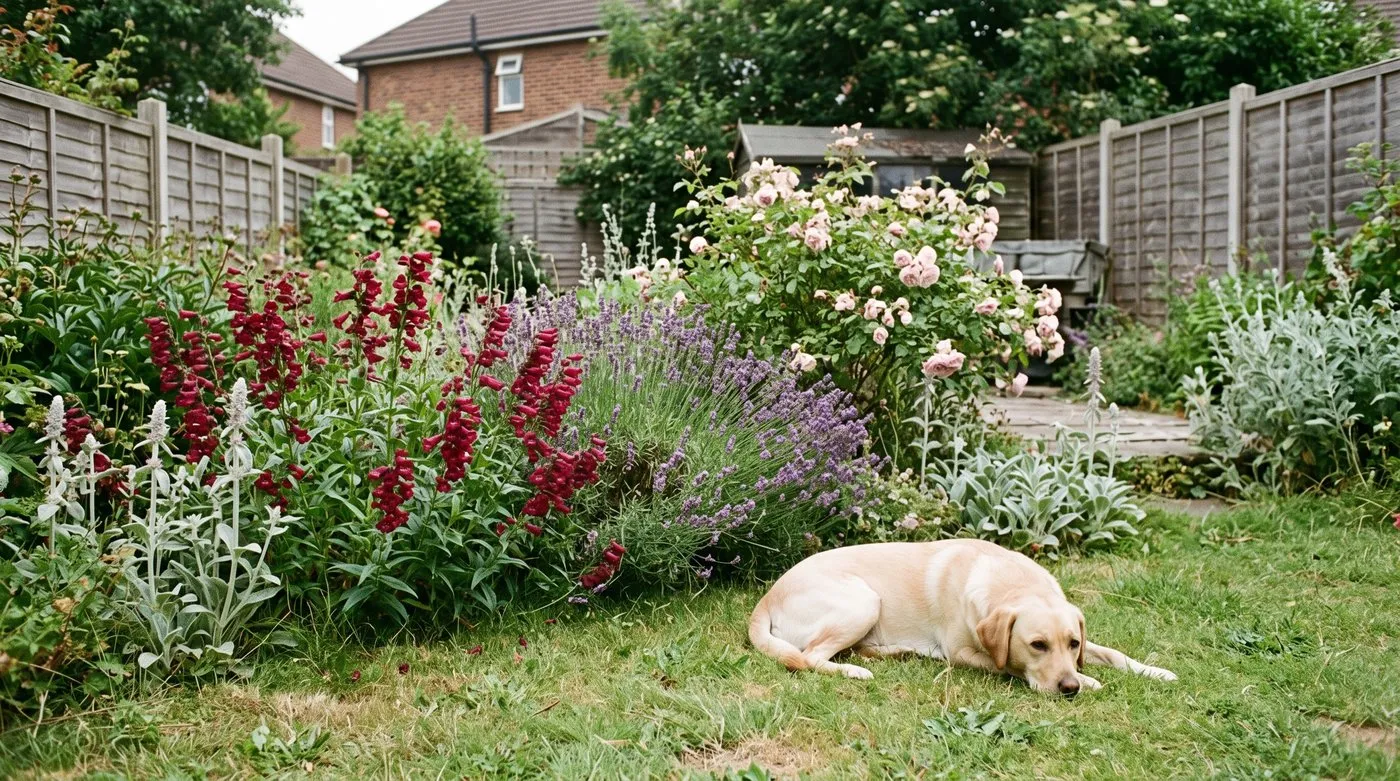
Garnet’s wine-red spires sit beautifully with lavender, roses and silver leaves. Plant three together for a proper splash of colour.
Frequently asked questions
Are penstemons perennial or annual?
Penstemons are perennials, so they come back each year. Most keep some leaves through mild winters. They flower from June to October and regrow each spring. The more tender varieties may not last long in cold gardens, so take cuttings to keep them going.
When should I take penstemon cuttings?
September is the best time. Choose shoot tips 7-10cm long with no flowers. Push them into a half-and-half mix of perlite and peat-free compost. Keep them in a cold frame, cool greenhouse or on a bright windowsill. They usually root in four to six weeks.
Why did my penstemon die over winter?
Wet soil is the usual culprit, more than cold. Heavy clay that stays soggy rots the roots. Work grit into the planting hole or plant on a slight mound. Cutting it back in autumn also makes winter losses more likely.
Should I cut back penstemon in autumn?
No, leave it until spring. The old stems and leaves protect the plant from frost and cold rain. Wait until mid-April, when new shoots appear at the base. Then cut back to just above the lowest pair of new leaves.
What is the hardiest penstemon for the UK?
Garnet is one of the toughest. Its proper name is Andenken an Friedrich Hahn. It copes with most UK winters and gives deep wine-red flowers from June to October. Husker Red is just as tough, with white flowers above dark purple leaves.
Do penstemons attract bees?
Yes, bumblebees love the tube-shaped flowers. Hoverflies and butterflies visit too. Their long flowering season means food for pollinators when many other plants have finished.
Can I grow penstemon in pots?
Yes, in a pot at least 30cm across. Use John Innes No. 3 with extra grit mixed in. Water regularly in summer, but make sure the pot drains well. Move it against a house wall in winter, as plants in pots feel the cold more than those in the ground.
Our team produces practical UK gardening guidance from source research, contributor records and established horticultural practice. Editorial standards are overseen by Matt W.