Key takeaways
- Balloon flower is hardy and long-lived once settled in well-drained soil
- It comes up very late, often in May, so mark the spot in autumn to avoid digging it up
- The deep taproot hates being moved or divided, so plant young plants where they'll stay
- Flowers open from July to September; deadheading keeps them coming
- Tall varieties need light support; dwarfs such as 'Sentimental Blue' suit pots
- Plants from seed usually flower well from their second summer
Balloon flower is a hardy perennial that rewards a little patience. Its fat buds swell like tiny hot-air balloons, then pop open into five-pointed stars in blue, white or pink.
The catch is timing. Platycodon grandiflorus comes up later than almost anything else in spring, and many gardeners dig it up thinking it’s dead. Get the spot, the soil and the spring wait right, and one clump will flower every summer for years.
If you’re after a big, early-summer blue spire instead, our guide to growing delphiniums is the better fit. Balloon flower is a shorter plant for late summer.
Why is my balloon flower so late to come up?
Balloon flower simply wakes up late, often not showing until May. By then most border plants are well on their way. That bare patch in April is the main reason people lose it: they hoe it off or plant something on top.
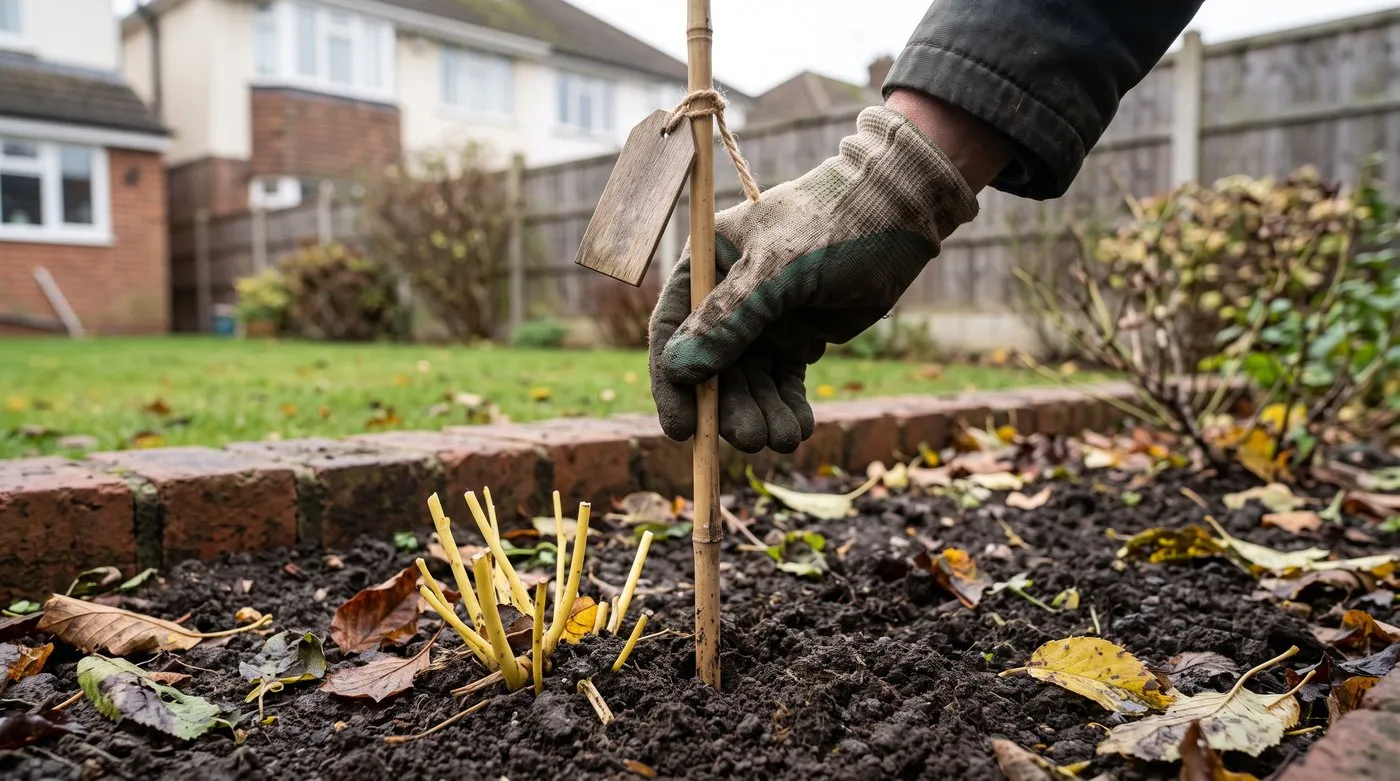
A simple cane pushed in beside the plant in autumn stops you digging it up by mistake next spring.
The fix is free. In autumn, push a labelled cane into the soil right next to each plant. You’ll know exactly where it is through winter and early spring. Keep your hoe and fork away until shoots appear.
Where to plant balloon flower
Plant balloon flower in full sun or light shade in fertile, well-drained soil. It flowers best in sun. Pink and white forms keep their colour better with a little afternoon shade.
The real enemy is winter wet. The fleshy root can rot in cold, waterlogged ground, which is what usually kills it on heavy clay. On clay, mix a few handfuls of grit into the planting hole first. Sandy or loamy soil needs no help.

White balloon flowers stay crisp in light shade. A brighter spot suits the blue forms best.
Plant young, then leave it alone
Balloon flower grows from a deep, brittle taproot. It hates being lifted, moved or divided, and it snaps easily if you try.
That shapes how you grow it:
- Start small. Young pot-grown plants or seedlings settle far better than big clumps.
- Plant once. Put it where you want it to stay.
- Don’t divide it. Splitting an old clump often kills it. Raise new plants from seed instead.
If you really must move one, do it in spring as the shoots appear. Dig deep and take as much soil with the root as you can. Expect it to sulk for a season. Most other perennials move far more happily, as our guide to moving perennials and shrubs explains.
From balloon bud to star flower
Knowing the yearly cycle helps you stop worrying in spring.
- Shoots appear in May, slowly at first, then grow fast.
- Buds form in June as small green pods at the stem tips.
- Buds swell in early July and colour up like little balloons.
- Flowers open from July, each bud splitting into a flat five-pointed star.
- Flowering carries on into September if you snip off faded flowers.
- Leaves yellow in autumn, often turning a lovely butter colour before they die back.
Children love popping the ripe buds with a gentle squeeze. It doesn’t harm the plant, though you’ll lose that flower.

Here a balloon bud is just splitting open along its five seams. It’ll be a flat star within a day or so.
Best balloon flower varieties to grow
Choose a dwarf for pots and the front of a border, and a taller form for the middle of a border.
| Variety | Flower colour | Rough height | Good for |
|---|---|---|---|
| ’Fuji Blue’ | Blue | About 60cm | Middle of a border, cutting |
| ’Fuji White’ | White | About 60cm | Light shade, cutting |
| ’Fuji Pink’ | Pale pink | About 60cm | Light shade, where colour lasts better |
| ’Mariesii’ | Blue | About 40cm | Front to middle of a border |
| ’Hakone Double Blue’ | Blue, double | About 50cm | Something a bit different |
| Astra series | Blue, white or pink | About 20cm | Pots and edging |
| ’Sentimental Blue’ | Blue | About 20cm | Pots and small spaces |

Dwarf balloon flowers stay short and bushy, so they’re perfect in a deep pot on a balcony.
Staking, deadheading and feeding
Tall varieties need light support. Push twiggy sticks in around the clump in late spring, once shoots appear, so the stems grow up through them. Our guide to staking tall perennials shows a few easy methods.
Deadhead faded flowers every week or so to keep new ones coming. A light mulch of garden compost in spring is all the feeding it needs. Too much nitrogen gives soft, floppy stems.

A ring of twiggy sticks keeps tall balloon flowers upright, even in a breezy seaside garden.
Gardener’s tip: For the vase, cut stems when the first buds show colour. They open indoors over several days, so you can watch the balloons pop.
Growing balloon flower from seed
Seed is cheap and easy, but slow. Plants usually flower well from their second summer.
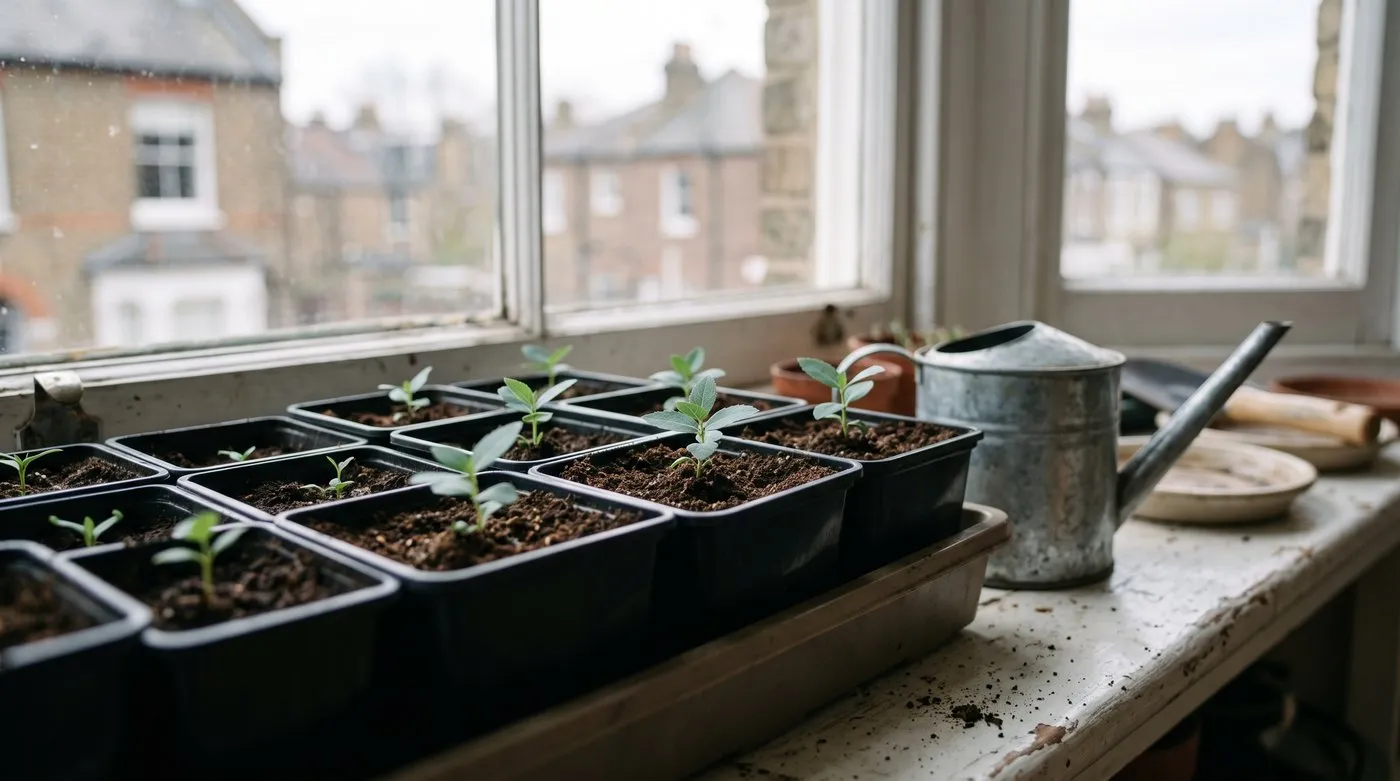
Deep pots give the young taproot room to grow down, so seedlings settle better when you plant them out.
Sow from late February to April indoors, in a warm spot. Scatter the fine seed on the surface of moist seed compost and don’t cover it, as it needs light to germinate. Prick out seedlings by a leaf, never the stem. Grow them on in deep pots or modules, so the taproot has room. Plant out while they’re still small, in their first or second summer.
Our guide to sowing seeds indoors covers the basics, including how to avoid damping off.
Month-by-month balloon flower calendar
Gardens in Scotland and the north may run a week or two behind.
| Month | What to do |
|---|---|
| January to February | Leave the soil alone where plants are marked |
| March | Sow seed indoors on the surface of the compost |
| April | Don’t hoe or dig near marked plants. Check for slugs |
| May | Shoots appear. Push in supports for tall varieties |
| June | Plant out young plants. Mulch established clumps |
| July | Flowering starts. Deadhead weekly |
| August | Keep deadheading. Water pots in dry spells |
| September | Last flowers. Leave a few to set seed if you like |
| October | Push a labelled cane beside each plant |
| November | Cut down dead stems. Leave the roots well alone |
Common balloon flower mistakes
- Digging up the sleeping plant. The soil looks empty in April, so gardeners hoe or plant over it. Mark every plant in autumn.
- Dividing an old clump. The taproot breaks and the plant often dies. Grow new plants from seed instead.
- Planting in wet clay. The root rots in winter. Add grit and pick a spot that never puddles.
- Ignoring slugs. Slugs can graze new shoots in late spring. Check them on damp evenings.
Plants to grow with balloon flower
Balloon flower’s clear blue is easy to pair. Dwarfs make neat front-of-border plants, while taller forms mix in mid-border.
Good partners include astrantia for soft pinks and whites and campanula, whose bells flower a little earlier. For more ideas, see our pick of the best purple, pink and blue flowers.
Bumblebees and honeybees visit the open stars through July and August, so it’s a useful late-summer flower in a bee-friendly garden.

Bumblebees love the open stars. That’s a good reason to keep deadheading through August.
Ready to plan the rest of your border? Browse our plant guides, or see our list of the best perennial plants for UK gardens for more long-lived partners.
Frequently asked questions
Is platycodon hardy in the UK?
Yes, balloon flower is hardy in UK gardens. The roots sit deep in the soil, which protects them in cold weather. Wet winter soil is a bigger threat than frost, so good drainage matters most. Plants in pots need a sheltered spot in winter.
Why has my platycodon not come up in spring?
It is almost certainly just late, not dead. Balloon flower is one of the last perennials to appear, often in May. Mark the spot with a cane in autumn and don’t dig there until you see shoots.
Can you divide a balloon flower?
It’s best not to, as the taproot breaks easily. Lifting an established clump often kills it. To make more plants, sow seed in spring or take basal cuttings from young shoots.
Where should I plant platycodon?
Plant it in full sun or light shade, in well-drained soil. It hates heavy ground that stays wet in winter, as the root can rot. On clay, add grit to the planting hole first.
Do balloon flowers need staking?
Taller varieties do, dwarf ones don’t. Forms around 60cm can flop in wind and rain, so push in twiggy supports in late spring. Dwarfs such as ‘Sentimental Blue’ stand up on their own.
How long does platycodon take to flower from seed?
Usually until its second summer for a good show. Some seedlings flower lightly in their first year. For quicker results, buy young pot-grown plants.
Will platycodon grow in a pot?
Yes, dwarf varieties grow well in pots. ‘Sentimental Blue’ and the Astra series suit a patio or balcony. Use a deep pot with well-drained compost and move it somewhere sheltered over winter.
Our team produces practical UK gardening guidance from source research, contributor records and established horticultural practice. Editorial standards are overseen by Matt W.