Key takeaways
- Leave seedheads on plants grown for bird food, self-seeding or winter shape
- Foxgloves, honesty and opium poppies need to drop seed to come back next year
- Teasel, sunflower and echinacea seedheads feed goldfinches and sparrows in winter
- Keep deadheading roses, dahlias, sweet peas and bedding for more flowers
- Cut the standing stems back in late winter, as new shoots appear
Not every faded flower needs snipping off. Some plants are grown as much for what comes after the flowers: seedheads for the birds, seedlings for next year or frosty shapes for the winter border.
Here are twelve plants to leave alone, why each one earns its place and how to cut them back in late winter. If you want the opposite list, our guide on how to deadhead flowers covers the plants that flower longer when you do.
Why leave seedheads on some plants?
Leave seedheads for three reasons: they feed birds, they sow next year’s plants and they give the border shape through winter.
- Bird food. Goldfinches, sparrows and other seed-eaters work through standing seedheads from autumn into winter.
- Free plants. Biennials and annuals such as foxgloves and poppies only come back if they drop seed.
- Winter shape. Stiff seedheads catch frost and low sun when little else is happening in the garden.
Hollow stems also give insects somewhere to shelter over winter. The plants below tick at least one box, and some tick all three.
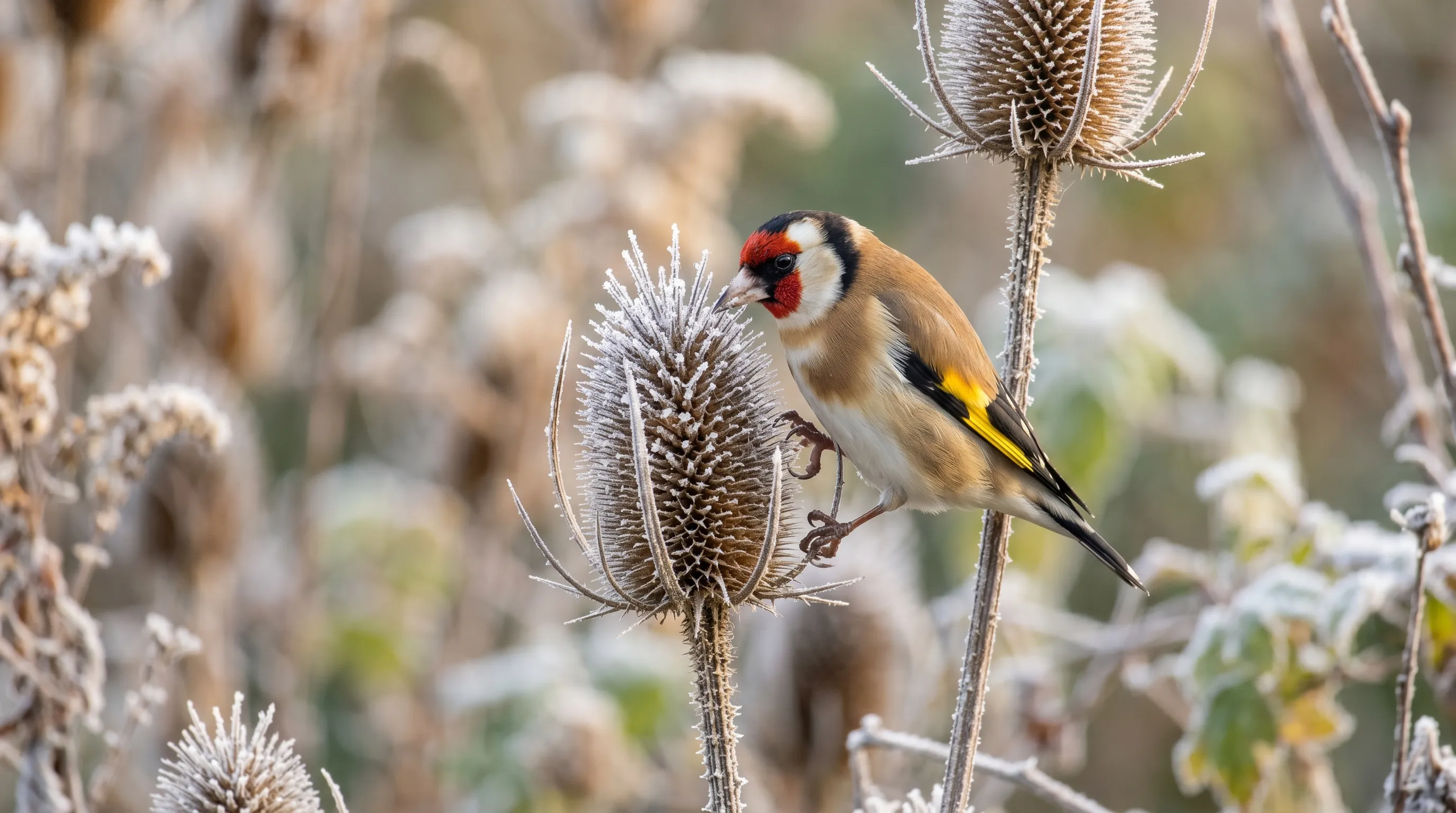
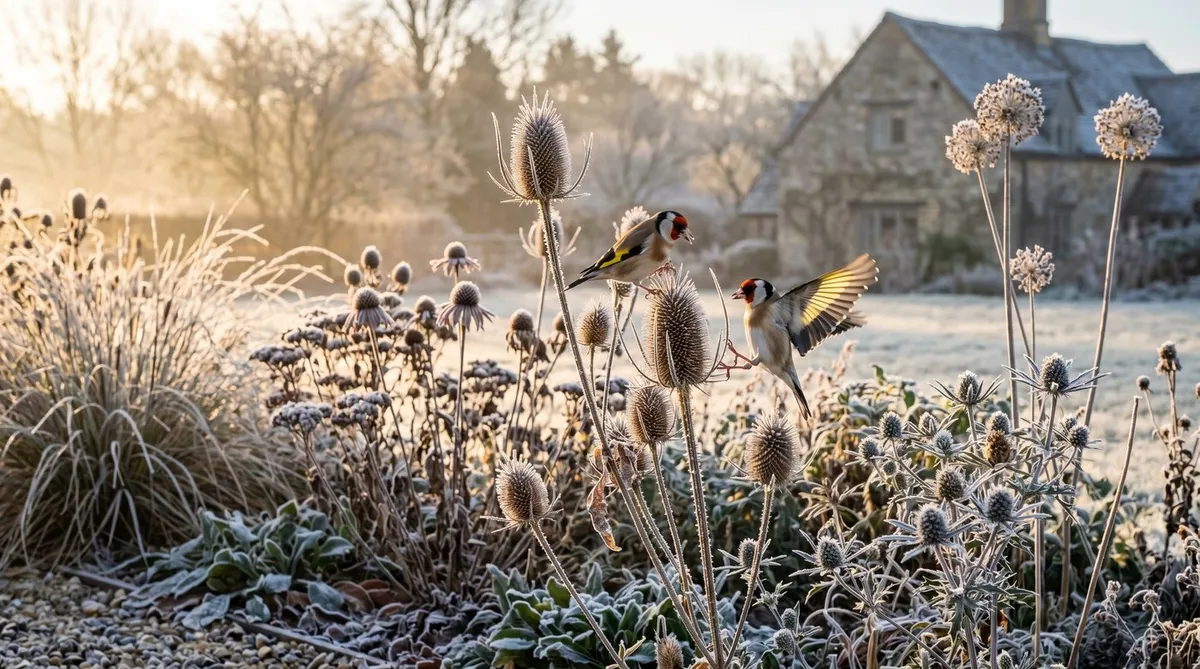
Goldfinches have just the right beaks for teasel seeds. Leave a few heads standing and you may get regular visitors all winter.
Plants to leave for the birds
These four have seeds that garden birds love. Leave the heads standing from autumn until late winter.
Teasel (Dipsacus fullonum) is a goldfinch favourite. It self-seeds freely, so pull up seedlings you don’t want while they’re small.
Sunflower (Helianthus annuus) heads feed sparrows, tits and finches. Tall single-headed types such as ‘Russian Giant’ give the biggest seedheads. Leave them on the stem, or cut a few heads and hang them up.
Echinacea (Echinacea purpurea) leaves dark domed seedheads that goldfinches pick at. They also look smart with frost on top. See our guide on how to grow echinacea for more.
Evening primrose (Oenothera biennis) holds upright seed spikes through winter, and finches feed on them. It self-seeds well, so a single plant soon becomes a small group.
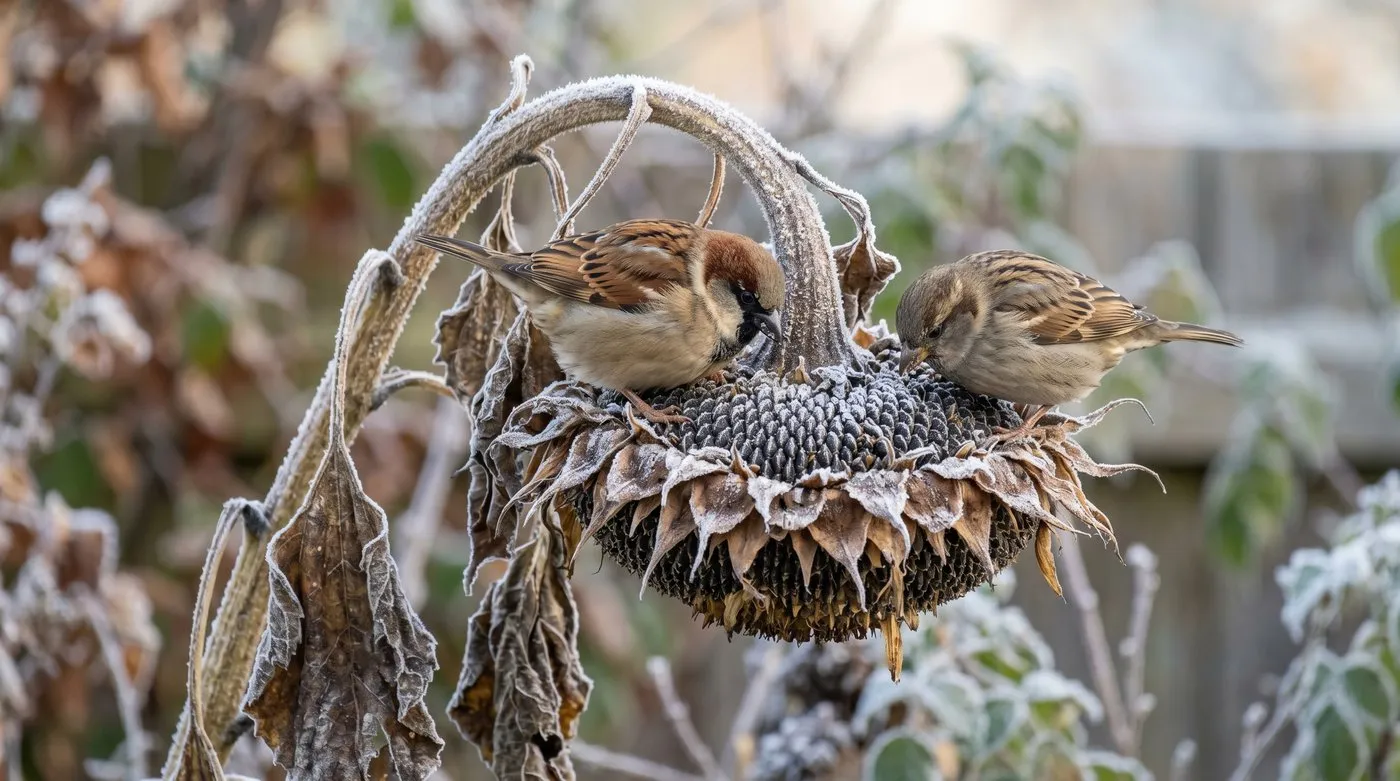
An old sunflower head is a bird table you didn’t have to fill. Leave it nodding on the stem and let the sparrows get on with it.
Plants to leave so they self-seed
These four come back from their own seed. Cut every head off and you may lose them.
Foxglove (Digitalis purpurea) is a biennial. It makes a leafy rosette in its first year, flowers in its second, then dies. Leave a few spikes to ripen. The seed pods ripen from the bottom of the spike up, and scatter seed in late summer. All parts of the plant are poisonous, so wear gloves when handling it. Our guide to growing foxgloves has more.
Opium poppy (Papaver somniferum) is an annual with lovely pepper-pot seedheads. Leave some heads to scatter seed and cut the rest for drying.
Honesty (Lunaria annua) is grown for its flat, silvery seed pods. It’s a biennial too, so leave the pods on to drop seed and enjoy the shine through winter.
Verbena bonariensis is a short-lived perennial that seeds itself around gently. Leave the stems standing until spring. Our Verbena bonariensis guide has more on growing it.
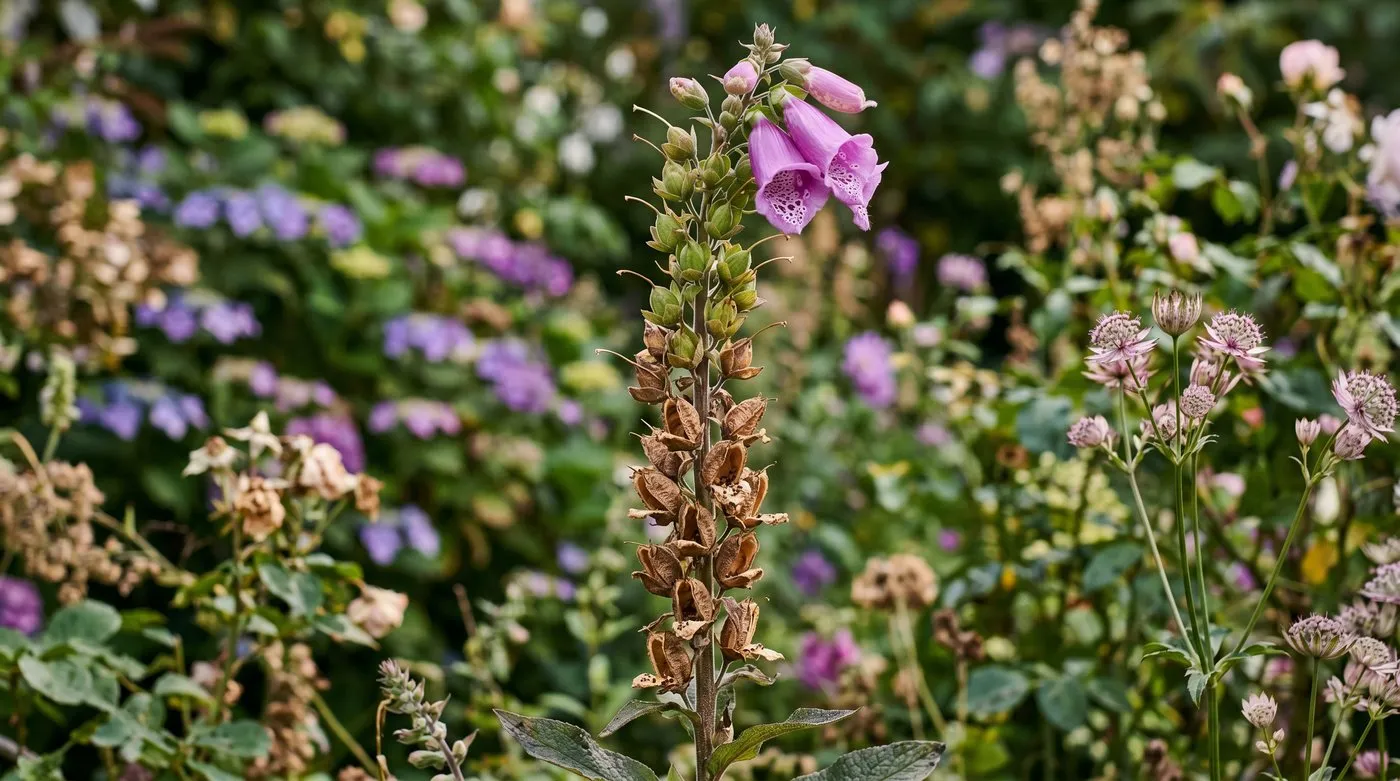
Foxglove seed pods ripen from the bottom up while the top is still flowering. Leave the spike and it will sow next year’s plants for you.
Plants to leave for winter structure
These four are grown as much for their seedheads as their flowers. They stand up well to wind and frost.
Sedum (Hylotelephium, such as ‘Herbstfreude’, often sold as ‘Autumn Joy’) has flat flower heads that age to rusty brown and stay upright through winter. Bees love the flowers in late summer. See our guide to growing sedum.
Sea holly (Eryngium) dries on the stem with spiky, silvery bracts. Eryngium giganteum, known as Miss Willmott’s Ghost, self-seeds too.
Allium seedheads, such as ‘Purple Sensation’, turn into straw-coloured globes that last for months. Leave them standing until they fall apart.
Phlomis russeliana has tiers of round seedheads stacked up stiff stems. It’s one of the best plants for a strong vertical line in winter.
For more ideas, our pick of the best plants for winter seedheads has fourteen more to try.
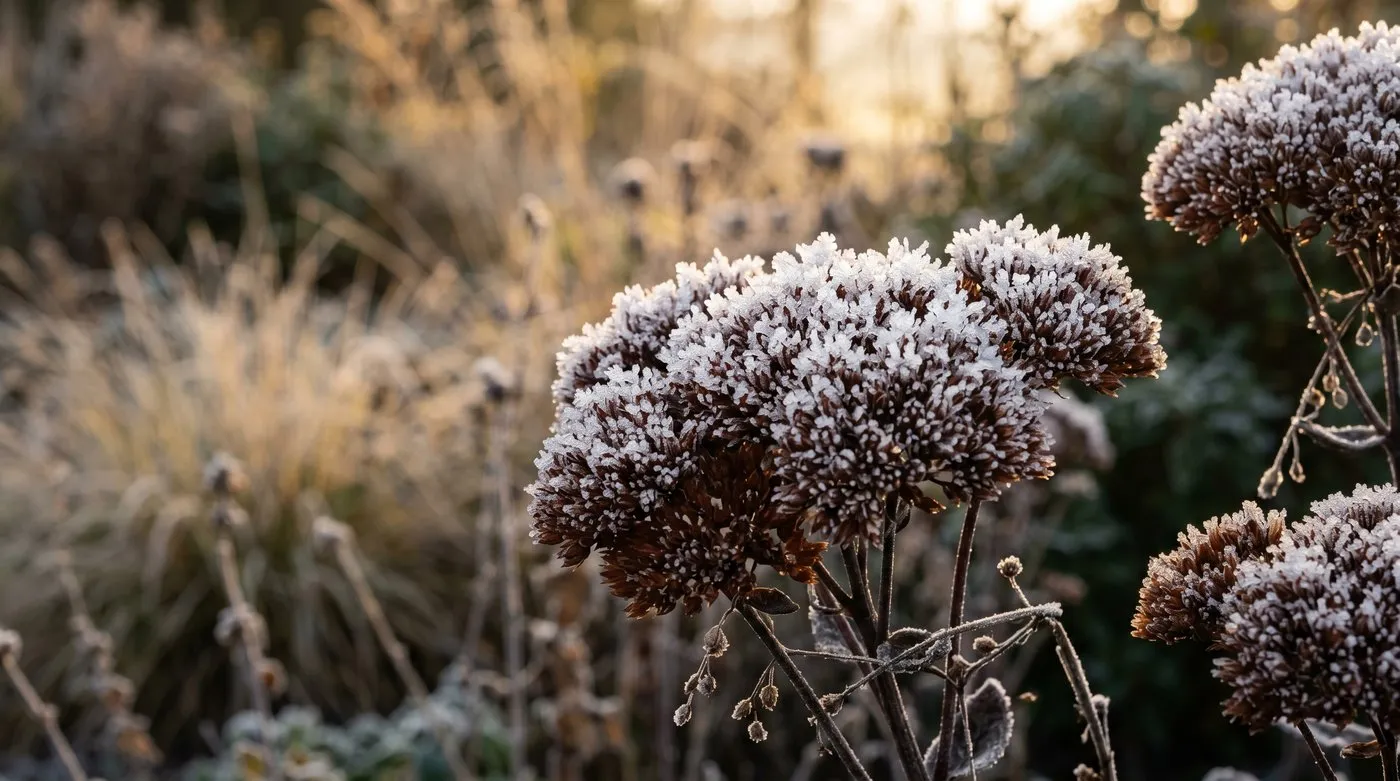
Sedum heads hold their shape for months. A frosty morning turns them into something special.
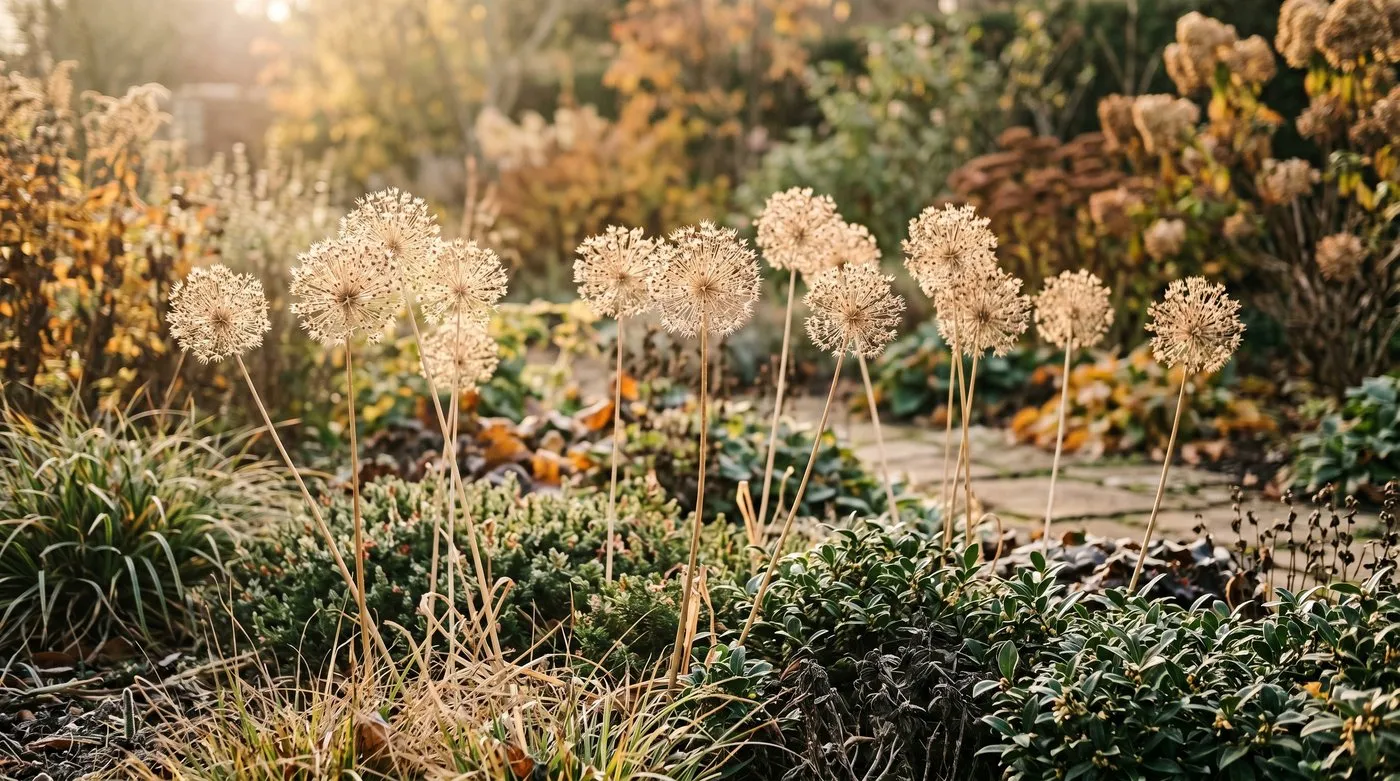
Allium seedheads keep their globe shape long after the purple has gone. They look great poking up through low, leafy plants.
Which seedheads do what?
Use this table to pick plants for the job you want them to do.
| Plant | Feeds birds | Self-seeds | Winter shape |
|---|---|---|---|
| Teasel | Yes | Freely | Good |
| Sunflower | Yes | Sometimes | Fair |
| Echinacea | Yes | Sometimes | Good |
| Evening primrose | Yes | Freely | Fair |
| Foxglove | No | Freely | Poor |
| Opium poppy | No | Freely | Fair |
| Honesty | No | Freely | Good |
| Verbena bonariensis | Some | Freely | Fair |
| Sedum | No | Rarely | Good |
| Sea holly | No | Some types | Good |
| Allium | No | A little | Good |
| Phlomis | No | Rarely | Good |
Plants you should still deadhead
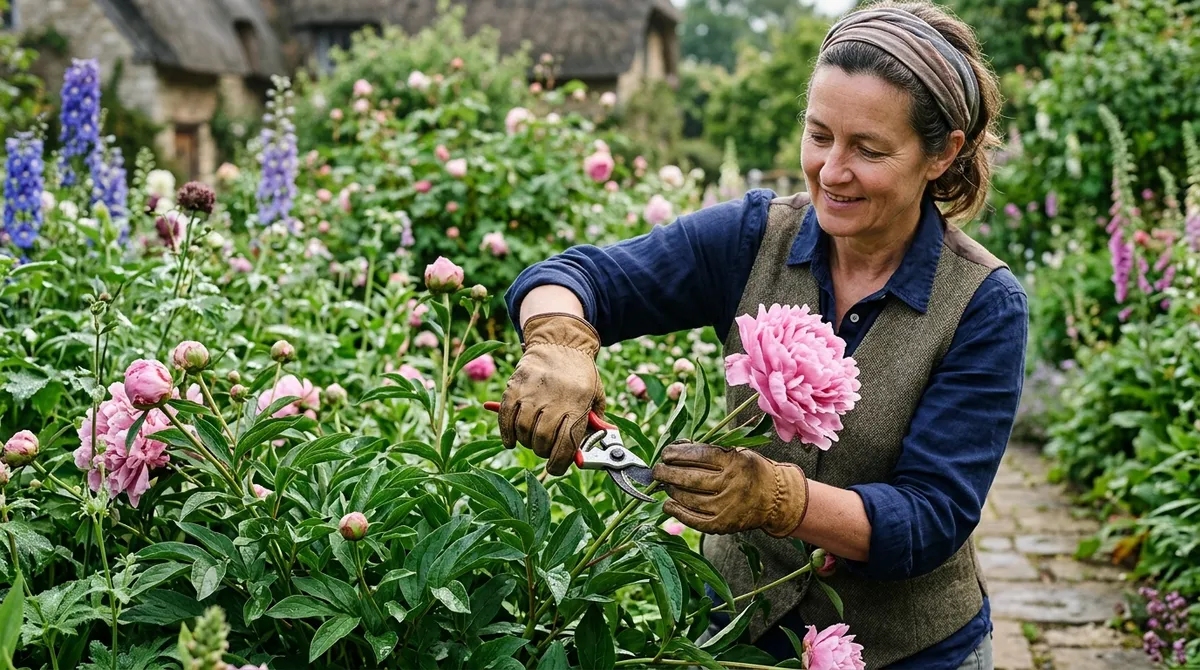
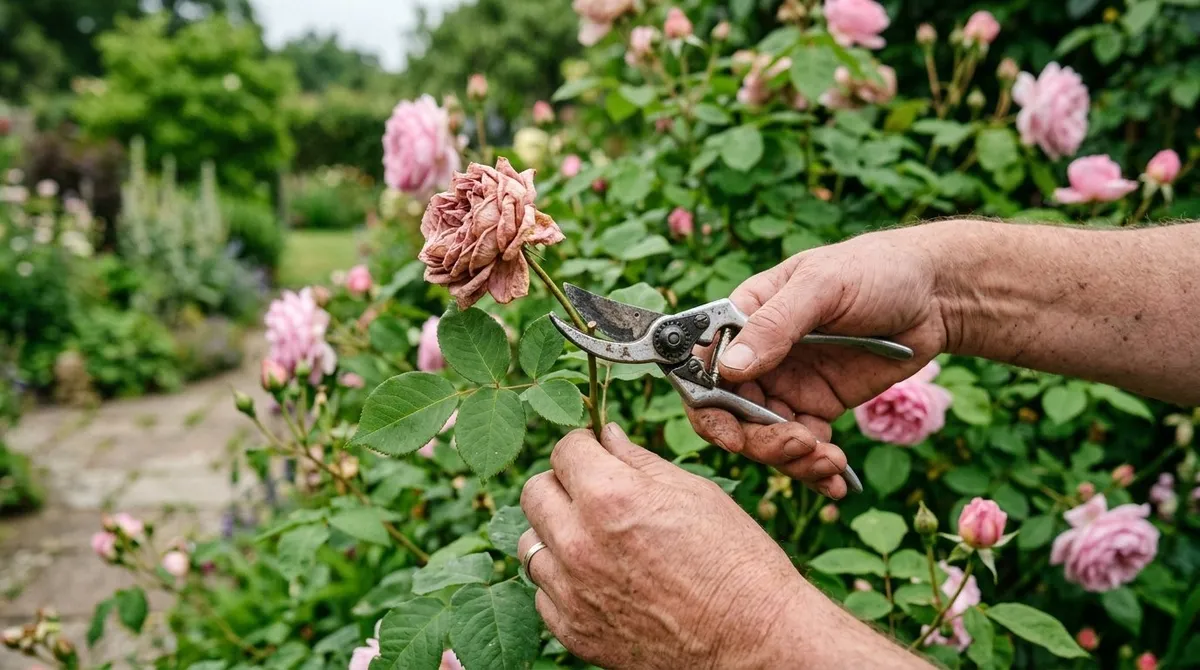
Keep deadheading plants grown mainly for a long run of flowers. Removing the old flowers stops them putting energy into seed, so they make more blooms.
| Plant | Why deadhead |
|---|---|
| Repeat-flowering roses | More flowers through summer |
| Dahlias | Flowers until the first frost |
| Sweet peas | Stops them setting seed and stopping |
| Cosmos | Keeps flowering into autumn |
| Penstemon | More flowers into autumn |
| Bedding plants | Tidier and longer flowering |
There is a middle way. Deadhead early in the season, then let the last flowers set seed. Roses grown for hips, such as Rosa rugosa, should be left so the hips can form. Our guide to rose hips suggests the best ones.
When to cut back seedheads
Cut back in late winter, usually February or early March. The trigger is new green shoots showing at the base of the plants.
By then the birds have had most of the seed and the self-seeders have dropped theirs. Cut stems down to a few centimetres above the ground with secateurs or shears. Work carefully around new shoots and any self-sown seedlings.
In colder parts of Scotland and northern England, you can wait a little longer. Compost the old stems, or leave a loose pile in a corner for insects.
Common mistakes with seedheads
- Tidying everything in autumn. It removes the birds’ winter food and next year’s seedlings. Tidy paths and edges instead.
- Leaving it too late in spring. Once new growth is tall, it’s hard to cut old stems without damaging it.
- Expecting named hybrids to come true. Many hybrid varieties set little seed, or give seedlings unlike the parent. Choose species for self-seeding.
- Letting self-seeders take over. Teasel and evening primrose can pop up everywhere. Hoe or pull spare seedlings while they’re small.
Ready to plan a border that looks good all year? Our guide to self-seeding plants has more easy plants that come back for free, and you’ll find plenty more seasonal jobs in our how-to guides.
Frequently asked questions
Which plants should you never deadhead?
Plants grown for their seedheads, bird food or self-sown seedlings. Good examples are teasel, sunflower, echinacea, evening primrose, foxglove, opium poppy, honesty, Verbena bonariensis, sedum, sea holly, allium and phlomis.
Will leaving seedheads make my garden look untidy?
A little in late autumn, but they soon become a winter feature. Frost and low sun on sedum, allium and teasel heads look lovely. Tidy the edges and paths and the border looks deliberate.
When should I cut back seedheads?
In late winter, usually February or early March. Wait until the birds have had most of the seed and new shoots are just showing at the base. Cut down to a few centimetres, taking care not to snip the new growth.
Do all flowers benefit from being left to seed?
No, many flower longer if you deadhead them. Roses, dahlias, sweet peas, cosmos and most bedding plants make more flowers when the old ones are removed.
Will foxgloves come back if I deadhead them?
Not from seed if you remove every spike. Foxgloves are biennials, so each plant flowers once and dies. Leave a few spikes to ripen and scatter seed for new plants.
Can I deadhead some stems and leave others?
Yes, that is often the best approach. Deadhead the first flush to keep plants flowering, then let the last flowers set seed. On self-seeders, leave a few heads and cut the rest.
Our team produces practical UK gardening guidance from source research, contributor records and established horticultural practice. Editorial standards are overseen by Matt W.