Key takeaways
- Hips form from fertilised flowers, so stop deadheading hip roses by August
- Pick when deep red or orange and just yielding, usually October to November
- Rosa rugosa gives the biggest, fleshiest hips for syrup and jelly
- The seeds sit in itchy hairs, so strain everything twice through muslin
- Most modern repeat-flowering roses set few hips, so grow species or shrub roses
- Leave some hips on the bush for blackbirds, thrushes and winter visitors
Rose hips are the bright fruits that follow rose flowers in autumn. Pick them when they are deep red and just soft, usually October to November, and turn them into syrup, jelly or tea. The one rule is to strain out the itchy hairs around the seeds.
This guide covers which roses give the best hips, when to pick, a simple syrup method and how to leave some for the birds. To forage hips and other fruit from a mixed native hedge, see the guide to planting and foraging an edible hedgerow.
What is a rose hip?
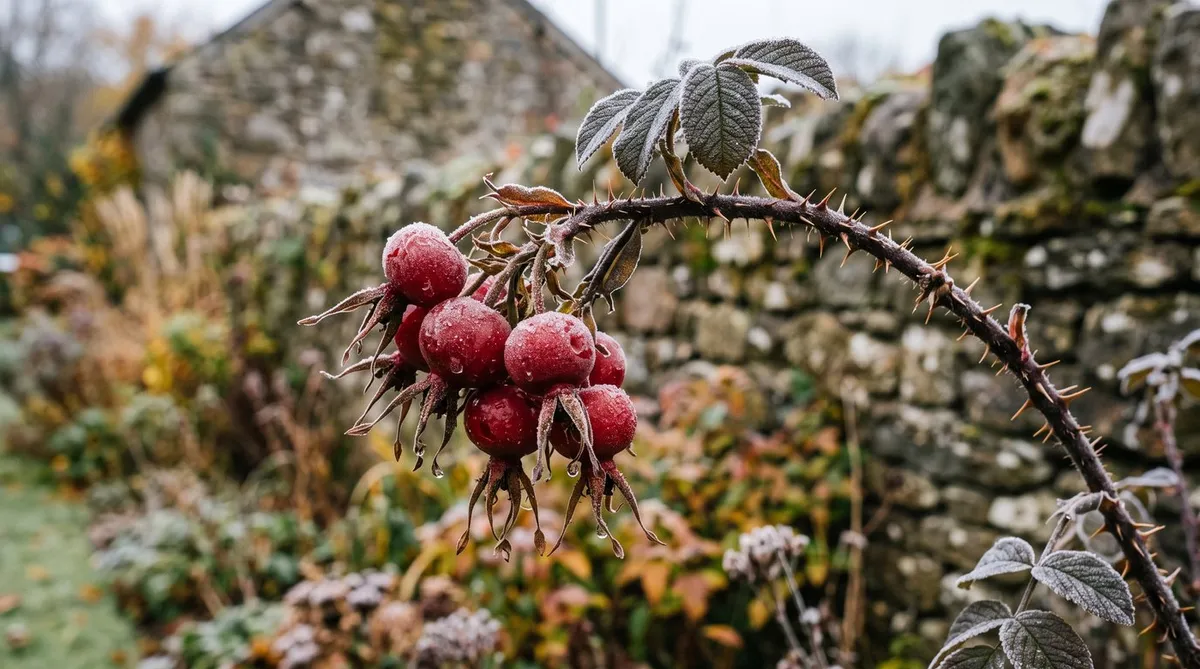
A rose hip is the fruit of a rose. After a flower is fertilised, its base swells and colours up into a fleshy hip. The seeds sit inside, surrounded by fine hairs.
Not every rose obliges. Many modern repeat-flowering roses, such as most hybrid teas, set few or no hips. The reliable hip roses are the species roses, the rugosas and many older shrub and rambling roses.
Best roses for hips
For eating, Rosa rugosa is the top choice. Its hips are large, round and fleshy, so they are quick to pick and process. For looks, Rosa moyesii ‘Geranium’ has glossy, flask-shaped scarlet hips.
| Rose | Hip shape | Best for |
|---|---|---|
| Rosa rugosa, including ‘Alba’ and ‘Rubra’ | Large, round, tomato-like | Syrup, jelly, easy picking |
| Rosa canina (dog rose) | Oval, bright red | Classic hedgerow hips, syrup |
| Rosa moyesii ‘Geranium’ | Flask-shaped, scarlet | Ornamental display |
| Rosa glauca | Small, dark red | Pretty clusters, birds |
| Rosa filipes ‘Kiftsgate’ | Tiny, in large sprays | Birds, a huge rambler |
Rugosa makes a tough, prickly hedge and copes with salty coastal winds. Keep it in the garden, though. It spreads readily on dunes and coasts in the wild, so never plant it out there. For choosing and caring for roses in general, read how to grow roses in the UK.
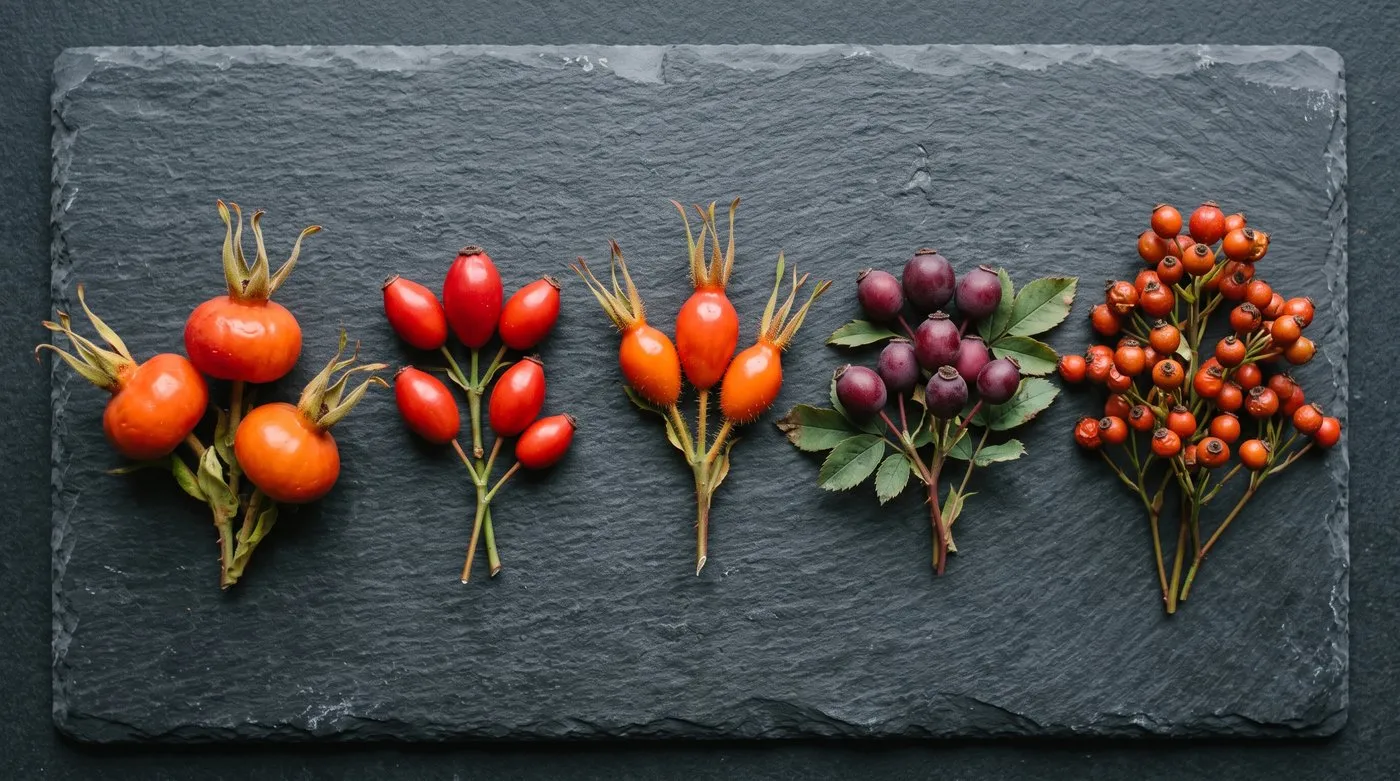
Hips come in all shapes: big round rugosas on the left, oval and flask-shaped hips in the middle, and dark and tiny clustered types on the right.
When to pick rose hips in the UK
Pick hips when they are deep red or orange, glossy and just yielding to a gentle squeeze. In most of the UK that is October to November.
Many foragers wait until after the first frost. Frost softens the flesh, which makes the hips easier to work with. If no frost has come by early November, pick ripe hips anyway and freeze them overnight to do the same job.
Leave any hips that are wrinkled, dull, mouldy or mushy. Wear thick gloves, because the best hip roses are very prickly. If you forage from hedgerows, pick away from busy roads and ask permission on private land.
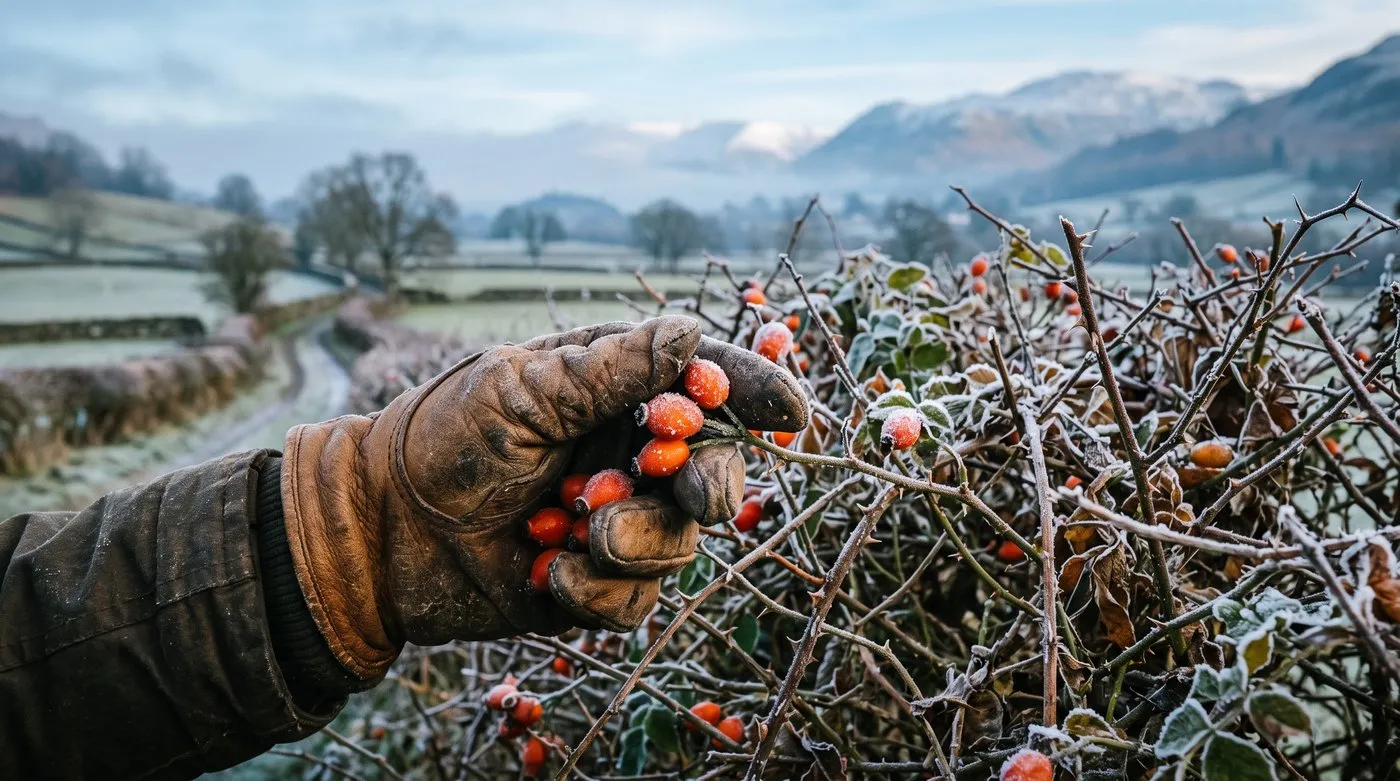
Frost-touched hips are soft and easy to pick. Thick gloves save your hands from the thorns.
How to make rosehip syrup
Rosehip syrup is the classic use. This method follows the traditional wartime approach and uses about 1kg of ripe hips.
- Prepare. Rinse the hips and pull off leaves and stalks. Chop them roughly or whizz them briefly in a food processor.
- First boil. Bring 1.5 litres of water to the boil, add the hips and bring back to the boil. Take off the heat and leave for 15 minutes.
- First strain. Pour everything into a scalded jelly bag or a double layer of muslin. Let it drip without squeezing, or hairs get through.
- Second boil and strain. Put the pulp back in the pan with 750ml of fresh boiling water. Leave for 10 minutes, then strain through clean muslin.
- Sweeten. Combine the juices. Add about 450g of sugar for every 500ml of juice and stir until it dissolves.
- Boil briefly. Boil for 5 minutes, then pour straight into hot, sterilised bottles and seal.
Store the bottles somewhere cool and dark. Once opened, keep the syrup in the fridge and use it within a week or two. It is lovely on porridge, pancakes or ice cream, or diluted as a drink.
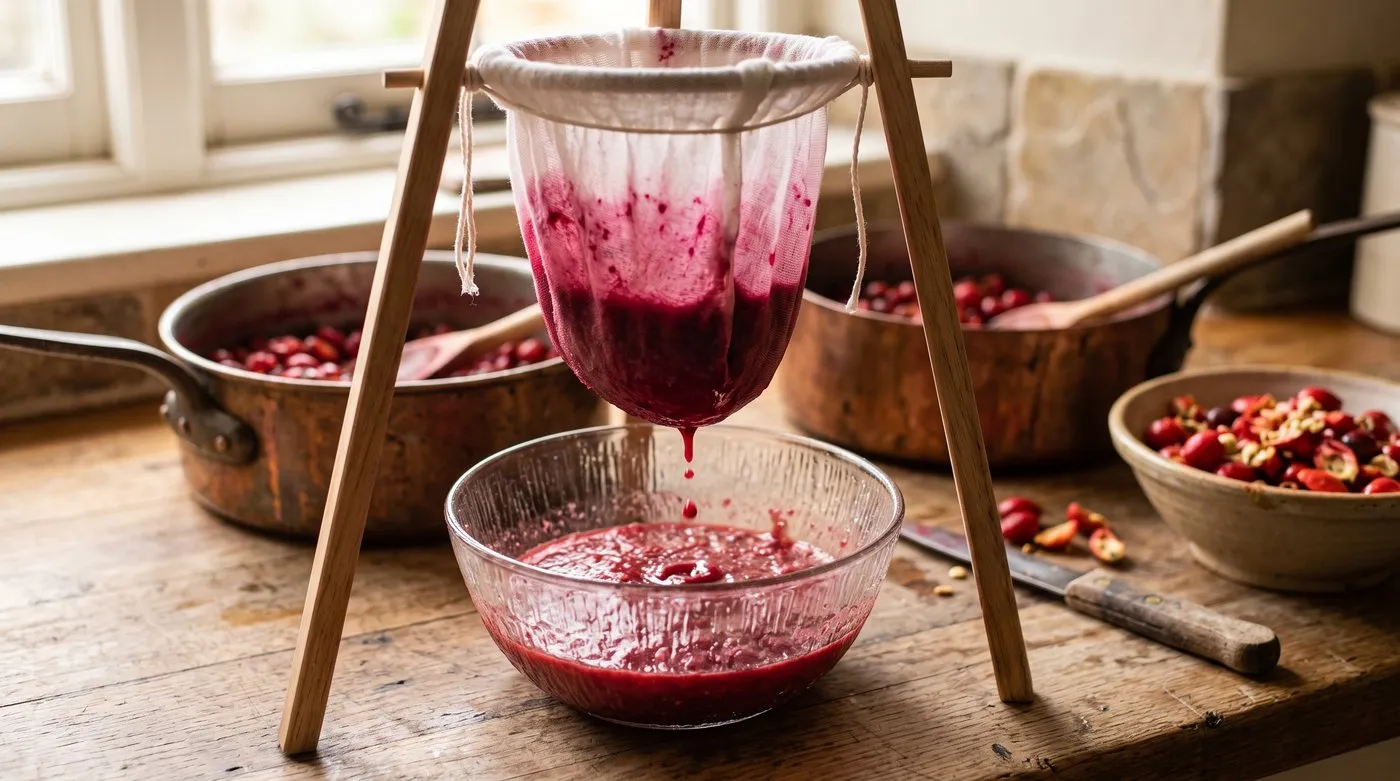
Let the pulp drip through the bag on its own. Squeezing pushes the itchy hairs through into the juice.
Why you must strain out the seed hairs
Inside every hip, the seeds are packed in fine, stiff hairs. They irritate the mouth and throat, and can upset the stomach. Children once used them as itching powder, which tells you what they do.
Cooking doesn’t soften them. The only fix is straining. Pass syrup and jelly through muslin or a jelly bag at least twice. Never scrape the seedy pulp into food.
If you want to nibble a hip raw, split it lengthways and scoop out the whole seedy centre first. It’s fiddly, which is why strained syrup and jelly are the easy options.
Warning: Keep raw, seedy hip pulp away from children. The hairs are very irritating to skin, eyes and mouths.
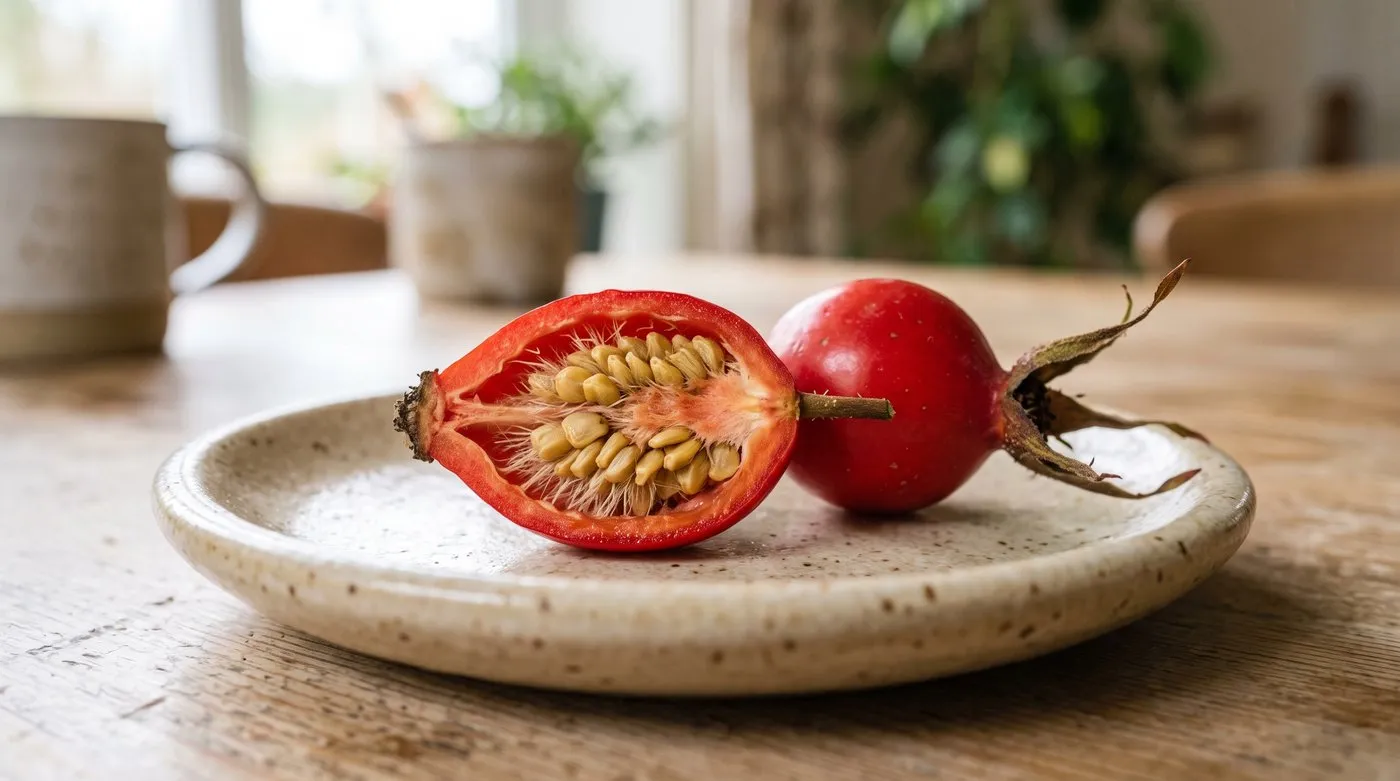
Cut a hip open and you can see the seeds and fine hairs. That centre is the part to strain out completely.
Rosehip jelly and tea
Rosehip jelly is a sharp, clear preserve that goes well with cheese and cold meats. Simmer the hips with sharp apples, which help it set, then strain the juice overnight through a jelly bag. Boil with sugar to setting point. The jam making guide explains setting point and sterilising jars.
Rosehip tea is the simplest use. Split the hips, scoop out the seeds and hairs, and dry the shells somewhere warm and airy. Steep a heaped teaspoon of the dried, chopped shells in just-boiled water for 10 minutes. Strain through muslin before drinking.
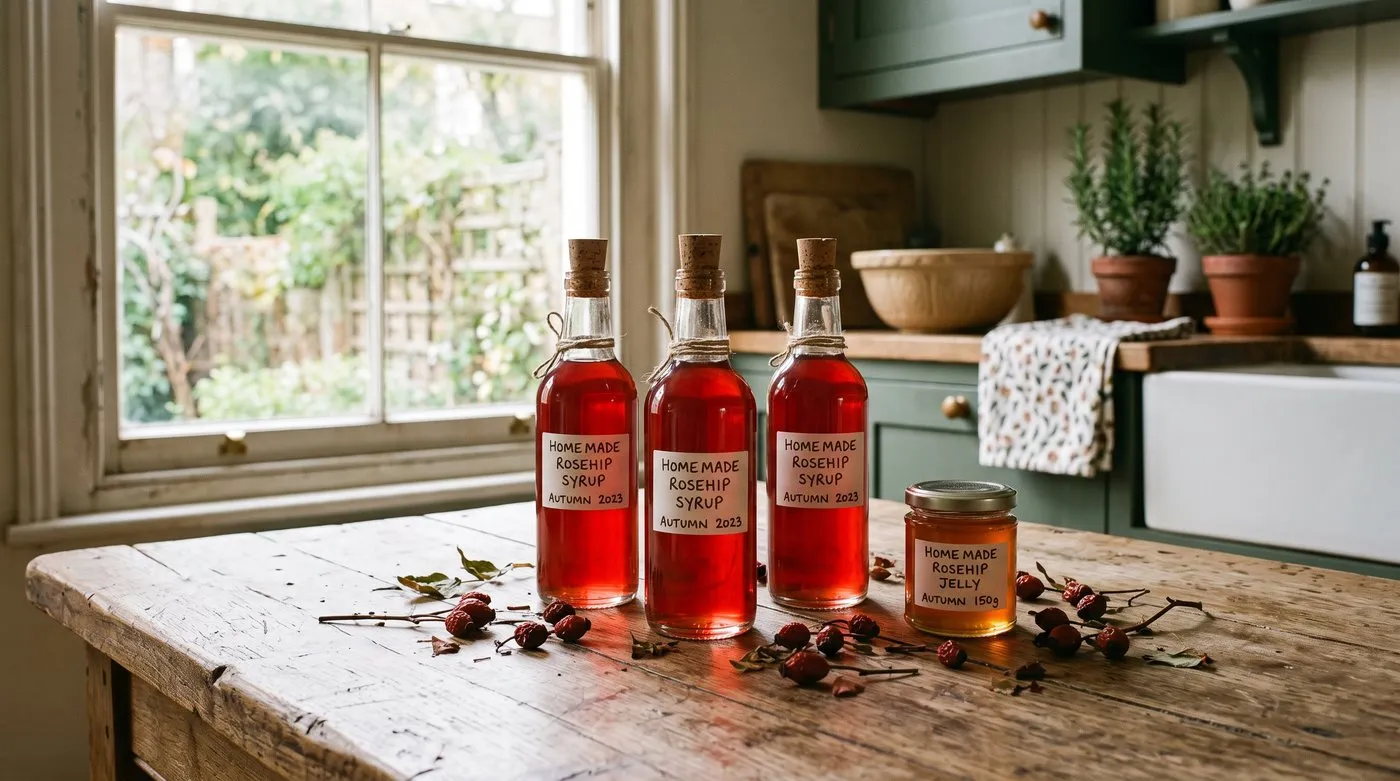
A batch of syrup and a jar of jelly from one autumn picking. Label them with the date so you use the oldest first.
Rose hips in wartime Britain
During the Second World War, oranges and other citrus fruit were scarce. Rose hips became a home-grown source of vitamin C. From the early 1940s, the Ministry of Food organised volunteers, including schoolchildren and Women’s Institute members, to gather wild hips from hedgerows.
The hips were made into rosehip syrup, given mainly to babies and young children. Many people still remember it as a winter treat.
Leave some hips for the birds
Rose hips are valuable autumn and winter food for birds. Blackbirds and song thrushes eat them, and winter visitors such as fieldfares and redwings strip hedges from late autumn. In some winters, waxwings turn up and feast on them too.
So pick some and leave the rest. A rugosa or dog rose hedge left partly unpicked feeds birds well into the cold months. The seasonal bird feeding guide shows what else helps them through winter.
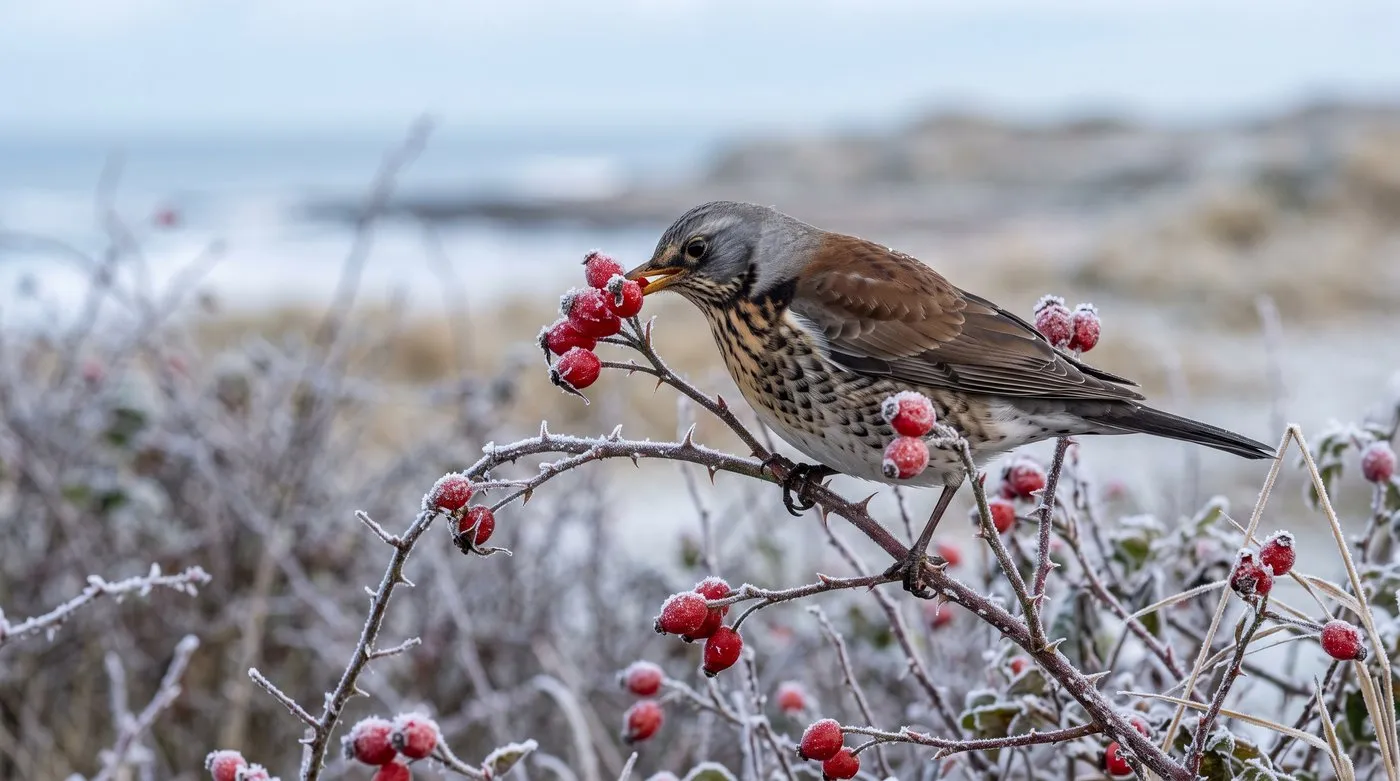
A fieldfare tucking into frosty hips. Leaving some on the bush feeds birds when other food runs short.
Rose hip calendar
| Month | What to do |
|---|---|
| June to July | Enjoy the flowers. Deadhead repeat-flowering roses you don’t want hips from |
| August | Stop deadheading hip roses so the flowers can set |
| September | Hips swell and start to colour |
| October | Hips ripen. Start picking once they are deep red and just soft |
| November | Main picking time, often after the first frost. Leave some for birds |
| December to February | Birds feed on unpicked hips. Use frozen hips for syrup |
| February to March | Prune roses. Light pruning keeps plenty of flowering wood for next year’s hips |
Pruning affects next year’s crop. The guide on how to prune roses covers timing for each type.
Common mistakes with rose hips
Deadheading into autumn. Every flower you cut off is a hip lost. Stop deadheading hip roses by August.
Picking too early. Hard, pale hips have little flesh and make a weak syrup. Wait until they are deep red and just soft.
Straining only once. One pass can let hairs through. Strain syrup and jelly at least twice.
Squeezing the jelly bag. It speeds things up but pushes hairs and cloudiness into the juice. Let it drip.
Growing the wrong rose. Most modern bedding roses set few hips. Plant a rugosa, a dog rose or another species rose.
Frequently asked questions
When should you pick rose hips in the UK?
Pick when they are deep red or orange and just soft, usually October to November. Many foragers wait for the first frost, which softens the flesh. If no frost has come by early November, pick ripe hips anyway and freeze them overnight. Skip any that are wrinkled, mouldy or mushy.
Which roses have the best hips?
Rosa rugosa has the biggest, fleshiest hips for syrup and jelly. The dog rose, Rosa canina, gives the classic oval hedgerow hip. Rosa moyesii ‘Geranium’ has striking flask-shaped hips for show. Many modern repeat-flowering roses set few or no hips.
Are rose hips safe to eat?
The flesh is safe to eat, but the hairy seeds inside are not. The seeds are packed in fine hairs that irritate the mouth, throat and gut. Strain anything you make twice through muslin or a jelly bag, or scoop the whole seedy centre out first.
How do you make rosehip syrup?
Simmer chopped hips in water, then strain the juice twice through muslin. Return the pulp for a second boil and strain again. Add sugar to the combined juice, boil for 5 minutes and pour into sterilised bottles. Keep opened bottles in the fridge.
Why were rose hips used in World War Two?
They replaced imported citrus fruit as a source of vitamin C. With oranges scarce, volunteers gathered wild hips from hedgerows. The hips were made into rosehip syrup, given mainly to young children.
Do rose hips help garden birds?
Yes, they are useful autumn and winter food for many birds. Blackbirds and thrushes eat them, along with winter visitors such as fieldfares, redwings and, in some years, waxwings. Leave some hips unpicked for them.
Should you deadhead roses if you want hips?
No, stop deadheading hip roses by August. Hips grow from fertilised flowers, so every flower you cut off is a hip lost. Carrying on deadheading into autumn is the usual reason a rose sets no hips.
Fancy more free food from your garden? Try the guide to foraging edible plants in your own garden, or browse more growing guides for the season.
Our team produces practical UK gardening guidance from source research, contributor records and established horticultural practice. Editorial standards are overseen by Matt W.


