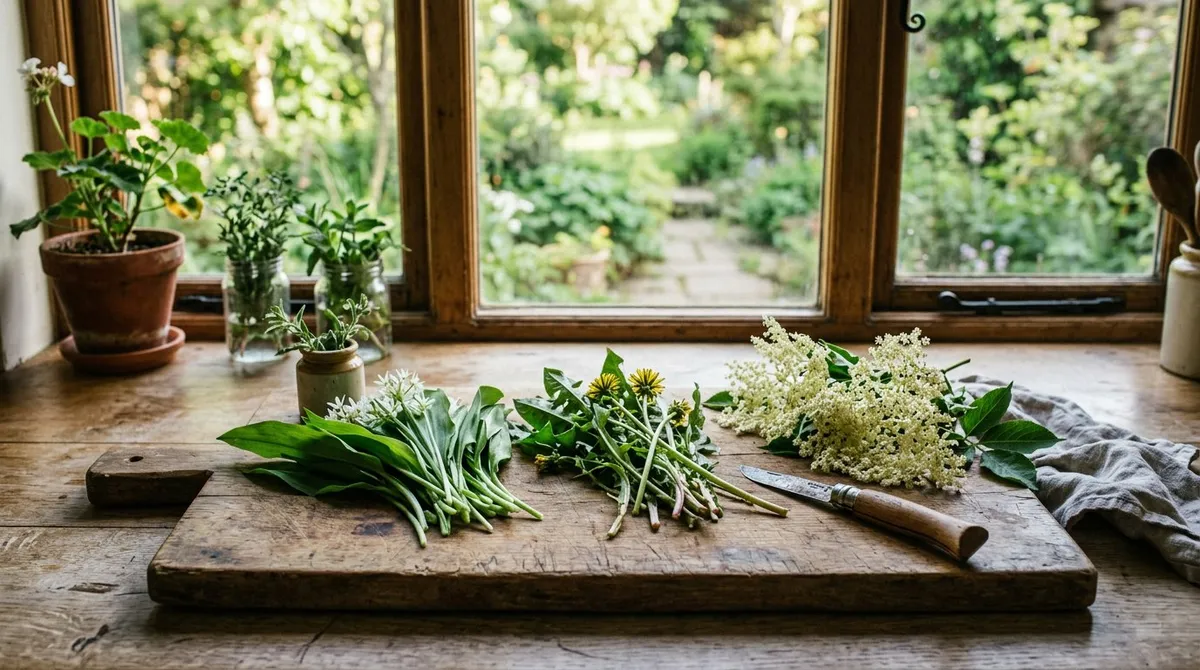
Most UK gardens contain 10-15 edible wild plants that are commonly removed as weeds. Dandelion leaves, nettles, wild garlic, chickweed, and hairy bittercress are nutritious, free, and available from February to November. Elderflowers make cordial in June, blackberries ripen in September, and sloes appear in October. Foraging from your own garden avoids the legal and safety concerns of public foraging while providing genuinely useful free food.
Key takeaways
- Most UK gardens contain 10-15 edible wild plants commonly pulled up as weeds
- Dandelion leaves, nettles, chickweed, and hairy bittercress are among the most nutritious greens available
- Elderflower cordial, blackberry jam, and sloe gin are classic garden forage recipes
- Garden foraging avoids the legal restrictions and contamination risks of public foraging
- Encouraging edible natives like wild garlic and primroses adds beauty and free food to your garden
foraging edible plants wild food native plants sustainable food grow your own
Our team produces practical UK gardening guidance from source research, contributor records and established horticultural practice. Editorial standards are overseen by Matt W.