Key takeaways
- Plant bulbs 5cm deep in autumn, in moist soil and shade
- Pick leaves from March to early May, before the flavour fades
- Crush a leaf first. If it doesn't smell of garlic, don't eat it
- It spreads steadily, so give it a corner where that's welcome
- Bulbs give you leaves the first spring. Seed takes a couple of years
- Never dig up wild bulbs from the countryside. It's against the law
Wild garlic is a lovely plant for a shady, damp corner where little else will grow. It fills spring with garlicky green leaves and starry white flowers, then quietly disappears by summer. Here’s how to plant it from bulbs or seed, tell it apart from poisonous lookalikes, stay on the right side of the law when foraging and enjoy it in the kitchen. If you already grow garlic or other alliums, it makes a natural addition.
What is wild garlic and where does it grow?

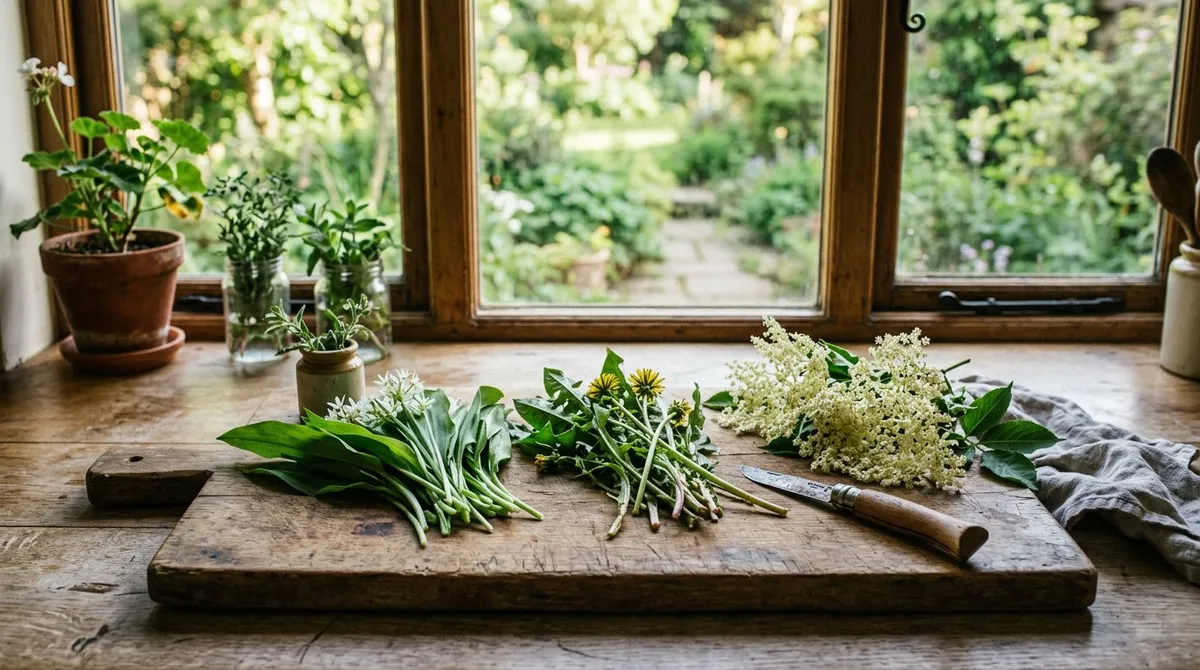
Wild garlic flowers from April to June, with round clusters of small white stars.
Wild garlic (Allium ursinum), also called ramsons, is a native British woodland bulb. It’s in the same family as onions, leeks and ordinary garlic, and grows wild across most of the UK. The Woodland Trust has a good page on spotting it in the wild.
Broad, bright green leaves push up in late February or March. White starry flowers follow in April. By late June the leaves yellow, and by July the plant has vanished underground until next spring.
It loves damp, shady spots with rich soil, like woodland floors, stream banks and hedgerows. That’s easy to copy at home. Any shady spot with decent moisture will suit it.
Wild garlic at a glance
| Feature | Detail |
|---|---|
| Other names | Ramsons, bear’s garlic |
| Height | About 15 to 30cm |
| Leaves | Broad, soft, bright green |
| Flowers | White stars in round clusters, April to June |
| Hardiness | Fully hardy |
| Soil | Moist and rich in leaf mould |
| Position | Part to full shade |
| Dormant | July to February |
How to identify wild garlic safely
Smell is the key. Crush a leaf between your fingers. Wild garlic smells strongly of garlic. Do this with each leaf you pick, because the smell stays on your fingers and can fool you.
This matters because two poisonous plants grow in similar places and look a bit alike.
Wild garlic vs lily of the valley
Lily of the valley (Convallaria majalis) is poisonous. Here’s how to tell them apart:
| Feature | Wild garlic | Lily of the valley |
|---|---|---|
| Smell | Strong garlic when crushed | No garlic smell |
| Leaves | Soft, each on its own stalk | Usually two leaves wrapped together at the base |
| Flowers | White stars in a round cluster | Little white bells on an arching stem |
| Safe to eat? | Yes | No, it’s poisonous |
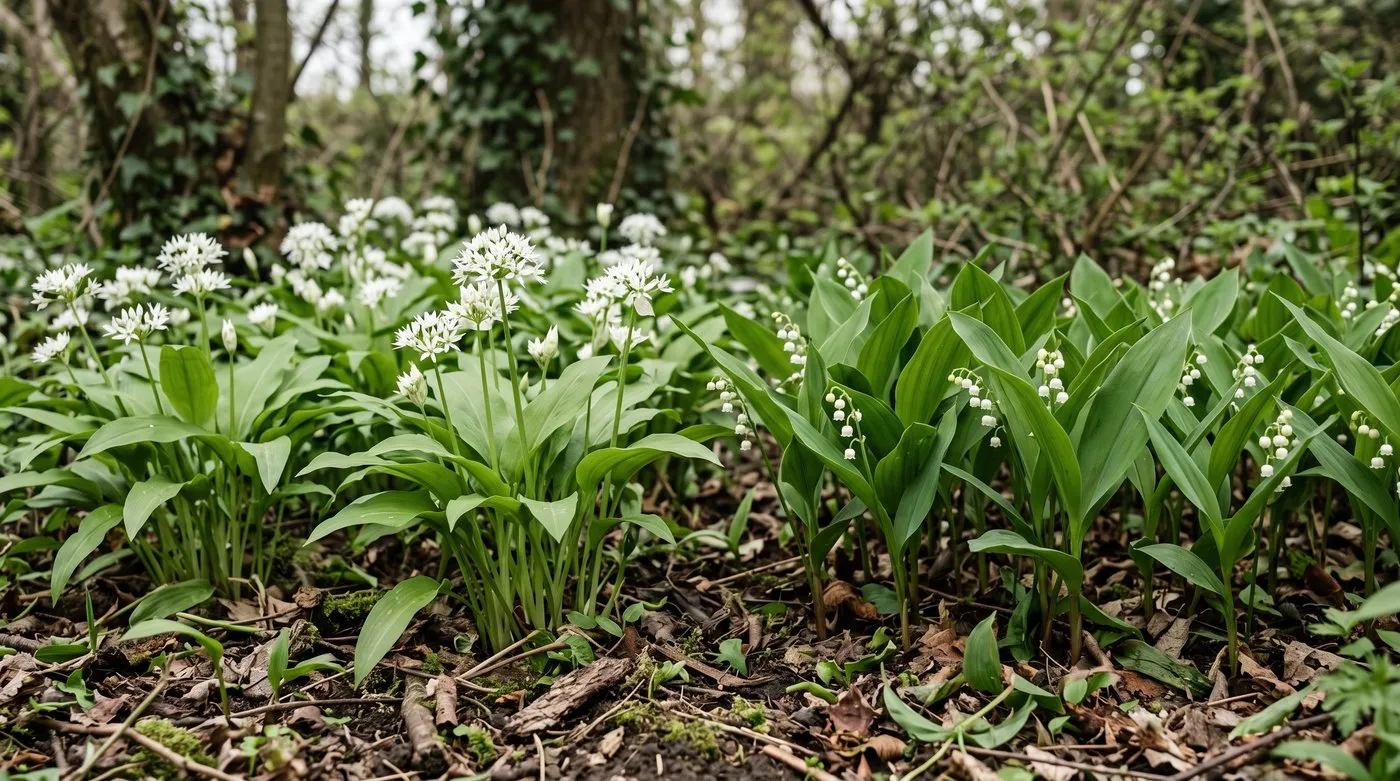
Wild garlic has star-shaped flowers and each leaf on its own stalk. Lily of the valley has little bells and paired leaves, and it’s poisonous.
Wild garlic vs lords-and-ladies
Lords-and-ladies (Arum maculatum) comes up at the same time and in the same places. Its leaves are arrow-shaped, thicker and glossier, often with dark spots. It’s poisonous and burns the mouth. Again, if it doesn’t smell of garlic, don’t eat it.
Safety first: only eat a leaf you’re sure of. If in doubt, leave it out. The RHS wild garlic page has photos to help.
How to grow wild garlic from bulbs

Pick a leaf or two from each plant rather than stripping a whole clump.
Planting bulbs in autumn is the quickest way to get going. You’ll have leaves to pick the next spring.
Where to plant
Pick a shady spot with moist soil. Under deciduous trees, along a north-facing fence or in the shadow of a building all work well. Dappled shade under birch, hazel or apple trees is perfect. Full sun dries the soil and weakens the plants.
It grows on clay, loam and chalk. If your soil is sandy and dry, dig in plenty of leaf mould or compost first.
When and how to plant
Plant dormant bulbs in September or October. You can also buy plants “in the green”, with leaves on, in March.
- Clear weeds and work in leaf mould or compost
- Plant each bulb 5cm deep and 10 to 15cm apart
- Water in well
- Mulch with leaf mould to keep the soil moist, just like a woodland floor
- Leave it alone. No feeding is needed
20 or 30 bulbs is plenty to start a patch. It’ll spread from there.
Buying bulbs
Buy from a nursery, ideally UK-grown stock. Never dig up wild bulbs from the countryside. It’s against the law without the landowner’s permission and harms wild colonies.
How to grow wild garlic from seed
Seed is slower but cheap, and gives sturdy plants that settle in well.
Collecting and sowing
The seed pods turn from green to brown and split in early summer. Collect the seed as soon as they start to crack and sow it straight away, as it doesn’t keep well.
Scatter fresh seed onto damp soil in a shady spot. Press it in gently and cover with no more than a thin layer of fine compost. The seed needs a cold winter before it sprouts, so expect seedlings the following spring, and sometimes the one after.
Seedlings start as a single grassy leaf. By the second spring they have a proper broad leaf. After a couple more years they’ll flower and seed themselves.
| Method | First pick | Cost | Spread |
|---|---|---|---|
| Bulbs in autumn | The next spring | Low | Quick |
| In the green (March) | The following spring | A little more | Quick |
| Fresh seed | After a couple of years | Free if you collect it | Slower at first |
For the best of both, plant bulbs for a quick harvest and scatter seed around the edges.
Where to plant wild garlic in your garden
Anywhere shady and damp. It’s perfect for those dark corners where most edible plants sulk.
Good spots:
- Under deciduous trees like birch, hazel, oak, apple or cherry
- Along north-facing hedges and fences
- In a woodland or wildlife corner
- On a shady bank
- In a large pot, at least 30cm deep, kept in shade
Avoid:
- Full sun
- Very dry, sandy soil, unless you improve it
- Sunny raised beds
It looks lovely with bluebells, primroses and ferns. It also grows happily in a shady herb bed. Just remember it will spread.
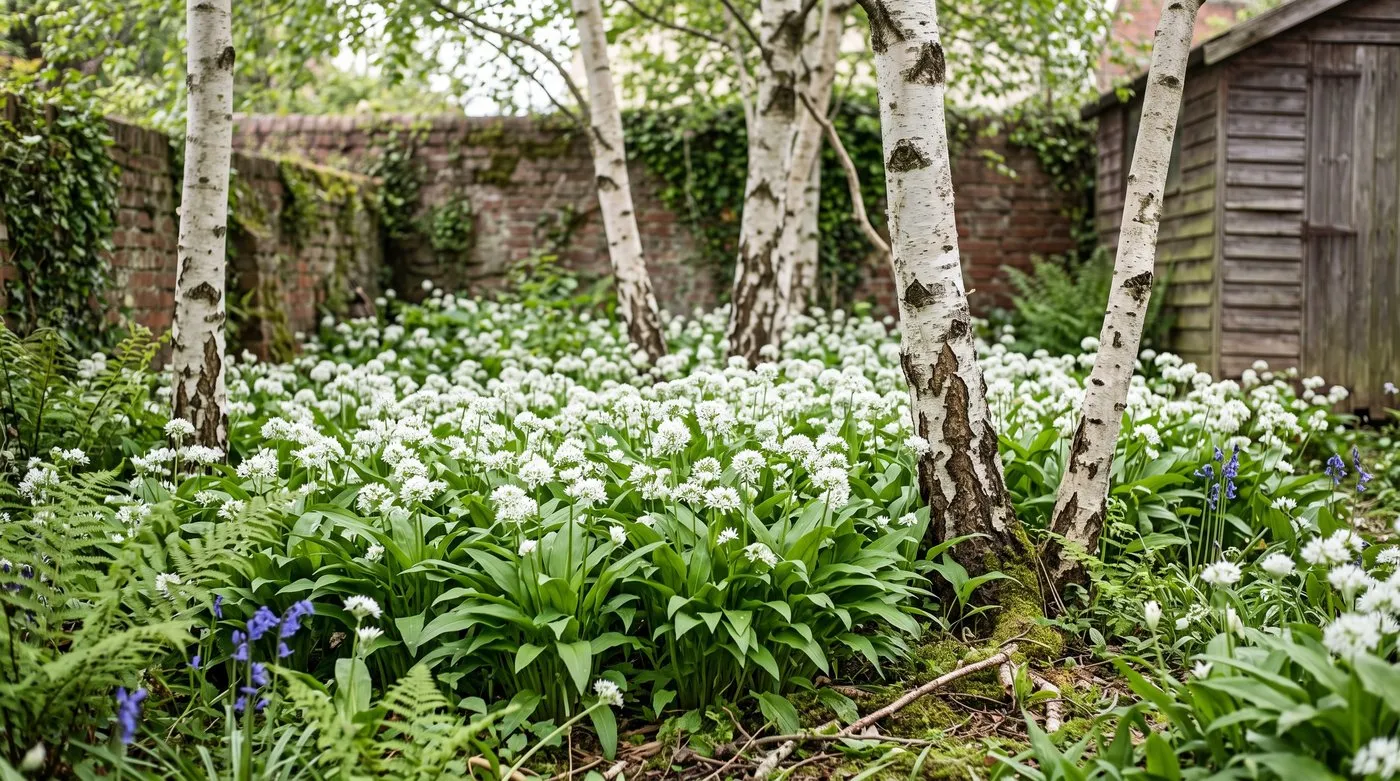
A shady, damp corner under deciduous trees is ideal. Bluebells and ferns make good company, but expect the garlic to spread.
How to keep wild garlic in check
It’s not invasive, but it does spread steadily. It grows by making new bulbs and by dropping seed.
To keep it where you want it:
- Cut off the flower heads before they set seed in late May or early June
- Plant it within edges, like paths, paving or lawn edges. The bulbs sit near the surface, so a shallow buried barrier works too
- Grow it in a big pot in shade, and keep it watered
It dies back completely by July. Unlike mint or horseradish, it doesn’t send runners into the next bed.
Foraging rules and UK law
Picking a few leaves for your own use is generally fine. Digging up the bulbs is not.
- Wildlife and Countryside Act 1981: it’s an offence to uproot any wild plant without the landowner’s permission
- Protected sites: don’t pick anything from a Site of Special Scientific Interest (SSSI) or nature reserve
- Pick lightly: take no more than a third of any patch and spread your picking around
When and how to pick wild garlic

Homemade wild garlic pesto, bright green and full of spring flavour.
Pick leaves from March to early May for the best flavour. Once the flowers open, the leaves get milder and a little bitter. The flowers are edible too, with a gentle garlic taste.
How to pick
Pick or snip a leaf or two from each plant, close to the base. Never take more than a third of a clump. The plant needs its leaves to feed the bulb for next year.
Storing fresh leaves
Wrap leaves in damp kitchen paper and keep them in a bag in the fridge. They’re best used within a few days.
What to cook with wild garlic
Leaves, stems and flowers are all edible. It tastes milder than ordinary garlic, with a fresh, peppery kick that softens when cooked.
Wild garlic pesto
The favourite. Blend about 100g of leaves with 50g of pine nuts or walnuts, 50g of parmesan, the juice of half a lemon and about 100ml of olive oil. Season with salt. Keep it in the fridge and use within a few days, or freeze it in small pots. Stir it through pasta, spread it on toast or spoon it over roast potatoes.
More ideas
- Soup: soften an onion, add a big handful of leaves and some stock, simmer for five minutes and blend
- Garlic butter: mix chopped leaves into soft butter with lemon zest and pepper. Roll up, chill and slice onto fish, steak or new potatoes
- Stir-fry: add whole leaves right at the end. They wilt like spinach
- Flowers: scatter them over salads and risottos
It’s great with asparagus, new potatoes, broad beans and goat’s cheese. Our guide to edible flowers has more ideas for using blossoms.
Common problems and pests
Slugs and snails nibble young leaves in mild, wet springs. A few holes won’t harm the plant, so you can usually leave them be.
Rust shows as orange-brown spots on the leaves, usually late in the season in warm, damp weather. Pick off and bin affected leaves, and don’t eat badly spotted ones. It rarely kills the plant.
Beyond that, wild garlic is trouble-free. Rabbits and deer sometimes nibble it, but the strong taste puts most animals off.
Wild garlic for wildlife
The spring flowers are a welcome early food for insects. Hoverflies, bees and beetles all visit, including early bumblebee queens.
The leaves give cover to beetles, frogs and slow worms in spring. A patch fits right into a wildlife garden, alongside edible hedgerow plants and native wildflowers.
Wild garlic jobs month by month
| Month | Jobs |
|---|---|
| January | Dormant. Nothing to do |
| February | First leaf tips in mild areas. Leave them be |
| March | Start picking once leaves are about 10cm tall |
| April | Best picking. Flowers opening |
| May | Flowers fading. Cut off seed heads if you want to stop it spreading |
| June | Collect seed if you want it. Leaves die back |
| July to August | Dormant. Mark the spot so you don’t dig it up by mistake |
| September | Plant new bulbs |
| October | Keep planting bulbs. Sow seed |
| November | Last chance for bulbs. Mulch with leaf litter |
| December | Dormant. Plan your companion planting for spring |
Buying and caring for wild garlic responsibly
Buy bulbs from a nursery, never from the wild. Wild garlic is a native plant and a sign of old woodland, so wild colonies are worth protecting. If you find it growing on land you look after, treat it kindly and let it be.
Frequently asked questions
Can I grow wild garlic in my garden?
Yes, as long as you have shade and moist soil. Plant bulbs 5cm deep and 10 to 15cm apart in autumn, under trees or by a north-facing fence. It’s happy in heavy clay. Once settled, it comes back every spring with no help. Avoid full sun, which dries the soil and weakens it.
How long does wild garlic take to grow from seed?
Expect to wait a couple of years. Sow fresh seed onto damp soil in summer or autumn, as it needs a cold winter before it sprouts. Seedlings start as a single thin leaf. By the second spring you can pick a few leaves. Bulbs planted in autumn give you leaves the next spring.
Is wild garlic the same as lily of the valley?
No, and lily of the valley is poisonous. The easy test is smell. Crush a leaf and sniff it. Wild garlic smells strongly of garlic, while lily of the valley doesn’t. Check each leaf, because the smell lingers on your fingers.
When should I plant wild garlic bulbs?
September or October, while they’re dormant. Plant 5cm deep and 10 to 15cm apart in moist, shady soil with some leaf mould. You can also plant “in the green” in March. Autumn bulbs settle in well and give you leaves the following spring.
Is it legal to pick wild garlic in the UK?
Picking a few leaves for your own use is generally fine. Digging up the bulbs without the landowner’s permission is against the law. Never pick in Sites of Special Scientific Interest or nature reserves. Take no more than a third of any patch.
Can wild garlic become invasive?
It spreads steadily but isn’t classed as invasive. It grows by making new bulbs and dropping seed, then dies back by July. To keep it in check, cut off the seed heads before they ripen, or plant it within paths or paving.
What can I make with wild garlic?
Pesto, soup, garlic butter and stir-fries. For pesto, blend the leaves with nuts, parmesan, lemon juice and olive oil, then keep it in the fridge for a few days or freeze it. The flowers make a pretty garnish. Pick leaves from March to early May for the best flavour.
Our team produces practical UK gardening guidance from source research, contributor records and established horticultural practice. Editorial standards are overseen by Matt W.